Buyer Fit Snapshot
| Best fit | Custom Padded Mailers Printing projects where brand print, material claims, artwork control, MOQ, and repeat-order consistency need to be specified before quoting. |
|---|---|
| Quote inputs | Share finished size, material target, print colors, finish, packing count, annual reorder estimate, ship-to region, and any compliance wording. |
| Proofing check | Approve dieline scale, logo placement, barcode or warning zones, color tolerance, closure strength, and carton packing before bulk production. |
| Main risk | Vague material claims, crowded artwork, missing packing details, or unclear freight terms can make a low unit price expensive after revisions. |
Fast answer: Custom Padded Mailers Printing: Branding That Ships Better should be specified like a repeatable production item. The safest quote records material, print method, finish, artwork proof, packing count, and reorder notes in one written spec.
Production checks before approval
Compare the actual filled-product size with the drawing, then confirm tolerance on folds, seals, hang holes, label areas, and retail display edges. Reserve space for logos, QR codes, warning copy, and material claims before decorative graphics fill the panel.
Quote comparison points
Review material grade, print process, finish, sampling route, tooling charges, carton quantity, and freight assumptions side by side. A quote is only useful when the supplier can repeat the same color, closure quality, and packing count on the next order.
Custom Padded Mailers Printing: Branding That Ships Better
Custom padded mailers printing shapes the first physical moment a customer has with your brand, and that moment can shift the whole feel of an order before the product even comes out of the pouch. A plain mailer still moves an item from point A to point B, but a printed padded mailer adds recognition, protection, and a cleaner sense of value that a blank shipper usually cannot deliver on its own.
From a packaging buyer's point of view, the strongest projects are rarely the prettiest mockups. They are the ones that hold up in real handling, fit the product properly, and still look intentional after a long trip through the delivery network. That is why custom padded mailers printing sits at the meeting point of product packaging, branding, and production reality. It is not decoration alone. It is a practical decision about substrate, print method, cost, and the story the package tells in the mailbox and on the doorstep.
I have seen a lot of brands underestimate how much confidence a printed mailer can create. A well-made mailer suggests the company pays attention to detail, while a generic one can leave even a good product feeling unfinished. That matters most for beauty items, apparel, small accessories, subscription kits, and lightweight ecommerce goods, where the outer shipper is part of the customer experience rather than a piece of throwaway packaging. Custom padded mailers printing gives you a way to make that experience feel deliberate without moving all the way into heavier cartons.
A printed mailer is more than a wrapper. It is a handling surface, a brand cue, and a protection layer that has to work together every time the package moves through sorting, transit, and final delivery.
What Custom Padded Mailers Printing Really Changes
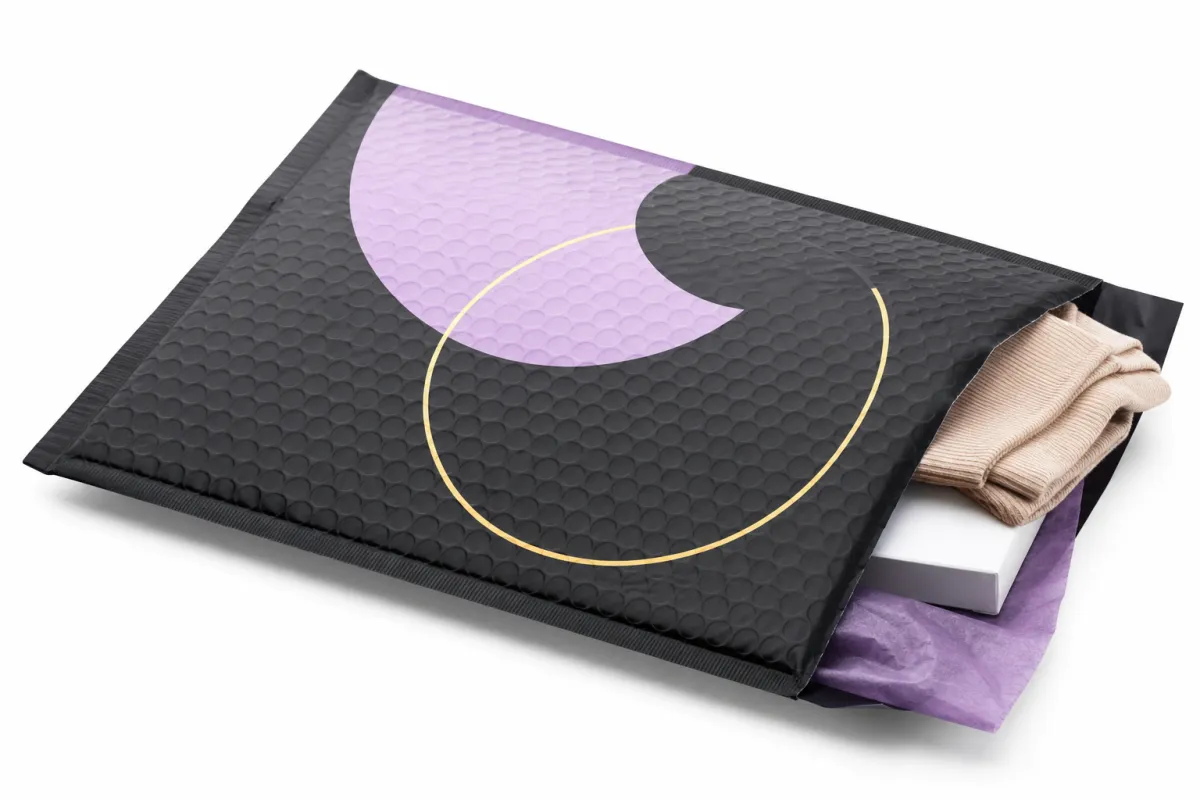
Picture a customer ordering a small item online and opening the mailbox to find a branded mailer instead of a plain kraft sleeve or a generic white pouch. That first visual cue changes the experience right away. Custom padded mailers printing does that work before the seal is broken, and it does it with far less material than heavier retail packaging or custom printed boxes. For brands shipping small, light products, that difference is meaningful.
A padded mailer sits in a useful middle ground. It offers more protection than a thin envelope, more branding space than a plain poly bag, and usually less weight and packing time than a corrugated carton. In practice, custom padded mailers printing often fits items that need surface protection, light cushioning, and a polished presentation without the cost or bulk of a rigid box. Books, cosmetics, soft goods, stationery, and small hardware pieces all fit that profile when they do not need a full box wall around them.
The print does more than change the look. Strong custom padded mailers printing helps a brand feel established, especially for smaller companies that are not yet sending enough volume to support inserts, tissue, and a long list of extras in every shipment. A clean logo, a steady color field, or a simple repeat pattern can create package Branding That Feels disciplined instead of improvised. That is often enough to make the order feel retail-ready even when it is shipping direct to consumer.
There is a practical side here too. Printed mailers are easier to spot in a warehouse, simpler to sort by campaign, and more likely to be handled carefully by packing teams because they look like a finished program rather than loose stock. Brands that use custom padded mailers printing well usually end up with a clearer shipping system overall. Artwork, label placement, and outer package start working together instead of sitting in separate lanes decided months apart.
One common mistake is expecting the mailer to carry every brand message at once. It should not. A strong printed mailer has a straightforward job: hold the product, survive the route, and reinforce the brand at a glance. If the design tries to say too much, it can feel crowded and expensive without really improving sales or retention. That is why custom padded mailers printing works best as part of a broader packaging design system rather than as a one-off artwork exercise.
How Custom Padded Mailers Printing Works
The structure of a padded mailer matters before any press ever touches it. Most versions have an outer face stock or film layer, an inner cushioning layer, a closure area, and a seam structure that determines where graphics can safely sit. With custom padded mailers printing, those physical details are not background information; they shape what the artwork can do and where it can live without distortion. A design that ignores fold lines or side seals often looks fine on screen and awkward in production.
In many runs, the outer layer is a paper-based sheet, a poly film, or a hybrid structure. Paper gives a more natural handfeel and often supports a cleaner recycled look. Poly can provide better moisture resistance and a smoother surface for certain print jobs. Hybrid builds try to bring both qualities together. The choice affects how custom padded mailers printing reproduces logos, solid colors, gradients, and fine type. A design that looks crisp on paper may need more care on film, especially if the surface has texture or a bit of stretch.
The most common print methods are flexographic printing and digital printing. Flexographic printing is often a strong choice for larger runs because it handles repeat artwork efficiently, keeps unit economics in check, and works well for patterns, logos, and broad color areas. Digital printing is usually a better fit for shorter runs, variable art, test programs, or projects where a brand wants to move quickly without investing in plates. Custom padded mailers printing can also connect to offset printing in adjacent parts of a program, such as inserts, belly bands, or companion cards, but the mailer itself usually relies on flexo or digital methods for practical production reasons.
Artwork prep is where many avoidable problems get caught. Logos should be in vector format when possible, especially when the design includes linework, type, or sharp geometric shapes. Color expectations need to be set early because a bright brand blue or a warm black can shift depending on the substrate and print process. Bleed, safe zones, and seam avoidance are not just prepress jargon; they decide whether the finished custom padded mailers printing looks centered, balanced, and intentional on the actual mailer surface.
Proofing is another place where experienced buyers slow down in the right way. A digital proof shows placement and composition, while a physical sample or preproduction proof can reveal how the material behaves under ink, heat, pressure, and folding. If the project depends on brand color, that extra review is usually worth it. Custom padded mailers printing can look excellent when the file is right, but the file still has to be translated onto a real substrate, at real speed, under real press conditions.
Production consistency depends on more than the press itself. Ink coverage, drying time, registration, and substrate lot variation all influence the final result. Heavy flood coats can reveal tiny inconsistencies more easily than a simple one-color logo. Fine text can disappear if it is too close to a seam or too small for the chosen print method. In other words, custom padded mailers printing is a production problem as much as a design problem, and the best results come from giving both sides equal attention.
Key Factors That Affect Custom Padded Mailers Printing
Material choice is usually the first fork in the road. Paper-based mailers tend to offer a more tactile, natural feel and can fit brands leaning into recycled or FSC-aligned messaging. Poly-based options are often chosen for moisture resistance, strength, and a slicker print surface. Hybrid constructions sit in the middle and can be useful when a project needs a balance of brand feel, durability, and cost. For brands comparing these options, it helps to look at the whole package, not just the sample swatch. If you want to see how outer packaging choices connect across a broader line, the mix of Custom Packaging Products and shipping formats can show what fits the rest of the program.
Color count and ink coverage also shape the result. A simple one-color logo is usually easier to run, easier to keep consistent, and less likely to show minor variation than a design with a full background color and several accent tones. That said, full-color custom padded mailers printing can work well when the artwork is built for it. The tradeoff usually lands in speed, cost, and the amount of press control required to keep color stable across the whole run. Large solid fields, especially dark ones, can expose streaks or slight density differences if the substrate or ink balance is not managed carefully.
Durability matters just as much as visual appeal. A mailer still has to move through conveyors, bins, truck routes, and hand sorting without splitting, scuffing, or opening early. I have seen brands fall in love with a glossy proof and forget to ask whether the package can actually protect the item inside. Custom padded mailers printing should support the shipping job, not get in the way of it. If the closure is weak or the material punctures too easily, the customer remembers that failure far more clearly than the logo.
Brand consistency is another major factor. The mailer should feel like it belongs to the rest of the product packaging system. That means thinking about the colors already used on labels, boxes, inserts, and web assets. If the brand uses custom printed Boxes for Premium orders, the padded mailer should not feel like it belongs to a different company. Strong package branding creates a visual family, even when the pieces are made from different materials and produced through different methods.
Sustainability claims should be handled carefully and honestly. Recyclability, recycled content, and fiber sourcing all depend on the exact material structure and local collection rules. If environmental messaging matters to your buyers, ask for documentation instead of relying on broad marketing language. The Forest Stewardship Council at fsc.org is a useful reference point for fiber-based sourcing discussions, while the EPA provides helpful context on waste and materials through epa.gov. Those references do not replace supplier data, but they keep the conversation grounded.
Another subtle factor is the role of the mailer inside the wider fulfillment system. If the item ships with a label printer, an insert card, and maybe a return slip, the outer package needs enough blank space and enough layout discipline to let the label breathe. A crowded art file can interfere with barcode placement or slow hand packing. That is where custom padded mailers printing becomes part of operations, not just creative direction.
Material and print comparison
| Option | Typical Strengths | Common Tradeoffs | Typical Use Case | Illustrative Unit Range |
|---|---|---|---|---|
| Paper-based padded mailer | Natural look, tactile feel, straightforward brand story | Less moisture resistance than poly in some builds | Beauty, lifestyle, stationery, eco-focused brands | $0.30-$0.80 |
| Poly padded mailer | Moisture resistance, clean print surface, lightweight | More synthetic feel, sustainability claims need care | Apparel, accessories, ecommerce shipments | $0.25-$0.70 |
| Hybrid construction | Balanced feel, good print options, practical durability | Not always the lowest-cost choice | Mixed product lines, branded shipping programs | $0.35-$0.90 |
The price ranges above are planning numbers, but they are useful because they keep a buyer from assuming every option costs about the same. In custom padded mailers printing, the substrate, print method, and finish all move the economics in different directions. A mailer that looks inexpensive in the sample room can become costly when the order includes unusual dimensions, high ink coverage, or a tight delivery window.
Custom Padded Mailers Printing Cost and Pricing Factors
Pricing starts with setup, and that is where many first-time buyers get surprised. There may be plate charges, prepress work, proofing, color matching, and tooling or line setup depending on the print method and construction. In custom padded mailers printing, those costs get spread across the quantity, which is why a 1,000-piece run almost never looks as efficient per unit as a 10,000-piece run. The larger order gives setup more room to spread out.
Quantity is still the biggest driver, but it is not the only one. A smaller order with a simple one-color logo can be more economical than a larger order with tight registration, multiple inks, or specialty film. Material thickness, closure type, gusset style, and whether the artwork wraps the full face all affect the quote. If a design needs more handling or more inspection, custom padded mailers printing usually moves into a higher price tier even when the order size stays the same.
For planning purposes, many brands want to see pricing at three levels: a test run, a working run, and a volume run. That gives a real picture of unit cost versus total spend. For example, a buyer might see an estimate at 2,500 pieces, 5,000 pieces, and 10,000 pieces, then compare what the warehouse can hold and how many months of inventory the business is comfortable carrying. That is a better method than chasing the lowest per-unit price and then paying for storage, obsolescence, or rush freight later.
Custom padded mailers printing also tends to price differently based on the visual style. A design with a centered logo and a single ink color is usually easier to manufacture than a full-coverage pattern with fine reverse type. A metallic accent, soft-touch coating, or another special finish can add appeal, but those choices should be justified by the brand strategy rather than added simply because they look nice in a render. Practical packaging design is about margin, durability, and customer perception together.
Here is a simple way to think about budgeting. If the product value is high, the mailer can justify a stronger presentation. If the product value is low, the mailer still needs to protect the item, but every extra cent matters more. That is why custom padded mailers printing is often best managed with a clear ceiling on unit cost before artwork starts. Once the budget is set, the design can be shaped to fit it instead of the other way around.
Shipping cost matters too, even though it is often discussed separately. A lighter mailer can reduce postage compared with a heavier box, especially when dimensional weight comes into play. For small goods, that savings can offset a meaningful part of the print premium. Brands evaluating Manufacturing Capabilities should ask not just what can be printed, but how the finished mailer affects the total landed cost of the shipment. The right answer is not always the prettiest one; sometimes it is the one that lands best on the P&L.
One more pricing point: the lowest quote is not always the lowest risk. If a supplier cannot explain color tolerance, substrate availability, or lead time variability, the project can drift. With custom padded mailers printing, a clear quote should tell you what is included, what proof stage you will see, and how revision rounds are handled. That kind of clarity helps a buyer compare apples to apples rather than chasing numbers that hide different assumptions.
Step-by-Step Order Process and Timeline
The cleanest orders begin with product dimensions. Before any artwork is finalized, confirm what is going inside the mailer, how much clearance the item needs, and whether there will be an insert, return card, or cushioning sheet. A padded mailer that looks ideal on paper may be too tight once the product, label, and closure overlap are all factored in. Custom padded mailers printing works best when the structure and the contents are planned together.
After sizing, the next step is artwork development. That includes logo files, brand colors, placement rules, and the exact area the print is allowed to occupy. If the brand already has a package branding guide, this is the moment to use it. If not, the team should define simple rules: where the logo sits, whether the front and back are both printed, and how much blank space is left for barcodes or shipping labels. A focused layout usually performs better than a crowded one.
Proof review is where the project either stays on schedule or starts slipping. A good proof should show scale, placement, and color intent clearly enough that the team can catch mistakes before production. If a customer approves a file too quickly, the print can still be off because a logo sat too close to a seam or because the color on screen did not match the substrate. With custom padded mailers printing, a careful proof is cheaper than a mistake on 5,000 units.
Production timing depends on complexity and volume. Simple jobs can move relatively quickly once approval is complete, while more customized jobs need extra time for material sourcing, prepress, and press scheduling. A realistic timeline for many custom padded mailers printing projects is often 12-15 business days from proof approval, but that can stretch if the artwork needs revisions, the material is special order, or the run sits behind larger production commitments. Add transit time on top of that, because the calendar should include packing, shipping, and receiving at the destination.
If the mailers are tied to a product drop, seasonal campaign, or trade show release, build a buffer. That buffer is not wasted time; it is the difference between a controlled launch and a frantic one. Some teams also schedule a sample check or internal signoff a few days before the final ship date so the fulfillment team can practice with the finished mailer dimensions. That small step often prevents packing bottlenecks later.
Brands with multiple shipping formats should also think about how the mailer fits the rest of the program. If some items ship in boxes and others in mailers, the artwork system should feel related. That is where a mix of Custom Poly Mailers and other materials can be coordinated with the broader packout, so customers see one brand rather than a collection of disconnected packages. Custom padded mailers printing is strongest when it is part of a planned assortment rather than a last-minute substitute.
Common Mistakes to Avoid in Custom Padded Mailers Printing
The first mistake is designing for a flat screen instead of a folded, sealed, shipping-ready mailer. A mockup can hide seam shifts, compression, and edge loss, so the artwork looks cleaner online than it will in production. Custom padded mailers printing needs layout discipline. If the logo is too close to a fold or a side seal, the finished result can look skewed even if the file technically printed correctly.
The second mistake is using weak files. Low-resolution logos, jagged line art, and tiny legal text can all become a problem once the job is on press. So can color choices that were never checked against the actual material. A navy blue that looks rich on a monitor may print flatter on a kraft-like paper face, while a red can darken slightly on film. With custom padded mailers printing, artwork quality and substrate choice are tied together.
The third mistake is forgetting the product inside the packaging. A mailer that looks elegant but crushes the contents is not a win. This comes up often when brands try to save money by choosing a thin build for a sharp-looking design. The order may arrive with scuffed corners, weak closure performance, or no real cushion at all. Good custom padded mailers printing should support both the visual and protective side of the shipment.
The fourth mistake is approving too fast. I understand the pressure; launch dates do not wait, and people want to keep things moving. Still, rushing a proof is one of the fastest ways to create regret. It can lead to off-center artwork, a missing logo on the reverse, or a color that misses brand expectations. The best custom padded mailers printing projects usually slow down for one careful proof review, then move forward with confidence.
There is also a broader systems mistake: not checking how the mailer relates to other materials in the order. If the shipping label, insert card, and product label all live in different visual worlds, the package feels improvised. The customer may not be able to explain why, but they feel the gap. That is why custom padded mailers printing should be evaluated alongside labels, inserts, and any companion retail packaging pieces, not in isolation.
Finally, do not ignore the operational side. A complicated design can slow packout, especially if every unit has to be checked for orientation or color placement. Simple, bold, readable artwork usually performs better across a real shipping line. In many cases, the strongest custom padded mailers printing is not the loudest design; it is the one that packs cleanly, travels well, and still looks branded when it lands on the doorstep.
Expert Tips and Next Steps for Better Results
Choose one clear visual idea and let it carry the whole package. A single strong logo placement, a repeated pattern, or a restrained color block often creates more confidence than a mailer packed with slogans, graphics, and callouts. Custom padded mailers printing tends to look more expensive when the design has room to breathe. Space is not empty; it is part of the brand message.
Test the design with the actual product inside before you place the final order. That sounds simple, but it catches problems that digital proofs cannot show. Does the closure still feel secure? Does the print disappear under a shipping label? Does the product shift and make the pouch bulge in the wrong place? Those are the practical questions that shape whether custom padded mailers printing will support the order in the real world.
Request a sample or preproduction proof whenever color, finish, or logo placement is critical. A good sample can prevent a lot of anxiety later. It also gives the team a chance to compare the printed result against the rest of the brand system, including cartons, labels, and inserts. If you are already sourcing other items, it helps to look at the larger picture and keep the entire branded packaging program aligned instead of treating every component as a separate purchase.
For teams trying to balance cost and presentation, a useful next step is to ask for quoted quantities at several levels and compare the unit price against storage and forecasted demand. That is where custom padded mailers printing becomes a planning exercise instead of a guess. If the business can use 8,000 units over a quarter, a larger run may make sense. If demand is uncertain, a shorter run with faster replenishment could be safer.
Another useful habit is to define what success looks like before the quote arrives. Is the goal to improve package branding for unboxing? Reduce damage rates? Support a product launch? Match the appearance of other product packaging materials? The answer shapes the material and print decisions. The more specific the goal, the better the final outcome of custom padded mailers printing usually is.
Here is a practical action plan that buyers can follow without overcomplicating the process:
- Confirm product dimensions and closure requirements.
- Gather print-ready artwork in vector format when possible.
- Choose the substrate based on feel, shipping conditions, and brand goals.
- Request pricing at multiple quantities to compare unit cost and total spend.
- Review a proof or sample before authorizing production.
- Build in transit time so the mailers arrive before the launch date.
If you are weighing options across a broader shipping program, it can help to compare custom padded mailers printing with other pack formats such as boxes, sleeves, and poly options. That comparison often shows where the best tradeoff sits between protection, cost, and appearance. For many brands, the strongest solution is not one format for everything, but a thoughtful mix of retail packaging choices that match the item and the customer experience.
Custom padded mailers printing is one of those decisions that pays off when the basics are done well: the right material, the right print method, the right art, and the right timeline. Get those parts lined up, and the mailer does far more than carry a product. It helps the product feel finished, trusted, and ready to be opened.
When a shipping outer supports the product, the brand, and the fulfillment team all at once, custom padded mailers printing becomes a quiet advantage. That is the goal, really: a package that protects the order, looks intentional, and reinforces the brand from the first scan to the final unseal. If you approach custom padded mailers printing with that mindset, the results usually speak for themselves.
If you are about to start a run, lock the size, material, ink count, and proof stage before artwork is approved. That one habit keeps custom padded mailers printing closer to budget, cleaner on press, and less likely to cause a last-minute scramble. It is kinda the simplest way to protect both the package and the schedule.
Frequently Asked Questions
What artwork format works best for custom padded mailers printing?
Vector files are the safest choice for logos, text, and clean shapes because they stay sharp at any size and reproduce more reliably across custom padded mailers printing jobs. If your design includes photography or complex gradients, use high-resolution image files and keep critical text away from seams, folds, and closure areas. If color accuracy matters, ask for a proof before production so the final custom padded mailers printing result is easier to approve with confidence.
How many colors can custom padded mailers printing handle?
The practical limit depends on the print method, substrate, and budget rather than a fixed rule. Simple one- or two-color layouts are often the most efficient for custom padded mailers printing, while full-color artwork can work well when the process supports it and the design is built for that output. If your branding depends on subtle gradients or multiple brand colors, confirm early that the chosen print method can reproduce them cleanly.
What affects the price of custom padded mailers printing most?
Quantity usually has the biggest effect because setup costs spread out as the order gets larger, which is why custom padded mailers printing becomes more efficient at higher volumes. Other major factors include size, substrate choice, color count, and whether the artwork needs special handling or finishing. Asking for quotes at several quantities is the simplest way to see where the best unit cost begins.
How long does custom padded mailers printing usually take?
Timing depends on proofing, material availability, production complexity, and how many revisions the artwork needs before approval. Simple custom padded mailers printing jobs move faster, while highly customized mailers or larger production runs take more coordination and more lead time. If the mailers support a launch date, seasonal promotion, or product drop, build in extra time so production and transit do not compress the schedule too tightly.
Should I choose paper or poly for custom padded mailers printing?
Paper can support a natural look and may fit better when the brand wants a more fiber-forward presentation, while poly can offer a smoother surface and different moisture resistance depending on the build. The right choice for custom padded mailers printing depends on the product, shipping conditions, sustainability goals, and the experience you want customers to have when the package arrives. If you are unsure, compare samples side by side and test them with the actual product inside.

