Buyer Fit Snapshot
| Best fit | Custom Poly Mailers with Hang Tags projects where brand print, material claims, artwork control, MOQ, and repeat-order consistency need to be specified before quoting. |
|---|---|
| Quote inputs | Share finished size, material target, print colors, finish, packing count, annual reorder estimate, ship-to region, and any compliance wording. |
| Proofing check | Approve dieline scale, logo placement, barcode or warning zones, color tolerance, closure strength, and carton packing before bulk production. |
| Main risk | Vague material claims, crowded artwork, missing packing details, or unclear freight terms can make a low unit price expensive after revisions. |
Fast answer: Custom Poly Mailers with Hang Tags: Branding That Ships should be specified like a repeatable production item. The safest quote records material, print method, finish, artwork proof, packing count, and reorder notes in one written spec.
Production checks before approval
Compare the actual filled-product size with the drawing, then confirm tolerance on folds, seals, hang holes, label areas, and retail display edges. Reserve space for logos, QR codes, warning copy, and material claims before decorative graphics fill the panel.
Quote comparison points
Review material grade, print process, finish, sampling route, tooling charges, carton quantity, and freight assumptions side by side. A quote is only useful when the supplier can repeat the same color, closure quality, and packing count on the next order.
Custom Poly Mailers with hang tags can do something a lot of brands usually reserve for cartons: protect the order, present the product with care, and make that first physical touchpoint feel deliberate. For folded apparel, soft accessories, and lightweight direct-to-consumer shipments, custom poly mailers with hang tags offer a low-bulk format that still reads as branded packaging instead of plain transit wrap. That matters because the customer sees the parcel before they ever handle the product, and in many categories that first glance shapes the whole experience.
The appeal of Custom Poly Mailers with hang tags comes from the balance they strike between shipping efficiency and retail presence. The poly mailer handles transport, while the hang tag carries the merchandising detail: size, style, care, promotion, story, or a cleaner brand cue. A plain mailer can move product from one place to another, but custom poly mailers with hang tags make the shipment feel like product packaging, not just logistics. For brands that want polished package branding without the weight and cost of a box, this format deserves real attention.
Custom Logo Things works across a range of custom packaging products, but this format is especially well suited to brands that sell visually driven products and want the outer shipper to match the item inside. In everyday use, Custom Poly Mailers with hang tags fit folded garments, socks, swimwear, scarves, small accessories, subscription items, and promotion kits where the order should arrive neat and readable. For operations that care about speed, consistency, and presentation, custom poly mailers with hang tags can be one of the cleanest ways to bridge retail packaging and shipping packaging without adding unnecessary structure.
In my experience, the brands that get the most out of Custom Poly Mailers with hang tags are usually the ones that treat packaging like part of the product, not a side task. The mailer does not have to be flashy to feel intentional. It just has to be built with enough care that the customer opens it and thinks, yes, somebody paid attention here.
What Are Custom Poly Mailers with Hang Tags?
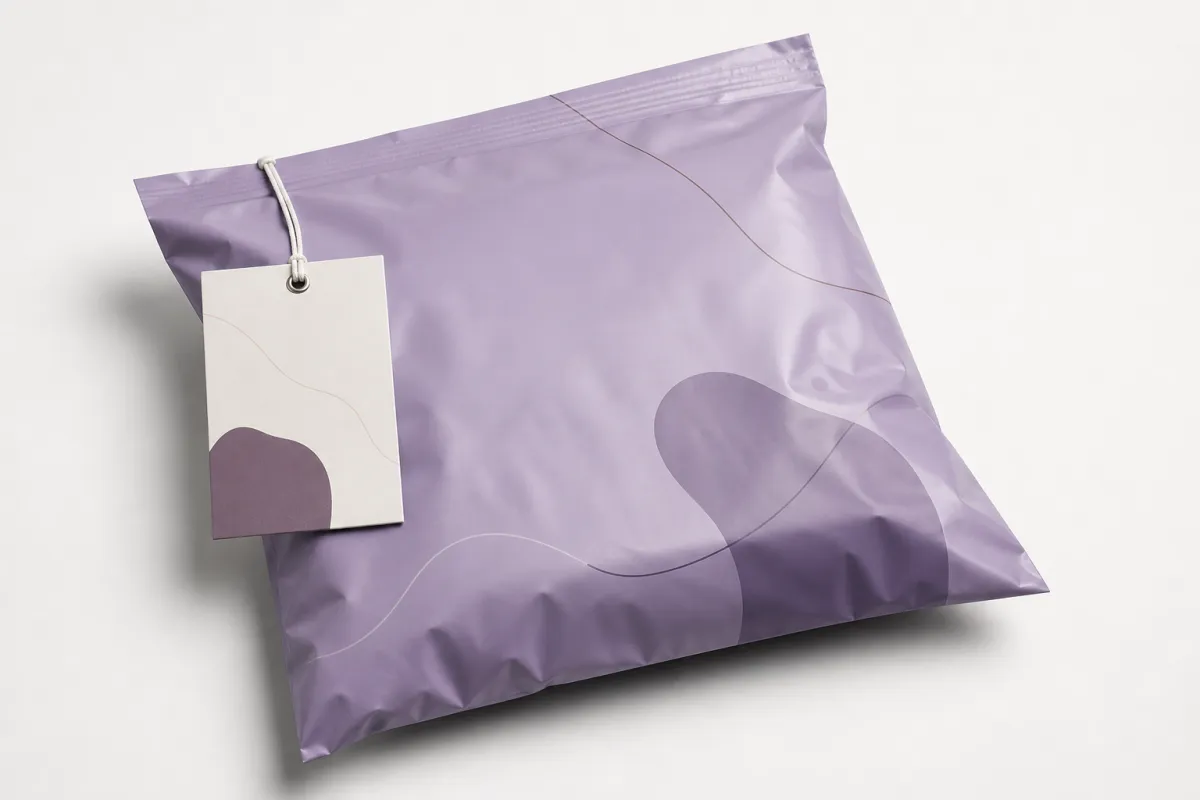
At the simplest level, custom poly mailers with hang tags are a two-part packaging setup. The mailer is the outer shipping layer, usually made from polyethylene film designed to resist tears, moisture, and handling abuse. The hang tag is the visible brand or product card, often printed on paperboard or specialty stock, that stays with the item inside the package or is attached in a way the customer can see right away. Put together, custom poly mailers with hang tags create a shipping format that is light, flexible, and still specific enough to carry brand identity.
What surprises a lot of buyers is how much retail presence this setup can create without moving to a box. A well-designed mailer with a clean tag can communicate the same sense of orderliness people expect from custom printed boxes, but at a lower material cost and with less dimensional weight. That is one reason apparel brands often use custom poly mailers with hang tags for routine shipments. The package arrives slim and tidy, yet the tag gives it the visual cue a customer would normally see on a rack, shelf, or garment table.
That retail cue matters more than it first appears. A hang tag is not just decoration; it can hold the style name, color, SKU, size, barcode, origin note, or care instruction, and that helps the order feel organized from the moment it arrives. Brands that sell bundles, subscription drops, or seasonal collections can also use custom poly mailers with hang tags to carry campaign messaging in a way a plain mailer cannot. The shipping lane becomes an extension of merchandising, which is a useful shift for direct-to-consumer packaging.
Where does this format fit best? Usually anywhere the item is soft, foldable, or not easily crushed. Tees, leggings, lightweight outerwear, knit accessories, fabric goods, and compact accessories are strong candidates because they do not need a rigid shell. In those cases, custom poly mailers with hang tags can outperform heavier setups because they pack quickly, ship light, and still support branded packaging. The customer gets a clear first impression, and the warehouse avoids the labor and freight penalties that often come with boxes and inserts.
There is also a meaningful difference between a mailer that simply ships product and a mailer-plus-tag system that supports sales. A standard mailer can hide the product until it is opened. Custom poly mailers with hang tags can guide the opening experience and reinforce the product story before the seal is broken. That is a small detail with a real effect, especially for direct-to-consumer brands where package branding and product identity help sell the item before the customer ever reaches it.
"The best packaging does two jobs at once: it protects the product in transit and tells the customer they bought from a brand that pays attention."
For buyers comparing Custom Poly Mailers with other formats, the real question is not whether the package looks good on a mockup. The better question is whether custom poly mailers with hang tags still look good after sorting, stacking, carrier handling, and final delivery. That is the test that separates attractive concept art from useful product packaging.
How Custom Poly Mailers with Hang Tags Work in Shipping
On the packing bench, custom poly mailers with hang tags begin with the item itself. The product is folded, checked, and inserted into the mailer, and the hang tag is either already attached or placed so it remains visible and stable through transit. Some brands use a perforated attachment point, some use string, some use adhesive, and some insert the tag with the product so the customer sees it as soon as the mailer is opened. The best method depends on how much movement the parcel will see, how fast the line runs, and how the brand wants the opening moment to feel.
The mailer carries the weight of the shipping job. It acts as the protective outer shell, which makes film thickness, seal quality, and tear resistance especially important. A mailer that looks fine on a sample sheet can still fail if the film is too thin for automated handling or if the seal area is weak. Custom poly mailers with hang tags work best when the package is built for the real shipping lane, not just for a photo shoot. If the product travels through conveyor systems, sortation chutes, and last-mile compression, the structure has to hold up to that path.
The tag adds another layer of function. A good hang tag can identify the product before opening, which helps in receiving, returns, and gifting. If a customer orders multiple styles, the tag can quickly indicate colorway, size, or collection without ripping open every package. For some brands, that reduces confusion at the packing desk and later on the customer side as well. Custom poly mailers with hang tags are especially useful when the tag includes a barcode or simple SKU reference, because the package remains readable even before the garment is handled.
There is a practical gain here: custom poly mailers with hang tags can reduce packout time compared with box, tissue, insert, and tape workflows. That does not mean every order should move to a mailer. Fragile items, structured goods, and high-crush products still need a carton. For soft goods, though, this setup often gives a better ratio of speed to presentation. The customer gets a deliberate unboxing feel, and the warehouse gets a package that is easier to build consistently.
The tradeoff is that the tag must stay secure. If the tag swings too freely, catches on sealing equipment, or shifts during high-speed handling, the package can look messy by the time it reaches the door. The attachment point should be tested with the exact mailer film, exact tag stock, and exact packing motion the team plans to use. That sounds basic, but it is where a lot of otherwise strong custom poly mailers with hang tags go sideways.
It helps to think of this setup as a single system rather than two separate items. The mailer, the tag, the seal, and the product fold all influence the final result. That is why a sample run matters. A package can pass a visual check and still fail in practice because the hang tag curls, the mailer puffs, or the opening edge stretches unevenly. If the brand wants the order to arrive with the same shape it had on the packing table, custom poly mailers with hang tags need to be tested as a whole.
For formal validation, many teams compare a new setup to recognized shipping test methods such as the procedures described by ISTA. That kind of discipline is useful when the brand wants repeatability, not just a nice prototype. In other words, custom poly mailers with hang tags should be judged by how they survive real movement, not only by how they look in a marketing deck.
Key Materials, Sizes, and Branding Decisions
Material choice is usually the first decision that affects performance. Film thickness, opacity, seal style, and surface finish all matter. A lighter mailer can work well for soft goods, but if the package will travel through rough carrier handling, a thicker film often earns its keep. For many apparel orders, a polyethylene mailer in the 2.5 to 4 mil range is a practical starting point, though the exact spec depends on product weight, fold height, and the amount of edge stress created by the seal. Custom poly mailers with hang tags only look polished if the mailer itself stays intact and flat.
Size deserves the same attention. Too large, and the package looks loose, shifts in transit, and wastes material. Too small, and the garment wrinkles, the hang tag bends, or the seal area takes on too much tension. A good fit leaves enough room for a clean fold and a safe tag placement without turning the mailer into a balloon. Package design becomes practical at that point, not decorative. The best custom poly mailers with hang tags are sized around the real packed product, not around an idealized artboard.
Hang tag stock changes the feel in a big way. Uncoated board gives a more natural, tactile look. Coated stock can sharpen the print. Soft-touch adds a muted, premium feel. Gloss can make color pop, but it also shows handling marks more readily. Recycled content may be the right choice if the brand wants to align with a sustainability message, though it should still be evaluated for stiffness and print fidelity. For some brands, the tag is where the story lives; for others, the mailer carries the visual identity and the tag stays more informational. Custom poly mailers with hang tags work best when the two components are not competing for the same job.
Branding choices should follow that split. A mailer often works well with a clear logo, a strong color field, and perhaps a short line of brand copy. The tag can carry richer details: product name, care notes, QR code, collection story, retail pricing reference, or a limited-use promotion. That keeps the package readable. If both surfaces try to say everything at once, the result usually feels crowded rather than premium. Good package branding is not about how much you can print; it is about whether the customer can understand it at a glance.
Here is one trade that many buyers make successfully: they keep the mailer visually simple and use the tag for storytelling. That approach often costs less than fully flooding the mailer with ink, and it usually holds up better for high-volume shipments. It can also make reorders easier because the mailer remains stable while the tag can be refreshed by season, collection, or promotion. For brands comparing branded packaging options, custom poly mailers with hang tags often deliver a strong mix of flexibility and consistency.
Sustainability and performance belong in the same conversation. The thickest stock is not automatically the best, and the most elaborate finish is not automatically the smartest. Ask what the package needs to survive, how it will be opened, and whether the tag stock is compatible with the brand's disposal goals. If the tag needs FSC-aligned paper, a material statement, or a more responsible fiber source, that can be planned up front. For more on paper sourcing and forest standards, FSC is a useful reference point.
The practical rule is simple: choose the lightest structure that still protects the product and supports the brand story. That is how custom poly mailers with hang tags stay cost-conscious without feeling cheap. In many cases, that balance is better than moving to heavier retail packaging just because the brand wants a better opening experience.
Custom Poly Mailers with Hang Tags: Pricing and Lead Times
Price comes down to a handful of variables that are easy to separate once you list them plainly. For custom poly mailers with hang tags, the biggest factors are mailer size, film thickness, print coverage, tag stock, finish, quantity, and whether the tag is attached before shipment or supplied separately. Add a second print side, special coatings, or more complex tag construction, and the cost moves up. Keep the structure standard and the artwork efficient, and the cost stays more manageable.
For a practical reference, a simple setup for 5,000 pieces might land in a range like $0.32-$0.55 per unit for a printed mailer plus a basic tag, while a heavier film, specialty tag finish, or more complex attachment method could move that closer to $0.60-$1.20 per unit or more. Those numbers are not universal, and they will shift with artwork coverage, material availability, and freight, but they show the shape of the economics. Custom poly mailers with hang tags are often less expensive than a full box-and-insert program, especially once packing labor and dimensional shipping cost enter the picture.
| Option | Typical Build | Approx. Unit Range at 5,000 | Best For |
|---|---|---|---|
| Standard mailer + simple hang tag | 2.5-3 mil mailer, one- or two-color print, uncoated tag | $0.32-$0.55 | Core apparel and everyday ecommerce shipments |
| Mid-tier branded setup | 3-4 mil mailer, full-color print, coated tag, cleaner finishing | $0.48-$0.78 | Seasonal drops, premium product packaging, giftable orders |
| Premium presentation build | Heavier film, specialty tag stock, soft-touch or foil detail | $0.72-$1.20+ | High-value apparel, limited editions, stronger retail packaging feel |
Lead time matters just as much, and it is often misunderstood. Once artwork is approved, standard custom poly mailers with hang tags may move through proofing, production, finishing, inspection, packing, and transit in roughly 12-18 business days on a straightforward run, though more complex builds can take longer. If you need preproduction samples, if the tag has a special die cut, or if the mailer uses uncommon color matching, add time. Freight transit also matters, especially if inventory has to arrive in a different region than the manufacturing site.
Three things tend to stretch timelines more than buyers expect. First, artwork changes after proof approval. Second, unclear dielines or tag specs create back-and-forth. Third, factory calendars fill up quickly before major selling periods. None of that is unique to custom poly mailers with hang tags, but this format is sensitive because there are two components that must align. If one piece slips, the whole package can slip with it.
There are simple ways to save money without hurting the result. Standardize the mailer size around your top-selling product dimensions. Keep print coverage focused instead of flooding the full surface unless the brand benefit is obvious. Use one tag format across a collection where possible. If you know the package will be reordered throughout the year, lock the specs early so you are not redesigning a working format every season. Custom poly mailers with hang tags are most economical when the system is repeatable.
One detail that many teams overlook is freight and receiving cost. Those charges can equal a meaningful portion of the landed price. A lower production quote does not always mean lower total cost if the package ships heavy or arrives in smaller, more frequent batches. When people compare custom poly mailers with hang tags against custom printed boxes, they sometimes focus only on print cost and forget the downstream labor and shipping differences. That is usually where the real savings show up.
Step-by-Step: Ordering and Preparing Artwork
The cleanest way to order custom poly mailers with hang tags is to start with the product itself, not the artwork. Measure the folded item, note its thickness, and think about how the customer will receive it. Will the garment ship flat? Will the tag stay outside the fold? Will the package need to fit a standard postal category? Those small questions affect every later decision. A package built around the real shipping profile is much easier to approve than one designed from a guess.
From there, choose the mailer structure first. That sounds obvious, but the tag should be designed to complement the mailer, not fight it. If the mailer needs a front seal area, the tag cannot block it. If the packaging line uses speed seal equipment, the attachment method has to avoid the sealing edge. If the customer will see the tag immediately on opening, its size and orientation matter a great deal. Custom poly mailers with hang tags work best when the mailer, tag, and sealing process are treated as one system.
Artwork should be built with a clear hierarchy. The logo needs enough contrast to read quickly. Product copy needs to stay legible at the real size, not just on a screen. If the tag carries a QR code, barcode, or SKU, it should be tested for scan quality and quiet zone spacing. If the mailer carries color blocking or a large brand panel, check how that print will look when folded, stacked, or slightly shifted. Good packaging design is often the art of removing friction from a package before it ever enters production.
It helps to build proofs with intent. Ask for a sample or digital proof that shows the tag position and the mailer artwork together. If the tag is attached through a hole, string, or adhesive point, confirm that the placement is realistic for the packing sequence you use. If the setup includes a new finish, ask for a sample before signing off. That is especially true with custom poly mailers with hang tags because a polished render can hide the simple fact that a tag is too large, too glossy, or too stiff for the actual mailer.
The production sequence should be written down internally, even if the order is small. Final sign-off, production, inspection, packing, transit, and receiving all matter. If your team is preparing a launch, assign one person to confirm dimensions and one to check print files. If the order is a replenishment, compare the new sample to a previous approved run. A short checklist saves a lot of confusion later, and it is one of the best habits for custom poly mailers with hang tags.
For brands that want to keep their packaging program organized, pairing these orders with Custom Packaging Products and Custom Labels & Tags can make the workflow easier to manage across seasons. The point is not to overcomplicate it; the point is to keep the mailer, tag, and brand system aligned from the start.
"A sample that looks close enough on a screen is not good enough on a conveyor belt."
Common Mistakes with Custom Poly Mailers and Hang Tags
One of the most common mistakes is overdesigning the tag. A hang tag that is too large can curl, bend, or catch against the mailer edge, which makes the package look careless even if the print itself is excellent. The tag should support the package, not become the package's problem. Custom poly mailers with hang tags are at their best when the tag feels purposeful and compact, not oversized and fragile.
Attachment failure is another easy way to lose quality. Weak adhesive, poor string selection, or a tag placed too near the seal line can cause shifting or detachment in transit. That may sound minor, but it can turn a polished piece of branded packaging into a loose card rattling around inside a mailer. If the tag is part of the customer experience, it has to survive the same handling that the product does. Test the attachment under the conditions the real shipment will face, not under a desk lamp.
Branding overload shows up more often than many teams expect. Some brands try to put every message onto both the mailer and the tag: logo, slogan, website, social handles, product story, care notes, return notes, sustainability notes, and a promotional offer. The result is clutter. Custom poly mailers with hang tags usually look stronger when one surface does the visual work and the other carries the supporting information. A cleaner layout reads as more premium and more intentional, especially in retail packaging contexts.
There is also the classic mismatch between mockup and production. A mailer can look beautiful in a digital rendering and still perform poorly if the material is too thin, the film finish shows scuffing, or the tag stock absorbs ink differently than expected. Buyers get caught here if they only approve the visual sample. Product packaging has to survive abrasion, moisture, and pressure changes. That is why sample approval should include packed handling, not just a front-and-back image.
Timeline mistakes create their own kind of damage. Late artwork changes, skipped samples, and underestimated freight windows can force rushed production or a reprint. When that happens, the order may still ship, but the brand loses time and flexibility. Custom poly mailers with hang tags are not unusually difficult to produce, yet they do require coordination between two printed components. If one side is late, the entire package can become late.
Another issue is ignoring the receiving stage. If the order arrives in a packaging warehouse and the team has no simple way to verify the tag, the size, or the attachment method, the first shipment may not be used correctly. A quick incoming inspection against the approved sample avoids that problem. A package that looks good in production should also be easy to accept, count, and stage. That is part of making branded packaging practical rather than decorative.
Finally, do not assume that every product category is a fit. Boxes still matter for fragile goods, high-end set pieces, and anything that needs strong crush protection. Custom poly mailers with hang tags are excellent for soft goods, but they are not a universal answer. Honest packaging decisions usually save more money and frustration than forcing every item into one format.
Expert Tips and Next Steps for Custom Poly Mailers with Hang Tags
If you want custom poly mailers with hang tags to work well, test one real packed sample under normal handling conditions. That means the same fold, the same insert sequence, the same tape or seal method, and the same movement the package will see before it lands in the customer's hands. The right package is the one that still looks intentional after sorting, stacking, and delivery. A sample that only works in a static photo is not enough.
Give the hang tag one clear job. It can tell the story, identify the product, or support a promotion, but trying to make it do all three at full volume often creates clutter. A tag that is easy to scan visually feels more confident. In practice, the most effective custom poly mailers with hang tags use the mailer for brand presence and the tag for one focused message. That division keeps the package readable and easier to reorder.
Build a simple internal checklist before every reorder: size, film thickness, attachment method, print file version, approval date, sample status, lead time, and receiving plan. It sounds basic because it is basic, and basic is good in packaging. The more repeatable the process, the fewer surprises you will have when the next batch arrives. For growing brands, that kind of discipline matters just as much as the artwork itself.
It also helps to compare two structures before settling on one. Sometimes a modest mailer with a strong tag outperforms a more elaborate printed mailer. Other times, the mailer deserves the heavier visual treatment and the tag can stay quiet. The right answer depends on the product mix, margin, and how much of the brand story needs to live at the shipping level. Custom poly mailers with hang tags are flexible enough to support both approaches, which is part of their appeal.
From a buyer's point of view, the best next step is practical: measure the product, gather the artwork, request a sample, and confirm the timeline before you place the order. If the brand is exploring a broader packaging program, it can be smart to compare custom poly mailers with hang tags against other options in the same budget band, including lighter custom printed boxes or simpler mailers with labels. That comparison often clarifies where the real value sits.
Custom poly mailers with hang tags are not just a shipping shortcut. Used well, they create a neat first impression, keep freight efficient, and support package branding without overbuilding the order. If you want the result to feel polished, start with the product dimensions, keep the design focused, and make sure the sample survives real handling. Do that, and custom poly mailers with hang tags can become one of the most practical pieces of branded packaging in your kit.
For teams ready to move forward, the safest path is simple: measure carefully, prepare clean artwork, confirm the attachment method, and ask for samples before launch. That is how custom poly mailers with hang tags turn from a nice idea into dependable product packaging that ships cleanly and looks right when it arrives.
FAQ
Are custom poly mailers with hang tags better than boxes for apparel?
They are often better for folded apparel, soft goods, and lightweight accessories because they cut weight and packing time while still delivering a branded look. Boxes still make sense for fragile, bulky, or presentation-heavy items, but custom poly mailers with hang tags usually win on speed and freight efficiency when the product is a good fit.
How do you attach hang tags to custom poly mailers?
Common methods include pre-punched tags with string, adhesive-backed tags, or tags inserted with the product so they stay visible after packing. The attachment method should match the mailer surface, handling speed, and the amount of motion the package will see in transit. A sample run is the best way to confirm the tag stays put.
What affects the price of custom poly mailers with hang tags?
Size, thickness, print coverage, tag stock, finish, attachment style, and order quantity all affect unit cost. More complex artwork or specialty finishes usually raise the price, while standard sizes and simpler construction help control it. Freight, sampling, and rush timing can also change the total landed cost.
How long do custom poly mailers with hang tags take to produce?
Timing depends on proof approval, whether samples are needed, and how complex the mailer and tag construction are. Once artwork is approved, standard runs often move faster than premium or highly customized builds. Freight transit and seasonal demand should be built into the schedule so inventory arrives on time.
Can custom poly mailers with hang tags be recycled or reused?
Recyclability depends on the exact film, local recycling rules, and whether the tag or adhesive creates mixed materials. Reuse is more practical when the mailer closes cleanly and the tag stays intact after opening. If sustainability matters, ask for the material breakdown early so the packaging plan matches your disposal goals.

