Buyer Fit Snapshot
| Best fit | Custom Paper Bags with Logo projects where brand print, material claims, artwork control, MOQ, and repeat-order consistency need to be specified before quoting. |
|---|---|
| Quote inputs | Share finished size, material target, print colors, finish, packing count, annual reorder estimate, ship-to region, and any compliance wording. |
| Proofing check | Approve dieline scale, logo placement, barcode or warning zones, color tolerance, closure strength, and carton packing before bulk production. |
| Main risk | Vague material claims, crowded artwork, missing packing details, or unclear freight terms can make a low unit price expensive after revisions. |
Fast answer: Custom Paper Bags with Logo: Film, Print, MOQ, and Carton Packing should be specified like a repeatable production item. The safest quote records material, print method, finish, artwork proof, packing count, and reorder notes in one written spec.
Production checks before approval
Compare the actual filled-product size with the drawing, then confirm tolerance on folds, seals, hang holes, label areas, and retail display edges. Reserve space for logos, QR codes, warning copy, and material claims before decorative graphics fill the panel.
Quote comparison points
Review material grade, print process, finish, sampling route, tooling charges, carton quantity, and freight assumptions side by side. A quote is only useful when the supplier can repeat the same color, closure quality, and packing count on the next order.
Custom Paper Bags With Logo do far more than carry an item from the counter to the car. They move the brand with the purchase, sometimes farther than the product itself travels that day. That is the reason Custom Paper Bags with logo matter so much in retail packaging: they serve a practical purpose, they act as a moving brand surface, and they show that the business paid attention to the details customers can actually feel.
From a packaging buyer's point of view, the bag is one of the few brand touchpoints that customers hold in their hands. A plain carrier says, "We needed something to get this home." A branded one says, "This purchase was planned with care." That small shift can shape perceived value, encourage social sharing, and help a customer remember your name the next time they need a gift, a refill, or a repeat order.
In practice, custom paper Bags with Logo sit right between product packaging and brand presentation. The format may look simple, yet the decisions behind it are not simple at all: paper stock, handle type, print coverage, gusset width, reinforcement, and finish all influence how the bag performs and how it feels in use. Make the right choices and the bag supports the sale. Miss the mark and it becomes a quiet expense that still looks expensive.
Why Custom Paper Bags With Logo Stand Out in Retail
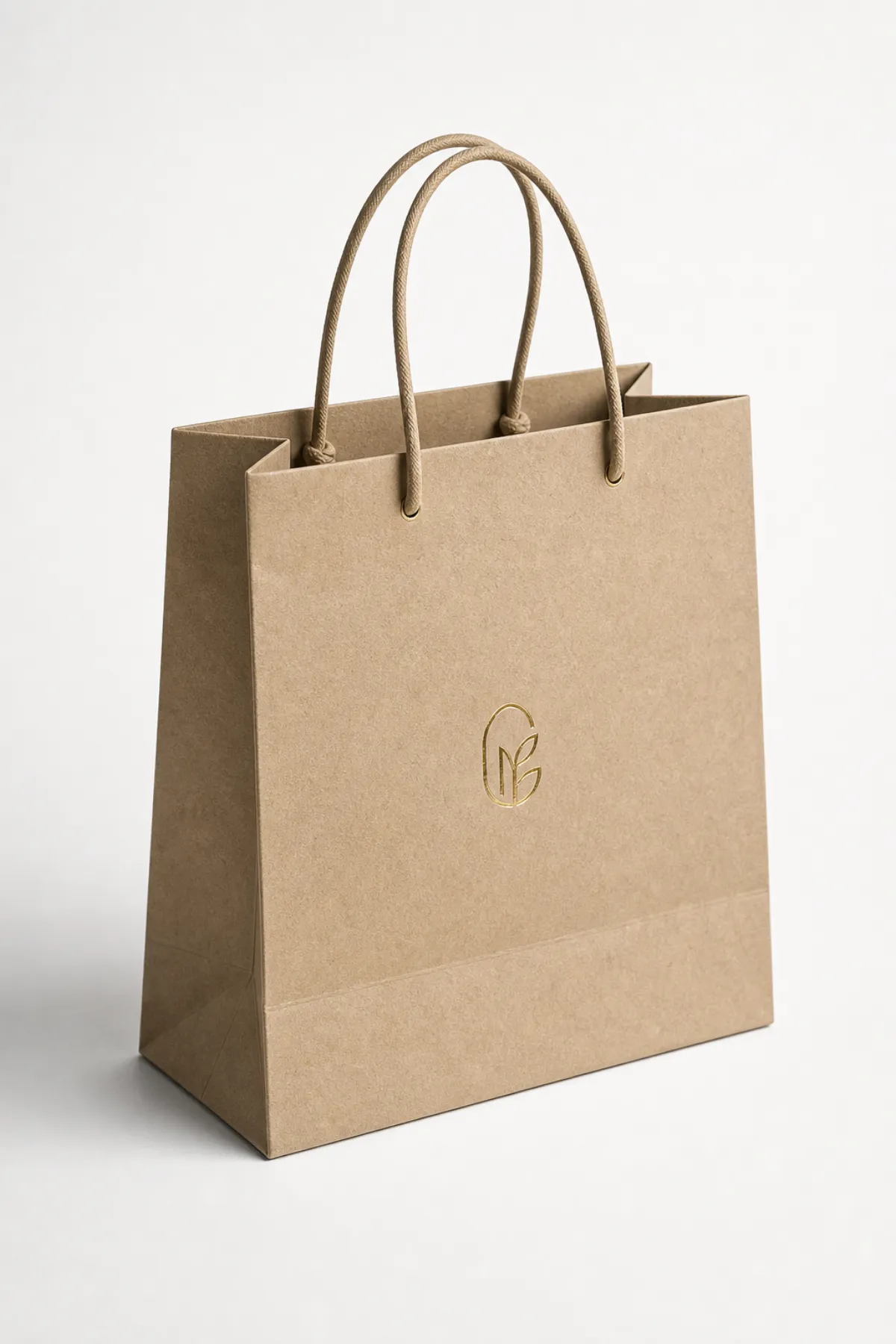
The bag often leaves the store before the product is even unwrapped. That is one reason custom paper bags with logo stand out. They move through parking lots, train stations, office lobbies, sidewalks, and kitchen tables, which means the branding keeps showing up in places your sales staff will never stand.
Common formats include SOS bags for groceries and quick-service use, twisted-handle shoppers for boutiques and pharmacies, euro-tote styles for higher-end retail packaging, and reinforced retail bags for heavier purchases. Each style solves a different job. SOS bags are efficient and stack neatly. Twisted-handle bags feel dependable and economical. Euro-totes bring a more polished presentation, especially for gifting or apparel. Reinforced bags exist for a simple reason: products get heavier than they look once they are packed and carried.
Custom paper bags with logo are not just transport tools. They are branded packaging assets. A well-made bag can lift the perceived value of a simple product, especially when the rest of the experience is clean and consistent. Customers may not measure paper weight or handle construction, but they absolutely notice whether the bag stands upright, whether the handle feels comfortable, and whether the logo reads clearly from a few feet away.
There is also a social effect that many businesses underestimate. A bag with strong packaging design gets photographed more often. It may show up in a quick post after a shopping trip, an unboxing clip, or a customer story shared with friends. That is never guaranteed, yet custom paper bags with logo make it more likely because they turn a routine handoff into something more considered.
There is a practical side too. Paper bags with a reusable feel can stay in use for days or weeks inside homes and offices. A customer may carry it once, then reuse it for receipts, gifts, returns, or storage. That extends brand exposure without adding another marketing line item. For small businesses, that matters. For multi-location retailers, it matters even more because consistency across stores becomes part of the brand itself.
I have seen buyers focus so hard on print color that they forget the one thing customers actually notice first: whether the bag survives the walk out the door. If the handle digs into the hand or the bottom sags, the branding does not get the last word. The bag does.
"The bag is often the last thing the customer touches in-store and the first thing other people see outside it. That makes custom paper bags with logo one of the most overlooked forms of retail media."
That is why the difference between a plain transport bag and a branded one is not cosmetic. It is strategic. One carries weight. The other carries weight and memory.
Custom Paper Bags With Logo: Process and Timeline
The ordering process for custom paper bags with logo usually starts with a short brief. What are the bags for? What will go inside them? How often will they be used? Those answers matter because a boutique carrying silk scarves needs a different structure than a bakery sending out pastry boxes or a trade show team handing out brochures and samples.
Once the use case is clear, sizing comes next. This is where many buyers lose time. A bag that looks large enough on paper may be too shallow for boxed goods or too narrow for folded apparel. The better move is to measure the actual item stack, then add room for packing, handle comfort, and a little movement. If the bag will serve multiple product types, separate sizes are often smarter than forcing one compromise size to do everything.
Paper stock and handle choice come after that. A supplier may offer kraft, white SBS, coated paper, or specialty paperboard depending on the style. Handles can be twisted paper, flat tape, cotton rope, or die-cut. Each option changes cost, durability, and appearance. Custom paper bags with logo are rarely "just bags" at this stage; they become a chain of choices that shape lead time and final feel.
Proofing protects the budget. A digital proof or dieline shows placement, dimensions, bleed, and print zones before a press run begins. That is where artwork problems surface: a logo too close to the edge, text too small to read, colors that shift on uncoated stock, or a handle hole that collides with the design. Skip this step and the mistake can get expensive quickly.
For a simple one-color bag on a common stock, the production calendar is often shorter. Once artwork is approved, some suppliers can move through print and finishing in roughly 10-15 business days, then add freight time. More complex custom paper bags with logo jobs that use lamination, foil, embossing, or multiple print passes usually need more runway, sometimes 15-25 business days or more depending on quantity and plant capacity. That range is not a promise; it is a practical planning window.
Delays usually come from the same few places. Artwork revisions eat days. Stock shortages force substitutions. File problems stall proofing. Last-minute quantity increases can push a job into another production batch. Seasonal launches make all of this worse because paper mills, converters, and freight networks get tighter at the same time. If the bags need to be ready for a store opening or a holiday campaign, ordering early is not a nice-to-have. It is the cheapest risk reduction available.
Planning for launch dates also helps with internal approvals. Many teams need sign-off from marketing, operations, procurement, and finance. That sounds slow, but it is better to build that reality into the schedule than to discover it after the proof has already been submitted. With custom paper bags with logo, the calendar often matters as much as the design.
One more detail from the production side: color shifts are more likely on uncoated kraft than on bright white stock, and fine lines can fill in if the artwork is too delicate for the press method. I have seen a lot of headaches come from artwork that looked great on screen and got muddy on paper. That is why a proof on the right stock matters, not just a PDF on a monitor.
Custom Paper Bags With Logo Pricing, MOQ, and Quote Factors
Price is usually the first number buyers ask about, and for good reason. Still, custom paper bags with logo pricing is not driven by one line item. It is shaped by paper weight, bag size, print colors, handle type, coating, finish, quantity, packaging format, and shipping. A quote that looks cheaper on the front end can end up more expensive once the real specs are compared.
MOQ, or minimum order quantity, exists because setup costs do not disappear just because the order is small. Plates, dies, press setup, material waste, and finishing adjustments all have to be absorbed somewhere. On a larger run, that cost spreads across more units. On a smaller run, the per-bag price rises. That is why a 1,000-piece order can sometimes cost more per unit than a 5,000-piece order by a wide margin.
As a general planning range, a straightforward Branded Paper Bag in a common size might land around $0.18-$0.35 per unit at higher volumes, depending on print coverage and stock. A more premium euro-tote or laminated shopper can move closer to $0.70-$1.50 per unit, especially if it includes special finishes or heavier construction. For smaller runs, the per-unit cost may rise sharply. Those numbers only help when the specs are comparable, which is why apples-to-apples quoting matters so much.
Here is a simple comparison buyers can use to read quotes more carefully:
| Bag Option | Typical Use | Common Specs | Relative Cost | What It Usually Means |
|---|---|---|---|---|
| Twisted-handle kraft shopper | Retail, takeaway, general merchandise | 120-200gsm kraft, one to two colors | Lower | Good balance of price and presentation |
| White paper retail bag | Boutiques, cosmetics, gift items | 150-230gsm paper, clean print areas | Moderate | Cleaner look, better for brand color accuracy |
| Laminated euro-tote | Premium retail, events, gifting | Heavier board, rope handles, finish options | Higher | Stronger shelf appeal and more premium feel |
| Reinforced specialty bag | Heavier products, repeat use | Bottom board, side gussets, reinforced handles | Higher | Designed for load-bearing and longer reuse |
The quote comparison should also cover what is included. Does the price include artwork setup? Proofing? Freight? Taxes? Are the bags packed in cartons or pallets? If two suppliers quote the same unit price but one excludes shipping, the comparison is not real. Custom paper bags with logo should be evaluated as delivered packaging, not just factory output.
There are several ways to save money without weakening the bag. Simplify the artwork. Limit the number of ink colors. Use standard sizes rather than custom dies. Choose a common stock that the converter runs regularly. Reduce full-surface print coverage if the design works with more negative space. These decisions can trim the budget without making the bag look cheap.
At the same time, the cheapest option is not always the best value. If the handle tears, the bottom sags, or the logo prints muddy, the bag is doing negative work. A customer who struggles with a bag may remember the frustration longer than the brand. That is a poor trade in retail packaging.
If you are comparing sourcing options, it can help to review broader packaging categories alongside bags. Our Custom Packaging Products page can give you a cleaner sense of what fits paper bags, boxes, and other branded formats together.
Choosing Materials, Print, and Finishes for Custom Paper Bags With Logo
Material choice is where custom paper bags with logo start to feel either practical or premium. Kraft has a natural, sturdy look that works well for eco-minded branding and everyday retail. White paper creates a brighter canvas for color accuracy and a more polished appearance. Coated paper can make artwork pop, though it can also move the bag toward a more upscale feel that does not suit every brand. Specialty stocks add texture or sheen, but they should earn their place.
Paper weight matters as much as the visual finish. A bag for light accessories may work on 120gsm or 140gsm stock. Heavier items, boxed products, or multi-item orders often need thicker paper or reinforcement. In real use, that means better bottom support, stronger gussets, and handles that do not cut into the hand. A beautiful bag that fails under weight is still a failure.
Print method also deserves attention. Flexographic printing is often efficient for simpler graphics and larger quantities. Offset printing gives strong detail and color control, which can matter for more refined branding. Digital options can suit smaller runs or projects with frequent artwork changes. None of these methods is automatically better. The right choice depends on quantity, artwork complexity, and the desired surface finish.
Finishes are where many brands overspend by accident. Matte lamination gives a softer, quieter look. Gloss reflects more light and can make bold colors feel sharper. Spot varnish can highlight a logo or pattern. Foil adds shine, while embossing creates physical depth. Die-cut windows can be useful in specialty retail packaging, but they make less sense for bags that need to remain durable and cost-conscious. Custom paper bags with logo should use finishes to support the brand story, not to decorate around a weak design.
Functional details often get less attention than they should. Handle strength matters if the bag will carry glass, jars, boxed cosmetics, or apparel bundles. Gusset width matters if the product has depth. Bottom board support matters if the bag will stand at checkout or sit on a shelf. Load capacity matters if customers are likely to walk several blocks, not just from the counter to a parked car.
From a packaging design standpoint, the best bag usually does three jobs at once. It looks good on a counter. It survives the trip home. It still feels intentional in a photo or in a customer's office. That combination is more valuable than a design that looks impressive only under studio lighting.
For brands that care about sustainability claims, certification and sourcing details should be checked carefully. FSC-certified paper can support responsible sourcing claims, and buyers can read more about standards directly at FSC. For shipping durability, especially if the bags are packed with other goods, test methods from ISTA help frame how packaging should survive transit and handling. Those references do not pick the bag for you, but they do raise the quality of the conversation.
One honest caveat: recycled or FSC-certified paper does not automatically make a bag low-impact in every market. Local recycling access, added lamination, foil, and mixed-material handles all affect end-of-life handling. If sustainability is part of the promise, the spec sheet should say exactly what the bag is made of and what parts make recycling harder.
Step-by-Step Guide to Ordering Custom Paper Bags With Logo
Start with the use case. Retail sales need one kind of bag. Takeout needs another. Trade shows, gifting, and event giveaways each bring different weight, size, and presentation requirements. The most efficient way to order custom paper bags with logo is to let the function set the spec first, then shape the design around that reality.
-
Define the contents. Measure the actual items that will go inside the bag, including any boxes, inserts, or tissue paper. If the bag will hold several product types, list them all before choosing a size.
-
Choose dimensions. Height, width, and gusset depth should reflect the real product mix. A bag that is too tight slows packing. One that is too large can make the purchase look underwhelming.
-
Prepare artwork. Confirm the logo file format, color values, bleed, safe zones, and any required fonts. Vector artwork usually gives the cleanest print result. Tiny type and thin strokes need extra caution.
-
Request a proof. Review the dieline carefully. Check handle placement, fold lines, and logo centering. This is the stage where most issues should be caught, not after production begins.
-
Ask for samples if possible. A physical sample tells you more than a PDF. You can feel the stock, test the handle, and see how the bag stands when filled.
-
Confirm logistics. Lock in quantity, freight method, ship-to address, and internal approvers before release. A finished bag sitting at the wrong warehouse is not useful.
A smart ordering process also thinks about reorder behavior. If the bag performs well, the second order should not require a fresh round of guesswork. Build a simple specification sheet that records size, stock, print method, finish, carton count, and approved artwork versions. That way, future custom paper bags with logo orders stay consistent even when staff changes.
It also helps to compare packaging types across the full buying journey. Some businesses use bags for the handoff and Custom Packaging Products for mailers, inserts, or secondary presentation. Thinking that way keeps product packaging and retail packaging aligned instead of treating each piece as an isolated purchase.
One more point: do not order against guesswork. A sales spike, seasonal offer, or event giveaway can change bag usage faster than expected. Build a reorder point based on actual velocity. If a store uses 2,000 bags a month, waiting until inventory is nearly empty is a self-inflicted rush charge.
For businesses that want extra assurance, packaging buyers often compare supplier claims against broader standards. FSC helps on sourcing. ISTA helps on transit performance. ASTM references can also be useful depending on material testing or barrier requirements. Those standards do not replace common sense, but they help separate a polished sales pitch from a defensible decision.
In short, the best ordering process is simple, but not casual. Custom paper bags with logo reward discipline: clear specs, clear proofing, clear timelines.
Common Mistakes Businesses Make With Custom Paper Bags With Logo
The first mistake is choosing on price alone. That is tempting, especially when bags seem like a commodity. But a lower quote can hide thin stock, weak handles, fuzzy printing, or a size that looks acceptable until the first real packing rush. With custom paper bags with logo, a cheap order can turn into a more expensive customer experience.
The second mistake is under-sizing. A bag that barely fits the product creates friction at checkout and often looks cramped. Customers may need two bags for one purchase, which adds cost and makes the handoff feel awkward. Worse, a tight bag can crush packaging, crease tissue, or damage product corners on the way out. That is not a minor issue. It is a practical loss.
The third mistake is over-designing. Too many elements can bury the logo, especially on smaller bags. Tiny text, weak contrast, busy patterns, and dense blocks of copy all compete with the brand mark. If the job is to make the business easy to remember, clutter works against it. Strong custom paper bags with logo usually rely on restraint, not visual noise.
The fourth mistake is waiting too long. Rushed orders leave almost no room for corrections. That means fewer proof rounds, less time for material substitutions, and more pressure to accept whatever is available. If the bags are for a launch or a holiday peak, that delay can be costly. The fastest way to lose money in packaging is to start late and then pay for urgency.
The fifth mistake is mismatched quality. A premium brand using a flimsy bag feels inconsistent. A value-focused operation paying for luxury finishes that the customer does not notice can waste money just as easily. Good packaging design fits the offer. It does not shout over it. It supports the product and the price point already in the customer's mind.
"A bag should make the purchase feel complete. If it feels like an afterthought, the brand loses a small but real chance to reinforce trust."
There is also a regional and operational issue that gets overlooked. Store teams pack differently. Some staff double-bag heavy items. Some fold the top. Some tuck receipts inside. That means the bag must tolerate messy real-world use, not just an idealized product photo. In that sense, custom paper bags with logo are tested by people as much as by materials.
If you want to avoid these pitfalls, start with a sample run, watch how staff pack it, and look at it through the customer's hands. That simple field test catches problems that a spec sheet cannot.
Expert Tips and Next Steps for Custom Paper Bags With Logo
My strongest advice is to treat the first order as a pilot, not a final verdict. A small trial run gives you useful signals: does the handle feel right, does the size match the product, does the print hold up, and do customers reuse the bag? Those observations are more valuable than a guessing session in a meeting room. Custom paper bags with logo improve quickly when the team has real feedback to work from.
Build a packaging spec sheet as soon as you settle on a winner. Keep the dimensions, paper stock, finish, print method, artwork version, approved supplier details, and reorder quantity in one place. This protects consistency across stores, campaigns, and staff changes. It also makes procurement easier because everyone is quoting from the same document instead of reconstructing the order from memory.
Compare at least two or three quotes using identical specs. Same size. Same artwork file. Same quantity. Same ship-to destination. If any of those variables change, the price comparison starts to blur. For custom paper bags with logo, clean quoting is often the difference between a useful decision and a misleading one.
Set a reorder point based on actual usage, not wishful thinking. If a business burns through bags quickly during promotions, events, or holiday weekends, that pace needs to show up in the inventory plan. A safety stock of one to two weeks is common for many stores, though the right buffer depends on lead time and sales variability. A bag shortage sounds small until checkout lines start to slow down.
It is also smart to align bag strategy with the broader packaging system. If your shelves already use printed boxes, inserts, or mailers, the bag should feel like part of the same family. That is where branded packaging becomes more than a visual habit. It becomes a consistent customer language across touchpoints. Our Custom Packaging Products page is a useful place to review that bigger picture before you lock the bag spec.
One final practical tip: keep a short checklist for future orders. Does the logo still match the latest brand file? Has the product mix changed? Are the bags still carrying the same weight? Has the store format shifted? Those questions are boring, which is exactly why they save money. They also stop little specification drifts from turning into bigger production mistakes later on.
For businesses that want a cleaner path forward, the next step is simple. Audit current bag use, request samples, verify artwork files, compare timelines, and place a trial order for custom paper bags with logo. If the first run performs well, scale it with confidence. If not, the pilot has already paid for itself by showing you what to fix before the next order lands.
FAQ
What size should I choose for custom paper bags with logo?
Match the bag to the actual product dimensions, not just the display shelf. Leave enough gusset and height for easy packing, product protection, and comfortable carrying. If your mix includes apparel, boxed goods, and small accessories, separate sizes are usually the better move. Custom paper bags with logo work best when the bag fits the item instead of forcing the item to fit the bag.
What is a typical MOQ for custom paper bags with logo?
MOQ depends on paper type, print method, and whether the bag is stock-based or fully custom. Lower MOQs are possible, but unit price usually rises as quantities drop. Ask whether the quote includes setup, proofing, and freight so the MOQ comparison stays fair. For custom paper bags with logo, the smallest order is not always the cheapest order.
How long does production usually take for custom paper bags with logo?
Simple designs can move faster, while specialty finishes and complex artwork usually extend the schedule. Proof approval, material availability, and shipping distance all affect the final timeline. Build in extra time before launches, holidays, and event deadlines to avoid expensive rush orders. The safest plan for custom paper bags with logo is to order before the deadline starts feeling tight.
Can I print full-color artwork on custom paper bags with logo?
Yes, but the best method depends on quantity, color count, and the level of detail in the design. Full-color printing can look strong, yet simpler artwork often delivers better consistency and lower cost. Ask for a proof that shows how colors, gradients, and small text will reproduce on the chosen paper stock. Custom paper bags with logo can handle rich graphics, but the stock and print process need to support them.
Which paper stock works best for custom paper bags with logo?
Kraft paper suits natural, sturdy, and lower-cost presentations, while white or coated paper can feel cleaner and more premium. Heavier products need stronger paper weight and reinforced handles to avoid failure in transit. The right stock depends on the brand image, product weight, and whether the bag will be reused after purchase. The best custom paper bags with logo are the ones that match both the product and the customer experience.
If you strip away the noise, the decision is straightforward: the right custom paper bags with logo should fit the product, fit the budget, and fit the brand story. That combination is what turns a simple carrier into packaging that does useful work long after the sale is complete. Start with the real load, confirm the proof on the right stock, and lock a reorder spec before the first run is gone. That is the kind of discipline that keeps the packaging looking good and working hard.

