Buyer Fit Snapshot
| Best fit | Custom Paperboard Boxes for Branding projects where brand print, material claims, artwork control, MOQ, and repeat-order consistency need to be specified before quoting. |
|---|---|
| Quote inputs | Share finished size, material target, print colors, finish, packing count, annual reorder estimate, ship-to region, and any compliance wording. |
| Proofing check | Approve dieline scale, logo placement, barcode or warning zones, color tolerance, closure strength, and carton packing before bulk production. |
| Main risk | Vague material claims, crowded artwork, missing packing details, or unclear freight terms can make a low unit price expensive after revisions. |
Fast answer: Custom Paperboard Boxes for Branding: Board, Finish, Dieline, and Unit Cost should be specified like a repeatable production item. The safest quote records material, print method, finish, artwork proof, packing count, and reorder notes in one written spec.
Production checks before approval
Compare the actual filled-product size with the drawing, then confirm tolerance on folds, seals, hang holes, label areas, and retail display edges. Reserve space for logos, QR codes, warning copy, and material claims before decorative graphics fill the panel.
Quote comparison points
Review material grade, print process, finish, sampling route, tooling charges, carton quantity, and freight assumptions side by side. A quote is only useful when the supplier can repeat the same color, closure quality, and packing count on the next order.
Custom Paperboard Boxes for Branding: Smart Design Tips
Custom paperboard Boxes for Branding do more than hold a product still. They sit on a shelf, get handled by tired warehouse staff, photographed by customers, and judged in the narrow window before someone decides whether the item feels credible. Retail research has repeatedly shown that first impressions form quickly; packaging often gets those few seconds to do the heavy lifting.
That pressure is exactly why custom paperboard Boxes for Branding matter. They are lightweight carton-style packages used for retail goods, subscription kits, gift sets, and promotional items, but their real value is psychological as much as physical. A good box makes the product feel intentional. A weak one makes even a strong brand look improvised, and I have seen that happen with products that were otherwise beautifully made.
The job is not decoration for decoration's sake. A logo on a front panel is not branding on its own; it is ink with expectations. Brand identity shows up in the structure, color palette, typography, finish, and opening sequence. Custom paperboard boxes for branding support packaging design better than a plain mailer or a generic carton because the entire surface can be planned around the brand story, not just a single printed face.
Think about the box in layers. Outer panels carry the first message. Interior print can carry a second one. Inserts protect the product and add a small sense of occasion. The opening sequence shapes the unboxing experience. Miss one of those pieces and the package starts feeling cheaper, even if the print budget was healthy.
That is the trap I see most often. Teams obsess over the front panel and treat the rest as background noise. Custom paperboard boxes for branding work best as a system: outside, inside, insert, and opening flow all need to reinforce the same idea. Otherwise the package says one thing and the product says another, which is how expensive branding begins sounding uncertain.
Custom paperboard boxes for branding: what they actually do
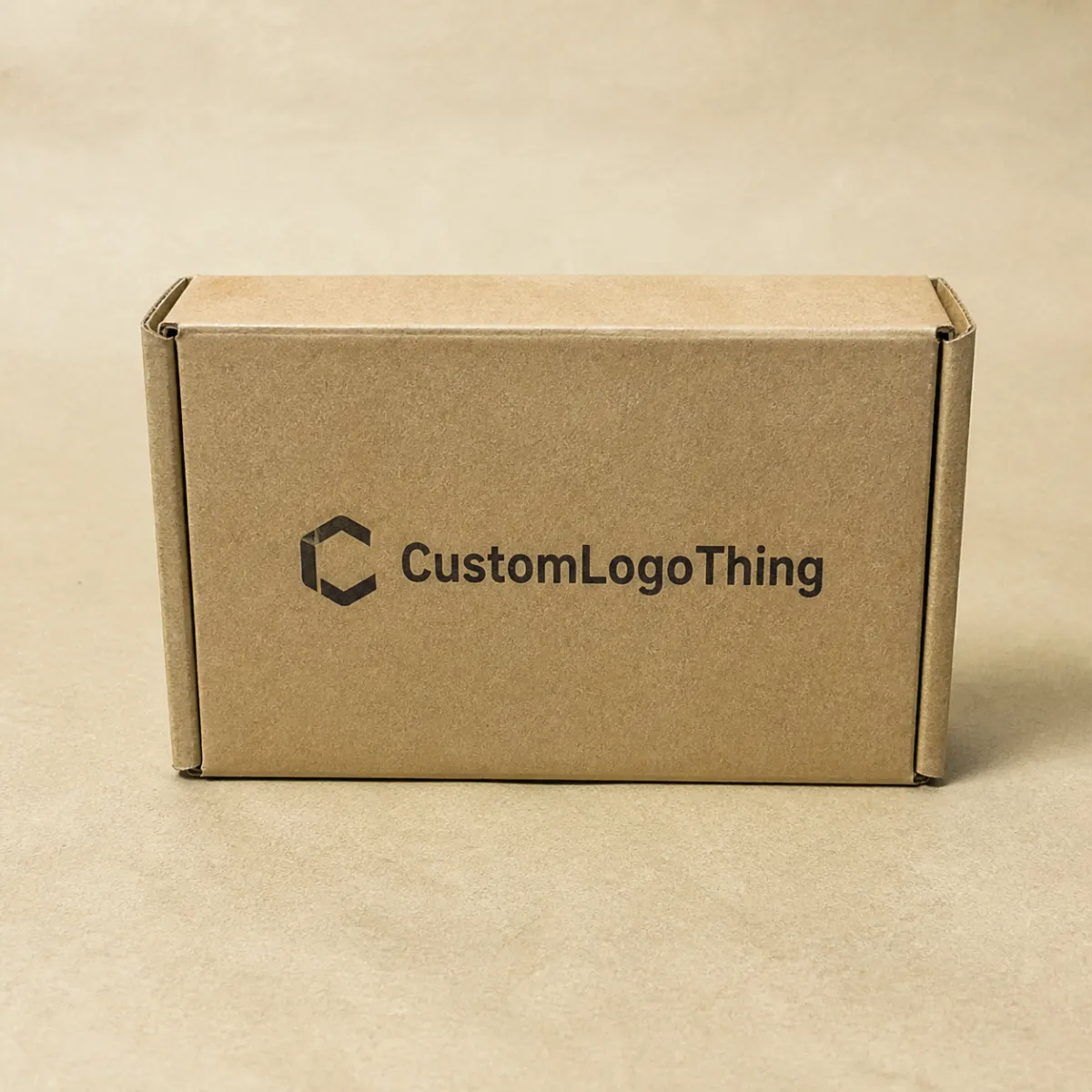
Custom paperboard boxes for branding are not just shells. They are shelf signals. A shopper sees whether the product deserves attention, whether the brand has standards, and whether anyone cared during packing. That judgment may be quiet, but it is immediate. Retail is full of these silent verdicts.
Paperboard is usually a lightweight, foldable carton material made from compressed paper fibers. It can be coated or uncoated, thick or thin, matte or glossy, and that range is a big reason custom paperboard boxes for branding show up across so many categories. Cosmetics, supplements, candles, stationery, apparel accessories, and gift sets all fit naturally in this format.
From a branding perspective, the box has three practical jobs. First, it creates recognition. Second, it signals quality. Third, it gives the product a sense of intention. Custom paperboard boxes for branding handle those jobs because they can keep color, typography, layout, and finish consistent across every unit that leaves the warehouse.
Decoration and branding are not the same thing. Decoration is surface-level. Branding is structural. A box with a loud logo but awkward proportions, weak contrast, or sloppy copy still feels off. Custom paperboard boxes for branding work best when the structure, graphics, and finish move in the same direction instead of competing for attention.
Branding lives in the sequence. A buyer notices the outer face first, then the side panel, then the inside print or insert, then the reveal. That order is where custom paperboard boxes for branding earn their value. A strong sequence can raise perceived value without changing the product formula at all.
“Good packaging does not shout. It makes the product feel inevitable.”
That is why custom paperboard boxes for branding often beat a standard carton with loose graphics. A well-built box supports product packaging, retail packaging, and package branding at the same time. It creates a controlled surface, which is another way of saying the customer sees the story in the order the brand intended.
For teams comparing formats, think in layers. The first layer is structure: tuck-end, sleeve, mailer-style carton, or display-ready shape. The second layer is visual hierarchy. The third layer is finish. Custom paperboard boxes for branding only look easy when those layers are planned together.
If you want a baseline reference on packaging terms and structural formats, the Institute of Packaging Professionals is a useful starting point. For fiber sourcing and recycled-content claims, FSC standards are worth reading before anyone starts placing "sustainable" on the dieline without a chain-of-custody plan.
Custom paperboard boxes for branding can also stay restrained. They do not need foil, embossing, and a magnetic closure to work. Clean structure, correct sizing, sharp print, and disciplined copy often outperform a box trying to prove too much. Packaging can turn into expensive theater if nobody is paying attention to the actual product.
There is a practical reason buyers keep returning to this format: paperboard is flexible enough for brand expression, yet ordinary enough to stay economical at scale. That balance is hard to beat. Too much luxury and the box starts swallowing margin; too little and the package disappears in the aisle.
Custom paperboard boxes for branding production process and timeline
Custom paperboard boxes for branding usually move through the same production path: brief, structure, dieline, artwork setup, proofing, printing, finishing, converting, packing, and shipping. The order matters. Miss a step and the schedule starts to wobble. Packaging delays are rarely mysterious; they usually come from missing dimensions, late artwork, or a sample approval that should have happened two rounds earlier.
Begin with the product spec. Measure the item in its final configuration, not in a best-case version where the label is thinner and the insert magically shrinks. Custom paperboard boxes for branding should account for weight, clearance, closure style, and how the product will move in transit. The box has to fit the real product, not the mood-board version of it.
The dieline stage is where the flat artwork gets mapped to the box structure. It is also where custom paperboard boxes for branding either become easy to produce or start behaving like a headache. Good dielines make panel placement obvious, leave room for barcodes and legal copy, and show exactly where folds, glue, and closures sit. Bad dielines are how brands end up printing a logo into a seam.
Proofing usually has at least two checkpoints: structural proof and print proof. On a custom run, you want to confirm dimensions first, then color and layout, then final pre-production approval. Custom paperboard boxes for branding should not go to press until someone has checked the box open and closed in real dimensions. Screen mockups lie. Paper does not.
Timing depends on complexity. Simple custom paperboard boxes for branding with standard folds and basic print often move through production in roughly 10-15 business days after approval. Add specialty coatings, custom inserts, foil, or deeper structural changes, and 15-25 business days is more realistic. A premium structure promised in a tiny window usually means something is being skipped.
Lead time also stretches when revisions stack up. One sample change is normal. Three changes usually mean the project was under-scoped. Custom paperboard boxes for branding run more smoothly when the brand finalizes copy, measurements, and finish choices before requesting quotes. Every change after that costs time, money, or both.
Practical timeline check:
- Day 1-3: brief, measurements, quantity, and structural direction
- Day 4-7: dieline setup and artwork layout
- Day 8-10: proof review and revision
- Day 11-15: print and finishing for simpler custom paperboard boxes for branding
- Day 16-25: added time for specialty coatings, inserts, or complex structures
Schedules slip when teams treat custom paperboard boxes for branding like a last-minute accessory. It is not an accessory. It is part of the launch. If the box arrives late, the launch slips too, even if the product is already sitting in a warehouse ready to go. That is a rough way to learn packaging belongs to operations, not only design.
I have watched launches stall because packaging was left until the brand assets were already locked. The product team assumed the box could be “wrapped up later,” and later turned out to be the most expensive week in the schedule. Packaging is not a finishing touch; it is part of the build.
Cost and pricing for custom paperboard boxes for branding
Custom paperboard boxes for branding are priced through a stack of choices, not a single number. Size, board grade, print coverage, finish, insert complexity, quantity, and freight all influence the final quote. The box that looks simple on a screen can become expensive if the print area is large, the finish is exacting, and the structure wastes material.
The biggest pricing lever is usually quantity. Small runs carry higher unit costs because setup gets spread across fewer boxes. Larger orders make custom paperboard boxes for branding cheaper per unit, but they also tie up more cash in inventory. Nobody loves paying for 8,000 boxes when only 3,000 are likely to move before the product line changes.
As a rough working range, basic folding cartons for custom paperboard boxes for branding might land around $0.18-$0.35 per unit at moderate volume, depending on board type and print coverage. Premium cartons with soft-touch lamination, foil, embossing, or custom inserts can climb to $0.45-$1.20 per unit or more. Rigid-style paperboard structures move higher still, especially in short runs or with full wraps.
Quotes can hide cost in places people forget to ask about. Setup fees, plates, sampling, color matching, insert tooling, palletizing, and special packing all matter. Custom paperboard boxes for branding should always be requested as a line-item quote so the buyer can see what is fixed, what is variable, and what will blow up the budget if someone tweaks the artwork late.
| Box type | Typical use | Approx. unit cost | Tradeoff |
|---|---|---|---|
| Basic folding carton | Cosmetics, supplements, small retail goods | $0.18-$0.35 | Best for value and speed, limited premium feel |
| Coated carton with finish | Gift sets, mid-tier retail packaging | $0.35-$0.75 | Better shelf impact, more setup and finishing cost |
| Rigid-style paperboard box | Premium product packaging, presentation sets | $0.75-$1.20+ | Stronger perceived value, heavier shipping and higher MOQs |
That table is a planning tool, not a rulebook. Custom paperboard boxes for branding can sit outside those ranges if the product is unusually small, unusually large, or printed with heavy ink coverage. The pricing pattern stays the same, though: more material, more labor, more finish, more cost.
There is also a tradeoff between premium feel and actual margin. A soft-touch lamination or foil stamp can make custom paperboard boxes for branding look much better on shelf, but only if the product margin can absorb it. A box should support the business model. If it eats the profit, it is not branding; it is sabotage with good manners.
Packaging teams comparing options should ask for the same spec across every quote: dimensions, board thickness, print sides, finish, insert type, quantity, and delivery location. If one supplier quotes custom paperboard boxes for branding with hidden assumptions and another quotes the full build, the cheapest one may also be the least honest. Apples-to-apples is the only comparison that matters.
Useful cost drivers to watch:
- Board thickness and coating type
- Print coverage and number of colors
- Foil, embossing, spot UV, or soft-touch finish
- Insert style and fold complexity
- Quantity and freight packaging method
One more point: freight rarely gets enough attention in early budgeting. A box that collapses flat is easier to store and ship, while a rigid-style structure may look impressive but can raise both carton count and freight weight. That difference can matter more than the decoration fee on a smaller program.
Key design factors that make custom paperboard boxes for branding work
Structure comes first. A folding carton, tuck-end box, sleeve, display box, or rigid-style paperboard box all send a different message. Custom paperboard boxes for branding need to match product weight, retail environment, and the way the box will be opened. A heavy item stuffed into a flimsy carton is not clever. It is a return waiting to happen.
Visual hierarchy is next. The brand mark, product name, benefit statement, and legal copy should have a clear order. Custom paperboard boxes for branding work better when the eye knows where to land first and what matters second. If every panel is shouting, nothing is clear. That is how a premium product starts looking like a clearance special.
Color control matters more than most people expect. Ink behaves differently on coated and uncoated board, and a matte finish changes how saturation reads under retail lighting. Custom paperboard boxes for branding should be proofed against the actual board, not only a digital mockup. A deep navy on a monitor can look flat on paperboard if the coating and press setup are off.
Finish choices affect both appearance and hand feel. Matte finishes feel quieter. Gloss is brighter and more reflective. Soft-touch feels expensive but can scuff. Embossing adds dimension. Foil adds contrast. Spot UV gives selective shine. Custom paperboard boxes for branding often look strongest when one or two finishes are used with restraint instead of every effect being thrown onto the panel at once.
Internal print can carry a second layer of story. A simple thank-you line, product-use tip, or brand message inside the box can improve the unboxing experience without adding much cost. Custom paperboard boxes for branding are a smart place to reinforce the brand promise after the outer face has already done the heavy lifting.
Sustainability should sit inside the design brief, not as a marketing note added later. Recyclable board, fewer unnecessary coatings, and efficient sizing all help. Custom paperboard boxes for branding can support an eco-friendly story if the structure is honest and the materials make sense. If the box says “green” but needs a truckload of filler and three coatings, people notice the contradiction.
For brands that care about recycled content or forest sourcing, FSC certification can help document the chain of custody. It is not a magic wand, and it does not excuse bad sizing, but it gives packaging decisions a credible backbone. Custom paperboard boxes for branding should support the claim, not invent it after the fact.
There is also a practical layer that never gets enough airtime: stackability, shelf facing, and warehouse handling. Custom paperboard boxes for branding need to survive real logistics. If the corners crush easily or the closure pops open during transit, the artwork will not rescue the box. Function and branding are not separate departments in the real world. They are one problem.
A detail that often separates competent packaging from forgettable packaging is edge behavior. How the corners fold, how the glue line sits, and whether the panels stay square after assembly all affect perceived quality. A customer may not name those details, but they feel them immediately when the box opens badly or arrives dented.
Step-by-step guide to ordering custom paperboard boxes for branding
Start with the basics. What is the product size, weight, sales channel, and shipping method? What impression should the box create in the first three seconds? Custom paperboard boxes for branding are much easier to spec once the team knows whether the package will live on a retail shelf, ship direct to consumer, or sit in a display tray at an event.
Next, build a packaging brief. Include dimensions, artwork files, quantity, budget range, required claims, and launch date. Custom paperboard boxes for branding get expensive when the buyer asks for quotes without saying whether the finish should be standard or premium, or whether the insert must keep the product upright during shipping. Clear brief, cleaner quote. Not a glamorous rule, but a useful one.
Request samples early. Even a plain structure sample can tell you more than a screen rendering. Custom paperboard boxes for branding should be tested with the actual product, not only admired in a PDF. Check fit, closure, board stiffness, print feel, and whether the box opens in a way that makes sense for the customer.
Then approve the dieline carefully. Every panel matters. Logo placement, barcode space, regulatory copy, front-facing orientation, and open direction all need a review. Custom paperboard boxes for branding often fail in the final mile because someone assumed the side panel was “probably fine” and never checked it. That is not design. That is optimism wearing a blazer.
Good ordering workflow:
- Confirm product dimensions and weight.
- Choose a structure that fits the channel.
- Build the brief with quantity and timeline.
- Request quote comparisons from multiple suppliers.
- Approve structure sample and print proof.
- Lock the final artwork and release to production.
- Plan receiving, kitting, and freight storage.
That last step gets ignored constantly. Custom paperboard boxes for branding do not arrive in a vacuum. They need warehouse space, labeling, maybe insertion or kitting, and a plan for how the finished goods move into the product line. Packaging is not just print. It is operations with nicer clothes.
If you need help lining up the packaging stack around the box itself, the team can compare Custom Packaging Products, review Case Studies, or pair the box with Custom Labels & Tags for a tighter brand system. The right support pieces make custom paperboard boxes for branding feel coherent instead of improvised.
One more thing: if a supplier cannot explain the difference between a structural proof, a print proof, and final production approval, keep shopping. Custom paperboard boxes for branding deserve a vendor who understands the process, not someone who treats it like a mystery box with a carton on top.
There is a reason experienced buyers keep a sample archive. A physical reference from the last project tells you more than a memory of what “looked premium” six months ago. Paperboard changes with coating, press conditions, and handling, so keeping samples on hand saves time when the next run starts.
Common mistakes with custom paperboard boxes for branding
The first mistake is choosing looks over function. A beautiful box that crushes, bends, or opens badly is still a bad box. Custom paperboard boxes for branding should protect the product and support handling first. The branding layer should enhance the structure, not cover for a weak one.
The second mistake is poor sizing. Boxes that are too large waste board, increase freight, and let the product shift around. Boxes that are too tight damage the product or make packing miserable. Custom paperboard boxes for branding need enough clearance for inserts, closures, and manufacturing tolerance. The millimeter you ignore now comes back later as a production headache.
The third mistake is over-design. Too many finishes, too much copy, too many competing colors, and suddenly the package looks busy instead of premium. Custom paperboard boxes for branding usually work better with a disciplined layout, one clear message, and a single visual idea. Luxury is often quiet. Chaos almost never reads as luxury.
The fourth mistake is waiting too long. If packaging gets sourced at the last minute, approvals become rushed, freight gets expensive, and revisions get cut short. Custom paperboard boxes for branding need schedule room just like the product itself. Squeezing packaging into the final week is how teams end up approving something they barely read.
The fifth mistake is supplier mismatch. Some vendors are strong on low-cost folding cartons but weak on color control. Others can handle premium structures but need higher minimums. Custom paperboard boxes for branding should be matched to the supplier’s real capability, not the sales pitch. A lower quote means little if the box arrives warped, off-color, or late.
Red flags worth watching:
- No clear dieline or proofing process
- Vague answer on material thickness
- Unclear finishing and setup fees
- No discussion of shipping or pallet count
- Promises that sound faster than physics allows
There is a sneaky mistake buyers make with custom paperboard Boxes for Branding: they design for the mockup, not the customer experience. A good mockup can hide panel seams, show impossible color, and make a flimsy box look premium. Real samples expose the truth. That is annoying, but cheaper than discovering the truth after 12,000 units land in the warehouse.
Another common problem is assuming the press proof is enough. A proof can confirm text and layout, but it cannot fully recreate how a finish behaves under retail light or how the board holds up after repeated handling. That gap is where surprises live.
Expert tips and next steps for custom paperboard boxes for branding
The first smart move is simple: order one sample round and compare it against the actual product. Custom paperboard boxes for branding should be judged in hand, on shelf, and in transit, not only on a monitor. Check how the box sits, how it closes, how the print reads under light, and whether the structure makes the product feel credible.
Then build a comparison grid. Keep it plain: unit cost, MOQ, lead time, print quality, finish options, board grade, and freight terms. Custom paperboard boxes for branding get easier to approve when the decision lives on one page instead of disappearing into three quote threads and a spreadsheet nobody fully trusts.
Try this test before you place the order:
- Pack ten units and time the process
- Stack the boxes and check crush resistance
- Ship a small sample carton to yourself or your team
- Photograph the box on shelf under real lighting
- Open and close it five times to check wear points
That test sounds basic because it is basic. Custom paperboard boxes for branding should handle real conditions, not just look good in a rendering. If the box fails during packing, shipping, or display, no amount of finish will save it. The useful part is that you learn this before production, not after.
For teams managing a launch, the next step is to finalize dimensions, gather artwork, confirm budget, request quotes, and lock a production window. Custom paperboard boxes for branding reward early decisions. The longer the spec stays vague, the more expensive every downstream step becomes. Packaging is one of those areas where indecision quietly taxes the whole project.
Use standards where they fit. ASTM methods can help with material testing. ISTA protocols matter if the box needs shipping durability. FSC claims need real chain-of-custody support. Custom paperboard boxes for branding are stronger when the spec is tied to something measurable instead of whatever sounded premium on the sales call.
If the project has multiple product SKUs, do not assume one box size will somehow handle all of them. It usually will not. Custom paperboard boxes for branding can be standardized across a family, but the insert and internal clearance still need to match the actual item. “Close enough” is how returns start.
The most useful packaging specs are the ones that survive contact with production. If the board choice, finish, and fold style make sense on paper but fail in packing, the spec needs to change. That is not a setback; it is the point of testing.
Honestly, the best packaging decisions are boring in the right way. They are measured, specific, and repeatable. That is what makes custom paperboard boxes for branding pay off: not drama, not excess, just a box that fits the product, supports the brand, and survives the trip.
For brands that want packaging to do real work, custom paperboard boxes for branding are a business decision as much as a design choice. Get the spec right, keep the structure honest, and let the box carry the brand without trying to be the whole show. That is usually where the strongest results live.
FAQ
What products work best with custom paperboard boxes for branding?
Custom paperboard boxes for branding work best for lightweight to medium-weight retail items such as cosmetics, supplements, candles, apparel accessories, stationery, and gift sets. If the product ships on its own, choose a structure that protects corners and holds its shape in transit. For shelf-facing products, leave enough panel space for the brand name and the key product claim without crowding the layout.
How thick should custom paperboard boxes for branding be?
Use stock thickness based on product weight, not guesswork. Lightweight products often work with standard folding carton board, while heavier or premium items may need thicker paperboard or a rigid-style structure. Ask for samples because one extra millimeter can change both durability and print feel. Custom paperboard boxes for branding should be selected around the product, the shipping method, and the retail setting.
What affects the pricing of custom paperboard boxes for branding?
Size, board grade, print coverage, finishes, inserts, and quantity are the main cost drivers. Small runs usually cost more per unit because setup is spread across fewer boxes. Freight and packing method matter too, especially if the boxes are bulky or need palletized shipping. Custom paperboard boxes for branding should always be quoted with the same spec so the numbers can be compared fairly.
How long does it take to produce custom paperboard boxes for branding?
Simple projects can move quickly after artwork approval, while complex finishes or custom structures need more lead time. Sampling, proofing, and revisions are where most schedules slip. If the launch date matters, lock the box spec early and build in time for one revision round. Custom paperboard boxes for branding are much easier to schedule when the product and artwork are already final.
Can custom paperboard boxes for branding still be sustainable?
Yes, if you choose recyclable board, avoid unnecessary lamination, and keep the structure efficient. Sustainability works best when it supports the brand story instead of becoming a marketing sticker. A smarter size often saves more material and freight than a flashy finish ever will. Custom paperboard boxes for branding can support a credible sustainability story when the materials and structure are chosen with discipline.

