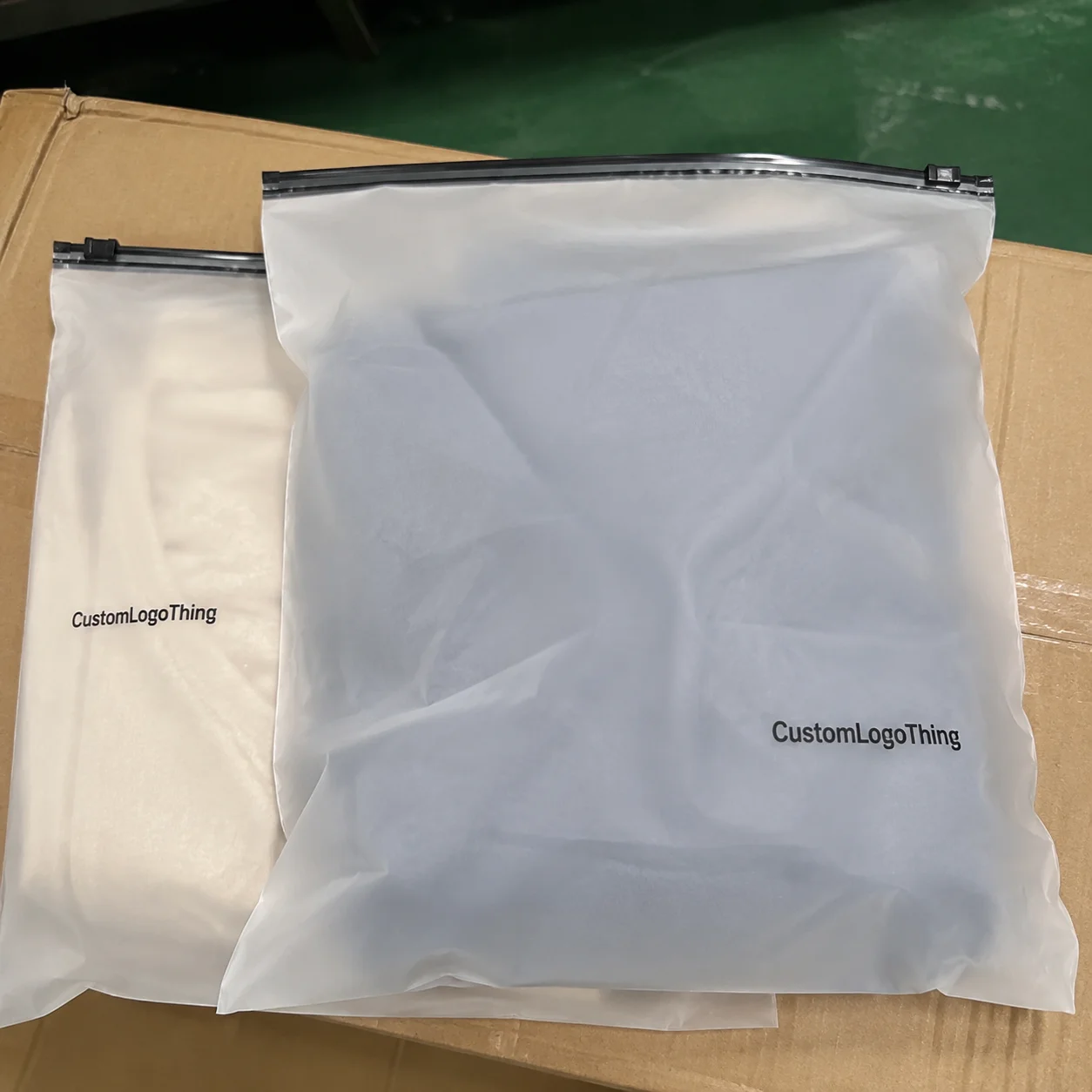
Custom Plastic Garment Bags unit cost for coffee is an odd-looking search phrase, but the buying problem behind it is familiar. Someone is trying to price a custom plastic bag for apparel, branded merchandise, event kits, or retail packaging tied to a coffee label, and they need a realistic unit cost before they approve artwork or issue a purchase order. The short answer is that the price depends less on the slogan printed on the bag and more on the actual structure: size, film thickness, closure style, print coverage, order quantity, packing method, and freight terms.
For simple Printed Poly Bags, unit cost can start in the rough range of $0.08 to $0.16 at higher quantities. A heavier garment bag with a zipper, hang hole, venting, and two-sided print can move into the $0.28 to $0.65 range, sometimes higher if the order is small or the structure is specialized. Those numbers are useful as a starting point, not as a promise. Resin markets move, labor and setup time vary, and the same-looking bag can price very differently once the spec gets fully defined.
Why A Clean Spec Sheet Changes Garment Bag Pricing
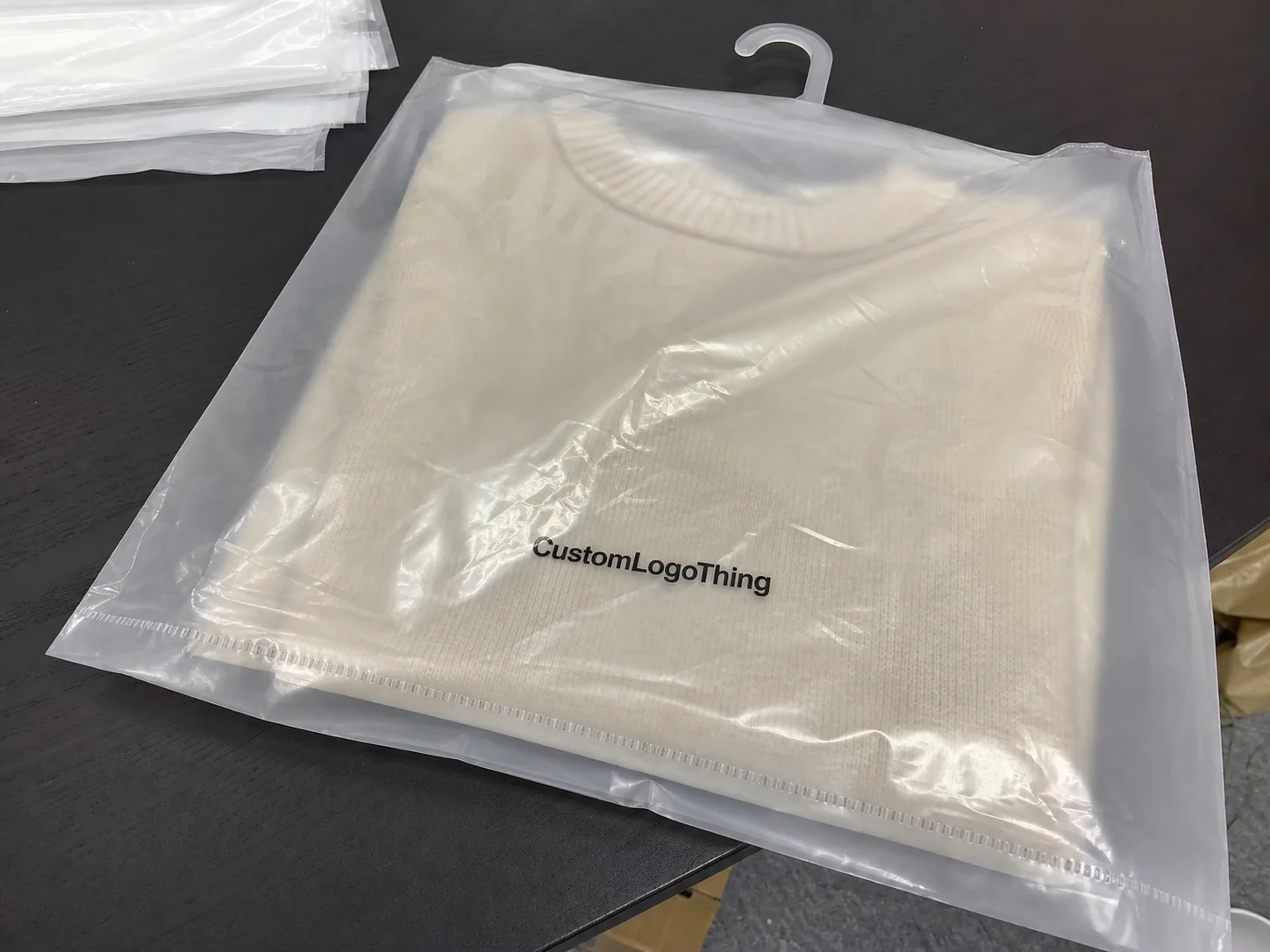
A clean spec sheet removes guesswork. That sounds basic, but it is usually the difference between a quote that holds and one that changes after the first proof. If a buyer requests “a clear custom garment bag with a logo,” the supplier still has to decide what bag size, what film gauge, whether the bag is flat or gusseted, whether it has a flap or zipper, where the hang hole sits, how the artwork should be positioned, and how the cartons should be packed. Every missing detail becomes an assumption, and assumptions are where unit cost starts to drift.
The practical issue is not just price. It is comparability. A 12 by 18 inch bag in 1.5 mil LDPE is not the same job as a 14 by 22 inch bag in 2.0 mil film with a slider zipper and full-width print. Material usage changes, conversion speed changes, and quality control becomes more involved. Buyers sometimes chase a low number before they confirm the working spec, then find that the “cheaper” quote was really for a lighter or simpler build.
A better first request includes the product use. If the bag must protect folded apparel, hold a coffee-branded retail item, or present merch neatly at the point of sale, the bag should be priced for handling, not only appearance. The structure needs to match the product inside it. A soft promotional insert and a thick folded sweater should not be quoted as if they belong in the same bag.
Practical rule: If the bag has to protect, display, or group a product, the spec should describe fit, handling, and closure together. Branding comes after that, not before it.
For Custom Plastic Garment Bags Unit cost for coffee, a complete spec sheet usually shortens the quoting cycle and reduces revision rounds. It also helps keep reorders consistent, which matters more than people expect once a packaging program is in circulation.
Materials, Closures, and Print Options That Change Performance
Most custom garment bags are made from LDPE, LLDPE, HDPE, PP, or blended film. Each material has a different feel and a different place in production. LDPE is soft and flexible, which makes it common for garment packaging. LLDPE adds puncture resistance and a little more stretch, which helps when the bag will be handled repeatedly or when product edges can create stress points. HDPE is crisper and can be useful in thinner structures, though it has a different hand and wrinkle pattern. PP is clearer and stiffer, which can improve shelf presentation if the bag is designed to hold its shape.
Film thickness, usually called gauge or mil, has a direct effect on both cost and performance. A 1.0 mil bag can work for light folded items or short-term dust protection. A 1.5 to 2.0 mil bag is a more common middle ground for apparel and branded merchandise. Heavier 2.5 to 3.0 mil structures make sense when the bag will be reused, handled often, or fitted with a slider zipper and retail display features. Using too little film saves money on paper, but it can create seam splits, weak seals, and a cheap-looking product at the shelf or in fulfillment.
Closure style matters almost as much as film choice. A flat open-end bag is the simplest build. An adhesive flap adds convenience and a basic tamper-resistant seal. A press-to-close zipper improves reuse and is often the better fit for kits or merchandise. A slider zipper costs more, but the extra hardware can be justified if the bag will be opened and closed many times. Hang holes, euro slots, reinforced headers, bottom gussets, and vent holes all add setup steps or conversion complexity.
Printing is another cost driver. One-color flexographic print on one side is generally the most controlled option. Two-sided printing, large solid areas, metallic inks, opaque white underlays, or very tight registration raise both setup and inspection requirements. A white print on a clear bag is not automatically expensive, but it does need good ink coverage and the right film surface to look clean. Where the print is simple, unit cost stays lower. Where the art has to sit precisely near a zipper track or hang slot, the price usually rises.
Buyers comparing Plastic Garment Bags with other packaging formats should also think about function. A bag protects, groups, and presents. A box stacks, ships, and cushions. A bag might be the right choice for display and dust control, while a folding carton may be better for shipping and retail storytelling. Most product programs use a mix of formats, and the right balance depends on the retail route, warehouse handling, and how much of the customer experience the packaging is supposed to carry.
Dimensions, Gauge, and Finish Specs Buyers Should Lock In
Finished dimensions should be defined before quoting. Finished width is the usable body width after side seals or conversion. Finished length is the usable body length after any flap, header, or zipper area is accounted for. If the product is thick or irregular, the allowance should be stated explicitly instead of guessed. A loose estimate can lead to wasted film and oversized cartons; a tight estimate can create pack-out problems and avoidable rejects.
For apparel and folded merchandise, a common allowance is 0.5 to 1.0 inch on width and 1.0 to 2.0 inches on length, depending on thickness and how neatly the item is folded. If a gusset is needed, specify whether it is a side gusset or bottom gusset and state the depth clearly. A 2 inch bottom gusset changes how the product sits in the bag and how cartons fill, so it is not a minor detail.
Gauge should be stated in mils, microns, or both. A 1.5 mil film is about 38 microns, and a 2.0 mil film is about 51 microns. Buyers who need repeatable reorders should also understand tolerance. Plastic film has normal production variation, and that variation matters if the bag has to fit tightly around an item or line up with a retail fixture. If consistency is critical, the acceptable range should be written into the spec before approval.
Artwork placement needs the same level of precision. Confirm the print area, color count, orientation, and the distance from edges, zippers, and hang holes. A centered 4 inch logo is easy to produce. A logo that must sit below a euro slot and clear a zipper track needs a real proof with measurements, not a verbal description. If the art file is not print-ready, expect more time for cleanup and proofing.
- Finished width: the usable bag body width after sealing or conversion.
- Finished length: the usable length from bottom seal to opening, flap fold, or zipper line.
- Gauge: commonly 1.0 mil, 1.5 mil, 2.0 mil, or 3.0 mil depending on the application.
- Closure: open end, adhesive flap, press zipper, slider zipper, or header style.
- Print: one or two sides, color count, logo size, print area, and registration tolerance.
For repeat orders, the final spec should be stored as a reference document, not reconstructed from memory. Reorders are much cleaner when the buyer can point to the approved dimensions, artwork revision, film callout, and carton pack count without digging through old email threads.
Custom Plastic Garment Bags Unit Cost for Coffee
The pricing stack is straightforward once the variables are visible. Film is the base material. Printing adds plates, ink, setup, and press time. Custom closures can add tooling or slow down conversion. Packing, cartons, palletizing, and freight all contribute to landed cost. For Custom Plastic Garment Bags unit cost for coffee, the phrase may be unusual, but the buying math is not: the clearer the spec, the less padding a supplier needs to cover uncertainty.
MOQ has a strong effect because setup costs get distributed across the run. If plates and press setup together run $250 to $600, that cost is heavy on a 1,000-piece order and much lighter on a 10,000-piece order. It is common to see a quote around $0.42 at 2,500 pieces, $0.28 at 5,000 pieces, and $0.19 at 10,000 pieces for the same general bag format. Those figures are not fixed pricing, but they show how quantity changes the math.
Unit cost should not be the only number under review. A higher MOQ can improve the per-bag price and still be the wrong choice if it creates storage pressure, ties up cash, or leaves obsolete branding sitting in inventory. Buyers sometimes focus on the cheapest line item and overlook the real cost of holding the extra stock for months. A more grounded comparison looks at total spend, storage space, and reorder timing together.
| Typical Option | Common Spec Range | Best Fit | Estimated Unit Cost Range |
|---|---|---|---|
| Basic open-end printed poly bag | 1.0-1.5 mil LDPE, one-color logo | Light protection, folded goods, simple retail packaging | $0.08-$0.20 at moderate to high quantities |
| Adhesive flap garment bag | 1.5-2.0 mil LDPE or PP, one or two colors | Dust protection, branded merchandise, cleaner pack-out | $0.14-$0.32 depending on size and MOQ |
| Press zipper bag | 2.0-3.0 mil film, reinforced closure area | Reusable packaging, samples, promotional kits | $0.24-$0.55 depending on print and structure |
| Slider zipper or specialty header bag | 2.5-3.0 mil film, custom punch or hang feature | Premium retail handling, repeated opening, display use | $0.38-$0.85 or higher for complex builds |
The fair way to compare quotes is to make the specs match. A 12 by 18 inch 1.5 mil bag with one-side black print should not be compared against a 14 by 20 inch 2.0 mil bag with two-sided white and black print. Ask for the same details from every supplier: size, gauge, film type, print method, MOQ, plate charge, sample cost, carton pack, and shipping terms. Only then does the unit cost mean something useful.
If the bag is part of a larger packaging program, the print style and sizing should stay consistent with any labels, sleeves, or cartons used alongside it. Mixed packaging systems often fail quietly, not because the individual components are bad, but because they were priced and approved in isolation.
Production Process and Lead Time From File Check to Shipment
A custom run usually starts with a spec review. The supplier checks dimensions, closure, film gauge, print colors, artwork format, and quantity. If the file is usable, the next step is a proof. If the file is not usable, that is usually where the schedule slows down. Vector artwork, outlined fonts, clear color references, and real placement dimensions can save several business days before production ever begins.
After proof approval, some jobs go straight into production. Others need a pre-production sample, especially if the bag has a new closure, a nonstandard punch, or artwork that sits close to an edge or zipper. Sampling can add about 5 to 10 business days depending on tooling and material availability. Actual production for many custom printed plastic bag orders often falls around 12 to 20 business days after approval, though large quantities, specialty closures, or a crowded schedule can push that longer.
The workflow is usually the same even when the details change: file check, proof, sample if required, material allocation, print setup, film printing, conversion, in-line inspection, counting, carton packing, final review, and shipment. Each step exists for a reason. Skipping proof discipline may save a day up front, but it can cost a week or two if the logo lands too close to a zipper or the hang slot cuts into the art.
There are a few ways to keep the schedule under control. Name one decision-maker for artwork approval. Send print-ready files in AI, EPS, or PDF format. Confirm the ship-to ZIP code during quoting, not after approval. If the bag supports a launch date, share the in-hand date rather than only the desired ship date. Production planning is easier when the deadline is real and the artwork is ready.
For cartons that will travel through multiple distribution points, transport standards can matter. The bag itself may not be the shipping container, but it still needs to survive packing, vibration, and compression without scuffing the product or collapsing the presentation. That is why a packaging program should be thought through as a system, not as a single line item.
Quality Checks That Keep Reorders Consistent
Quality control begins before the first printed bag is made. Incoming film should be checked for thickness, clarity, contamination, and roll condition. During printing, the operator should monitor color, registration, and ink coverage against the approved proof. During conversion, seal strength, zipper function, vent placement, and cut length need regular checks. These are not decorative checks; they are the points where defects are usually caught before they become cartons of waste.
Count verification matters more than many buyers expect. If cartons are supposed to hold 500 pieces and the count drifts, receiving teams lose confidence quickly. Carton labels should show the item name, quantity, PO reference if needed, and handling instructions. Final carton inspection should look at corner damage, moisture risk, label accuracy, and pallet stability. A bag that arrives in good shape but is packed badly still creates work on the receiving dock.
Stable reorders depend on stable records. A bargain quote is not enough if the bag changes slightly every time it is reordered. Small shifts in length, seal position, or print placement can create real problems: garments fit differently, packers slow down, hooks do not line up, or a new run looks off next to older stock. The visible price per bag matters, but so does the time spent correcting avoidable mistakes.
A simple approval record usually solves most of that risk. Keep the final proof, material callout, gauge, finished size, closure detail, carton pack, and photos of the approved sample in one place. If a future purchase order is placed by a different team member, that record keeps the program from being rebuilt from memory and guesswork.
Environmental claims should be handled carefully. Recycled content, recyclability, and disposal language depend on the actual resin, the printing inks, labels, and the waste system where the package ends up. For broad reference on materials and waste hierarchy, the EPA Sustainable Materials Management hierarchy is a practical starting point. Any claim on the package should match the material, not the marketing wish list.
What To Send For A Production-Ready Quote
A production-ready quote request does not need to be elaborate. It needs to be complete. Send the bag style, final dimensions, film gauge, quantity, print details, shipping destination, and target delivery date in one message. If the job is new, include a product photo or a short note about what will go inside the bag so the supplier can size the structure realistically.
Use precise numbers. “Medium size” is not enough. “Finished size 12 inches wide by 18 inches long, 1.5 mil LDPE, adhesive flap, one-color black logo centered on front, 5,000 and 10,000 piece quote, ship to Dallas ZIP code 75201” is the kind of request that gets a useful number back. If the product is bulky, include the folded product dimensions and thickness. If the bag hangs in retail, show the punch location or hook requirement.
Ask for a proof on every printed order. Ask for a physical sample when the structure is new, the artwork is tight, the closure is unfamiliar, or the unit cost is high enough that a mistake would be expensive. A sample is not always needed for a routine reorder with the same artwork and same spec, but on a first run it is cheap insurance.
- Bag style: open end, flap, zipper, slider zipper, header, or gusseted format.
- Final dimensions: finished width, finished length, gusset, and fit allowance.
- Material: LDPE, LLDPE, HDPE, PP, recycled-content option, or supplier recommendation.
- Gauge: target mil or micron thickness, plus tolerance if required.
- Print details: logo file, colors, printed sides, print area, and any opacity needs.
- Quantity: target order plus one or two MOQ price breaks.
- Shipping: destination, delivery deadline, carton or pallet requirements.
The cleanest buying process is direct: define the use, lock the spec, review the proof, and compare quotes on the same basis. If those details arrive together, Custom Plastic Garment Bags unit cost for coffee can usually be quoted accurately the first time, with fewer revisions and fewer surprises between approval and shipment.
FAQ
What drives custom plastic garment bags unit cost for coffee buyers the most?
Size, film gauge, print coverage, and closure style usually move the price more than anything else. MOQ matters too, because setup costs get spread across the run. A cleaner spec almost always produces a more dependable unit cost.
How can I lower the unit price without hurting performance?
Keep the dimensions tight to the product, avoid unnecessary print coverage, and choose the lightest gauge that still packs and handles well. If cost needs to come down, change one variable at a time so the effect is visible.
What minimum order quantity should I expect for a custom run?
MOQ depends on print complexity, tooling, and whether the bag is a standard format or a more specialized build. Higher quantities usually improve pricing, but the break-even point has to account for storage, handling, and future artwork changes.
How long does production usually take after approval?
Many custom printed plastic bag orders take about 12 to 20 business days after artwork and sample approval. Sampling, specialty closures, material shortages, or a busy production queue can extend that timeline.
What should I send to get an accurate quote the first time?
Send final dimensions, material preference, gauge, quantity, print details, shipping destination, and target delivery date. If the artwork is still in progress, say so clearly and note the revision stage.