Custom Custom Plastic Garment Bags for Food Brands: Get Quotes
Custom Custom Plastic Garment Bags for food brands may sound like a narrow packaging category, but the buying problem is familiar: the bag has to protect the packed item, keep dust and moisture away from the presentation surface, carry the brand cleanly, and move through production without creating extra labor. For many food companies, these bags are used around folded merchandise, promotional items, display kits, seasonal bundles, retail accessories, or secondary packs that travel alongside edible products. They are not always direct food-contact packaging, and that distinction matters before any quote is accepted.
A good bag spec is not only about a logo and a size. It is about film behavior, closure placement, print durability, filling speed, shelf appearance, and whether the finished pack still looks controlled after handling. The details look small on a quote sheet. On a packing line, in a cold room, or inside a retailer receiving window, they become very real.
What Custom Plastic Garment Bags Actually Do for Food Brands
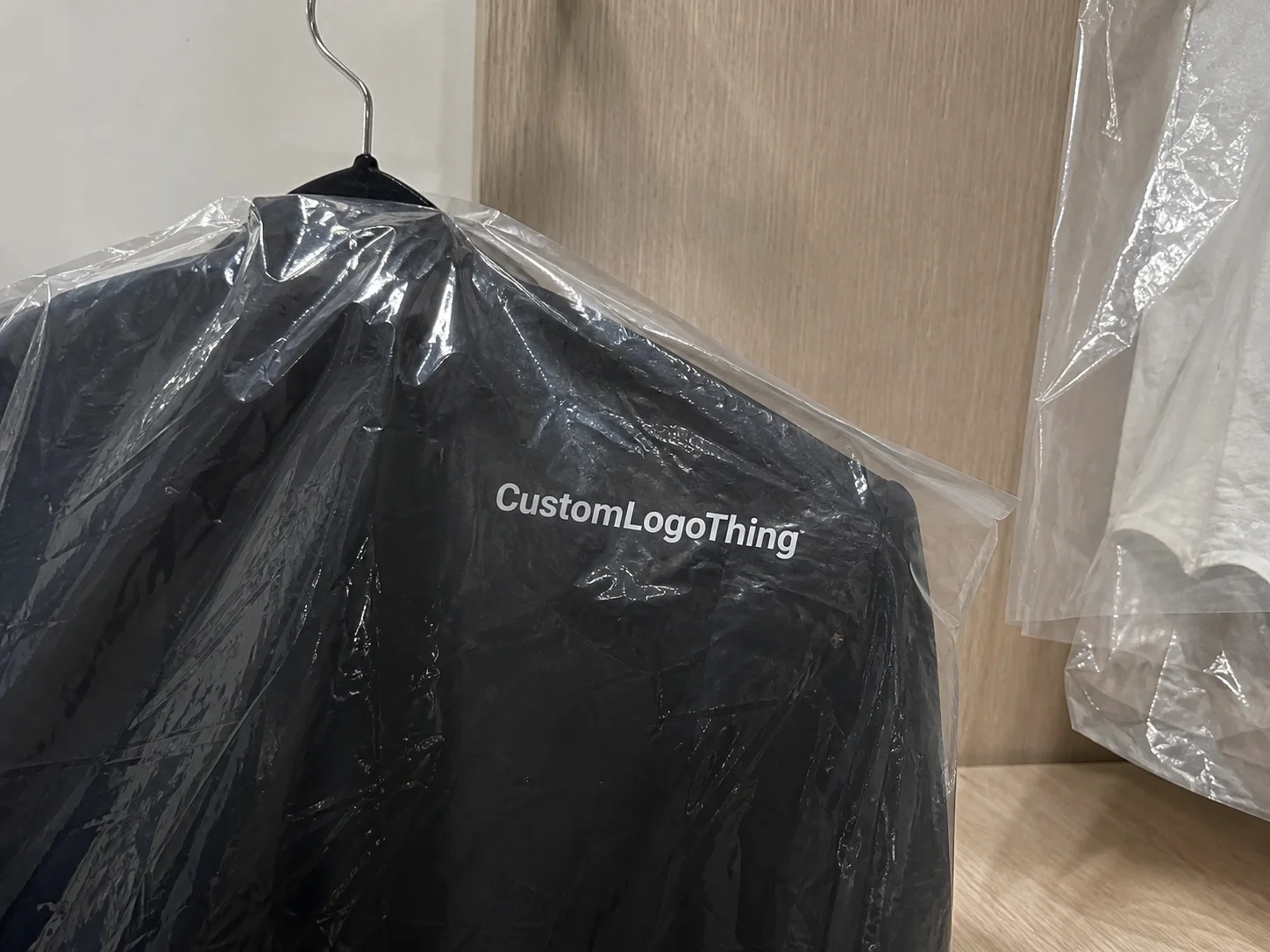
Most projects start with a simple request: “We need a clear poly bag with our brand on it.” That is reasonable, but it is not enough to quote accurately. A garment-style plastic bag can be used as a sleeve, a protective outer wrap, a hanging display bag, a resealable bundle bag, or a secondary retail pack. Each use changes the dimensions, closure, film thickness, and print layout.
For food brands, the bag is often part of a broader product packaging system. It may hold a folded apron in a gift box, cover a reusable tote in a promotional kit, protect a branded uniform component, or wrap a non-food accessory sold with a food item. In those applications, the bag is not expected to preserve food freshness like a primary pouch or barrier film. Its job is cleaner and more physical: keep the product neat, visible, scuff-free, and ready to present.
Fit is the first visible quality cue. If the bag is too loose, the product shifts and the pack starts to look unfinished. If it is too tight, the film pulls across corners, wrinkles along the seal, or creates stress marks that make even a strong print look cheap. A few millimeters can change how the pack feels in the hand.
The compliance question should be answered early. If the plastic bag may touch food directly, ask for appropriate food-contact documentation for the intended market, including material declarations and any required regulatory support. If the bag is only secondary packaging, the paperwork may be simpler, but it still should be clear. “Food brand” does not automatically mean “food-contact safe,” and a supplier should not treat those as the same thing.
These bags also need to work with other packaging components. If the finished pack sits inside Custom Packaging Products such as cartons, sleeves, inserts, or display trays, the bag dimensions should be checked against that full assembly. A bag that looks fine alone may bunch inside a carton, cover a printed insert, or add too much thickness to a kit. The best quote requests describe the full packing method, not just the bag.
How Construction and Sealing Choices Change Performance
The basic construction includes film type, film gauge, finished size, opening direction, closure style, perforation or venting, print area, and packing format. None of those choices is decorative only. They affect how the bag opens, fills, seals, stacks, hangs, ships, and looks under light.
Closure style deserves more attention than it usually gets. A flap with an adhesive strip is common because it gives a clean retail look and can be packed quickly once operators know the motion. The adhesive placement needs to be checked against the product height, the fold line, and the amount of headspace needed for closing. If the strip sits too close to the product, operators may fight the bag. If it sits too high, the finished pack may look oversized.
Permanent adhesive, resealable adhesive, zipper closures, heat seals, bottom seals, side welds, and header areas all have different cost and handling profiles. A resealable closure may be useful for customer access, but it can add material and change the pack thickness. A simple heat seal can look tidy and reduce tampering, but it requires the right sealing equipment and a film that behaves consistently under heat. A hang hole or header can make sense for retail display, provided the top area is strong enough and the hole position matches the display hardware.
Venting is another small feature with outsized consequences. If air is trapped inside a snug bag, the pack may puff, stack poorly, or resist insertion into a carton. Small vents or perforations can solve that, but they may not be appropriate where dust protection or moisture resistance is the primary goal. The right answer depends on the environment and the packing motion.
Print coverage changes both appearance and performance. A clear bag with a small logo can feel bright, clean, and product-forward. Heavier ink coverage gives stronger branded packaging presence, but it can obscure the contents, scuff more visibly, or require more careful handling after printing. White ink, spot colors, varnish, and matte effects can improve the finished look, though they also add setup complexity and can move the quote.
A useful sample is one that has been handled. Fold it, insert the product, remove it, reseal it if applicable, stack it, and rub the printed area lightly against a carton or another bag. A perfect desk sample is encouraging; a sample that survives ordinary handling is more informative.
Material, Thickness, and Finish Choices
Film thickness is usually the first specification buyers want to settle. Thinner film reduces cost, packs down efficiently, and works well for light products that do not press hard against corners or seams. Thicker film improves stiffness, tear resistance, and perceived quality, but it can make the bag less forgiving if the size is too tight. More thickness is not automatically better. It has to match the packed weight, product edges, closure style, and filling process.
Common flexible packaging films used for this type of application include PE and PP variants, with the exact choice depending on clarity, stiffness, sealing method, and supplier capability. LDPE is flexible and familiar for many soft poly bag uses. PP can offer a crisper feel and higher clarity in certain constructions, though it may behave differently at folds and seals. Recycled-content films may be available for some secondary packaging applications, but availability, clarity, strength, and regulatory suitability need to be confirmed before they are promised on a retail claim.
Clarity matters because the bag often frames the product. High-clarity film is usually the safer choice when color, texture, or folded presentation must be visible. Frosted or semi-opaque film can create a more private, premium look, but it reduces product visibility and may soften printed color. Gloss finishes read brighter under store lighting. Matte finishes hide fingerprints and glare better, though they can make dense colors feel less sharp.
Cold storage and humid distribution add another layer. A film that performs well in a dry office may stiffen, crack, haze, or show weak seals under colder handling. If the packed item will be stored near refrigerated or frozen products, ask about cold-crack resistance, seal integrity, and whether the film remains flexible at the expected temperature range. Moisture resistance should be discussed honestly too. A poly bag can help keep surface moisture and dust off the product, but it is not automatically a high-barrier food package.
Size should be based on the packed product, not the flat product. Measure width, height, depth, and the way the item expands after folding or bundling. Add room for insertion, closure headspace, and any top header or hang hole. If the product has firm corners, raised seams, rigid tags, or bulky folds, include those in the measurement. A bag that is only sized from a flat dieline often ends up tight in the wrong places.
Quality checks should be simple and repeatable: confirm finished width and length against tolerance, check seal strength, inspect print registration, rub the printed area, test closure alignment, and pack several real units rather than one carefully chosen sample. If operators need to slow down to make the bag look right, that belongs in the buying decision.
Cost, Pricing, and MOQ
Pricing for custom Custom Plastic Garment Bags for food brands is shaped by dimensions, film gauge, material type, print colors, print coverage, closure style, finish, tolerance requirements, packing format, and quantity. A basic clear bag with one-color print and a standard adhesive flap will not price like a custom-size frosted bag with multiple inks, venting, a reinforced header, and tight visual requirements.
MOQ is not just a supplier preference. Setup time, plate or cylinder costs where applicable, artwork proofing, machine setup, spoilage allowance, packing, and administration all have to be absorbed by the run. Smaller orders carry more overhead per bag. Larger orders usually lower unit cost, but they also require better inventory planning and more confidence in the spec.
Directional pricing can help set expectations before formal quoting:
| Run size | Typical unit price | Best fit | Notes |
|---|---|---|---|
| 2,000 to 5,000 bags | $0.18-$0.35 | Launches, tests, seasonal runs | Setup, proofing, and sampling have a larger effect on unit cost |
| 5,000 to 15,000 bags | $0.11-$0.24 | Retail replenishment and moderate programs | Often a practical range for branded secondary packaging |
| 15,000+ bags | $0.07-$0.16 | Ongoing production and multi-SKU programs | Better unit economics, with more pressure on forecasting and storage |
Those ranges are not universal. Heavy print coverage, specialty film, zipper closures, unusual sizes, narrow tolerances, rush timing, and freight can all move the number. A low unit price may also hide a thinner film, weaker closure, reduced print coverage, or less favorable packing method. The comparison only means something when every supplier is quoting the same construction.
Ask for setup charges, sample charges, artwork charges, freight assumptions, production lead time, overrun and underrun policy, packing quantity per carton, and whether the quote includes any compliance documentation. If the bags ship with custom printed boxes or other components, compare total landed cost rather than bag cost alone. Freight and storage can erase savings from a slightly lower unit price.
For broader material and end-of-life research, packaging.org and EPA recycling guidance are useful reference points. They will not replace supplier documentation, but they help buyers ask better questions about recyclability claims, labeling, and practical recovery limits.
Process and Lead Time
A clear quoting process starts with a clean spec. Provide packed product dimensions, quantity, target film thickness, material preference if known, print artwork, number of colors, finish, closure style, packing method, delivery deadline, and whether the bag is direct contact or secondary packaging. If the product will be packed by hand, say so. If it will run through equipment, include the machine requirements and tolerance limits.
After the initial quote, artwork is checked for print method, color expectations, safe areas, and placement. Proofs are reviewed. Samples may be made, especially for new sizes, new closures, or high-visibility retail packs. Once the proof and sample are approved, production begins, followed by quality checks, packing, and shipment.
The common delays are predictable. Rough measurements create size revisions. Low-resolution artwork slows proofing. Unclear finish instructions lead to sample disputes. Late changes after approval can reset the schedule. A buyer who freezes the spec early usually gets a cleaner timeline and a more reliable quote.
For a new custom order, a reasonable planning window is often 12-20 business days after proof approval, with more time needed for sampling, specialty closures, complex printing, or freight constraints. Repeat orders with existing tooling and approved artwork can move faster. Rush jobs are possible in some cases, but they reduce the margin for sampling and correction, which is risky if the pack will be customer-facing.
Quality control should be defined before production, not argued over afterward. Basic checks include bag dimensions, film gauge, seal strength, adhesive placement, print registration, color consistency, closure function, carton count, and a pack test using the actual product. If the bag is part of a kit or display, test the full assembly. A neat bag that crushes inside the outer carton still fails the job.
If transit performance is a concern, ask whether the finished assembly should be reviewed against a ship-test approach such as ISTA protocols. The bag itself may not need a formal test, but the combined pack might, especially for retail kits, ecommerce bundles, or launch sets with multiple components.
Project examples can also help buyers understand the level of detail needed before quoting. Reviewing Case Studies is useful when they show dimensions, materials, finishing decisions, and packing requirements rather than only polished renderings. The rendering shows the intention; the spec shows whether production can actually repeat it.
Common Mistakes That Raise Cost
The most common mistake is measuring the item instead of the packed product. A folded textile, accessory, or promotional item often expands once inserted. Closures need room. Operators need room to slide the product in without forcing corners. A bag can be mathematically close and still be wrong for production.
Another frequent problem is approving artwork only on screen. Film changes how color behaves. Fine type can fill in. Thin lines may disappear. Dark ink can hide the product more than expected. Transparent areas can shift the balance of the design once the real item is inside the bag. Physical samples or close production references are worth the time when the pack will sit on shelf or appear in a customer order.
Cheap material choices can also backfire. Saving a few cents per bag does not help if the film tears during packing, the closure misses its mark, or the finished unit looks tired after shipment. Labor waste and damaged presentation are real costs, even when they do not appear on the packaging quote.
Compliance assumptions are another risky shortcut. If direct food contact is possible, the buyer needs documentation that matches the material, use conditions, and market. If the bag is secondary packaging, the requirements may be lighter, but the intended use should still be documented. A brand should not discover after production that the bag was quoted for a different application than the one operations intends to use.
Finally, compare quotes carefully. One supplier may quote a 2 mil film while another quotes 1.5 mil. One may include a resealable adhesive strip; another may include a permanent flap seal. One may include setup and freight; another may leave them out. Put the specifications side by side before deciding that one quote is cheaper.
What to Prepare Before Requesting Quotes
Before requesting quotes, build a short spec sheet. Include the packed product dimensions, desired bag style, target material, film thickness or performance requirement, quantity, print colors, print coverage, finish, closure type, venting needs, packing method, delivery location, and deadline. State whether the bag is direct food-contact packaging or secondary packaging connected to a food brand. That one line can change the documentation required.
Send the same information to every supplier. If each supplier receives a different description, the quotes will be difficult to compare and the lowest number may simply reflect the thinnest assumption. Ask for tolerances, sample timing, production timing, overrun policy, carton packing, and any setup charges in writing.
Request a sample when fit or presentation matters. Use the actual product, not a substitute with similar dimensions. Check insertion speed, closure alignment, print visibility, clarity, scuffing, stacking, and how the bag behaves inside the outer pack. A sample does not remove every risk, but it catches the mistakes that are hardest to fix after production.
The strongest custom bag orders are bought by specification, not by instinct. For food brands coordinating bags with labels, cartons, sleeves, inserts, or retail kits, that discipline keeps the finished package branding consistent and keeps operations from inheriting a design problem. The right bag should look clean, pack efficiently, and hold up in the conditions where it will actually be used.
What makes custom plastic garment bags for food brands different from standard poly bags?
They are usually built for protection and presentation together. Fit, closure placement, clarity, finish, and print durability matter because the bag may be visible in a retail pack, promotional kit, or customer order. If the bag can touch food directly, it also needs the correct food-contact documentation.
What thickness should I choose for garment-style plastic bags used by food brands?
The right thickness depends on product weight, corners, handling, storage, and the desired feel. Lightweight secondary packs may work with thinner film, while heavier or more visible retail packs often need additional gauge for tear resistance and structure. Test the packed product before approving a full run.
How much do custom custom plastic garment bags for food brands usually cost?
Many projects fall somewhere around $0.07-$0.35 per bag, depending on quantity, size, film, print, closure, and finish. Small runs cost more per unit because setup is spread across fewer pieces. The only useful comparison is a spec-for-spec quote with setup, sampling, freight, and lead time shown clearly.
How long does a custom order usually take?
A new custom order often needs 12-20 business days after proof approval, though sampling, specialty materials, complex print, or freight can extend that timeline. Repeat orders with approved artwork and existing specifications may move faster. Late artwork or size changes are the most common causes of delay.
What should I send to suppliers before requesting quotes?
Send packed product dimensions, quantity, film preference or thickness target, artwork, print colors, finish, closure style, packing method, delivery deadline, and whether the bag is direct contact or secondary packaging. Give every supplier the same information so the quotes can be compared fairly.
For custom Custom Plastic Garment Bags for food brands, the best order is the one measured against the real product, checked against the full packaging system, and approved with enough detail that production can repeat it without guesswork.


