Custom Custom Plastic Garment Bags for Cosmetics Brands
Cosmetics brands tend to notice garment packaging only when it fails. A split seam, a hanger hole that tears after a few uses, or a bag that looks clear in the sample but hazy in production can quietly ruin an otherwise polished program. That is why custom Custom Plastic Garment Bags for cosmetics brands should be treated as a working packaging component, not a decorative add-on.
These bags sit in a practical middle ground between retail presentation and day-to-day protection. They keep apparel clean in storage, make uniforms and robes easier to handle during launches or events, and preserve a tidy look on racks and in back-of-house inventory. For beauty labels that already pay close attention to branded packaging, the bag has to fit the same visual language without slowing down packing or inflating unit cost.
Plastic still gets chosen often because it is visible, moisture resistant, and economical at volume. Clear and frosted films allow the garment to stay visible, which matters in showroom environments and during merchandising. The real decision is not whether plastic looks good on a mockup. It is whether the spec survives handling, folds well, stacks well, and stays consistent from the first sample through the last carton.
That distinction matters because buyers often want one bag that can handle display, storage, and shipping. Those are not the same job. A bag built for a retail rack may feel too light for fulfillment. A heavy shipping bag may look bulky and less refined on the floor. The better approach is to choose the film, closure, and dimensions around the exact use case, then test that choice against the real garment.
Why custom custom plastic garment bags for cosmetics brands matter at retail
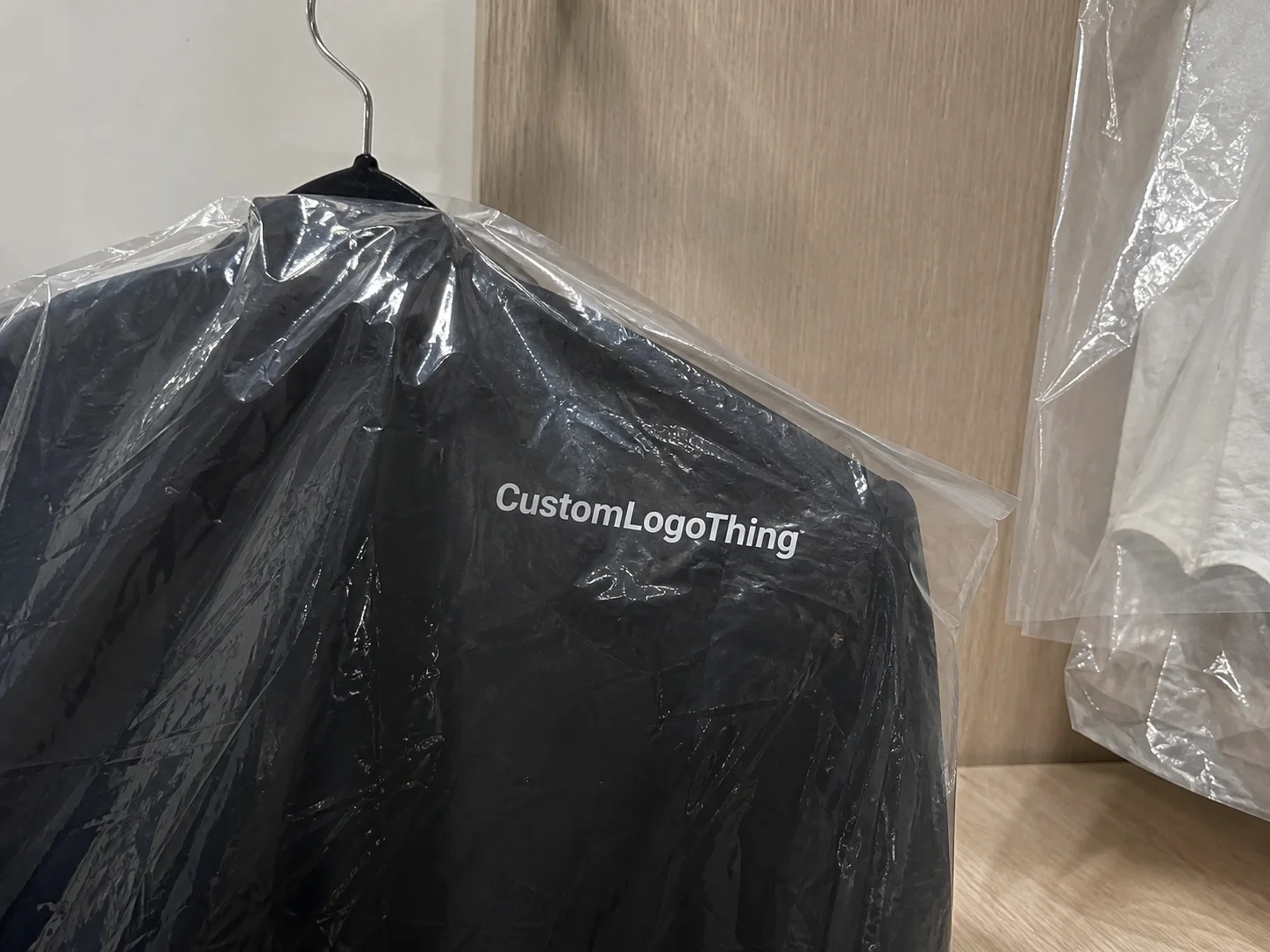
A garment bag does not need to be flashy. It does need to fit the product, protect it through normal handling, and present cleanly enough that it does not distract from the brand. When the bag is wrong, the failure is easy to see. Wrinkles, split seams, misaligned prints, and hanger slots that tear after a few uses all make the packaging feel cheaper than it should.
Cosmetics brands use these bags for more than apparel alone. They show up around spa robes, staff uniforms, event wardrobe, influencer kits, launch-day support pieces, and back-of-house storage. In those settings, custom Custom Plastic Garment Bags for cosmetics brands need to do two things at once: protect the item and hold a premium visual line. That is harder than it sounds, because the packaging has to stay functional while still matching the rest of the product packaging program.
Plastic usually wins these comparisons for a few practical reasons. It gives better visibility than most paper sleeves, it handles humidity and light handling better than nonwoven options, and it is usually more cost-effective at volume than layered alternatives. The tradeoff is that the bag has to be specified carefully. A vague brief can create a bag that looks fine in renderings and feels wrong on the packing table.
If the bag looks good but scuffs, splits, or hangs crooked after a few packing moves, it is not premium. It is waste.
For brands balancing shelf presentation, fulfillment speed, and budget, the garment bag is often the part of the packaging system that gets under-specified. That is exactly where problems begin. A good bag does not need to dominate the experience. It just needs to disappear into the process and keep the garment looking finished.
How the bag construction actually works
A garment bag is really a stack of small decisions. Film type, thickness, closure style, hanger opening, side gussets, bottom seal, and print method all change how the bag behaves. A single weak point can make the whole piece feel off, even when the artwork itself is clean.
Film type is usually the first decision. LDPE is flexible and forgiving, which helps with folded garments and softer handling. CPP is clearer and stiffer, which can look cleaner in retail settings. Blends sit somewhere in the middle, especially when the buyer wants a practical balance of cost, clarity, and feel. There is no universal best option; there is only a better fit for the application.
Thickness is where many buyers underestimate the impact of the spec. Thin film can be fine for display, but heavier garments, metal hardware, or repeated handling usually call for more gauge. Too thin and the seam, hanger hole, or closure area becomes the first failure point. Too thick and the bag becomes harder to fold, stack, and pack, which affects labor. That labor cost is real even if it does not show up in the quoted unit price.
Closure style changes the whole workflow. Adhesive strips, zip closures, flap folds, and open-top designs with hanger slots all behave differently on the line and in transit. A closure that is fast to use but weak under handling can lead to returns or rework. For custom Custom Plastic Garment Bags for cosmetics brands, the right choice depends on whether the bag is intended for storage, display, reuse, or one-time shipping.
Side gussets help when the garment has bulk, layered fabric, or wide shoulders. They add capacity without forcing the bag to balloon unnaturally. Bottom seal design matters as well, especially when the bag needs to carry weight without stressing the corners. For larger orders, ask for simple film data, seal strength information, and transit testing aligned with a procedure from the International Safe Transit Association. If the packaging program also includes cartons or inserts, the EPA's packaging and waste guidance is useful context.
The visual side matters too. Clear or frosted film can look premium with restrained one-color branding. Heavy graphics can work, but they move the bag toward a more promotional look. That may be right for some campaigns. It just needs to be intentional, because the wrong artwork treatment can make a neat package feel busy.
Spec choices that decide quality, not just appearance
If the goal is to make custom Custom Plastic Garment Bags for cosmetics brands work at scale, the spec has to control behavior, not only appearance. Thickness, clarity, finish, print method, and whether the bag is meant to be reusable or single-use all affect how the order performs once it reaches the packing table.
Clarity versus strength is the core tradeoff. Ultra-clear film looks sharp, especially in retail packaging, but it can be more vulnerable to puncture if the garment includes studs, snaps, hooks, or a rigid hanger. A slightly thicker or less glossy film may look less dramatic in a render, yet survive handling much better in real use. Packaging design should support the workflow, not just the mockup.
Printing is another cost lever. A one-color logo on a clear bag is usually the most economical branded option and still looks polished. Two-color printing, full coverage graphics, warning text, and size labels all add setup time and raise cost. They also extend the approval cycle because the printer has more to align and inspect. If the brand already uses Custom Printed Boxes or other highly branded packaging, it is easy to overextend that look to the garment bag. Sometimes that works. Sometimes it just adds noise.
Size gets missed more often than it should. Measure the garment at its widest folded point, then add room for the hanger, shoulder bulk, and closure overlap. A jacket needs more clearance than a shirt. A robe needs more room than a lightweight blouse. If the bag is too tight, fabric wrinkles, seams strain, and the packing line slows down. If it is too large, the bag shifts around and looks sloppy. Neither outcome helps the brand.
When requesting quotes, ask suppliers to confirm the resin, thickness in microns or mil, finish, print method, and the acceptable tolerance on finished size. If the bag is part of a broader packaging system, ask how it fits with inserts, hang tags, or outer cartons. A supplier should be able to tell you whether the spec is set up for display, storage, shipment, or mixed use. If the answer stays vague, the spec is probably vague too.
- Premium display: clearer film, lighter print, cleaner fold, tighter dimensional tolerance.
- Warehouse handling: thicker film, stronger seams, practical closure, less emphasis on visual effects.
- Fulfillment and shipping: puncture resistance, hanger hole reinforcement, carton-ready packing, transit testing.
Production steps and lead time: from spec to shipment
Most delays happen before the machine starts. The usual flow is inquiry, spec review, artwork check, sample approval, production, inspection, packing, and freight booking. If any one of those steps is handled loosely, the schedule stretches.
For custom Custom Plastic Garment Bags for cosmetics brands, the first round should include exact dimensions, target film, closure style, print placement, artwork files, and quantity. After that, the supplier should issue a proof, confirm the material, and outline the sampling plan. If the bag is printed, ask for a dieline or at least a layout drawing before approval. A screen mockup is not the same thing as a production proof, and that difference saves time later.
Timing depends on complexity. Simple unprinted bags with standard construction can move quickly after approval. Printed bags, special finishes, reinforced openings, and custom tooling need more time because setup and quality checks take longer. A realistic production window is often 12 to 20 business days after approval, with extra time for freight and customs if the order is crossing borders. That is not slow. It is normal for a custom packaging order with multiple production steps.
Ask for proof points instead of promises. Pre-production sample photos, material confirmation, final carton count, and packed dimensions should all be part of the approval trail. If the order is large, ask how inspection is handled and whether the supplier checks seal strength, print registration, and dimensional variance before release. For transit-sensitive orders, ISTA-style testing is a sensible addition.
The handoff between design and production is where a lot of packaging programs go sideways. A logo that looks fine in a pitch deck may disappear on clear film if the contrast is too low. Thin type can vanish. Hairline graphics can break. A measured spec can still fail if the artwork was never built for the substrate. Experienced teams treat the garment bag as part of the full packaging system, not as a separate afterthought.
Cost, MOQ, and quote factors that move unit price
Price is mostly a function of material, size, print, and volume. Buyers want one clean number. Suppliers need the spec. If either side skips a detail, the quote stops being useful.
For custom custom plastic garment bags for cosmetics brands, it helps to think about pricing by tier:
| Option | Typical Spec | Strength | Tradeoff | Indicative Unit Price at 5,000 Units |
|---|---|---|---|---|
| Basic clear LDPE bag | Light gauge, open-top or simple flap, no print | Lowest cost, quick to run | Less premium, more basic handling feel | $0.11-$0.18 |
| Printed retail bag | Mid gauge, one-color logo, hanger slot, optional gusset | Good branding without heavy setup | Higher proofing and setup time | $0.18-$0.32 |
| Heavier premium bag | Thicker CPP or blended film, reinforced seams, stronger closure | Better presentation and handling | Higher material cost, less forgiving on labor | $0.28-$0.45 |
The MOQ logic is straightforward. Setup costs exist whether the order is 1,000 pieces or 20,000. If the supplier has to prepare print plates, adjust tooling, and run checks, those fixed costs get spread across the order. That is why unit price usually drops as volume rises. It is also why a small run can look expensive even when the bag design itself is simple.
Compare quotes on the same basis. Confirm whether the price includes printing, samples, packaging, inspection, freight, and duty. One supplier may look cheaper until freight is added. Another may include a better film but use a smaller usable size. A third may be quoting a similar-looking bag that is actually thinner. A low quote is not automatically wrong, but it needs to be compared line by line.
If one estimate comes in far below the rest, ask what changed. Usually the difference is one of four things: thinner film, smaller dimensions, fewer print passes, or hidden shipping assumptions. Sometimes the low quote is valid. More often it leaves out something the buyer will still need to pay for. That is how procurement teams end up revisiting a package after the order has already been placed.
For brands building a broader merchandising program, it can help to compare the bag order with other Custom Packaging Products. In some cases, simplifying the bag spec frees up budget for the outer carton or the display insert. In other cases, the bag is the only part of the package that customers touch directly, which changes where the money should go.
Common spec mistakes that create waste and rework
Most rework problems are self-inflicted. The bag was not necessarily bad. The brief was incomplete.
These are the mistakes that show up most often with custom custom plastic garment bags for cosmetics brands:
- Undersizing the bag: The garment wrinkles, the seam stretches, and packing slows down.
- Vague material language: “Clear plastic” is not a spec. Resin, gauge, and finish need to be defined.
- Artwork too close to seals: Logos or text distort where folds and heat seals overlap.
- Low-resolution files: Tiny type and soft edges make even a good bag look cheap.
- Skipping the physical sample: Screen approvals miss opacity, fold behavior, and real handling feel.
The hanger hole deserves its own warning. If the opening is not reinforced or tested, it becomes the first failure point. The bag may look fine on a flat proof and still tear in use, especially with heavier garments or repeated hanging. Ask for a sample that is actually loaded, hung, folded, and moved by hand. That is basic validation, not overengineering.
Another common issue is assuming all clear films behave the same way. They do not. One supplier’s clear may look glassy and rigid. Another may be softer and slightly hazy. If the brand is particular about appearance, the sample needs to be viewed under the same lighting used in the showroom or photo set. Small differences are often what separate acceptable packaging from packaging that feels off.
There is also a workflow problem that gets missed when teams focus only on appearance. A bag that looks beautiful but is awkward to seal can back up a line. A bag that is quick to close but flimsy in transit can trigger replacements. Good packaging design is not about maximizing one feature. It is about avoiding failure in the actual process.
Expert tips and the next steps to request a sample
The fastest way to get a useful quote is to send a spec pack that answers the obvious questions up front. Include garment dimensions, target use case, artwork files, preferred film finish, closure style, estimated quantity, and ship date. That gives the supplier enough detail to quote a real product instead of guessing. Guessing is where bad pricing starts.
For custom custom plastic garment bags for cosmetics brands, I would usually ask for two sample paths if budget allows: one version optimized for presentation, one optimized for cost efficiency. That comparison shows where the extra money is going. In some orders, the premium version is worth it because it improves handling and presentation. In other orders, the lower-cost version performs almost the same in real use.
A simple physical test tells you more than a polished render ever will:
- Load the real garment, not a placeholder.
- Close the bag using the actual packing method.
- Hang it, fold it, and move it the way staff will move it.
- Check the seam, hanger hole, clarity, and any scuffing after handling.
- Repeat with a heavier item if the range will vary.
If the sample passes that test, the order is probably on the right track. If it fails, adjust the spec before committing to volume. A small change in thickness, size, or closure style is cheaper than a full re-run. Serious buyers keep a record of what worked, what failed, and how the packaging behaved under actual handling. That habit pays off across the whole product packaging program, not just this one item.
There is a reason experienced packaging teams treat garment bags with the same discipline as cartons, inserts, and custom printed boxes. They know the bag is part of the brand experience, not an afterthought. Get the spec right, and custom custom plastic garment bags for cosmetics brands protect the product, support shelf presentation, and keep the packing line moving. Get it wrong, and the least expensive item in the system becomes the one that creates the most friction.
FAQ
What thickness works best for custom custom plastic garment bags for cosmetics brands?
Start with the garment, not the gauge. Lightweight display use can work with thinner film, but heavier items, sharp hardware, or repeated handling usually need more thickness. The practical goal is to balance clarity and durability instead of chasing the thickest film available.
What MOQ should I expect for custom plastic garment bags for cosmetics brands?
MOQ depends on size, print complexity, and whether the bag needs standard tooling or a custom format. Smaller runs are possible, but unit price usually improves quickly once setup cost is spread across more pieces. If the bag is part of a wider branded packaging program, ask for pricing at multiple quantities so the breakpoints are visible.
How long does production usually take after approval?
Simple unprinted bags can move relatively quickly once the spec is locked. Printed or highly customized orders need more time for artwork checks, sampling, and inspection. A realistic plan is often 12 to 20 business days after approval, plus freight time. If a supplier promises much faster delivery, ask which steps are being skipped.
Can I print a logo on clear garment bags without ruining the look?
Yes, but the print method and ink coverage matter more than the logo itself. One-color or restrained branding usually preserves the clean look better than full-surface graphics. If other packaging pieces already carry strong branding, the garment bag does not need to shout to do its job.
What should I include in a quote request for custom plastic garment bags?
Send dimensions, material preference, thickness target, closure style, print details, quantity, and delivery timeline. Add sample requirements, packaging specs, and the shipping destination if you want a quote that is actually usable. That is the shortest path to a sensible number for custom custom plastic garment bags for cosmetics brands.


