Custom Plastic Garment Bags Production Timeline: Buy Smarter — the Custom Plastic Garment Bags Production timeline usually does not slip because one machine ran slowly. It slips because the job was still changing after the quote, after the proof, or after the material was already being reserved. In practice, the schedule gets stretched by open artwork, shifting dimensions, or a late decision on film thickness more often than by the converting line itself.
Custom Plastic Garment Bags Production Timeline: What Actually Happens
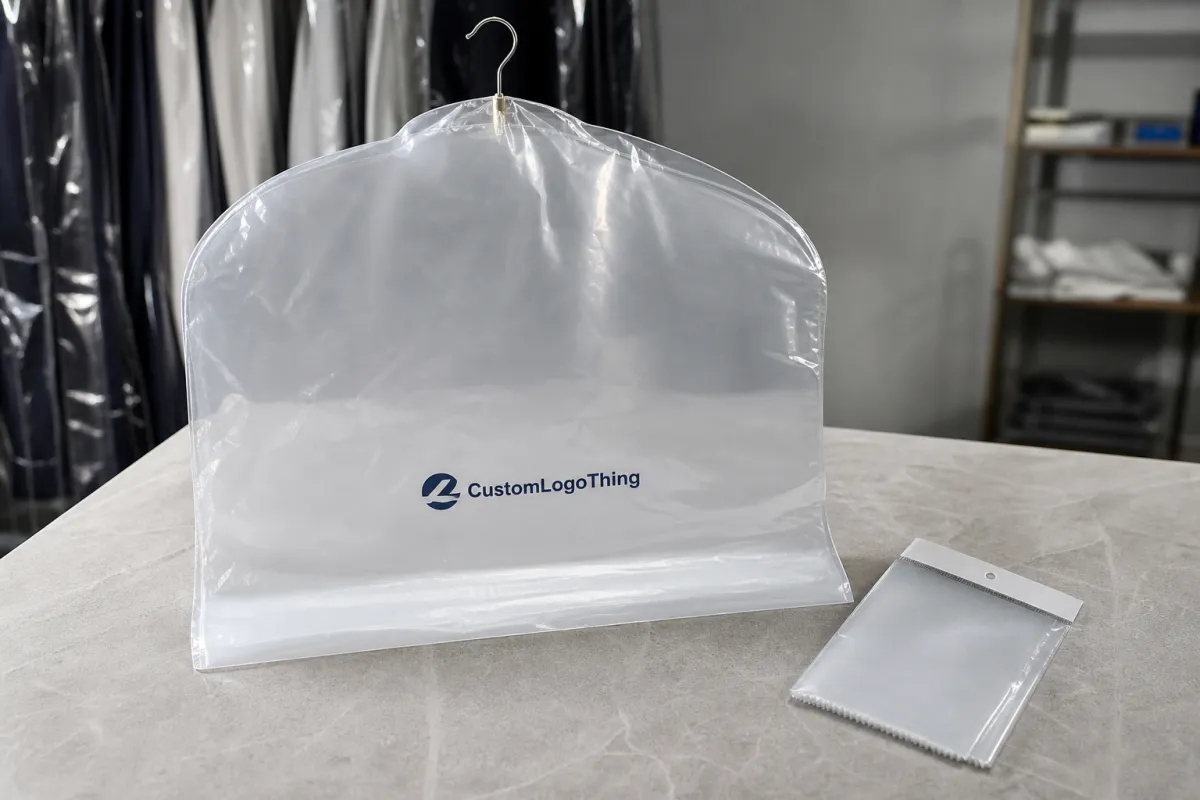
A garment bag order looks simple from the outside. It is a clear or printed sleeve, a hanger opening, a seal or closure, and a carton count. The reality is more layered. The job starts with a quote, moves through proofing and file checks, then into resin allocation, film production, printing, converting, packing, and freight handoff. Each stage is ordinary on its own. Together, they decide whether the bags arrive early enough to matter.
That is why buyers who only ask, “How fast can you run it?” usually get an incomplete answer. A factory can move quickly once every detail is frozen. The real question is how fast the order can become frozen.
Garment bags also carry more variables than many plastic packaging items. A basic poly bag may need only size, gauge, and seal type. A garment bag may need a longer body, venting, a slit or zipper, anti-slip features, branded printing, or a specific folding method. Those choices affect tooling, layout, and packing. One new feature can mean a new proof, a different machine setup, or a fresh material source.
For a standard first run with approved artwork, buyers often see this rough sequence:
- Quote and spec review: 1-2 business days
- Proofing or sampling: 1-5 business days, depending on revisions
- Material allocation: 2-7 business days if the film is not already reserved
- Printing and converting: 5-12 business days for a normal run
- Packing and freight handoff: 1-3 business days before shipment leaves the dock
That is a normal production window, not a promise. A clean reorder can move faster because the dimensions, artwork, and packout are already approved. A first-time launch with custom printing, special packing, or recycled-content requirements tends to take longer. The schedule expands as the job becomes less ordinary.
There is also a difference between production time and total delivery time. Freight, customs clearance, port congestion, and carton inspection can all add days after the bags have already been made. A buyer planning retail packaging, wholesale replenishment, or seasonal apparel programs needs to treat lead time as a chain, not a single number.
Why Lead Time Expands: Process, Proofs, and Material Supply
The biggest delays often happen before the first roll of film is ever printed. A brief with missing dimensions, low-resolution artwork, or unclear packing instructions sends the job into another review cycle. That review cycle can feel small to the buyer and large to the factory. It is one of the main reasons the schedule stretches.
Prepress is where a lot of hidden time lives. The supplier may need to confirm the exact width and length, logo placement, venting pattern, line art quality, barcode space, and carton markings. If the file has to be rebuilt, the job pauses. If color expectations are vague, the proof may need another round. A one-day correction is easy to underestimate when a launch date is already fixed.
Material supply matters just as much. Buyers frequently ask for a specific gauge, a particular level of clarity, recycled content, or a resin blend that feels softer or crisper. Those are reasonable requests, but they can narrow the sourcing pool. If the film is not already in inventory, the supplier may need to slot resin extrusion into an existing production calendar. That can add days before the actual bag conversion begins.
Repeat orders move faster for a reason. The print file is already approved. The bag dimensions are already locked. The supplier does not need to interpret the job again. That is why a reorder and a first-time purchase may look similar on paper while moving at very different speeds on the floor.
The shortest production path is usually the one with the fewest unknowns. Every new feature, artwork edit, or material request adds another place where the schedule can pause.
Seasonal demand creates another layer of pressure. Retail launches, trade show deadlines, and holiday inventory often occupy machine time weeks ahead. Even a supplier with spare capacity may have to fit the order into a crowded calendar. Freight can also turn into the weak point; a bag run that finishes on time still arrives late if the pickup window is missed or the export booking is not ready.
Buyers who work in apparel packaging tend to recognize this pattern. A garment bag is not just a consumable; it is part of the same branded packaging system as hangtags, labels, cartons, and sometimes Custom Printed Boxes. If one component is still changing while the others are already approved, the whole schedule becomes less predictable.
Custom Plastic Garment Bags Pricing: MOQ, Quote Drivers, and Unit Cost
Price and lead time usually move together. The more specialized the garment bag, the more likely the quote includes setup labor, material sourcing, proofing, and packing steps that take time. Comparing only unit price misses the real cost structure. Buyers need to look at thickness, print coverage, closure style, carton format, freight, and whether the order is a one-time run or a repeat program.
MOQ, or minimum order quantity, is the point where a supplier can make the run economical. A plain clear bag can often support a lower MOQ because setup is simple. A printed bag with special features usually needs a larger run to spread setup costs across more pieces. That is why small quantities can become expensive quickly once branding or custom details are added.
For planning purposes, these ranges are common in the market. They are not fixed rules, but they are realistic enough to help buyers budget and schedule.
| Option | Typical MOQ | Typical Unit Cost | Typical Timeline | Best Fit |
|---|---|---|---|---|
| Plain clear garment bag | 3,000-5,000 pieces | $0.18-$0.28 | 7-12 business days | Basic product packaging and stock replenishment |
| 1-color printed bag | 5,000-10,000 pieces | $0.24-$0.38 | 10-15 business days | Branded packaging for retail or wholesale use |
| Custom-feature bag with venting, zipper, or recycled content | 5,000+ pieces | $0.35-$0.60 | 12-20 business days | Higher-spec garment programs and premium package branding |
These numbers also explain why the first order often costs more than the next one. Plate charges, setup time, and proofing are concentrated into the opening run. A second or third order may drop in unit cost because the supplier already has the approved spec on file. That is normal purchasing behavior, not a pricing anomaly.
A clean quote request should include bag dimensions, film type, thickness, print count, carton count, target volume, and required delivery date. If those details are missing, the supplier has to assume more, and assumptions usually add time. A vague brief is one of the fastest ways to slow down a packaging order before production begins.
Another useful comparison: a plain bag behaves more like utility packaging, while a branded garment bag starts to resemble a complete packaging program. Once print quality, color matching, and presentation matter, the job needs a longer approval cycle and a more disciplined calendar.
Spec Choices That Speed Up or Slow Down Production
The fastest orders are usually the least complicated ones. Size, closure style, print method, and packing instructions all matter. A longer bag may need a different folding pattern. Reinforced seams can introduce another converting step. Even a small change in length can affect film layout and waste, which is why the schedule can shift from a minor spec revision.
Material choice is one of the most important variables. LDPE usually offers better flexibility and clarity. HDPE is often thinner, lighter, and a little crisper. Recycled-content film can fit a sustainability target, but it may change the visual finish or print behavior. If the buyer wants a very specific look, the supplier may need a narrower set of material options. Narrower options usually mean a longer wait.
Printing is another turning point. A one-color logo is far easier to approve and run than full coverage graphics, white ink, or metallic effects. Color matching introduces another round of prepress review, especially if the brand already uses a strict palette across custom printed boxes, hangtags, and garment bags. The more surfaces a brand expects to match, the more time should be built into proofing.
Packing requirements can be just as important as print. Some buyers want a fixed bundle count per carton, retail-ready folding, special inserts, or carton labels that match an internal warehouse system. Those steps add labor. None of them are dramatic on their own. Together, they can turn a straightforward order into a slower one.
Compliance requests also influence scheduling. A recycled-content statement, material declaration, or internal sourcing document may need to be checked before production is released. Those requests are reasonable, especially for retailers with formal procurement rules. They simply belong in the schedule from the beginning, not at the proof stage.
For larger retail programs, some teams ask suppliers to align carton and packout testing with ISTA-style handling or similar distribution checks. That is not always necessary for garment bags alone, but it is smart to discuss if the bags are traveling with other packaging or moving through a rough shipping network.
Step-by-Step Buying Process From Brief to Shipment
A clean brief is the easiest way to protect the schedule. It should cover garment type, bag dimensions, thickness, closure style, printing needs, carton count, and the target in-hand date. Buyers who send all of that together usually get a faster and more usable quote. Buyers who send half of it often get follow-up questions, which is where the timeline starts to drift.
After the brief comes the quote comparison. The lowest unit price is not always the best value. Freight terms, setup fees, proofing costs, and packing charges can change the landed cost more than buyers expect. One supplier may look cheaper because it assumed a looser delivery window or a simpler spec. Apples-to-apples comparison is the only fair comparison.
Proof approval is the real control point. The proof should be checked for artwork scale, placement, color notes, warning copy, carton markings, and any barcodes or regulatory text. If a sample is involved, it should confirm the final spec rather than act as a loose reference. A sample that differs from the approved file can create false confidence, which is a costly mistake later.
Once approval is given, the order moves through production milestones. Buyers Should Know when the job shifts from prepress to material allocation, from printing to converting, and from packing to dispatch. That visibility helps merchandising, procurement, and logistics stay synchronized. A garment bag order is often part of a broader Custom Packaging Products program, so one delay can affect more than one department.
The final checkpoint is receiving. On arrival, the buyer should confirm quantity, print quality, carton condition, and bundle count. A quick inspection against the spec sheet catches issues before the bags are distributed. A damaged carton, an incorrect fold, or a print mismatch is much easier to resolve immediately than after stores have already been assigned inventory.
That sequence is why the custom plastic garment bags production timeline feels more like a series of decisions than a single manufacturing number. The schedule gets shorter when decisions are locked early, and longer when approvals keep moving.
Common Mistakes That Delay Garment-Bag Orders
The first mistake is requesting a quote without exact measurements. Even a small change in width or length can affect the bag pattern, the pack count, or the print layout. What looks like a minor revision to the buyer can force the factory to recalculate the job.
Artwork errors are the second major delay. Low-resolution files, missing dielines, and late copy changes all send the job back to prepress. Teams often describe a file as “almost ready,” but almost ready is not ready. That gap matters more when the deadline is close.
The third mistake is approving the proof before packing instructions are confirmed. Carton labels, bundle count, and freight booking all influence labor and dispatch. A job can be printed correctly and still arrive late if the shipping plan was never finalized. Production and logistics have to move together.
Another common problem is waiting until after a sales launch is already public. Retail teams do this more often than they should. Marketing locks the calendar, then packaging gets squeezed into whatever time is left. The schedule does not adjust just because the campaign is announced.
Price pressure can create its own issues. When buyers demand a low budget and a short deadline at the same time, the order may require compromises in film choice, print complexity, or carton handling. Sometimes those compromises are fine. Sometimes they quietly change the quality of the final result.
The buyers who handle this best tend to be practical, not dramatic. They give the supplier enough time to work with ordinary production conditions. That is often what keeps the order clean.
Expert Timing Tips and Next Steps for Buyers
Work backward from the date the bags need to be in hand. Subtract freight time first, then production, then proofing, then a buffer for revisions. That simple exercise reveals whether the schedule is realistic before money is committed. It also exposes whether the order needs a simpler spec.
Do not request samples from a moving target. If the dimensions, artwork, or packout are still changing, the sample will only prove a version that no one is actually buying. A sample should confirm the real order, especially if the bag is part of a larger package branding or branding packaging rollout.
Seasonal demand deserves a wider buffer than most teams expect. Holiday retail, show inventory, and apparel refreshes all pull capacity in the same direction. A supplier may be able to rush a small order, but the calendar gets tight fast when multiple buyers want the same ship window.
Use the same spec sheet across suppliers. Otherwise, one quote may assume a different gauge, another may include freight, and a third may interpret the pack count differently. The numbers will not be comparable if the inputs are not identical. That sounds basic, but it is one of the most common reasons purchasing teams make the wrong call.
If garment bags are being sourced alongside cartons, labels, or other packaging, keep the whole package family in one planning file. That makes it easier to compare the order with the rest of your Custom Packaging Products list and spot where one item could create a delay for the others. It also helps align color, finish, and delivery dates across the full program.
The most reliable rule is simple: confirm the spec, confirm the MOQ, request a timeline-based quote, and set the approval deadline before the order is released. That is the cleanest way to protect the custom plastic garment bags production timeline without paying extra for avoidable urgency. The best orders are usually the ones that never had to be rescued.
How long is the custom plastic garment bags production timeline for a standard order?
Most standard orders land in the 7-15 business day range after proof approval, but the exact pace depends on material availability, print complexity, and whether the bag spec is already approved. Repeat orders often move faster because the dimensions and artwork are already on file. Rush jobs can work, but they usually need simpler specs and very fast buyer sign-off.
What affects custom plastic garment bags pricing the most?
Size, thickness, print coverage, and special features are the biggest drivers. MOQ and setup charges matter a lot on the first order, while freight and packing format can change the landed cost more than buyers expect. If the bag needs recycled content, a special closure, or extra carton handling, the quote usually rises with it.
How can I shorten the lead time?
Send a complete brief the first time: exact dimensions, bag style, material preference, print file, quantity, and target date. Approve the proof quickly, and avoid changing the spec after the quote is locked. Standard materials and simpler printing are usually the fastest path when the deadline is tight.
What MOQ should I expect?
MOQ varies by bag size, print method, and how much setup the converting line needs. Smaller runs are possible, but the unit cost usually climbs because setup is spread across fewer pieces. For repeat programs, ask whether the supplier offers better pricing once the spec is established.
Do I need a sample before starting production?
A sample or proof is a smart move when the artwork, sizing, or fit matters. It catches layout, color, and packaging issues before the full run starts. For repeat orders, a previously approved spec sheet may be enough if nothing has changed. If the bag is part of a larger retail packaging rollout, a sample is usually cheap insurance.
For buyers who want fewer surprises and better control over cost, the lesson is consistent: treat the custom plastic garment bags production timeline as a planning tool, not just a factory estimate. The order moves fastest when the spec is final, the proof is approved without drift, and the freight plan is built into the calendar from day one.

