A boutique garment bag is a small piece of packaging, but it sits very close to the product the customer is judging. If the cover is too thin, too short, cloudy in the wrong way, or poorly printed, it can make pressed merchandise feel less cared for before anyone reads the price tag. Custom Plastic Garment bags unit cost for boutique orders matters because the bag has to protect the garment, support the visual tone of the store, and still make sense across hundreds or thousands of pieces.
The best garment covers do quiet, practical work. They reduce dust on dark fabrics, limit handling marks on pale blouses, protect shoulders from rubbing on crowded rails, and help staff move pieces from receiving to the sales floor without constant steaming and lint rolling. That can matter a great deal for boutiques selling dresses, suits, coats, bridal pieces, or limited seasonal collections where presentation is part of the value.
Presentation affects sell-through, but protection affects margin. A bag that saves a few minutes of rework per rack, or keeps one higher-value garment from being marked during storage, may return more than its fraction-of-a-dollar cost. The goal is not to buy the most expensive cover; it is to Choose the Right construction for the way inventory is actually handled.
Why the right garment bag changes boutique sell-through
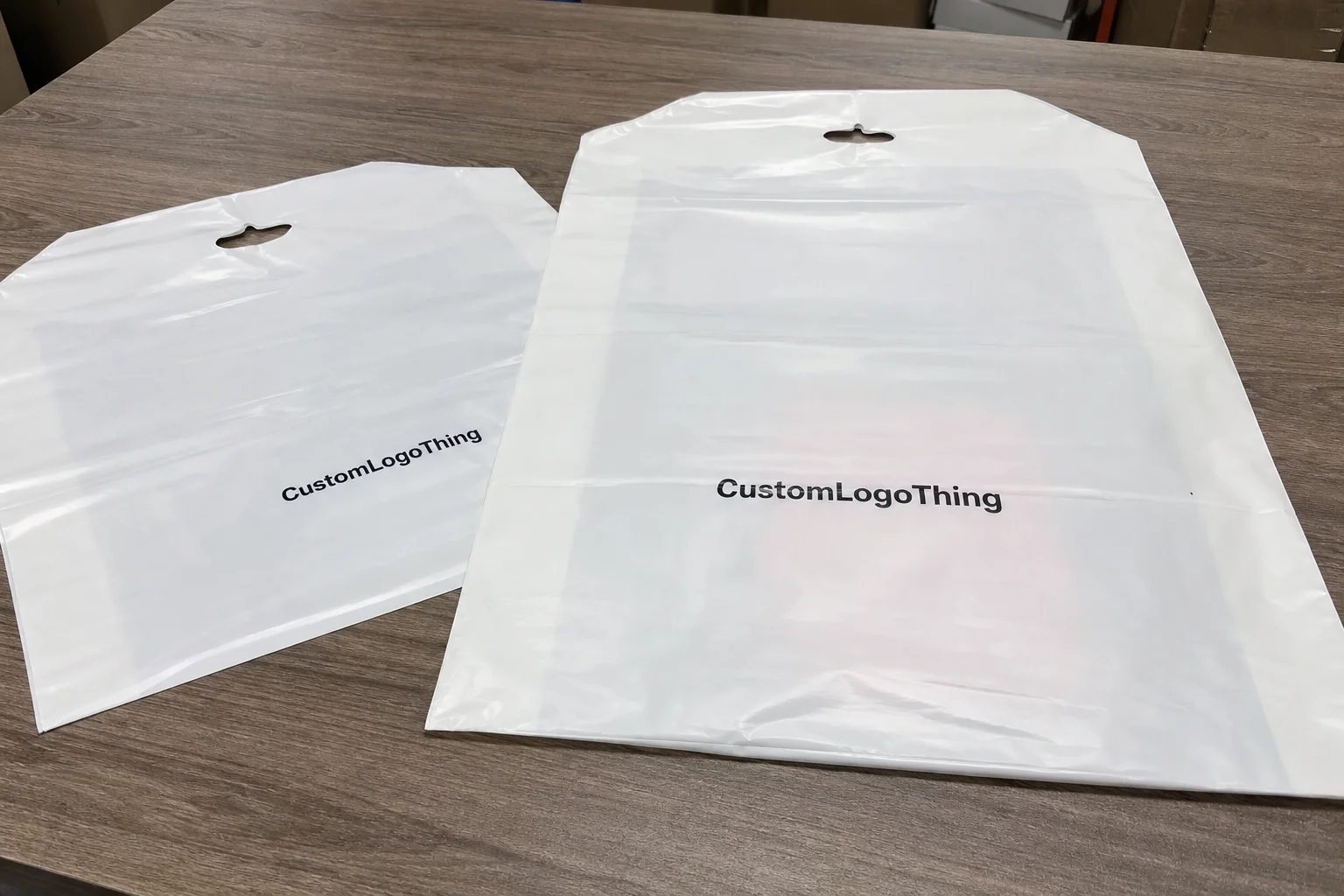
Boutique apparel usually passes through several touchpoints before purchase: receiving, inspection, steaming, tagging, back-room storage, merchandising, fitting room returns, and final handoff. Each step adds risk. A light sleeve may be fine for short-term dust protection, but it may fail quickly if garments are moved often, packed tightly, or handled by customers during try-ons.
A better buying question is not simply, "What is the cheapest bag?" It is, "What bag protects this garment well enough for our store's workflow?" A lightweight blouse may only need a clear LDPE cover around 1.0 to 1.5 mil. A structured coat, beaded gown, suit, or formal dress may call for 2.0 mil or more, a larger shoulder profile, a gusset, or a stronger hanger opening.
Small operating gains add up. Clear visibility helps staff identify color, size, and style without opening every cover. Better top strength reduces torn hanger holes. A properly sized bag prevents hems from folding or curling at the bottom. In a busy boutique, those details reduce the kind of tiny friction that never appears as a line item but still costs labor.
Buyer note: Judge a garment bag by protection, handling speed, rack fit, print quality, and brand appearance. Unit price alone can be misleading if staff must replace torn bags, re-steam garments, or remove covers that look worn after a few days on the rail.
For stores building a consistent retail packaging program, garment bags should be considered alongside hang tags, tissue, labels, shopping bags, and custom printed boxes. Custom Logo Things supports that broader mix through Custom Packaging Products, which helps buyers keep garment covers and other printed packaging visually aligned without treating each item as a separate afterthought.
Bag styles, closures, and material choices that matter
Bag style changes cost, handling, and perceived value. Center-folded garment bags are common because they are efficient to produce and fast for staff to use: the garment hangs inside, the cover drapes over the front and back, and the team can move inventory without folding or repacking. Simple clear sleeves are usually economical and practical, while side-gusseted bags add depth for coats, suits, layered dresses, and garments with structure at the shoulder.
Film choice also changes the result. LDPE is flexible, widely used, and cost-effective for many boutique applications. It bends well, resists casual tearing, and works for everyday hanging protection. CPP can feel smoother and may show garments with sharper clarity, though the exact look depends on thickness, finish, and production method. Frosted film gives a softer retail appearance and can reduce glare under store lighting, but artwork contrast should be checked carefully because pale ink can lose impact on a translucent surface.
Closures deserve more attention than they usually get during first quotes. Open-top covers are fast and tend to cost less. Resealable flaps improve dust control and give the package a more finished feel. Zippered garment covers cost more because the zipper, trim, insertion labor, and inspection all add cost, yet they may be appropriate for bridal, formalwear, long-term storage, or customer handoff when reuse is part of the value.
| Option | Best use | Typical cost impact | Practical watchpoint |
|---|---|---|---|
| Open-top LDPE cover | Short-term hanging, stockroom protection, everyday apparel | Lower | Less dust control at the top opening |
| Frosted printed sleeve | Boutique display, premium presentation, lighter garments | Medium | Artwork contrast must be checked against the film finish |
| Side-gusseted bag | Coats, suits, layered dresses, bulky shoulders | Medium to higher | Gusset depth should match the garment, not a rough guess |
| Zippered garment cover | Formalwear, bridal, reusable retail handoff | Higher | Zipper quality and seam strength need inspection |
The hanger opening is a small feature with a large effect on daily use. If the film tears around the hook, the bag begins to look cheap and may shift awkwardly on the rack. Heavier garments may need a reinforced slit, a thicker top area, or a die-cut shape that spreads stress instead of concentrating it at one point.
Not every boutique needs heavy film. Over-specifying is one of the easiest ways to waste money in retail packaging. If a bag only needs to protect a pressed blouse for a short period on a rail, a heavy reusable cover may be unnecessary. If the same bag must protect a wool coat through storage, customer pickup, and transport, stronger film becomes easier to justify.
Specifications boutique buyers should lock before quoting
A quote is only as accurate as the specification behind it. Before requesting pricing, gather the working details: width, length, gusset depth, hanger opening, closure type, film thickness, print area, print colors, finish, packing method, and order quantity. A vague request for a "standard dress bag" can produce three very different quotes, none of them easy to compare.
Garment type drives the dimensions. A blouse cover may be around 21 inches wide by 36 inches long. A cocktail dress may need 24 by 54 inches. A suit or coat bag may need 24 to 28 inches in width, 60 inches or more in length, and 3 to 6 inches of gusset depth depending on shoulder structure, lining, fabric bulk, and hanger type. These are planning examples, not universal rules, but they show why a one-line quote request rarely produces a dependable price.
Thickness should be matched to handling, not chosen from habit. Light-duty boutique covers may fall around 1.0 mil. A general retail garment cover often sits around 1.25 to 1.5 mil. Heavier handling, longer storage, customer reuse, or bulky garments may justify 2.0 to 2.5 mil or more. Film thickness affects cost, carton weight, hand feel, tear resistance, and how the bag hangs on the garment.
- Width: Measure across the garment at its widest practical hanging point, then allow room for fabric movement.
- Length: Measure from hanger top to hem, then add clearance so the bottom does not crush, drag, or curl.
- Gusset: Use for bulky shoulders, layered garments, coats, and pieces that need depth rather than a flat cover.
- Film thickness: Match gauge to garment weight, handling frequency, and whether the bag will be reused.
- Print area: Confirm logo size, placement, color count, and how much of the garment should remain visible.
- Packing: Specify carton count, folding method, labeling, and whether multiple sizes must be separated clearly.
Features such as vent holes, tear-off tops, anti-static treatment, and resealable flaps should be decided before the quote is issued. Vent holes can reduce trapped air and help bags hang or stack more cleanly. Anti-static treatment may help with certain synthetic fabrics where film cling makes the garment difficult to present. Resealable flaps add dust control but also add material and handling time.
Artwork belongs in the specification package too. A one-color logo on clear LDPE is simpler than a two-color mark on frosted CPP with tight registration. Fine lines, metallic inks, large flood areas, or a very specific brand color should be discussed early, because plastic film does not behave like paperboard. Ink opacity, film clarity, and surface texture all influence the finished appearance.
Clear specifications reduce surprise charges and make supplier comparisons more honest. If every supplier prices the same size, gauge, closure, artwork, and quantity, the buyer can evaluate cost, lead time, and quality with fewer hidden variables.
Custom plastic garment bags unit cost for boutique pricing factors
Custom Plastic Garment Bags unit cost for boutique purchasing is shaped by material, size, thickness, print complexity, order quantity, closure, reinforcement, and packing method. The lowest price usually comes from a simple clear LDPE cover with a modest gauge, one-color print, open top, and enough volume to spread setup work across more units. Costs rise with gussets, thicker film, zipper closures, multiple ink colors, specialty finishes, reinforced openings, and precise carton packing requirements.
For broad budgeting, simple custom printed garment bags may land around $0.18 to $0.38 per unit at 5,000 pieces, depending on size, gauge, and print coverage. Smaller boutique runs around 1,000 pieces may sit closer to $0.45 to $0.95 per unit once custom printing, setup, and packing are included. Heavier zippered or reusable-style covers can move above $1.50 per unit and may reach several dollars each when thicker film, trim, reinforcement, or more complex construction is involved. These figures are planning ranges, not a formal quote.
MOQ is tied to production economics. Press setup, plate preparation, material loading, color matching, and first-piece inspection can take nearly the same effort whether the run is 800 bags or 8,000 bags. That is why small custom orders often carry a higher setup cost per bag. The equipment must still be prepared, checked, run, inspected, and packed.
Quantity breaks are worth studying rather than accepting casually. A buyer may see 1,000 pieces at $0.72 each, 2,500 pieces at $0.42 each, and 5,000 pieces at $0.28 each for the same basic bag. The larger order reduces unit cost, but it also increases total cash outlay and storage needs. Extra inventory can become a problem if brand colors, logos, addresses, or garment sizing priorities change before the bags are used.
| Quantity | Basic clear printed cover | Frosted or gusseted cover | Heavier or zippered style |
|---|---|---|---|
| 1,000 pieces | $0.45-$0.95 each | $0.65-$1.25 each | $1.80-$3.50 each |
| 2,500 pieces | $0.30-$0.58 each | $0.48-$0.90 each | $1.45-$2.85 each |
| 5,000 pieces | $0.18-$0.38 each | $0.34-$0.72 each | $1.15-$2.30 each |
Print complexity is another major price lever. A one-color logo with moderate coverage is usually straightforward. Two or three colors require tighter control, and large printed areas may affect drying, registration, opacity, and scrap rate. If the garment bag is part of a larger packaging set with custom printed boxes, tissue, labels, or shopping bags, align the color target early so the plastic film does not look disconnected from the rest of the retail presentation.
Packing method can also shift cost. Flat-packed bags, folded bags, size-separated cartons, inner bundles, or special labels may each change labor and carton count. For a boutique with multiple locations or several garment categories, clearer carton labeling may be worth a small added cost because it reduces receiving errors and restocking confusion.
Ask for price breaks at several quantities and compare the full landed picture, not only the per-piece number. The best order size may be the point where unit savings, available storage, cash flow, and branding stability all line up. A lower unit cost is useful only if the extra bags will be used before they become obsolete.
For sustainability and labeling questions, buyers can review general packaging and waste reduction guidance from the U.S. Environmental Protection Agency. If paper inserts, corrugated cartons, or mixed-material retail packaging are part of the same program, FSC-related sourcing claims should be checked through the Forest Stewardship Council rather than assumed from a supplier description.
Production steps, lead time, and sample approval
A disciplined order process protects both budget and timing. The typical path starts with RFQ review, specification confirmation, pricing, artwork check, proof approval, material scheduling, production, inspection, carton packing, and shipment. If a step is skipped, the risk usually reappears later as a fit issue, print issue, delay, or unexpected cost.
Lead time depends on construction and approval speed. A simple repeat order with approved artwork can often move faster than a new custom printed run. As a planning range, many custom garment bag projects run about 12 to 20 business days after proof approval, with longer timing for specialty closures, unusual film, physical samples, higher quantities, or more complex print. Transit time is separate and should be planned around seasonal floor resets, trunk shows, bridal appointments, or new collection arrivals.
Digital proofs confirm logo placement, dimensions, print colors, orientation, and basic layout. They do not prove physical fit. For high-value garments, unusual lengths, bulky shoulders, frosted film, zipper closures, or any cover where clarity and drape matter, a physical sample is a sensible checkpoint. A sample can reveal whether the hanger hole sits correctly, whether the bottom clearance is enough, whether the gusset opens properly, and whether the printed logo blocks too much of the garment.
Approval should be treated as a production checkpoint rather than a formality. Once plates are made, material is staged, or the run has started, changes become expensive. Moving a logo by 2 inches may sound minor, but if it requires new setup or makes finished inventory unusable, the cost is real.
- Confirm garment type, dimensions, film, closure, print method, and quantity.
- Review artwork for color count, line weight, print size, and placement.
- Approve the digital proof, and request a physical sample if fit or finish needs verification.
- Lock the production schedule after approval.
- Inspect finished cartons for labeling, count, packing method, and visible defects.
For buyers also ordering Custom Packaging Products such as mailer boxes, tissue, retail inserts, or shopping bags, artwork approval should be coordinated across the full set. A garment bag logo that looks too large compared with boxes and bags can make the branding feel uneven, even when each individual item technically matches its proof.
Quality checks that separate a dependable supplier
Quality control in garment bags is not glamorous, but it is where dependable suppliers earn trust. Start with film consistency. A bag specified at 1.5 mil should not feel sturdy in one carton and flimsy in the next. Variation can come from material control, extrusion consistency, or substitution, and staff will notice it quickly during normal handling.
Seal quality matters as much as film gauge. Weak side seals split when garments are inserted. Rough or uneven seals hurt the finished appearance. Poorly controlled seal lines can make bags hang crookedly, which is especially visible on an open rack where customers compare garments side by side. A good boutique cover should open easily, slide over the garment without fighting the fabric, and hang straight enough to feel intentional.
Printing needs its own checks. Look for clean logo edges, correct placement, reasonable color consistency, and controlled registration on multi-color artwork. Plastic film stretches and moves differently from paperboard, so buyers should not expect a logo to match a rigid box with absolute precision. A responsible supplier will explain normal tolerances for film printing rather than treating plastic, paper, and board as if they behave the same way.
Carton packing affects the finished user experience as well. Bags packed too tightly may crease. Poor moisture protection can weaken cartons during transit or storage. Unclear carton labels slow receiving, especially if the order includes separate sizes for blouses, dresses, coats, and gowns. Labels showing size, gauge, quantity, and artwork version can save time every time staff restock.
Standards can help frame expectations. For transit testing of packaged goods, buyers may reference organizations such as ISTA, especially if garment bags are part of an e-commerce or shipping program rather than only in-store hanging. ASTM test methods are commonly used across the plastics industry to evaluate properties such as tensile strength, tear resistance, and thickness. Not every boutique order needs lab testing, but a supplier familiar with those concepts is usually better prepared for technical questions.
The costly mistake is treating defects in a low-cost bag as harmless. If staff discard 6 percent of the order because hanger openings tear, or if garments need extra steaming because covers are too short, the real unit cost is no longer the number on the quote. It includes labor, waste, poor presentation, and sometimes customer hesitation.
Next steps to request a quote and place the order
Before requesting pricing, gather five essentials: garment type, finished bag dimensions, film thickness target, print artwork, and estimated quantity. Those details allow a supplier to price the actual product instead of issuing a broad estimate that changes later. If thickness is uncertain, describe the garment weight, handling method, storage conditions, and whether customers are expected to reuse the bag.
Ask for multiple quantity tiers using the same specification. A practical request might include 1,000, 2,500, and 5,000 pieces. That makes the relationship between setup cost, unit cost, storage, and cash flow easier to see. It also reveals whether a slightly larger order provides enough savings to justify carrying extra cartons.
Send artwork in vector format whenever possible, such as AI, EPS, or editable PDF. Include Pantone targets if color matters, while allowing for the fact that plastic film, ink opacity, and surface finish can shift the result compared with paper packaging. For boutiques with a broader branded packaging program, Custom Logo Things can help align garment bags with Custom Packaging Products so the final handoff feels consistent from rack to register.
Confirm the proofing and sample process before production enters the line. A digital proof may be enough for a simple one-color logo on a known bag size. A physical sample is smarter for long dresses, coats, frosted film, zipper closures, or any order where garment fit is critical. After approval, lock the production schedule and avoid late artwork changes unless the issue is serious enough to justify the delay and added cost.
The most reliable way to control Custom Plastic Garment Bags Unit cost for boutique orders is to send exact specs, quantity targets, and print requirements in one organized request. Share the garment type, finished bag size, closure choice, film preference, logo file, packing needs, and timing goal, and the quote will be far more useful than a rough price built on assumptions.
FAQ
What affects custom plastic garment bags unit cost for boutique orders the most?
Material type, bag size, film thickness, order quantity, and print complexity usually have the largest impact. Smaller quantities carry higher setup cost per bag, while larger runs usually reduce the per-piece price. Gussets, reinforced hanger openings, resealable flaps, zipper closures, and special packing can raise cost, but they may also reduce damage and handling problems.
What MOQ should a boutique expect for custom garment bags?
MOQ depends on bag style, film choice, printing method, and supplier setup requirements. Simple unprinted covers often allow lower minimums than custom printed or specialty-closure bags. Buyers should ask for pricing at several quantity tiers so they can see where the best unit cost appears without ordering more than they can store or use.
How do I choose the right thickness for boutique garment bags?
Use lighter film for short-term hanging protection and stronger film when garments will be stored longer, shipped, handled frequently, or handed to customers for reuse. Match the thickness to garment weight and workflow rather than price alone. For many boutique applications, 1.0 to 1.5 mil works for lighter items, while heavier garments may need 2.0 mil or more.
How long does production usually take after approval?
Lead time depends on artwork approval, material availability, order size, print complexity, closure type, and whether a sample is required. Many custom garment bag projects run about 12 to 20 business days after proof approval, though specialty work can take longer. Shipping time should be planned separately.
Can boutique garment bags be customized for long dresses or coats?
Yes. Length, width, gusset depth, hanger openings, vents, flaps, and closures can be adjusted for longer or bulkier garments. The supplier needs accurate garment measurements and handling details to avoid a bag that is too tight, too short, or wastefully oversized.


