Order Custom Plastic Garment Bags Unit Cost for Cosmetics
Two plastic garment bags can look nearly identical on a table, then land several cents apart once the specifications are measured properly. That gap is usually not random. It comes from width, length, gauge, seal style, print coverage, carton pack-out, and freight volume long before resin price becomes the main line item. For cosmetic programs, that distinction matters because the bag is rarely just a cover for apparel. It may hold robes, staff uniforms, launch-event shirts, influencer kit garments, or gift-with-purchase textiles that sit beside skincare, fragrance, and other beauty items.
So the right starting point for Custom Plastic Garment Bags Unit cost for cosmetics is not “a clear bag with a logo.” It is a spec conversation. The more accurately the bag is defined, the less likely the quote will shift after sampling or production starts. That same discipline also helps keep the bag aligned with the rest of the pack-out, including Custom Packaging Products, printed cartons, inserts, labels, and retail-ready components.
Why cosmetic buyers overpay for garment-bag unit cost
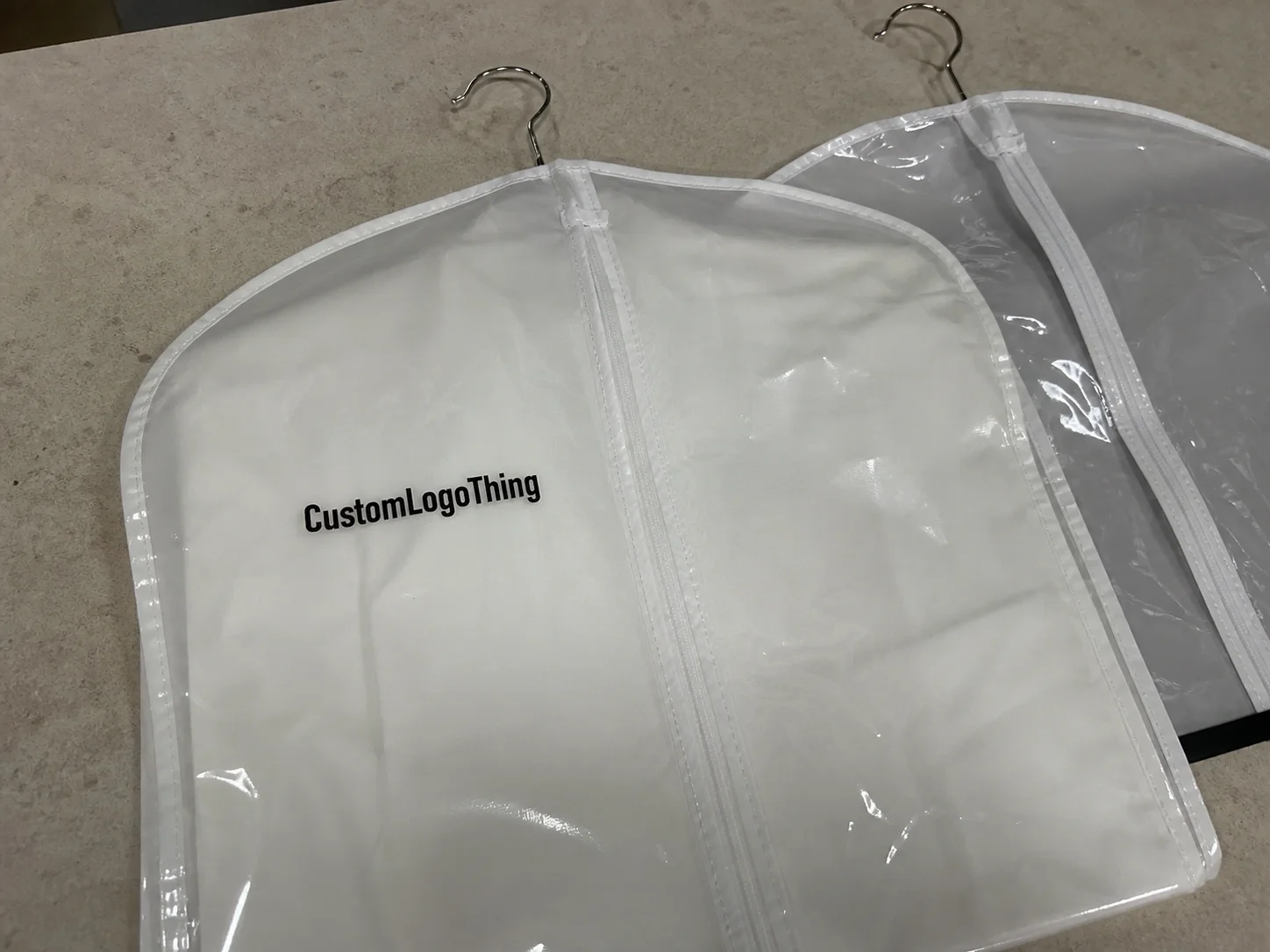
The most common mistake is comparing appearance instead of construction. A 12 inch x 18 inch bag in 1.5 mil LDPE with a one-color logo is not in the same cost category as a 16 inch x 24 inch bag in 2.5 mil frosted film with a flap, adhesive strip, hanger hole, and warning copy. On a sample table, those two bags can appear close enough. On a production quote, they are different jobs.
Size tends to move pricing first. Once the finished dimensions increase, material usage rises, web width may change, and scrap can rise with it. Add a few inches to width or length and the effect compounds across 10,000 or 50,000 pieces. If the new size forces a different roll width or conversion setup, there is another cost layer on top of the film itself.
Gauge is the second quiet driver. Heavier film feels more substantial, but thicker is not automatically better. A garment bag for a folded robe in a controlled fulfillment environment may not need the same wall strength as a hanger-style bag that gets handled repeatedly in a stockroom. Paying for extra mils only makes sense when the bag actually needs the added puncture resistance or stiffness.
Practical buying rule: pay for the protection and presentation the item needs, not for thickness or clarity that will never be noticed by the end recipient.
Finish can also distort budget decisions. Crystal-clear film is useful when the garment color must be visible at receiving, but frosted or matte film often hides scuffs better and can suit beauty packaging more naturally. Tinted film can reinforce a brand palette, though custom color matching and minimums can make it less economical unless the program is large enough to justify it.
The more useful question is not “What is the cheapest bag?” It is “Which spec protects the garment, supports the brand, and avoids waste?” That framing usually leads to better sourcing choices and fewer re-quotes.
Film, gauge, and finish choices that affect performance
LDPE remains the workhorse for many Custom Plastic Garment Bags. It is flexible, easy to convert, and has enough clarity for most folded apparel and cosmetic promotional textiles. LLDPE can improve tear resistance and seal performance, especially when the bag must flex during packing or travel. Some buyers still ask about PVC-style clarity, but poly films are usually easier to source, lighter to ship, and more familiar in current fulfillment operations.
Gauge changes how the bag behaves in real use. A 1.25 mil film may be adequate for light dust protection on low-handling items. A 1.5 to 2.0 mil structure is common for folded apparel kits and promotional garments. Once the bag goes above 2.0 mil, it begins to feel noticeably more substantial, but both the unit price and carton weight rise with it. For hanger bags, staff uniforms, or kits that pass through several handling points, 2.0 to 3.0 mil is easier to justify.
Finish deserves close attention because it affects presentation as much as durability. Clear film shows garment color and supports easy receiving checks. Frosted film softens reflections under retail lights and can look more in line with beauty packaging, especially when paired with a restrained logo. Matte film reduces glare even more, though availability and price vary by run size. Tinted film creates a stronger brand cue, but it may require a higher MOQ and more sampling time.
Odor is not a glamorous topic, but it matters. Bags used near fragrance, skincare, or clean-beauty sets should not carry a strong plastic smell. It is worth asking whether the film can be packed, sealed, and held for several days before approval so any odor issue shows up early. Scuff resistance matters too. A glossy bag can look polished at first, then show rub marks after warehouse handling. A frosted or matte surface often hides that better.
Moisture protection is often overstated. Poly garment bags can help with dust and light moisture exposure, but they are not a substitute for a true moisture-barrier pouch or sealed primary packaging. If the garment sits beside liquid cosmetics, the overall pack-out has to account for leaks, cap torque, inner seals, and carton orientation. For transport-sensitive projects, testing guidance from groups such as ISTA and material reduction principles from the EPA sustainable materials management program can be useful reference points.
Size, sealing, and print specifications buyers should lock down
Good pricing starts with measured specs. Confirm the flat width, finished length, gusset if one is required, opening orientation, flap depth, closure style, hanger hole position, vent holes, and any warning text. A photo helps, but it does not replace dimensions. Even a half-inch error can cause fit problems once the garment is folded with tissue, a card, or a product insert.
Width is usually the first number to settle because it determines material usage and film web width. Length comes next, followed by closure style. A simple open-end bag is generally less expensive than a flap bag with a resealable adhesive strip. A die-cut hanger hole or reinforced header helps with retail display, but it adds process steps. Vent holes may be needed for air release during packing or for certain retail requirements, though they should be placed carefully so they do not weaken the loaded edge.
Print specs can move the quote as much as the physical size. A one-color logo in one location is usually the most efficient branded option. Add a second color, larger coverage, tight registration, metallic ink, flood background, barcode, care copy, or recycling language, and the cost changes quickly. Flexographic printing is common for larger runs. Smaller programs may use different print methods if the artwork and film are suitable.
Artwork should be supplied as vector files, usually AI, EPS, or press-ready PDF, with Pantone references when color consistency matters. Thin lines under roughly 0.25 pt, reversed-out micro text, or large solid areas can create production issues on flexible film. If the bag needs suffocation warning copy, confirm the exact wording, placement, and print size for the markets where the bags will ship.
A clean spec sheet saves money. Include the bag drawing, dimensions, material, gauge, finish, closure, print colors, logo placement, carton quantity, target MOQ, and delivery location. Procurement, brand, and packaging design should sign off on the same version before requests for quotation go out. That one step usually prevents several rounds of avoidable revision.
Custom plastic garment bags unit cost for cosmetics: pricing, MOQ, and quote drivers
The quote for Custom Plastic Garment Bags Unit cost for cosmetics is built from multiple pieces: resin and film, gauge, dimensions, print setup, ink coverage, closure style, conversion speed, carton pack-out, freight, and any sampling or proofing. A buyer who compares only the unit price may miss the reason one supplier looks cheaper on paper.
MOQ matters because setup work is real. Plates, color checks, film sourcing, machine setup, conversion adjustments, and packing instructions all have to be spread across the order. At 2,500 pieces, those fixed costs sit heavily on each unit. At 25,000 or 50,000 pieces, the same preparation is distributed across more bags, so the unit cost usually falls.
| Typical specification | Common quantity range | Indicative unit cost | Cost notes |
|---|---|---|---|
| 1.5 mil clear LDPE, open end, one-color logo | 5,000-10,000 pieces | $0.12-$0.22 per bag | Efficient when the size is standard and the print coverage is modest. |
| 2.0 mil frosted LDPE, flap with adhesive strip | 10,000-25,000 pieces | $0.18-$0.34 per bag | Better presentation and easier closure, with added material and conversion cost. |
| 2.5 mil tinted or matte film, hanger hole, larger logo | 25,000+ pieces | $0.28-$0.55 per bag | Higher film cost, possible color matching, and slower finishing can raise the price. |
| Custom oversized garment bag with multi-color branding | Custom by project | Quoted after drawing review | Film width, carton cube, and freight assumptions become major pricing factors. |
These are working benchmarks, not promises. A narrow standard-size bag using clear film can land lower, while an oversized bag with heavy ink coverage, custom cartons, and rushed transit can move higher. Freight also matters more than some teams expect because garment bags are lightweight but bulky. A thicker film or loose pack pattern can add carton cube and change shipping cost materially.
To compare quotes fairly, check whether artwork prep, digital proofing, plate charges, preproduction samples, overrun allowance, inner packs, master cartons, and freight are included. Confirm the tolerance as well. Poly bag dimensions and quantities typically carry manufacturing tolerances, and those should be visible before purchase order approval. The cheapest quote is not the best quote if it assumes thinner film, a smaller dimension, or a different finish than the approved sample.
A practical sourcing approach is to request two or three tiers, such as 5,000, 10,000, and 25,000 pieces. That shows where the unit cost drops and whether the savings justify the inventory commitment. For a cosmetic brand building a repeat program, that view is often more useful than a single number.
Production process, approval steps, and lead time planning
Production starts with spec confirmation. The supplier reviews the size, film, gauge, finish, closure, artwork, quantity, pack-out, and delivery details. After that, artwork is prepared for print and a proof is issued. A flat digital proof confirms layout, logo size, copy, and placement, but it will not fully show film feel or opacity. A physical sample or preproduction proof is better when hand-feel, clarity, tint, or closure function matters.
The production path usually moves through film extrusion or film sourcing, printing, bag conversion, inspection, packing, and shipment. If the film is standard clear LDPE and the logo is one color, the process can move efficiently after proof approval. If the project needs custom tinted film, heavier gauge, color matching, or a special closure, the preproduction stage can take longer.
Lead time depends on specification and capacity, but many straightforward custom runs are often planned around 12-20 business days after final proof approval. Samples may add 5-10 business days, and transit is separate. Larger runs, custom film, multi-color printing, or special carton requirements can add time. Rush schedules are possible in some cases, but rush fees and freight upgrades can erase the savings gained from careful unit-cost negotiation.
Delays usually come from three places: artwork that is not print-ready, dimensions changing after sampling, and too many revision rounds. Cosmetic teams often include brand, product, operations, and procurement stakeholders, so approval routing needs a named owner. One person should control the spec sheet and collect comments before changes go back to the supplier.
- Confirm finished bag dimensions before artwork placement is finalized.
- Approve Pantone colors, logo size, and warning copy in writing.
- Separate sample timing, production timing, and transit timing on the launch schedule.
- Build in a receiving buffer if the bags support a promotion, event, or seasonal kit.
- Keep one approved sample as the reference for repeat orders.
For transport-sensitive programs, ISTA-style thinking helps even if the bag itself is not tested alone. Pack the garment bag inside the actual shipper or master carton, then check scuffing, seal stress, compression, and presentation after handling. Product packaging works as a system, not as isolated parts.
Why this packaging works for cosmetics and apparel programs
Custom plastic garment bags fit cosmetic programs because they solve a narrow but valuable job: keeping textile items clean, organized, and brand-consistent until the recipient opens the package. Robes, headbands, uniforms, launch shirts, spa garments, event apparel, and retail associate kits all benefit from dust protection and neat presentation. The bag does not have to be fancy. It has to be right.
There is also a sourcing advantage in using a packaging partner that understands both visual presentation and functional packing. A supplier focused only on generic poly conversion may miss how logo placement lines up inside an influencer kit or how frosted film coordinates with custom printed boxes. A partner familiar with Custom Packaging Products can help align the bag with cartons, mailers, labels, tissue, and inserts without overbuilding the spec.
Quality checkpoints should be specific. Film gauge should be consistent within the agreed tolerance. Edge seals should hold under normal packing pressure. Adhesive strips should close cleanly without tearing the flap. Logo placement should not drift enough to look careless. Carton counts should match the purchase order so receiving teams are not forced into recounts during a launch week.
Repeatability matters too. A test order might be 2,500 or 5,000 pieces, but a successful program may scale to 25,000 or more. Before scaling, confirm that the same film finish, print color, closure, and carton pack-out can be repeated. If the first order used an available stock film, ask whether that film will remain available or whether a future run may require a close substitute. That question is often missed until the reorder is already late.
Many buyers focus on the lowest first quote and not enough on repeat-order control. Saving $0.02 per bag does not help if the second run arrives with a different haze level, weaker seals, or cartons that do not fit the warehouse shelf plan. Stability across runs is part of the real unit cost.
What to send for a fast quote and next-step sampling
A fast quote needs clear inputs. Send the target width and length, preferred gauge, material or finish, closure style, print requirements, quantity, carton preference, and delivery destination. If you are replacing an existing bag, include a photo and a measured sample. Better yet, send the previous spec sheet if you have it.
For Custom Plastic Garment Bags Unit cost for cosmetics, the most useful starting details are practical ones: 1.5 or 2.0 mil film, clear or frosted finish, one-color or two-color print, open-end or adhesive flap, and the expected order quantity. If you are unsure about gauge, describe the garment weight and handling path. A folded spa robe shipped in a gift kit does not need the same spec as a hanging uniform bag handled daily in a retail stockroom.
Sampling should match the risk level. For a simple repeat order, a digital proof may be enough. For a new cosmetic launch, a physical sample is worth the time because the team can check feel, clarity, fit, closure, and how the bag presents inside the full package. If the bag sits beside premium skincare or fragrance, review it under the same lighting and packing conditions your customer will see.
- Finished bag size: width, length, gusset, flap depth, and tolerance if known.
- Material target: LDPE, LLDPE blend, clear, frosted, matte, tinted, and gauge.
- Closure: open end, flap, resealable adhesive, hanger hole, vent holes, or header.
- Print: logo file, Pantone color, print location, warning copy, and coverage area.
- Commercial details: MOQ target, quote tiers, carton count, ship-to ZIP or destination.
Custom Logo Things can quote the bag as a standalone item or align it with broader package branding across cartons, mailers, labels, and retail packaging. Use the spec sheet to compare options, confirm what is included, and match custom plastic garment bags unit cost for cosmetics against the budget, launch date, and quality expectations before approving a full run.
FAQs
What changes custom plastic garment bags for cosmetics unit cost the most?
Bag size and film width usually move the price more than buyers expect because they directly change material consumption. Gauge, print coverage, and closure style also add cost quickly when the bag needs extra stiffness, a more refined finish, or larger branding. MOQ matters because setup, proofing, and conversion costs are spread across fewer pieces on small runs.
What MOQ should I expect for custom cosmetic garment bags?
MOQ depends on film type, print method, dimensions, and closure style. A basic one-color clear LDPE bag may be practical at lower quantities, while custom tinted film, special gauge, or multi-color print usually needs a larger run. Ask for two quote tiers, such as 5,000 and 25,000 pieces, so you can see the unit cost difference before committing inventory dollars.
How do I compare quotes for custom plastic garment bags unit cost for cosmetics?
Compare the exact size, gauge, print coverage, closure, carton pack-out, and freight terms. Confirm whether sampling, artwork prep, proofing, cartons, overrun allowance, and delivery are included or billed separately. A lower quote can be misleading if it assumes thinner film, smaller dimensions, looser packing, or a different finish than your approved sample.
How long does production usually take after artwork approval?
Lead time depends on whether the film, print setup, and closure are standard or custom. Straightforward custom runs are often planned around 12-20 business days after final proof approval, while sampling, revisions, special film, or large quantities can add time. Artwork approval is usually the point that starts the real production clock.
What details should I send to get an accurate quote quickly?
Send size, gauge, material preference, closure style, print requirements, quantity, carton preference, and delivery address. If you already have a sample, drawing, or previous supplier spec, include it so the quote reflects the real bag. Complete information reduces back-and-forth and helps confirm custom plastic garment bags unit cost for cosmetics with fewer revisions.