The Bag That Protects Margin Before It Protects Fabric
A garment bag can look like a minor packaging expense until it starts creating avoidable work: scuffed folded apparel, torn seams at the packing table, clouded product visibility, or rebagging before inventory reaches the sales floor. Buyers searching for Custom Plastic Garment Bags unit cost for apparel usually need more than a per-piece number. They need to know which choices are driving that number and which ones are just adding cost without improving performance.
In practice, the right bag protects more than fabric. It keeps size runs organized, holds bundled sets together, gives warehouse teams a consistent packing format, and presents branded apparel cleanly when the product is handled by a retailer, distributor, showroom rep, or e-commerce customer. That matters for shirts, dresses, uniforms, suits, activewear, outerwear, folded direct-to-consumer garments, and hanging retail programs.
The biggest pricing mistakes usually start too early. A buyer asks for a cheap bag before the bag has been defined. A useful quote starts with finished dimensions, resin choice, gauge, artwork, quantity, packing method, and delivery location. From there, unit cost can be compared fairly because the supplier is quoting the actual packaging program, not a vague idea of a poly bag.
Practical rule: if two garment bag quotes do not list the same material, gauge, size, closure, print method, quantity, carton count, and freight terms, they are not quoting the same bag.
That is why specification discipline matters. A thin, poorly sized bag can create labor and damage costs that are larger than the money saved on the order. A well-built bag, even if it costs a little more up front, often lowers total packaging cost by reducing rejects, speeding packing, and protecting presentation quality.
Material Choices for Apparel Garment Bags
Most apparel garment bags are made from polyethylene film, but the feel and performance can vary a lot depending on the resin blend. LDPE is common for softer, more flexible bags with a smooth hand feel. HDPE can feel crisper and may allow a lighter structure in certain bag styles. Blended polyethylene options are often used when the buyer needs a balance of clarity, tear resistance, stiffness, and cost control.
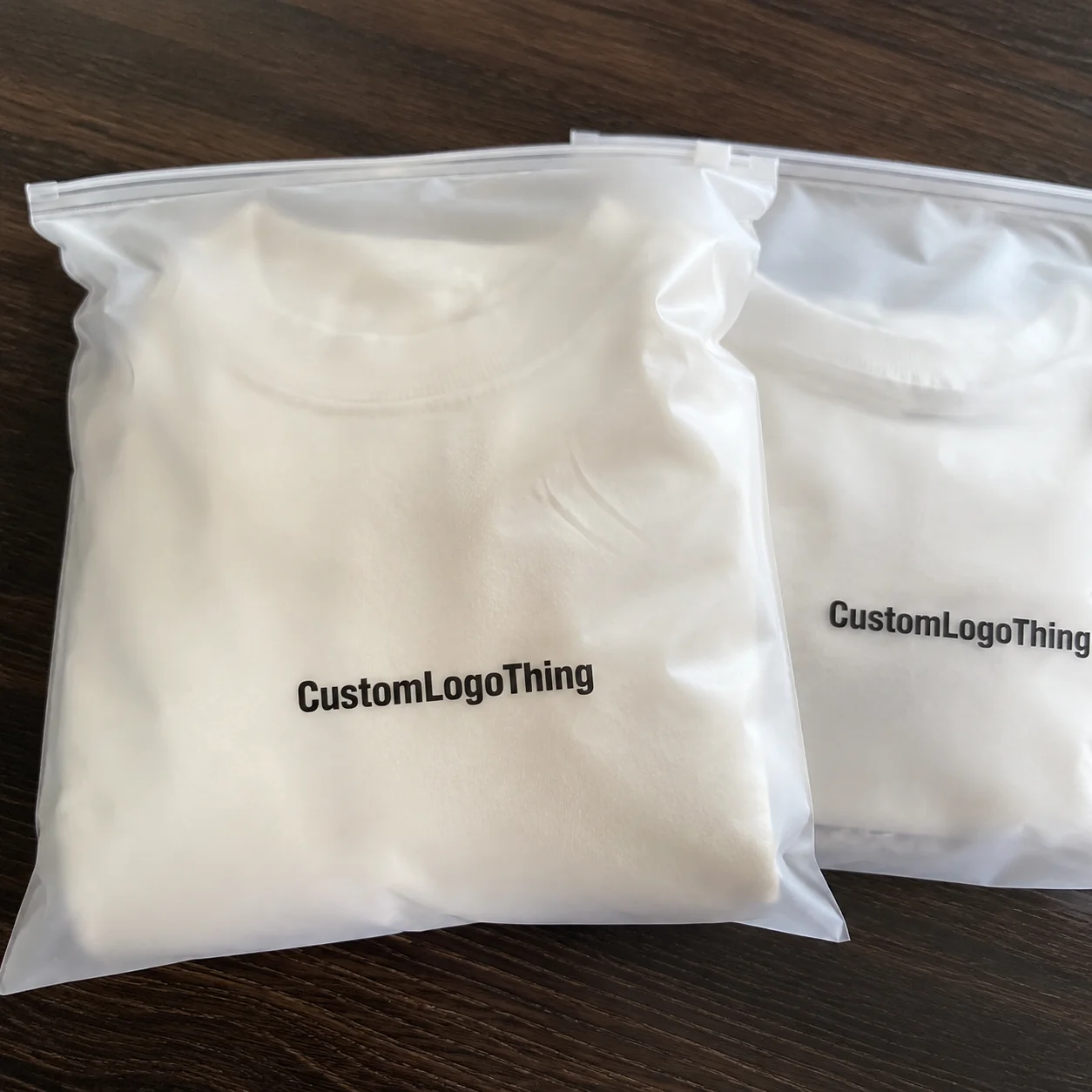
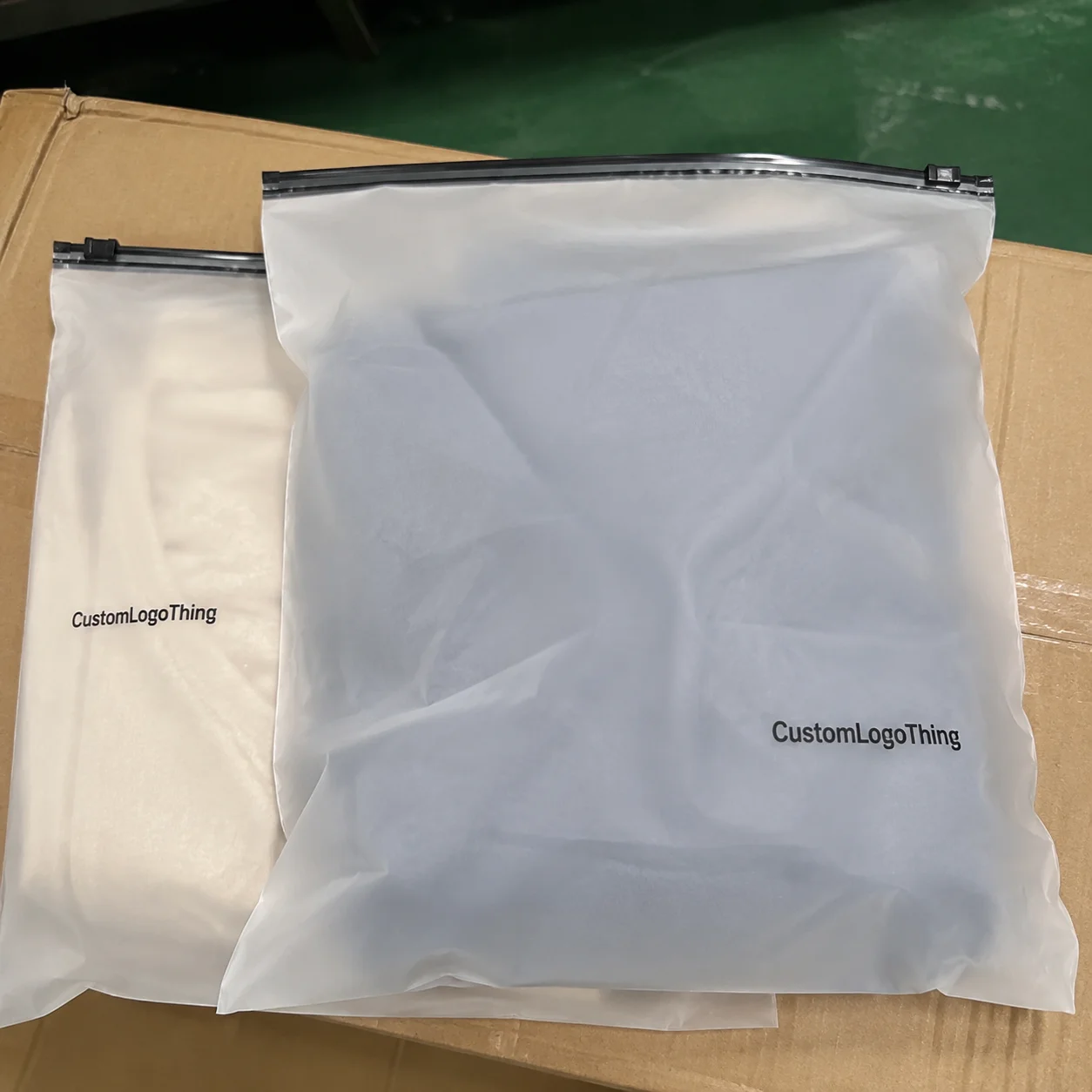
Clarity matters because apparel is visual merchandise. A high-clarity bag helps color, folded shape, size labels, and hang tags show through. Frosted or matte film can feel more premium and can offer some privacy for direct shipping or sample distribution, but it reduces product visibility. For retail packaging, that tradeoff should be deliberate.
Film performance shows up in small but important moments: a hanger opening that does not split, a side seal that holds after cartons are stacked, a bag that slides smoothly during packing without sticking to itself, and enough stiffness for semi-automated fulfillment equipment to feed consistently. Tear resistance, puncture resistance, seal strength, slip level, and film stiffness all affect the real unit cost because they affect labor, waste, and damage rates.
For apparel buyers, sustainable options should be discussed in specific terms rather than broad claims. Recycled-content film may be available for certain structures, but exact content, clarity, and seal performance depend on the bag style, print method, and target thickness. Downgauging can reduce plastic use if the thinner film still survives the handling environment. Heavier reusable bags can make sense for premium garments, garment storage, or returnable packaging programs. Retailer requirements may also influence resin choice, labeling, or recycling marks. Buyers checking broader packaging expectations can review guidance from the U.S. Environmental Protection Agency and confirm customer-specific rules before artwork approval.
Food-grade or medical-grade claims are usually irrelevant for apparel unless a retailer, regulation, or special product requirement calls for them. For most apparel programs, the better question is simpler: will this bag protect the garment, present the brand, run through the packing process, and arrive without creating avoidable repacking work?
Match the material to the garment category. Lightweight tees and folded basics usually do not need the same film as suits, dresses, uniforms, coats, or reusable storage bags. For broader package branding programs that combine bags, hang tags, mailers, and Custom Packaging Products, consistency across materials can also matter, especially if the line sits together in a showroom or ships as a branded set.
Size, Gauge, Closure, and Print Specifications
Good quoting begins with a complete specification. At minimum, prepare the flat width, finished length, lip or flap allowance, gusset if needed, material gauge, hanger hole or reinforced hanger opening, adhesive strip or zipper detail, vent holes, suffocation warning, barcode placement, and carton packing count. That list may look fussy, but it prevents the expensive kind of guessing.
Gauge is one of the biggest cost and performance decisions. A thinner film can reduce material use, carton weight, and freight cost, but it still has to survive packing tables, hang rails, warehouse handling, and transit vibration. Heavier film improves toughness and perceived quality, yet it raises material cost and can increase shipping weight. The right answer depends on garment weight, fold size, closure stress, and the number of times the bag will be handled.
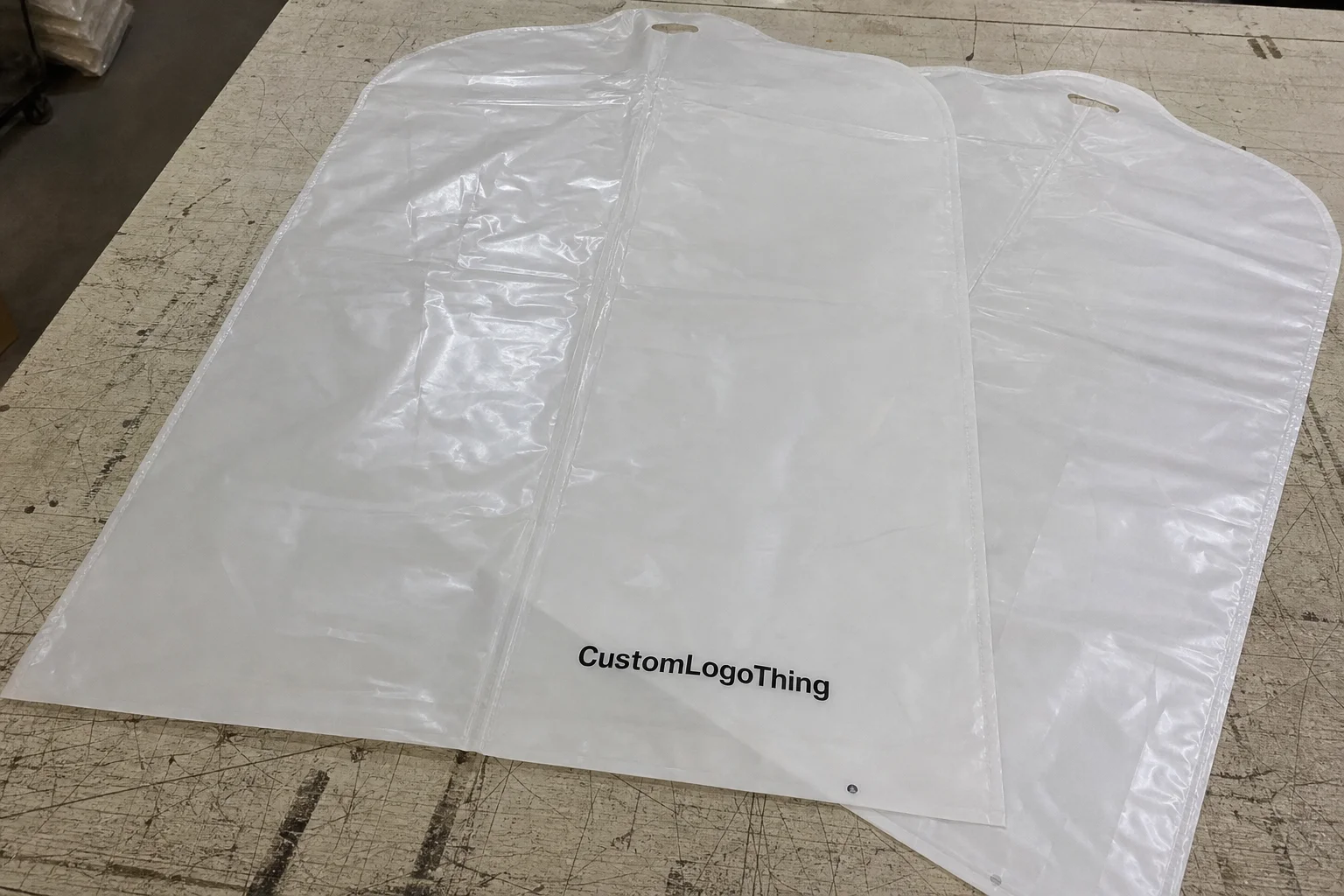
Closure choice should match the workflow. Open-ended bags are fast for in-store handling and hanging apparel. Self-seal flap bags fit folded e-commerce apparel because they close quickly and protect the garment inside a shipper or mailer. Zipper or slider bags cost more, but they can be useful for reusable garment storage, premium sets, uniforms, or products that customers may open and reclose. Hanging bags can include a standard hanger opening, reinforced detail, or a shaped opening depending on the display and handling requirement.
Print specifications deserve the same attention. A one-color logo is usually the most economical form of branded packaging. Multi-color flexographic printing can create stronger shelf or unboxing presence, but each color may add setup, registration control, and ink coverage considerations. Spot print is different from full-coverage graphics. Artwork should stay away from fold lines, side seals, hanger holes, adhesive strips, zipper tracks, and barcode scan zones.
Compliance copy can affect the final size and layout. Thin-film bags may require suffocation warnings depending on destination, retailer rules, or bag dimensions. Recycling marks, country-specific instructions, care notes, and customer-required text should be provided before proofing. Barcode zones should remain clean, flat, and low-glare so warehouse scanners do not fight heavy ink coverage or wrinkled film.
| Specification Area | Common Options | Cost and Use Impact |
|---|---|---|
| Material | LDPE, HDPE, blended polyethylene, recycled-content film where suitable | Changes clarity, feel, stiffness, tear resistance, and resin cost |
| Gauge | Light, medium, or heavy film matched to garment weight and handling | Thicker film usually raises unit cost and freight weight, but improves toughness |
| Closure | Open end, self-seal flap, zipper, slider, hanger opening | Affects packing speed, reusability, presentation, and converting complexity |
| One-color logo, multi-color print, spot coverage, warning text, barcode window | More colors and coverage can increase setup time, ink use, and inspection needs |
Small dimension changes can have a real cost effect. Adding half an inch may push the bag to a wider film web, create more trim scrap, change carton count, or affect pallet efficiency. Measure carefully, especially if the bag must fit folded garments, hangers, inserts, or retailer-specific presentation standards.
Custom Plastic Garment Bags Unit Cost for Apparel and MOQ Factors
The main unit cost drivers are resin type, film thickness, finished dimensions, print colors, ink coverage, closure style, hanger reinforcement, venting, recycled-content requirements, packing format, quantity, and freight destination. That is why Custom Plastic Garment Bags Unit cost for apparel cannot be judged accurately from a generic catalog price.
MOQ is tied to the way film and printing are produced. Material purchasing, press setup, plate or setup work, machine changeover, converting time, and carton efficiency all need enough volume to make production practical. A Very Small Custom run can carry a high unit cost even if the bag itself is plain, because setup time is spread over fewer pieces.
Quantity changes the math. Larger orders spread fixed costs across more units and can improve material purchasing efficiency. Repeat orders may also move faster if the artwork, print plates, approved proof, and finished specification stay unchanged. Not always, of course. Material availability, freight schedules, and current production capacity still matter.
For planning purposes, buyers often see the lowest unit cost on simpler programs with plain film, a single print color, standard dimensions, and a stable repeat order. Price rises as soon as the job adds special sizing, heavy gauge film, a zipper or slider closure, multiple colors, recycled-content requirements, or strict retailer compliance text. A clear quote should show per-unit pricing, any setup or plate charges, sample or proof charges when needed, estimated freight, production lead time, payment terms, and any difference between initial runs and repeat runs. Buyers should also ask whether pricing is based on pickup, prepaid freight, delivered cost, or another shipping term, because freight can make a low piece price look better than it really is.
For a typical apparel buyer, the cost conversation usually falls into three rough bands. Plain, unprinted bags in standard sizes tend to sit at the low end. Basic custom-printed bags with one logo color often land in the middle. Heavier film, special closures, higher print coverage, or small MOQs push the price up quickly. Those are broad ranges, not a quote, but they help set expectations before the specification is locked.
There are practical ways to control unit cost without weakening the package. Reduce print colors if a one-color logo does the job. Confirm only the gauge needed for the garment and handling environment. Avoid oversized bags that waste film and create sloppy presentation. Standardize sizes across multiple garments where possible. Order in efficient carton quantities. Approve artwork cleanly so rework does not add cost or delay. Small changes like these usually matter more than chasing a lower quote from an apples-to-oranges comparison.
Custom Logo Things can provide itemized quotes based on verified specifications, which helps buyers compare real landed cost instead of a partial headline price. That matters if the program includes retail packaging, e-commerce folded apparel, showroom samples, or a broader line that also uses custom printed boxes and other branded packaging components from Custom Packaging Products.
Production Process and Lead Time From Artwork to Delivery
The production path is straightforward, but each step needs clean information. It usually begins with inquiry review, specification confirmation, artwork check, quote, proof or sample approval when needed, material scheduling, printing, converting, quality inspection, carton packing, and shipment. If one piece of information is missing, the job can stall while everyone waits for a measurement, warning statement, or logo file.
Want a faster quote? Send final dimensions, desired gauge, print-ready vector artwork, Pantone or ink references, shipping address, delivery deadline, and any retailer compliance documents at the start. Include photos of the current bag if you are matching one. A ruler in the photo helps. So does a close-up of the closure, hanger opening, vent holes, and any warning copy.
Digital proofs are useful for confirming logo size, print direction, warning text, and placement. Physical samples may be recommended for new structures, higher-value garments, unusual closures, reusable zipper bags, or retailer presentation checks. A digital proof can show position, but it cannot fully show film stiffness, hand feel, zipper action, adhesive peel, or how the bag behaves on a packing line.
Lead time depends on material availability, print complexity, order quantity, custom tooling or plate needs, approval speed, inspection requirements, and domestic or international freight choices. Rush production, split shipments, air freight, and multiple revisions can raise landed cost. Confirming specifications early is often the simplest way to protect both the schedule and the budget.
Common bottlenecks are predictable: unclear artwork, missing bag measurements, late compliance copy, last-minute size changes, and changes after proof approval. Once a repeat order has the same approved specification and artwork file, the process is usually smoother because fewer decisions have to be reopened. That is one reason many apparel teams keep a master spec sheet for each bag style instead of relying on memory or scattered email threads.
How to Compare Suppliers Without Chasing the Cheapest Bag
Compare quotes line by line, not only by per-piece price. One supplier may quote thinner film, fewer print colors, a different closure, no freight, or a smaller carton count than another. The cheapest line on a spreadsheet can become expensive if the bags arrive wrinkled, tear during packing, fail barcode scans, or miss a retailer’s warning requirement.
Quality checkpoints for apparel are specific. Look for consistent film thickness, clean side seals, reliable adhesive strips or zipper function, print registration, ink rub resistance, clear barcode zones, accurate sizing, clean perforations if used, and packing that prevents bags from arriving crushed. For transit performance programs, buyers may also want to review distribution testing concepts from ISTA, especially if garment bags are part of a larger shipper or carton system.
Communication quality is part of the purchase decision. A good supplier asks about garment type, fold size, hanging versus flat packing, presentation expectations, retailer requirements, and fulfillment workflow before recommending a specification. That technical review can reduce waste or improve packing speed with a small change to gauge, opening style, or bag length. It also helps surface problems early, when changing the drawing is cheaper than changing a finished order.
Some buyers focus only on unit price and miss the cost of inconsistency. If a bag is too loose, staff spend time folding and reworking product. If the film is too thin, rejects and tears increase. If the print drifts, retail presentation suffers. Those hidden costs are real, and they should be part of the comparison.
Ask each supplier to quote the same material, gauge, finished size, print method, quantity, lead time, packing count, freight basis, and one-time setup costs. For Custom Plastic Garment Bags unit cost for apparel, that discipline makes the comparison fair and keeps purchasing decisions tied to actual performance, not just a low number.
Quote-Ready Next Steps for Apparel Buyers
A quote moves faster when the buyer has the working details ready. Start with the garment type, folded or hanging format, finished bag size, desired gauge or current sample thickness, material preference, closure type, print colors, logo file, warning or compliance copy, estimated quantity, delivery address, and target in-hands date.
- Garment details: shirts, dresses, uniforms, suits, activewear, outerwear, sample sets, or folded e-commerce apparel.
- Bag format: flat poly bag, self-seal flap bag, hanger bag, zipper bag, gusseted bag, or reusable storage bag.
- Measurements: outside width, outside length, flap length, gusset depth, hanger opening, vent placement, and carton count if matching an existing program.
- Artwork: vector logo, print color references, warning text, recycling marks, barcode window, and retailer instructions.
- Commercial details: order quantity, delivery address, target date, freight preference, and whether the quote is for a first run or repeat run.
To measure a current bag, lay it flat and smooth without stretching the film. Measure outside width and length, then note the flap, lip, hanger opening, gusset, vents, zipper, or adhesive strip. Photos of the front, back, closure area, and side seal are helpful. If tolerances, closure feel, retailer presentation, or automated packing compatibility matter, send a physical sample, because photos and dimensions can miss film stiffness and seal details.
If you are uncertain, start with the garment category, packing method, and target quantity. Then ask for two specification options: a cost-efficient version for basic protection and a sturdier retail-presented version for heavier handling or premium presentation. That gives purchasing, operations, and marketing a clearer comparison than one vague quote.
For Custom Plastic Garment Bags unit cost for apparel, the fastest path to a useful number is a complete specification, clean artwork, and a realistic quantity, because those details let the supplier quote the actual bag the buyer intends to use.
FAQs
What affects custom garment bag unit pricing the most?
The biggest drivers are bag size, film gauge, material type, order quantity, print colors, closure style, hanger reinforcement, packing method, and freight destination. A thin open-ended one-color bag will price very differently from a heavier reusable zipper garment bag with multi-color printing and reinforced hanger detail. For accurate comparison, ask every supplier to quote the same dimensions, gauge, print method, quantity, packing count, and shipping terms.
What MOQ should I expect for custom plastic apparel bags?
MOQ depends on the material, print setup, bag style, and production efficiency rather than a single universal number. Custom printed runs generally require enough quantity to justify film setup, printing plates or setup work, press time, converting time, and carton packing. If your quantity is low, ask whether a simpler print, standard size, or repeatable specification can help control the unit cost.
How do I choose the right gauge for plastic garment bags?
Start with the garment weight, packing method, and handling environment. Folded tees usually need less strength than suits, coats, uniforms, or reusable storage bags. Thinner gauge can reduce cost and shipping weight, but it must still resist tearing at seams, adhesive areas, hanger openings, and packing tables. If matching an existing bag, measure the current film or send a sample so the quote can reflect the feel and performance you already use.
Can custom plastic garment bags include logos, warnings, and barcodes?
Yes, logos, suffocation warnings, recycling marks, size labels, care notes, and barcode windows can usually be planned into the artwork layout. Barcode and scan areas should stay clean, flat, and away from seams, folds, heavy ink coverage, and closure strips. Provide vector artwork and any required compliance text early so proofing does not slow the production timeline.
How long does the custom garment bag production process take?
Timeline depends on artwork readiness, proof approval, material availability, print complexity, quantity, sampling needs, inspection requirements, and freight method. The process typically moves through specification review, quote approval, artwork proofing, material scheduling, printing, converting, inspection, packing, and shipping. Buyers can reduce delays by confirming dimensions, gauge, closure style, print colors, delivery address, and target deadline before production is scheduled.
What should I ask before approving a quote?
Ask what exactly is included in the price, whether setup or plate charges are separate, what film and gauge are being used, how the bags are packed, whether freight is included, and what the sample or proof process looks like. If the quote is for apparel packaging, also confirm warning text placement, barcode readability, and whether the quoted bag matches the way your team actually folds and ships the garment.