If you are searching for custom plastic shopping Bags with Logo no minimum, the problem is usually practical, not promotional. You need branded bags for a store opening, a short event run, a pop-up, or a small retail batch, and you do not want to commit to a truckload of inventory. That is a sensible buying position. The catch is that “no minimum” changes the economics, the setup process, and sometimes even the bag construction itself.
In packaging, “no minimum” rarely means there is no threshold in the real world. It usually means a supplier is willing to run a very small quantity, often by using an existing bag format, a simpler print setup, or a limited number of colors. The smaller the order, the more visible the fixed costs become. That is why a bag that costs cents in bulk can climb quickly in a short run.
For a retail buyer, the bag is doing more work than people give it credit for. It carries the purchase, reinforces the logo at checkout, and keeps advertising moving after the sale. In a small order, that role is even more important because the bags are often tied to a launch or a limited-use campaign rather than routine replenishment.
What “no minimum” really means for branded shopping bags
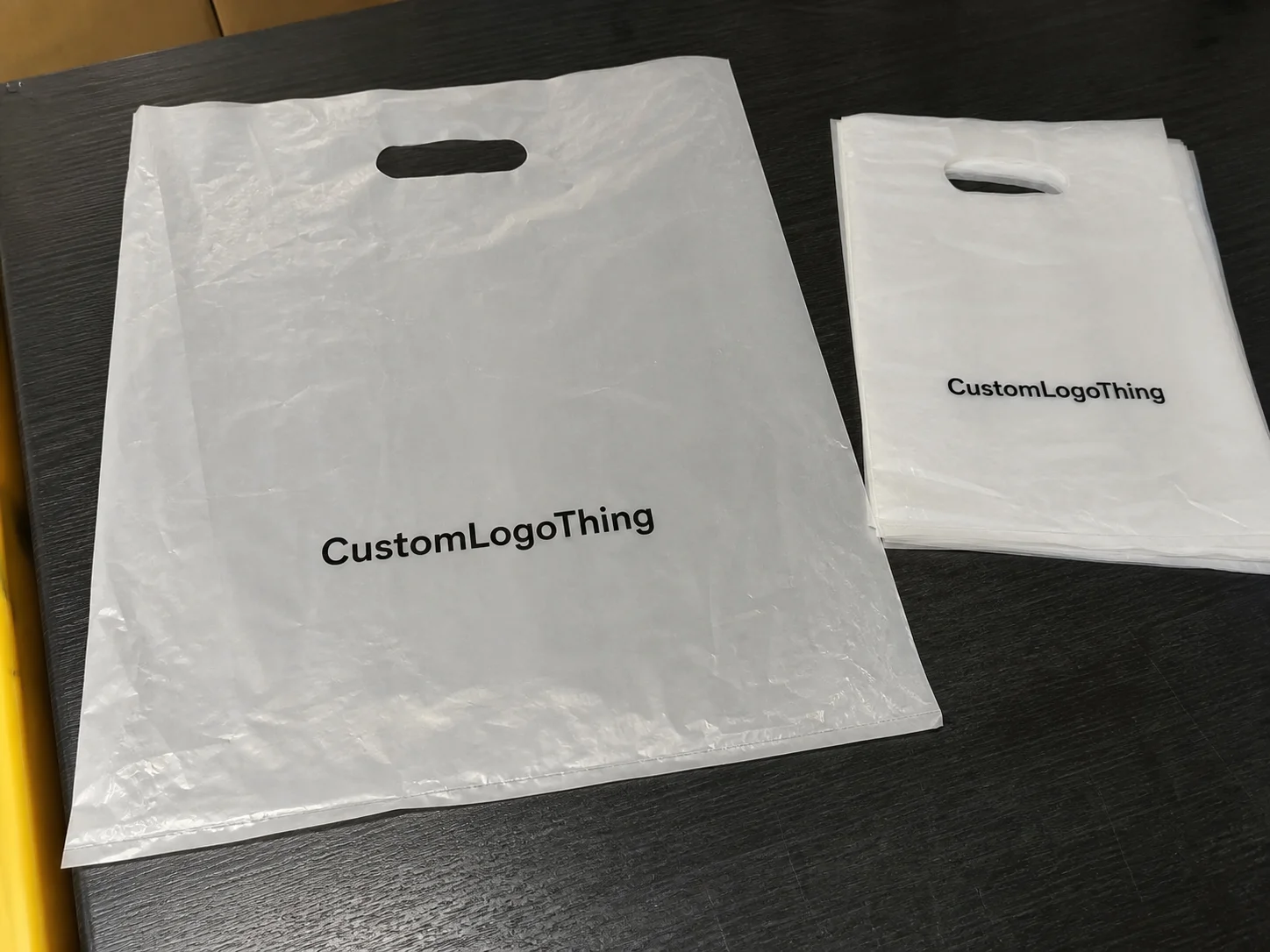
The phrase sounds straightforward, but it is worth reading closely. A no-minimum program may allow tiny quantities, yet it does not erase the setup steps that make printing possible. Someone still has to review artwork, confirm the bag size, prepare print files, set up the press or digital system, and check the proof before production starts. Those steps cost time and money whether the order is 500 bags or 50,000.
That is why custom plastic shopping Bags with Logo no minimum tend to suit specific business situations: pop-up retail, seasonal promotions, trade shows, small boutiques, new product launches, and short-term inventory tests. The value is not just in quantity. It is in avoiding storage, reducing cash tied up in packaging, and giving the buyer room to refine the design before scaling.
The structure of the bag matters more than many first-time buyers expect. Some suppliers truly offer a low-quantity custom print on a standard stock bag. Others allow a few custom touches, but not enough to make the order behave like a fully tailored packaging project. Once you ask for a custom size, a special handle, unusual film color, or multiple print locations, the order may move out of the low-minimum lane and into a more traditional production run.
That tradeoff is the center of the decision: the closer the bag is to stock, the easier it is to order in small numbers.
There is also a useful testing advantage. Small runs let buyers evaluate logo clarity, bag feel, handle strength, and real checkout performance without betting on a large order. That kind of feedback is more useful than a polished mockup, because plastic film behaves differently once it is folded, filled, and handled by staff or customers.
How the ordering and proofing process works
Most small-run bag orders follow the same basic chain: quote request, specification review, artwork submission, proof approval, production, quality check, and shipping. That sounds ordinary, but small orders are less forgiving of vague instructions. If dimensions are unclear or the artwork is not final, the order can stall early and the delay can feel outsized compared with the size of the run.
Artwork quality is usually the first pressure point. Vector files such as AI, EPS, or a print-ready PDF are preferred because they preserve clean lines and scale correctly. A low-resolution JPG may be acceptable for a quick internal reference, but it is a weak starting point for film printing. On a plastic surface, soft edges, tiny text, and crowded details lose definition fast.
The print method will shape what is possible. Flexographic printing is common for repeatable packaging work and larger runs. Screen printing can suit simpler designs and lower quantities. Digital printing may work for some programs, but it is not a universal answer for every film type or bag style. The right method depends on the number of colors, the amount of ink coverage, the bag material, and how exact the logo needs to look.
Before production begins, suppliers usually confirm the bag width, gusset, height, thickness, handle style, color, print placement, and ink count. That proof is not a formality. It is the last checkpoint before the job becomes physical inventory. For a buyer, that means the proof should be reviewed like a production document, not just a preview image.
“The cheapest order to fix is the one that gets corrected on the proof, not after production.”
Buyers who already manage other packaging items often see the value of keeping specifications aligned. A bag that visually matches the rest of the packaging system tends to look more intentional at checkout, even if the order itself is small and temporary. The packaging does not need to be extravagant. It needs to be coherent.
Cost, pricing, and unit cost factors to compare
Pricing for custom plastic shopping Bags with Logo no minimum is driven by a limited number of variables, but each one matters. Bag size, film thickness, print colors, number of print sides, bag style, and total quantity all affect the final quote. A plain one-color bag in a standard size is a very different job from a heavier gauge bag with two-sided printing and a more complex logo layout.
The simplest way to understand the pricing is this: fixed setup costs are spread across fewer units. That is why small runs tend to have higher unit prices. The cost of proofing, prep, plate or press setup, and color alignment does not shrink just because the order is small.
For buyers comparing small orders to bulk pricing, the pattern usually looks like this:
| Order type | Typical use case | Unit cost pattern | Main benefit | Main drawback |
|---|---|---|---|---|
| No-minimum / very low quantity | Pop-ups, launches, small boutiques, events | Higher per bag because setup is spread thin | Low inventory risk, easier testing | Higher unit price |
| Mid-volume run | Growing retailers, seasonal programs | Moderate unit cost | Reasonable balance of cost and flexibility | Some storage still required |
| Bulk run | Established stores, chain replenishment | Lowest unit cost | Best economy of scale | More cash tied up, more inventory to store |
There are other charges that may not be obvious at first glance. Artwork cleanup can add time if the file is not print-ready. Some print methods require plates or similar tooling. Rush orders can raise the total. Split shipments, special cartons, or unusual packing instructions can also affect the quote. If the bag needs to meet a compliance requirement, the material choice may narrow further, which can affect price.
Buyers often compare quotes that are not truly equivalent. One supplier may quote a thin bag with one print color, while another quotes a thicker film with two-sided printing. Those are different products. A fair comparison means matching size, film gauge, artwork complexity, and quantity before judging price.
That is also where a higher unit cost can still be the better purchase. A bag used for a launch or a trade event is not just a supply item. It is part of the presentation at the point of handoff. If the bag tears easily or the logo prints poorly, the brand pays for that in perception.
Production steps and timeline expectations
Lead time is usually the part buyers underestimate. A clean small order can move quickly, but only if the artwork is final, the specs are standard, and the proof is approved without revisions. Once the bag construction changes or the logo file needs cleanup, the schedule stretches.
A realistic timeline separates proofing, production, and shipping. Those are not interchangeable. A supplier may approve artwork in a day or two, yet manufacturing still takes its own window, and transit time depends on the destination and carrier. Buyers often compress all three into one expectation and then feel surprised when the order arrives later than planned.
The most common causes of delay are predictable: artwork revisions, late color changes, uncertain dimensions, custom sizing, and changes after proof approval. The more unusual the bag request, the more likely the supplier will ask for additional confirmation before starting. That is not hesitation; it is basic quality control.
Stock-based imprint programs are generally faster because the bag format already exists. Fully custom shapes, nonstandard handles, or unusual film colors take longer. If the bags are tied to a date that cannot move, the supplier should be given the deadline early, along with the shipping destination and any rush requirements. A verbal estimate is not enough. A written timeline is far more useful than a promise that “it should be fine.”
For buyers coordinating several packaging purchases at once, timing matters beyond the bag itself. If your bag order is part of a larger packaging set, the schedule needs to line up with labels, inserts, boxes, or other printed items. One delayed component can throw off the entire presentation.
Quality expectations also depend on the use case. A bag carrying folded apparel for a few blocks does not face the same stress as one used repeatedly through a store day. Production planning should reflect that reality. There is a difference between a promotional bag and a daily retail workhorse.
Key specs that affect performance, appearance, and compliance
Film thickness is one of the first specs to review. It is usually described in mils or microns, depending on the supplier. Thinner film lowers material usage, but it can feel flimsy and may not hold up well with heavier contents. Thicker film usually improves durability and gives the bag a more substantial feel, though it also raises cost and can shift the weight of the finished product.
Size matters just as much. A bag should match the goods being placed inside, not just the logo artwork. Oversized bags can waste material and look awkward. Undersized bags create handling problems immediately. For boxed items, folded apparel, printed brochures, or mixed merchandise, the gusset width is often the spec that determines whether the bag actually works at checkout.
Appearance is not only about the logo. Film color, opacity, and contrast all affect how well the branding reads from a distance. White and opaque films typically make a logo easier to see. Tinted or clear films can look sharper in the right context, but they also reduce contrast if the artwork is light or too detailed. Simple high-contrast designs usually print more cleanly than busy artwork.
Compliance should not be left until the end of the process. Plastic bag rules vary widely by region and can affect material type, thickness, intended use, or even whether the bag can be distributed for checkout at all. If a business operates in more than one jurisdiction, the bag spec should be checked against local rules before the quote is approved. A design that works in one market can be a problem in another.
From a practical sourcing standpoint, the best bag is the one that performs under real use. It opens easily, holds weight without tearing, and prints cleanly enough that the logo still looks deliberate after handling. That principle holds whether the order is a few hundred bags or a larger replenishment run.
If a brand is evaluating packaging across categories, it can help to think in terms of materials rather than slogans. For paper-based packaging, certifications such as FSC may be relevant. For shipping and damage prevention standards, references such as ISTA can inform broader packaging decisions. And for recycling guidance, the EPA recycling resources are a useful starting point. Those frameworks do not solve every buying problem, but they keep the discussion grounded in actual requirements rather than vague claims.
Common mistakes buyers make with small-quantity bag orders
The first mistake is ordering before checking local restrictions or store policy. It happens more often than it should. A buyer sees a bag that looks right, approves it, and only later discovers that the material or thickness does not fit the intended use.
The second mistake is sending poor artwork. A low-resolution logo can sometimes be cleaned up, but not always, and cleanup takes time. On plastic film, soft edges and tiny details are especially unforgiving. If the logo matters, the file needs to be print-ready.
The third mistake is guessing the size. Measure the products that will actually go into the bag. Measure width, depth, and height. Then allow room for handling. A bag that fits the item on paper can still fail in practice if staff have to force the contents in at an angle.
The fourth mistake is assuming a no-minimum order will move at the same speed as a standard promo item. Even a short run still has proofing, setup, and transit. If the event date is fixed, the timeline needs to be realistic from the start.
The fifth mistake is comparing price without comparing specs. A thinner film, a different print method, or a one-sided layout can make a quote look cheaper than a real equivalent. The lowest number on the page is not always the best value.
There is also a quieter error: focusing on the bag as a disposable item and ignoring its branding role. A weak print, a wrinkled finish, or a flimsy handle can make the entire purchase feel less finished. Retail buyers usually notice that faster than customers do, which is another reason quality control matters.
Expert tips for getting better results from a no-minimum order
Keep the artwork simple. One strong logo, clear contrast, and limited ink colors tend to print better in small quantities. Simpler does not mean generic. It means choosing a layout that suits the production method instead of fighting it.
Request a digital proof before production and review it with the same attention you would give a final label sheet. Check alignment, size, color callouts, and placement. A proof is not just a picture; it is the point where small errors can still be corrected without losing money.
Order a few extras if the bags are tied to a launch, seasonal rush, or event. Small runs move faster than people expect, and a modest overage can prevent last-minute shortages. Reordering a tiny quantity under deadline is often more expensive than building in a small cushion.
Compare specifications side by side rather than comparing only prices. For example, look at 1.5 mil versus 2 mil film, or one-color versus two-color printing. That comparison exposes the real tradeoff between durability, appearance, and cost. If the bag is being used for customer-facing retail, the slightly stronger option often pays for itself in perceived quality.
My practical view: the best small-run order is usually the one designed around actual handling. A bag can look attractive in a mockup and still fail once it is loaded, carried, and reused by the customer.
If a broader packaging program is being built around the order, keep the internal approval path simple. That means the quantity, artwork, size, deadline, and compliance check should all be settled before the quote turns into a purchase order. Less back-and-forth usually means fewer errors.
Actionable next steps before requesting a quote
Start with measurements. Write down the real product dimensions, then translate those into a target bag width, gusset, and height. If the bag is for apparel, printed materials, or boxed items, guesswork creates the wrong size faster than almost anything else.
Gather the artwork next. Use a print-ready vector file if possible, and confirm the logo color, placement, and any brand rules about spacing or contrast. If the logo is still being refined, say that early. It is better to disclose a work in progress than to force a print quote off incomplete files.
Then define the bag’s role. Is it for a retail opening, event handout, short-term promotion, or everyday checkout use? That answer changes how much emphasis should be placed on thickness, print quality, and quantity. A bag for one weekend does not need the same spec as a bag that will be used daily.
Include the deadline, shipping address, and whether the job needs standard or rush handling. If the bags must arrive by a fixed date, that should be part of the first conversation, not the last. A supplier can only confirm a schedule if the target is visible.
Finally, check local plastic bag rules and any internal store requirements before requesting the quote. Then compare the quote on the basis that actually matters: fit for use, print quality, compliance, and total cost. That is the real test for Custom Plastic Shopping Bags with logo no minimum. They work best when the order is small, specific, and tied to a clear purpose rather than a vague idea of branding.
For the right store, launch, or event, that flexibility is valuable. It prevents excess inventory, keeps the budget under control, and still gives the customer a branded bag that looks like it belongs to the business.
Can I really order custom plastic shopping bags with logo no minimum?
Yes, some suppliers offer very low or no-minimum programs, usually built around stock bag formats or simplified printing. Availability depends on the bag style, artwork, and production method.
Why is the unit cost higher on small orders?
Setup, proofing, and production prep are spread across fewer bags. Small quantities rarely benefit from the economies of scale that lower bulk pricing.
What artwork file works best for logo bags?
Vector files such as AI, EPS, or print-ready PDF are usually preferred. They preserve clean edges and reduce the chance of blurry print results.
How long does production usually take for a no-minimum order?
Timing depends on proof approval, print method, bag style, and shipping distance. A written schedule should separate production time from transit time.
What should I check before placing the order?
Confirm bag size, thickness, print colors, delivery deadline, and any local plastic bag compliance rules. Make sure the supplier has final artwork before the quote is approved.


