Most products do not need elaborate packaging to look professional. They need protection, consistency, and a unit cost that does not quietly drain margin. That is why custom Poly Bags Wholesale keeps appearing in buying plans for apparel, parts, inserts, retail kits, and e-commerce orders that need to ship cleanly without adding unnecessary weight or storage bulk.
A well-printed poly bag can look cleaner on shelf or in a mailer than a heavier box that costs more to ship and takes up more warehouse space. That is not a glamorous answer, but it is usually the correct one. For repeat packing runs, the real question is not whether the package can be made more elaborate. It is whether the package gives the best mix of protection, branding, and cost per order.
This article focuses on the choices that affect a quote, lead time, and final result: bag style, film, print, minimum order quantity, and the small details that make a run either easy or irritating. For buyers comparing broader options, Custom Packaging Products and Wholesale Programs are useful starting points.
Why poly bags still beat fancier packaging for everyday shipping
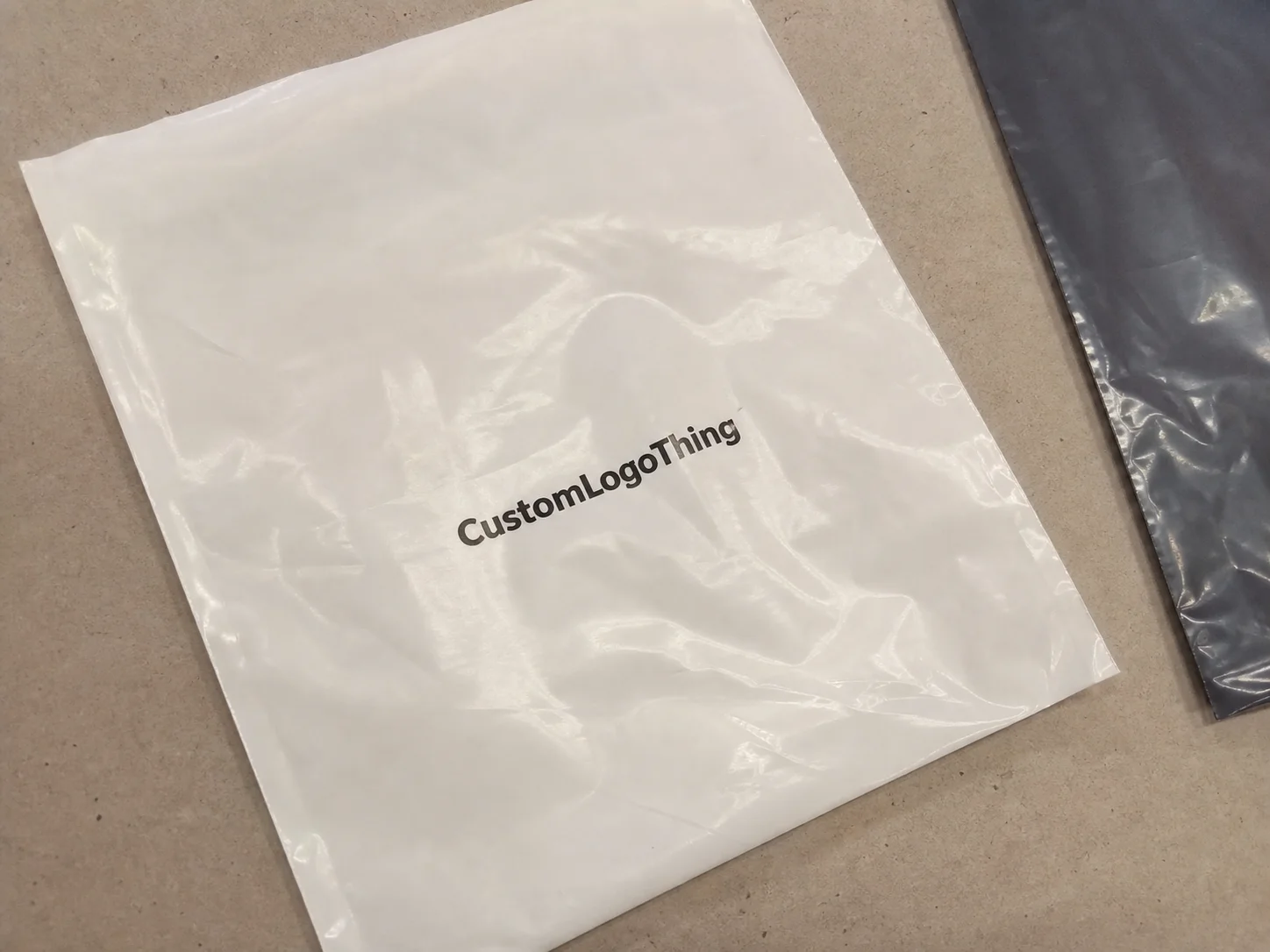
Poly bags keep winning because they solve a practical problem: move product cheaply without making it look cheap. A proper bag protects against dust, minor scuffing, and handling damage while staying light enough to avoid unnecessary freight cost. That matters when you ship thousands of units and every extra gram begins to act like a tax.
They work well for apparel, replacement parts, paper inserts, accessory kits, and bulk storage. They also make sense for brands that need retail packaging with a clean branded front but do not need the structure of a carton. If the product is soft, flat, or already protected, a custom poly bag often beats a box on cost and warehouse efficiency.
There is a common buying mistake here: assuming that “premium” packaging automatically makes the product look premium. It usually does not. Poor sizing, sloppy print placement, and weak material make expensive packaging look amateur fast. A simple, correctly specified poly bag with strong package branding is often better than a box that eats budget for no functional gain.
“A good bag is invisible in the right way. It protects the product, carries the brand, and does not need a second line item just to justify itself.”
For recurring orders, the packing line needs consistency more than drama. That is where custom Poly Bags Wholesale makes sense: predictable unit cost, simple storage, and fewer surprises during replenishment. For many brands, that is smarter than overbuilding product packaging for items that never needed it.
Custom poly bag styles, materials, and print options
Not every poly bag does the same job. The style determines how the bag loads, how it presents the product, and how much abuse it can take in transit. Start there before debating ink colors.
Common bag styles:
- Layflat bags — simple, low-cost, and suited to flat products or bundled items.
- Gusseted bags — side or bottom expansion for thicker goods and boxed inserts.
- Resealable zip bags — useful for retail kits, parts, and reusable storage.
- Wicketed bags — better for high-speed packing lines and volume handling.
- Header bags — common for hanging retail displays and small accessory items.
Material selection matters just as much as format. LDPE is flexible, clearer, and often preferred for a softer feel. HDPE is thinner and crisper, and it can work well when a lighter bag with decent strength is the goal. Co-extruded films are used when more toughness or a better balance of appearance and performance is needed. The correct choice depends on the product, not the mood board.
Finish changes presentation. Clear bags show the product, frosted bags soften the view, tinted bags hide visual clutter, and opaque bags create stronger brand control. Clear and frosted options work best when the product itself is part of the appeal. Opaque films are better when you want a uniform look across multiple SKUs or need to reduce visible variation.
Print options are more flexible than many buyers expect. A one-color logo, a two- or three-color mark, sizing details, warnings, barcodes, and short instructions can all be printed on the bag. Surface coverage still matters. Heavy ink coverage, full-panel print, and multi-color registration increase cost and can stretch lead time. That is normal production behavior, not a special case.
For branded packaging, keep the print plan focused. A clean logo, size callout, and one line of compliance copy often works better than trying to force every message onto one panel. If the job involves shipping-focused format decisions, Custom Poly Mailers can be a useful comparison point.
Specs that actually matter: thickness, size, seal, and compliance
Thickness is measured in mils, and that number matters more than most buyers realize. A thinner bag costs less, but it also punctures faster, stretches more, and can look flimsy if the product has corners, edges, or rough surfaces. For lightweight apparel or inserts, 1.5 to 2 mil can be fine. For heavier or sharper items, 2.5 to 4 mil is often safer. If the product can scratch through the film, thickness should be adjusted before you start looking for a prettier print.
Size should be based on the product, not on an old supplier catalog. Measure width, height, and thickness, then allow enough insertion room so packing does not become a wrestling match. Oversizing increases material use and makes the package look loose. A bag that is too tight causes sealing issues and slows the pack line. The sweet spot is usually a little extra room, not a lot.
Seal type changes performance. Side seal bags are common and efficient for flat products. Bottom seal bags can be strong and simple. Resealable zipper closures improve customer convenience and are useful when the product will be opened and closed more than once. The right seal depends on handling, storage, and whether the buyer should reuse the bag.
Three specs deserve careful review before any production approval:
- Clarity — if the product needs visibility, check haze and film consistency.
- Puncture resistance — especially for metal parts, buttons, zippers, or anything with corners.
- Print registration — logos should sit where the proof says they will sit, not “close enough.”
Compliance is not optional when the category requires it. Food contact applications, suffocation warnings, child-safety notices, recycling marks, and industry-specific labeling may all apply depending on the use case. A low-cost order can become expensive quickly if those details are missed. Standards and testing references from groups like ISTA are useful when validating shipment performance, and EPA guidance is worth reviewing for recycling and waste-related considerations.
Ask for tolerance ranges in writing. A bag listed as 18 x 24 inches is not always exactly that on the floor. Good suppliers will state acceptable variation, and that distinction separates a usable spec sheet from a decorative PDF.
Custom poly bags wholesale pricing, MOQ, and unit cost
Pricing is driven by a handful of variables: bag size, film thickness, print colors, number of printed sides, bag style, and order quantity. Change one and the quote shifts. Change three and you are in a different pricing bucket entirely.
For simple printed bags, MOQ can be accessible. Smaller standard-format runs may start in the low thousands, while fully custom sizes, multi-color work, or specialty materials often push the minimum higher. That is not a supplier trying to be difficult. It is how setup and production economics work.
To keep buyers grounded, here is a practical framework. These are common ranges, not promises:
| Order Type | Typical MOQ | Approx. Unit Price | Notes |
|---|---|---|---|
| Simple 1-color printed layflat bag | 5,000-10,000 | $0.04-$0.12 | Best for flat, light products and repeat packing. |
| Custom size with 1-2 color print | 10,000-20,000 | $0.08-$0.22 | More setup, more material, more control over fit. |
| Resealable or wicketed format | 10,000+ | $0.10-$0.30 | Convenience features add cost but improve packing speed. |
The most common mistake is comparing quotes that are not actually the same product. One supplier quotes 2 mil, another quotes 3 mil. One includes one-color print, another excludes setup. One uses a different bag size. Then the buyer picks the lowest number and acts surprised when the order performs differently. Compare identical specs or the numbers are meaningless.
Hidden costs deserve attention too. Setup charges, plates, freight, special carton packaging, and compliance copy can all affect landed cost. If procurement only looks at unit price, it is seeing half the picture. A lower unit cost is only useful if the bags get used within a reasonable time and do not trap cash in storage.
A practical buying approach is simple: estimate monthly or quarterly use, then order enough to get a meaningful unit-rate drop without building inventory you cannot move. For many teams, the best custom Poly Bags Wholesale decision is the one that balances inventory risk with a real cost advantage.
Production steps, timeline, and lead time from proof to shipment
The production process is straightforward if the artwork and specs are clean. It becomes messy when they are not. Start by sending dimensions, thickness, material preference, print colors, quantity, and any compliance notes. The supplier should confirm feasibility and return a proof.
A normal workflow looks like this:
- Request specs and artwork review.
- Confirm the proof and layout.
- Approve a digital mockup or sample if needed.
- Run production.
- Inspect, pack, and ship.
Artwork preparation makes or breaks turnaround. Vector files are best. PMS color references help when color matching matters. CMYK works for many jobs, but it does not guarantee perfect color on film. Blurry logos, low-resolution text, and poorly placed barcode artwork slow things down because somebody has to fix them before production starts.
Lead time depends on the order. Simple printed bags may run in about 12 to 15 business days after proof approval. Custom sizes, multiple colors, special films, or compliance-heavy jobs can take longer. Overseas production can lower unit cost, but it usually needs more planning, more communication, and a larger buffer for shipping. Domestic stock runs may ship faster, but the price point is often different. That tradeoff is real, and buyers should decide it early.
Samples are worth requesting when the order is large or the print layout is sensitive. A digital mockup is useful for approval. A pre-production sample is better when fit, print placement, or material feel matters. Approve the thing you are actually going to buy, not a vague approximation of it.
For regulated or shipment-sensitive categories, packaging validation is worth the extra time. Standard transit checks and packaging testing references can help avoid damage claims later. If a product needs to survive rough handling, guessing is expensive.
How to choose a supplier that won’t waste your time
First question: can they actually make what you need? Plenty of buyers get sold by a middleman who talks well and controls very little. You want a supplier who can confirm film gauge, bag style, print setup, and finishing details without improvising halfway through the quote.
Second: do they proof properly? Clear specs, written approval, and artwork confirmation are non-negotiable. The supplier should be able to point to exactly what will be printed, where it will sit, and what tolerances apply. If the proof is vague, the production result will be vague too.
Third: can they repeat the job? Repeat orders should match the first run in size, placement, color expectation, and film quality. Consistency is part of the value. If a supplier cannot keep the same look on reorder, they are not solving a packaging problem; they are creating one.
Also, a good supplier will tell you when not to spend more. Sometimes a full bleed print is unnecessary. Sometimes a zipper is overkill. Sometimes a fancier film adds cost without adding actual value. That kind of restraint usually saves money.
Finally, confirm freight and reorder support. A clean process for reprints, simple communication, and predictable ordering terms matter more than a polished quote template. If the relationship is going to work, buyer-side clarity is half the battle.
For brands that sell across different formats, it helps if the supplier understands adjacent packaging lines like custom printed boxes and mailers. That does not mean everything must come from one source. It means the supplier understands how your branding packaging decisions affect the whole order flow.
Next steps to order custom poly bags wholesale without mistakes
Build a one-page spec sheet before requesting quotes. Include product dimensions, target bag size, thickness, material, print colors, quantity, and any warning or compliance copy. If possible, attach a product photo or an image of the current package. That saves time and reduces quoting errors.
Send the same spec to two or three suppliers and compare like for like. If the quotes differ, check whether the film gauge, setup charges, print sides, or freight terms are different. They usually are. That is how people end up paying more for “cheaper” bags.
Ask three questions before you approve anything:
- What is the proof timeline?
- What is the production timeline after approval?
- What is the estimated freight cost?
Plan reorders based on actual usage, not wishful thinking. Running out is expensive. Sitting on dead stock is expensive too. A reorder point tied to monthly consumption keeps the operation under control.
If you are ready to source Custom Poly Bags wholesale, send specs and artwork together, request a proof, and confirm approval rules before production starts. That is the cleanest path to a usable quote, fewer delays, and packaging that does its job without turning the process into a project.
What is the typical MOQ for custom poly bags wholesale?
MOQ depends on size, print complexity, and whether the bag is a standard or fully custom format. Simple printed bags usually have lower minimums than custom-sized or multi-color runs. Ask for the MOQ in writing along with the exact spec sheet so you are comparing real offers.
How do I choose the right thickness for custom poly bags?
Match thickness to product weight, sharp edges, and handling conditions. Thinner bags work for lightweight apparel and inserts, while heavier or rougher items need a higher gauge. If the product can puncture the film, increase thickness before adding print complexity.
How long does production usually take for custom poly bags wholesale?
Simple orders move faster than custom sizes with multiple print colors or special compliance requirements. Artwork approval and proof changes are the biggest avoidable delays. Always confirm lead time after final proof approval, not before.
Can I print my logo and warning text on the same poly bag?
Yes, many bags can carry branding plus copy such as warnings, sizing, barcodes, or instructions. The layout depends on available print area and the bag style. Clean, legible placement matters more than trying to cram everything onto one side.
What should I send when requesting a quote for custom poly bags wholesale?
Send product dimensions, target bag size, thickness, material preference, print artwork, colors, quantity, and any compliance notes. If possible, include a photo of the product or current packaging. The more exact the specs, the less likely you are to receive a useless quote.


