Custom Printed Poly Bags Wholesale for Fast Bulk Orders
Order custom printed Poly Bags Wholesale with clear specs, low minimums, and predictable lead times for retail and shipping, without quote churn or delays.
Custom Printed Poly Bags wholesale looks simple until a spec slips. Then the real cost shows up in re-packing labor, damaged goods, or a retail display that looks slightly different from one store to the next. For buyers, the bag itself is only part of the value. The bigger payoff is control: consistent product packaging, repeatable branding, and fewer moving parts in the packing line.
For teams balancing retail packaging, warehouse packing, and direct-to-consumer fulfillment, the question is rarely whether printed film is useful. The question is whether the bag spec is tight enough to keep labor low and presentation consistent. Stock bags plus labels can work for short runs, but labels add a step, introduce placement variation, and create another item to buy, store, and track. Direct print removes that handoff. It also keeps the logo, warning copy, SKU detail, or barcode in the same place every time.
That matters more as volume grows. A pallet that ships cleanly is one thing. A year of repeat orders through multiple locations is another. Once a packaging format becomes part of daily operations, small differences in film gauge, seal width, or print placement stop being cosmetic and start affecting throughput.
Why Bulk Poly Bags Beat Ad-Hoc Packaging for Consistent Orders
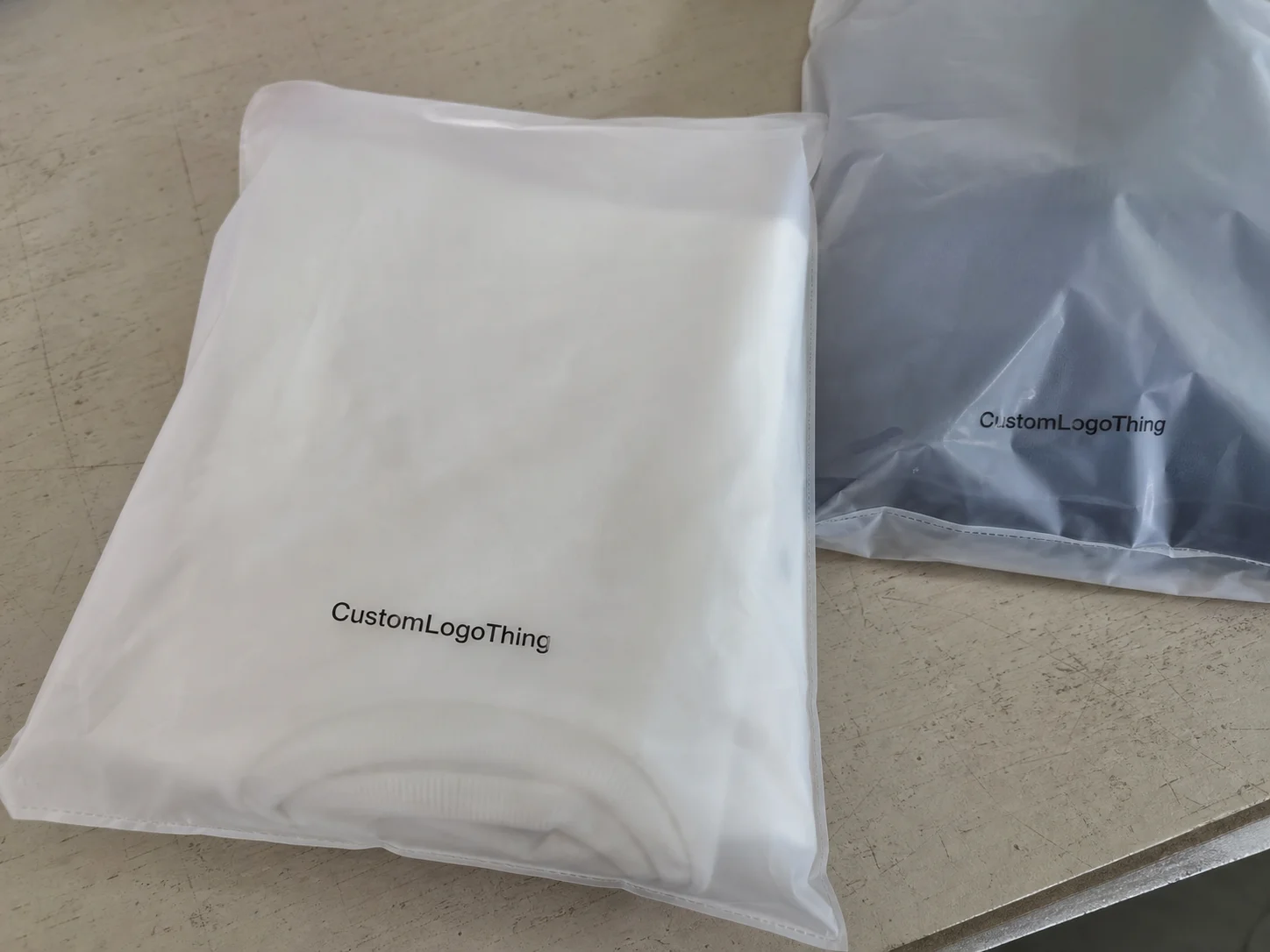
Ad-hoc packaging usually looks inexpensive until the hidden work appears. If a warehouse is taping labels onto stock bags, correcting print placement by hand, or re-bagging returns because the fit is loose, the labor bill can erase the savings quickly. A small dimensional correction, such as moving from a 9 x 12 bag to a 9.5 x 12.5 bag, may cost less than repeated repacking over a few hundred units.
Wholesale buyers choose printed poly bags because they standardize packing across stores, warehouses, and fulfillment centers. That consistency reduces training time and cuts the number of decisions workers need to make on the line. It also helps in retail packaging, where the front-of-shelf impression matters as much as the product inside. The logo sits in the same place. The warning text is legible. Package branding does not drift from one batch to the next.
There is a practical comparison between labels and direct print. Labels are flexible, but flexibility has a price: extra labor, extra inventory, and a real chance of misalignment. Direct print is usually the better choice when the order repeats and the artwork is stable. Labels still make sense for highly variable SKUs, but many buyers move to printed film once the design settles. Some teams compare bags to custom printed boxes, but that is not always the right benchmark. A bag often serves a faster, lighter-duty role and can eliminate secondary packaging entirely when the product allows it.
If you want a simple purchasing framework, keep it practical:
- Use printed bags when the order repeats and the spec is stable.
- Use labels when the artwork or SKU changes often.
- Use stock bags only when branding and consistency are secondary.
That is why many buyers start with a small run, then move the approved spec into a reorder program through a Wholesale Programs page or a standard purchasing workflow.
Product Styles, Print Options, and Closure Details
The right bag style depends on how the product enters the bag, how it ships, and how much shelf presence it needs. Flat poly bags are the simplest and most common. They work well for folded apparel, printed inserts, small parts, and lightweight retail items. Gusseted bags expand for bulkier products, which matters when the product has depth or an irregular profile. Wicketed bags speed up hand packing because they are stacked on a wire wicket, so they feed cleanly on a line. Resealable options are useful for kits, samples, or returns where the end user may open and close the package more than once.
Printing choice is just as practical. A single-color logo is usually the cleanest and most economical option. Multi-color graphics add cost, but the bigger issue is not just the ink count. It is artwork coverage and placement tolerance. If the design wraps around the gusset or sits too close to the seal area, the print area becomes harder to hold consistently. That is where packaging design matters. A simple logo centered on the face of the bag is easier to reproduce than a dense illustration that pushes right to the edge.
Closures and finishing details change how the bag functions on the line and in the customer’s hands. Heat seal is common for tamper control. Self-seal and flap seal options reduce packing steps. Perforation can improve tear-off behavior for multi-unit packs. Hang holes support retail display. Venting is useful for products that trap air, such as some textiles or foam items. Even a small finishing detail can decide whether the bag fits the workflow or creates friction.
Buyers usually sort the options like this:
| Style | Best Use | Typical Price Range | Operational Note |
|---|---|---|---|
| Flat poly bag | Apparel, inserts, small retail goods | $0.09-$0.18 each | Lowest setup complexity and easiest to reorder |
| Gusseted bag | Bulkier products, folded kits, boxed items | $0.13-$0.26 each | More volume, but size accuracy matters more |
| Wicketed bag | Fast hand packing, light industrial use | $0.15-$0.30 each | Speeds line speed when packing is repetitive |
| Resealable bag | Samples, kitting, returns, accessories | $0.18-$0.38 each | Useful when the end user needs multiple openings |
For buyers building a broader product packaging program, it helps to compare bag formats against other Custom Packaging Products rather than treating every item as a separate decision.
Material, Gauge, and Size Specifications Buyers Should Lock In
Material choice matters more than most buyers expect. LDPE is usually the better pick when flexibility, clarity, and a softer feel matter. HDPE is stiffer, often cheaper, and better suited to lighter-duty applications where puncture resistance is less of a concern than cost and throughput. Blended films sit somewhere in the middle. None of these are universally right. The product weight, edge sharpness, and handling conditions determine the better option.
Gauge, or thickness, should be selected with the product, not habit. A 1.5 mil film may be fine for a soft folded garment. A product with rigid corners or sharp edges may need 2.5 to 4 mil to avoid tears in transit. Buyers often ask for “thicker” without saying why. That is not enough. If the bag is too heavy, you pay for film you do not need. If it is too light, the failure shows up later as returns, damage, or rework.
Size inputs are just as important. The supplier needs the product dimensions, the insertion clearance, the seal area, and the usable print-safe margin. A bag that matches the product width exactly is usually too tight once the item is packed. The internal fit should allow for easy loading without wrinkling the print or stressing the seal. Ask for dimensional tolerance in writing. On many film runs, a small variation is normal, and that variation should be understood before production starts.
Before quoting, confirm these details:
- Exact product dimensions, including any folded or expanded state.
- Material type: LDPE, HDPE, or blend.
- Target gauge in mils or microns.
- Bag orientation, print side, and print area.
- Color target, ideally with a PMS reference if brand matching matters.
- Carton pack count and any bundle or wicket requirements.
For performance questions, many packaging teams reference ASTM film tests such as tensile or impact methods, and they use ISTA shipment testing when the bag is part of a parcel workflow. A quick look at the industry resources at Packaging.org or the ISTA standards library is often enough to frame the right conversation with a supplier. If your program also uses paper cartons or inserts, FSC-certified paperboard can be part of the larger sourcing decision even though the bag film itself is a separate material call.
Custom Printed Poly Bags Wholesale Pricing, MOQ, and Quote Drivers
Custom printed Poly Bags Wholesale pricing is driven by a few variables that show up repeatedly: size, film grade, print colors, print coverage, bag style, and quantity. The bigger the print area and the more colors involved, the more setup and production time the job consumes. If the bag is custom cut, has a wicket, needs perforation, or uses a specialty seal, that adds complexity too. The quote is not arbitrary. It reflects machine time, material waste, and how much setup the run needs before the first sellable bag comes off the line.
MOQ is usually tied to production efficiency rather than a hard rule. A simple repeat order may have a lower minimum because the artwork and tooling already exist. A new multi-color run, especially one with tight registration or special finishing, often needs a larger quantity to justify setup. In real buying terms, you are paying for the press time whether you order 1,000 or 10,000. A larger run usually lowers the unit cost even if the total check gets bigger.
Here is a practical pricing frame buyers can use before asking for a quote:
- Small repeat runs: $0.09-$0.20 per unit, depending on size and print coverage.
- Mid-volume custom runs: $0.14-$0.28 per unit.
- More complex bags or resealable formats: $0.18-$0.38 per unit.
- Setup costs: often $120-$450, depending on print method and artwork complexity.
If a quote is missing setup, freight, or special handling, it is not a clean comparison. Ask suppliers to separate those costs so you can compare apples to apples. That matters especially when the buyer is weighing a direct print bag against a label-and-stock-bag approach or against another item in the same program, such as a custom mailer or a printed carton.
For high-confidence bidding, send these inputs on the first pass:
- Exact bag size and style.
- Material and thickness target.
- Total quantity and expected reorder frequency.
- Artwork file and color references.
- Target in-hand date and shipping destination.
The cleaner the input, the less quote churn you get. That is one reason custom printed Poly Bags Wholesale programs often outperform one-off sourcing.
Production Steps, Proofing, and Lead Time Expectations
The production path is straightforward, but delays usually come from the buyer side rather than the press. It starts with artwork submission, then proof review, then plate or cylinder preparation, followed by printing, inspection, packing, and freight booking. If the artwork is incomplete or the file is not vector-based, the proof stage stretches. If the color target changes after the first proof, the schedule moves again. If the bag dimensions are still being negotiated internally, no supplier can lock the run in cleanly.
Lead time should be framed realistically. Simple repeat orders can move faster because the supplier already has the spec and art on file. First-time custom orders usually take longer, especially if new tooling or special finishing is involved. A common planning range is 10-18 business days from proof approval for straightforward runs, with longer timing for larger quantities or more complex print work. Rush jobs can be done, but rush charges are usually a sign that the schedule was compressed too late.
If the proof is still changing, the order is not ready. The cheapest unit price does not matter if the artwork or bag size is still moving.
Buyers who need speed should have these items ready before they request a quote:
- Approved vector artwork, preferably AI, EPS, or PDF with outlined fonts.
- Final dimensions, including seal allowance and print-safe space.
- Quantity target and preferred carton pack count.
- Clear ship-to address and delivery window.
- Internal sign-off path so proof approval does not stall.
If the bag is part of a broader shipping program, especially for DTC parcels, it may be worth comparing it to Custom Poly Mailers. The right choice is not always the printed bag; sometimes the better answer is a mailer with the right strength, print area, and sealing method for the shipment profile.
How to Compare Suppliers for Repeat Orders and Lower Risk
Price is only one signal. For repeat orders, what matters is whether the supplier can reproduce the same bag again without drift. Color consistency, dimensional accuracy, film quality, and seal performance are the real test. If one run is crisp and the next arrives with slight size changes, the buyer ends up spending more time sorting the problem than saving money on the unit cost.
Sample policy matters for first-time orders. A sample should confirm print legibility, fit, and seal performance before the production run is released. That does not mean the sample has to be perfect in every aspect, but it should prove the design concept and the mechanical function. Ask how the supplier handles approved samples and whether those specs are stored against the exact SKU. Reorder risk falls when the approved version is documented rather than living in email threads.
Communication standards are usually a good proxy for operational quality. Suppliers that send clear proofs, mark revisions, and state dimensional tolerances in writing tend to handle repeat work better. Suppliers that answer slowly or avoid direct questions about print registration, color matching, or MOQ often create friction later. For packaging buyers, that is a warning sign, not a minor annoyance.
Look for these controls before you commit:
- Written proof approval with version tracking.
- Saved artwork and approved sample references.
- Clear reorder process tied to the exact SKU.
- Transparent defect or remake policy.
- Specific answers on tolerance, carton count, and packing method.
Good suppliers do not just sell bags. They preserve the spec. That is the difference between a one-time buy and a repeatable program that supports retail packaging or fulfillment at scale.
How to Request a Quote, Approve Artwork, and Place the First Run
The cleanest quote request is simple: exact bag size, material preference, gauge, quantity, artwork file, and target in-hand date. If the bag has special features, include those too. Flap seal, perforation, hang holes, wicketing, and venting should never be left implied. The supplier should not have to guess whether the bag is for apparel, small parts, printed inserts, or another product category.
Ask for a written quote that separates unit cost, setup cost, freight, and any special handling. Without that breakdown, it is hard to compare Custom Printed Poly bags wholesale offers fairly. A low unit price can hide a higher setup charge. A seemingly higher quote may actually be better once freight and remake risk are included. If you are comparing multiple options, do not only ask which one is cheaper. Ask which one is easier to reorder with the same result.
The approval sequence should be direct: review the proof, verify color and layout, confirm the ship date, and then lock the spec sheet for future runs. If the proof changes after sign-off, the timeline should move accordingly. That is standard, not a flaw. What causes problems is pretending the changes are small when they affect registration, size, or lead time.
For buyers setting up their first order, this path is usually the most efficient:
- Send the full spec and artwork file.
- Review the quote line by line.
- Approve the proof only after verifying the dimensions and print area.
- Keep the approved spec sheet with the PO for reorders.
- Use the finished bag as the reference for future bulk purchasing.
That process keeps package branding consistent and reduces rework across the program. It also makes it easier to expand into related formats later, whether that means cartons, inserts, or other custom printed boxes. If the numbers, timeline, and spec all line up, custom printed poly bags wholesale becomes a repeatable buying process instead of a recurring fire drill.
What drives custom printed poly bags wholesale pricing the most?
The biggest drivers are bag size, film thickness, print color count, artwork coverage, and total quantity. Setup cost has a much bigger effect on small orders, while larger runs usually bring the unit price down. Freight, special finishing, and rush timing can also move the final quote.
What MOQ should I expect for custom printed poly bags wholesale orders?
MOQ is usually based on production efficiency rather than a fixed industry number. Simple repeat bags often have lower minimums than multi-color or highly customized runs. Ask for MOQ by style and print method so you can compare options before committing.
How long does custom printed poly bag production usually take?
First-time orders usually take longer because artwork proofing and setup must be completed before production starts. Repeat orders can move faster when the exact spec and artwork are already approved. Lead time depends on quantity, print complexity, and how quickly the proof is approved.
Which material is better for custom printed poly bag wholesale orders: LDPE or HDPE?
LDPE is usually preferred when you need more flexibility, clarity, and a softer feel. HDPE is often chosen for lighter-duty applications where stiffness and lower film cost matter. The right choice depends on product weight, handling, and how the bag will be used.
Can I reorder the same custom printed poly bags without starting over?
Yes, if the original spec, artwork, and print setup were saved correctly. A good supplier should keep the approved details on file so reorders do not require a full reset. Before reordering, confirm that the size, film, and artwork still match the current packing need.


