A useful poly mailer Bags Unit Cost Breakdown starts with the full packing workflow, not just the bag price. For soft goods, a single mailer can replace cartons, tape, fillers, and extra handling steps, which changes labor, freight, and damage exposure together. A few cents per order looks minor until volume makes it visible in the budget.
That is why the cheapest quote is not always the cheapest program. A lower unit price means little if it slows packing, increases rework, or raises freight because the bag is oversized or overbuilt. The better comparison is total landed cost: unit price, MOQ, setup fees, transit weight, and the work the warehouse has to do.
Why Poly Mailer Bags Cut Packing Cost So Fast
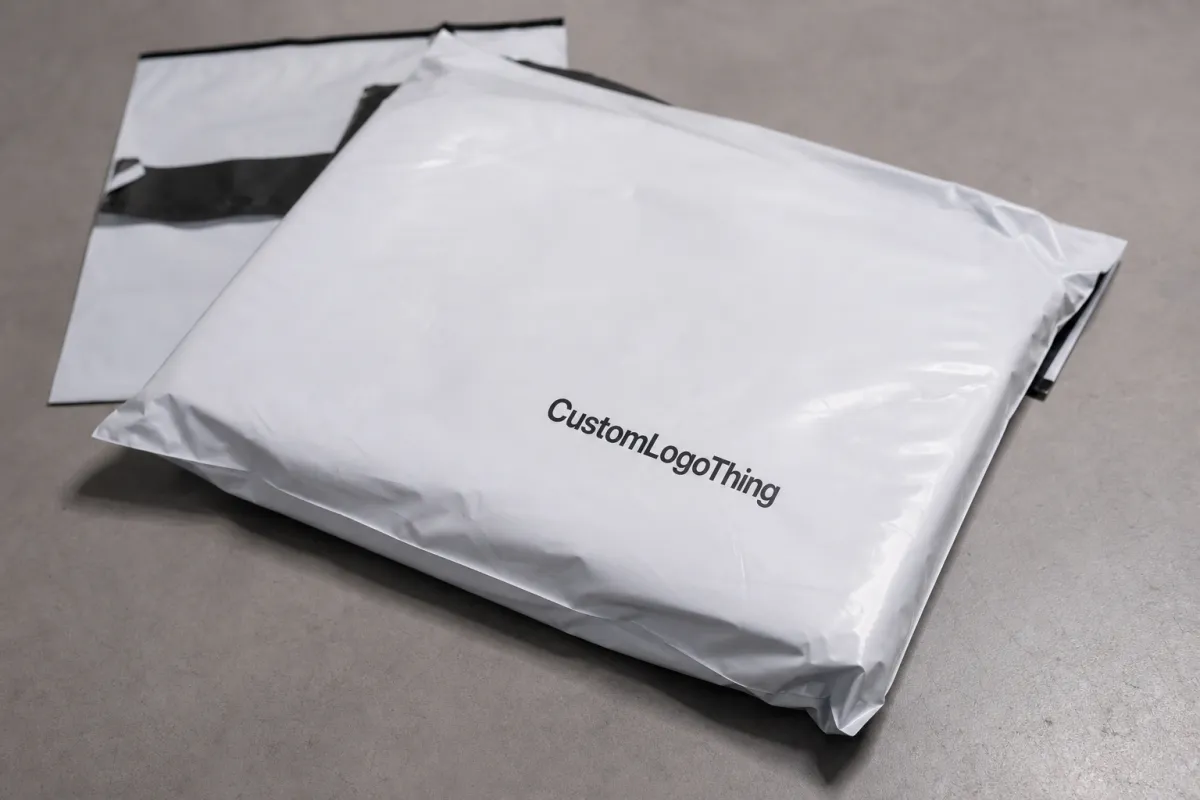
Poly mailers save money because they remove steps. For many apparel and accessory orders, the packer no longer needs a box, tape gun, or void fill. One seal is enough. That sounds small until a fulfillment line runs for hours; ten seconds saved per order becomes meaningful labor savings at scale.
The material weight helps too. A mailer usually weighs far less than corrugated packaging, so the shipping bill can drop along with packout cost. That is the main reason buyers ask for a poly mailer Bags Unit Cost Breakdown before approving a run. The bag itself is only one number. The savings usually show up in lighter parcels, fewer damaged shipments, and faster pack speed.
If the pack saves a nickel but adds a second touch, the saving was fake.
There is also the customer side. A clean, well-sized mailer usually arrives looking intentional, while a sloppy one wastes material and can make the brand look careless. For lightweight textile goods, the move to a mailer often reduces corrugated use, which also supports source-reduction goals discussed by the EPA.
Poly Mailer Bag Construction, Print, and Closure Options
Most mailers use LDPE or a coextruded film structure. LDPE is flexible and usually the economical baseline. Coextruded film gives more control over opacity, puncture resistance, and print performance, especially when the outer layer needs a better finish or the bag carries a heavier load. Thickness matters, but film structure matters just as much. A well-built 60-micron bag can outperform a heavier but poorly balanced one.
Plain mailers are the simplest route. Printed mailers add branding and a higher setup burden. Tamper-evident options suit shipments where opening evidence matters. Bubble-lined mailers add protection for items that can scuff, dent, or nick in transit. None of these formats is universally better; they solve different problems.
Print changes the quote in predictable ways. A one-color logo is usually easier to run and less sensitive to registration issues. Full coverage artwork, gradients, or tight alignment require more setup time and more process control. That is where tooling fees and setup charges tend to appear. Buyers often focus on the per-piece number and forget that more complex art can push the first order higher even if repeat runs become more efficient.
Closure style matters too. A peel-and-seal strip is standard on most ecommerce mailers. Dual adhesive return strips help with reverse logistics and customer convenience. Some brands want a stronger first seal; others want the package to open and reclose cleanly. Adhesive type, strip width, and placement all affect the final quote.
- Plain mailers fit low-cost, high-volume packing where branding stays secondary.
- Printed mailers support retail presentation and basic brand recognition.
- Tamper-evident mailers suit shipments where opening evidence matters.
- Bubble-lined mailers work for harder goods that still need lightweight shipping.
Testing should match actual use, not catalog optimism. For buyers who need a performance reference, ISTA transport test methods are a useful benchmark. Film strength can also be checked against standard tensile and elongation methods such as ASTM D882, which helps separate marketing claims from materials that can survive shipping.
Size, Thickness, and Spec Choices That Affect Performance
Size is one of the fastest ways to move cost up or down. Oversized mailers waste film and raise freight. Undersized mailers create packing friction and increase the chance of damage or return issues. The right dimensions let the product slide in without stressing the seam or folding the item badly. A useful spec sheet should always state internal size, not just a nominal outside dimension.
Thickness is the next lever. Lightweight apparel mailers often sit in the 50-70 micron range. Heavier-duty shipping bags may go higher depending on the product and the route. Thicker film does not automatically mean better performance; it only means more material. If the product does not need more puncture resistance, opacity, or seal strength, extra gauge is just extra cost.
Seal width is easy to ignore and annoying to fix later. A narrow or inconsistent seal can create problems during high-speed packing, especially in semi-automated close-and-ship operations. A wider, uniform seal usually gives better reliability and fewer rejects.
Before quoting, confirm these basics:
- Internal size and acceptable tolerance
- Gauge or micron target
- Finish and color, including opacity needs
- Closure type and adhesive style
- Security features, if any
- Print area and color count
Standardizing sizes across SKUs is one of the easiest ways to save money without touching quality. A brand that trims five mailer sizes down to three usually lowers inventory complexity, reduces changeovers, and improves purchasing accuracy. A supplier can also recommend a film structure that fits the job without overbuilding the spec just because the catalog allows it.
Poly Mailer Bags Unit Cost Breakdown: Pricing, MOQ, and Volume Breaks
This is where the poly mailer Bags Unit Cost Breakdown becomes useful for the buyer. A quote usually contains several pieces: raw film, printing setup, labor, packaging, tooling fees if applicable, and freight allocation. MOQ matters because fixed costs get spread across the run. A 5,000-piece order and a 50,000-piece order may use the same artwork, but they do not carry the same burden per unit.
As MOQ rises, unit price usually falls. That does not mean the biggest order is always the smartest one. It means buyers should look at the next volume break and ask whether the savings justify the inventory they will have to hold. If the drop from 10,000 to 25,000 pieces is small, tying up cash in stock may not be worth it. If the drop is meaningful, the bigger order can pay back quickly.
The main cost drivers are usually easy to spot once separated:
- Bag size and film usage
- Thickness and material grade
- Print complexity and color count
- MOQ and setup dilution
- Closure style and adhesive design
- Freight, carton count, and destination
For rough planning, plain stock-style mailers in larger runs often land around $0.06-$0.14 per unit, depending on size and thickness. Custom Printed Mailers with simple one-color branding often sit closer to $0.12-$0.28 per unit. Bubble-lined or multi-color custom options usually cost more. Those numbers are planning ranges, not promises. Artwork complexity, resin swings, and shipping lane all move the final number.
| Option | Typical MOQ | Indicative Unit Price | Best Fit |
|---|---|---|---|
| Plain stock mailer | 1,000-5,000 | $0.06-$0.14 | Fast-moving apparel, low branding need |
| One-color custom printed mailer | 5,000-10,000 | $0.12-$0.28 | DTC brands, repeat orders, simple logo work |
| Full-coverage custom mailer | 10,000+ | $0.18-$0.35 | Brand-heavy programs, stronger shelf impact |
| Bubble-lined mailer | 5,000+ | $0.20-$0.40 | Accessories, books, harder goods needing extra protection |
Freight can change the final number more than people expect. A low factory price with expensive shipping can lose to a slightly higher unit quote with better carton packing and a cleaner delivery lane. If the shipment crosses borders, duties, inland transport, and carton pack counts all affect landed cost. That is why buyers should ask for factory price and delivered estimate together, not as separate conversations.
Standard colors and standard sizes often cost less than custom colors and odd dimensions because common specs are easier to run and source. If the design can work with a standard base film, the budget may be better spent on stronger print or a better adhesive. That is usually a smarter trade than paying for a novelty size nobody needed.
Bottom line: the lowest quote on paper is not always the cheapest packaging program. The useful comparison is cost per piece, freight, inventory risk, and the amount of time each mailer saves in the warehouse.
Production Steps, Proofs, and Lead Time Expectations
A clean production run usually follows the same path: quote request, spec confirmation, artwork review, proof approval, production, inspection, and shipment. The part that causes the most friction is usually the handoff between buyer and supplier. Missing dimensions, unclear artwork, and late changes to closure style can reset the schedule fast.
Stock-style orders move faster because the material and structure are already defined. Custom printed jobs take longer, especially when the artwork needs plates, color matching, or multiple proof rounds. A typical range for Custom Printed Mailers is often 12-15 business days after proof approval, although larger or more complex orders can run longer. Shipping time is separate, so buyers with seasonal launches or tight receiving windows should budget both production and transit.
Pre-production approval is worth the time. A digital proof confirms artwork placement, copy, and color direction. A physical sample, when needed, helps verify feel, closure behavior, and fit. That small step can prevent a much larger mistake. A mailer that looks correct on screen can still be off by a few millimeters or crowd the seal once printed at scale.
Warehouse reality matters too. If the pack line is booked or the receiving team has limited slots, even a well-made order can miss its window. Better suppliers ask about carton counts, pallet configuration, and shipping method early. That is not filler; it is how the order gets delivered without causing another problem downstream.
Brands that care about sustainability should ask practical questions instead of settling for slogans. Can the outer cartons be specified with FSC-certified board? Can the design reduce material without hurting performance? Can the shipment avoid unnecessary air freight? Those choices matter more than a generic green claim.
The production schedule gets calmer when the brief is complete: fewer revisions, fewer assumptions, and fewer surprises when the truck shows up with the wrong thing.
What to Confirm Before You Request a Quote
If you want a useful quote, send facts, not a rough idea. The fastest way to get an accurate Poly Mailer Bags unit cost breakdown is to provide bag size, thickness, print colors, quantity, closure style, shipping destination, and the product going inside the bag. A supplier can only recommend well when the use case is clear.
The request should also say what matters most: brand presentation, lower freight, faster packing, or better return handling. Each answer leads to a different spec. That is where a packaging partner earns trust: not by pushing the most expensive option, but by showing the tradeoffs plainly.
Before approving an order, ask for these three things:
- Sample images or a sample pack so you can inspect material and print style
- A tiered price sheet showing how unit cost changes with MOQ
- A standard-versus-upgraded comparison so you can see what each feature adds
That keeps the conversation grounded and makes it easier to compare quotes from different suppliers on equal terms. A quote that hides setup charges or freight is not actually cheap. A quote that lays everything out clearly is the one you can plan around.
For buyers moving quickly, the sequence is simple: gather the specs, request a sample pack, confirm artwork, compare the volume breaks, and lock the production window. If the order fits, the numbers usually make that obvious. If not, the spec can often be trimmed without giving up strength or presentation. That is the value of a disciplined Poly Mailer Bags unit cost breakdown: it turns a vague purchase into a decision that holds up under scrutiny.
If you need a broader packaging review, start with Custom Poly Mailers for the application, then compare them against other Custom Packaging Products before signing off. The best buying decision is rarely the loudest one; it is the one that balances cost per piece, performance, and the way the operation actually runs.
What drives the poly mailer bag cost per unit the most?
Bag size and film thickness usually move price fastest because they change material usage. Print complexity, color count, and tooling fees can add more than buyers expect on smaller runs. Freight, carton count, and destination also affect landed cost, not just the factory price.
How does MOQ affect poly mailer bag pricing?
Higher MOQ spreads setup and printing costs across more bags, which lowers the unit price. Low-MOQ orders usually cost more per bag because fixed production costs are not diluted as much. Ask for tiered pricing so you can compare the savings at each volume break.
What details should I send to get an accurate poly mailer quote?
Share the internal size, thickness, color count, closure style, and whether you need plain or printed bags. Include the order quantity, shipping destination, and any packaging requirements such as cartons or retail-ready packing. Attach artwork early so the supplier can confirm print feasibility before pricing is finalized.
How long does production usually take after approval?
The timeline usually starts after artwork and proof approval, not when the first email is sent. Simple stock-style orders move faster than custom printed runs that need plates, color matching, or extra proofing. Shipping time adds to the schedule, so confirm both production lead time and transit time up front.
Can I lower the unit cost without sacrificing quality?
Yes: standardize bag sizes, reduce print colors, and choose a common film structure when possible. Ordering in larger volumes and avoiding rush freight usually cuts cost more effectively than downgrading materials. A supplier can often suggest a better spec that preserves strength while trimming waste.

