Custom poly mailer Bags for Beauty brands sit in a practical middle ground: they are shipping packaging, but they also carry a surprising amount of brand meaning. A $22 cleanser arriving in a plain gray mailer feels transactional. The same product in a printed bag with a clean logo panel, a good seal, and a finish that matches the rest of the line feels intentional before the customer even opens it.
That matters because beauty is built on repeat purchase and presentation. Packaging is not just a container that survives transit; it is part of product packaging, package branding, and the first physical proof that the brand pays attention to detail. For many customers, the mailer is the first branded touchpoint after checkout, and sometimes the only one until the parcel is in hand.
There is also a very real operational angle. Beauty products often need more care than apparel or accessories, and the outer shipper has to support that without slowing fulfillment to a crawl. The best mailer choice is usually the one that balances protection, print quality, and pack speed rather than trying to excel at only one of those things.
Why beauty shipments need more than a plain mailer
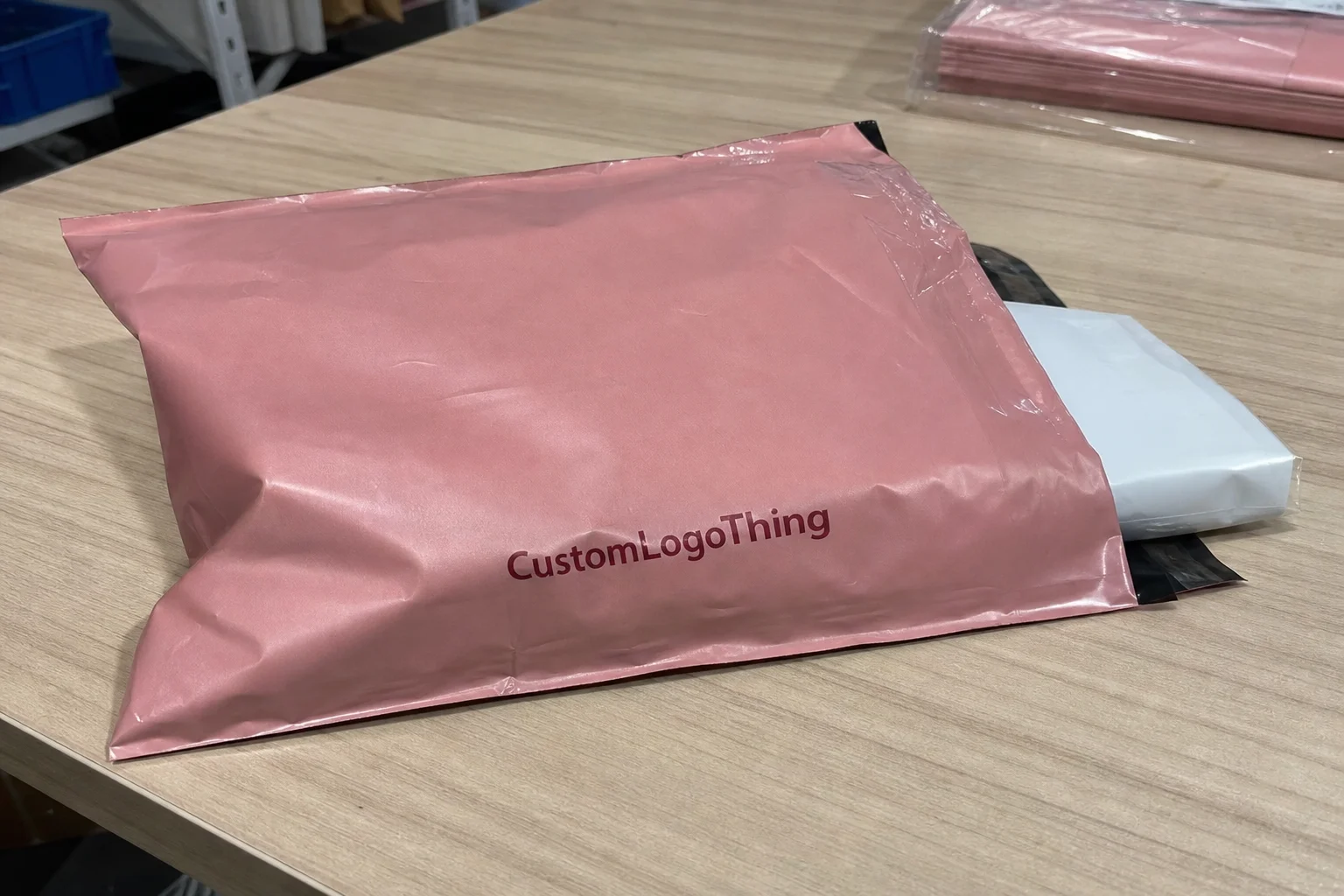
Beauty shipments have a different risk profile than most lightweight ecommerce categories. Shirts can wrinkle and still be acceptable. Skincare serums, lip oils, cream compacts, and sample kits are more likely to leak, dent, crack, or arrive looking compromised. Even when the product itself survives, a weak outer presentation can chip away at trust.
Custom Poly Mailer Bags for beauty brands are usually made from polyethylene film and printed with a logo, brand pattern, tagline, or campaign artwork. The material is flexible, light, and efficient to pack, which is one reason direct-to-consumer beauty labels use them so often. They reduce shipping weight compared with a box, speed up packing at the table, and give the brand a much larger printable surface than a stickered envelope.
Beauty also sells on perception. A frosted finish, a soft matte print, or a restrained color block can make a modestly priced item feel more premium. That effect is not theoretical. Switching from an unbranded bag to a custom-printed exterior that matches the website palette often changes how the order feels before the customer touches the product.
Still, appearance is only half the job. Beauty mailers need to be specified for the actual pack-out, not just for the logo. Film thickness, seal strength, and shipping conditions matter. So does the internal layout. A mailer can look excellent and still fail if a glass bottle is rattling around inside with no secondary protection.
“Pretty packaging is not enough. If the bag tears, the seal splits, or the print looks weak in transit, the customer remembers the failure first.”
How custom poly mailer bags work in the shipping workflow
The workflow is simple, which is part of why mailers are so widely used. The product is filled or boxed internally, inserted into the mailer, sealed with the adhesive strip, labeled, and sent into the carrier network. The bag does not need to do everything, but it does need to survive a lot: packing-table handling, conveyor friction, sorting, stacking, and a drop or two before it reaches the customer.
Construction details separate a useful mailer from a flimsy one. Most custom poly mailers use polyethylene film with a self-seal closure. Some include gusseting for extra depth, and some add tamper-evident features so the customer can see if the package was opened. Tear resistance is not glamorous, but it is one of the first specs worth asking about if the line includes fragile items or longer shipping routes.
Branding is usually printed on the outer surface. Depending on the supplier, the print may be one-color logo work, spot-color artwork, or full-coverage designs with matte or glossy finishes. The method affects appearance and cost. A simple single-color logo can be efficient, while edge-to-edge graphics usually add setup complexity and can stretch lead times.
These bags tend to work best for lightweight beauty orders:
- Sheet masks and sample kits
- Lip products and compact cosmetics
- Light skincare bundles
- Subscription boxes with low crush risk
- Promo orders and seasonal launches
They are less forgiving for glass, liquid-heavy kits, or products that can leak under pressure. If a brand ships fragile items, the mailer should be treated as the outer layer, not the only layer. For rough handling, buyers often evaluate packaging against recognized performance standards such as ASTM and ISTA test methods. The International Safe Transit Association is a useful reference point for distribution testing: ISTA.
Plain poly mailers and custom versions usually move through the same fulfillment process. The difference shows up after delivery. A custom version adds recognition, visual consistency, and a more deliberate brand impression, which matters for beauty labels that rely on repeat orders and unboxing content.
Key material, print, and sizing factors to compare
Material thickness is one of the first numbers to compare, and it matters more than many buyers expect. Thinner films cost less and weigh less, but they can stretch, crease, or split under stress. Thicker films generally improve durability and puncture resistance, though they also increase cost. For most beauty shipments, the decision lands in the middle rather than at the lightest or heaviest extreme.
Size planning should start with the packed order, not the individual product. That sounds obvious, yet it is still one of the most common mistakes. A serum bottle, two sample sachets, an insert card, and a thank-you note may fit individually but not once they are packed together with a little padding. Measure the biggest order you plan to ship, then add room for closure and handling.
Print choices influence both look and price. A one-color logo can be clean and economical. Multi-color artwork, gradients, and full-coverage branding look richer, but they usually require more prep and can affect the lead time. If the visual identity depends on a precise Pantone match, say that early. If the goal is a broad brand feel rather than exact color control, CMYK may be enough.
Color choice does real branding work. Clinical skincare often reads well in white, gray, soft blue, or restrained neutrals. Color cosmetics can carry bolder hues without looking out of place. Spa-style or wellness brands often favor muted earth tones, pale greens, or soft gradients that feel calmer than retail packaging with heavy contrast.
Sustainability questions are getting sharper, but the answer is not always to use the thinnest film possible. Downgauging film can reduce material use, yet if the bag starts failing, the brand may create more waste through replacements and returns. Some suppliers offer recycled-content options, and many brands prefer that route for package branding because it supports the sustainability story without asking the bag to do less than it should.
Closures matter too. A good adhesive strip should hold through transit and still be easy for the customer to open. Tamper evidence helps build trust, especially in beauty where buyers are cautious about product integrity. If you sell premium skincare, a weak-looking seal can undercut the whole experience.
| Option | Typical use | Strength | Trade-off |
|---|---|---|---|
| Plain poly mailer | Low-cost shipping | Low unit cost, fast sourcing | Little brand impact |
| Custom printed mailer | Direct-to-consumer beauty orders | Stronger branding, better unboxing | Higher setup and MOQ requirements |
| Mailer with inner cushioning | Fragile kits or mixed orders | Better protection for liquids and glass | Slightly more packing time and cost |
For broader context on packaging material choices and design considerations, the Institute of Packaging Professionals and the EPA’s packaging and waste resources at epa.gov are both useful references.
Pricing and MOQ basics
Pricing is usually driven by five variables: size, film thickness, print complexity, special finishes, and quantity. That sounds simple until you price a few options side by side. A 9 x 12 inch bag with one-color print can sit in a very different cost band from a larger full-color mailer with a glossy finish and a strong adhesive. The difference is not only material; it is also setup, press time, and waste during production.
For smaller runs, unit pricing tends to be higher because setup costs get spread across fewer bags. That is the basic economics of custom printed packaging, whether the order is mailers, custom printed boxes, or retail packaging labels. Once quantity rises, per-unit cost usually drops. The question is whether the extra inventory is worth the lower unit price.
MOQ means minimum order quantity, and for new beauty brands it can feel like a wall. It is not always fixed across suppliers. Some offer lower-volume options, but the trade-off is usually a higher unit price. For launch collections, subscription campaigns, or seasonal tests, that flexibility can still make sense.
If you are comparing options, think beyond the bag itself. A custom mailer can reduce packing labor because you are not applying stickers to every unit. It can also improve consistency, which matters if multiple people pack orders or if the brand is scaling quickly. That consistency is part of branded packaging, even if it does not show up cleanly in a spreadsheet.
Here is a practical way to compare common options:
| Approach | Upfront cost | Packing speed | Brand consistency |
|---|---|---|---|
| Plain mailer + sticker | Lower at first | Slower | Depends on application quality |
| Custom printed poly mailer | Higher setup, lower labor | Faster | Very consistent |
| Mailer plus insert card system | Moderate | Moderate | Strong when executed well |
As a rough planning range, many buyers see simple custom poly mailer pricing land somewhere around $0.18 to $0.60 per bag at moderate to higher quantities, while smaller runs, heavier films, or multi-color printing can push that number higher. Exact pricing depends on the brief, so side-by-side quotes are the only reliable comparison. Freight, duties, and carton counts can also shift the landed cost more than new buyers expect.
If you want a broader view of packaging formats beyond mailers, our Custom Packaging Products page is a useful place to compare options. And if you want to see how packaging choices translate into real production outcomes, the Case Studies section gives more context than a spec sheet alone.
Production steps and timeline from artwork to delivery
The production path is usually concept, artwork prep, proofing, material selection, print approval, production, finishing, quality check, and freight. That is the backbone. The real delays tend to happen in the middle, usually when the artwork is not press-ready or when colors are specified too loosely and need clarification.
Good files save time. Low-resolution logos, missing bleed, mismatched fonts, and unclear color references can add days. If you are sending brand assets, a clean vector file and a clear note on print area are far better than a screenshot pulled from the website header. A small amount of file prep can prevent a lot of rework later.
Lead time depends on order complexity and factory load, but a common range for many custom mailer runs is often 12 to 15 business days from proof approval, with freight added on top. That is not a promise. Quantity, print method, finish, and shipping route all matter. Specialty coatings, recycled-content requests, or heavier customization can stretch the schedule. If the order moves internationally, customs and transit can matter as much as production.
Sample approval is where smart buyers save money. A physical sample can reveal that the logo is too small, the color is too dark, or the seal lands awkwardly near a design element. Catching those problems before the full run is far cheaper than discovering them after 10,000 bags have been printed.
Plan the launch calendar backward. If the shipping date is fixed, do not assume packaging will arrive exactly when you want it. Build in space for artwork revisions, proof sign-off, production, and freight delay. That kind of planning is especially useful for Beauty Brands That launch in drops or coordinate packaging with marketing campaigns.
Common mistakes beauty brands make with mailer packaging
The most common mistake is choosing a mailer that looks right but does not fit the actual pack-out. A beauty brand may love the mockup, then discover the bag is too small once an insert card, sample pack, and protective wrap are added. That leads to stretched seals, wrinkled artwork, and a less professional result.
Another mistake is specifying premium print effects before confirming the product can survive transit. A glossy custom mailer does not fix poor internal protection. If the product is fragile, the internal structure comes first. That order matters more than the finish choice.
Buyers also get trapped by unit cost alone. A cheaper bag can cost more overall if it slows packing, causes damage, or forces the brand to overorder and store excess inventory. Storage space has a cost. So does labor. So do replacements for damaged shipments.
Then there is the visual problem. Artwork that looks strong on a screen can disappear on the bag if the contrast is weak or the logo is too small. Dark logo on dark film. Pale text on a glossy finish. It happens more than it should. Proofs exist for exactly this reason.
Skipping sample testing is still a frequent error, especially for products with pumps, droppers, glass bottles, or liquid components. A quick test pack can expose the weak point before a larger order is locked in. In packaging, that small delay usually pays for itself.
Expert tips for stronger branding, lower damage, and faster fulfillment
Design the mailer for photography as well as shipping. Beauty customers share unboxing content more often than many categories, and the package can act like unpaid media. A clear logo panel, a thoughtful color block, or a recognizable pattern helps the package read well on camera and in person.
Use one strong visual anchor. A centered logo panel or a repeated brand pattern is easier to recognize than a crowded layout with too many competing elements. In package branding, clarity usually beats noise.
Match bag color to your product line architecture. One shade for skincare, another for color cosmetics, maybe a seasonal version if inventory is tightly controlled. The goal is not to make everything different. The goal is to make picking easier and the brand easier to recognize.
Test adhesive strength on the actual fulfillment line. A sample-room seal and a production-line seal are not always the same thing. Temperature, speed, and handling can change the result. If your team packs hundreds of orders a day, small differences show up fast.
If the brand ships mixed-product orders, standardize a small set of sizes. Fewer SKUs simplify picking, reduce mistakes, and make inventory easier to forecast. That is one of those boring decisions that quietly improves operations.
Finally, ask for a prototype or short run before scaling when changing printers, updating artwork, or launching a new collection. It is the cheapest insurance you can buy in packaging design. A small test run can reveal print issues, seam behavior, and color shifts long before they become expensive.
Next steps to spec your first beauty mailer order
Start with the actual products. List the largest bundle, the most fragile item, and every insert or promo piece that will travel with the order. That is the only way to size the mailer honestly.
Next, measure the packed order, not the product alone. This is where many teams under-specify packaging and end up forcing too much into too little space. If you are unsure, build around the largest realistic order first.
Decide the non-negotiables before you request quotes. Print area, finish, thickness, seal type, and recycled-content preference should be clear enough that suppliers are comparing the same brief. If they are not, the quotes will not be comparable either.
Ask for pricing at two or three quantities. That gives you a better picture of where the step-down in unit cost justifies holding more inventory. For many brands, the best decision is not the cheapest unit price. It is the best balance of durability, branding, and cash flow.
Then build the launch schedule backward from the desired ship date. Add time for artwork approval, proofing, production, and freight. That simple calendar exercise prevents a lot of stress later.
For beauty brands, the mailer is not just a shipping shell. It is part of the customer promise. So when you review custom Poly Mailer Bags for beauty brands, judge them the way a buyer would: by durability, branding, and timeline together, not as separate boxes to tick.
What size custom poly mailer bags work best for beauty brands?
Choose the size based on the packed order, not the individual item. Leave room for inserts, sample packs, and minor cushioning. Test the largest bundle first so the bag does not stretch or seal poorly.
Are custom poly mailer bags safe for skincare and cosmetics?
They are suitable for many lightweight beauty orders and bundled kits. Fragile glass, liquids, and leak-prone products usually need inner protection. Always test the full pack-out before placing a large order.
What affects the price of custom poly mailer bags the most?
Size, film thickness, print complexity, and order quantity drive most pricing changes. More colors and larger coverage usually increase cost. Higher volume often reduces the unit cost significantly.
How long does it usually take to produce custom beauty mailers?
Timing depends on artwork approval, proofing, production load, and freight. Simple designs usually move faster than multi-color or specialty-finish orders. Approving artwork early is the best way to avoid delays.
Can small beauty brands order custom poly mailer bags without a huge MOQ?
Many suppliers offer lower-volume options, but pricing per bag is often higher. Smaller runs are useful for launches, seasonal campaigns, or testing a new design. Ask for tiered pricing so you can compare small-run flexibility with larger-run savings.


