If you ship coffee direct to customers, the outer package has to do more than hold the order together. Custom Poly Mailer Bags for coffee brands need to protect aroma-packed inner bags, survive carrier handling, and still feel like part of the brand when the customer opens the package at the door.
That balance is why so many roasters and subscription programs are moving away from plain stock mailers. A well-specified poly mailer can reduce freight weight, improve package branding, and create a cleaner unboxing experience without pushing the budget into rigid retail packaging territory.
Why coffee brands are moving to custom poly mailer bags
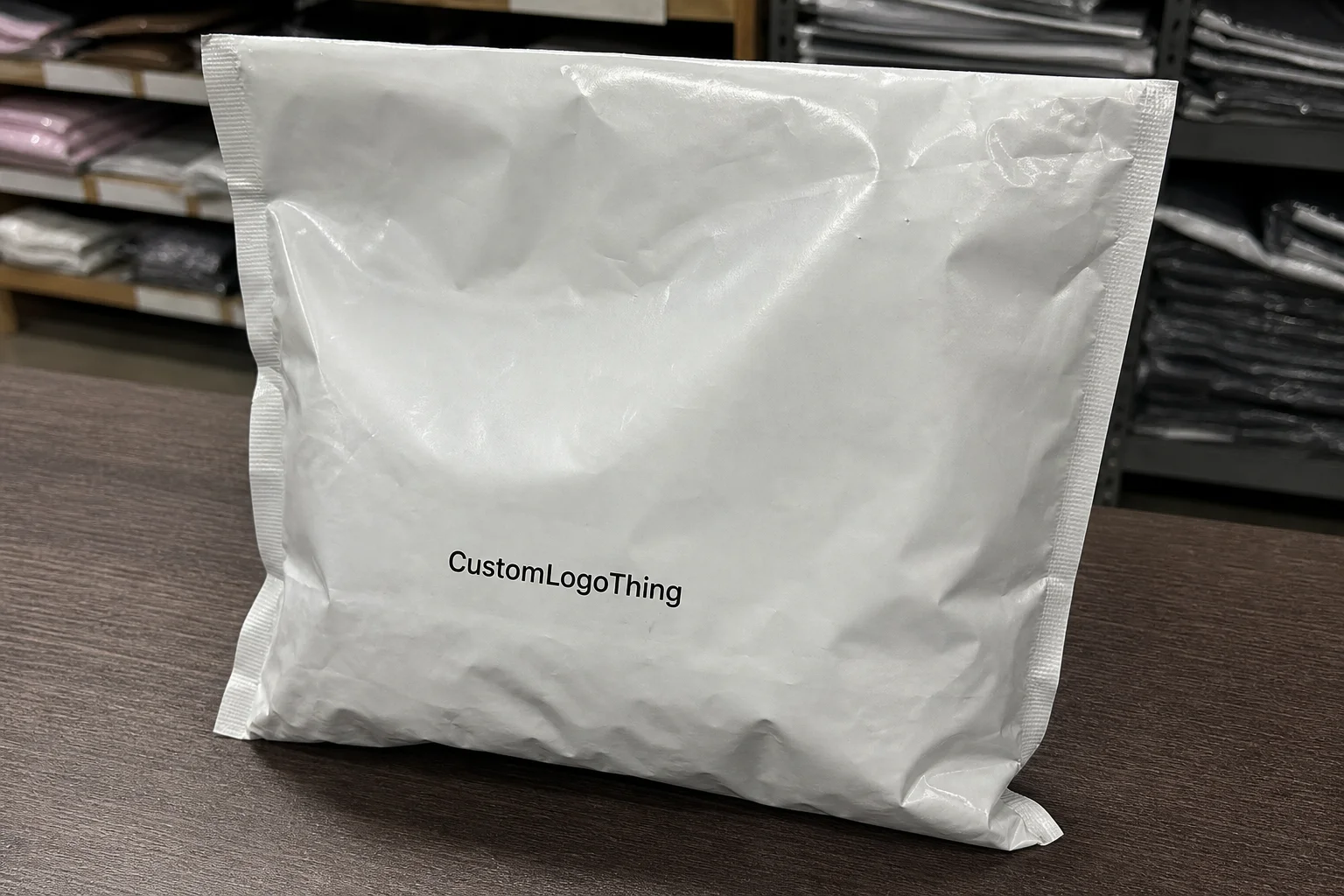
Picture a one-pound roasted coffee bag sliding through fulfillment: it may be packed with a sample card, a subscription insert, or a small gift, then shipped through a network that will sort, slide, drop, and stack it more than once. That is where custom Poly Mailer Bags for coffee brands start making sense. They are light, print-friendly, and far less expensive to ship than a rigid mailer or carton, yet they can still deliver the clean presentation that buyers expect from modern packaging.
At a practical level, poly mailers are usually made from single-layer polyethylene, co-extruded film, or a padded construction that adds a bit of cushioning. Single-layer PE is the simplest and often the most cost-efficient. Co-extruded film gives you better toughness and can pair outer print layers with an inner layer that improves tear resistance. Padded versions use bubble or foam cushioning and are better when the insert is vulnerable or the route is rougher.
Coffee brands like them because the use case is straightforward: subscription shipments, sampler packs, retail refill bags, and bundles that go Direct to Consumer. Unlike custom printed boxes, which can be excellent for presentation but more expensive in freight and storage, a mailer can carry strong branding at a lower landed cost. That matters when shipping volume rises and margin gets tighter.
From a packaging buyer’s point of view, the best mailer is the one customers barely think about during shipping and immediately notice during unboxing. That usually means the right size, a decent seal, a clean print, and no unnecessary material.
There is also a subtle but real freight advantage. Because the mailer itself is light and flat, you are not paying to move empty paperboard air. For many brands, that is the surprising win: premium appearance without dragging shipping cost upward.
One more reason these bags keep showing up in coffee programs is operational simplicity. A mailer that folds flat in storage, feeds quickly at a packing table, and closes with a pressure-sensitive flap can reduce labor friction more than a more elaborate package format. That matters in subscription fulfillment, where the same motion is repeated hundreds or thousands of times in a single shift.
How custom mailers protect coffee in transit and on shelf arrival
Protection starts with the outer layer, not with wishful thinking. Custom mailers help coffee shipments by adding abrasion resistance, moisture barrier, puncture protection, and a tamper-evident closure. A good adhesive flap should stay closed through handling, while the film itself should resist rubbing from conveyors and bin sorting. For heavier orders or packs with sharper edges, film thickness becomes more important than decorative finish.
In coffee shipping, the inner package matters too. Most roasted coffee is already sealed in a valve bag, tin-tie pouch, or another oxygen-managed pouch. The outer poly mailer is not replacing that barrier; it is protecting the inner package from transit damage and helping the order arrive looking intentional. If the inner pouch gets scuffed, the customer still judges the whole experience by what lands at their door.
Print quality influences that impression more than many teams expect. Crisp logos, consistent color density, and the right opacity can make the same mailer feel like premium branded packaging instead of a generic shipper. White film usually gives more flexibility for color accuracy, while black or dark opaque film can hide contents better and create a sharper visual contrast for logos and messaging.
Seal strength and closure type matter as much as the graphics. A cheap adhesive strip that lifts in hot weather, or a seal that leaves too much opening force for warehouse staff, can create returns and complaints. In practice, the best spec is the one that balances easy packing with enough tack to survive heat, pressure, and normal carrier abuse.
Unboxing consistency is another quiet advantage. Customers who reorder coffee every month begin to recognize the package before they even open it, which helps package branding and repeat-order memory. That can be as simple as a repeating color band, a clean logo lockup, or a short inside-print message that appears every time they open the flap.
For teams that want to compare shipping standards, the testing conversation often comes back to transit simulation and handling expectations. Resources from the ISTA testing community are useful for understanding how packaging is evaluated under vibration, drop, and compression conditions, even if you are not running a full lab program.
There is a practical limit here, though. A poly mailer is not a substitute for poor inner packaging, loose product fit, or an overfilled order. If a coffee pouch is already damaged before it enters the mailer, the outer bag cannot correct that. The best results come from matching the mailer to the complete ship-ready pack, not just the coffee bag by itself.
Key specs that affect cost, pricing, and MOQ
Pricing on custom Poly Mailer Bags for coffee brands usually comes down to a handful of variables that buyers can actually control. The biggest ones are film thickness, bag size, print color count, surface finish, adhesive flap type, and any added features such as tear strips, dual seals, or reinforced seams. If you change two or three of these at once, the quote can move more than expected.
For typical production, a simple one-color mailer in moderate volume might land around $0.18–$0.28 per unit at 5,000 pieces, depending on size and coverage. Add full-color print, a matte finish, or a higher-gauge film, and it is easy to move into the $0.30–$0.55 range. Those are practical planning numbers, not fixed rules, because the final cost depends on material market conditions and the converter’s process.
MOQ changes with print method. Flexographic printing is often used for higher quantities and cleaner repeat runs, especially when the artwork is stable. Rotogravure can support high-graphic detail and long production runs, but the cylinder cost pushes the economics toward larger orders. Digital printing can lower setup friction for smaller launches or seasonal artwork changes, though the unit price is usually higher at scale.
Here is a simple way to think about the trade-off:
| Mailer option | Typical strengths | Typical trade-offs | Best fit |
|---|---|---|---|
| Single-layer PE mailer | Lowest cost, light weight, easy to print | Less cushioning, lower puncture protection | Light coffee shipments, stable inner pouches |
| Co-extruded film mailer | Better toughness, improved tear resistance | Slightly higher cost | Subscription coffee, mixed SKU fulfillment |
| Padded mailer | Extra protection, better for inserts and bundles | Higher freight and material cost | Sampler kits, gift packs, fragile add-ons |
| Recycled-content PE mailer | Better sustainability story, familiar format | Print and finish options can be narrower | Brands with documented environmental claims |
Size is another place where buyers can quietly save money. If the mailer is too large, you pay for extra film and often add void fill or packing time. If it is too tight, workers fight the pack-out, and seals can be stressed. Matching the mailer dimensions to the actual coffee pack size usually pays back faster than chasing a fancy finish.
Honestly, many brands overspend by designing around visual preferences first and shipping math second. A slightly smaller, correctly specified mailer often looks better, packs faster, and claims less carrier volume than a flashy oversized one.
Minimum order quantities can be deceptively high if the artwork is complex or the film choice is unusual. A simple stock-color bag with one-color print is often easier to start than a fully custom structure with specialty finishes. That does not mean the upgraded version is wrong; it just means the buyer should decide whether the added cost is buying measurable value or only a visual change.
Production process and lead time: what happens after you approve artwork
Once artwork is approved, the run follows a fairly predictable path, though the exact order varies by supplier and print method. The production steps usually include spec confirmation, artwork prep, plate or file setup, print proofing, film extrusion or sourcing, printing, lamination if needed, converting, sealing, inspection, and packing. If a converter keeps both printing and converting in-house, that can shorten handoffs, but not always the overall schedule.
Artwork complexity can extend the timeline faster than most teams expect. A simple one-color logo with a repeat pattern is usually easier to proof than a full-wrap design with gradients, QR codes, and tight brand color matching. If you care about a specific Pantone range, say so early. Otherwise, the proof may look fine on screen but feel off once it hits film.
Lead time also moves based on raw material availability and the season. When resin supply is stable and the converter has stock film in the right gauge, some orders move fairly quickly. If the job needs custom-sourced film, special recycled content, or a less common color, expect more time. For planning purposes, many coffee brands should build in 12–15 business days from proof approval for production, then add freight time and a little buffer for sample review.
For sustainability claims or packaging material questions, I usually suggest checking directly against recognized resources rather than relying on assumptions. The EPA recycling guidance can help teams speak more accurately about end-of-life expectations, especially if the brand plans to mention recyclability on the package or product page.
Buyers should also budget time for sampling and internal review. A proof checks print layout, but a physical sample tells you how the seal feels, how opaque the film is, and how the final package presents in a warehouse light, which is often very different from a screen mockup.
Quality control usually focuses on a short list of checks that seem basic but prevent expensive reorders. Confirm the print position, the flap adhesion, the seal alignment, the film gauge, and whether the color stays consistent across the run. If the mailer includes a barcode or QR code, scan several samples from different cartons rather than relying on one good piece.
How to choose the right structure, size, and print format
Choosing the right structure starts with the coffee pack itself. Measure the outer dimensions of the inner bag or pouch, then add just enough clearance for easy insertion and seal closure. If the pack ships flat and slim, a standard PE mailer may be enough. If you are bundling inserts, stickers, or multiple pouches, you may need a wider gusset or a cushioned format.
There are a few common material directions to consider. Opaque white film gives a clean backdrop for color-heavy branding and often feels more like retail packaging. Opaque black film hides contents well and can create a premium, modern look. Recycled-content options can support a sustainability story, but the finish, print fidelity, and local recycling access should be checked carefully before making public claims.
Print format matters too. A simple one-color logo can look elegant if the layout is disciplined. Full-color graphics open up more visual storytelling, but they also need better artwork preparation and tighter ink control. Matte finishes tend to read softer and more premium, while glossy surfaces can feel brighter and more promotional. Inside-print messaging is a good place for a short note, brew tip, or loyalty prompt, because it adds value without cluttering the outer design.
If you are debating whether to print a mailer or move the same branding into custom printed boxes, consider how the order is fulfilled. Mailers are often a better fit for lighter coffee shipments and subscription fulfillment, while boxes can make sense for higher-end gift sets or orders that need structure. The right answer is not always the most elaborate one; it is the one that fits your shipping profile and brand expectations.
Expert note: sustainability claims have to stay grounded in what the material actually is, not what the brand hopes it will be. A recyclable PE mailer is different from a mixed-material mailer, and access to curbside recycling varies by region. If your brand wants to say something environmental, make sure the claim is backed by documentation and local reality, not just a sales sheet.
For brands browsing broader options, it can help to compare the mailer program with other Custom Packaging Products and see where the mailer fits into the wider Case Studies and fulfillment strategy.
Structure choice should also account for temperature. Films can feel stiffer in cooler storage and more flexible in warm environments, which affects how they feed and seal. That is one reason a sample pack tested in the actual warehouse is more reliable than a decision made from a single desktop photo.
Common mistakes coffee brands make when ordering mailers
The most common mistake is underestimating shipping stress. Coffee bags may not be heavy by warehouse standards, but they still experience compression, corner impact, and abrasion. If the film is too thin or the seal is weak, damage claims rise quickly. A mailer that looks fine on a desktop proof can behave very differently after a few conveyor turns and a carrier sort.
Another common miss is oversizing. A bag that is too large makes the order look loose, adds extra material cost, and can increase the chance that the inner package shifts around. On the flip side, an undersized mailer slows pack-out and can stress the adhesive. The best answer is usually a measured fit, not a generous one.
- Ignoring hot-weather adhesive performance and then getting flap failures during summer shipping.
- Choosing graphics before structure, which can lead to pretty but impractical packaging design.
- Using low-resolution art that blurs on film, especially around small text and QR codes.
- Skipping transit testing and discovering puncture risk only after launch.
- Forgetting exact specs and getting quotes that are not truly comparable.
Artwork problems are especially painful because they are preventable. Dark film can swallow weak logos. Fine lines may vanish. QR codes need enough contrast and size to scan reliably after printing and handling. If a barcode or QR code is part of the customer journey, test it before the order is locked.
One more thing people miss: warehouse handling. The mailer has to work not just for the customer, but for the fulfillment team packing hundreds or thousands of units. If the adhesive is awkward, the material sticks to itself, or the seal needs too much pressure, labor slows down and complaints start long before the consumer sees the package.
There is also a production-side mistake that shows up late: not confirming how the artwork will sit on the actual bag panel. A design can look balanced in a file but drift onto a fold, seam, or seal area once it is converted. That is why dielines and real dimensions matter more than a glossy render.
Expert tips for a smoother quote, proofing, and rollout
If you want cleaner pricing, send the supplier the right inputs from the start. That means product dimensions, target quantity, expected monthly volume, print references, shipping conditions, and any special handling concerns. The more exact the brief, the easier it is to avoid a quote that is technically accurate but commercially useless.
Ask for a pre-production proof or sample whenever possible. A PDF proof is useful, but a physical sample tells you much more about color density, seal feel, film stiffness, and how the packaging presents in real light. That matters for coffee, because the packaging is part of the brand promise before the bag is even opened.
I also recommend testing mailers through the actual fulfillment flow. Pack a few, label them, move them through your warehouse process, and if possible run a basic drop or vibration check aligned to your risk level. You do not need to build a full lab. You do need to see how the product behaves in the same conditions your carrier network will create.
Rollout works best in stages. Start with one core size for your main SKU, measure damage rates and labor speed, then expand to seasonal editions or gift sets once you know the structure works. That is a better use of budget than trying to launch three sizes and four graphics all at once.
Good package branding is not just how it looks on a render. It is how it survives the warehouse, the truck, the porch, and the second order.
For brands ready to compare formats, the simplest path is often to review Custom Poly Mailers alongside your coffee line review and decide where the mailer program can carry the most value with the least complexity.
During proofing, keep a short checklist in front of everyone reviewing the sample: artwork placement, seal performance, size fit, opacity, and scanability. Those five checks catch most preventable issues before they become inventory.
Next steps for launching custom poly mailer bags for coffee brands
Before you request pricing, create a short internal spec sheet. Include mailer size, film type, print needs, closure style, finish, target MOQ, and any sustainability requirements. That one page will save time for both the buying team and the converter, and it makes it easier to compare quotes without apples-to-oranges confusion.
Then gather artwork files, brand colors, and product photos. If the supplier can see the real coffee bag, bundle insert, or subscription kit, they can usually confirm fit and print feasibility faster. This is where good product packaging planning pays off, because the outer mailer should match the inner product and the fulfillment method, not fight them.
Request a sample pack or proof, review it with operations and marketing, and approve only after checking actual shipping performance and shelf presentation. If possible, involve the warehouse team in the final call. They will spot practical issues the marketing team may never see, like awkward flap behavior or a size that slows packing.
Finally, use the first rollout to build a better reorder file. Note the final approved spec, the color references, the damage rate, and any packing observations. That way, your custom Poly Mailer Bags for coffee brands become more dialed in with every run, instead of starting from scratch each time.
It also helps to document what did not work. If a finish showed scuffs under warehouse lighting, or a flap adhesive was too aggressive for fast packing, keep that in the spec notes. Those details are small when they happen, but they save real money on the next production cycle.
Frequently asked questions
What size custom poly mailer bags for coffee brands should I order?
Base the size on the outer coffee package dimensions plus a little handling clearance. Avoid oversizing, since extra space can make the mailer look sloppy and increase shipping waste. If you ship multiple SKUs, consider one standard size and one larger size for bundles or gift packs.
Are custom poly mailer bags for coffee brands strong enough for shipping roasted coffee?
Yes, if the film thickness, seal strength, and puncture resistance are matched to the product weight and carrier conditions. For heavier or sharper-edged inserts, choose a thicker film or cushioned structure. Always test the mailer in your real fulfillment and transit environment before scaling up.
How much do custom poly mailer bags for coffee brands cost?
Pricing depends on size, film structure, print colors, finish, and order quantity. Simple one-color mailers usually cost less than full-color or specialty-finish options. Higher MOQ often lowers unit cost, but only if the quantity fits your storage and usage plan.
What is the typical lead time for custom poly mailer bags for coffee brands?
Lead time usually depends on artwork approval, proofing, materials, and print complexity. Stock-based builds are often faster than fully custom film programs. Add extra time for sampling, revisions, and freight so launch dates do not slip.
Can custom poly mailer bags for coffee brands be made with recycled content?
Yes, many mailers can include recycled content or be specified with recyclable PE structures. The best choice depends on your sustainability goals, print requirements, and local recycling access. Ask for material documentation so your claims stay accurate and supportable.


