Skincare shipments look light on a scale, but they can be unforgiving once they leave the warehouse. A serum bottle that leaks one ounce, a glass jar that shifts inside a pouch, or a pump that rubs against a carton can turn an otherwise clean order into a replacement and a refund. That is why custom Poly Mailer Bags for skincare brands deserve serious consideration: they are lightweight, easy to brand, and often less expensive to ship than rigid packaging, yet they still need to earn their place in the pack-out.
From a packaging buyer’s point of view, the appeal is easy to see. Poly mailers can reduce dimensional weight, speed up fulfillment, and make a shipment feel intentional rather than generic. They also fit neatly into recurring order programs, subscription refills, and accessory bundles where speed and consistency matter as much as presentation. Still, a mailer is only as good as the product system around it. If a formula can crush, burst, or seep, the outer bag should not be expected to handle everything on its own.
For skincare brands, the best use cases tend to be smaller, more stable orders: sample sets, refills, mini kits, and secondary-packaged products that already have some protection. Heavier glass, loose components, and leak-prone formulas usually need more than a thin film and a printed logo. That distinction saves money in the long run because it keeps the packaging decision tied to reality instead of aesthetics.
What custom poly mailers do for skincare shipments
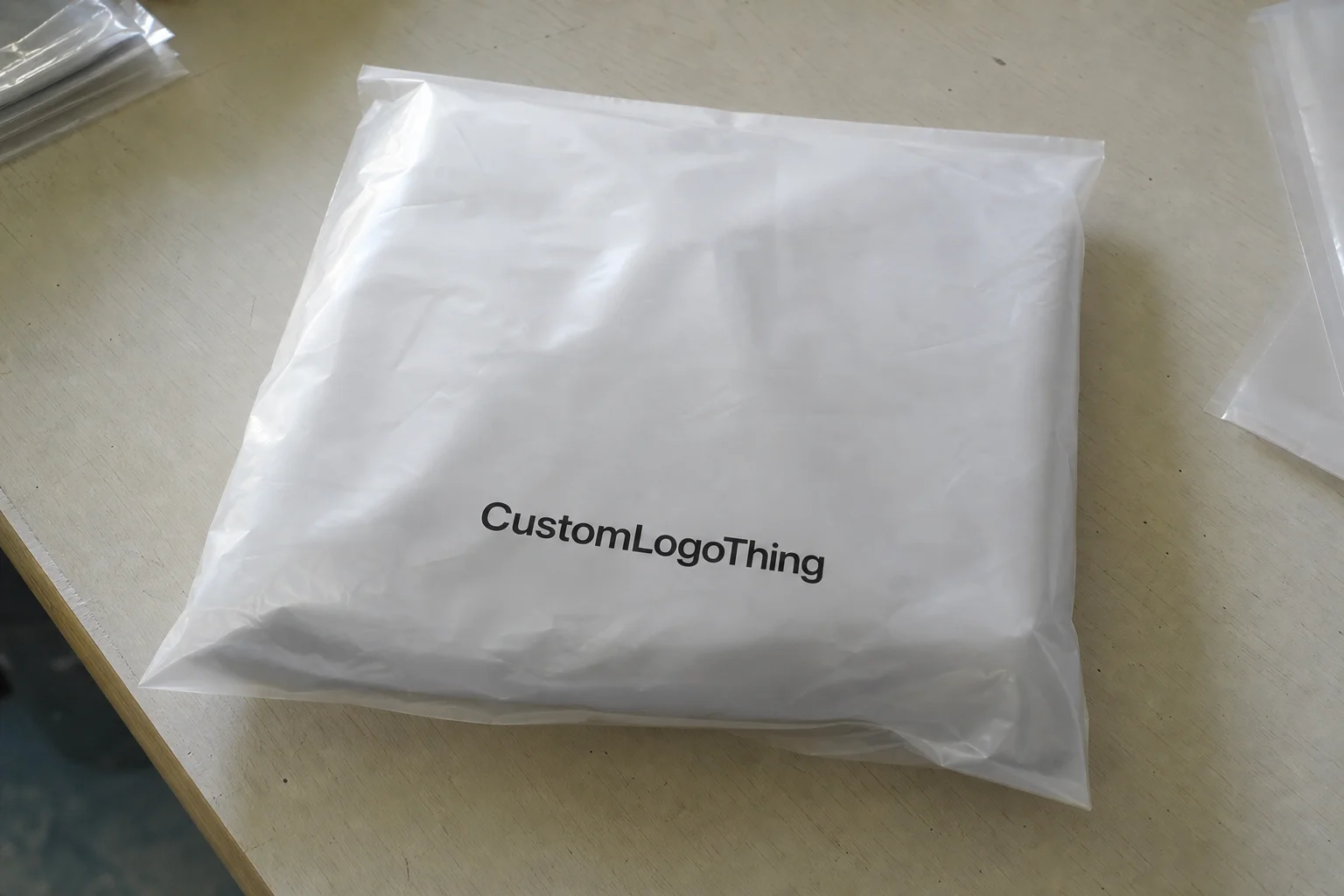
Skincare sits in an awkward middle ground for shipping packaging. It carries premium expectations without always carrying premium margins, and the product itself is often sensitive to pressure, vibration, and temperature swings. A face cream in a jar may retail for $24, but if the package arrives cracked or smeared, the service recovery cost can erase much of the profit on that order. Poly mailers help with the economics, especially for direct-to-consumer shipments where every ounce and every cubic inch affects the rate.
At a basic level, poly mailers are lightweight shipping bags made from polyethylene film or co-extruded film structures. They can be printed with logos, seasonal art, product graphics, handling notes, or QR codes. They can also be sized tightly around the packed item, which has a real operational effect. Tighter sizing reduces movement, limits the need for filler, and helps avoid the dimensional-weight penalties that can make oversized parcels expensive for no good reason.
The broader advantage is speed. A fulfillment team can fold, insert, seal, and label a mailer in seconds. That matters during launch weeks, promotional spikes, and subscription cycles when throughput matters more than elaborate presentation. Compared with custom printed cartons, mailers usually use less material and add less volume, which keeps storage and shipping simpler.
They are a strong fit for a few common skincare formats:
- Sample kits with sachets, minis, and a small instruction card.
- Refill orders where the product already ships inside a stable container or pouch.
- Subscription shipments that repeat on a predictable schedule and need consistent pack-out speed.
- Accessory bundles such as applicators, cleansing cloths, spatulas, or routine inserts.
They are not the right answer for everything, though. A glass dropper bottle with a weak closure or a heavier jar with no inner support can shift around too much in a plain mailer. In those cases, the outer bag may still be useful, but only as part of a layered system that includes an inner carton, a padded insert, or a bubble-lined format.
It helps to think of packaging as a system rather than a single item. A pouch, a carton, a mailer, and a corrugated outer shipper each solve different problems. Choosing the right layer for the right SKU is usually what separates a tidy shipping operation from one that spends all month fixing preventable damage.
How custom poly mailer bags work in the fulfillment flow
Most fulfillment teams want fewer touches, not more. A custom mailer can support that goal, but only if the structure matches the product and the closure matches the workflow. In practice, the process starts with picking the product, checking dimensions and weight, and deciding whether the item will ship as-is or inside a secondary pack. After that come the mailer, the seal, the shipping label, and the carrier handoff.
A typical sequence looks like this:
- SKU selection — confirm the exact product, including size, weight, fragility, and whether it contains liquid or glass.
- Pack-out test — place the finished product, not a naked bottle or jar, into the proposed mailer.
- Seal check — make sure the adhesive strip closes cleanly without stressing the contents.
- Label placement — verify that barcodes and shipping labels sit flat and remain readable.
- Carrier handoff — confirm the finished parcel meets the required service level and parcel limits.
Construction choices affect how the whole flow behaves. A single-layer film mailer is the lightest and usually the lowest cost. Co-extruded film structures often give better opacity and tear resistance because multiple layers can improve strength and print quality. Bubble-lined versions add cushioning, which can be valuable for delicate items or higher-value sets. Tamper-evident closures are also common in skincare because they make it easier to see whether a package has been opened before arrival.
Printing matters for operations as well as branding. Matte finishes usually feel more restrained and can reduce glare on logos. Glossy finishes tend to make color appear brighter. Recycled-looking films can support an eco-forward presentation, though the look should match the brand’s positioning rather than simply following a trend. A clinical skincare line may need a minimal mark and a clean white background; a more expressive brand may choose full-bleed graphics and stronger color.
| Mailer type | Best use | Protection level | Relative cost |
|---|---|---|---|
| Single-layer poly mailer | Light, non-fragile skincare sets | Low to moderate | Lowest |
| Co-extruded printed mailer | Branded DTC skincare orders | Moderate | Moderate |
| Bubble-lined mailer | Delicate items and gift sets | Higher | Higher |
| Tamper-evident mailer | Leak-sensitive or higher-value items | Moderate to higher | Moderate to higher |
If your team is also comparing Custom Poly Mailers or other Custom Packaging Products, start with what the parcel actually needs to survive, not with what looks most premium on a sample board. That approach usually reduces waste and makes the final spec easier to defend internally.
Key material, sizing, and branding factors to compare
Three specs carry more weight than most buyers expect: film gauge, size, and print coverage. Film gauge, often discussed in microns or mils, affects puncture resistance, opacity, and how the mailer feels in the hand. A thinner bag may be perfectly adequate for soft goods or sample kits. A thicker bag usually gives more confidence when the order includes rigid components, multiple units, or higher handling risk. There is no universal best gauge because the right choice depends on the product, the closure, and the carrier path.
Sizing is where a lot of brands quietly lose money. If the mailer is too big, the product shifts during transit, which increases the chance of scuffing and impact damage. It also raises postage if dimensional weight climbs. If it is too tight, sealing becomes awkward and the bag can stress at the seam. The practical sweet spot is a snug fit with enough room for the closure to work cleanly and without strain.
For skincare, that means measuring the finished packed SKU, not just the jar or bottle. Include inserts, sample cards, instruction leaflets, and any internal cushioning. A set that looks small on a desk can become a much larger pack-out once the retail sleeve, safety seal, and card insert are added. That is the version that matters for sizing.
Branding choices that affect buyer perception
Branding on a poly mailer is judged before the package is even opened. Full-bleed printing can make a shipment feel like a designed object rather than a plain shipper. Minimal logos can work well for dermatologist-led or clinical products. QR codes can point to routine guides, ingredient education, or reorder pages, which gives the package a practical role beyond transportation.
There is also a visibility issue that brands sometimes overlook. High-contrast logos are easier to read in photos, delivery videos, and porch shots. That matters more than many teams expect because a mailer that photographs well can extend the brand’s presence without adding another printed component.
If you are comparing custom Poly Mailer Bags for skincare brands across suppliers, ask each one for the same set of specifications: film type, gauge, size, print colors, closure style, and quantity. Without that consistency, quotes become hard to compare. One vendor may be pricing a thin stock bag with one-color printing, while another is pricing a heavier structure with better opacity and stronger adhesive.
Sustainability claims need care. Recycled content, downgauging, and right-sizing all help reduce material use, but recyclable does not mean universally recycled. The exact film structure, local collection rules, and the customer’s market all matter. For a broader reference point on recycling guidance, the EPA recycling guidance is useful, but local rules still determine what gets collected and processed.
For broader packaging strategy, the best option is usually the one that balances protection, weight, and presentation rather than maximizing just one of those things. A mailer that looks premium but drives damage is not premium. It is expensive.
Custom poly mailer bags for skincare brands: process and timeline
Packaging schedules usually slip because of several small delays, not one dramatic problem. A logo revision, a Pantone adjustment, a size change, a closure preference, or a proof that nobody approved on time can all push production back. That is why timeline planning matters as much as material selection. The path usually runs through design approval, material choice, proofing, printing, finishing, inspection, and shipping, and each step can add a day or several.
Stock-decorated mailers can sometimes move in roughly 7 to 12 business days after proof approval, depending on capacity and freight method. Fully custom printed runs often sit closer to 12 to 20 business days. Special sizes, heavier print coverage, or more complex closures can extend that further. Overseas production adds another layer because manufacturing time and transit time are separate problems.
Artwork revisions are one of the most common delays in packaging buying. Color matching is another. A brand may want a warm beige, a muted sage, or a specific blush tone, but the final printed film can shift slightly because ink behaves differently on plastic than it does on coated paper. If color is tightly controlled in your brand system, ask for a physical proof or a press reference rather than relying only on a screen mockup.
“The package that ships on time is usually the one that was approved early, tested with the actual SKU, and left with one person accountable for sign-off.”
Seasonal campaigns and product drops add another layer of pressure. A launch tied to email marketing, influencer content, or holiday demand cannot afford to wait on packaging. If mailers arrive late, the team either pauses the launch or ships in a temporary format that weakens the presentation. Buffer stock helps more than most teams want to admit, especially when demand spikes are hard to predict.
For brands that want a better sense of how packaging programs behave in practice, reviewing Case Studies can be useful before placing a first order. The details rarely match exactly, but the lessons repeat: samples matter, freight matters, and the almost-right spec often turns into the expensive one.
For quality assurance, many teams also reference performance testing standards such as ISTA and ASTM methods. If a shipment includes fragile components or higher-value products, test protocols are worth discussing with your supplier. The International Safe Transit Association maintains widely used guidance at ISTA. That does not replace real pack-out testing, but it gives the team a sensible framework.
Cost, MOQ, and quote factors that move unit price
The fastest way to overspend on packaging is to compare quotes without standardizing the spec. Price is usually driven by bag size, film thickness, print coverage, color count, closure style, and order volume. MOQ matters because the fixed setup cost gets spread across fewer or more units. That is why a small run can look expensive on paper, while a larger run may cut the unit price sharply.
For practical planning, simple branded mailers in moderate quantities may fall around $0.18 to $0.28 per unit at about 5,000 pieces, depending on size and print coverage. Heavier gauge film, more colors, or specialty closures can push that higher. At much smaller volumes, the unit cost rises quickly because setup charges are divided across too few bags. Larger programs usually lower unit price, but freight and storage can eat into savings if the order is larger than demand.
Ask for these line items explicitly:
- Setup or plate charges for print preparation.
- Overages in case the run includes spoilage or extra output.
- Freight from factory to warehouse.
- Reprint fees if artwork changes after approval.
- Sample charges if you need physical pre-production units.
One trap is chasing a lower unit price while ignoring total cost. A cheaper mailer that causes even a small percentage of damage can erase the savings quickly, especially in skincare where returns are often not resellable. Another trap is paying for premium print effects that improve the look but do nothing for protection or fulfillment speed. Metallic ink can be attractive; it is not always worth the added cost.
For more complex packaging programs, compare mailers against other Custom Packaging Products and against Case Studies that show how different formats perform in practice. That wider view helps teams decide whether the best answer is a mailer, a box, or a hybrid pack-out that uses both.
If your supply team needs a benchmark, a useful internal question is simple: what is the cost to ship one order safely, with the brand image we want, at the highest likely order volume? That is a more useful question than “what is the cheapest mailer?” The cheapest option is often the wrong one because it ignores damage, returns, and labor.
Step-by-step buying guide for packaging and operations teams
Good packaging programs are built on ordinary discipline. Not drama. Not a last-minute rush. Here is a practical sequence that works for most teams evaluating Custom Poly Mailer Bags for skincare brands.
- Define the product set — list dimensions, weight, closure type, fragility, and whether the item contains liquid or glass.
- Set the brand experience goal — decide whether the look should feel minimal, luxe, clinical, or eco-forward.
- Choose the physical spec — select size, film type, thickness, print coverage, and closure based on transit risk and budget.
- Request samples or digital proofs — test them with actual SKUs, not mock fillers.
- Confirm lead time and freight — make sure production, shipping, and receiving all fit the launch calendar.
- Set safety stock — keep a buffer so a sell-through spike does not stop fulfillment.
There is one step that gets skipped too often: test the package the way a carrier would mishandle it, not the way your team would handle it. If the product slides when shaken, the mailer may be too large. If corners burst under pressure, the film may be too thin or the inner pack may need reinforcement. A little manual abuse in the warehouse can save a lot of customer frustration later.
For sustainability-minded brands, paper inserts or routine cards can complement the mailer when printed instructions are needed. The Forest Stewardship Council explains certification and sourcing at fsc.org. FSC does not certify poly film itself, but it matters when the broader packaging system includes paper components.
Small details still count. Barcode placement. Adhesive strength. Ink contrast. Pouch opening direction. These are not glamorous decisions, but they are the ones that decide whether fulfillment runs cleanly on Monday morning or slows down with avoidable fixes.
Common mistakes that cause damage, waste, or weak branding
The most common mistake is ordering a mailer that is too large. It sounds harmless, but excess room lets products swing during transit, which raises the chance of scuffing and impact damage. It also pushes teams toward more filler, tape, or secondary protection, which defeats the reason for using a mailer in the first place.
The second mistake is assuming every skincare item can ship in a basic poly mailer. That is not true. Glass droppers, heavy jars, and leak-prone formulas may need inner cartons, bubble wrap, or a more rigid outer shipper. The mailer can still be part of the system, but it should not be the only defense.
Branding can also go wrong in two opposite directions. Some teams print so much onto the bag that the logo, barcode, and handling details get lost in the noise. Others go so minimal that the package feels forgettable. Strong package branding should remain readable, recognizable, and aligned with the price point of the product inside.
Environmental claims need discipline as well. If the mailer contains recycled content, say so clearly. If it is recyclable only in certain markets, say that too. If the claim depends on local collection systems, disclose it. Buyers are less forgiving of vague sustainability language than they used to be, and for good reason.
Finally, do not wait until launch week to approve artwork. Rush fees are expensive, but stock shortages are worse. If the packaging arrives late, the team may have to ship in a fallback format that weakens the unboxing experience and confuses repeat buyers. That is a poor trade in a category where presentation and trust are closely linked.
Custom mailers are not just shipping bags. They are a small operating system for DTC skincare, refill programs, and branded shipment presentation at scale. Choose the right spec, test it with the actual product, and keep the timeline honest. Do that, and custom Poly Mailer Bags for skincare brands can protect margins, reduce waste, and support the brand story without pretending to be a solution for every SKU.
Are custom poly mailer bags for skincare brands safe for liquid products?
They can be safe when the product is properly sealed and protected inside secondary packaging. For glass, pumps, or leak-prone formulas, use inserts, pouches, or inner cartons to reduce transit risk.
What size should I choose for custom poly mailer bags for skincare products?
Measure the finished packed SKU, not just the jar or bottle alone. Choose a size that allows a snug fit with limited movement, while still closing cleanly and meeting carrier rules.
How much do custom poly mailer bags usually cost?
Pricing depends on size, film thickness, print complexity, and order volume. Larger orders usually lower unit cost, while special finishes, setup, and shipping can raise the total.
What is the typical turnaround for custom mailers?
Turnaround varies by whether you choose stock-decorated or fully custom printed bags. Artwork approval, proofing, and freight can add time, so build in a buffer before launch.
Can I make custom poly mailer bags more sustainable?
Yes, by choosing recycled content options, minimizing material use with the right size, and limiting unnecessary print coverage. Always verify recyclability and disposal guidance based on the exact film and your market.


