For many apparel brands, Custom Poly Mailer Bags for fitness brands do more than hold a T-shirt or a pair of leggings. They are often the first branded surface a customer sees when the shipment arrives, and that matters because the product itself is soft goods that do not require a rigid box to stay protected. Chosen well, these mailers protect the order, keep shipping weight down, and make delivery feel intentional instead of generic.
That is why fitness labels rely on them for direct-to-consumer drops, subscription kits, ambassador orders, and seasonal launches. In practical terms, a well-specified poly mailer can support brand packaging goals without adding the cost, bulk, or cube of custom printed boxes. For a growing brand, that difference often shows up in both shipping math and warehouse handling.
Why Fitness Brands Rely on Poly Mailers for Apparel
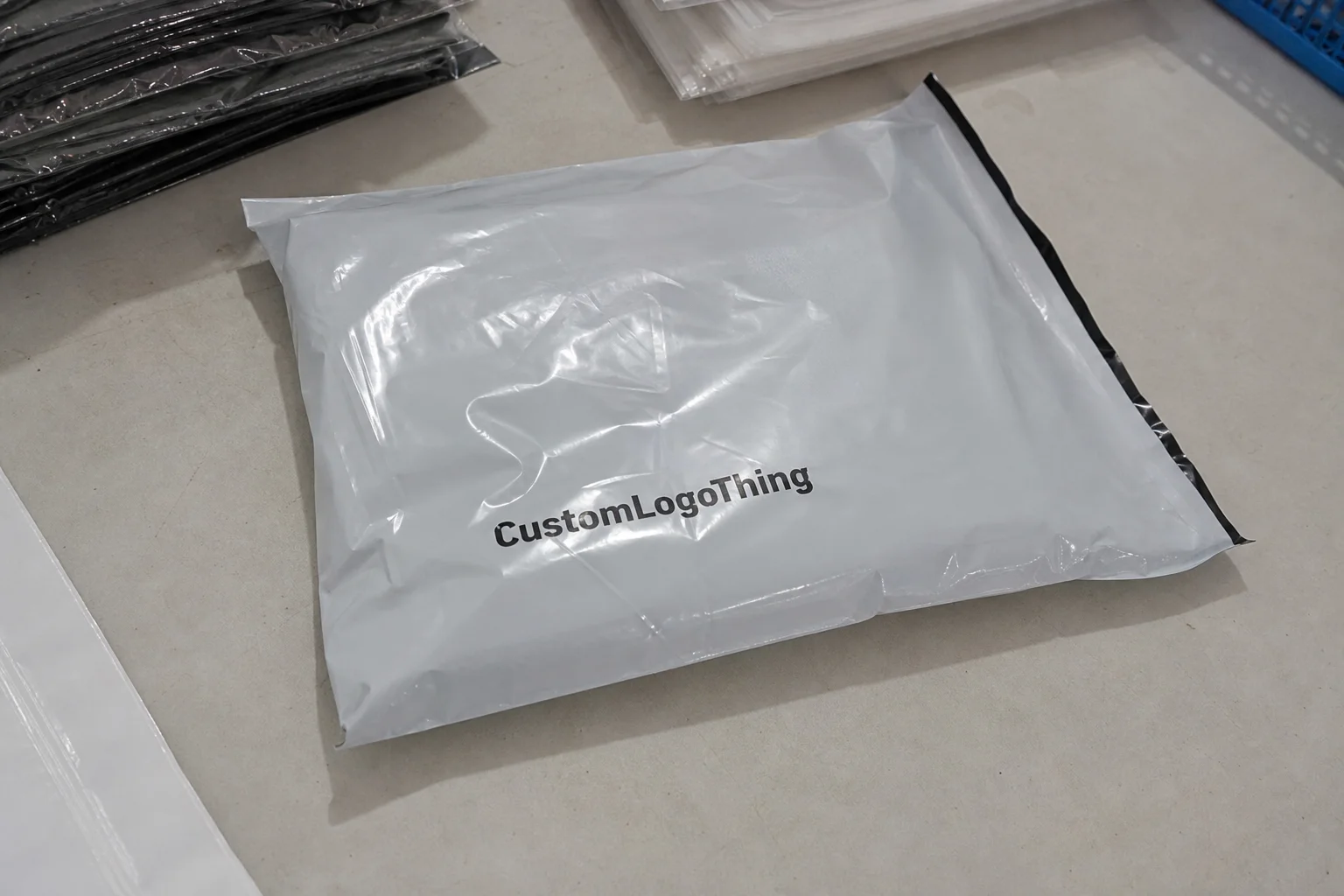
Fitness apparel ships lighter than many buyers expect. A pair of leggings, a training tee, socks, or a small accessory bundle often fits cleanly into a flexible mailer, and that flexibility is a major part of the appeal. You are not paying to ship air the way you often do with corrugated boxes, and once order volume climbs, that savings becomes hard to ignore.
A poly mailer is a lightweight shipping bag made from polyethylene film, usually paired with a pressure-sensitive adhesive closure. The film resists moisture, handles normal parcel movement better than plain paper mailers in many situations, and provides a smooth surface for logos, sizing marks, and brand messaging. For apparel sellers, that printed surface becomes part of the experience before the package is even opened.
From a packaging buyer’s point of view, it makes sense for several common use cases:
- Direct-to-consumer apparel where shipping weight needs to stay controlled.
- Influencer drops where presentation matters and unboxing is part of the campaign.
- Subscription kits where every cycle needs to look consistent.
- Seasonal launches where speed, storage efficiency, and branded presentation all matter together.
A lot of brands overcomplicate this decision. If the product is soft, folded, and not fragile, custom Poly Mailer Bags for fitness brands usually offer the best balance of protection and cost. They are not the answer for every item, but for leggings, tees, and lightweight sets, they are often the smartest starting point.
“The best mailer is the one that protects the order, fits the product cleanly, and keeps the brand presentation consistent without making fulfillment harder.”
You can see similar packaging decisions across broader Custom Packaging Products, but apparel has its own rhythm. Fitness buyers usually care about motion, moisture, and visual identity at the same time, which is why the mailer often becomes part of the package branding rather than an afterthought.
How Custom Poly Mailers Are Made and Printed
Most Custom Poly Mailers start with layered polyethylene film. A simpler version uses a single layer, while a better-performing version may use co-extruded layers, where one layer focuses on toughness and another supports print quality or surface finish. That layered structure affects both appearance and durability, especially when bags move through sortation, stacking, and parcel handling.
The closure is usually a peel-and-seal adhesive strip. Some mailers use a single adhesive flap, while others include a twin adhesive or return-seal style closure for easier returns. For apparel brands, that detail can be useful because customers do not always keep the original shipping materials when they try items on at home.
Printing is commonly done with flexographic methods for larger runs. Flexo works well because it handles repeat artwork efficiently, and it can print bold color fields, logos, and pattern elements at scale. The main thing buyers should understand is that color count influences setup. A one- or two-color design is often simpler and more economical than a full-coverage design with multiple spot colors, gradients, or fine details.
Common construction and finish options include:
- Single-wall mailers for lighter apparel and accessories.
- Dual-layer mailers for better puncture resistance and a more premium feel.
- Matte finish for a restrained, upscale look.
- Gloss finish for bright color pop and a sharper retail-style appearance.
- Clear interior or exterior windows in special applications, though not every design needs this.
- Die-cut adhesive seals that help with packing speed and tamper resistance.
Design elements like sizing marks, QR codes, care reminders, hashtags, and logo repeats can all be printed onto the mailer. The trick is keeping everything legible on a moving delivery network, where corners get rubbed, labels get added, and packages are sorted more aggressively than people realize. A design that looks clean in mockup but disappears in transit is not doing the job.
For brands that care about presentation as much as function, the mailer should feel intentional, but it should never slow fulfillment. That is a good rule for any packaging design decision, whether you are buying mailers, labels, or custom printed boxes.
Size, Strength, and Brand Fit: The Key Buying Factors
Size is where many orders go wrong. A bag that is too small can stress the seams, force the adhesive closure to work harder than intended, and make a folded garment look cramped. A bag that is too large wastes film, takes up more storage space, and can increase postage because you are shipping a larger parcel than you really need.
The right fit depends on the actual packed dimensions, not just the garment category. A single tee is one thing; a hoodie, a two-piece set, and a bundle order are another matter entirely. The safest approach is to test with real product samples, folded the way the team actually packs them.
Strength is usually discussed in mils, which is a thickness measurement for film. Typical apparel mailers might land around 2.0 to 3.5 mil, though heavier bundles may justify a thicker build or a dual-layer structure. If the order includes dense items or several garments, the bag should have enough puncture resistance to tolerate corners, tags, and repeated handling. That does not mean the thickest film is always the right choice; it means the right film should match the shipment profile.
Brand fit matters just as much. A fitness label often wants the mailer to feel athletic, clean, and confident. A black bag with a sharp white logo sends a very different message than a neon bag with full-coverage artwork. Neither is automatically better. The right choice depends on the brand palette, the audience, and how the delivery should feel when it lands at the door.
Here is a practical comparison many buyers use when evaluating options:
| Mailer Type | Best For | Typical Strength | Brand Look | Relative Cost |
|---|---|---|---|---|
| Standard single-layer poly mailer | Tees, socks, light accessories | About 2.0-2.5 mil | Clean and simple | Lower |
| Dual-layer custom poly mailer | Leggings, light sets, small bundles | About 2.5-3.5 mil | More premium and durable | Moderate |
| Return-seal mailer | Apparel with likely exchanges | Varies by construction | Functional, customer-friendly | Moderate to higher |
| Heavier-duty custom mailer | Hoodies, bundled orders, denser shipments | 3.5 mil and up | More substantial, less flimsy | Higher |
There is also the sustainability question, which deserves a careful answer. Some buyers want recycled content, some want downgauged film to reduce material use, and some want a better material balance overall. Those goals can all be valid, but they are not interchangeable. A lighter film is not the same thing as a recycled film, and a recycled-content bag still needs to meet the brand’s performance requirements. If you are trying to align with broader packaging goals, resources from the EPA recycling guidance and standards information from the FSC can help frame the conversation, even though they do not replace supplier specs.
For brands with a higher-end retail packaging feel, the finish can change perception quite a bit. Matte often reads more premium and subdued. Gloss usually feels louder and brighter. Both can work in branded packaging, but the choice should support the garment line rather than fight it.
Custom Poly Mailer Bags for Fitness Brands: Process and Lead Time
The production sequence is fairly straightforward, though the details matter. It usually starts with quoting, then artwork review, then prepress proofing, then printing, then curing or finishing, then converting the film into bag format, and finally packing the completed order for shipment. Each step depends on the one before it, so one small delay in approval can push the whole schedule back.
Lead time changes based on several factors:
- Print complexity and the number of colors.
- Bag size and the amount of film needed.
- Material availability at the time of order.
- Special features like return seals, extra thickness, or custom finishes.
- Artwork readiness and how quickly proofs are approved.
For many production runs, a straightforward order can move faster than a highly customized one. A simple two-color design on a standard size may be easier to schedule than full-coverage artwork with multiple revisions. Still, the biggest variable is usually approval speed. Missing bleed, low-resolution logos, unclear PMS references, or a last-minute copy change can add days to the timeline.
If a brand wants a cleaner process, it helps to send a complete spec sheet up front. That should include final vector artwork, target dimensions, estimated product weight per shipment, desired film thickness, finish preference, and any special handling requirements. When those details are clear, the quoting and proofing process is usually far smoother.
For teams building a launch calendar, packaging should be planned before fulfillment starts, not after. That sounds basic, but it gets missed all the time. If mailers arrive after inventory is already in the warehouse, the speed advantage of flexible packaging disappears quickly. For brands needing help across multiple formats, Custom Poly Mailers are often just one part of a broader packaging plan.
To keep quality aligned with expectations, many buyers also look at process controls and packaging standards used in other shipping categories, including ship-test references like ISTA protocols for transport testing. Not every apparel mailer needs full lab validation, but the testing mindset helps brands ask better questions.
Cost, Pricing, and MOQ: What Really Drives the Quote
Pricing is usually driven by a small group of variables: size, thickness, print coverage, number of colors, number of sides printed, order quantity, and added features like hang holes or twin adhesives. Once those pieces are clear, most quotes make a lot more sense.
MOQ exists because custom printing and converting involve fixed setup costs. Plates, prepress work, press setup, and material changeovers all cost money before the first sellable unit is produced. As the order size goes up, those setup costs get spread over more bags, which is why larger runs usually lower the unit price.
Here is a realistic way buyers often think about efficiency, using approximate pricing ranges that will vary by spec and market conditions:
| Order Size | Typical Price Per Unit | What Usually Helps |
|---|---|---|
| 1,000-2,500 pieces | $0.28-$0.45 | Simple art, standard size, limited colors |
| 5,000 pieces | $0.18-$0.28 | Moderate print coverage and stable specs |
| 10,000+ pieces | $0.12-$0.22 | Higher volume, repeatable artwork, streamlined setup |
Those are not promises, and they should not be treated like a fixed rate card. A heavier film, a special finish, or a more complex design can move the quote up quickly. That is why comparing different packaging options only works if the spec sheet matches. A thicker premium mailer is not the same quote as a lighter budget version, even if both are called “custom poly mailers.”
Freight and storage also belong in the total cost picture. A bag that is cheaper per unit but takes more warehouse space, ships in a larger carton count, or slows packout can cost more over time than a slightly more expensive option that is easier to handle. This is where practical product packaging decisions beat surface-level price shopping.
If a brand is comparing packaging formats, it can help to review Case Studies and see how different product packaging choices affect fulfillment, storage, and presentation. The final decision is rarely just about the price of the bag itself.
Common Design and Ordering Mistakes to Avoid
The first mistake is guessing the size. Too many teams pick a mailer based on the category name instead of the packed sample. A leggings order, for example, may look small on paper but bulk up quickly once folded, bagged, and stacked with inserts. Guessing often leads to wrinkling, excess void space, or seam stress at the closure.
The second mistake is sending artwork that is not ready for print. Fine lines, tiny type, low-resolution logos, and colors chosen only for screen viewing can disappoint fast once they hit film. Print on plastic is unforgiving in the sense that it shows artwork problems clearly. If the logo is weak in the file, it will usually look weak on the bag.
Another common issue is ignoring the fulfillment team. A mailer that looks beautiful but slows packers down is not a good fit. The adhesive should close reliably, the film should open without fighting the user, and the bag should stack well on the bench. If the packaging causes friction during packing, the whole operation feels it.
Overcomplicating the design is another trap. Brands sometimes add too many colors, too much copy, and too many decorative elements because they want the mailer to do everything. Usually, that raises cost and adds lead time without improving the customer experience. Strong package branding is often simpler than teams expect.
Before ordering, test with real product samples. Mockups are useful, but they do not show fabric bulk, fold memory, zipper corners, or how a two-piece set settles into the bag. Those details change the final fit more than most teams realize.
Expert Tips and Next Steps for a Better Packaging Rollout
If you want a smoother rollout, start with a spec sheet that includes the product weight, folded dimensions, shipping method, desired print style, and target launch date. That gives the packaging supplier enough information to narrow the right options instead of guessing at them.
A small test run is smart if you are moving from generic mailers to a custom program. It lets you check color, closure feel, pack speed, and real-world fit before you commit to a larger purchase. That is especially useful for brands that are still refining their sizing or planning a new drop structure.
It also helps to align packaging with campaign timing. If a launch depends on influencer fulfillment, press kits, or a seasonal drop, the mailers need to arrive before inventory is ready to ship. Packaging that lands late is not a branding asset; it is a delay.
Document the approved artwork, size standards, reorder thresholds, and any approved alternate specs. That way, the next order is predictable, and the brand does not drift into inconsistent bags from one season to the next. Consistency matters more than many teams think, especially when customers start recognizing the packaging before they even see the product.
For fitness apparel, custom Poly Mailer Bags for fitness brands work best when sizing, print, cost, and timeline are planned together before production starts. That is the practical way to protect the shipment, present the brand well, and keep fulfillment moving without unnecessary headaches.
FAQ
What size custom poly mailer bags do fitness brands usually need?
Most brands choose based on the folded dimensions of the apparel, not just the item category. Lightweight tees and socks can fit smaller mailers, while hoodies, sets, or multiple units usually need larger dimensions. Testing with real packed product is the safest way to avoid overfilling or wasted space.
Are custom poly mailers good for shipping activewear?
Yes, they work very well for soft goods like leggings, tops, shorts, and accessories. They offer moisture resistance, lower shipping weight, and a branded outer layer that looks polished at delivery. For very bulky or rigid items, another package style may be a better fit.
How much do custom poly mailer bags for fitness brands cost?
Pricing depends on size, thickness, print coverage, color count, and order quantity. Higher volumes usually reduce the unit cost because setup expenses are spread across more pieces. Comparing quotes only works well when the specs match exactly.
What is the typical lead time for custom printed poly mailers?
Lead time varies by artwork approval, print complexity, material availability, and production schedule. Clean final files and quick proof approvals usually shorten the timeline. Brands should plan ahead for launches and seasonal restocks so packaging arrives before fulfillment begins.
What should I send to get an accurate quote for custom poly mailer bags?
Provide the bag dimensions, estimated product weight, print colors, artwork file, and target quantity. Include any preferences for finish, thickness, or special features like adhesive strength. The more specific the spec sheet, the easier it is to compare pricing and timeline options.


