For a fitness brand shipping leggings, tees, bands, or bundled promo kits, Poly Mailer Bags unit cost for fitness is not just a packaging line item. It is a margin decision, a packing decision, and sometimes a freight decision all at once. A mailer that looks inexpensive on paper can still become the pricier option once labor, storage space, void fill, and shipping weight are added into the picture.
That difference shows up quickly at scale. A sportswear label moving 10,000 orders a month does not experience a small overage the same way a boutique brand does. Two grams here, a slightly larger flat pack there, and dimensional weight starts working against the shipment. The cheapest-looking option is often not the cheapest one by the time the parcel leaves the warehouse.
Why fitness brands watch mailer cost per order
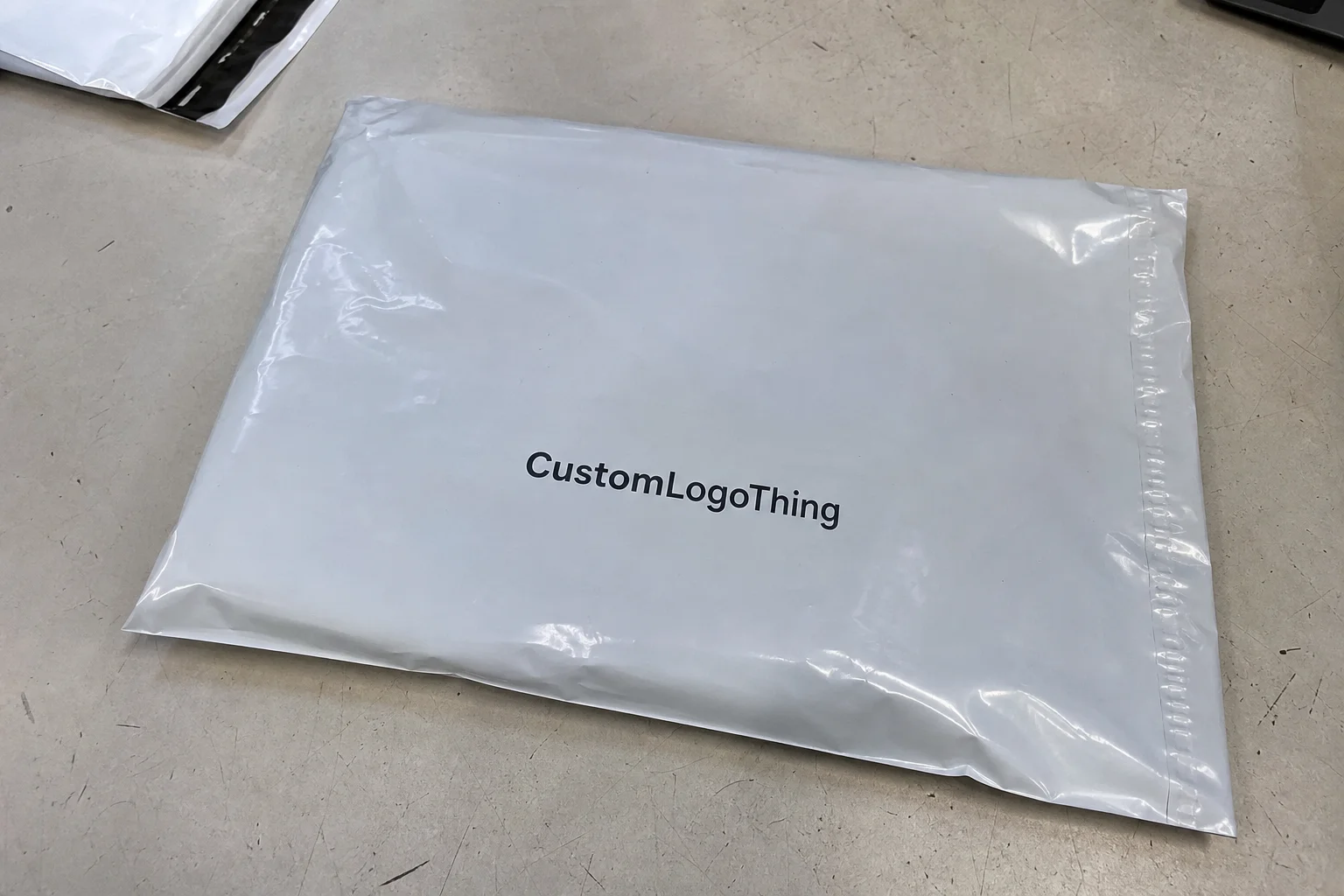
Fitness products are a strong fit for poly mailers because most apparel and accessories are soft, compressible, and low-fragility. A properly sized mailer often beats a carton on total fulfillment cost. There is less packaging material, less void fill, fewer packing touches, and, in many carrier networks, lower cubic weight.
That advantage matters most for leggings, tees, socks, resistance bands, shaker sleeves, and small accessory bundles. Those products usually do not need rigid wall protection, but they do need a package that seals well, stays opaque, and survives the trip without splitting at the seam or scuffing the print.
From a packaging buyer’s point of view, the useful question is the total cost per shipment. Not the quoted unit price alone. A mailer that costs a little more per piece can still lower overall spend if it cuts pack-out time by 15 to 20 seconds per order or removes the need for a larger box. That kind of time savings is easy to underestimate until the order volume climbs.
“A low bid is not always a low cost. If the mailer slows packing or forces oversized shipping, the savings can disappear in the warehouse.”
That is why teams searching for Poly Mailer Bags unit cost for fitness usually want a predictable, repeatable number they can build into margin models and launch budgets. They are not shopping for a catalog price; they are trying to lock in a packaging input that will hold up across reorders, seasonal spikes, and subscription replenishment.
Packaging people tend to treat mailers as a system choice rather than a standalone product choice. The bag affects picking, packing, freight class, customer perception, and even return handling. That is why many brands compare poly mailers against lightweight boxes only after calculating the full landed cost.
Two useful references are ISTA, which publishes transport testing guidance, and the EPA, which provides broader packaging and waste-reduction context that can support sourcing decisions.
Product details that shape performance and brand presentation
Fitness brands use Mailers for Apparel launches, gym accessories, resistance bands, shaker sleeves, socks, and promo kits built around lightweight soft goods. That use case favors a package that is thin, durable, and quick to seal. It also favors a clean printed surface, because the mailer is often the first physical brand touchpoint a customer sees.
Material choice changes both appearance and performance. LDPE remains common because it is flexible and cost-effective. Co-extruded films can add strength and better puncture resistance while keeping the bag relatively light. Recycled-content blends are more common now too, especially for brands that want to show progress on sustainability without moving to a rigid mailer or a carton. Finish matters as well: matte can look more premium, while glossy film often gives stronger color contrast.
Closure style is another cost and usability lever. A standard self-seal adhesive strip is usually the most economical. Tamper-evident closures are popular when buyers want a stronger first-open signal. Double-seal or return-friendly configurations add convenience, but they can increase tooling fees or setup charges if the structure is nonstandard.
Print choices move the quote quickly. One-color logos are usually the lowest-cost branded option. Full-color exterior graphics cost more, and inside printing pushes the price higher again because it adds complexity and ink coverage. The same is true of custom finishes such as soft-touch lamination or heavy matte coating. Every added feature increases the unit cost, and sometimes the MOQ too.
If the packaging needs to do more than ship product, specify that up front. A mailer for a launch kit with inserts, a size card, and a return strip is a different item from a plain stock bag. Buyers who define the use case clearly usually get tighter pricing and fewer revisions.
- Best for simple apparel: LDPE or co-ex LDPE, one-color print, standard self-seal.
- Best for premium branding: co-ex film, matte finish, two-color print, cleaner registration.
- Best for return-heavy programs: dual-seal or return-strip format, stronger adhesive, slightly higher cost per piece.
For branded apparel runs, many buyers compare Custom Poly Mailers with other Custom Packaging Products to see whether the mailer or a lightweight box fits the product mix better.
Specs that matter for fitness apparel and accessories
Size drives a surprising amount of cost. A compact accessory mailer for bands or socks might sit in the 8 x 10 inch range. A standard apparel mailer for tees and leggings often falls around 10 x 13 or 12 x 15 inches. Larger hoodie or bundle mailers may run closer to 14 x 19 inches or beyond. Bigger does not just use more film; it can increase freight volume and inbound storage space too.
Thickness is usually discussed in mils, and the right choice depends on product weight and handling risk. Thin films around 1.5 to 2.0 mil can work for lightweight tees and accessories if the packing line is clean and consistent. Midweight options around 2.5 to 3.0 mil are common for leggings, heavier tops, and mixed bundles. If the brand ships denser items or wants more puncture resistance, higher gauges may make sense, but the price rises with them.
Buyers should also verify durability specs, not just bag dimensions. Puncture resistance matters when the order includes metal hardware, tags, or sharp insert corners. Seal strength matters because weak adhesive creates returns and repack work. Opacity matters for privacy, especially when product graphics or contents might show through thinner film. Moisture protection matters for apparel shipped through humid regions or rainy delivery networks.
There are a few less visible details worth checking before approval:
- Recycled content percentage and whether it is post-consumer or post-industrial material.
- Return-strip configuration if the brand wants reusable packaging.
- Perforation or tear-strip placement for easier opening.
- Recycled-stream compatibility if the buyer is making end-of-life claims.
- Print registration tolerance for logos with tight line work.
Here is a practical checklist that helps buyers compare vendors on equal terms:
| Spec | What to confirm | Why it affects cost |
|---|---|---|
| Size | Flat width, length, and usable gusset if any | More film increases material and freight spend |
| Film thickness | Mils or micron equivalent | Thicker film improves durability but raises unit cost |
| One-color, multi-color, inside print, coverage level | Ink, plates, and setup charges change quickly | |
| Closure | Standard, tamper-evident, dual-seal | Special adhesives can increase tooling fees |
| MOQ | Minimum order quantity by size and print style | Lower runs usually carry higher cost per piece |
The goal is not to over-spec the mailer. It is to avoid hidden trade-offs. A quote that looks lower can conceal thinner film, a weaker seal, or a design that creates damage claims later.
Poly mailer bags unit cost: pricing, MOQ, and what changes the quote
The biggest drivers behind Poly Mailer Bags unit cost for fitness are straightforward: dimensions, film gauge, print coverage, number of colors, adhesive type, and order quantity. That is the core pricing logic. Everything else usually sits on top of it.
As a rule, higher quantities lower the unit cost because setup charges get spread across more bags. Short runs do the opposite. They usually carry more expensive art prep, plate costs, or tooling fees on a per-piece basis. A stock mailer with no print may be economical at low volume, but once a brand wants a custom logo or private-label look, the minimums tend to rise.
For planning purposes, a common range for custom-printed fitness mailers may fall around $0.12 to $0.35 per piece, depending on size, print coverage, quantity, and material choice, with larger or more complex formats moving higher. That is not a fixed rule. Material markets, freight, and final specifications can push pricing in either direction. Still, it is more useful than a vague “competitive pricing” claim.
To judge the true cost, include the full landed picture:
- Mailer unit cost from the factory quote.
- Freight to your warehouse or 3PL.
- Storage cost, especially if bags are bulky.
- Packing labor per order.
- Spoilage or damage rate from weak seals or wrong sizing.
That last point is easy to miss. A bag that is two cents cheaper but creates even a small amount of rework, returns, or split shipments is rarely the better commercial choice. For fitness brands running drops or seasonal restocks, a cleaner spec can protect both margin and customer satisfaction.
Below is a simple comparison framework buyers can use before requesting a quote:
| Option | Typical unit cost pattern | Best fit | Trade-off |
|---|---|---|---|
| Plain stock mailer | Lowest material cost | Fast-moving basics, budget shipping | Little brand impact |
| One-color custom print | Moderate cost per piece | Most apparel and accessory brands | Setup charges and MOQ apply |
| Full-color branded mailer | Higher cost per piece | Launches, premium product drops | Higher print complexity |
| Return-friendly dual-seal | Higher than standard seal | Apparel with frequent exchanges | More material and adhesive cost |
If a buyer is comparing two quotes, the cleanest way to avoid misleading headline pricing is to ask for a quote table with size, film gauge, print method, MOQ, lead time, and landed cost. That gives procurement teams something usable instead of a low number that may not survive freight or revisions.
Process, lead time, and production steps from quote to delivery
The buying workflow is usually simple, but each step matters. First comes the spec request. Then artwork review. Then a proof. After that, the order quantity is locked, production begins, and freight is booked. Any change after proof approval can shift both lead time and cost.
Custom mailers usually move through prepress, film selection, printing, curing or lamination if the finish calls for it, converting, packing, and shipment. If the design is simple, the process stays fairly direct. If it uses multi-color graphics, inside print, or a special closure, the production path gets longer.
Lead time depends on several variables:
- Print complexity and artwork revisions.
- Inventory availability for standard film or closures.
- Seasonality, especially before major shopping peaks.
- Shipping method, whether air, ocean, or domestic ground.
- Proof turnaround from the buyer’s side.
Typical timelines often run 12 to 15 business days from proof approval for simpler custom runs, though larger or more complex jobs can stretch beyond that. Freight can add more time. That is why a milestone-based schedule is more reliable than a single delivery promise.
For fitness brands, timing is a commercial issue rather than a production detail. If an influencer drop is set for the first week of the month, packaging should not arrive in the same window as product inventory. Build in a buffer. A late mailer forces expensive workarounds, and rush freight quickly eats into any savings achieved on the unit cost.
“Ordering packaging two weeks too late is usually more expensive than choosing the better spec up front.”
There is also a standards angle that some buyers overlook. If a brand is shipping nationally or through a retail partner, transport testing aligned with ISTA guidance can help validate that the chosen mailer survives handling better than an untested alternative. That does not mean every order needs formal lab testing, but it does mean the package should be chosen with real transit stress in mind.
Repeat orders and quality control
Repeat packaging business is about predictability. Stable specs. Consistent print quality. Fewer surprises in landed cost. Those are the features that matter to operations teams, because they make planning easier and reduce the time spent chasing exceptions.
A supplier that understands apparel and accessory fulfillment also tends to ask better questions. Will the mailer carry one folded tee, or a bundled kit with a band and insert card? Is the brand trying to reduce dimensional weight, or does it need a premium-looking package for direct-to-consumer unboxing? Those answers change the spec, and the spec changes the quote.
Quality control matters more than most buyers admit. Seal testing, print registration checks, film consistency, and lot matching can all affect performance on the packing line. If the seal is inconsistent, staff slow down. If the print drifts, the brand looks less polished. If the bag dimensions vary too much, fulfillment teams lose time adjusting inventory usage.
That is where service becomes a cost-control tool. Faster sampling. Cleaner approvals. Better forecasting. Fewer emergency reorder cycles. In many cases, those savings are worth more than a tiny discount on each bag. Experienced buyers tend to think less about the cheapest quote and more about what keeps the operation stable over the next six months.
At Custom Logo Things, that practical lens is built into how we approach Custom Poly Mailers and other Custom Packaging Products for apparel and fitness brands. The aim is not flashy packaging for its own sake. The aim is packaging that fits the product, protects the shipment, and supports the margin model.
For brands that reorder often, consistency is its own saving. The same gauge. The same adhesive feel. The same print color. That repeatability makes forecasting easier and helps avoid surprises when the next production run comes around.
FAQ
What affects poly mailer bags unit cost for fitness apparel most?
Size, film thickness, print coverage, color count, and order quantity are the biggest drivers. Freight and packing labor can matter as much as the bag price itself, especially at scale.
What MOQ should a fitness brand expect for custom poly mailers?
MOQ usually depends on whether the bag is stock, printed, or fully custom. Higher-volume runs often lower the unit price by spreading setup costs across more bags.
Are custom poly mailers better than boxes for leggings and tees?
For soft goods, mailers usually cost less to ship and pack than boxes. They work best when products are foldable, low-fragility, and do not need rigid protection.
How can I reduce unit cost without making the mailer look cheap?
Use the smallest workable size, limit print colors, and choose a standard finish. Keep the branding sharp but simple so the design still feels premium.
What should I confirm before approving a fitness mailer quote?
Verify size, thickness, print method, MOQ, lead time, freight terms, and sample approval. Ask for the landed cost per order, not just the factory unit price.


