Buyer Fit Snapshot
| Best fit | Custom Poly Mailers with Matte Finish projects where brand print, material claims, artwork control, MOQ, and repeat-order consistency need to be specified before quoting. |
|---|---|
| Quote inputs | Share finished size, material target, print colors, finish, packing count, annual reorder estimate, ship-to region, and any compliance wording. |
| Proofing check | Approve dieline scale, logo placement, barcode or warning zones, color tolerance, closure strength, and carton packing before bulk production. |
| Main risk | Vague material claims, crowded artwork, missing packing details, or unclear freight terms can make a low unit price expensive after revisions. |
Fast answer: Custom Poly Mailers with Matte Finish: Film, Print, MOQ, and Carton Packing should be specified like a repeatable production item. The safest quote records material, print method, finish, artwork proof, packing count, and reorder notes in one written spec.
Production checks before approval
Compare the actual filled-product size with the drawing, then confirm tolerance on folds, seals, hang holes, label areas, and retail display edges. Reserve space for logos, QR codes, warning copy, and material claims before decorative graphics fill the panel.
Quote comparison points
Review material grade, print process, finish, sampling route, tooling charges, carton quantity, and freight assumptions side by side. A quote is only useful when the supplier can repeat the same color, closure quality, and packing count on the next order.
Custom Poly Mailers with matte finish can change the way a brand is perceived before a customer even reaches the product. The low-sheen surface cuts glare, photographs well under bright store lights, and does a better job of disguising the nicks and scuffs that shipping can leave behind. For ecommerce brands that care about branded packaging, that difference is not cosmetic fluff. It shapes the first impression, and first impressions tend to hang around longer than the unboxing moment itself.
There is a practical reason these mailers keep showing up in product packaging plans: they sit in a useful middle ground between presentation and protection. In plain English, Custom Poly Mailers with matte finish are printed polyethylene shipping bags with a muted exterior that gives artwork a calmer, more editorial tone. Apparel, beauty products, accessories, subscription shipments, and other lightweight goods tend to fit that profile well, especially when package branding has to pull real weight without inflating fulfillment costs.
The finish is not just a visual preference. It changes how the mailer feels in hand, how a logo reads on a phone screen, how dirt shows up during transit, and how premium the order looks next to other retail packaging in a stack, a closet, or a customer’s social feed. That is enough reason to evaluate Custom Poly Mailers with matte finish before art is approved or quantity is locked in.
I have seen teams spend hours perfecting artwork only to discover that a glossy proof made the logo look louder than the brand actually was. Matte usually fixes that. Not always, but often enough that it deserves a serious look.
This post walks through how Custom Poly Mailers with matte finish work, what changes their performance, how pricing is usually built, and where buyers get tripped up. If you are comparing Custom Poly Mailers with other Custom Packaging Products, the details below should make the choice clearer.
What Custom Poly Mailers with Matte Finish Are and Why They Stand Out
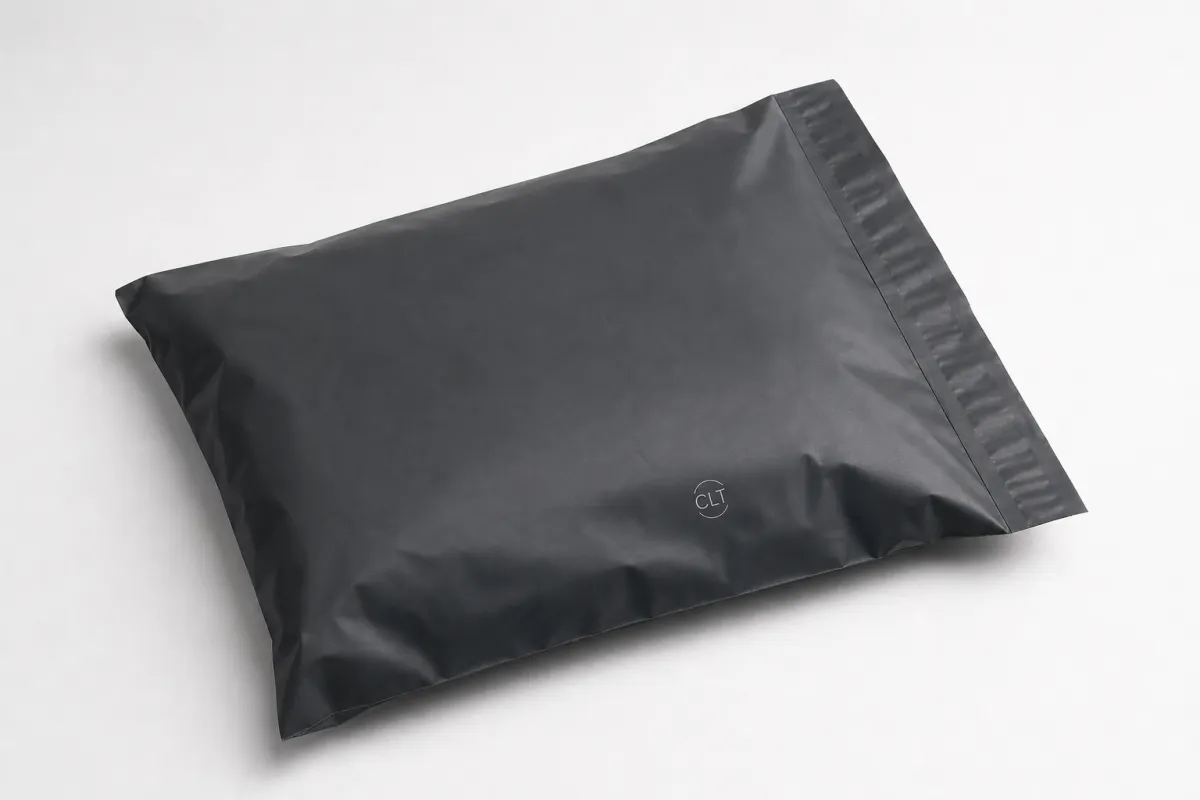
Custom poly mailers with matte finish are Printed Shipping Bags made from polyethylene film with a low-gloss exterior. The core job has not changed: the bag keeps lightweight goods together, resists moisture better than paper in many shipping conditions, and closes with a pressure-sensitive adhesive strip. The matte finish changes the visual and tactile experience. It does not turn the mailer into something else.
Why does that matter? Gloss reflects light sharply. Matte diffuses it. The difference seems small until a package sits under warehouse LEDs, kitchen lighting, or a customer’s phone flash. Custom poly mailers with matte finish tend to look steadier and more deliberate. For a small brand trying to appear established, that restraint can carry more weight than a louder surface treatment.
Photography is part of the story too. Gloss can throw bright highlights across a logo and swallow fine type. Matte usually keeps artwork readable. If your design leans on typography, thin lines, or subtle contrast, the lower sheen helps those elements survive real-world viewing. That can make the package feel like curated package branding rather than a generic shipping supply in a branded wrapper.
From a buyer’s standpoint, custom poly mailers with matte finish usually suit light, flexible products that do not need rigid structure of their own. Tees, leggings, soft goods, small accessories, samples, beauty kits, and subscription items often fit the bill. The emphasis is presentation plus transit defense, not crush resistance. Products that need more protection may still call for inserts, a pouch, or a box.
That is where the comparison with custom printed boxes becomes useful. Boxes bring structure, stacking strength, and a more rigid feel. Matte poly mailers offer lower freight weight, less material use, and a faster ship-from-home workflow. Many ecommerce teams use both formats: boxes for premium bundles or fragile goods, custom poly mailers with matte finish for lighter SKUs that need stronger presentation without extra bulk.
“A matte mailer is not trying to be loud. It is trying to look intentional. That restraint is part of the value.”
That distinction explains a lot of the appeal. Buyers are moving away from packaging that shouts and toward packaging that looks composed. Custom poly mailers with matte finish fit that shift well. They are understated, not forgettable. When the artwork is handled well, understatement often reads as more premium than noise.
For brands that sell through social channels, the effect gets stronger. Customers usually see the package before they see the product, and many see it through a camera lens rather than in person. A matte finish keeps the mailer visually grounded in those conditions. That can strengthen retail packaging perception without forcing the brand into a full box system or a heavier packaging stack.
Handling marks matter too. Matte tends to hide fingerprints, small abrasions, and dust better than gloss. That does not make the mailer tougher in a structural sense, but it can preserve a cleaner look through sorting, stacking, and last-mile delivery. Packaging teams notice that kind of quiet improvement because it reduces the number of units that arrive looking used before they are opened.
There is a subtle behavioral effect here as well. A matte surface tends to feel calmer in the hand, and people often connect that feeling to quality whether they mean to or not. It is a tiny cue, but packaging is built from tiny cues.
How Custom Poly Mailers with Matte Finish Work
Construction is usually straightforward. A typical mailer includes a polyethylene film body, printed artwork, a matte exterior layer or surface treatment, and a self-seal adhesive closure. Some versions use virgin film for a more consistent appearance; others use recycled content or blended film to reduce resin use and support sustainability goals. The exact build matters because the finish is only one part of performance.
Custom poly mailers with matte finish change how the surface handles light. Instead of a reflective shine, the coating or film treatment scatters light across the face of the mailer. Logos become easier to read, and the package picks up a softer visual texture. Bold colors can feel more controlled, almost like they belong in a lifestyle catalog instead of a warehouse aisle.
The matte finish does not change the underlying mechanical performance. Tear resistance, seam strength, puncture resistance, and closure integrity still depend on film gauge, sealing quality, and manufacturing consistency. A beautiful mailer that tears at the seam is still a bad mailer. The finish is what customers notice first, but it should never be the only specification a buyer checks.
In shipping environments, matte and gloss behave differently under real handling. Gloss can make saturated colors feel louder, which works for some consumer brands. Matte usually hides fingerprints, scuffs, and dust more effectively, which matters when mailers sit in staging areas or pass through several hands before delivery. Custom poly mailers with matte finish often feel less slippery too, which can help during packing, stacking, and labeling.
I have watched fulfillment teams prefer matte bags for a very practical reason: they show less drama on the line. Fewer visible marks. Less glare under fixtures. Less need to inspect a stack twice because a shiny surface made every crease look worse than it was.
One simple comparison helps buyers frame the decision:
| Option | Visual Effect | Handling Marks | Best Use Case | Typical Buyer Priority |
|---|---|---|---|---|
| Matte poly mailer | Soft, low glare, editorial | Hides scuffs well | Apparel, beauty, lifestyle brands | Presentation and camera-friendly branding |
| Gloss poly mailer | Bright, reflective, high contrast | Shows marks more easily | Bold color branding, promotional shipments | Color pop and visual punch |
| Recycled-content matte mailer | Muted, natural look | Varies by film blend | Eco-positioned ecommerce brands | Brand image plus material story |
The table matters because the finish should match the job, not just the mood board. Custom poly mailers with matte finish perform best when the brand wants a refined, tactile impression and does not need high-shine graphics. If the goal is loud promotional impact, gloss can still make sense. If the goal is premium understatement, matte usually comes out ahead.
Shipping standards and transit expectations deserve more attention than they usually get. Groups such as the ISTA community focus on package testing because the route matters as much as the material. A mailer that looks polished but fails in drop testing or compression scenarios is still a liability. That is why a good supplier should be able to talk about film strength, seals, and test behavior, not just surface treatment. If sustainability claims are part of the brief, the EPA guidance on materials and waste reduction is a useful reference point too.
The touchpoint matters more than many packaging buyers expect. A matte surface often feels softer, drier, and more substantial in the hand than a glossy one. That does not make it structurally stronger by itself, but it shapes perception. Customers decide quickly whether a package feels cheap or considered. When custom poly mailers with matte finish arrive clean, quiet, and controlled, the shipment can feel more premium before the seal is opened.
Key Factors That Affect Appearance, Durability, and Branding
Several variables shape how custom poly mailers with matte finish perform in the real world. Thickness comes first. Common film gauges often fall in the 2.5 mil to 4 mil range, though some applications go thinner or thicker depending on product weight and shipping risk. Thicker mailers usually resist punctures and stretching better, but they also add cost and can increase material use. That tradeoff is normal in packaging design.
Size comes next. An oversized mailer wastes material and looks sloppy. A mailer that is too tight can stretch artwork, stress seams, and make sealing harder. For many brands, the right size is the one that lets the packed item slide in without forcing the adhesive closure to fight the contents. That sounds basic, yet oversized packaging remains one of the most common errors in branded packaging.
Print behavior matters more on matte surfaces than many teams expect. High-contrast logos usually hold up well. Fine lines, low-contrast type, and delicate gradients may need adjustment because the finish softens glare and can also soften visual intensity. That does not mean matte cannot support full-color work. It means the artwork should be reviewed with the substrate in mind, not only on a monitor.
Custom poly mailers with matte finish also respond differently to ink coverage. A full-bleed design can look elegant and cohesive, but heavy coverage may affect the feel of the mailer and move the price. Minimalist designs can work very well on matte because the blank space becomes part of the brand story. That is one reason many premium labels prefer matte for package branding: it gives typography and logo-led layouts room to breathe.
Add-ons deserve attention too. Tear strips can improve opening convenience. Double adhesive strips help with returns and multi-use workflows. Opaque liners protect privacy. Reinforced seams help reduce transit failure. Recycled content can support sustainability messaging, though buyers should confirm whether the film blend changes print sharpness or surface feel. There is no universal best spec. There is only the best spec for the shipment.
For brands that track environmental positioning carefully, composition matters. Some custom poly mailers with matte finish are made with recycled content or are designed to reduce overall material use. If sustainability is central to the sale, look for clear documentation and avoid vague claims. The FSC standard applies more directly to paper-based packaging, but it still signals how seriously many buyers expect sourcing claims to be handled across all product packaging categories.
Just as important is how the mailer fits into the larger packaging mix. A store that uses custom poly mailers with matte finish for subscriptions might still use cartons, inserts, and tissue in other channels. Good packaging design does not force every product into one format. It matches each item to the most efficient package that still supports the brand story. That is where a coordinated system beats a one-off purchase.
A nice-looking mailer that creates extra labor is not a win. If it takes longer to pack, harder to seal, or more time to label, the brand pays for that every single day.
What to check before approving art
- Logo contrast against the background color.
- Minimum line weight for icons, borders, and typography.
- Artwork bleed and safe area around seams and adhesive zones.
- Whether the chosen size leaves enough room for product plus closure.
- How the design looks under both daylight and warehouse lighting.
Those checks sound basic because they are basic, and basic mistakes cost money. Custom poly mailers with matte finish can look excellent on a proof and still underperform if the artwork was built for a different substrate. A little preflight work prevents expensive surprises and keeps the final package from looking like an accidental compromise.
Production Process and Timeline for Custom Poly Mailers with Matte Finish
The cleanest production runs begin with a precise brief. Before requesting quotes, gather the mailer dimensions, product weight, print colors, artwork files, target quantity, shipping deadline, and any special functions like tear strips or double seals. Suppliers can move faster when the request is specific. A vague brief tends to produce a vague answer.
Once the brief is in, the supplier usually reviews the artwork for printability and sends a digital proof. Some projects also require a physical sample, especially if the brand cares about color accuracy or needs the matte texture approved in hand. This is where many teams lose time. Proofing is not just a box to tick. It is the last chance to catch layout problems, contrast issues, or bad dimensions before production starts.
The production chain for custom poly mailers with matte finish usually includes file prep, printing, surface finishing, curing or drying, converting into finished mailers, and final inspection. Each step can affect the result. Complex artwork or special colors may require more setup and quality control. Busy seasons can stretch lead times even when the order itself is straightforward.
Typical schedules vary, though a simple order often lands around 12 to 15 business days after proof approval. Larger quantities, custom sizing, special inks, or sample revisions can add time. Rush jobs are possible in some cases, but rush fees and limited material availability can alter the economics fast. The cheap option stops looking cheap when it misses a launch date.
That timeline is why many packaging buyers build buffer into launch plans. If a subscription drop, seasonal collection, or influencer campaign depends on the mailers arriving on time, waiting until the last minute is risky. Small revisions can consume days. A five-minute change to artwork can become a five-day delay if it triggers another proof round.
Project management gets easier when custom poly mailers with matte finish are treated as part of the launch plan, not a final afterthought. The package should be locked around the same time as product sizing and fulfillment planning. That is especially true for brands that ship both custom poly mailers with matte finish and Custom Poly Mailers in other finishes for different campaigns. Consistency matters, but so does workflow.
Inspection deserves more attention than it usually gets. Ask how the supplier checks seam quality, print registration, and closure performance. Good suppliers should be able to explain how defects are caught before shipment. For brands trying to reduce damage claims or returns, that conversation is worth having. A polished-looking mailer is not enough if the closure fails under ordinary handling.
For a first order, the smartest approach is to treat it as a controlled test. Start with a quantity that supports a pilot run or a limited launch. That lets the team see how custom poly mailers with matte finish behave across packing stations, transit conditions, and customer feedback without locking into a large inventory commitment too early.
Cost, Pricing, MOQ, and Quote Variables
Pricing for custom poly mailers with matte finish is shaped by a handful of variables that interact in predictable ways. Size is one. Thickness is another. Print coverage matters, especially if the design uses heavy ink or full-bleed art. Quantity is often the biggest lever because higher volumes usually lower the unit cost. Finishing method, color count, and special features can all move the quote up or down.
As a working range, small- to mid-volume custom poly mailers with matte finish may sit somewhere around $0.18 to $0.40 per unit depending on size, coverage, and quantity, with larger runs often landing lower. That is not a promise; it is a practical starting point. A simple one-color design at a high MOQ will price differently than a full-color, full-bleed mailer with a custom size and an extra closure feature.
Minimum order quantities matter too. A lower MOQ reduces inventory risk, but it usually raises the unit cost. A higher MOQ improves pricing, but it requires more cash upfront and more storage. That is why the cheapest per-piece number is not always the smartest business decision. If the brand is still refining its product mix, a smaller run of custom poly mailers with matte finish may be the wiser move even if the unit cost is higher.
Buyers should also ask about setup charges, plate fees, sample costs, freight, and rush fees. Those line items can change the final economics dramatically. A quote that looks competitive on paper may stop being competitive once shipping and proofing are added. That is especially true in branded packaging, where design approvals and sample checks are part of the real project cost rather than a side note.
Here is a practical comparison of what often affects the final price:
| Quote Variable | Low-Impact Scenario | High-Impact Scenario | What to Ask |
|---|---|---|---|
| Quantity | Small pilot run | High-volume replenishment | What is the unit price at each volume tier? |
| Print coverage | Small logo, one side | Full-bleed, multi-color artwork | Does coverage change ink or setup costs? |
| Material thickness | Standard film for soft goods | Heavier film for added puncture resistance | What gauge best fits the packed item? |
| Finishing extras | Plain matte surface | Tear strip, double seal, or special lining | Which add-ons change lead time or price? |
The table leads to a simple rule: compare like with like. Do not compare one supplier’s fully loaded quote for custom poly mailers with matte finish against another supplier’s stripped-down number that excludes shipping or proofs. A quote only matters if it reflects the same spec, the same quantity, and the same delivery terms.
Cost should be measured against outcome, not only unit price. If the mailer improves customer perception, reduces returns caused by damage or poor presentation, or supports a stronger premium position, a slightly higher quote may still be the better business choice. That is especially true for brands where retail packaging and first impressions directly affect repeat purchase behavior.
For teams balancing multiple packaging formats, it helps to compare the matte mailer against other solutions in the catalog. Some products still need rigid cartons, while others are perfectly fine in a lightweight mailer. The right mix often includes custom poly mailers with matte finish for apparel and flexible goods, plus boxes or inserts for more delicate shipments. That is where a broader look at Custom Packaging Products can sharpen decision-making.
Common Mistakes to Avoid When Ordering Matte-Finish Mailers
The first mistake is choosing custom poly mailers with matte finish because they look premium without checking whether the product actually needs more protection. If the item is sharp-edged, heavy, moisture sensitive, or prone to crushing, finish should not outrank structure. A handsome mailer that fails in transit is still a failed package.
The second mistake is approving artwork that only works on a screen. Matte surfaces can mute low-contrast logos and soften tiny details. Designers sometimes assume that if a file looks clean digitally, it will print cleanly on film. That assumption breaks more often than people admit. A proof, sample, or careful mockup is worth the time.
Oversizing is another common trap. Too much empty space inside a mailer wastes material, can drive up dimensional shipping costs, and makes the package feel less intentional. It also lets the product move around, which may cause creasing or a sloppy-looking pack-out. Custom poly mailers with matte finish should fit the contents cleanly, with just enough room for insertion and closure.
Another problem is ignoring the seal. Adhesive strength matters. If the strip is weak, the package may open in transit or during return processing. If the seal zone is poorly designed, labels may not stick cleanly. A glossy or matte surface does not rescue a mailer with poor closure performance. Buyers should ask for seal specs and test the packed item in real workflow conditions.
Do not approve color from a monitor alone. Screens can make matte designs look brighter or darker than the finished mailer will appear. Lighting changes everything. If the package will live in warehouse aisles, fulfillment tables, or customer photos, those conditions should influence approval. Custom poly mailers with matte finish can be strong visually, but only if the buyer judges them in the right environment.
One more mistake shows up with surprising frequency: people forget to test the mailer after labels are applied. A surface that looks clean in a mockup can behave differently once adhesive, heat, and pressure enter the picture.
Here is a short checklist that helps keep the order on track:
- Confirm the packed product size, not just the product size.
- Check film thickness against product weight and seam stress.
- Review artwork contrast under realistic lighting.
- Ask for a sample or proof before volume approval.
- Verify the closure type and return-use requirements.
These mistakes repeat because packaging is easy to treat as a last checkbox. It is not. Packaging influences damage rates, labor efficiency, and brand perception all at once. Custom poly mailers with matte finish only work when they support all three.
Expert Tips and Next Steps for Your First Order
If you are deciding between matte and gloss, start with the brand story. Choose custom poly mailers with matte finish when you want a refined, camera-friendly, tactile impression. Choose gloss when you need stronger color pop and a brighter visual hit. Neither option is universally better. The right answer depends on how the product should feel before it is opened.
Test the mailer in the actual packing flow. Put the real product in the bag. Seal it. Move it through the same station, the same labels, the same handling steps, and the same shipping path you expect in production. This is where small issues appear. A mailer can look perfect on a sample card and still behave awkwardly when a packer is moving 200 units per hour.
Build a one-page spec sheet before you talk to suppliers. Include dimensions, thickness, closure style, print area, quantity, artwork format, color targets, and delivery deadline. That document cuts down on back-and-forth and makes quote comparisons easier. It also helps a supplier tell you whether custom poly mailers with matte finish are the right fit or whether another build would perform better.
Compare at least two or three quotes, but compare them carefully. Ask what is included, what counts as a setup charge, what sample options exist, and whether freight is built in. A slightly higher quote can still be a better deal if the supplier is clearer, faster, and more reliable. In packaging, clarity often saves more money than a tiny unit-price reduction.
For brands with multiple package types, think in systems rather than single purchases. A company might use custom printed boxes for premium bundles, paper-based mailers for some channels, and custom poly mailers with matte finish for apparel or lower-profile SKUs. That layered approach usually performs better than trying to force one package type to do everything.
The most practical move is still the simplest one: run a small pilot first. A limited order of custom poly mailers with matte finish lets you check customer response, test the handling, and confirm whether the finish actually supports your brand voice. If the results are good, scale with confidence. If they are not, you have not tied up too much inventory in the wrong spec.
Keep the decision tied to the real business variables: product type, budget, timeline, and shipping risk. Custom poly mailers with matte finish can be a smart choice, but only when the specs match the item and the fulfillment process. Start with one SKU, one size, and one proof that has been tested under warehouse lighting. If that passes, you will know a lot more than you would from a polished digital mockup.
FAQs
Are custom poly mailers with matte finish strong enough for apparel shipping?
Yes, for soft goods like tees, socks, leggings, and many accessories, custom poly mailers with matte finish are usually strong enough when the film thickness and seam construction are chosen correctly. Fit is the key variable. If the garment is packed tightly or includes heavier accessories, choose a thicker spec or add internal protection so the mailer is not carrying all the stress alone.
Do matte-finish custom poly mailers cost more than glossy ones?
Often they do, but the difference usually comes from the finishing method, print coverage, and quantity rather than the matte look itself. Larger runs typically reduce the unit price, so compare quotes at the same thickness and MOQ. Ask suppliers to itemize setup, shipping, and sample charges so the quote is truly comparable.
How do I choose the right size for custom poly mailers with matte finish?
Measure the product after it is fully packed, then add just enough room for a clean insert and seal. Avoid choosing a mailer that is much larger than the item, since excess space can waste material and make the package look careless. If you ship multiple SKUs, test the size against the largest common order, not the smallest one.
Can I print full-color artwork on custom poly mailers with matte finish?
Yes, full-color designs are possible, but contrast and saturation should be reviewed on the matte surface before production. Fine details, gradients, and dark-on-dark artwork may need adjustment so the design stays crisp after printing. Request a proof or sample because colors can look different on a matte substrate than they do on a screen.
How long does production usually take for matte poly mailers?
Timing depends on proof approval, order size, and print complexity, so there is no single fixed schedule. Simple orders may move faster, while samples, revisions, and highly customized runs can add days. Plan extra buffer if the mailers need to arrive before a launch, seasonal drop, or subscription ship date.

