Buyer Fit Snapshot
| Best fit | Custom Poly Mailers for Wholesale Orders That Ship Better projects where brand print, material claims, artwork control, MOQ, and repeat-order consistency need to be specified before quoting. |
|---|---|
| Quote inputs | Share finished size, material target, print colors, finish, packing count, annual reorder estimate, ship-to region, and any compliance wording. |
| Proofing check | Approve dieline scale, logo placement, barcode or warning zones, color tolerance, closure strength, and carton packing before bulk production. |
| Main risk | Vague material claims, crowded artwork, missing packing details, or unclear freight terms can make a low unit price expensive after revisions. |
Fast answer: Custom Poly Mailers for Wholesale Orders That Ship Better should be specified like a repeatable production item. The safest quote records material, print method, finish, artwork proof, packing count, and reorder notes in one written spec.
Production checks before approval
Compare the actual filled-product size with the drawing, then confirm tolerance on folds, seals, hang holes, label areas, and retail display edges. Reserve space for logos, QR codes, warning copy, and material claims before decorative graphics fill the panel.
Quote comparison points
Review material grade, print process, finish, sampling route, tooling charges, carton quantity, and freight assumptions side by side. A quote is only useful when the supplier can repeat the same color, closure quality, and packing count on the next order.
Custom Poly Mailers for Wholesale Orders That Ship Better
Custom Poly Mailers for wholesale orders sit in a pretty practical corner of packaging, and that is exactly why they matter. A mailer that saves a few seconds at pack-out, trims shipping weight, and cuts down on rework can change the rhythm of a warehouse once the volume climbs. At 2,000 units, those little efficiencies stop feeling small. They show up in labor, carrier spend, and whether the shift feels steady or keeps getting interrupted by avoidable fixes.
Wholesale buyers usually are not shopping for something charming. They need a bag that prints cleanly, arrives consistently, and survives sorting belts, dock stacks, and the occasional rough handoff. A weak spec creates damage, complaints, and extra handling. A good one folds into the workflow, does its job, and helps the brand look organized before the parcel is even opened.
Why custom poly mailers for wholesale orders pay off
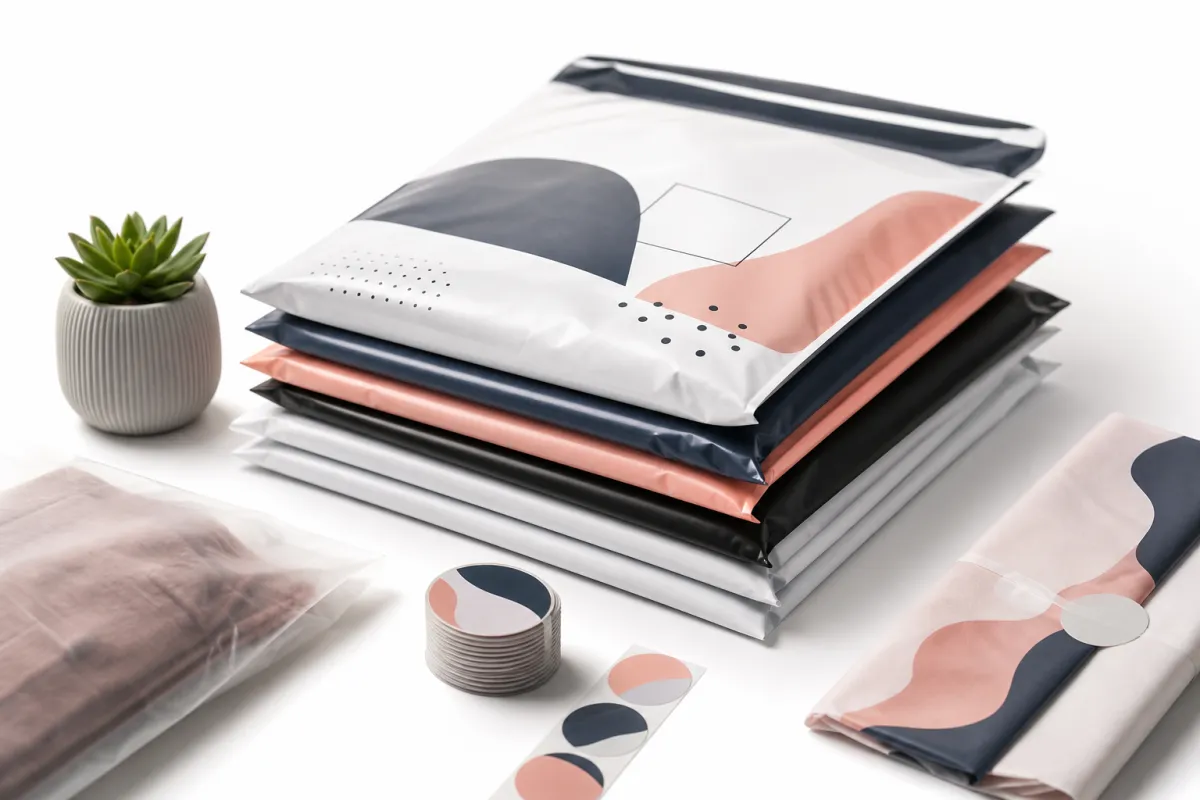
Custom Poly Mailers for wholesale orders do three useful things at once. They protect the product, speed up packing, and keep the outbound presentation steady from the first carton to the five-thousandth. That sounds simple because it is. Packaging That Works at scale usually looks plain from a distance and highly intentional once you watch the warehouse move.
I have seen teams lose time in tiny increments that never show up on a spreadsheet until someone finally asks why pack-out is drifting. A plain mailer often needs a label, an insert, and a second look to make sure the printed side faces the right direction. Each extra touch adds handling time and gives the process one more chance to slip. A custom-printed bag with the right dimensions removes some of that friction before it starts.
Shipping weight matters too. Poly mailers stay light, which helps when dimensional pricing and surcharges punish anything bulky. A well-sized mailer keeps the shipment tight without crowding the product. For apparel, soft goods, accessories, and other light kits, that often beats using a carton that costs more to buy, more to store, and more to move.
Branding is part of the job, but it should stay grounded. Custom poly mailers for wholesale orders are not meant to turn every shipment into a luxury reveal. They turn a plain outer parcel into a branded package that looks deliberate on a porch, at a receiving dock, or on a retail shelf before the bag gets opened. The outer layer is the first signal a customer or store clerk sees, so it should be clean and easy to understand.
Keep the goal steady: repeatable output first, pretty graphics second. Wholesale packaging earns its keep by holding up under pressure.
A packaging buyer is making an operations decision, not chasing a mood board. If a design slows the line, requires too many print passes, or pushes the minimum order into awkward territory, it is the wrong spec. The strongest custom poly mailers for wholesale orders are the ones that keep the pace up, keep the look consistent, and keep the damage rate low enough that no one has to open a ticket. That is the real test, and it is a lot less glamorous than a mockup.
The payoff shows up in lower handling time, cleaner presentation, and fewer complaints about torn sleeves or scuffed outer packaging. It also keeps you from paying for retail-style extras that never matter in a wholesale workflow. The best packaging choice usually feels practical because it is solving an operations problem rather than decorating one. I know that sounds plain, but plain is often where the money is.
Custom poly mailers for wholesale orders are often the most cost-effective way to make a shipment look intentional without rebuilding the whole packaging system. The mailer does not need to be flashy. It needs to fit, print, seal, and move through the supply chain without becoming a problem.
What custom poly mailers for wholesale orders include
When buyers ask for custom poly mailers for wholesale orders, they usually mean more than a logo on a plastic sleeve. The full spec touches film type, bag size, seal style, print method, color count, finish, and a few other details that feel minor until they interfere with production. Those details decide whether the order runs smoothly or turns into a series of small headaches.
The film is the starting point. Most wholesale mailers use polyethylene because it stays light, bends easily, and keeps the cost reasonable at volume. Some buyers want recycled-content film to support a lower-plastic story. Others want a thicker feel because the product is sharp, bulky, or likely to get tossed around before delivery. That range is normal. Pretending one film works for every item is where packaging plans go sideways.
Size is where money gets wasted fastest. A mailer should fit the packed item with just enough room to lie flat, not so much room that the product shifts around like loose hardware in a tray. Apparel, soft goods, and flat kits often fit standard sizes. Bulkier pieces need wider gussets or a stronger closure area. Product measurements tell you that. A catalog photo does not, and a sample sitting on a desk can be misleading too if the actual packed thickness changes later.
Seal style deserves more attention than it usually gets. A standard self-seal strip works for most outbound orders, while dual adhesive strips help when a return path matters. Tear notches make opening easier without a blade, and tamper-evident closures add another layer of security when privacy or product integrity matters. For custom poly mailers for wholesale orders, those details can save a lot of friction later.
Print method shapes both the look and the cost. Flexographic printing is common for larger runs because it handles volume efficiently and keeps the per-unit price in a sensible range. More colors raise setup complexity. Heavy ink coverage adds cost. Fine detail can get limited by film stretch and print resolution, so a design that looks perfect on screen may need a little simplification on the actual bag. That is not a supplier excuse. That is the material doing what material does.
Logo placement and edge clearance matter more than many teams expect. Poly mailers flex, fold, and seal at the edges, which means artwork too close to a seam can get clipped. Tight margins can look cramped. Good packaging design leaves safe zones for the artwork, repeats patterns where it makes sense, and accounts for the shipping label if it lands on the front panel. I have seen a nice design get a little awkward simply because nobody allowed enough breathing room around the seams.
A few millimeters can decide whether the finished mailer looks sharp or rushed. A bold logo, a repeating pattern, or a simple two-color treatment often reads better than a busy graphic forced into the wrong format. Custom printed boxes usually get the attention in packaging meetings, yet custom poly mailers for wholesale orders often carry the larger share of actual shipments. That deserves the same care.
By default, most mailers do not include inserts, labels, or retail extras. A mailer is a mailer. If the order also needs thank-you cards, barcode stickers, or separate printed boxes for another SKU, those are separate items. Clear quotes start with clear questions, and it is easier to ask them before the order is in motion than after the proof is already approved.
Sizes, gauges, and material specs that matter
For custom poly mailers for wholesale orders, size only solves part of the problem. Gauge, which is the thickness of the film, affects the feel of the bag, how well it resists punctures, and how much abuse it can take before it gives out. Thin film keeps costs down. Thicker film adds durability. The tradeoff is easy to understand, yet buyers still order by habit more often than by product type.
Wholesale sizes usually range from small flat mailers for socks and accessories to larger bags for hoodies, sweatshirts, and soft home goods. The best size is the smallest one that fits the packed item without stretching the seams or forcing the packer to fight the bag. Oversizing costs money in three different ways: material, shipping, and storage space. It also makes the finished package feel less disciplined, which can matter more than people admit.
For thin apparel, a 2.0 mil to 2.5 mil poly mailer often works well. For heavier garments, layered kits, or products with corners, 2.5 mil to 3.0 mil usually gives a safer margin. If the item has any chance of puncture, the thicker film is usually worth the added cost. For custom poly mailers for wholesale orders, that cost is often lower than the expense of re-shipping damaged units, and that math is hard to argue with once the returns start coming in.
Material choice changes more than price. Standard polyethylene is the workhorse. Recycled-content options can help support sustainability goals, though the exact composition should be checked carefully. Specialty barrier films exist as well, but they usually raise the price and are rarely needed unless moisture sensitivity or product protection creates a real requirement. Buyers sometimes ask for a greener option without defining the actual performance need, and that is where the conversation gets fuzzy fast.
If sustainability is part of the brief, the discussion should stay tied to actual specs. Some buyers want film recovery guidance or recycled-content percentages. Others need packaging that fits with EPA recycling guidance. Those details matter when they match the supply chain and the customer promise, not when they are only present in a presentation deck. A disclaimer is fair here: local film recycling rules vary a lot, and curbside acceptance is not guaranteed.
Performance checks are worth asking for before the order is locked. Seal strength is one. Print adhesion is another. Opacity matters if the contents should stay hidden. Drop handling and conveyor durability matter if the mailer has to move through distribution before it reaches the end customer. A supplier that cannot explain how the bag handles rough transport is giving you a warning, not a quote.
A practical way to sort the options looks like this:
- Apparel and soft goods: prioritize fit, lighter film, and clean print.
- Accessories and small kits: use stronger seals and tighter sizing.
- Lightweight hard goods: choose thicker film and better puncture resistance.
- Privacy-sensitive items: ask for opaque film and tamper-evident closure.
If you are comparing Custom Poly Mailers to other Custom Packaging Products, unit price alone will not tell the story. Compare the cost of damage, rework, and packing time. A slightly more expensive mailer can still come out ahead if it keeps the line moving and lowers failure rates. Wholesale buyers learn that lesson quickly, usually right after the first shipment that comes back with avoidable problems.
For mixed product categories that include soft and hard goods, ask for a sample fit test. A good supplier will tell you directly if the item belongs in a poly mailer or if it should move into a different structure. Straight talk saves time. A sizing chart based on real thickness does too. That is the kind of detail that separates a useful quote from a polished one.
Custom poly mailers for wholesale orders: pricing and MOQ
Custom poly mailers for wholesale orders are priced the same way most packaging is priced: higher quantity lowers the unit cost, but not at the same pace for every spec. Bigger runs usually bring the price down quickly. Add more colors, heavier film, special closures, or recycled-content material, and the number climbs again. There is no shortcut around production math, and anybody saying otherwise is probably glossing over something.
MOQ depends on the size and the print method. Small, straightforward runs may start around 1,000 to 2,500 pieces with some suppliers, while true wholesale pricing usually becomes more competitive at 5,000 units and above. If you need a serious bulk quote, ask for the exact MOQ tied to your size and artwork. Broad ranges are useful for rough planning, but they do not help much when the budget needs a real number.
Typical unit pricing can land in a wide band depending on the spec. For a basic custom mailer at 5,000 pieces, a reasonable starting point may sit around $0.12 to $0.22 per unit. Thicker film, extra colors, or specialty finishes can move that toward $0.20 to $0.35 or more. That is not a trick. That is what happens when setup work and material cost start doing their jobs.
For buyers comparing options, the table below gives a practical starting point. These are not quotes. They are the sort of ranges a packaging buyer uses to narrow the field before asking for final artwork review.
| Option | Typical Use | Approx. MOQ | Typical Unit Cost at 5,000 | Notes |
|---|---|---|---|---|
| 2.0 mil PE, 1-color print | Light apparel, flat kits | 2,500-5,000 | $0.12-$0.18 | Lowest cost; best when product is light and print is simple. |
| 2.5 mil PE, 1-2 color print | Apparel, accessories, subscription packs | 5,000+ | $0.16-$0.26 | Good balance of cost, strength, and presentation. |
| 3.0 mil PE, heavier coverage | Bulkier soft goods, mixed kits | 5,000+ | $0.20-$0.32 | Better puncture resistance; print cost rises with coverage. |
| Recycled-content film | Brands with sustainability targets | 5,000+ | $0.18-$0.35 | Material claim and availability should be verified on the spec sheet. |
| Dual-adhesive / return-ready | E-commerce returns, exchange-heavy programs | 5,000+ | $0.22-$0.38 | Useful if reverse logistics matter more than the lowest unit cost. |
The main cost drivers are easy to list and easy to miss when the quote is moving fast. Dimensions change material usage. Thickness changes resin consumption. Print colors increase setup and run complexity. Ink coverage affects visual punch and cost. Recycled-content film can add a premium. Rush schedules can trigger freight or overtime pressure. None of that is mysterious, but all of it matters.
Every quote should answer the same basic questions: exact size, film thickness, print colors, artwork coverage, shipping destination, and whether setup or tooling fees apply. If those details are missing, the comparison becomes guesswork. Guesswork is expensive in packaging because the mistake only shows up after the order has landed.
One more economics point matters for larger programs. At a certain volume, custom poly mailers for wholesale orders can cost less than buying unbranded packaging plus separate labels or stickers. The exact tipping point depends on print complexity and labor time, but it appears more often than people expect. If your team spends seconds adding branding to every unit, the custom mailer may already be the better buy. That is one of those boring savings that adds up quietly in the background.
For repeat ordering, Wholesale Programs help keep the process steady. Fixed specs make reorders faster, reduce mismatch risk, and let you compare the same item across seasons without rebuilding the request from scratch. Predictable ordering usually beats a one-off bargain that needs to be rechecked every time.
Proofing, production, and delivery timeline
Custom poly mailers for wholesale orders move faster when the artwork is ready before the quote is locked. That sounds obvious, yet it is one of the most common places a project stalls. A logo file needs cleanup, a color needs adjustment, or the size changes after the proof is already underway. Each small change pushes the schedule back a little more.
The process usually follows a familiar path: quote request, digital proof, approval, production, quality check, and shipping. A simple mailer with clean artwork can move through that path quickly. Complicated designs or large quantities stretch the calendar. Many buyers should plan for roughly 12 to 20 business days after proof approval, then add freight time based on destination. If a launch date is fixed, start earlier than feels necessary. That is not overcautious; it is just honest planning.
Digital proofs are useful, but they do not answer every question. They show layout, type placement, logo position, and general color direction. Physical samples tell you more about film feel, finish, and closure quality. If exact color matching matters, ask whether a pre-production sample is worth the extra time. For custom poly mailers for wholesale orders, that step often pays off when a brand is particular about tone and contrast.
Artwork changes are the easiest way to blow up the schedule. So are late requests for more print coverage, a different size, or a rush date that ignores production reality. A supplier can help, but not if the order keeps shifting. Lock the spec first. Then lock the art. Then lock the quantity. That sequence prevents more headaches than any software tool can promise.
Quality control should be visible, not mysterious. Ask how the bags are checked for print clarity, seal integrity, and size tolerance. A supplier with a simple checklist is usually a good sign. If nobody can explain how defects are caught, keep looking. Wholesale packaging depends on repeatability. One clean sample means little if the full batch arrives uneven.
Shipping planning matters too. Flat poly mailers are easier to stage than cartons, but large runs still need space. If you are building inventory for a launch, calculate storage before the shipment lands. Custom poly mailers for wholesale orders may be light, yet 20,000 units still take up real room. That detail often gets overlooked until boxes start filling a back room or blocking a work area. It is one of those very unglamorous problems that somehow becomes urgent overnight.
When the order is tied to a launch, a seasonal drop, or a reorder built around a sales forecast, leave some breathing room. Freight can wobble even after production goes well. That is not drama, just logistics. The safer move is to start proofing earlier than feels necessary and keep a little room for revisions if the branding team changes direction, which happens more often than most schedules account for.
For brands that also buy other Custom Packaging Products, it helps to line up the timing across items. Matching mailers, labels, and inserts in one schedule lowers mismatch risk and keeps fulfillment simpler. Growing operations tend to benefit more from coordination than from squeezing out a tiny savings on a one-time order.
If the order has to land before a launch, treat the proof deadline like a production deadline. Proofing is not a side step. It is the point where custom poly mailers for wholesale orders either become a stable part of the supply chain or a last-minute apology sent at midnight.
Why choose Custom Logo Things for bulk mailers
Custom Logo Things works well for buyers who want practical answers instead of polished noise. That matters because custom poly mailers for wholesale orders are usually bought by people who need a clear spec, a fast revision cycle, and enough packaging experience to tell the difference between a nice mockup and a bag that will actually run cleanly in production.
The useful part is communication, not hype. A good bulk packaging supplier should help check size, film, print coverage, and closure style before the order is locked. That saves time at the front end and avoids the awkward moment when the first run arrives and the bag is a little too small, a little too shiny, or a little too crowded with graphics. I have seen that kind of mismatch create a lot of unnecessary back-and-forth.
Consistency matters just as much. Once a spec works, nobody wants to rebuild it on every reorder. That is true for custom poly mailers for wholesale orders, and it applies across the broader packaging stack as well. If you are pairing mailers with Custom Poly Mailers, inserts, or other Custom Packaging Products, steady artwork and fixed specs keep the brand cleaner and the warehouse easier to manage.
Clear quoting is part of the value. When you compare suppliers, you want the same questions answered in the same way. MOQ, lead time, film thickness, print count, and shipping costs should be laid out plainly. If one supplier hides fees in the fine print while another gives you a clean comparison, the second one has already made the process easier. That is not a small thing in wholesale buying.
From a packaging buyer's point of view, the real advantage is support that fits wholesale reality. That means artwork checks before print, realistic MOQ guidance, and help deciding between a lighter bag and a stronger one. It also means telling you when a product should move to a different format. Not every item belongs in a poly mailer. Sometimes the right answer is a thicker bag, and sometimes it is another structure entirely.
Good packaging branding is not about making every shipment feel luxurious. It is about making the brand look steady at scale. That is where custom poly mailers for wholesale orders do their best work. They give you a repeatable surface, a system that can be reordered, and a way to make the outbound experience feel intentional without turning the project into a vanity exercise.
If you need a starting point, begin with the order size, confirm the product dimensions, and decide how much branding coverage the package really needs. Most brands can get strong results with a simple logo, a repeating pattern, and one or two print colors. More is not always better. Sometimes more is only more expensive.
For buyers who want to keep things organized, the FAQ page can answer common ordering questions before a quote request goes out. That is not flashy. It is efficient, and wholesale buyers usually appreciate efficiency once the spreadsheet gets involved.
Next steps for placing a wholesale order
If you are ready to order custom poly mailers for wholesale orders, keep the next steps straightforward. Choose the size first. Confirm the material second. Decide on print coverage third. Then gather artwork and ask for a quote with exact quantities. That order prevents most of the rework that slows packaging projects down.
Here is the shortlist I would use before sending a request:
- Product dimensions: length, width, and thickness of the packed item.
- Target quantity: trial run, quarterly usage, or full wholesale volume.
- Film preference: standard PE, recycled-content, or heavier gauge.
- Print details: logo file, number of colors, coverage area, and finish preference.
- Functional features: tear notch, tamper evidence, return strip, or privacy opacity.
When the quotes come back, compare three things first: unit price, MOQ, and timeline. Only one of those matters if the other two fail. A low price with a huge minimum order is not really a win for a smaller brand. A fast timeline with weak print quality is not a win either. A beautiful sample that takes forever to reorder is just a polished headache.
Ask for a proof that shows exact dimensions and finish notes. The print placement, seam location, and seal style should all be visible before approval. If the supplier can add a fit recommendation based on the product, even better. A good proof cuts out guesswork, and guesswork is what creates waste.
Repeat buyers usually do better by estimating three months of usage and adding a buffer for promotion spikes or seasonal demand. Ordering exactly what you think you need this week can leave you short the moment a campaign performs better than forecast. Wholesale runs work better when they account for real demand, not just the cleanest version of the spreadsheet.
Custom poly mailers for wholesale orders stop being complicated once they are treated like a production tool rather than a branding trophy. Pick the right size, keep the print clear, and use a spec that can survive the route your shipments actually take. That is the difference between packaging that looks fine on a sample sheet and packaging that keeps working when the warehouse is busy.
If you want the cleanest path forward, send the dimensions, artwork, and target quantity, then ask for a quote and proof review. That is how custom poly mailers for wholesale orders become a repeatable part of the operation instead of another last-minute scramble.
What is the minimum order for custom poly mailers for wholesale orders?
MOQ depends on size, print method, and film choice, but custom poly mailers for wholesale orders usually start where the unit cost becomes meaningful. Smaller runs can be available, yet they often carry higher setup cost per piece. Ask for the MOQ on your exact size and artwork so you are comparing real numbers instead of a rough estimate.
How much do custom poly mailers for wholesale orders cost per unit?
There is no honest single price. Unit cost depends on dimensions, thickness, print colors, and quantity. At higher volumes, custom poly mailers for wholesale orders usually get cheaper quickly, while heavier ink coverage and specialty materials push the price up. Provide exact specs if you want a quote that is actually useful.
What sizes work best for custom poly mailers for wholesale orders?
The best size is the smallest one that fits the packed product without forcing the seams or wasting shipping space. Apparel, soft goods, and light accessories often fit standard sizes, while bulkier items need more width or a stronger construction. Ask for a fit recommendation based on actual dimensions, because product categories can be misleading.
How long do custom poly mailers for wholesale orders take to produce?
Production time usually depends more on proof approval, quantity, and print complexity than anything else. Simple custom poly mailers for wholesale orders can move quickly, while artwork revisions, color matching, or freight delays stretch the schedule. Build in extra time if the mailers need to arrive before a launch or restock.
Are custom poly mailers for wholesale orders recyclable?
Some poly mailers can be recycled where film recycling is accepted, but local rules vary and curbside acceptance is not guaranteed. Recycled-content or lower-plastic options may be available if sustainability matters to your brand. For most buyers, the exact material spec should guide the answer, not a vague promise.

