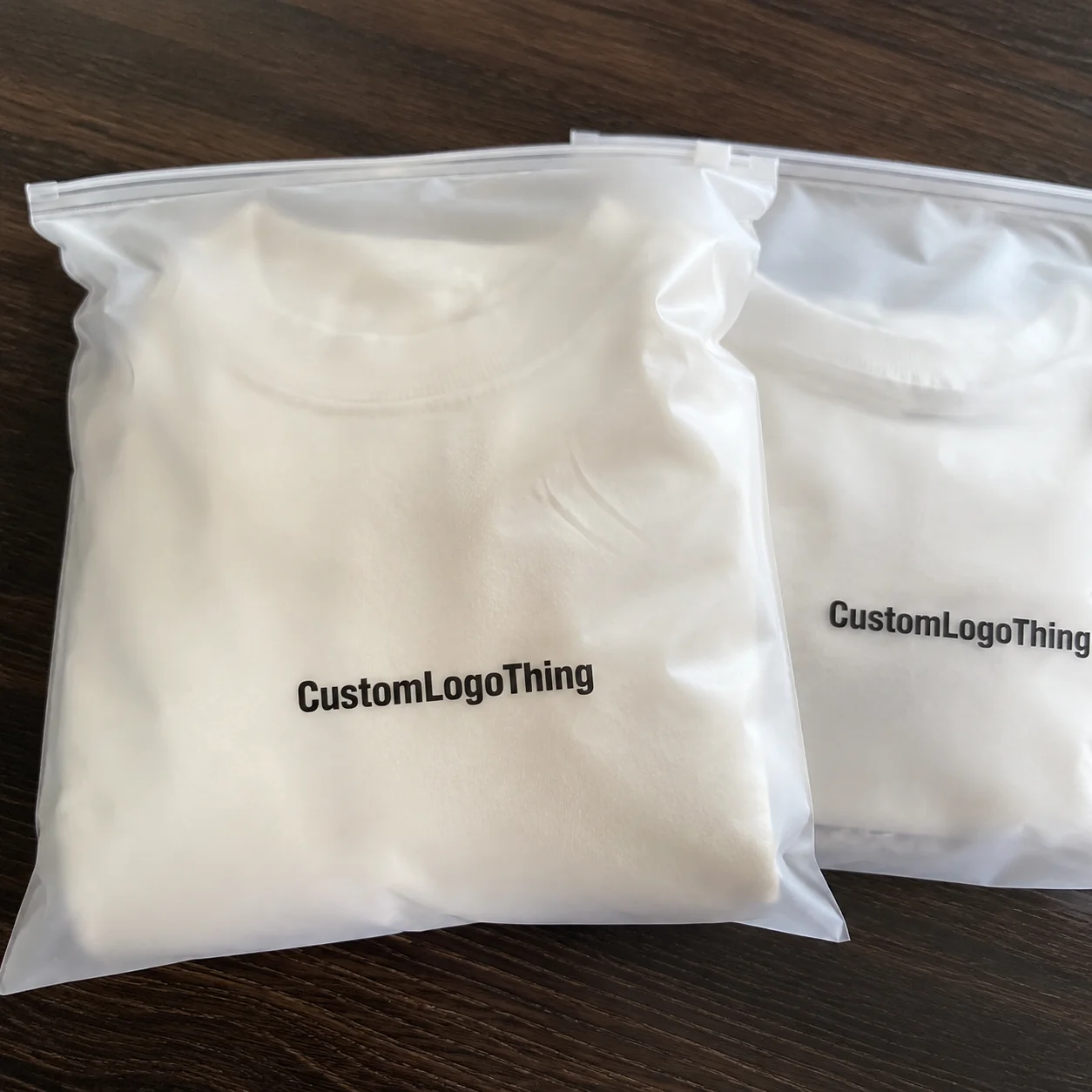
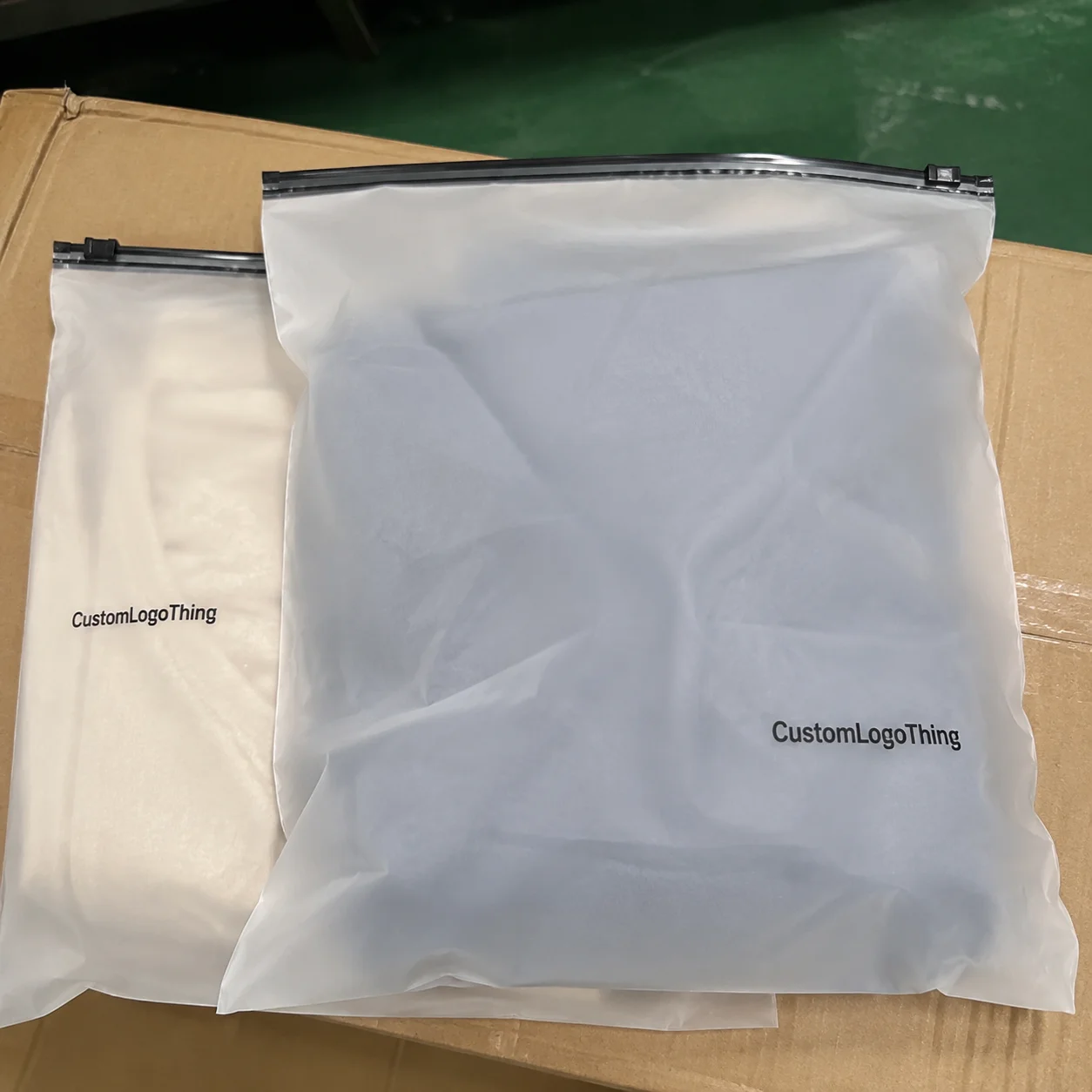
If you are comparing Custom Printed Plastic Bags Wholesale options for a new product line or a replenishment run, the fastest way to save time and money is to match the bag to the real job it has to do, not just the artwork you want on it. A plain poly bag can move product from point A to point B, but a printed bag can also carry brand recognition, handling instructions, and retail value in one lightweight package.
That is why wholesale buying matters. You get more predictable unit cost, better consistency across SKUs or store locations, and enough volume to standardize product packaging without scrambling for emergency reorders. From a packaging buyer’s point of view, the goal is simple: protect the product, present it well, and keep the total landed cost under control.
In practice, the best result comes from lining up film type, thickness, print method, and closure style with the product itself and the way it moves through shipping, storage, and shelf display. That balance is where branded packaging starts paying for itself.
Custom packaging that protects product, branding, and margin
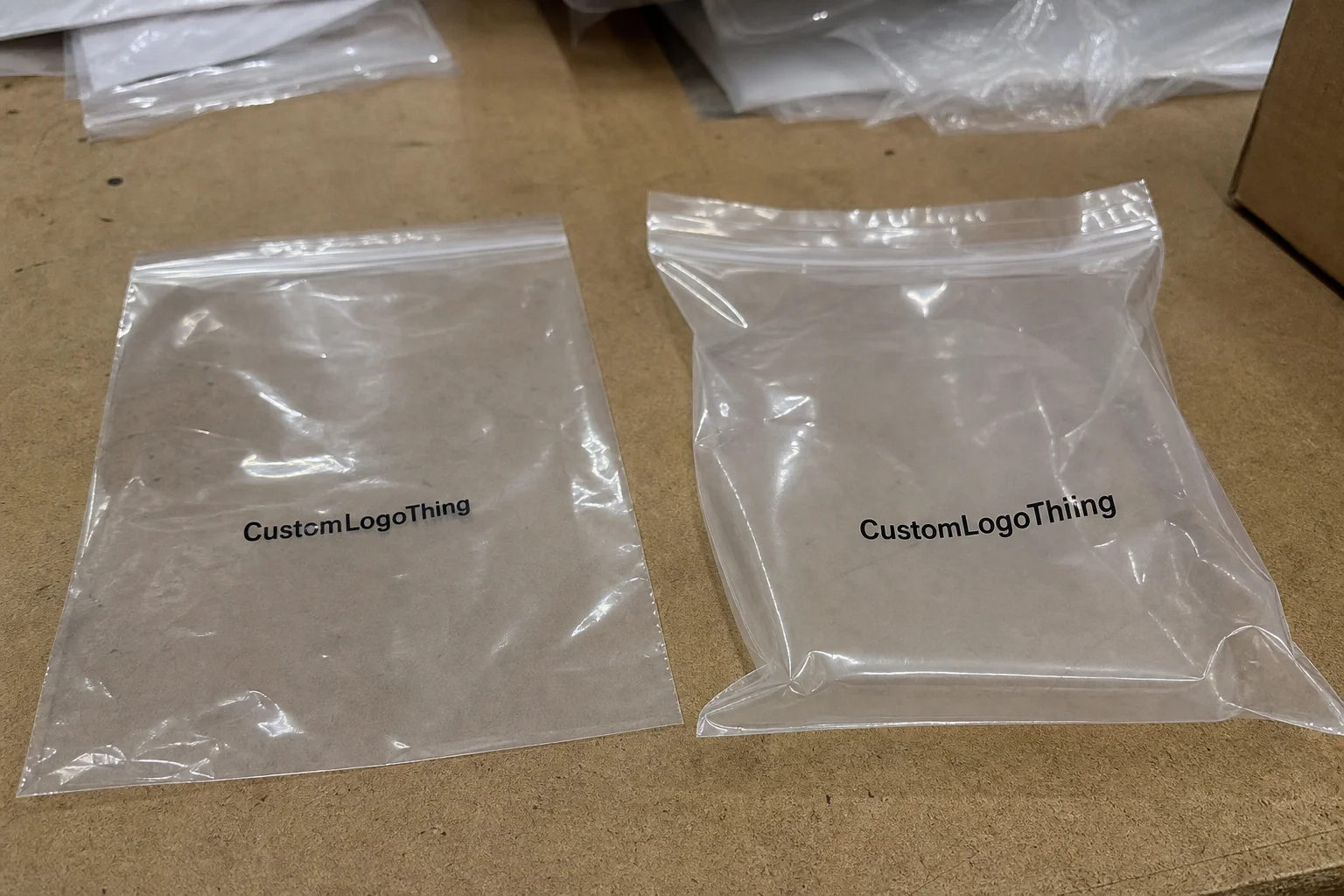
Printed Plastic Bags are popular because they do several jobs at once. They are moisture resistant, light to ship, and flexible enough for retail, apparel, food service, industrial parts, and promotional kits. Compared with many rigid formats, they often deliver better visibility and lower material cost, especially when the goal is to keep unit economics tight without sacrificing presentation.
For buyers who are balancing operations and brand image, that matters. A well-specified printed bag can reduce the need for extra labels, inserts, or overpackaging. It also helps create a consistent shelf look, which is a big part of package branding whether the item is hanging in a store, being packed in a fulfillment center, or sitting in a backroom awaiting shipment.
“The lowest price bag is rarely the lowest total cost bag. If the gauge is too light, the seal is weak, or the print makes the bag look cheap, you usually pay for it later in waste, returns, or repacking.”
That is why buyers often compare printed plastic against Custom Packaging Products like labels, mailers, or cartons before they commit. Sometimes custom printed boxes make sense for premium presentation or fragile goods. Other times, a flexible bag is the better answer because it uses less material, ships flatter, and keeps packing lines moving faster.
For companies ordering at wholesale scale, consistency is a major advantage. Once the spec is set, the same bag can be used across multiple channels, which helps keep retail packaging uniform and avoids the confusion that happens when different locations source similar-looking but slightly different packaging.
Film types, print methods, and closure styles that affect performance
The material choice shapes everything else. LDPE is common for its softness, clarity, and good puncture resistance. HDPE is thinner and crisper, often used when you want a lighter bag with a bit more stiffness. PP, or polypropylene, brings a sharper feel and better clarity for certain retail applications, though it behaves differently under heat and sealing conditions.
For buyers, that means the “best” film is really the one that matches the product and the handling environment. A garment bag may need a clean finish and good transparency. A parts bag may need higher tear resistance. A produce or food-service bag may need a specific food-contact structure, depending on the application and local requirements. If recyclability is a priority, the structure should be discussed early so the bag can be built around the right film family rather than patched together later.
Print method changes cost and appearance. Flexographic printing is usually the workhorse for efficient high-volume runs, especially when the artwork is stable and the order will repeat. Gravure can be the right choice for rich, detailed graphics on larger programs, but it tends to make more sense at scale. Digital printing is often used when quantities are lower or artwork changes more often, because setup can be lighter and revisions are easier to manage.
Closure style matters just as much. Zipper seals work well for reclosable retail items. Heat seals are common where tamper evidence or a clean finish matters. Side gussets and bottom gussets add capacity and help the bag stand or load better. Die-cut handles support carry-out and display use. Wicketed formats are efficient in fulfillment and packing environments because they let operators separate bags quickly.
Surface finish changes the look and feel. Gloss brings brightness and sharper color appearance. Matte gives a softer, less reflective presentation. Clear film shows the product clearly, while frosted and tinted films add privacy or visual separation. Print coverage, color count, and whether the artwork is on one side or both sides will affect not only presentation but also the quote structure.
| Option | Best for | Typical impact on cost | Practical note |
|---|---|---|---|
| LDPE with flexo print | Retail, apparel, general-purpose packaging | Moderate at volume | Good balance of feel, strength, and repeat production efficiency |
| HDPE with simple print | Lightweight utility bags, shipping liners | Lower material cost, lower print complexity | Thinner feel; suitable when stiffness is not a priority |
| PP with higher-detail graphics | Retail presentation, premium inserts, clear product visibility | Often higher | Sharper presentation, but sealing and handling need to be specified carefully |
| Digital print short run | Lower quantities, faster art changes | Higher unit cost at scale | Useful for testing a package design before larger rollout |
For performance standards, it helps to understand the real-world tests behind the claims. Packaging programs that need transit confidence can be checked against ISTA testing practices, while recyclable-material goals may be aligned with guidance from the EPA. Those references do not pick the bag for you, but they do help buyers ask better questions.
What to specify before requesting a quote
The cleanest quote starts with complete specs. At minimum, a supplier should know the bag dimensions, film thickness in mil or microns, bag style, print colors, artwork format, and pack count per carton. If you leave those out, the quote may look fast, but it will not be reliable enough to compare apples to apples.
Different applications need different priorities. A garment bag may care most about clarity and presentation. A courier or mailer bag will care more about seal integrity and puncture resistance. A produce bag may need a different film balance than an industrial parts bag. Good packaging design starts with the use case, not with the logo.
If the product is sharp, heavy, wet, or heat sensitive, say so up front. Also note target fill weight and any sealing equipment already on the line. These details change the proper gauge, seal width, and sometimes even the bag opening style. If the bags will run through automated equipment, tolerances matter more than people expect.
Specs to prepare before you request pricing
- Bag size: width, length, and gusset depth if needed
- Film thickness: mil or microns, with a practical target range if you are unsure
- Material type: LDPE, HDPE, PP, or a recyclable-film request
- Print details: number of colors, one-side or two-side print, Pantone references
- Artwork file: AI, EPS, or press-ready PDF preferred
- Pack-out: bags per carton, carton dimensions, and pallet expectations
- Compliance needs: food contact, barcode placement, puncture resistance, or other performance notes
Clear specs shorten the quote cycle, reduce artwork revisions, and help avoid sample delays. They also make it easier for the supplier to spot issues before production starts, which is usually where the best cost savings happen.
If you need a broader sourcing starting point, it can help to review a supplier’s Wholesale Programs so you can see what fits your volume and whether they handle repeat replenishment well.
Custom printed plastic bags wholesale cost, MOQ, and unit economics
Custom Printed Plastic bags wholesale pricing is driven by a handful of straightforward variables: resin cost, thickness, bag size, number of print colors, number of printed sides, and total order volume. Once those change, the quote changes. That is normal, and it is one reason a vague request often produces a vague answer.
MOQ, or minimum order quantity, exists because setup costs have to be spread across the run. Flexographic and gravure printing usually need higher volumes than digital because plates, prepress work, and press setup take time. Smaller runs can still be possible, but unit pricing generally rises as volume drops.
Here is the practical way I look at it: if you are buying a repeat item, you usually want to standardize as much as possible. One size, one gauge, one artwork version. That tends to lower the cost per bag and makes reordering much easier. If you manage multiple SKUs, consolidating bag sizes where possible can improve your unit economics quickly.
Freight and packaging method also matter. A quote that looks low on paper may not be low once cartons, pallet configuration, proofing, and shipping are added. A true landed-cost comparison should show tooling, plates, sampling, packaging, and freight separately so you can compare suppliers honestly.
| Cost driver | How it affects price | Buyer action that helps |
|---|---|---|
| Material resin | Heavier or specialty films cost more | Choose only the gauge needed for the product |
| Bag size | Larger formats use more film | Keep dimensions tight to the product |
| Print colors | More colors can mean more setup and press time | Limit colors where the design allows it |
| Total volume | Higher quantities usually lower unit price | Consolidate orders or plan for a larger run |
| Tooling and plates | Fixed costs hit small runs harder | Ask how the setup cost is allocated |
Typical pricing will vary widely by bag size and print coverage, but for many common wholesale programs, buyers are often comparing price bands rather than exact cents alone. A simple, single-color bag at 5,000 pieces may land very differently from a multi-color bag with heavy coverage and special finishing. The quote should make that difference obvious.
That is also where Custom Printed Plastic bags wholesale buyers can make smart tradeoffs. Simplify the artwork, reduce print coverage, or order a standardized size, and the per-unit number often improves. If the product is not premium-sensitive, those changes can save more than trying to negotiate a small discount off a complicated spec.
Production steps, proof approval, and realistic lead time
A typical job follows a pretty clear path: inquiry, spec review, artwork check, quote confirmation, proof approval, production, quality inspection, packing, and shipment. It sounds simple, but the delay usually happens in the handoffs, not on the press.
Proofing deserves real attention. The proof should confirm dieline dimensions, copy placement, color expectations, and any barcode or registration details. If a logo is too close to a seal edge or a warning line sits in the wrong place, it is much easier to fix before production starts. Once the order is running, changes get expensive fast.
Lead time depends on a few practical factors: print method, quantity, material availability, and whether the bag needs extra finishing like custom handles, special sealing, or a multi-step structure. Simple orders with finalized artwork can move faster than complex runs, but I would never promise a timeline without checking the current production load and raw material status.
Sampling and full production are not the same thing. A sample can confirm size, feel, and general appearance, but it may not represent every detail of a full run, especially with color density or long production tolerances. That is why suppliers should explain what the sample does and does not prove.
If you need guidance on packaging formats beyond bags, browsing other Custom Packaging Products can help you compare options before locking in a format. Sometimes the best answer is still a bag; sometimes it is a label-plus-mailer approach or a box for better protection.
For buyers who are shipping products that will face parcel transit, it is reasonable to ask whether the packaging has been considered against ISTA transport testing principles. That does not replace actual validation, but it gives a useful framework for thinking about crush, vibration, and puncture risk.
Quality checks, packaging consistency, and supply reliability
The best wholesale supplier does more than print your logo. They help keep the run consistent from the first carton to the last. That means checking print registration, seal strength, gauge consistency, color variation, and bag dimensions across the order. If one of those drifts, the problem usually shows up on the packing line long before it shows up in a complaint email.
Carton labeling and lot tracking matter more than some buyers expect. If you reorder regularly or distribute to multiple warehouses, clear labeling makes it easier to stage inventory and trace a specific run if a question comes up. Pack counts should also be consistent, because a short count on the box level creates friction that has nothing to do with the packaging itself.
Good consistency helps operations in a very practical way. Bags that open properly, seal reliably, and stack evenly reduce waste and keep lines moving. Bags that stick, split, or vary too much in thickness can slow packing, cause rework, and eat away at whatever savings the lower unit price was supposed to deliver.
When a supplier understands repeat orders, they should be able to explain their tolerances in plain language. That includes what kind of variation is acceptable, how they check it, and what happens if the run falls outside spec. That kind of clarity builds trust faster than a polished brochure.
- Inspect first cartons for print alignment and seal quality
- Confirm carton counts and labeling before release to your warehouse
- Keep one approved master spec for repeat orders
- Document any changes in size, color, or film thickness before the next run
If your program includes sustainability goals, the supplier should be able to speak clearly about resin choices and disposal considerations, and not hide behind vague claims. For general packaging sustainability guidance, the EPA resource center is a useful place to verify terminology and avoid marketing fluff.
How to place the order and avoid delays on your next run
The easiest way to avoid delays is to act like the order is already going to production. Confirm the size, choose the film and thickness, finalize the artwork, decide on quantity, and request a written quote with all charges shown. That single step saves a lot of back-and-forth.
After that, ask for a proof and, if the application is demanding, a physical sample. Then ask for a clear production schedule before you release the order. That schedule should include proof approval timing, estimated production start, and ship window. If a supplier cannot give you that, they probably do not have enough control over the process to support a tight replenishment plan.
Send files in the format the printer prefers. Vector artwork, clean fonts, confirmed Pantone references, and barcode requirements all help. If a logo has multiple versions, make sure the approved one is obvious. Small misunderstandings there can delay a job by days.
Also think about receiving. Warehouse hours, dock requirements, storage space, and freight timing all affect how well the delivery goes. A good packaging plan is not just about the bag; it is also about whether the bags arrive when the team can unload and use them.
For buyers moving quickly, the order process usually goes best when the supplier is direct about what they need and what the schedule really allows. That is the right mindset for Custom Printed Plastic bags wholesale: complete specs, prompt approvals, and a supplier who can explain the next step without guessing.
FAQ
What is the minimum order for custom printed plastic bags wholesale?
MOQ depends on bag size, material, and print method. Flexographic and gravure runs usually require higher volumes than digital because setup, plates, and press time have to be spread across the order. Smaller quantities can sometimes be done, but unit cost usually rises when the run is too short to absorb those fixed expenses.
How long does it take to produce custom printed plastic bags wholesale orders?
Lead time depends on artwork approval, print method, quantity, and material availability. Simple jobs can move quickly after proof approval, while larger or more complex orders need more prepress review and production time. If a supplier is also handling special finishes or custom closure styles, expect the schedule to stretch a bit.
What artwork files do I need for custom printed plastic bags wholesale?
Vector files such as AI, EPS, or press-ready PDF are preferred because they hold clean edges and accurate scaling. It also helps to provide logo colors, copy, barcode details, and any dieline or placement instructions. The more precise the file package, the fewer revisions you usually need.
Can I choose recyclable or food-safe materials for printed plastic bags?
Yes, many programs can be built around recyclable film requests or food-contact requirements when the application calls for them. The right material depends on the product type, the seal method, regulatory needs, and how the bags will be stored or shipped. It is better to confirm those details before quoting than to retrofit the specification later.
How can I get the best price on custom printed plastic bags wholesale?
Keep the bag size standard, limit print colors, and order enough volume to spread setup costs efficiently. Ask for a full landed-cost quote so you can compare material, printing, packaging, and freight together. That gives you a clearer picture than looking at bag price alone.