Buyer Fit Snapshot
| Best fit | Custom Printed Void Fill projects where brand print, material claims, artwork control, MOQ, and repeat-order consistency need to be specified before quoting. |
|---|---|
| Quote inputs | Share finished size, material target, print colors, finish, packing count, annual reorder estimate, ship-to region, and any compliance wording. |
| Proofing check | Approve dieline scale, logo placement, barcode or warning zones, color tolerance, closure strength, and carton packing before bulk production. |
| Main risk | Vague material claims, crowded artwork, missing packing details, or unclear freight terms can make a low unit price expensive after revisions. |
Fast answer: Custom Printed Void Fill: What It Is and How It Works should be specified like a repeatable production item. The safest quote records material, print method, finish, artwork proof, packing count, and reorder notes in one written spec.
Production checks before approval
Compare the actual filled-product size with the drawing, then confirm tolerance on folds, seals, hang holes, label areas, and retail display edges. Reserve space for logos, QR codes, warning copy, and material claims before decorative graphics fill the panel.
Quote comparison points
Review material grade, print process, finish, sampling route, tooling charges, carton quantity, and freight assumptions side by side. A quote is only useful when the supplier can repeat the same color, closure quality, and packing count on the next order.
Custom Printed Void Fill: What It Is and How It Works
The most expensive thing in a shipment is often the empty space around the product. Annoying, but true. That empty space is where a lot of damage starts, because products do not need a dramatic crash to fail. They just need room to move. Custom Printed Void Fill tackles that problem and does something extra while it is there. It keeps the item from sliding around, and it turns the inside of the box into part of the brand experience.
Plain dunnage only does one job. Custom Printed Void Fill does two. It stabilizes the product, and it gives the carton a more deliberate, branded feel. That matters more than some teams expect. A box that opens to clean printed filler feels planned. A box that opens to loose stuffing and rattling contents feels improvised, even if the product itself is premium. Customers notice that difference fast. They may not say it out loud, but they feel it.
I have sat through enough packout reviews to know this part gets underestimated. Packaging teams will obsess over the outer carton and then treat the inside like leftover space. That is backwards. The inside is the first thing the customer sees after the seal breaks. A good custom printed void fill spec can reduce breakage, support unboxing, and make a shipment feel consistent across SKUs. That matters for fragile home goods, cosmetics, specialty food, subscription boxes, and any product that needs a little extra reassurance in transit.
The basic comparison is simple. Standard void fill protects the carton. Custom printed void fill protects the carton and reinforces the brand story. For some shipments, that is a visual upgrade. For others, it is the difference between a clean delivery and a return request. Not glamorous. Just expensive when it goes wrong.
Custom Printed Void Fill: What It Is and Why It Matters
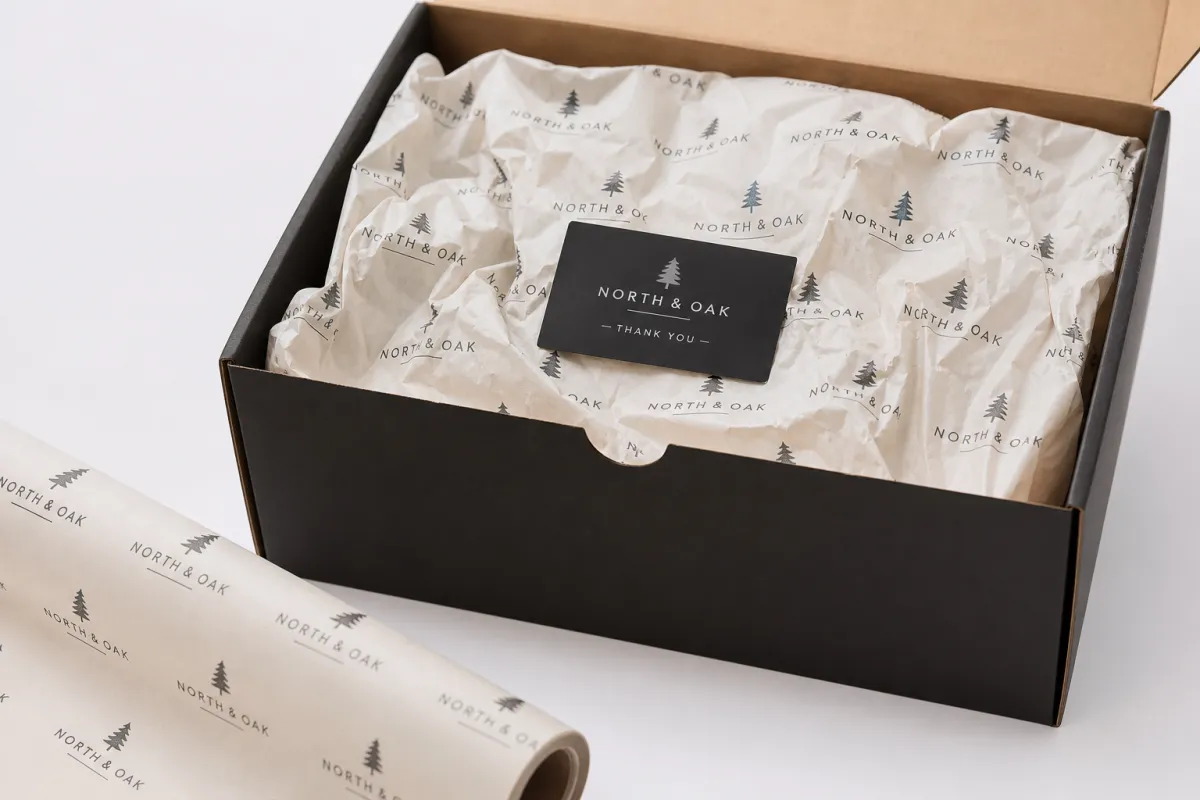
At its core, custom printed void fill is protective filler printed with brand graphics, handling cues, short messages, or sustainability language. The print may be a logo repeat, a recycling reminder, a care note, or a simple line that helps the customer understand what to do with the product next. The material itself can be kraft paper, tissue, crinkle paper, or a film-based air cushion system, depending on the packout. The main point is straightforward: the filler is no longer anonymous.
From a packaging buyer's point of view, that shift is practical. If the shipment needs filler anyway, why not make the filler work harder? A plain brown or white filler disappears into the box. Custom printed void fill still does the boring but important work of stopping movement, but it also adds visible structure to the unboxing. That is useful for branded packaging programs where the inside of the carton needs to match the care shown on the outside.
There is a quieter operational benefit too. When teams standardize on custom printed void fill, the filler itself can help warehouse staff spot the intended packout. A repeated mark or a simple instruction can cut down variation between shifts. Nothing fancy. Still useful. Fulfillment teams moving hundreds or thousands of units a day do not need another guessing game.
One thing people get wrong is treating void fill like decoration. It is not decoration. It still has to protect the product. If the branding looks sharp but the box arrives crushed, the printing did nothing useful. Good custom printed void fill sits between packaging design and distribution performance. It supports the product during transport, and it supports the brand once the customer opens the box.
Most damage claims start as a movement problem, not a carton problem. If the product can slide, tilt, or rattle, the packaging is already working against itself.
That is why custom printed void fill makes the most sense for shipments where presentation and protection are already tied together. Subscription kits, ecommerce gifts, premium accessories, and product launches all fit that pattern. In those categories, the filler is not an afterthought. It is part of the delivery experience.
There is also a sustainability angle. If a brand wants recyclable paper-based materials, FSC-certified inputs, or a cleaner material story, custom printed void fill can support that goal with the right substrate and ink system. The result depends on the material, but the idea stays the same: use the inside of the box to communicate better, not just to occupy air.
For teams sourcing packaging supplies, it helps to look at the larger material family as well. Our Custom Packaging Products page is a useful starting point if the box build includes inserts, wraps, or other branded components alongside the filler. The best custom printed void fill decisions usually come out of a broader packout conversation, not a one-off purchase.
If you need a quick rule, use this one: if the shipment already relies on filler to keep the product safe, custom printed void fill can usually add value without creating a separate packaging step. That is the appeal. One component, two jobs. Pretty simple on paper. Less simple when the box is overpacked and the line is backed up.
How Custom Printed Void Fill Works in the Packout
Custom printed void fill works by reducing the empty space that lets a product move during transit. Movement creates impact. Impact creates wear, scuffing, crushed corners, and sometimes a full product failure. A properly chosen filler absorbs some shock, limits shifting, and keeps the item centered in the carton so the box can handle normal shipping abuse better.
There are a few common formats. Kraft-based paper fill is often used for heavier products because it offers structure and solid bulk. Tissue-based options are lighter and can feel more premium for cosmetics or gift packaging. Crinkle paper creates visible volume and shows up a lot in Branded Retail Packaging. Air-based systems focus more on cushioning and volume than visual texture, though printing options there are more limited and usually happen on the film or a related insert rather than on the air cell itself. The substrate drives the print method. That part never really changes.
Custom printed void fill can live in different places inside the packout. Sometimes the print is directly on the filler material. Sometimes the brand message appears on an inserted wrap that sits above the filler. Sometimes the filler is plain, but the visible layer above it carries the design. The choice depends on how much of the inside of the box will be seen and how fast the fulfillment team needs to pack.
That last point matters. A beautiful filler that slows the line is not a win. If the packaging station starts fighting the material, the labor cost rises and everybody notices. Warehouse operators need material that loads quickly, dispenses consistently, and does not require a specialist to get right. Good custom printed void fill is as much about production speed as it is about visual appeal. The material should feed cleanly, hold its shape, and avoid friction at the pack station.
For brands working across multiple SKUs, the smartest packout is usually the one that can be repeated without constant judgment calls. A standard box family, a standard fill volume, and a consistent printed message make the whole operation easier to train. That is where custom printed void fill starts acting like a process tool instead of just a branded accessory.
There is also a structural difference between void fill and inserts. Inserts are designed to hold a product in a precise position. Custom printed void fill is usually less rigid and better at filling irregular gaps. That makes it useful in cartons where product dimensions vary slightly, or where one box size serves several order profiles. In those cases, the filler adapts to the void instead of forcing the product into a fixed geometry.
Brands that use custom printed void fill well often pair it with a broader packaging design strategy. The exterior carton, label copy, insert card, and inner filler all support the same message. The result feels coordinated without being overworked. That balance is what separates polished packaging from packaging that just looks expensive.
If you want to compare the main options, this table is a useful starting point:
| Option | Typical Use | Print Approach | Relative Cost | Practical Notes |
|---|---|---|---|---|
| Plain kraft paper fill | General ecommerce protection | No print or one-color mark | Lowest | Good for basic cushioning, less brand presence |
| Custom printed kraft fill | Branded shipments and retail packaging | Flexographic or digital print | Low to medium | Balances visibility, speed, and material efficiency |
| Tissue or crinkle fill | Gifts, cosmetics, premium unboxing | Repeat logo or pattern print | Medium | Feels elevated, but may offer less structure than kraft |
| Air-based filler with branded insert | Lighter products or high-volume shipping | Branding on outer insert or carton layer | Medium to higher | Fast to deploy, but print placement is more limited |
For compliance-minded teams, testing matters. Custom printed void fill should be evaluated the same way as any other protective packaging component: drop tests, vibration exposure, compression checks, and rough handling simulations. ISTA protocols such as those published by the ISTA are a useful reference point, especially if the product is sensitive or the shipping lane is rough. If the filler is paper-based and the brand is aiming for responsible sourcing, the FSC standard is another useful benchmark for material selection.
The big lesson is simple. Custom printed void fill only works if it fits the packout, not if it just looks nice in a sample photo. The carton, the product, the pack station, and the shipping lane all matter. Ignore one of them and the material choice gets shaky fast.
Custom Printed Void Fill Costs, Pricing, and Value Drivers
Pricing for custom printed void fill depends on a handful of variables that interact more than people expect. Material choice is the first one. Kraft paper usually costs less than premium tissue. Crinkle paper can sit in the middle or higher, depending on finish and print coverage. Air-based systems change the math again because the cost is tied to film, volume, and fill method rather than just paper weight. If the substrate changes, the economics change with it.
Print coverage is the next driver. A simple one-color repeat is easier to run than a dense multi-color pattern with tight registration. Number of colors, ink system, and artwork complexity all push the price. If the design uses a lot of ink coverage, the material can feel more premium, but the unit cost goes up. That is normal. The real question is whether the added visual value is worth the spend.
Order volume matters just as much. Smaller runs of custom printed void fill often carry higher unit costs because setup, proofing, and minimum order requirements are spread across fewer pieces. A 5,000-piece order might land somewhere around $0.18-$0.28 per unit for a simple printed paper format, while a larger repeat order can come down meaningfully if the artwork stays stable and the supplier is not retooling the line. Those numbers are directional, not universal, because substrate and print coverage change the math quickly.
Setups are easy to overlook. Proofing, plate creation for analog print, color matching, and first-article approval all add time and cost. If the artwork changes late, the job can get expensive fast. That is one reason custom printed void fill rewards teams that finalize the message early and keep it simple. A bold logo, a short instruction, and a clear repeat pattern usually cost less to produce than a highly detailed graphic system.
There is a second cost layer that never shows up neatly on a quote sheet: total landed cost. Freight, warehousing space, labor time at the packing line, and damage rates all matter. A filler that saves 30 seconds per case can be worth more than a slightly cheaper material that slows the line. If the filler slows the line, it is gonna cost more than the quote shows. A filler that reduces breakage by even 1% or 2% can pay back faster than many teams expect, especially if the product is expensive to replace or the return experience is rough on customer service.
From a commercial standpoint, custom printed void fill should be compared against the hidden cost of plain packaging. Returns, replacement shipments, lost repeat orders, and poor first impressions are real expenses. If a brand ships 10,000 units a month and a better fill spec prevents 100 damaged deliveries, the value is not theoretical. It is measurable.
Here is a practical way to think about pricing:
- Material cost: driven by substrate, weight, and sourcing.
- Print cost: driven by colors, coverage, and registration complexity.
- Setup cost: driven by plates, proofs, and prepress work.
- Logistics cost: driven by freight class, storage footprint, and pallet density.
- Operational cost: driven by how quickly the fill runs at packout.
That list sounds obvious, but it is often the missing piece in a sourcing conversation. Buyers focus on unit price and forget that custom printed void fill can change labor speed, case density, and even how many boxes fit on a pallet. A lower unit price is not always the cheaper option once the shipment is in motion.
There is another angle worth mentioning. If the printed message reduces the need for separate branded inserts, stickers, or extra thank-you cards, the filler can pull double duty. That is where custom printed void fill starts acting like a packaging consolidation tool. Fewer components. Fewer touches. Less clutter inside the box.
On the buyer side, the right question is not “What is the cheapest filler?” It is “What is the best total package for this product, this shipping lane, and this fulfillment team?” That is a much better way to evaluate custom printed void fill because it accounts for both branding and operational reality.
Custom Printed Void Fill Process and Timeline: From Brief to Shipment
The process starts with a clean brief. Before anyone quotes custom printed void fill, the supplier needs the product dimensions, carton size, fragility concerns, shipping method, and branding requirements. If the product has sharp edges, crush points, or a heavy center of gravity, say so early. A filler spec that works for a lightweight accessory may fail completely for a glass item or a dense kit.
Artwork review comes next. Good suppliers will check file resolution, color usage, repeat pattern alignment, and whether the message will still be legible once the material is folded, crumpled, or compressed. That stage matters more than many brands realize. A print file can look fine on screen and still fail in production if the substrate stretches or distorts differently than expected. With custom printed void fill, the substrate is part of the design.
Sampling should happen before the full run. A small proof run or preproduction sample lets the team check fit, color, legibility, and packout speed. If the filler is awkward to load or takes too much space, the sample stage catches the issue before the order scales. That is the moment to adjust repeat size, ink density, or material choice. Once the full production run starts, every small mistake gets expensive.
Typical timelines vary, but a straightforward custom printed void fill order often needs 12-15 business days from final proof approval to shipment for standard materials. More complex jobs can take longer, especially if the artwork changes, the substrate is specialty stock, or the order is large enough to require queue time. If a supplier is also managing freight from a separate plant, add more time. Shipping distance alone can add several days.
Fast timelines usually come from simple specs. Standard material. One-color print. Final artwork ready on day one. No late edits. When those conditions are in place, custom printed void fill can move quickly. When the design is still changing, the lead time stretches. That is not a supplier failure; it is just how prepress and production work.
For teams coordinating with packaging procurement, it helps to map the process in stages:
- Define product protection targets and box dimensions.
- Choose the substrate and print method.
- Approve artwork, repeats, and handling copy.
- Review samples under real packout conditions.
- Run production and confirm shipping details.
That sequence keeps custom printed void fill grounded in the actual packout, not in a graphics mockup. It also makes supplier conversations cleaner. Instead of asking for “something branded,” the team can ask for a specific material, a specific message, and a specific performance target.
If the project includes other components, such as cartons, labels, or inserts, it helps to source them together. A combined order can make the brand message more consistent and simplify procurement. Our Custom Packaging Products page is useful for teams building out a broader system around custom printed void fill, especially when the goal is a coordinated product packaging program rather than a single component purchase.
The most important timeline lesson is this: build in sample review time. Even a good-looking proof can hide practical problems. The first production run should not be the first real test of custom printed void fill.
Step-by-Step Guide to Specifying the Right Void Fill
The smartest way to specify custom printed void fill is to start with the box, not the design. Measure the empty space around the product in the shipping carton. Look at the movement risk from every angle. If the product slides side to side, top to bottom, or end to end, the packout needs enough material to stop that motion without crushing the item. That balance is the whole job.
Next, define the performance goal. Is the priority breakage reduction? Better unboxing? Faster fulfillment? Standardization across a box family? The answer changes the spec. A premium gift program might favor tissue or crinkle with a cleaner graphic repeat. A heavier ecommerce product may need denser kraft fill with a simpler print. Custom printed void fill should solve the main problem, not the prettiest one.
Then write the design brief in plain language. The artwork should support the packing job. Short copy usually works better than a dense paragraph. A logo repeat can be enough. Handling cues should be obvious. If the message is meant to be seen as soon as the carton opens, keep the contrast high and the design uncluttered. That is how custom printed void fill helps package branding without making the interior feel crowded.
It is also worth checking the warehouse setup. How is the material dispensed? Is it cut by hand, fed from a box, or loaded into a machine? Can the team pack 300 units an hour with the new fill, or does the spec slow them down? A beautiful filler that adds 10 seconds per carton can quickly become a labor problem. The right custom printed void fill should be easy to train, easy to load, and easy to repeat.
Testing should happen in the real world. A 20-box test run is a practical place to start. Use actual products, real cartons, and the same packing team that will handle the live order. Then send those boxes through the shipping path or a close simulation. Drop tests, rough handling, and short transit trials often reveal things that a static bench test does not. If the product shifts, the fill volume is too low. If the carton bulges, the fill volume is too high.
That trial also helps with customer perception. Open the box yourself. Does the filler look intentional? Is the product easy to remove? Does the printed message add clarity, or does it just add clutter? Good custom printed void fill should feel like part of the experience, not a random layer someone added because the budget allowed it.
When a brand standardizes on a few box families, the whole process gets easier. The fill spec can be reused instead of reinventing for every order. That is a major efficiency gain, and it usually improves consistency too. From a packaging operations standpoint, repeated decisions are better than constant custom decisions. They reduce mistakes, speed up training, and give the team a clearer baseline for custom printed void fill.
Here is a compact decision framework that works well:
- Protection first: make sure the product does not move.
- Visibility second: keep the print legible and brand-appropriate.
- Speed third: confirm the filler loads quickly at the pack station.
- Consistency fourth: standardize across box families where possible.
If you want the short version, custom printed void fill is not chosen from a catalog photo. It is chosen after measuring the void, testing the packout, and asking whether the printed message actually helps the shipment do its job.
Common Mistakes When Buying Custom Printed Void Fill
The first mistake is choosing the material for looks alone. I see this often with teams focused on premium unboxing. The print looks beautiful, the color palette is on-brand, and then the product arrives damaged because the filler was too soft, too thin, or too sparse. Custom printed void fill is still a protective component. If it cannot stop movement, it is the wrong spec.
Underfilling is another common failure. A carton with too much empty space needs enough material to occupy that gap. If the team uses too little, the product rattles. Overfilling is also a problem because it can raise shipping weight, slow down packing, and create a messy look when the carton opens. The right amount of custom printed void fill is the amount that stabilizes the shipment without forcing the box to fight back.
Compatibility checks get missed too. Some inks, coatings, or mixed-material fillers can create recycling confusion. If the brand is aiming for curbside-friendly paper packaging, mixed substrates can weaken the message. The same goes for warehouse machinery. If the fill jams a dispenser or catches on a sealing station, the design is not production-ready. Good custom printed void fill respects both recycling streams and equipment reality.
Another error is skipping worst-case testing. A carton that survives a short urban route may behave differently on a longer lane with more handling events, temperature swings, or stacking pressure. If the product is fragile, test the worst-case shipment, not the easy one. That is especially true for ecommerce orders where the parcel may move through multiple hands before delivery. Custom printed void fill should be validated under the conditions it will actually face.
There is also a branding mistake that shows up often: trying to say too much. The filler is not a brochure. The best messages are short, bold, and instantly legible. A simple logo repeat, a reuse reminder, or a short care note usually does more good than a paragraph of copy. With custom printed void fill, clarity beats clutter almost every time.
If the project is being compared against other packaging upgrades, keep the decision grounded in data. Damage rate, return reason, and packout time are the numbers to watch. Not vibes. Not personal preference. Those metrics tell you whether custom printed void fill is earning its place in the box or just taking up space.
One more mistake deserves mention: failing to involve fulfillment staff early. The people packing the boxes know where the friction is. They know when a filler tears too easily, when it binds, or when it takes longer than expected to place. Their input is often the difference between a spec that looks good on paper and one that actually works. For custom printed void fill, operator feedback is not optional.
Expert Tips and Next Steps for Custom Printed Void Fill
If the goal is better packaging without unnecessary complexity, standardize the box families first. The more repeatable the carton sizes, the easier it is to lock in a custom printed void fill spec that stays stable over time. Constantly changing the carton shape forces the filler to do too much work, and that usually creates inefficiency somewhere else in the process.
Use the print surface strategically. Keep the brand mark visible where it will actually be seen. Put handling instructions where the packer or customer can read them in a second. If the message is about reuse or recycling, make it direct. A long explanation is less useful than a clear cue. The best custom printed void fill designs usually feel simple because they are doing focused work.
Watch the data. Damage rates, return reasons, freight complaints, and packing speed tell a story. If a new filler reduces breakage but adds too much labor, the net value may be lower than expected. If it speeds up packing and improves the unboxing, the case for custom printed void fill gets stronger fast. Real-world numbers matter more than a polished sample board.
There is also a sustainability angle worth tracking. Paper-based materials can be easier to align with FSC sourcing and recycling goals, but the full picture depends on the substrate, ink, and local disposal rules. A good supplier should be able to explain how the material performs in actual recycling streams, not just how it looks on a spec sheet. That kind of honesty is useful, and it is one of the signs you are working with a partner who understands custom printed void fill as a packaging system, not a graphic product.
Here is a simple rollout plan that works for many brands:
- Pick one SKU family with clear damage history or a strong brand-facing need.
- Request a sample of custom printed void fill in the intended substrate.
- Run a 20-box test with the normal packing team.
- Compare damage, labor time, and customer feedback against the current setup.
- Expand only after the numbers justify the change.
That approach keeps the decision disciplined. It also reduces the risk of overcommitting to a filler that looks good but does not carry its weight. The best packaging teams treat custom printed void fill like a controlled improvement, not a decorative upgrade.
If you are building out a broader branded packaging program, think of the filler as one layer in a larger system. The carton, the insert, the label, and the void fill should all reinforce the same identity. That is where custom printed void fill can quietly do a lot of heavy lifting. It protects the product, sharpens the presentation, and makes the inside of the box feel as considered as the outside. For brands that care about product packaging, that is a worthwhile place to invest.
When the packout is being refined, it can help to compare filler options alongside other components in our Custom Packaging Products catalog. That makes it easier to decide whether custom printed void fill should stand alone or work alongside inserts, wraps, or another branded element. Sometimes the best result comes from one smart component. Sometimes it comes from a coordinated set.
My practical take: use custom printed void fill where it can improve both protection and perception. If it only does one of those jobs, keep evaluating. If it does both, it earns its place quickly.
How much custom printed void fill do I need per box?
Measure the empty space around the product first, then choose enough fill to stop movement without compressing the item. The right amount of custom printed void fill usually depends on box size, product density, and how much the shipment shifts during a simple shake test or short transit trial.
Is custom printed void fill more expensive than plain void fill?
Usually, yes on a unit basis, because printing, setup, and artwork handling add cost. The total package can still cost less overall if custom printed void fill reduces damage, returns, or the need for extra inserts. On larger repeat orders, the price gap often narrows.
What artwork works best on custom printed void fill?
Bold logos, short reuse messages, and simple handling cues tend to perform best. High contrast matters because the print has to read quickly during packing and opening. If custom printed void fill is part of a premium unboxing moment, keep the graphic clean and repeat the message consistently.
How long does custom printed void fill take to produce?
Lead time depends on artwork approval, material availability, print complexity, and quantity. Straightforward jobs with standard materials often move faster, while more complex custom printed void fill orders need extra time for proofing and setup. Sample approval should be built into the schedule.
Is custom printed void fill recyclable or sustainable?
It can be, but the answer depends on the substrate, ink system, and local recycling rules. Paper-based custom printed void fill is often easier to align with curbside recycling than mixed-material alternatives, but the supplier should explain how the material behaves in real recycling streams.
If you want a packout that protects the product and does something useful for package branding, custom printed void fill is one of the few upgrades that can pay back in fewer damages, smoother fulfillment, and a stronger first impression.
The cleanest next step is not a full rollout. It is one SKU family, one real test run, and one honest review of the numbers. If the filler protects the product, keeps the line moving, and makes the unboxing feel intentional, you are on the right track. If it misses any of those jobs, adjust the spec before scaling.

