Buyer Fit Snapshot
| Best fit | custom printed void fill paper for packaging buyers comparing material specs, print proof, MOQ, unit cost, freight, and repeat-order risk where brand print, material, artwork control, and repeat-order consistency matter. |
|---|---|
| Quote inputs | Share finished size, material target, print colors, finish, packing count, annual reorder estimate, and delivery region. |
| Proofing check | Approve dieline scale, logo placement, barcode or warning zones, color tolerance, and any recyclable or compostable wording before bulk production. |
| Main risk | Vague material claims, crowded artwork, or missing packing details can create delays even when the unit price looks attractive. |
Fast answer: Custom Printed Void Fill Paper: How It Works and Costs should be specified like a repeatable production item. The safest quote includes material, print method, finish, artwork proof, carton packing, and reorder notes in one written spec.
What to confirm before approving the packaging proof
Check the product dimensions against the actual filled item, not only the sales mockup. Ask for tolerance on folds, seals, hang holes, label areas, and retail display edges. If the package carries a logo, QR code, warning copy, or legal claim, reserve that space before decorative graphics fill the panel.
How to compare quotes without losing quality
Compare board or film grade, print process, finish, sampling route, tooling charges, carton quantity, and freight assumptions side by side. A lower quote is only useful if the supplier can repeat the same color, closure quality, and packing count on the next order.
The most expensive part of a box is often the empty space inside it. A candle that can rattle around in transit can end up with a scuffed label, a chipped edge, or a broken lid long before the customer ever lifts the tissue or peels back the tape. That is the practical value of custom Printed Void Fill paper: it keeps the product from shifting, supports the contents during the trip, and gives the inside of the package a finished look instead of a rushed warehouse look.
For brands shipping skincare kits, glass jars, candles, small electronics, or gift sets, custom Printed Void Fill paper sits in a useful middle space between protection and presentation. It does a job on the shipping line and a different job at unboxing, which is why it matters so much to buyers who care about both damage rates and brand perception. The real decision is not whether to buy paper. The real decision is which format, basis weight, print coverage, and order volume will actually work in a live packout without turning into waste.
I have watched more than one team focus on the exterior of the carton while the interior got treated like an afterthought. The box looked polished on the outside, then opened to a sloppy void full of loose scraps or nothing at all. That mismatch is usually what customers remember. If the inside feels intentional, the whole shipment feels like it was handled by people who knew what they were doing.
Custom Printed Void Fill Paper: why empty space gets expensive
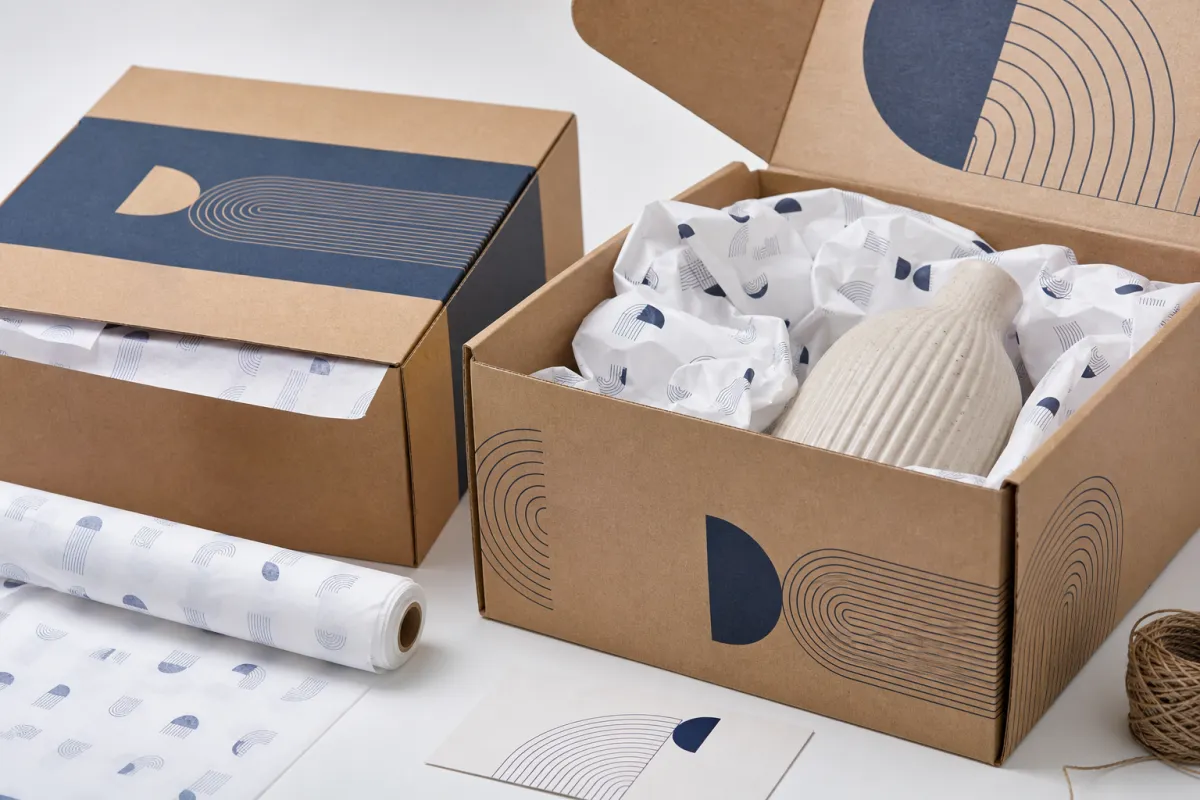
Empty space is not harmless. Inside a carton, it becomes movement, and movement becomes force. A product that can slide two inches can also strike a wall hard enough to crack a cap, dent a corner, or scuff a printed surface. That is why custom printed Void Fill Paper matters even for items that do not look fragile at first glance. Damage often begins with motion, not with a product that is inherently weak.
From a packaging buyer’s perspective, the carton works like a system. The box size, the product, the closure, the insert, and the void fill all affect one another. If one part is off, the whole packout becomes more expensive. A right-sized box paired with custom printed Void Fill Paper can reduce breakage and improve the unboxing experience at the same time. A box with too much air and no fill just becomes a rattling container with a logo on the outside and a mess inside.
That matters for product packaging and retail packaging alike. E-commerce teams feel it through returns and replacements. Retail teams feel it when shelf-ready kits arrive damaged or when the presentation looks sloppy after transit. Either way, the customer treats the inside of the box as part of the product. A filler that looks cheap drags down the whole order. A branded paper fill that fits the shipment makes the package feel intentional, which helps the overall package branding do more of the selling.
In my experience, a lot of damage claims start with one avoidable problem: the carton was chosen for warehouse convenience instead of transit performance. If the box is a size too large, the void fill gets asked to do too much. If it is too tight, the product may be protected but the presentation suffers. The sweet spot is a packout that holds the item firmly without forcing the packing crew to fight the material every time they close a box.
In practice, custom printed void fill paper is a cleaner answer than tossing in random kraft scraps or relying on plastic air pillows because they happen to be nearby. It can be FSC-certified, recyclable where accepted by local recycling systems, and easier to position as a paper-based option in a sustainability story. If that story matters to your brand, the material choice is not just a logistics call. It is part of the brand promise.
A branded filler that does not stop movement is just expensive confetti.
One mistake I see often is treating void fill like decoration. It is not decoration. It is part of the shipping test. A few inches of free movement can mean a return, and a return eats margin fast. The better mindset is simple: choose custom printed void fill paper to control motion first, then let the print improve presentation once the protection problem is solved.
If your current packout uses oversized cartons, the savings from tightening up the fill can be real. Less movement means less damage, fewer complaints, and fewer do-overs in the warehouse. That may not sound glamorous, but it is how profitable shipping usually works.
How custom printed void fill paper works in real packouts
At a basic level, custom printed void fill paper works by creating friction and volume. It wedges around the product, keeps the item centered, and absorbs the small shocks that happen during transit. The paper does not need to be fancy to do that. It needs to be placed correctly, used in enough quantity, and matched to the carton and product weight.
Paper format matters more than most people expect. Sheets behave differently from crumpled paper. Fan-fold formats feed differently from loose bundles. Machine-dispensed paper works well on higher-volume lines, while hand-packed orders often do better with simple sheets or pre-cut bundles. A buyer comparing options for custom printed void fill paper should think about labor first, not only the material spec.
Here is the practical version:
- Sheets work well for smaller teams that need fast, predictable packing.
- Crumpled or crinkle styles add more bulk and can lock items in place better.
- Fan-fold or roll formats help with repetitive packouts and reduce handling time.
- Machine-dispensed paper fits higher-volume fulfillment where line speed matters.
Printing changes the role of the filler. Once the paper carries a logo, pattern, or short message, it becomes part of the customer experience. That is the reason custom printed void fill paper is so effective: it turns dead space into visible brand touchpoints. The inside of the box stops looking accidental. It starts looking planned.
That also helps branded packaging make a stronger impression. A lot of brands spend money on custom printed boxes and forget that the first thing a customer sees after opening the carton is often the filler. If the outside is branded but the inside is plain, the experience feels unfinished. If the carton and the void fill share the same visual language, the package feels more complete.
Custom printed void fill paper fits especially well in these situations:
- Mixed-SKU orders where product sizes vary from order to order.
- Lightweight breakables like jars, candles, and bottles.
- Subscription kits that need a neat reveal without adding plastic.
- Giftable orders where presentation matters almost as much as protection.
It is not a magic fix, and that needs to be said plainly. If a product needs rigid immobilization, corner protection, or molded support, custom printed void fill paper will not replace an insert. It can stabilize and cushion. It cannot rescue a poor box choice or a fragile item with too much room to move.
For testing, I like a simple rule: pack the real product, shake the carton gently, then do a drop test that reflects the route and carrier handling you actually see. If the item shifts, the fill is not doing enough. If the carton bulges badly, you are probably using too much material or the wrong format. Either way, the answer is in the packout, not the sales pitch. A quick mockup in the office might look fine, but a real shipping line has a way of telling the truth pretty fast.
Custom printed void fill paper cost: pricing, MOQ, and quote drivers
The cost of custom printed void fill paper depends on more than paper weight. Buyers often look at one number and miss the rest, which is how budgets drift off course. The actual price is shaped by paper grade, basis weight, print coverage, number of colors, roll or sheet size, packaging format, and whether the run is fully custom or a stock format with branding added later.
MOQ matters too. Lower minimums usually mean a higher unit price because setup, press time, and converting costs have to be spread across fewer pieces. That is not a hidden fee trick. It is just how print production works. If you want custom printed void fill paper in a small run, expect to pay more per unit than you would on a larger order with the same artwork and format.
A better buying approach is to compare cost per packed order, not just cost per roll. A cheap paper that tears easily can force the team to use more of it. A denser, better-sized format may cost more on paper but less in labor and waste. That difference is usually what decides whether the material is actually economical.
| Option | Typical Use | Indicative Cost Range | What to Watch |
|---|---|---|---|
| Unprinted kraft void fill | Basic gap filling and low-cost shipping protection | $0.04-$0.12 per packed carton equivalent | Lowest branding value; may require more labor if it packs loosely |
| 1-color custom printed sheets | Branded e-commerce and gift orders | $0.10-$0.24 per packed carton equivalent | Good balance of cost and presentation; print area and setup fees matter |
| Heavier custom printed rolls or fan-fold paper | Higher-volume packouts and more secure stabilization | $0.14-$0.35 per packed carton equivalent | Often better protection, but paper usage and freight can rise |
| Premium branded format with full coverage | High-touch unboxing and retail-ready orders | $0.20-$0.45+ per packed carton equivalent | Best for premium package branding, but only if the shipment value supports it |
Those numbers are a starting point, not a promise. A supplier’s quote can move with pulp costs, shipping distance, and the actual converting setup required for the run. For a 5,000 to 10,000 unit order, small logos and light print coverage may come in near the bottom of those ranges, while full-coverage patterns, heavier paper, or unusual formats push pricing upward. If you ask for custom printed void fill paper with multiple colors, expect the unit cost to move up quickly. Print complexity is rarely free.
Most quote requests should include a few very specific questions:
- Is the quote based on paper weight, sheet count, or roll footage?
- Are plate, die, or setup fees included?
- Is freight separate, or does the price include shipping?
- Are samples charged, and are they credited on order?
- What happens if the artwork changes later?
If those answers are vague, the quote is not really a quote yet. It is a guess with a logo on top. A good supplier should be able to explain how custom printed void fill paper pricing changes with basis weight, sheet size, and print coverage. If they cannot, you are probably not comparing the same product across vendors.
Labor is part of the equation too, and it matters more than many buyers expect. A material that slows packers by even a few seconds per order becomes expensive very quickly. At 1,000 orders a day, five extra seconds per carton adds up in a hurry. If the paper is harder to dispense, harder to crumple, or harder to position, the quote may look attractive while the labor bill quietly rises.
One practical benchmark: for a medium-volume operation, I would rather see a slightly higher unit cost for custom printed void fill paper that packs reliably than a lower-cost version that tears, jams, or takes two hands to place. Cheap material that creates warehouse friction is not cheap.
Production process and lead time for custom printed void fill paper
The production flow for custom printed void fill paper is simple on paper and less simple in practice. It usually starts with artwork review, then print setup, paper sourcing, proofing, converting, quality inspection, packing, and shipment. Every one of those steps can move quickly or slowly depending on how clean the order is when it lands on the production floor.
Artwork is the first place delays show up. Low-resolution logos, fuzzy edges, missing vector files, and tiny type create back-and-forth that burns time. A printer can only work with what is supplied. If the brand mark needs cleanup, that should happen before the order is approved. Otherwise, the lead time for custom printed void fill paper starts stretching for no good reason.
Print color count matters too. A one-color logo on kraft paper is usually easier and faster than a full-coverage design with multiple ink stations. Paper availability matters as well. If the basis weight or sheet size is unusual, sourcing can add days. Custom converting adds another layer. None of that is mysterious. It is just production reality.
As a rough planning guide, repeat runs with locked artwork can often move in about 7 to 12 business days after approval, while first-time custom jobs are more commonly in the 12 to 20 business day range, depending on volume and format. Larger or more complex custom printed void fill paper orders may need more breathing room, especially if they require a custom print pattern, specialty paper, or extra inspection steps. For tight launches, I always tell teams to pad the schedule a little. Nobody ever regrets having the paper early.
That is where packaging standards become useful. If you are shipping products that are sensitive to transit, the packout should be tested against actual handling, not wishful thinking. Organizations like ISTA publish test procedures that help brands understand whether a package can survive the movement and impact it will see in the real world. For paper sourcing, if sustainability claims matter, FSC certification is another useful reference point.
Lead time is not only a supplier issue. It is a planning issue. If your launch date is fixed and the custom printed void fill paper arrives late, your warehouse either waits or ships with plain filler and a weaker presentation. Neither option is great. The fix is to request a production calendar before you approve the order.
Ask for the milestones in writing:
- Artwork approval date
- Proof confirmation date
- Production start date
- Estimated completion date
- Freight transit window
That sounds basic because it is basic. Still, basic planning is where many packaging jobs go sideways. A one-week delay from unclear artwork can turn into a warehouse scramble. A clean schedule keeps custom printed void fill paper aligned with inventory, labor, and launch timing instead of turning into a last-minute panic.
Step-by-step: choosing custom printed void fill paper for your packout
The best way to spec custom printed void fill paper is to start with the product, not the paper. Measure the item, carton size, and void space first. If you do not know how much room needs to be filled, every paper choice becomes a guess. A guess is fine for a coffee order, not for a shipment with breakage risk.
Step one is to measure the object and the void around it. If the product is small but heavy, you usually need stronger stabilization. If it is light and bulky, you may need more volume than weight. A candle in a tall box and a jar in a short carton do not need the same filler behavior. Custom printed void fill paper should match the problem, not a generic spec sheet from a supplier brochure.
Step two is to match the material to the shipping risk. Rough handling, stacked cartons, and mixed freight routes call for more secure fill. Gift boxes or direct-to-consumer kits may only need a light branded nest to prevent movement. There is no prize for using the heaviest paper available. There is only the question of whether the fill actually protects the shipment.
Step three is to think about labor and line flow. Manual packing lines usually want a simple format that can be reached, torn, and placed without slowing the team. Higher-volume operations may benefit from a standardized feed format. If the order volume is large enough, the wrong format can create a bottleneck that costs more than the material itself. That is why custom printed void fill paper should be spec’d with the packing team in the room, not just procurement.
Step four is to decide what the print is supposed to do. Are you reinforcing sustainability? Building recall? Cleaning up the inside of the box? Hiding plain kraft? Creating a premium reveal? Each goal pushes the spec in a different direction. A simple logo pattern may be enough for branded packaging. A heavier pattern might be worth it for premium gift orders. Full coverage might make sense for retail-ready kits, but it is not always worth the cost.
Here is a simple decision path that works well in practice:
- Low-value, low-risk items: lighter paper, minimal print, faster packout.
- Medium-value fragile items: moderate weight, more volume, branded surface.
- Premium or giftable items: stronger paper, cleaner presentation, stronger package branding.
- Multi-item kits: test multiple carton sizes and adjust the fill per SKU.
Step five is testing, and it needs to be real testing. Not a showroom test. Pack actual orders, close the box, shake it, tip it, and if the product is valuable enough, run a simple drop test that reflects the route. If you are serious, document the result so future buyers know what worked. The best custom printed void fill paper spec is the one that survives a real shipping day.
For brands that already use Custom Packaging Products, the void fill should feel like part of the same system. The carton, inserts, labels, and filler should all work together. A coordinated packout is cleaner, faster, and usually easier to maintain than a collection of one-off fixes.
One more point: do not let the print design outrun the packaging function. A beautiful graphic printed on paper that does not support the product is just a nice-looking failure. The better approach is to let the shipping need decide the structure, then let the brand decide the artwork. That order matters.
Common mistakes when ordering custom printed void fill paper
The first mistake is obsessing over the print and forgetting the performance. A logo can be sharp and the job can still fail if the paper compacts too much or tears too easily. Custom printed void fill paper is not a brochure. It has one main job: stop movement. If it cannot do that, the print is a very expensive decoration.
The second mistake is guessing the void size. Carton dimensions change. Product mixes change. Seasonal kits change. If the box is oversized by even half an inch in the wrong direction, the fill requirement jumps. An order that looked right on paper can arrive too small or too bulky. Good buyers measure actual packouts, not just carton labels.
The third mistake is ignoring labor. I have seen brands save a few cents on material and then lose minutes at the packing bench because the paper is awkward to use. That is backwards. If custom printed void fill paper is too stiff, too slippery, or too annoying to crumple, the warehouse pays for it every day the product ships.
The fourth mistake is treating artwork like it will print itself. Small logos and fine line work can disappear on textured paper, especially if the ink contrast is weak. If the design is too delicate, it may look fine on screen and weak in production. Ask for a proof on the actual substrate. With custom printed void fill paper, print behavior is part of the spec, not a side detail.
The fifth mistake is skipping a pilot. A pilot run sounds boring. It is also where expensive surprises get caught. One short test order can reveal whether the paper handles well, whether the team likes it, and whether the shipping result is actually better. That is a far cheaper lesson than discovering the problem after a warehouse has already committed to a full run.
Other problems show up when buyers compare different vendors without standardizing the assumptions. One quote includes freight, another does not. One uses a heavier paper, another uses a thinner sheet count. One includes a setup fee, another hides it somewhere else. By the time you line them up, you are not comparing the same custom printed void fill paper at all.
If you want a cleaner decision, compare these points side by side:
- Paper weight and sheet or roll dimensions
- Print coverage and number of colors
- Freight and handling charges
- Setup, plate, or proof fees
- Expected labor impact on the packing line
That is the unromantic part of packaging. Good packaging design sounds creative, but the best decisions usually come from boring details and honest testing. A pretty filler that fails transit is not a brand asset. It is a return rate waiting to happen.
Expert tips and next steps for custom printed void fill paper
Use custom printed void fill paper to support the packout, not replace the rest of it. The strongest setup is usually a right-sized carton, the right insert or wrap, and enough void fill to keep the product centered. When all three work together, the shipment looks better and survives better. That is the job.
Ask for samples in the exact paper weight and print style you plan to buy. Then test those samples with real products and the people who will actually pack orders. A sample that looks fine in a meeting can behave very differently on a busy fulfillment line. If the team hates the way it handles, the spec is wrong no matter how nice the mockup looks.
Comparing quotes only works if the assumptions are the same. Match the paper weight, format, print area, freight, and setup fees before deciding. Otherwise you end up comparing a clean quote against a sneaky one. That is how procurement gets tricked by pennies and loses dollars. For custom printed void fill paper, the cheapest quote is only cheap if it does the job at the same labor cost.
If you are rolling this out across several SKUs, start with the most fragile or most valuable items first. Those are the orders where the value shows up fastest. A kit that used to arrive scuffed or rattling is the easiest place to prove the case. Once the team sees fewer issues, expanding the spec gets much easier.
It also helps to think about the rest of the brand system. If you already use custom printed boxes, labels, inserts, or tissue, the void fill should not fight those choices. It should feel like part of the same branded packaging language. Good package branding is not just a logo on a lid. It is a consistent experience from the outer carton to the last layer of paper inside.
If sustainability is part of the pitch, ask directly whether the paper is FSC-certified, recyclable in your market, or available in a recycled-content option. Do not assume the answer. Sustainability claims need to be backed by the actual material spec. Paper-based packaging can be a strong story, but only if the claim matches the product.
Here is a practical rollout plan that keeps the process sane:
- Measure the carton and actual void space.
- Choose the main protection goal: stabilization, presentation, or both.
- Request two or three sample specs with different weights or formats.
- Test them with real products and real packers.
- Approve the best-performing option and lock the artwork.
- Ask for a production schedule and freight window before placing the order.
That sequence sounds simple because it is. It also prevents the usual problems: late artwork, bad assumptions, wrong paper weight, and a warehouse team improvising with whatever is on hand. If you handle the spec properly, custom printed void fill paper does more than fill space. It protects the product, supports the brand, and makes the box feel finished instead of improvised.
Custom printed void fill paper is one of those packaging choices that looks modest until you measure the damage it prevents. Get the carton size right, Choose the Right paper weight, keep the print simple enough to reproduce well, and compare quotes on the same terms. Do that, and the material pays for itself the way good packaging usually does: quietly, by reducing mess, returns, and avoidable nonsense. If you need one clear starting point, test three paper weights on one real packout, then pick the version that holds the product steady without slowing the line.
FAQ
What is custom printed void fill paper used for in shipping?
It fills empty space so products do not slide, tilt, or hit the carton walls during transit. The printed surface also adds brand presence inside the box, which makes the opening feel more deliberate. Custom printed void fill paper is especially useful for fragile, mixed-SKU, or premium orders that need both stabilization and presentation.
Is custom printed void fill paper cheaper than bubble wrap or air pillows?
Sometimes, but not always. The better comparison is cost per packed order, not cost per roll. Paper can win when you care about branding, recyclability, and a cleaner unboxing, while air pillows can be cheaper for pure void volume. In many product packaging setups, custom printed void fill paper wins on presentation and brand fit even when the raw material price is a little higher.
What paper weight should I choose for custom printed void fill paper?
Light weights work for small, low-risk items and simple gap filling. Heavier weights are better for sharper products, heavier contents, or cartons that get rough handling. The safest answer is to test custom printed void fill paper with real packed orders before locking the spec, because the right weight depends on the product, carton size, and how your team packs.
How long does custom printed void fill paper usually take to produce?
Lead time depends on artwork approval, print setup, paper availability, and order size. Repeat runs with locked artwork are usually faster than first-time custom jobs. Ask for a production schedule before you commit so your inventory and launch timing stay aligned. For a first run of custom printed void fill paper, more planning is usually the smartest move.
Can custom printed void fill paper replace all other protective packaging?
No. It handles voids and light stabilization, but it is not a universal replacement for inserts or wraps. For fragile or high-value products, it should be one part of a layered protection system. The best setup is usually right-sized cartons plus the right amount of void fill, not one miracle material. That is true for custom printed void fill paper and pretty much every other packaging material that people try to overwork.

