Buyer Fit Snapshot
| Best fit | Custom Product Labels with CMYK Printing projects where brand print, material claims, artwork control, MOQ, and repeat-order consistency need to be specified before quoting. |
|---|---|
| Quote inputs | Share finished size, material target, print colors, finish, packing count, annual reorder estimate, ship-to region, and any compliance wording. |
| Proofing check | Approve dieline scale, logo placement, barcode or warning zones, color tolerance, closure strength, and carton packing before bulk production. |
| Main risk | Vague material claims, crowded artwork, missing packing details, or unclear freight terms can make a low unit price expensive after revisions. |
Fast answer: Custom Product Labels with CMYK Printing: Key Factors should be specified like a repeatable production item. The safest quote records material, print method, finish, artwork proof, packing count, and reorder notes in one written spec.
Production checks before approval
Compare the actual filled-product size with the drawing, then confirm tolerance on folds, seals, hang holes, label areas, and retail display edges. Reserve space for logos, QR codes, warning copy, and material claims before decorative graphics fill the panel.
Quote comparison points
Review material grade, print process, finish, sampling route, tooling charges, carton quantity, and freight assumptions side by side. A quote is only useful when the supplier can repeat the same color, closure quality, and packing count on the next order.
Custom Product Labels with CMYK Printing: Key Factors matter because a label is usually the first branded object a buyer actually touches. A candle jar, supplement bottle, or coffee pouch can look clean on a screen and still lose some of that polish the moment ink hits paper or film. That gap between mockup and press is where color, contrast, durability, and cost show their teeth. I have watched plenty of strong designs get humbled by the wrong stock, the wrong finish, or a proof that nobody questioned soon enough.
From a packaging design standpoint, custom product Labels with CMYK printing are attractive because they can handle photography, gradients, icon systems, ingredient panels, and multi-SKU programs without forcing every version into a separate spot-color setup. They fit neatly into broader product packaging programs, especially when a brand wants one visual language across labels, Custom Printed Boxes, and secondary packaging. The tradeoff is simple. CMYK gives range, not magic.
Teams working through retail packaging decisions for a launch or refresh usually end up asking the same questions. Which stock is being printed? How much contrast does the artwork need? Is the label going on glass, film, or a textured surface? Those details decide whether custom product labels with cmyk printing feel crisp and controlled, or a little flatter and less predictable than the file looked on the laptop. The answer is often less about the artwork than the material.
And yes, the material can make a gorgeous design look kinda ordinary if nobody planned for it.
"A label is not a monitor preview. It is a material, an ink system, and a finishing choice all working at the same time."
What Custom Product Labels with CMYK Printing Really Mean
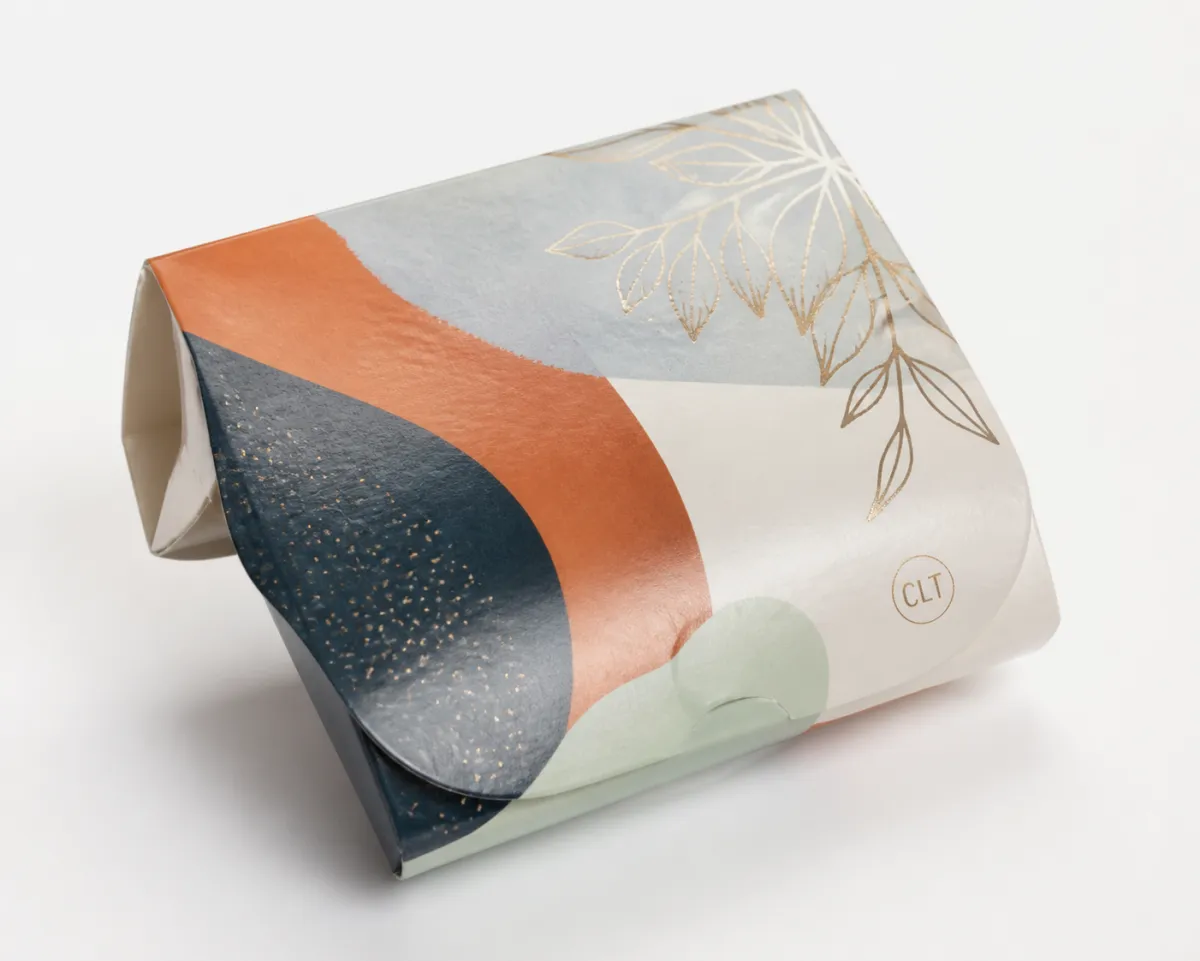
CMYK stands for cyan, magenta, yellow, and black. In custom product labels with cmyk printing, those four process inks are layered in microscopic dots to create the illusion of full color. That differs sharply from RGB, where red, green, and blue light mix on a screen. A monitor can glow at a brightness a printed label will never reach, which is why custom product labels with cmyk printing usually look a touch quieter once they leave the design file and enter production.
That difference is not a defect. For many brands, CMYK is the most practical balance between visual range and production control. A herbal supplement line may need 12 flavors, each with slightly different accent colors, nutrition copy, and certification marks. Custom product labels with cmyk printing let those SKUs stay under one visual system without demanding a separate ink formula for every variant. It is one reason buyers keep returning to CMYK when the design has to work across multiple sizes or container shapes.
Picture a candle brand with three jar sizes, six scents, and a seasonal release. The artwork may include a photographic texture, a gradient band, and a small logo. CMYK can usually handle that combination with good discipline. If the design depends on a highly specific brand blue or a signature metallic tone, the answer may shift toward tighter proofing, a spot-color hybrid, or a different color expectation altogether. Custom product labels with cmyk printing work best when the rules are set early: broad visual range, repeatable production, and realistic color behavior on the chosen stock.
Substrate changes everything. A white paper label, a gloss film label, and a clear label do not absorb or reflect ink in the same way. On a bright white surface, custom product labels with cmyk printing can look cleaner and more saturated. On clear film, the same artwork may need a white underprint to preserve contrast. On textured paper, small type can soften at the edges because the surface itself adds visual noise. The label is never just ink; it is a material decision.
In my own review process, I always look at the face of the label first and the edges second. If the face fails, the rest of the work does not matter much.
In practice, buyers usually reach for custom product labels with cmyk printing when they need one or more of these things:
- Full-color flexibility for photography, gradients, icon sets, and layered graphics.
- Short-to-mid runs where switching to special inks would slow the schedule or complicate inventory.
- Multi-SKU consistency across flavors, scents, sizes, or seasonal editions.
- Packaging design freedom that can carry the same visual language into Custom Packaging Products and broader branded packaging programs.
For brands comparing label-only work with carton or insert projects, the terminology gets fuzzy fast. The broader packaging world has its own rules, and resources from packaging industry organizations can help teams speak the same language when sourcing, artwork, and sustainability goals need to line up.
Custom product labels with cmyk printing are not only about color. They are also about repeatability. A coffee label that prints well this month should still print well on the next reorder, and that is where process discipline matters more than visual flair alone.
How Custom Product Labels with CMYK Printing Work
The basic workflow behind custom product labels with cmyk printing is separation. Artwork is broken into four channels, and each channel contributes microscopic marks that blend at normal viewing distance. Cyan carries much of the cool range, magenta adds warmth and depth, yellow brightens the image, and black anchors contrast. Done well, the printed result can feel richer than the file suggested. Done poorly, the label may look muddy, overbuilt, or inconsistent from one batch to the next.
File prep matters more than many teams expect. Low-resolution photography can pass on a website and still look soft on press. Thin fonts can break apart at small sizes. Dark backgrounds with tiny white text can lose clarity once the label is trimmed, wrapped, or applied to a curved container. For custom product labels with cmyk printing, the safe assumption is simple: anything borderline in the file becomes more obvious at production size.
These are the technical checks that prevent most surprises before print:
- Resolution: Images should usually be prepared at 300 dpi at final size, not scaled up from a smaller web file.
- Vector text: Logos, line art, and type should be outlined or kept editable as vectors when possible.
- Rich black control: Heavy blacks need careful handling so large panels do not print unevenly or look brownish.
- Bleed and trim: Artwork should extend beyond the die line so the final cut does not expose white edges.
- Barcode spacing: Quiet zones and contrast matter if the label includes retail scan codes.
The press method matters too. Digital printing is often the best fit for custom product labels with cmyk printing when the run is short, the artwork changes often, or the schedule is tight. Flexographic printing can make sense at larger quantities, especially if the brand has a stable spec and wants consistent output over time. Offset printing is less common for pressure-sensitive labels than for custom printed boxes, but it still shapes expectations across print production because it sets a benchmark for color control, screen behavior, and finish quality.
Finishing choices change the final look as much as the ink system does. A gloss varnish can make colors appear deeper and more energetic. Matte can soften glare and create a restrained, premium feel. Lamination adds surface protection and can help labels resist moisture, scuffing, and handling. In other words, custom product labels with cmyk printing are really a system of variables: separation, substrate, press, and finish shape the result together.
Custom product labels with cmyk printing also have a boundary. They are excellent for most brand graphics, but if a company needs a precise spot color, a metallic effect, or a strict match to an old printed asset, the team may need to proof more carefully or alter the print strategy. That is not a flaw. It is the practical edge of process color.
"CMYK gives you range. The substrate, proofing, and finish decide how much of that range survives onto the shelf."
For brands that want a clearer view of the production side, the Manufacturing Capabilities page is a useful place to compare how labels, cartons, and other components fit into one print program. That matters when custom product labels with cmyk printing need to match the rest of the package rather than sit apart from it.
Key Factors That Shape Color, Finish, and Readability
The first factor is substrate. White paper, gloss film, matte film, clear film, and textured stocks all behave differently under the press. Custom product labels with cmyk printing on white paper usually look the most straightforward because the ink has a bright, neutral base. Clear film can create a premium look, but it often needs a white underlayer to keep colors from disappearing into the container. Textured labels can look handcrafted and high-end, yet they also reduce fine-detail sharpness. The same file does not print the same way across all of them.
Second is color management. A calibrated monitor helps, but it cannot erase every shift between screen and press. The more disciplined the workflow, the fewer surprises. That usually means using the correct ICC profile, converting artwork before approval, and checking a proof against the actual label stock. Custom product labels with cmyk printing reward brands that approve color by reference, not by memory. If the approved sample is too bright, the next run can drift further than the team expects.
Third is finish. Gloss, matte, soft-touch, and specialty coatings do more than alter appearance. They change how light travels across the label and how the eye reads color. A deep navy may look nearly black under matte lamination, while a gloss finish can make the same tone feel more saturated. Soft-touch can elevate package branding, but it may also mute contrast slightly. For premium retail packaging, that tradeoff is often acceptable. For small warning copy or regulated ingredient panels, it may not be.
Fourth is legibility. Labels are not posters. They have to hold up under fluorescent store lighting, on curved containers, and sometimes in refrigerated or humid conditions. That is why small type, barcodes, lot codes, warnings, and ingredient statements deserve more attention than the hero graphic. If the main image is beautiful but the copy is hard to read, custom product labels with cmyk printing have missed the real job.
When paper sourcing enters the brief, sustainability questions usually follow. If your team is trying to align custom product labels with cmyk printing to a paper-based material strategy, FSC certification is worth reviewing through FSC certification guidance. That does not solve every sourcing question, but it gives procurement and brand teams a clearer standard for chain of custody.
One quiet truth in packaging design is hard to ignore: labels never live alone. They sit beside closures, cartons, shippers, and shelf graphics. A label can look excellent in isolation and still feel out of place on the finished item if the brand system is not coordinated. Custom product labels with cmyk printing should be judged alongside the full product packaging experience, not just as a single flat file.
For brands that want cleaner decisions, it helps to treat the label as part of a hierarchy. The hero mark should be visible from a distance. The product name should stay readable at arm's length. The regulatory copy should hold together when the package is angled or stacked. That sounds obvious, yet custom product labels with cmyk printing often fail because teams spend too much time on color mood and not enough time on reading distance.
Process and Timeline for Custom Product Labels with CMYK Printing
A clean workflow is the fastest route to custom product labels with CMYK Printing That resemble the proof. The usual sequence is straightforward, but each step matters: request specs, submit artwork, review the proof, confirm stock and finish, print, inspect, and ship. When a job slips, one of those steps was usually rushed or skipped. A missing die line or a vague finish note can add more time than a brand expects.
- Confirm specs first. Final dimensions, material, adhesive, and application surface should be locked before artwork is finalized.
- Send print-ready files. CMYK-built artwork, outlined type, linked images, and correct bleed keep the estimate honest.
- Review a proof. A digital proof is fast; a physical proof is slower but often worthwhile for custom product labels with cmyk printing.
- Approve clearly. One person should own the sign-off so color and copy do not drift during review.
- Produce and inspect. The print run should be checked for registration, trim accuracy, and finish consistency before shipment.
Timeline depends on the order, but a common range for straightforward digital printing jobs is often 5-10 business days after proof approval. Add a few days if the die cut is custom, the finish is specialty, or a physical sample is required. For more complex label runs, custom product labels with cmyk printing can move into the 10-15 business day range, especially if the artwork still needs refinement. That is not slow by packaging standards; it is simply the time required to get details right.
Proofing deserves more respect than it usually gets. A digital proof can show placement, copy, and general color direction, but it cannot perfectly mimic the selected stock. A physical proof or sample roll is better when the label is meant for a high-value SKU or when color accuracy is sensitive. From a buyer's point of view, the extra day or two can save a week of frustration later if the label does not read correctly on shelf.
The quality gate is also where testing belongs. If the labels will move through distribution, store handling, or shipping vibration, a transit test is worth considering. For that kind of planning, ISTA methods are a useful reference point, especially ISTA test methods that help teams think about abrasion, drop, and package integrity in a structured way. The label itself may not be the item being tested, but the package as a system still deserves evaluation.
Several factors can stretch the clock:
- Multiple versions: Different scents, flavors, or regions can multiply proof approvals.
- Complex finishes: Lamination, spot varnish, and specialty coatings add setup steps.
- Unclear artwork: Missing fonts, low-resolution logos, or wrong dielines create back-and-forth.
- Late changes: A revised ingredient statement or revised SKU count can reset the schedule.
For teams balancing labels with cartons or other branded components, it helps to think about the wider package calendar too. If Custom Labels & Tags are part of a launch alongside custom printed boxes, the production order should reflect that hierarchy. Labels may move faster than cartons, but if they hold up fulfillment, the entire product launch waits.
Custom product labels with cmyk printing move fastest when the spec sheet is boring. That sounds unglamorous, but it is true: fixed dimensions, clear approval, clean files, and one point of contact shorten turnaround more reliably than any rush promise.
Cost and Pricing for Custom Product Labels with CMYK Printing
Pricing usually comes down to six parts: material, size, quantity, print method, finishing, and die cutting. Custom product labels with cmyk printing are rarely priced on ink alone. The stock may be inexpensive, but if the label needs white ink, lamination, an unusual shape, or a physical proof, the cost changes quickly. A quote that looks low at first can move upward once the real spec is confirmed.
Quantity is one of the strongest levers. In most label programs, per-unit cost drops as volume rises because setup and press time are spread across more pieces. A small run of 250 or 500 labels can feel expensive on a per-label basis, while a 5,000-piece order may cut that unit price in half or more. For custom product labels with cmyk printing, the minimum order quantity is not just a supplier policy; it reflects how production overhead gets absorbed.
Here is a practical pricing snapshot for common label types. Actual quotes vary by art coverage, finish, and supplier, but these ranges give a useful starting point:
| Label Type | Common Use | Typical Price Range per 1,000 | Notes |
|---|---|---|---|
| White paper label | Candles, dry goods, entry-level retail packaging | $45-$110 | Good for cost control; best on smooth surfaces |
| Matte BOPP film | Bath, beverage, supplement, moisture-prone packaging | $65-$150 | More durable than paper; strong everyday choice |
| Clear film with white underprint | Premium bottles, transparent containers, modern branding | $90-$220 | Needs careful artwork and proofing to preserve contrast |
| Textured specialty paper | Boutique candles, artisan food, premium package branding | $75-$180 | Looks distinctive, but fine detail can soften |
For a straightforward 5,000-piece run, custom product labels with cmyk printing might land around $0.05-$0.12 per label on a simple paper stock, while a more complex clear film job with white underprint and laminate can move closer to $0.14-$0.28 per label. Those numbers are not universal, but they are concrete enough to help a buyer plan. Once size, shape, and finish are known, the quote becomes far more useful.
Where brands overspend is usually easy to spot:
- Changing artwork late after the proof is already approved.
- Ordering too many variants before sales data shows which SKU will move.
- Choosing specialty finishes everywhere instead of saving them for hero products.
- Ignoring the application surface and then replacing labels that peel, wrinkle, or lift.
That last point is not trivial. A label that behaves beautifully on a flat sample can still fail on a curved or refrigerated package, and then the real cost is not the label itself but the rework. If your launch spans labels, cartons, and outer shipper packaging, the broader Manufacturing Capabilities can help you compare what belongs in one run and what should be staged separately.
For buyers who want the price conversation to stay grounded, one useful rule is this: custom product labels with cmyk printing should be quoted with the final application in mind. A label for a dry, smooth bottle is a different purchase than a label for a chilled, condensation-prone container. Same art. Very different economics.
Common Mistakes to Avoid Before You Approve the Proof
The most common mistake is sending RGB artwork and hoping the press will sort out the rest. It will not. RGB is built for screens, while custom product labels with cmyk printing depend on process inks that have a narrower color range. That means bright electric blues, neon greens, and some saturated oranges will not translate perfectly unless the file is adjusted with print in mind. The earlier that conversion happens, the less painful the proof cycle becomes.
The second mistake is ignoring bleed and safe zones. A design may look centered on a screen, but the die cut can trim slightly differently from edge to edge. If text, logos, or borders sit too close to the edge, the label can look off-balance even when the print itself is fine. For custom product labels with cmyk printing, a few extra millimeters of bleed can prevent a lot of visual trouble.
The third mistake is underestimating contrast. Thin fonts, pale gray text, and busy backgrounds often become harder to read once printed. This is especially true for ingredient panels, warnings, and barcodes. A barcode on retail packaging does not need to be decorative. It needs to scan. Strong contrast, adequate quiet zones, and clean placement matter more than style in those zones.
The fourth mistake is forgetting the application surface. Labels for glass, paperboard, HDPE, PET, or refrigerated containers may need different adhesive behavior. A label that looks perfect on a flat mockup can lift at the edges when wrapped around a curve, or it can wrinkle if the bottle is cold and damp. Custom product labels with cmyk printing should always be judged alongside the container they are meant to live on.
There is also a habit that causes avoidable frustration: approving color from memory instead of from a reference. Human memory is poor at exact color recall. If a brand blue matters, approve it against a physical sample or a documented proof standard. That is one reason custom product labels with cmyk printing work better when the team keeps a simple spec sheet and writes down the exact version approved.
A quick pre-approval checklist helps:
- Confirm file mode: CMYK, not RGB.
- Check dimensions: Final size matches the dieline.
- Review copy: Ingredients, claims, and warnings are final.
- Test barcodes: Scans cleanly at the intended size.
- Inspect contrast: Text remains readable under normal store lighting.
Custom product labels with cmyk printing are most reliable when every small production decision is made before approval, not after the press run has started. That sounds simple, but in packaging it is the difference between a smooth reorder and a messy correction.
Expert Tips and Next Steps for Custom Product Labels with CMYK Printing
Start with the container, not the artwork. That is the clearest advice for buyers planning custom product labels with cmyk printing. Measure the application surface, confirm whether the package is smooth or textured, and decide whether the label has to survive moisture, oil, refrigeration, or frequent handling. Once those points are fixed, the art direction can be shaped around reality instead of fighting it.
Then build a simple packaging checklist. Final dimensions, substrate, adhesive, finish, quantity, SKU count, and launch date should all sit on one page. Clear sourcing makes pricing sharper. When a supplier sees the same spec sheet the buyer sees, estimates become more accurate. It also becomes easier to compare labels against the rest of the product packaging system, including custom printed boxes or secondary shippers.
Use proofing like a production buyer would. Compare the design in daylight and under store lighting. Scan the barcode. Read the smallest copy from arm's length. If the label is going onto a transparent bottle, hold it against the actual package and check how the background changes the color. Custom product labels with cmyk printing should be tested in context, not just admired on a PDF.
The first order should usually be treated like a controlled test, not a final verdict on the entire brand system. Print one core SKU, evaluate shelf presence, and learn how the label behaves in real use. If the label performs well, expansion into additional flavors, scents, or sizes becomes much easier. If it misses the mark, the correction happens before the whole line is locked.
That is where the broader packaging relationship becomes useful. If you are comparing label stock to carton stock or trying to align label finishes with outer packaging, the page for Custom Packaging Products can help you see the larger system. For many brands, custom product labels with cmyk printing are only one piece of the identity puzzle.
A few practical habits pay off every time:
- Archive approved files so reorders do not start from scratch.
- Save proof notes about color, finish, and substrate.
- Keep SKU naming consistent across labels, cartons, and inventory records.
- Recheck the spec sheet before every reorder, even if the art has not changed.
If there is one final way to think about custom product labels with cmyk printing, it is this: they are a repeatable production tool, not a one-time design event. Brands that treat them that way get fewer surprises, cleaner reorder cycles, and better shelf consistency. Brands that treat them like a screen file tend to chase color, time, and cost. Handle the specs well, and custom product labels with cmyk printing become one of the most dependable pieces of the whole packaging program.
The actionable takeaway is straightforward: before you approve a proof, verify the container, the stock, the finish, and one physical color reference, then lock the spec sheet and keep it for reorders. That small discipline saves more money than any last-minute design tweak ever will.
Frequently Asked Questions
How accurate are custom product labels with cmyk printing compared with what I see on screen?
Expect a close match, not a perfect clone. Screens use light, while custom product labels with cmyk printing use ink on a real substrate, so brightness and saturation usually shift a bit. Accuracy improves when the monitor is calibrated, the file is built in CMYK, and a proof is approved before production. A physical sample is even better if the brand color is touchy.
What affects the price of custom product labels with cmyk printing the most?
Quantity, material, label size, finishing, and proofing are usually the biggest price drivers. A simple paper label costs less than a clear film job with white underprint and laminate, and small runs often carry a higher unit cost because setup is spread across fewer pieces. With custom product labels with cmyk printing, the spec sheet matters more than the ink alone.
How long does the process usually take for custom product labels with cmyk printing?
Clean files and simple specs move fastest, while physical proofs, special finishes, and complex die cuts add time. A straightforward digital job might ship in about 5-10 business days after approval, while more involved custom product labels with cmyk printing can take longer if artwork needs revision or samples are required. If the launch date is tight, send the full spec early so nobody is guessing.
Can custom product labels with cmyk printing work for clear or textured packaging?
Yes, but the substrate changes how colors and contrast appear, so proofs matter more than usual. Clear film often needs a white underlayer to stay readable, and textured surfaces can soften fine detail. Custom product labels with cmyk printing can still look excellent on these materials when the artwork is set up for the surface, not just for the screen.
What should I send before requesting a quote for custom product labels with cmyk printing?
Send final dimensions, quantity, substrate preference, finish preference, application surface, and print-ready artwork if available. If you have a launch date or a target reorder schedule, include that too. The cleaner the brief, the more useful the quote for custom product labels with cmyk printing will be.
What is the smartest next step if I want to order custom product labels with cmyk printing?
Clean up the artwork, confirm the real container size, and request a proof before you commit to volume. Then compare the proof against the actual package, not just the PDF. That simple sequence is what keeps custom product labels with cmyk printing predictable, and it is usually the difference between a smooth launch and a costly reprint.

