Buyer Fit Snapshot
| Best fit | Custom Product Labels with Foil projects where brand print, material claims, artwork control, MOQ, and repeat-order consistency need to be specified before quoting. |
|---|---|
| Quote inputs | Share finished size, material target, print colors, finish, packing count, annual reorder estimate, ship-to region, and any compliance wording. |
| Proofing check | Approve dieline scale, logo placement, barcode or warning zones, color tolerance, closure strength, and carton packing before bulk production. |
| Main risk | Vague material claims, crowded artwork, missing packing details, or unclear freight terms can make a low unit price expensive after revisions. |
Fast answer: Custom Product Labels with Foil: Design, Print, Apply should be specified like a repeatable production item. The safest quote records material, print method, finish, artwork proof, packing count, and reorder notes in one written spec.
Production checks before approval
Compare the actual filled-product size with the drawing, then confirm tolerance on folds, seals, hang holes, label areas, and retail display edges. Reserve space for logos, QR codes, warning copy, and material claims before decorative graphics fill the panel.
Quote comparison points
Review material grade, print process, finish, sampling route, tooling charges, carton quantity, and freight assumptions side by side. A quote is only useful when the supplier can repeat the same color, closure quality, and packing count on the next order.
Set a plain bottle next to the same bottle finished with Custom Product Labels with foil, and the difference shows up fast. One reads as functional and forgettable; the other feels intentional, polished, and ready for a higher shelf position. That shift in perception is a big reason Custom Product Labels with foil appear so often on beverage packaging, skincare, specialty foods, supplements, and other products where the label has to do a lot of selling in a very small space.
Foil is not only about shine, which is where a lot of projects go sideways early on. Used well, custom product Labels with Foil place metallic detail only where it supports the design, whether that means a logo, a border, a seal, a product name, or a small accent that catches the light and guides the eye. The result feels less like decoration and more like structure, because the metallic detail gives the package a focal point and helps the rest of the layout breathe.
The technical side matters just as much as the look. A label still has to read clearly, fit the container, survive shipping, and match the environment where the product will actually live. A chilled bottle, a curved jar, and a dry carton all ask for different material and adhesive choices. Custom product labels with foil can look elegant and still fail in the real world if the adhesive is wrong, the layout is crowded, or the foil sits over a barcode or ingredient panel that needs clean contrast. The strongest results come from treating the label as a complete build, not just a shiny front face.
Custom Logo Things works with branded packaging every day, and the same pattern comes up again and again: buyers want a premium appearance, a unit cost that fits the budget, and a label that applies cleanly on the line. I have seen jobs look perfect on screen and then kinda lose their footing once they hit a refrigerated bottle or a tight curve. The sections that follow break down how custom product labels with foil are made, what drives pricing, how to plan a realistic schedule, and which materials hold up once the labels leave the proof and enter production.
Why Custom Product Labels with Foil Grab Attention Instantly
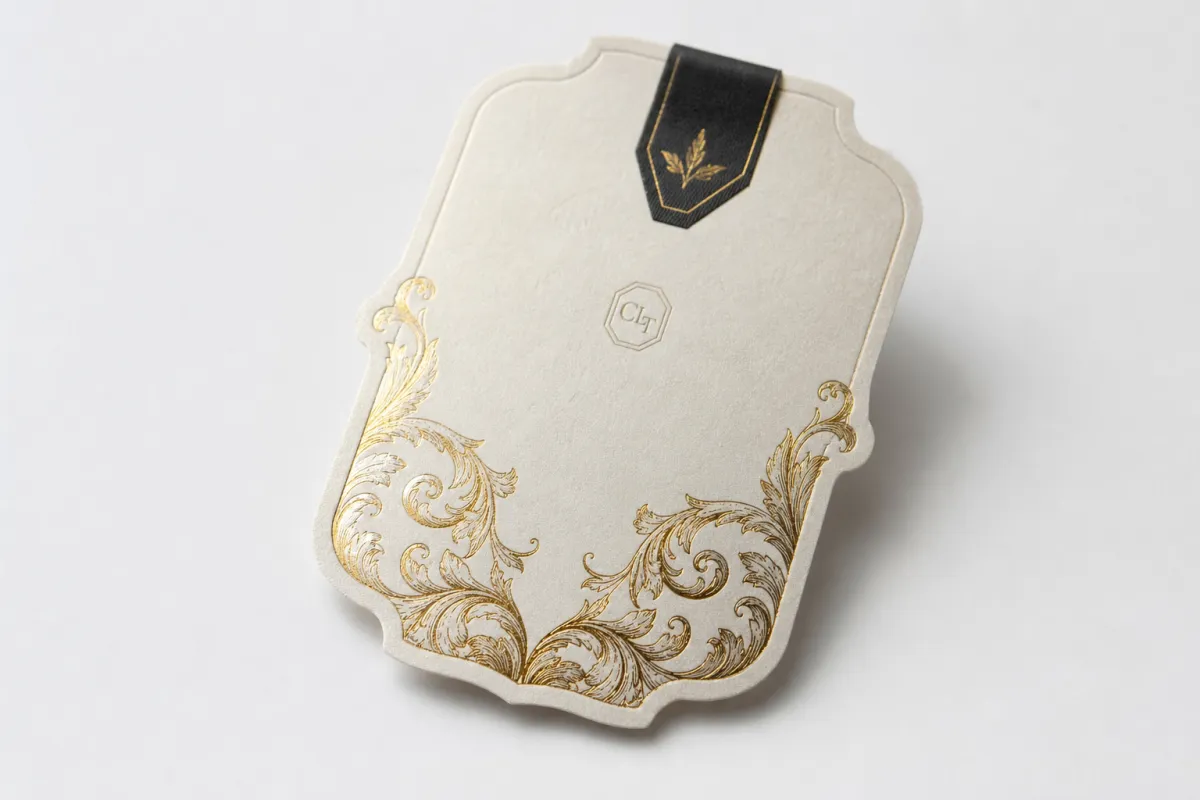
Shelf appeal begins with contrast. A matte bottle with a reflective logo, or a smooth carton with a metallic badge, creates a visual break that the eye finds almost immediately. That is one reason custom product labels with foil work so well in categories where several similar packages sit side by side and the buyer has only a second or two to decide which one deserves a closer look. A package does not need to be covered in metal to feel premium; even a narrow foil line or a small emblem can do the job if the design stays disciplined.
Movement matters too. As a shopper walks past, tilts a package, or lifts it under store lighting, foil shifts with the light and gives the label a sense of motion that printed color alone cannot match. That behavior helps custom product labels with foil stand out in retail spaces, on e-commerce photography, and in social media images where light catches reflective surfaces in appealing ways. For brands trying to claim visual space quickly, that small glint can carry more weight than a much larger block of flat print.
Foil also gives hierarchy a clearer voice. A foil logo tells the eye where to begin. A foil border frames the information. A seal or crest can anchor the brand mark and make the whole label feel more finished. In package branding, hierarchy is not a decorative extra; it is what makes the message easy to read at a glance. Well-planned custom product labels with foil organize the surface so the shopper understands what matters first, second, and third without having to work for it.
One mistake shows up often: too much foil on a single label. When every headline, edge, and icon shines, the package starts to feel busy rather than premium. Better results usually come from using custom product labels with foil in one or two strong positions, then supporting the metallic detail with open space, quiet typography, and a clear visual focal point. Restraint gives the foil room to feel intentional.
If the foil carries the whole design, the label is probably leaning on the wrong thing. A strong layout should still make sense if you imagine the metallic detail removed.
That is the simplest test I use. If the label still feels balanced without the foil, the metallic layer is doing useful work. If the design falls apart the moment the foil disappears, the layout needs more structure. Good custom product labels with foil support the brand story instead of rescuing weak composition.
For teams comparing package components, it helps to think in systems instead of isolated parts. A bottle label, outer carton, and shipping box all sharing the same visual language create a much stronger brand impression than a foil label sitting alone. That is why foil often pairs naturally with Custom Labels & Tags and broader Custom Packaging Products, especially when a brand wants the retail package and the direct-to-consumer box to feel like they belong to the same family.
Industry references can help when the project involves material selection or shipping durability. Packaging resources at packaging.org are useful for comparing substrates and sustainability considerations, while the testing guidance at ista.org can help if the labels need to survive distribution, rough handling, or long transit routes.
Handled thoughtfully, custom product labels with foil do more than sparkle. They elevate first impressions, improve visual structure, and support the value story before the shopper has read a single ingredient or specification line. That is a remarkable amount of work for one finishing detail, which is why foil continues to earn its place in premium packaging design.
How Custom Product Labels with Foil Are Built and Finished
The production path for custom product labels with foil begins long before anything reaches a press. Artwork needs to be separated correctly, the foil area needs its own clear layer, and the dieline has to match the actual package geometry instead of an idealized mockup. From there, the printer decides how the foil will be applied, which stock will carry it, and whether the finished labels should ship as rolls or sheets. Each choice shapes both appearance and handling.
Hot foil stamping
Hot foil stamping uses heat and pressure to transfer metallic foil from a carrier film onto the label stock. It is the classic method for a reason. Edges stay crisp, logos hold detail well, and borders can feel especially sharp and deliberate. For custom product labels with foil, hot stamping often delivers the richest tactile effect, though it also asks for tooling and setup that make the most sense at moderate or higher quantities.
Because the process presses into the stock, material selection matters a great deal. Some papers take hot foil beautifully, while certain films or delicate textures can crush under pressure or lose definition. Small type, tight knockouts, and thin hairlines need extra care. Hot foil can look outstanding, yet it rewards artwork that is simple, confident, and built with the production method in mind.
Cold foil and digital foil accents
Cold foil uses adhesive and UV curing to bond the metallic layer without the same heat and pressure profile as hot stamping. That makes it a practical option for some roll-label workflows, especially when the job needs to move quickly or blend with printed color layers. Digital foil accents are helpful for shorter runs or variable artwork, where the metallic effect is added without the traditional plate-and-die path.
For custom product labels with foil, these methods give brands flexibility, but they do not all look identical. Cold foil, digital foil, and hot stamping can each produce a different visual character depending on stock, overprint, and top coating. A buyer who wants a bright mirror finish should ask for samples or proofs that show the actual appearance, not just the concept. The word "foil" covers more than one finish.
Label construction from top to bottom
A pressure-sensitive label is more than the face stock you see first. It includes the print surface, the adhesive, the liner, and sometimes varnish or lamination on top. When custom product labels with foil are built well, those layers work together. A gloss laminate can strengthen scuff resistance, while a matte or soft-touch finish can calm the overall surface and make the foil feel even more pronounced. The wrong topcoat, though, can soften the shine or complicate application.
Package shape deserves attention too. A flat carton and a tightly curved jar are not the same project. Curved surfaces demand flexibility, and the foil area has to stay stable enough that it does not crack, wrinkle, or distort during application. That is one of the main reasons sample testing matters so much for custom product labels with foil.
Where foil belongs, and where it does not
Foil tends to work best in bold, readable places: the logo, a single product mark, a border, or a seal. It is much less dependable in tiny text, dense ingredient copy, or barcode areas. A barcode printed on top of a foil field can scan badly if contrast is not handled carefully, and very fine foil details can break up during conversion or application. For that reason, the most reliable custom product labels with foil use foil as a feature, not as a background for everything.
If a design team wants a metallic mood across a larger area, the better move is often a mix of printed metallic ink, foil accents, and non-metallic typography. That preserves legibility, gives the label some quiet space, and protects the parts that need to scan or read cleanly. The adjustment is small, yet it often improves both production stability and brand clarity.
When the finished label works, the result is easy to read, easy to apply, and visually confident. That is the real aim with custom product labels with foil: a premium impression that survives the journey from screen to press to shelf.
Cost, Pricing, MOQ, and Quote Factors for Foil Labels
Pricing for custom product labels with foil depends on several moving parts, and the foil itself is only one piece of the puzzle. Label size, quantity, stock, adhesive, ink coverage, foil passes, finishing method, and whether new tooling is required all feed into the quote. A simple foil logo on standard material can be cost-efficient in a healthy run size. A label with multiple foil colors, specialty stock, and extra finishing steps will climb in price because the job demands more setup and more control.
Minimum order quantity changes the math quickly. Short runs carry a higher unit cost because setup is spread across fewer labels, even when the design looks straightforward. A 500-piece order of custom product labels with foil may land roughly around $0.45 to $1.20 per label depending on size and complexity, while a 5,000-piece run with a single foil accent might fall closer to $0.12 to $0.35 each. Those are working ranges rather than fixed promises, but they show how quantity reshapes the economics.
Some buyers compare foil labels by unit price alone and miss the items buried in the quote. Ask whether plates, dies, setup charges, proofing, and freight are included. Ask whether the finish is hot foil, cold foil, or a printed metallic effect. Ask what happens if the artwork changes after approval. Those questions matter because custom product labels with foil can look similar on a spec sheet while carrying very different production costs.
| Foil Label Option | Best Use | Typical Setup | Typical Unit Cost Impact |
|---|---|---|---|
| Hot foil stamping | Premium logos, seals, and crisp metallic accents | Plate or die, press setup, test pull | Lower at mid to high quantity; higher at short runs |
| Cold foil | Roll-label production with printed color integration | Foil station, UV curing, overprint alignment | Efficient for steady volumes, moderate setup cost |
| Digital foil accents | Short runs, test launches, artwork that may change | Digital workflow, fewer traditional tools | Often best for small quantities; premium per piece |
| Metallic ink instead of foil | Subtle shimmer where mirror shine is not needed | Standard print setup | Usually lower cost, less reflective finish |
There is a real connection between the label and the rest of the packaging system. If a brand is building several SKUs, it often makes sense to standardize one label size, one substrate, and one foil accent across the line. That can reduce setup complexity and improve consistency across custom product labels with foil as well as cartons, sleeves, and inserts. For brands managing multiple product formats, consistency usually matters more than shaving a few cents from a single run.
Coverage is another practical cost control. Foil on a 1.5-inch logo is much cheaper to run than foil across a full background field, because larger coverage creates more waste, more handling, and more room for variation. If a brand wants the premium signal but the budget is tight, a narrow foil line, badge, or corner mark can deliver the effect without turning the entire project into a specialty production job.
If you are comparing label options with Custom Printed Boxes or other package components, ask for the quote in a way that compares like with like. The real question is not which label is cheapest on paper, but which build fits the package, the handling environment, and the launch volume. That approach leads to better custom product labels with foil decisions and fewer surprises once production begins.
Process and Timeline: From Artwork Approval to Delivery
The route from artwork approval to finished labels follows a familiar sequence, yet each step has its own pace. File review comes first, with the printer checking dielines, bleed, foil layers, and image resolution. Proofing follows, either digital or physical depending on the job. Tooling, print, foil application, finishing, inspection, and shipping come after that. With custom product labels with foil, the process usually includes a few extra checks because metallic effects can introduce setup and quality-control steps that standard print-only labels do not require.
It helps to think in three separate clocks: design time, production time, and transit time. Design time covers artwork revisions and internal approvals. Production time begins after proof approval and ends when the labels are packed. Transit time depends on the carrier and destination. For a straightforward order, the production window may sit around 7 to 12 business days after approval; more complex custom product labels with foil can stretch to 12 to 15 business days or longer if tooling or material sourcing takes extra time.
Timelines usually stretch for predictable reasons. Missing artwork slows proofing. Late revisions reset the schedule. Material backorders can add several days. A foil layout that looks simple on screen may still need extra press checks if the coverage is dense or the type is very fine. None of that is unusual. It is simply the reality of print production, and it is better to plan for it than to build a launch around best-case timing.
Seasonal launches deserve a buffer. If the product needs to land in a retail window, request samples early. If the label will be applied by hand, test the workflow before the final shipment arrives. If the project is a rebrand, proof the way the label sits on the package surface, not just how it looks on a monitor. Custom product labels with foil can look perfect digitally and still behave differently once they are wrapped around a jar or applied to a chilled bottle fresh from refrigeration.
As a simple rule, unusual package shapes need more lead time. Deep curves, wet environments, textured containers, and placements that require special alignment all add complexity. The more technical the package, the more valuable a pre-production sample or short test run becomes before full volume is ordered.
When a label program is tied to a broader rollout, keep the rest of the system visible. The label may need to coordinate with cartons, outer cases, inserts, and launch timing so the full package reads as one careful decision. In that sense, custom product labels with foil are part of the launch logic, not just the final decorative step.
Material, Adhesive, and Finish Choices That Affect Performance
Material selection is the point where a beautiful label becomes a dependable one. A face stock that feels rich in the hand may still be the wrong choice for a cold bottle or an oily cosmetic jar. An adhesive that behaves well on a dry carton may fail on a curved glass container in a cooler. For custom product labels with foil, the substrate matters just as much as the metallic detail, because the two together shape how the label looks, feels, and performs over time.
Face stock options
Paper remains popular for premium branding because it can feel warm, tactile, and classic, especially when paired with texture. Polypropylene and polyester films are better when water resistance, flexibility, or durability matter more. Specialty stocks, including vellum-like papers and soft-touch surfaces, can give custom product labels with foil a distinct personality, but they still need to be checked against the application method and the environment where the product will live.
A textured paper with foil can feel luxurious in a way smooth film cannot quite match, yet paper is not always the right answer for condensation, oils, or repeated handling. Film often performs better on bottles and jars, especially when the label must tolerate refrigeration or moderate moisture. If the goal is to look premium and survive rough treatment, I usually suggest starting with the environment first and the surface finish second.
Adhesive behavior
Adhesive choice sits quietly in the background, but it can decide whether the label succeeds or fails. Permanent adhesive is common, yet not every permanent adhesive behaves the same on glass, plastic, or coated cartons. A chilled package often needs a cold-temperature adhesive that can bond before condensation becomes a problem. Curved containers may benefit from a more flexible adhesive so the label can conform without edge lift. For custom product labels with foil, adhesion is part of the design brief, not a detail to handle later.
Surface energy matters too. Some plastics resist adhesion more than others, and some containers carry oils or release agents from manufacturing. A test application is the safest way to confirm performance when the substrate is challenging. That is especially true for high-touch items that will be handled often in retail or at home.
Topcoat, varnish, and lamination
Top finishes protect foil from scuffing and can change the visual rhythm of the label. A gloss laminate adds shine and toughness; a matte or soft-touch laminate can calm the surface and let the foil stand out more clearly. A clear varnish may be enough for moderate handling, while harsher environments may require lamination. For custom product labels with foil, the finish should be selected for the package's actual handling path, not just the marketing render.
Line weight and contrast matter more than many buyers expect. Thin foil details can disappear if the artwork is too delicate, especially on textured stock. Dense layouts can become hard to read if foil sits on top of a busy background. A more thoughtful layout gives the eye room to rest, and that usually separates a polished label from one that only looks expensive in a static mockup.
For a useful reference point on shipping durability, the ISTA testing framework can be helpful, while package and material data sheets from manufacturers can offer broader context. The best substrate, adhesive, and finish combination is the one that matches the package surface, the shipping path, and the way the label will be handled after it reaches the shelf.
That is why the strongest custom product labels with foil are rarely chosen on appearance alone. They are matched to the package as a system, so the look, bond, and durability all support each other.
Common Mistakes to Avoid with Foil Product Labels
The first mistake is using foil everywhere. A label loses hierarchy fast when every headline, border, and icon shines with equal intensity. The eye needs contrast and breathing room. For custom product labels with foil, a single well-placed accent usually does more for perceived value than a full metallic field that competes with the copy.
The second mistake is weak file prep. Missing foil layers, unclear dielines, low-resolution images, and tiny text create avoidable problems long before production starts. If the foil area is not separated clearly, proofing gets slower and more error-prone. Good file prep matters even more for custom product labels with foil because the metallic layer creates one more point where mistakes become visible.
The third mistake is choosing the wrong stock or adhesive for the environment. Paper may work on a dry carton and fail on a chilled bottle. A label that looks perfect on a flat proof can start to lift once it wraps around a curve. When buyers order custom product labels with foil without thinking about moisture, oils, temperature, or handling, the problem often shows up only after the labels are already in use.
The fourth mistake is skipping physical samples. Digital proofs are useful, but they do not show how the foil will react to light, touch, or application conditions. If the package shape is unusual, if the product is refrigerated, or if the label will be applied by hand at speed, a sample is worth the time. That small step can prevent a great deal of waste.
The fifth mistake is expecting foil to fix a weak design. Foil can elevate a strong label, but it cannot rescue poor typography or a crowded layout. Type still needs size, spacing, and contrast. The structure still needs to make sense. A label that reads well first and sparkles second is usually the better long-term choice for branded packaging and retail packaging alike.
The most honest way to think about it is simple: custom product labels with foil are production pieces, not just pretty graphics. They have technical limits, and the best results come from respecting those limits early. That does not make the project less creative; it usually makes the final product look more polished because the creative idea fits the material and the process.
Brands that treat foil as one part of a wider package strategy usually get stronger results. They consider the label beside the carton, the carton beside the shipper, and the shipper beside the customer experience. That broader view is what makes package branding feel consistent instead of stitched together.
Expert Tips and Next Steps for Ordering Foil Labels
If you are preparing a quote request, gather three things before you send it: the final artwork, the package dimensions, and a clear description of the environment the label will face. Say whether the package is dry, chilled, oily, curved, handled by hand, or packed on automated equipment. Those details help a printer recommend custom product labels with foil that fit the real use case instead of just the render.
A sample review is especially useful if the label is going on a curved container, a refrigerated product, or something that gets touched often. Even a quick test can show whether the adhesive grabs properly, whether the foil reads clearly, and whether the finish resists scuffing. For custom product labels with foil, that test often separates a nice idea from a dependable production piece.
It pays to compare vendors on more than price. Ask how they handle proofs, how they define setup charges, what guidance they offer on material selection, and whether repeat orders will match the first run closely. Consistency matters a great deal in product packaging, especially if the same label will be reordered across multiple batches or extended into a larger product line later on.
A practical ordering checklist looks like this:
- Confirm the exact foil area and whether the foil will be hot stamped, cold foiled, or digitally accented.
- Choose the face stock based on the package environment, not only the visual finish.
- Decide whether gloss, matte, or soft-touch lamination best supports the brand look.
- Review proofing requirements, including foil layers, dielines, and scan-critical elements.
- Set the launch timeline with room for production, inspection, and transit.
One more practical point: when a brand is building a full line, it can be efficient to specify related pieces together so the materials and visual language stay aligned. A foil label, a carton, and a sleeve can all be designed to feel like they belong to the same family. That coordination is easier when you treat custom product labels with foil as part of the total packaging system rather than as a single isolated item.
For many buyers, the best balance is straightforward: a clear logo in foil, a dependable stock, an adhesive suited to the package, and a finish that protects the label through normal handling. That combination gives the brand the premium signal it wants without pushing the job into unnecessary complexity. Keep the design disciplined and the brief specific, and custom product labels with foil can deliver a polished result that feels earned rather than forced.
Before the order moves into production, compare the proof against the actual container, confirm the foil placement under real lighting, and make sure the adhesive and finish match the product environment. That is the cleanest path to custom product labels with foil that look sharp, apply cleanly, and hold up where the product really lives.
What are custom product labels with foil, and how are they different from metallic ink?
Foil uses a reflective metallic layer, while metallic ink imitates shine with printed pigments. In most lighting, custom product labels with foil look brighter, sharper, and more premium, especially on shelf-facing artwork. Metallic ink still has a place when a brand wants a softer shimmer or a lower-cost option, but it usually cannot match the mirror-like effect of true foil.
Are custom product labels with foil durable enough for bottles and jars?
Yes, as long as the face stock and adhesive are matched to the container surface and the product environment. For bottles and jars, custom product labels with foil often benefit from lamination or a protective varnish, especially when the package will see scuffing, moisture, or repeated handling. If the container is curved or chilled, a test sample is the safest way to confirm performance before full production.
How much do custom product labels with foil usually cost?
Pricing depends on quantity, label size, foil coverage, material, and finishing method. Smaller runs of custom product labels with foil usually carry a higher unit cost because setup is spread across fewer pieces, while larger runs bring the per-unit price down. The most accurate quote comes from final artwork, package specs, and the intended application environment.
What file setup do I need for custom product labels with foil?
Provide clean vector artwork when possible, plus a separate foil layer that clearly marks the foil area. Keep fine text, thin lines, and tight details larger than you would for a standard print-only label, because custom product labels with foil need a little more room to reproduce cleanly. Include dielines, bleed, and any special notes so the proofing process is faster and more reliable.
Can custom product labels with foil work on refrigerated or high-moisture packaging?
Yes, but the adhesive and top finish need to be chosen for cold or damp conditions. Paper stocks may need extra protection, while film stocks often perform better in moisture-heavy settings. For custom product labels with foil, a real-world sample test is the best way to confirm performance before a full order, especially if the product is coming out of refrigeration or moving through a humid fill room.
What should I do after I get a quote for my foil labels?
Compare the quote against your package reality, not only the price line. Check the stock, adhesive, foil method, proofing steps, and delivery timing, then ask for a sample if the application is unusual. That is the cleanest path to custom product labels with foil that look premium, run smoothly, and fit the product from the first shipment forward.

