Tea Brands Are Buying Garment Bags for More Than Apparel
Tea companies package far more than leaves, tins, sachets, and sampler boxes. Many buyers comparing PVC Zipper Garment Bags Unit cost for tea programs are actually protecting the branded textiles that travel with a campaign: staff uniforms, embroidered aprons, tea ceremony robes, retail launch jackets, influencer apparel kits, festival uniforms, and gift-with-purchase merchandise.
None of those items should be treated as direct tea packaging. They do, however, sit close to the customer’s impression of the brand. A cloudy bag, rough zipper, crooked logo, or strong plastic odor can make an otherwise polished tea program feel rushed.
The commercial risk is usually small per piece and large in the aggregate. A quote that saves two or three cents can become expensive if the PVC is too thin, the zipper splits during packing, the logo rubs off after a few openings, or cartons arrive after the store opening. One rework, one expedited air shipment, or one failed retail activation can erase the savings from a cheaper specification.
Garment bags carry a different risk profile than primary tea packaging because they are not food-contact materials. Different does not mean risk-free. These bags still appear at trade shows, retail counters, corporate gifting events, and sales meetings, often beside premium tea tins, printed inserts, display cards, and apparel that has to look ready for use.
Buyer reality: PVC Zipper Garment Bags for tea programs should be treated as branded promotional packaging, not tea leaf packaging. They are best used for garments, accessories, event apparel, sample kits, and bundled brand collateral connected to a tea campaign.
The best target is rarely the thickest bag. Overbuilding adds cost, weight, freight cube, and sometimes stiffness without improving the way the bag will be used. A better specification matches the garment, the handling route, the brand presentation, and the deadline.
Product Details That Actually Change Performance
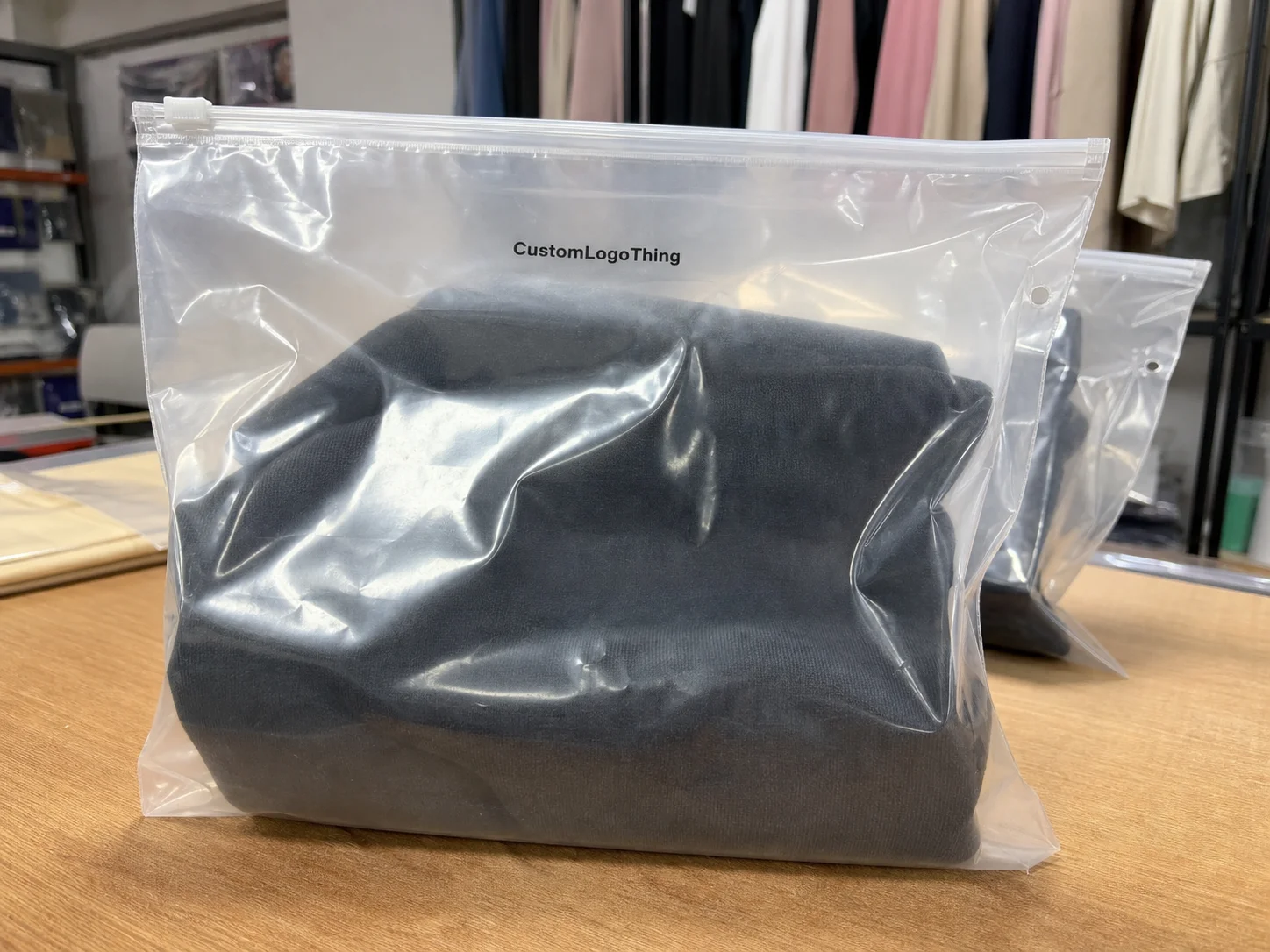
A PVC zipper garment bag is a transparent or semi-transparent plastic cover with a zipper closure, hanger opening, sealed edges, and optional details such as printed logos, handles, gussets, accessory pockets, reinforced trim, or barcode labels. For a buyer, it is a flexible protective sleeve with branding space and enough structure to survive sorting, packing, transport, and handoff.
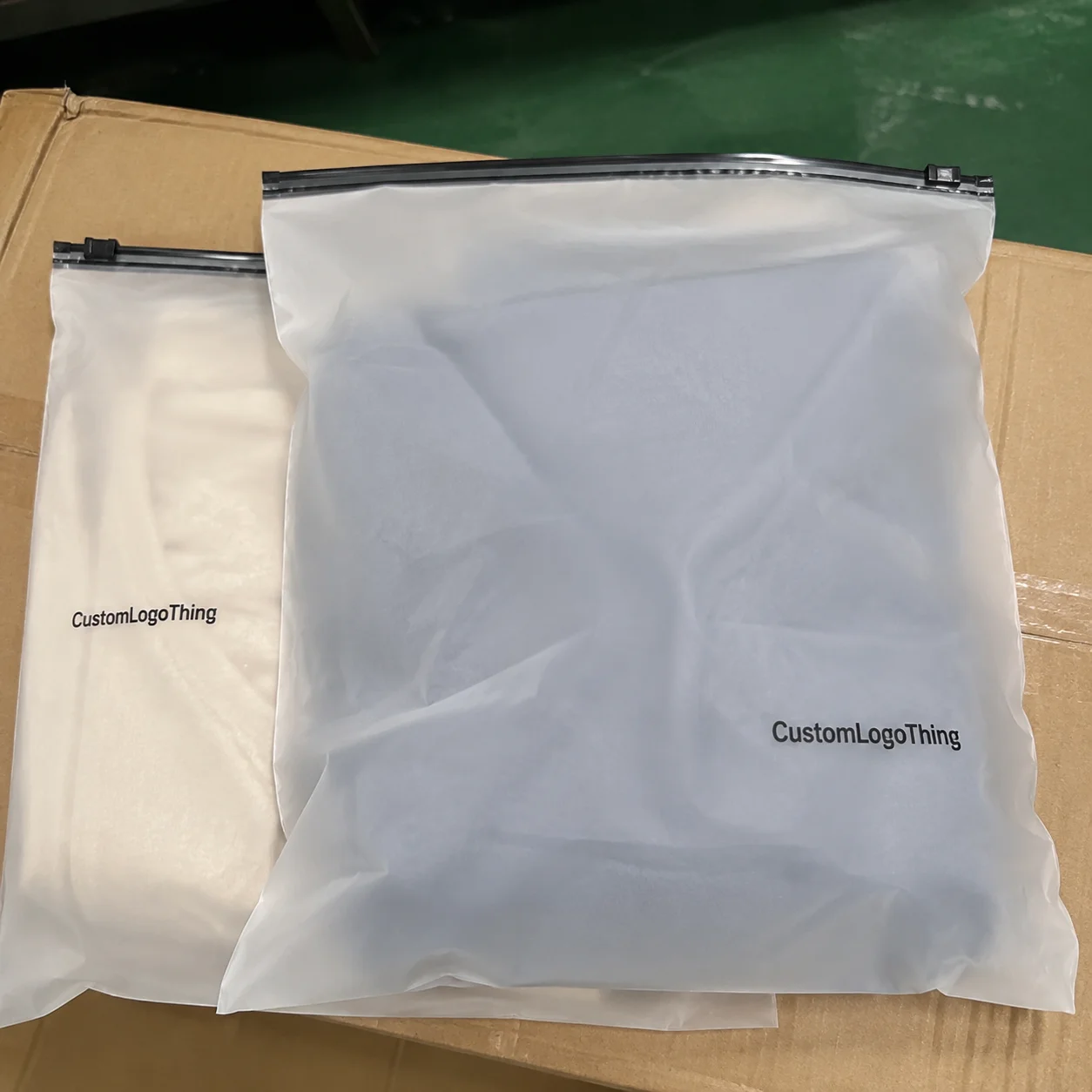
Clear PVC has one plain advantage: staff can see the garment color and size quickly. That matters when 300 aprons are being sorted for a store opening or when wholesale sales kits include several apparel sizes. Frosted or tinted PVC gives a softer retail appearance and hides wrinkles or handling marks, but it can slow visual checking during fulfillment.
Zipper choice is a cost lever that deserves more attention than it usually gets. Standard nylon zippers work for most apparel bags. A heavier puller, metal-look slider, color-matched zipper tape, or branded pull tab may make sense for premium tea houses, ceremony wear, or VIP gifting kits. The upgrade may add only a few cents per piece, but across 5,000 or 10,000 units it becomes a real budget line.
Construction details can decide whether a low-cost bag performs or disappoints. A hanger hole without reinforcement may stretch during rack storage. Weak side seams can split if folded robes are bulky. Poor zipper end stops create repeat failure points. Bottom seals need enough strength to handle stacked cartons, especially when bags are shipped folded and opened later by store teams working quickly.
Odor is the quiet issue with PVC. Material grade, ink system, drying time, and ventilation all affect how the finished bag smells when cartons are opened. Even though the garment bag should not touch consumable tea, it may be packed near tea merchandise, paper collateral, or branded tins. If the program has a premium presentation or will sit near aromatic products, request low-odor material options and proper airing before carton packing.
For broader context on distribution handling, the International Safe Transit Association publishes test procedures used to evaluate packaged products through shipping environments. Flexible garment bags are not corrugated shippers, but the principle still applies: the product has to survive the route, not just look acceptable in a sample photo.
Specifications to Confirm Before You Ask for a Quote
A precise quote starts with precise inputs. A request such as “standard garment bag with logo” invites uneven pricing because suppliers fill the gaps differently. One may assume thinner PVC. Another may include a reinforced hanger opening. A third may quote a smaller bag with no gusset and basic bulk packing.
Prepare these details before asking for pricing:
- Bag width and length: measured flat, usually in inches or centimeters.
- Gusset depth: often 2–4 inches for bulkier robes, jackets, or layered kits.
- PVC thickness: commonly specified in millimeters or microns, depending on supplier format.
- Zipper type and color: standard nylon, color-matched tape, heavier slider, or upgraded puller.
- Hanger hole style: slit, round opening, reinforced patch, or no hanger opening.
- Print requirements: logo file, print colors, print area, and one-sided or two-sided placement.
- Quantity and MOQ target: requested order volume plus possible quantity tiers.
- Packing method: bulk packed, individually folded, inner polybagged, barcode labeled, or size assorted.
- Delivery location and deadline: destination address, port, warehouse, office, event venue, retailer DC, or forwarder.
Thickness changes both cost and feel. Lighter gauges reduce unit cost and can be suitable for single-use event apparel, temporary staff uniforms, or one-time promotional giveaways. Thicker PVC improves structure, durability, and perceived value for reusable retail applications, executive gifting, and premium tea ceremony apparel.
Measure the actual garment instead of relying only on a size chart. Aprons, padded uniforms, jackets, and robes compress differently. A bag that is undersized by half an inch may still close during a relaxed sample check, then fail in bulk packing when teams are moving quickly and zipper stress increases.
Print method also changes the quote. One-color screen printing is usually the most cost-efficient option for a logo. Multi-color artwork, large coverage, metallic ink, or full-panel designs require closer review of opacity, registration tolerance, setup charges, and drying behavior. Large ink areas can stiffen the panel and may increase scuff risk if the bags are folded, stacked, or rubbed during fulfillment.
Compliance depends on the sales channel and end use. Some buyers request material data, phthalate-free options, or internal sustainability documentation. If the bags are connected to youth apparel programs, procurement may ask for CPSIA-related information. If paper hangtags or insert cards are included, FSC-related claims should be handled carefully; the Forest Stewardship Council explains the rules behind certified fiber claims.
Carton decisions are not housekeeping. Carton count, folding direction, inner packing, barcode labels, size assortment, and carton marks affect labor time, carton cube, and freight. Freight can become the hidden cost per piece, especially for bulky garment bags shipped by air.
How We Calculate PVC Zipper Garment Bags Unit Cost for Tea Orders
The cleanest way to think about PVC Zipper Garment Bags unit cost for tea orders is to break the bag into cost blocks: material usage, trims, printing, labor, setup, packing, quality checks, inland freight, export handling, and final shipping. Each part looks modest on its own. Together, they decide the real cost per piece.
Size drives cost faster than many buyers expect. PVC is priced by area and thickness, so increasing both width and length raises material usage sharply. A 24 x 40 inch bag uses much more material than a 20 x 30 inch apron bag, even before a gusset is added. In some cases, a slightly oversized pattern costs more than a logo upgrade.
MOQ is shaped by material procurement, zipper color, print setup, production efficiency, and whether the buyer wants a stock-size bag or fully custom construction. A stock-size transparent bag with a one-color logo may allow lower quantities. A frosted custom size with color-matched zipper tape, reinforced hanger patch, and two-sided artwork usually needs a higher order volume to make production sensible.
| Order Scenario | Typical Use | Common Specification | Pricing Behavior | Buyer Watchout |
|---|---|---|---|---|
| Small pilot run | Tea festival, pop-up, influencer kit | Standard size, light to medium PVC, one-color logo | Higher cost per piece because setup and labor are spread across fewer units | Confirm whether tooling fees, print screens, or setup charges are included |
| Mid-size campaign | Store opening, seasonal staff apparel, wholesale kits | Custom size, medium PVC, standard zipper, one or two print colors | Better bulk pricing once print and packing are standardized | Match carton packing to the delivery route and receiving team |
| Large recurring order | National retail rollout, repeat uniform program | Optimized pattern, approved thickness, fixed logo placement | Lowest unit cost after specifications are locked and repeat production is stable | Keep signed specs to avoid drift between reorders |
| Premium gift program | Tea ceremony robe, VIP set, corporate gifting | Thicker PVC, frosted finish, upgraded zipper, reinforced trim | Higher unit cost, often justified by presentation value | Review odor, scuff resistance, and print durability carefully |
Low-volume buying has a place. A tea brand testing a new retail apron program may not want to commit to 10,000 pieces immediately, and that caution is reasonable. The tradeoff is unit cost. Setup charges, artwork checking, machine time, and packing labor do not disappear because the order is small.
Higher volume usually lowers the piece price by spreading fixed work across more units. It can also improve material purchasing efficiency. Volume only helps, however, if the specification is correct. Ordering 20,000 bags in the wrong size is not disciplined procurement; it is inventory punishment.
For a matched-spec quote, send quantity tiers, exact dimensions, thickness target, zipper color, logo file, print colors, destination address, deadline, and whether a pre-production sample is required. If the order must ship to multiple store locations, state that early. Split shipments can change labeling, carton counts, pallet planning, and freight pricing.
Be careful with quote comparisons. One supplier may quote thinner PVC, smaller dimensions, no individual packing, a lower-grade zipper, or no inspection allowance. The result looks cheaper, but it is not the same bag. In packaging purchasing, unmatched quotes are not competition; they are noise.
Sampling, Approval Process, and Production Timeline
A typical workflow includes inquiry, specification review, initial quote, artwork check, sample or digital proof, approval, bulk production, inspection, packing, and shipping. Some orders move faster. Others need more review because the garment is unusual, the artwork is detailed, or the delivery plan involves several locations.
Stock samples verify material feel and basic construction. They are useful when a buyer wants to compare clear versus frosted PVC, standard zipper versus upgraded puller, or light versus medium gauge. A stock sample does not confirm final size, exact logo placement, or carton packing.
Custom samples do more work. They confirm size, artwork scale, zipper color, hanger opening, gusset depth, and the real production appearance. If the garment is bulky — a thick robe, padded jacket, layered gift set, or apron packed with a printed card inside — custom sampling is usually worth the time.
Timeline variables include print complexity, material availability, zipper color, order quantity, inspection requirements, factory workload, and shipping method. A simple one-color print on a stock size is naturally faster than a fully custom pattern with color-matched zipper tape and multi-color artwork.
Internal approvals often consume more calendar days than production. Brand teams may need to approve logo scale. Procurement may need to approve price. Retail operations may need to approve carton labels. A sample revision can add another cycle, especially if the bags support a trade show, store opening, seasonal launch, or corporate gifting date.
Rush orders are possible in certain cases. If material is available, artwork is clean, and the specification is simple, production may be accelerated. There is usually a cost: fewer zipper color choices, limited sampling options, or a shift from ocean freight to air freight. Air freight can overwhelm the savings from a lower unit price.
The safer plan is to request pricing early enough for one sample cycle and one revision. Not every order needs multiple samples. The schedule simply should not assume perfection on the first proof, especially for branded items that will be photographed, sold, handed to VIP customers, or distributed across several locations.
Quality Controls That Prevent Cheap-Bag Failures
Quality control is cost protection. A low price is not savings if zippers split, seams tear, ink flakes, or bags arrive with inconsistent sizing two days before a retail launch.
Useful inspection checkpoints include material thickness verification, clarity review, odor check, zipper pull testing, seam strength check, hanger opening placement, print color match, logo alignment, carton labeling, and random finished-goods review. None of these steps is glamorous. They prevent expensive surprises.
Print durability needs practical testing, not just a clean digital proof. Garment bags are folded, stacked, rubbed, opened, closed, and packed into cartons. Ink adhesion and scuff resistance matter more than they appear in flat artwork. A logo that looks perfect on day one but scratches during fulfillment creates a visible brand problem.
Size tolerance should be defined in the quote if fit is tight. Minor variation is normal in plastic bag manufacturing. The question is how much variation the garment can tolerate. A robe program with generous sizing may allow more flexibility. A fitted jacket bag with a narrow gusset may need tighter control.
Customers may never ask whether the PVC is 0.10 mm, 0.12 mm, or 0.15 mm. They will notice a cracked zipper on a premium tea robe. They will notice a cloudy bag in a VIP gifting kit. They will notice if the logo is tilted across the front panel or if the bag smells strongly of plastic when opened.
Documentation reduces disputes. Photos, approved samples, inspection notes, signed specifications, carton marks, and artwork proofs help procurement teams compare repeat orders accurately. That becomes especially useful after the first order, because repeat purchasing should become easier, not more confusing.
Commercial test: If a quote cannot state the size, thickness, zipper type, print method, packing method, and delivery terms, it is not ready for serious comparison.
Action Steps to Get an Accurate Bag Quote
Start with the intended use. Say whether the bags are for store uniforms, tea ceremony robes, staff aprons, retail launch apparel, festival kits, wholesale sales samples, or premium gifting. Use case affects thickness, print method, zipper choice, packing, and whether sampling should be mandatory.
Then send the core quote details:
- Garment type: apron, robe, jacket, shirt, uniform set, or mixed kit.
- Quantity: include a target order volume and ask for two or three quantity tiers.
- Delivery address: warehouse, office, retail location, event venue, freight forwarder, or retailer DC.
- Target in-hand date: not just the production deadline.
- Preferred dimensions: width, length, and gusset if known.
- Logo file: vector artwork is best for clean printing.
- Print colors: Pantone references help reduce interpretation.
- Packing requirements: bulk pack, individual fold, barcode labels, size assortments, or carton marks.
- Compliance needs: low-odor PVC, phthalate-free options, internal documentation, or retailer paperwork.
Photos help. So do measurements. If you already have a garment bag that works, send its flat size and a photo of the zipper, hanger opening, seam, and packing style. If the current bag fails, name the failure: zipper breakage, tearing, odor, cloudiness, poor logo adhesion, difficult packing, or poor fit.
Ask for two or three quantity tiers instead of one number. Procurement can then see how unit cost changes with MOQ and decide whether a larger run is financially justified. Sometimes the price break between 1,000 and 3,000 pieces is meaningful. Sometimes freight, packing, or storage makes the larger order less attractive. The numbers should make that visible.
Choose the decision path before the deadline becomes tight. A stock sample is good for checking feel and basic construction. A custom sample is better for exact size, logo placement, zipper color, and premium programs. Direct production may be acceptable only when the specification is simple, artwork is straightforward, and the buyer accepts the risk of approving from files and prior samples.
Before approval, confirm logo placement, zipper direction, hanger hole style, folding direction, packing method, carton marks, and delivery deadline. These sound like small details because they are small individually. Together, they decide whether the receiving team can use the bags immediately or has to sort through avoidable problems.
The most useful request is not “send the cheapest bag.” It is “price the bag that will actually work.” A matched-spec quote for PVC Zipper Garment Bags Unit cost for tea should reflect the exact dimensions, material, print, packing, and delivery terms your team expects to receive.
FAQ
What affects PVC zipper garment bag unit cost for tea brand orders the most?
The biggest cost drivers are bag size, PVC thickness, zipper type, print method, number of print colors, quantity, packing requirements, and shipping method. A larger transparent bag with thicker PVC and multi-color printing will cost more than a simple one-color logo bag in a standard size. For accurate comparison, request quotes using identical dimensions, thickness, artwork, MOQ, and delivery terms.
Are PVC zipper garment bags safe to use near tea products?
They are suitable for garments, uniforms, aprons, robes, and promotional apparel connected to tea brands, but they should not be used as direct food-contact packaging for loose tea or tea bags. If bags will be packed near tea merchandise, request low-odor material options and proper ventilation before carton packing. For consumable tea packaging, use approved food-contact materials instead.
What MOQ should I expect for custom PVC zipper garment bags?
MOQ depends on size, material thickness, zipper color, print setup, and whether the design uses stock components or fully custom construction. Lower quantities may be possible for simple bags, but unit cost is usually higher because setup and labor are spread across fewer pieces. Ask for multiple quantity tiers to identify the most cost-efficient order size.
How long does the production timeline take after artwork approval?
Timeline depends on sample requirements, material availability, printing complexity, order quantity, inspection steps, and shipping method. Stock samples are typically faster than custom samples because they confirm material and construction without new tooling or print setup. Buyers with trade show, store opening, or campaign deadlines should include time for proof review, sample approval, production, inspection, and transit.
What information should I provide to get a precise unit cost quote?
Send bag dimensions, garment type, quantity, PVC thickness preference, zipper color, logo file, print colors, packing method, delivery address, and deadline. Photos of the garment or a current bag help prevent sizing mistakes and unnecessary revisions. If you are unsure about thickness or size, request a recommendation based on single-use, retail, or reusable promotional needs.