Buyer Fit Snapshot
| Best fit | Custom Recycled Cardboard Inserts Wholesale Pricing projects where brand print, material claims, artwork control, MOQ, and repeat-order consistency need to be specified before quoting. |
|---|---|
| Quote inputs | Share finished size, material target, print colors, finish, packing count, annual reorder estimate, ship-to region, and any compliance wording. |
| Proofing check | Approve dieline scale, logo placement, barcode or warning zones, color tolerance, closure strength, and carton packing before bulk production. |
| Main risk | Vague material claims, crowded artwork, missing packing details, or unclear freight terms can make a low unit price expensive after revisions. |
Fast answer: Custom Recycled Cardboard Inserts Wholesale Pricing should be specified like a repeatable production item. The safest quote records material, print method, finish, artwork proof, packing count, and reorder notes in one written spec.
Production checks before approval
Compare the actual filled-product size with the drawing, then confirm tolerance on folds, seals, hang holes, label areas, and retail display edges. Reserve space for logos, QR codes, warning copy, and material claims before decorative graphics fill the panel.
Quote comparison points
Review material grade, print process, finish, sampling route, tooling charges, carton quantity, and freight assumptions side by side. A quote is only useful when the supplier can repeat the same color, closure quality, and packing count on the next order.
Custom Recycled Cardboard inserts wholesale pricing looks straightforward until one cracked jar, one bent corner, or one returned kit starts eating into margin. A damaged unit rarely stops at the unit itself. It usually brings a refund, a replacement, a support ticket, and another shipment on top. That is why custom Recycled Cardboard Inserts wholesale sits in the category of business decisions, not just packaging purchases, especially for e-commerce packaging and subscription kits.
For Custom Logo Things, the question is never whether an insert looks neat in a render. The real test is harder. Does the insert hold the product still? Does it cut down damage? Does it speed pack-out without forcing workers to wrestle with the structure? Does it keep freight weight under control? Strong Custom Recycled Cardboard inserts wholesale programs answer yes to those questions. They support product packaging, protect fragile goods, and keep branded packaging from turning into a problem once the carton leaves the dock. In other words, custom recycled cardboard inserts wholesale are judged by the line, not the mockup.
I once sat through a packaging review where a candle set looked perfect in the sample room and then arrived in three separate pieces after a short parcel test. The fix was not dramatic. We tightened the cavity, changed the board, and removed a little dead space. That kind of adjustment sounds small, but it saved real money. That is the part people miss when they look only at artwork proofs.
Brands comparing inserts for e-commerce, subscription kits, gift sets, or small retail bundles usually discover the same thing: fit matters more than flash. A plain kraft insert with a precise cavity can outperform a printed option if the dimensions are right. That sounds unglamorous. It also happens to be true. Couriers do not reward pretty packaging. They reward packaging that stays together, which is exactly why custom recycled cardboard inserts wholesale have become a practical standard for shipping inserts.
How Do Custom Recycled Cardboard Inserts Wholesale Reduce Shipping Damage?
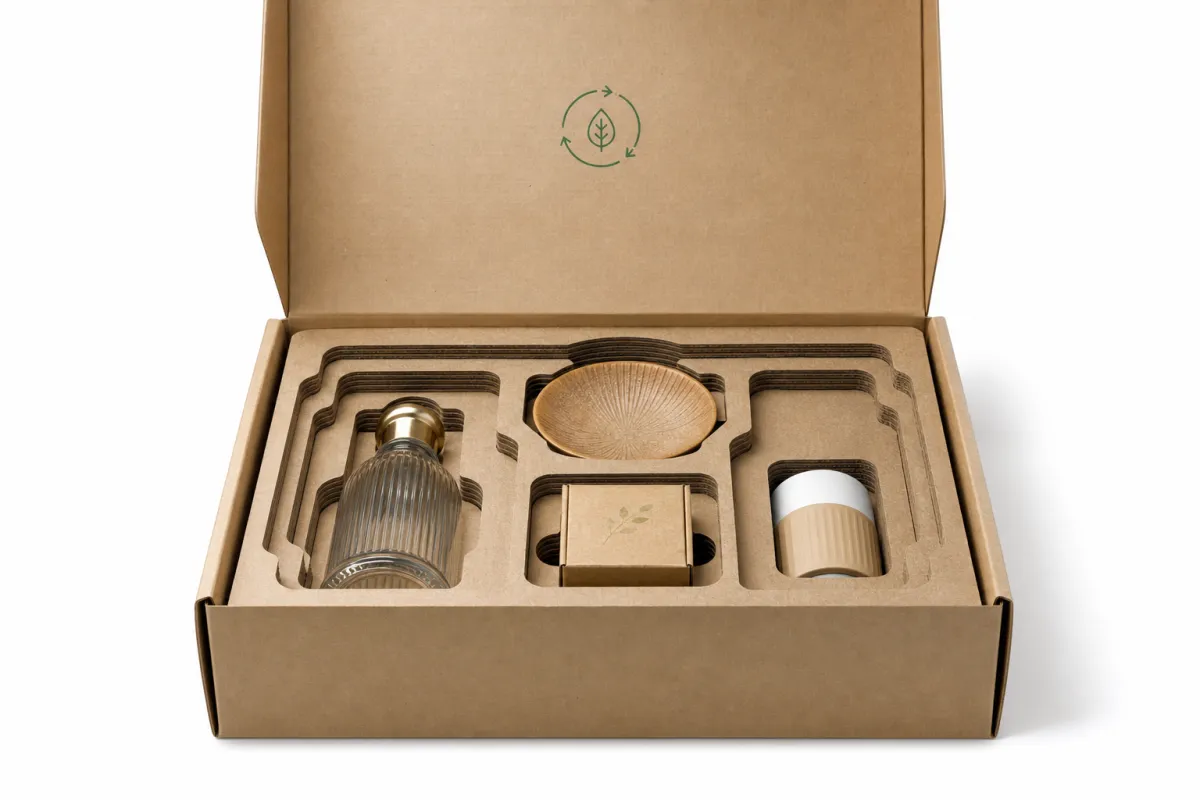
Damage prevention is the main reason buyers order custom recycled cardboard inserts wholesale. Not because recycled material sounds virtuous. Because returns are expensive, and a low-cost insert can stop a much bigger loss from showing up later. If a $0.20 insert saves one $18 replacement shipment and one refund, the arithmetic is obvious. People still miss it while reviewing artwork proofs. That is why custom recycled cardboard inserts wholesale are often treated as protective packaging, not trim.
Wholesale buyers usually look at four things before they think about appearance: damage rate, labor time, freight weight, and pack-out consistency. A slow insert drags down the packing table. A flimsy insert lets the product move. A design that changes from batch to batch pushes warehouse teams into workarounds, and workarounds usually mean mistakes. Packaging only looks simple from a distance.
Custom recycled cardboard inserts wholesale works because recycled board gives structure without unnecessary bulk. That matters in e-commerce, where every ounce affects shipping cost, and it matters even more in subscription kits, where presentation and protection have to coexist. Fragile items need internal support. Gift sets need order inside the box. Electronics accessories need separation so they do not collide in transit. The insert carries all of that quietly, much like well-designed corrugated inserts in a larger shipping program.
From a packaging design standpoint, the insert performs the invisible job. It limits movement, separates components, and absorbs impact before the product does. Buyers choosing custom recycled cardboard inserts wholesale should think about function first. Sustainability still matters, but performance pays for the order.
Here is the blunt part: a slightly higher insert cost often pays back quickly if it trims even a small number of damage claims. Fragile kits, cosmetics, electronics accessories, candles, glass jars, and premium food sets can all become expensive to ship when the internal structure is weak. Better fit usually means fewer complaints, fewer replacements, and fewer support tickets that drain time.
A cheap insert is only cheap if it survives shipping. If it fails, the bill arrives later, usually with worse customer service attached.
For buyers comparing custom recycled cardboard inserts wholesale with foam or molded pulp, the decision usually comes down to protection, appearance, and cost. Foam can perform well, though it may not suit every brand or recycling target. Molded pulp has real strengths, but it is not always the best choice for small runs or tight internal tolerances. Recycled cardboard sits in a useful middle range for many programs, especially when the outer carton is fixed and the product shape is predictable. It is the middle ground many brands choose after testing paperboard inserts and other recycled packaging options.
That is also where wholesale orders make sense. Once the structure is dialed in, repeat runs should stay consistent. Reordering the same custom recycled cardboard inserts wholesale design is far easier than rebuilding the layout every quarter. Consistency reduces mistakes. It also makes labor training simpler, which is not flashy but matters a great deal on a busy line.
For broader sourcing context, some buyers start with Wholesale Programs before narrowing into the exact packaging structure that fits their volume and budget. That order of operations tends to work better. Start with the job. Then choose the insert.
Custom Recycled Cardboard Inserts Wholesale: Product Types and Fit
Custom recycled cardboard inserts wholesale is not one product. It covers a family of structures, and the right one depends on weight, carton style, shipping method, and the amount of hand assembly a packing team can tolerate. A bottle with a pump needs different support from a cable kit. A premium gift set needs a different internal layout from a warehouse bundle of spare parts. One design rarely serves all of those jobs well, which is why custom recycled cardboard inserts wholesale projects usually begin with the product itself.
The most common styles include die-cut trays, folded inserts, partitions, locking-tab structures, and multi-cavity layouts. Die-cut trays work well when the product footprint is predictable and the fit needs to feel clean and repeatable. Folded inserts make sense when quick assembly and simple tooling are priorities. Partitions suit glass, jars, bottles, and anything that should not touch its neighbor. Locking tabs keep the structure together without tape. Multi-cavity layouts handle kits with several parts, sample packs, chargers, or mixed SKUs.
Board choice matters as much as geometry. For custom recycled cardboard inserts wholesale, corrugated board usually gives better protection for heavier items or longer transit lanes. Chipboard fits lighter products, cosmetics, stationery, and presentation-driven retail packaging. Layered constructions can give the insert a more premium feel when the box needs structure and a polished opening experience at the same time. The result is a cleaner insert system without adding unnecessary bulk.
The insert also has to match the outer box without wasting headspace. That is where packaging design gets practical fast. A mailer box with too much dead space invites movement. A rigid box with an undersized insert can press against the lid or crush the edges. A shipper with loose cavities can rattle even when the product appears secure in the hand. Good custom recycled cardboard inserts wholesale planning starts with the internal dimensions of the carton, not the outside face of the package.
Mailers, rigid boxes, shippers, and retail-ready cartons all benefit from the right insert shape. In Custom Printed Boxes, inserts can also support the visual rhythm of the pack-out. That matters especially when the outer carton carries strong package branding and the inside needs to feel equally deliberate. A solid opening experience does not require expensive materials. It requires coordinated parts that fit and behave the way they should.
One useful way to compare the common options is by fit behavior, not just by price. Here is a simple view:
| Insert Style | Best For | Typical Board | Wholesale Price Range | Notes |
|---|---|---|---|---|
| Folded insert | Light products, quick assembly, subscription kits | Chipboard or light corrugated | $0.18-$0.32 per unit at 5,000+ | Fast to pack, lower tooling, good for simple layouts |
| Die-cut tray | Fragile items, retail presentation, precise fit | Corrugated recycled board | $0.24-$0.48 per unit at 5,000+ | Stable fit, strong protection, more accurate die work |
| Partition insert | Bottles, jars, glass sets, multi-piece shipments | Corrugated or chipboard | $0.22-$0.44 per unit at 5,000+ | Good separation, useful for breakable product packaging |
| Layered multi-cavity insert | Premium kits, electronics accessories, mixed SKUs | Thicker corrugated or layered board | $0.40-$0.85 per unit at 5,000+ | Best for complex pack-outs and premium unboxing |
The prices above are broad wholesale ranges, not promises carved in stone. Material choice, cavity count, print coverage, and tooling complexity all move the number. A cleaner design usually costs less to make. A structure that folds efficiently usually costs less to pack. Buyers looking at custom recycled cardboard inserts wholesale should ask how the design behaves in production, not just how it looks in a PDF. That production view matters more than glossy renderings for any custom insert program.
Unprinted natural kraft remains a strong option for many brands, especially when the outer carton already handles the visual side. Still, when the internal experience matters, a single-color print can support the brand without pushing cost too far. That is common in retail packaging, gifting, and curated kits where the inside matters as much as the outside.
Specifications That Matter for Wholesale Inserts
Most problems in custom recycled cardboard inserts wholesale orders start with weak specs. A buyer says, "It needs to fit the product," and that barely helps. Fit what exactly? With what clearance? For what weight? In which carton? On what shipping route? In what humidity? Under what handling conditions? The details are where the real answer lives, especially for die-cut inserts that need repeatable cavity accuracy.
Before quoting, a supplier should have these measurements: internal box dimensions, product dimensions, product weight, and target clearance. Fragile items and products with protrusions need extra context too. A bottle with a pump, a device with a charger, or a kit with uneven pieces will not behave like a plain cube. That is why custom recycled cardboard inserts wholesale should be built around the real object, not the idealized version in someone’s head.
Board thickness changes the result in a big way. Flute type does too. A lighter board may work for a small cosmetic set, yet fail for a heavier glass component. Score depth matters because weak scoring leads to cracked edges or sloppy folds. Cut tolerance matters because a cavity that drifts by a few millimeters can trigger repeat complaints across a full production run. With custom recycled cardboard inserts wholesale, millimeters are not a design flourish. They are cost, and they often decide whether the insert feels engineered or improvised.
Real-world tests matter more than theory. Buyers should care about crush resistance, stackability, drop protection, and batch consistency. A design that cannot survive a basic drop test or transit vibration check is not ready for shipping. Many teams use ISTA methods for validation, and that is a sensible step when the route is rough or the product value is high. The International Safe Transit Association publishes practical testing guidance at ista.org, which gives buyers a useful framework for transit risk.
For sustainability and material sourcing, buyers often ask about recycled content and chain-of-custody documentation. That is a fair question. If the program needs FSC-certified board, ask early. If the business reports recycled content, keep the paperwork clean. The point is not to dress the spec sheet in green language. The point is to document what is actually being purchased in a way that supports recycled packaging claims.
Humidity causes trouble more often than people expect. Recycled cardboard responds differently in damp storage or long ocean transit. A structure that behaves well in a dry room may need a stronger board grade or tighter packaging process when the route is harsher. That matters especially for custom recycled cardboard inserts wholesale shipped into seasonal stock rooms, coastal locations, or mixed-temperature logistics networks.
ASTM and ISTA references help because they turn vague claims into measurable performance. If a supplier mentions a board grade, a stacking test, or a transit simulation, ask which standard was used. Buyers do not need a lecture. They need repeatable results. That is exactly why custom recycled cardboard inserts wholesale should be specified with measurable terms instead of marketing adjectives.
- Internal box size: drives cavity dimensions and overall fit.
- Product weight: determines board strength and structure depth.
- Clearance target: usually a few millimeters, depending on fragility.
- Transit method: parcel, pallet, air freight, or mixed handling.
- Storage conditions: dry warehouse, humid environment, or long hold time.
One more practical note: if your product line has multiple SKUs, share the full set. Mixed packs often need a smarter cavity layout so the insert can handle variation without leaving dead space. That can save freight weight and reduce fill material. It also makes custom recycled cardboard inserts wholesale easier to repeat across product launches and across seasonal bundles.
For buyers building a larger packaging system, it can help to compare inserts against the outer format. Some brands pair insert development with Custom Packaging Products as a broader sourcing step, then confirm the carton family later. Others start with Custom Shipping Boxes and design the insert around the approved box. Both paths work. The key is matching the insert to the actual packaging stack, not to an imagined ideal.
Custom Recycled Cardboard Inserts Wholesale Pricing, MOQ, and Volume Breaks
Pricing for custom recycled cardboard inserts wholesale comes down to a few real cost drivers: board grade, structural complexity, print, die tooling, quantity, and timing. That sounds obvious, yet buyers still get surprised when a "simple" insert gets pricier because the design has too many folds, tight cavities, or a multi-piece assembly sequence. Every extra step adds cost. Packaging is not moved by optimism, and wholesale quotes usually reflect that quickly.
Minimum order quantity depends on the insert style. Simple folded inserts can often support lower entry quantities because they use simpler tooling and less setup. Complex die-cut builds usually need higher minimums because the cutting forms, setup time, and labor make small batches inefficient. For custom recycled cardboard inserts wholesale, lower MOQs are easier when the structure is straightforward. When the structure is complex, the MOQ rises. That is ordinary manufacturing math, not a sales trick.
Volume breaks matter because setup charges and tooling get spread across more units as the order grows. That is why unit cost often falls faster than buyers expect once the run moves beyond a few thousand pieces. A quote at 500 units can look very different from a quote at 5,000. The clearest way to compare is to request tiered pricing at 500, 1,000, 5,000, and 10,000 units. That shows where the savings actually begin.
Here is a practical pricing frame for custom recycled cardboard inserts wholesale:
| Quantity | Simple Folded Insert | Die-Cut Corrugated Insert | Complex Multi-Cavity Insert | Common Cost Driver |
|---|---|---|---|---|
| 500 | $0.42-$0.78 | $0.55-$1.05 | $0.90-$1.80 | Setup and tooling dominate |
| 1,000 | $0.28-$0.52 | $0.38-$0.78 | $0.62-$1.25 | Setup is spread out more |
| 5,000 | $0.18-$0.32 | $0.24-$0.48 | $0.40-$0.85 | Material and run efficiency matter most |
| 10,000+ | $0.14-$0.26 | $0.19-$0.40 | $0.32-$0.70 | Production efficiency and material yield improve |
Those numbers are a buying range, not a formal quote. Heavy print coverage, thicker board, or a complicated dieline will push cost upward. Rush timing can do the same. Some buyers dislike that answer. Fair enough. Rush jobs still use labor, and labor still carries a price. Custom recycled cardboard inserts wholesale is usually cheapest when the structure is clean and the order volume is predictable, especially for standard shipping inserts.
Tooling fees can range from modest to meaningful depending on complexity. A simple die setup may be relatively low, while a more intricate structure with multiple cavities and tight tolerances costs more to tool. Buyers should ask for tooling as a separate line item. That makes it easier to see how much of the quote is one-time setup versus per-unit production. Transparency helps, especially when several suppliers are being compared side by side.
Printing adds cost, although usually not as much as buyers fear. One-color print on recycled board often gives a practical balance when the insert needs a branded touch. Full coverage or multiple ink hits pushes the number higher, and that is expected. Plain natural finish remains common because many brands care more about fit and protection than decoration inside the box. In other words, custom recycled cardboard inserts wholesale should do the packaging job first. It should not become a trophy piece for a design meeting.
From a wholesale buyer’s point of view, the best quote is the one that separates unit price, tooling, setup, lead time, and freight assumptions. That reduces guesswork. It also makes comparisons easier when every supplier uses a different board, a different die, or a different quality standard.
Production Process and Timeline for Wholesale Inserts
The production flow for custom recycled cardboard inserts wholesale should be predictable. It usually starts with specs, moves to a quote, then to dieline or structure review, then a sample, then approval, then full production. Simple enough. Trouble starts when buyers skip the measurement step and jump straight to artwork. That is backwards. A polished render cannot fix the wrong cavity depth. A good workflow keeps the custom recycled cardboard inserts wholesale order tied to the product, not the mockup.
Simple layouts can move fairly quickly once the dieline is confirmed. More custom structural designs need extra sampling and approval time. That is especially true when the insert uses fold logic, locking tabs, or multiple cavities that all need to fit together. Buyers asking for custom recycled cardboard inserts wholesale should plan around structure development, not just print production. The structure is the work, and it is where the project either saves money or creates rework.
The most common delays are boring and predictable: missing measurements, late artwork changes, and revisions after the first sample. A product changes by a few millimeters and the cavity no longer fits. Someone updates the packaging artwork after approval and the proof cycle starts over. A team forgets to say whether the insert should hold one item or two and the order stalls while everyone sorts it out. A clean spec sheet saves time because it removes those gaps before they become expensive.
In a straightforward run, the sample approval cycle can decide whether the delivery feels organized or chaotic. Once the sample is checked for fit, assembly, and box compatibility, production usually moves with fewer surprises. Many buyers of custom recycled cardboard inserts wholesale also ask for a quick packing test, which is smart. If the insert slows the line or forces awkward folds, it may be low-cost on paper and expensive in labor.
Quality control should include three checkpoints: cut accuracy, fit consistency, and carton compatibility. A good supplier checks whether the insert holds shape after cutting, whether cavity dimensions stay within tolerance, and whether the insert works inside the approved carton without buckling. That is where experienced packaging design beats guesswork. The goal is not drama. The goal is repeatable parts.
Realistic lead times vary by complexity and order size, but a useful planning frame is this:
- Simple insert designs: often move faster once the sample is approved.
- Moderate structural jobs: need a few extra days for sampling and die review.
- Complex multi-part inserts: need more approval time because fit and assembly matter more.
- Rush orders: can be done, but they usually cost more and leave less room for revisions.
For buyer planning, the best approach is to approve the structure before worrying about finishing details. That keeps the schedule under control. A supplier that understands custom recycled cardboard inserts wholesale should be able to tell you where the risk sits: structure, sampling, print, or assembly. Honest scheduling beats a cheerful promise that everything will be quick, and it keeps wholesale production realistic.
One more thing: keep reorders simple. Once the right design is approved, store the exact specs, clearance notes, and board grade. That way the next run is not treated like a fresh experiment. Reorders are where good packaging systems prove their value, especially when the product line changes often or the warehouse runs on regular replenishment cycles.
Why Choose Us for Custom Recycled Cardboard Inserts Wholesale
Some suppliers quote inserts by guessing. That is not a compliment. For custom recycled cardboard inserts wholesale, guessing is how a buyer ends up with a nice sample that falls apart in the actual box. At Custom Logo Things, the better method is to quote from product specs, carton dimensions, and the real shipping use case. That approach may sound basic. It is basic. Basic is exactly what you want when the goal is to keep products intact, especially in custom packaging programs with strict margins.
What buyers usually want is simple: fewer surprises, a better fit, and a supplier that knows the difference between a pretty insert and a production-ready one. That means practical structure knowledge, consistent material sourcing, and replies that do not take forever. In wholesale work, speed matters, but accuracy matters more. When a supplier understands custom recycled cardboard inserts wholesale, the order tends to move with fewer revisions and fewer headaches, which matters most for repeat production runs.
Repeatability is another advantage. When a design is built for production, reorders stay cleaner. Assembly time is more consistent. Damage rates are easier to predict. The outer carton and insert work as one system instead of fighting each other. That is how product packaging stops acting like a cost center and starts functioning like a control system.
Buyers also value directness. Nobody wants vague claims about premium vibes or magical protection. They want facts. What board? What thickness? What clearance? What volume break? What lead time? If a supplier can answer those questions without fluff, that is a sign the operation is serious. Custom recycled cardboard inserts wholesale should be treated like a manufacturing purchase, not a branding exercise.
There is also a broader packaging advantage here. Many brands want the insert, outer carton, and print style to match the tone of the product line. That is where package branding and retail packaging work together. The insert may be hidden during transit, but it still shapes the opening experience. If the carton opens cleanly and the product sits correctly, the brand feels more controlled. If the product shifts or arrives rattling around, the whole package feels cheaper than it should. That is why custom recycled cardboard inserts wholesale are part of the brand experience, not just the shipper spec.
We also understand that economics matter. A supplier who knows custom recycled cardboard inserts wholesale should be able to explain where the cost comes from and where the savings live. Maybe the board can be simplified. Maybe the cavity count can be reduced. Maybe the print can be cut to one color. Maybe the box and insert can be redesigned together so freight weight drops. Practical advice like that is worth more than a polished sales line.
For sustainability-minded buyers, recycled board and documentation can support procurement goals without compromising function. The EPA has practical recycling and materials guidance at epa.gov, which is useful if your internal team needs a reference point for material claims. The point is not to talk green. The point is to buy smart.
Custom recycled cardboard inserts wholesale should protect the product, fit the box, and keep the pack-out process sane. That is the job. Everything else is decoration.
Next Steps for Custom Recycled Cardboard Inserts Wholesale Orders
If you want a useful quote for custom recycled cardboard inserts wholesale, prepare the basics before asking for pricing. Send the internal box dimensions, product dimensions, product weight, quantity target, and shipping destination. If the product is fragile, say so. If the pack includes more than one SKU, list every item. If the insert has to work with a specific outer carton, name it. The more exact the input, the better the quote, and the faster the custom recycled cardboard inserts wholesale process moves.
There are two sensible paths from there. The first is sample-first, which fits tight tolerances, fragile products, or unusual pack-outs. The second is production-ready, which works for cleaner jobs where the dimensions are stable and the risk is lower. For many buyers, custom recycled cardboard inserts wholesale works best when the structure is sampled once and then locked for repeat orders, turning one design decision into a repeatable system.
Ask for pricing at several quantities so you can see the true break points. Ask for tooling and setup fees as separate lines. Ask for lead time in business days, not vague promises. Ask what the board grade is, how the insert is cut, and whether a simple one-color print is possible if you need branding inside the carton. Those questions are normal. They are also the quickest way to avoid a bad purchase.
If you are already comparing outer formats, it helps to look at the full packaging stack together instead of treating the insert as a separate purchase. That is where custom printed boxes, branded inserts, and the outer shipper can be aligned into one practical system. It usually saves time later. It also avoids the odd situation where the box looks premium but the inside feels like an afterthought. For many teams, custom recycled cardboard inserts wholesale are the piece that brings the stack together.
Send the specs, get the quote, and make the insert earn its place. That is the whole job. For custom recycled cardboard inserts wholesale, the goal is not to impress a design review. The goal is to protect the product, reduce damage, and keep the order profitable. When the insert does that, the wholesale program starts paying for itself.
What size details do I need for custom recycled cardboard inserts wholesale?
Provide the internal box dimensions, the product dimensions, and the clearance you want around the item so the insert can be sized correctly. Include product weight and any fragile features such as glass, pumps, sharp edges, or uneven shapes. If you have multiple SKUs, share all of them so the design can handle mixed packs without wasted space. Clear measurements are the fastest path to accurate custom recycled cardboard inserts wholesale pricing.
Are recycled cardboard inserts strong enough for shipping?
Yes, when the board type and thickness match the product weight and the transit conditions. Corrugated recycled board usually handles shipping better than thinner paperboard for fragile or heavier items. Fit matters more than thickness alone, because a well-designed insert protects better than a thicker insert that leaves the product moving around inside the carton. That is the practical case for custom recycled cardboard inserts wholesale in shipping-heavy programs.
What is the usual MOQ for custom recycled cardboard inserts wholesale?
MOQ depends on design complexity. Simple folded inserts usually allow lower entry quantities than multi-part die-cut builds. Volume pricing often improves quickly once setup and tooling are spread across a larger run. Ask for tiered pricing at several quantities so you can see where the order becomes efficient instead of guessing. That tiered view makes custom recycled cardboard inserts wholesale easier to compare.
How long does production usually take for wholesale inserts?
Simple designs can move faster, while custom structural jobs need time for sampling and fit approval. The biggest schedule risk is missing measurements or late revisions after the first sample. A clean spec sheet and a fast approval cycle are the best ways to keep the job moving on schedule. That keeps custom recycled cardboard inserts wholesale from turning into a delay in the broader packaging plan.
Can custom recycled cardboard inserts wholesale be printed?
Yes, but printing adds cost, so it should support the packaging goal instead of just decorating the insert. Many buyers choose unprinted recycled kraft for a cleaner cost structure and shorter lead time. If branding matters, a simple one-color print usually gives the best balance of cost and presentation for wholesale production. That is especially true when custom recycled cardboard inserts wholesale are part of a larger branded packaging system.
How do I compare inserts against other packaging materials?
Compare them by protection, assembly time, freight weight, and how well they support the outer carton. Recycled cardboard is often the practical middle ground when buyers want structure without adding unnecessary bulk. If your product needs more impact resistance, ask for a sample and test it before committing to a full run. A small test now is cheaper than a pile of returns later.

