Buyer Fit Snapshot
| Best fit | Custom Retail Gift Boxes with Ribbon projects where brand print, material claims, artwork control, MOQ, and repeat-order consistency need to be specified before quoting. |
|---|---|
| Quote inputs | Share finished size, material target, print colors, finish, packing count, annual reorder estimate, ship-to region, and any compliance wording. |
| Proofing check | Approve dieline scale, logo placement, barcode or warning zones, color tolerance, closure strength, and carton packing before bulk production. |
| Main risk | Vague material claims, crowded artwork, missing packing details, or unclear freight terms can make a low unit price expensive after revisions. |
Fast answer: Custom Retail Gift Boxes with Ribbon: Material, Print, Proofing, and Reorder Risk should be specified like a repeatable production item. The safest quote records material, print method, finish, artwork proof, packing count, and reorder notes in one written spec.
Production checks before approval
Compare the actual filled-product size with the drawing, then confirm tolerance on folds, seals, hang holes, label areas, and retail display edges. Reserve space for logos, QR codes, warning copy, and material claims before decorative graphics fill the panel.
Quote comparison points
Review material grade, print process, finish, sampling route, tooling charges, carton quantity, and freight assumptions side by side. A quote is only useful when the supplier can repeat the same color, closure quality, and packing count on the next order.
Custom retail gift boxes with ribbon do more than make a product look dressed up. The ribbon changes the first impression before the lid even opens, and that matters because customers start judging value the moment they touch the package. A modest item can feel deliberate, premium, and ready for gifting when custom retail gift boxes with ribbon are built with the right board strength, print method, closure style, and proportions working together instead of fighting for attention.
A ribbon only earns its place when the box underneath is doing real work. Weak corners, thin board, a loose lid, or a poor product fit can make the whole package feel improvised, and the ribbon ends up exposing every flaw instead of covering it. Well-made custom retail gift boxes with ribbon combine branding, protection, and presentation into one system, which is why they show up so often in boutique packaging, seasonal promotions, beauty lines, luxury accessories, and corporate gifting programs. The finished package should feel native to the brand, not attached as an afterthought.
For buyers planning custom printed boxes for retail, the real question is not whether ribbon looks attractive. The better question is whether the structure holds the product securely, whether the opening feels intentional, and whether the materials can be produced consistently at the quantity the program actually needs. That is where thoughtful packaging design earns its keep, and honestly, that part gets overlooked more often than it should.
What custom retail gift boxes with ribbon really do
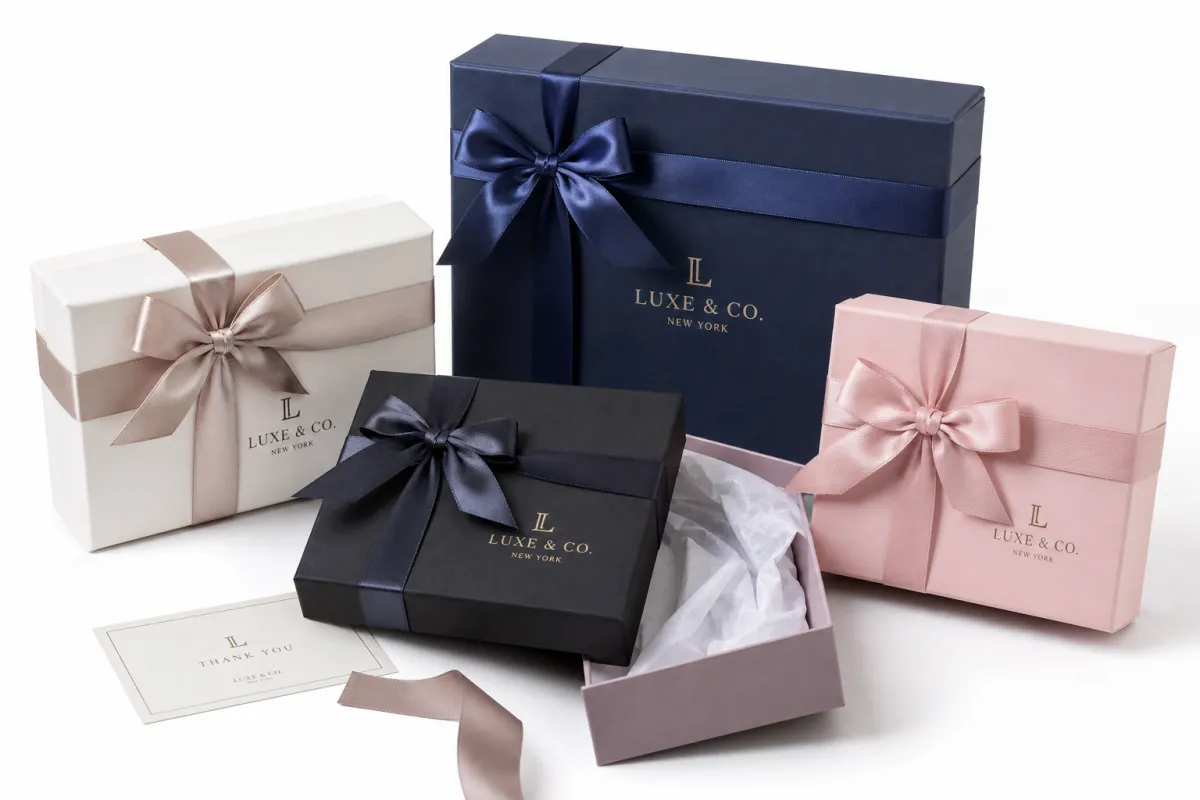
A ribbon changes the emotional read of a package quickly. Even before the product is visible, custom retail gift boxes with ribbon signal care, ceremony, and value, which is exactly why they often outperform plain cartons in perceived quality. A simple box can still protect a product, but a ribbon adds a tactile cue that says the item was meant to be opened, shared, or handed over as a gift.
That extra cue matters on a crowded shelf, and it can matter even more after shipping, when the box arrives looking like the product itself has already been wrapped for the occasion. Custom retail gift boxes with ribbon are especially useful for seasonal gift sets, candle collections, fragrance, small leather goods, apparel accessories, subscription-style gift programs, and holiday promotions where presentation carries real selling power.
Decoration and structure have to stay separate in the mind, even if they are part of the same build. A ribbon does not carry the package by itself. Board thickness, glued corners, lid fit, insert design, and wrap stock do the heavy lifting. When those pieces are tuned together, custom retail gift boxes with ribbon feel premium without becoming fussy. When they are not, the ribbon can highlight every uneven edge and misaligned fold.
Buyers often focus on the ribbon first because it is the most visible detail, yet packaging usually succeeds when the ribbon is only one part of a broader presentation system. If the closure opens awkwardly, the box rattles, or the logo lands in an odd place, the package loses credibility no matter how attractive the tie may be. Strong branded packaging should look intentional from the outside and feel controlled in the hand.
The practical value of custom retail gift boxes with ribbon shows up in a few clear ways:
- They raise perceived value before the product is touched.
- They guide the opening sequence and make the reveal feel more deliberate.
- They support gifting, merchandising, and unboxing content at the same time.
- They protect the product more reliably when the structure and insert are designed as a single unit.
A ribbon should not be a patch on weak packaging. In strong retail packaging, the ribbon is the finishing detail that confirms the box was built with purpose.
For readers comparing options, it helps to think about the role of the box in three layers: visual impression, handling, and protection. Custom retail gift boxes with ribbon need all three, and the order matters. Experienced packaging teams usually start with dimensions, closure style, and product fit before they talk about color or embellishment because the structure has to support the presentation rather than the other way around.
To see broader packaging options alongside ribbon formats, you can also review Custom Packaging Products as a reference point for box styles, inserts, and finishing methods that may work with your program.
How custom retail gift boxes with ribbon are made
The construction process for custom retail gift boxes with ribbon usually begins with the box type. A premium program often uses rigid setup board, while lighter retail lines may use folding carton stock. The choice changes the feel right away. Rigid board gives the box more structure, a cleaner edge, and a more gift-like presence, while folding board is lighter, easier to ship, and often better for higher-volume retail packaging where cost control matters.
Once the structure is chosen, the box is wrapped or printed. Many custom retail gift boxes with ribbon use wrapped paper over rigid board because the wrap hides seams and gives the exterior room for richer decoration. Other programs use printed stock with lamination, soft-touch coating, matte film, or spot gloss. The finish matters because ribbon and surface texture interact visually; a satin ribbon against a glossy box feels different from the same ribbon against a soft-touch surface.
The ribbon itself can be built into the box in several ways. A front-tie design creates a classic presentation and works well for gift-style packaging. Side closure loops can be used on a lid-and-base box so the ribbon helps hold the lid closed. Belly bands with ribbon accents are often used when the product line wants a more modern or modular feel. Some custom retail gift boxes with ribbon use ribbon pulls, which help lift a lid or sleeve in a controlled way without requiring a full wraparound tie.
Die-cutting, gluing, and hand-finishing all influence consistency, and that matters more than many buyers expect. If the slot for a ribbon is slightly off, or the knot lands too far to one side, the whole package can look uneven. On small runs, some variation is normal because hand-tied ribbon and manual assembly are part of the process. On larger runs, the tolerances need to be checked so custom retail gift boxes with ribbon stay aligned from unit to unit.
There is also a photography angle. Ribbon width, edge finish, and weave change how the box appears in marketing images. A narrow ribbon can disappear on a large panel, while a wide ribbon can dominate a small box and crowd the logo. Custom retail gift boxes with ribbon should photograph well under soft light and still look balanced in person, because those two conditions are not always the same.
Manufacturing often includes a sample or mockup stage, then production, then final assembly. If the design includes multiple components, such as an insert, sleeve, and closure ribbon, those parts need to be checked in sequence. That becomes especially important for custom printed boxes used in retail gift programs, where the final appearance depends on how the pieces sit together after assembly.
From experience, the projects that run the cleanest are the ones that treat the sample as a working tool, not a pretty object. Once you close a sample a few times, lift the lid, and check whether the ribbon lays flat or twists on itself, the weak spots show up fast. That little bit of hands-on review saves a lot of backtracking later.
For teams unfamiliar with packaging structures, an industry resource like the Institute of Packaging Professionals can be useful for general packaging terminology and best practices, especially if you are comparing structure, print, and finishing options across multiple product lines.
Choosing materials, ribbon styles, and structure
Material choice comes first because the box has to support the product before any ribbon is added. For custom retail gift boxes with ribbon, rigid setup board is the go-to when the goal is a premium presentation with a solid hand-feel. Folding board works better when the line needs lighter shipping weight, faster packing, or a lower unit cost. Between those extremes are paper wrap choices that affect print sharpness, edge coverage, and durability.
For the outer wrap, coated art paper can reproduce logos and photography cleanly, while textured papers can soften the look and make the box feel more crafted. Soft-touch lamination creates a velvety surface that pairs nicely with satin or grosgrain ribbon, but it can also show marks more easily if the handling environment is rough. That is why custom retail gift boxes with ribbon should be specified according to the end use, not only by appearance.
Ribbon style is just as important. Satin ribbon feels soft, polished, and gift-ready. Grosgrain has a ribbed texture that reads more structured and modern. Organza is light and airy, often used when the presentation should feel delicate or romantic. Woven ribbon can look more tailored and durable, especially on retail programs that want a slightly heritage or craft-forward tone. For custom retail gift boxes with ribbon, the ribbon material should match the brand voice and the handling requirements.
Common ribbon and structure pairings
Not every ribbon works with every box style. A large rigid box with a high-gloss wrap may look best with a wider satin ribbon, because the smooth sheen balances the stronger surface. A smaller folding carton can look cleaner with grosgrain or a narrow woven tie, since the texture adds interest without overpowering the panel. If the box carries a complex print design, a simpler ribbon often protects clarity, which is a basic rule in packaging design that many buyers only learn after a few production runs.
Closure design also matters. A ribbon should support the opening motion rather than fight it. If the closure is too tight, the ribbon frays. If it is too loose, the box opens before the customer expects it to. Good custom retail gift boxes with ribbon use enough tension to feel secure without making the unboxing annoying. That balance is partly structural and partly material-driven, which is why the closure and the insert should be tested together.
Here is a simple comparison of common options for custom retail gift boxes with ribbon:
| Box style | Typical use | Estimated unit range | Strengths |
|---|---|---|---|
| Rigid setup box with satin ribbon | Luxury gifts, beauty sets, accessories | $1.80-$4.50 each at 5,000 units | Premium feel, strong presentation, good for gifting |
| Folding carton with ribbon tie | Retail promotions, lighter products | $0.55-$1.25 each at 5,000 units | Lower weight, faster packing, more cost-efficient |
| Rigid box with ribbon pull and insert | Fragrance, watches, corporate kits | $2.20-$5.75 each at 5,000 units | Controlled reveal, secure fit, polished unboxing |
| Custom sleeve with ribbon band | Seasonal sets, brand launches | $0.75-$2.00 each at 5,000 units | Modern look, easier variation across SKUs |
Those figures are only planning ranges, and they shift with print coverage, board grade, ribbon width, assembly labor, and quantity. Still, they help buyers understand the relationship between material choice and the final unit cost. Custom retail gift boxes with ribbon are usually priced by more than just the box shell; the closure style and finishing steps can change the economics quickly.
Color coordination deserves real attention too. A ribbon should not fight the logo or the surface finish. If the printed panel already carries strong graphics, a quieter ribbon can keep the composition clean. If the box is minimal, the ribbon can carry more of the visual identity. That is what package branding is about: making the material choices feel like part of the same story instead of separate decisions.
For sustainability-focused programs, buyers often ask whether FSC-certified board or recycled content paper is possible. In many cases, yes, depending on the design, ink coverage, and required finish. A ribbon can still be used in a more responsible packaging program, but it helps to check material sources early and confirm what certification claims are actually available. If that is a priority, the FSC site is a good reference for certification basics and claim language.
One thing I have seen repeatedly is that the prettiest material spec on paper is not always the smartest one on press. A surface that looks gorgeous in a sample room can pick up scuffs fast in fulfillment, and a ribbon that feels elegant in a hand-tied mockup can be a pain to repeat at scale. That is why the end use matters so much.
Cost factors and pricing for custom retail gift boxes with ribbon
Pricing for custom retail gift boxes with ribbon becomes easier to read once the project is broken into pieces. The main cost drivers are box construction, board thickness, ribbon type, print coverage, specialty finishes, assembly labor, and quantity ordered. A simple printed carton with a narrow ribbon pull costs very differently from a rigid box with foil stamping, a custom insert, and hand-tied closure details.
Board thickness is one of the first variables to look at. Heavier board costs more, but it also improves rigidity, stackability, and the tactile impression in the hand. If the box must protect a fragile item or support a premium image, that extra material is usually justified. If the product is light and the box is used mainly for display, a lighter structure may make better economic sense. That tradeoff is common in retail packaging, and it is why custom retail gift boxes with ribbon should be costed against the product margin, not in isolation.
Print coverage has a similar effect. A simple one-color logo on an understated wrap is much less expensive than full-bleed graphics with multiple passes of ink, foil, or embossing. Specialty finishes add visual weight and can improve shelf appeal, but they raise the price because they require extra setup, slower throughput, or more quality checks. For custom retail gift boxes with ribbon, the finish stack often matters as much as the ribbon itself.
Quantity is another major factor. Setup costs are spread across more units as volume increases, so the per-box price usually drops when the order gets larger. Smaller runs can still make sense, especially for seasonal launches or test programs, but the hand-finishing component can make the unit cost noticeably higher. Buyers sometimes focus on the base box price and overlook the ribbon assembly labor, which can be significant if each unit needs a tied closure or insert alignment.
The price structure for custom retail gift boxes with ribbon usually breaks down into a few practical buckets:
- Shell cost: board, wrap stock, print, and structural components.
- Ribbon cost: material type, width, finish, and cut length.
- Labor cost: gluing, wrapping, inserting, tying, and quality checks.
- Finishing cost: foil, embossing, lamination, spot coating, or specialty texture.
- Logistics cost: pack-out, cartonization, and freight based on size and weight.
On many projects, the real question is not "How cheap can the box be?" It is "What is the lowest-cost design that still protects the product and supports the brand?" That is the more useful framing for custom retail gift boxes with ribbon, especially for retail items where perceived value affects conversion and repeat purchase.
Custom inserts can increase cost, but they can also reduce loss. A well-designed insert keeps the product stable, protects delicate corners, and makes the unboxing look deliberate. That is worth money. Loose items inside a beautiful box feel unfinished, and damaged goods are far more expensive than a cleaner structural choice. In other words, product packaging should be measured by more than the quote sheet.
If you want a simple outside reference for packaging and testing language, ISTA provides useful information around transit conditions and distribution testing at ISTA. That matters for custom retail gift boxes with ribbon because a beautiful box still has to survive handling, shipping, and storage.
When buyers compare quotes, I suggest looking at three numbers together: unit price, pack-out labor, and damage risk. A slightly more expensive box can be the better value if it closes cleanly, fits the product properly, and reduces the chance of remakes or returns. That is often the real financial logic behind custom retail gift boxes with ribbon.
Step-by-step timeline from concept to delivery
The timeline for custom retail gift boxes with ribbon usually begins with a brief. The best briefs include product dimensions, weight, whether the item is fragile, the target retail price, the desired presentation style, and whether the box will ship flat or assembled. If those basics are missing, every later decision gets slower because the packaging team has to infer structure before they can recommend materials.
Next comes structural direction. This is where the box type, insert style, ribbon method, and finish options get narrowed down. A luxury skincare set may call for a rigid lid-and-base box with a ribbon pull and paperboard insert, while a lower-cost seasonal retail item may work better with a folding carton and belly band ribbon. Custom retail gift boxes with ribbon work best when the structure is settled before artwork is finalized.
After that, artwork prep begins. Print files should be supplied in the correct format, with bleeds, safe zones, and color references. If the ribbon is a key visual component, its placement should be shown clearly in the dieline or mockup. That keeps avoidable revisions off the table later. In many projects, the biggest delays happen here, not in manufacturing, because artwork files are not print-ready or because the team keeps changing the ribbon layout after the structure was already approved.
Then comes sampling or mockup work. A sample helps verify fit, closure tension, logo placement, and the way custom retail gift boxes with ribbon actually close in the hand. This is the stage where small problems become visible: a ribbon that twists, a lid that sits proud, or a product that slides too freely inside the insert. Catching those issues early saves time and cost later.
Another small but real benefit of the sample stage is that it gives sales, operations, and marketing the same physical reference. People tend to argue less once the box is in front of them. Funny how that works, but it does.
Typical production sequence
Most programs follow a sequence like this:
- Project brief and product measurements
- Structural recommendation and quote
- Artwork setup and dieline review
- Mockup or sample approval
- Production and finishing
- Assembly, ribbon application, and quality inspection
- Carton pack-out and shipment
Lead time depends on design complexity. Simple custom retail gift boxes with ribbon can move relatively quickly if artwork is final and the structure is already known. More complex builds with custom inserts, multiple components, embossing, or specialty ribbon attachment methods take longer because each additional step introduces another point of inspection. A realistic planning window often includes room for one sample revision, especially if the box is being used for a launch or holiday program.
One useful habit is to freeze the ribbon method early. Whether you are using front ties, pulls, side loops, or band accents, the closure style affects the board layout and assembly sequence. If the ribbon changes late, the whole production flow may need to be adjusted. That is why well-managed custom retail gift boxes with ribbon programs usually lock the closure decision before the artwork is fully finalized.
When timing matters, be honest about it. If the project needs a short runway, simplify the structure, limit the number of finishing effects, and keep the ribbon style straightforward. That does not mean settling for less attractive packaging. It means focusing the budget and schedule on the elements that matter most. For many retail packaging programs, that is the smartest path.
Common mistakes that weaken the final result
The most common mistake with custom retail gift boxes with ribbon is choosing the ribbon before the structure is finalized. That sounds small, but it causes real issues. If the board thickness changes later, the ribbon length, tie location, and closure tension may no longer work. A clean-looking box depends on the full system, not just the ribbon sample.
Another mistake is overdecorating a small box. Too many finishes, an oversized ribbon, heavy graphics, and multiple decorative layers can make the package feel crowded instead of premium. Good packaging design knows when to stop. A restrained composition often looks more expensive because the details have room to breathe. With custom retail gift boxes with ribbon, the goal is polish, not clutter.
Fit testing is non-negotiable. A beautiful box that lets the product rattle or tip over does not feel finished. It feels risky. That is especially true for cosmetics, glass items, watches, candles, and other retail goods that benefit from snug support. The insert and closure should be tested with the actual product, not a placeholder. The box should close easily, open predictably, and present the item in the same position every time.
Production realities also get ignored more often than they should. Ribbon color can shift under different lighting. Satin can reflect more strongly than expected. Hand-tied ribbon can vary a little from unit to unit. Even the same printed stock can look different after lamination or coating. None of that means the project is wrong, but it does mean custom retail gift boxes with ribbon should be approved from a production sample, not only from a screen mockup.
There is also a budget mistake I see a lot: buyers spend on the visible exterior and leave too little for the inside. If the insert is weak, the product moves. If the closure is awkward, the customer notices. If the lid does not sit square, the whole presentation loses confidence. Strong retail packaging should feel complete from the first touch to the final reveal.
The errors that most often weaken custom retail gift boxes with ribbon are easy to spot once you have seen a few projects go sideways:
- Finalizing ribbon before the box dimensions are locked.
- Skipping insert and product fit tests.
- Using too many finishes on a small box.
- Ignoring ribbon availability or color matching tolerances.
- Approving artwork without checking the actual closure layout.
If you are comparing suppliers or internal options, ask for a sample that shows the full closure and opening sequence. Not just the exterior. Not just the print. The full sequence. That is the only way to know whether custom retail gift boxes with ribbon will feel polished in the hand and on the shelf.
Expert tips for better custom retail gift boxes with ribbon
My first recommendation is to design the reveal on purpose. The best custom retail gift boxes with ribbon do not simply open; they unfold in a way that guides the eye. The ribbon, lid lift, inner layer, and product placement should create a natural path from exterior to interior. That is what turns a package into an experience rather than a container.
Pick one or two hero elements and let them carry the design. Maybe it is a deep matte box with a narrow satin tie and a blind-embossed logo. Maybe it is a textured wrap with a bold foil mark and a cleaner ribbon pull. Either way, avoid stacking every possible embellishment onto one package. The more competing details you add, the harder it becomes to manufacture custom retail gift boxes with ribbon consistently.
Proof color under real light. Screen color is not enough. Ribbon sheen, paper texture, and coating finish all change the way the package reads in person. I would rather see a slightly quieter design in a real sample than a flashy mockup that falls apart under retail lighting. That kind of practical check is especially useful for branded packaging where color identity matters.
Keep the product dimensions close at hand during every decision. A box that is 2 mm too loose can feel sloppy. One that is 2 mm too tight can crush the insert or distort the ribbon closure. With custom retail gift boxes with ribbon, small dimension changes can ripple through the whole assembly process. That is why measurements, tolerances, and sample checks matter so much.
Approve the sample before production and treat it as the reference standard. That sample should confirm the ribbon method, closure tension, print placement, finish feel, and insert fit. If a supplier can also show you a mock-up of the full pack-out sequence, even better. It gives the whole team a shared target and reduces the chance of surprises later.
A practical checklist helps buyers keep custom retail gift boxes with ribbon on track before release:
- Confirm final product dimensions and weight.
- Choose the box structure and closure method first.
- Match ribbon material and width to the box size.
- Review print and finish on a real sample.
- Test insert fit and opening sequence with the actual product.
- Verify quantity, lead time, and assembly expectations before release.
For buyers building a larger retail line, it can also help to think of custom retail gift boxes with ribbon as part of a broader packaging system. That means the same brand logic should carry through shipping cartons, display packaging, inserts, and protective materials. The box with ribbon is the moment of delight, but it works best when the supporting packaging is just as well planned.
When the goal is to increase perceived value without losing control of cost, the smartest path is usually a clear structure, one strong visual idea, and a ribbon choice that fits the product, the brand, and the assembly budget. That approach keeps custom retail gift boxes with ribbon elegant, manufacturable, and easier to scale across different SKUs or seasonal runs.
If you are ready to spec a project, start with the product dimensions, desired presentation style, and target order quantity, then request a mockup and lock the ribbon method before production. That sequence keeps the package honest and helps custom retail gift boxes with ribbon land the way they should: polished, secure, and worth opening.
One last practical note: if the box is meant to do real retail work, build it for the worst handling it will face, not the best. That means checking the closure after repeated opens, testing whether the ribbon holds its shape, and making sure the insert still supports the product after transit. Get those basics right, and the packaging will feel intentional every time someone opens it.
What makes custom retail gift boxes with ribbon better than standard gift boxes?
They create a stronger first impression because the ribbon adds a tactile, gift-ready cue before the box is opened. They can also improve product protection and presentation when the structure and insert are designed together. For retail items where perceived value matters, custom retail gift boxes with ribbon are often a better fit than a plain carton.
How do I choose the right ribbon for custom retail gift boxes with ribbon?
Match the ribbon material to the brand tone and handling needs. Satin gives a soft premium look, while grosgrain feels more structured. Check ribbon width against the box size so it looks balanced, and review color against a physical sample because sheen and texture can shift the appearance under real light.
What affects the cost of custom retail gift boxes with ribbon the most?
The biggest cost drivers are box construction, ribbon type, print coverage, specialty finishes, and whether the order needs hand assembly. Quantity matters too because setup costs are spread across more units in larger runs. Custom inserts and complex closures can raise labor, material, and approval time for custom retail gift boxes with ribbon.
How long does it take to produce custom retail gift boxes with ribbon?
Timing depends on artwork readiness, sampling needs, and the complexity of the structure and ribbon attachment method. Simple designs move faster, while custom inserts, specialty finishes, and multi-piece builds usually take longer. A clear brief and prompt approvals help keep the schedule on track for custom retail gift boxes with ribbon.
What mistakes should I avoid when ordering custom retail gift boxes with ribbon?
Do not finalize the ribbon before the box dimensions and closure style are confirmed. Do not skip fit testing, because a beautiful box still fails if the product moves or arrives damaged. Do not overload a small package with too many finishes, since the result can feel crowded rather than polished.
Related packaging resources
Use these related guides to compare specs, costs, quality checks, and buyer decisions before making the final call.

