Buyer Fit Snapshot
| Best fit | Custom Shipping Labels with Logo projects where brand print, material claims, artwork control, MOQ, and repeat-order consistency need to be specified before quoting. |
|---|---|
| Quote inputs | Share finished size, material target, print colors, finish, packing count, annual reorder estimate, ship-to region, and any compliance wording. |
| Proofing check | Approve dieline scale, logo placement, barcode or warning zones, color tolerance, closure strength, and carton packing before bulk production. |
| Main risk | Vague material claims, crowded artwork, missing packing details, or unclear freight terms can make a low unit price expensive after revisions. |
Fast answer: Custom Shipping Labels with Logo: Material, Adhesive, Artwork, and MOQ should be specified like a repeatable production item. The safest quote records material, print method, finish, artwork proof, packing count, and reorder notes in one written spec.
Production checks before approval
Compare the actual filled-product size with the drawing, then confirm tolerance on folds, seals, hang holes, label areas, and retail display edges. Reserve space for logos, QR codes, warning copy, and material claims before decorative graphics fill the panel.
Quote comparison points
Review material grade, print process, finish, sampling route, tooling charges, carton quantity, and freight assumptions side by side. A quote is only useful when the supplier can repeat the same color, closure quality, and packing count on the next order.
Custom Shipping Labels With Logo: Design, Cost, and Tips
Custom Shipping Labels with logo do a lot more work than most teams give them credit for. A carton may be sturdy, a mailer may have a nice print finish, and the tape may carry a little visual personality, but the label is the piece that stays visible through fulfillment, carrier sorting, dock handling, porch delivery, and sometimes the return trip too. From a packaging buyer’s point of view, that makes custom shipping labels with logo a high-frequency branding asset, not just a utility item tucked into the corner of order fulfillment.
I like to think about custom shipping labels with logo as part of the broader packaging system, right alongside branded packaging, packaging design, and the first physical impression a customer gets when the parcel lands on the doorstep. A good label has to scan cleanly, stick under real shipping conditions, and keep the logo readable after abrasion, humidity, and a few rough handoffs. It also has to fit the economics of ecommerce shipping, because every packed order carries that cost whether the label looks like an afterthought or a deliberate piece of package branding.
For brands that use Custom Shipping Boxes, Custom Poly Mailers, or broader Custom Packaging Products, the label should feel like part of the same visual system. The rest of this guide walks through how custom shipping labels with logo are made, what affects durability, what drives price, and how to choose a spec That Actually Works on the packing line.
Custom Shipping Labels With Logo: The Small Detail Customers Notice First
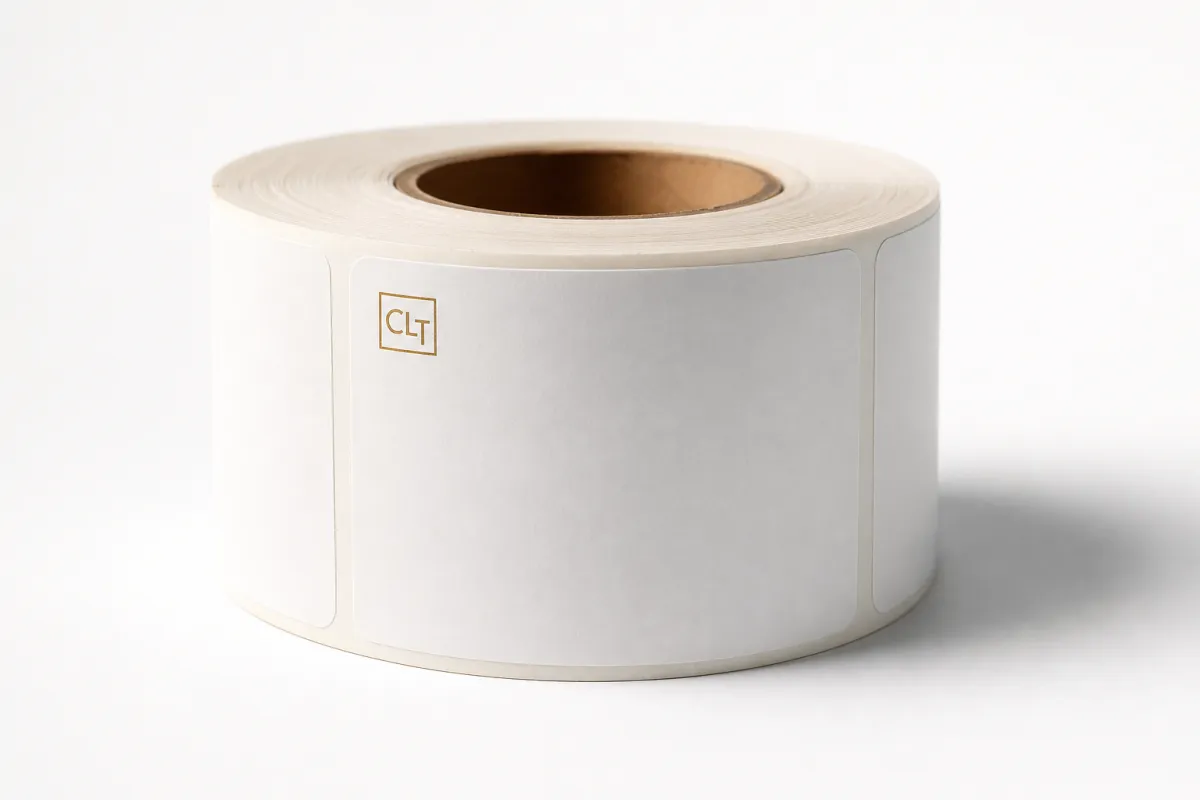
Custom shipping labels with logo are often seen more consistently than the box itself. Boxes get stacked, tucked into shipping bags, covered by tape, or placed inside another carton, but the shipping label stays exposed. It moves through sorters, docks, porches, vans, and return routes, which means custom shipping labels with logo can become the most repeated brand touchpoint in the entire shipping journey.
That repetition matters because recognition builds through repeated exposure. A customer may not study the packaging, but they will notice a logo that feels intentional and familiar. In practice, custom shipping labels with logo work a bit like a small billboard for the brand, especially in ecommerce shipping where the parcel may be the only physical contact a customer has with the company. If the label looks clean, aligned, and consistent, it suggests that the operation is organized. If it looks muddy, crooked, or inconsistent, the brand can feel less dependable before the box is even opened.
Teams often underestimate the psychology here. Custom shipping labels with logo are not only about decoration; they are part of trust-building. A crisp label can reinforce that the order was packed by a process, not by luck. I’ve seen more than one reprint happen because the logo was technically “fine,” but the label looked rushed once it was on the carton. That kind of small miss adds up fast. It is kinda the difference between looking assembled and looking intentional.
In plain language, a custom label is simply a shipping label that carries a logo, mark, or branded design element alongside the carrier data, address block, and barcode. The best versions balance three jobs at once: they identify the parcel, they support the brand, and they survive handling. If any one of those jobs is weak, the label becomes a compromise instead of a tool.
For a buyer planning custom shipping labels with logo, the real question is not whether branding belongs on the label. It is how much brand presence the workflow can support without hurting scan reliability or slowing order fulfillment. That answer changes with carton size, packout speed, shipping volume, and how much room you have on the face of the package.
Custom Shipping Labels With Logo: Process and Timeline From Proof to Delivery
The production path for custom shipping labels with logo is straightforward, though a few checkpoints deserve attention. It usually starts with artwork review, then proofing, then printing or digital setup, followed by conversion into rolls or sheets, slitting, inspection, and final packing. If the order is a repeat run, much of that work is already locked in. If the design is new, each step needs more attention, and that adds time.
Proofing is where a lot of problems get caught early, and it is the cheapest place to catch them. A proof should confirm logo placement, barcode clear zones, address block spacing, bleed, trim, and the overall contrast of the artwork. On custom shipping labels with logo, the barcode always comes first from a functional standpoint, because if the code does not scan, nothing else matters. A logo can be attractive and still fail if it crowds the quiet zone or creates low contrast where the scanner expects clean edges.
Ask for a proof that shows the label at actual size, not only on a large screen mockup. A design can look balanced at 400 percent zoom and still feel cramped once it is printed at 4 x 6 inches. That is especially true for custom shipping labels with logo that need to fit small cartons or mailers, where every tenth of an inch matters. One rule I keep coming back to: if the artwork feels a little roomy on screen, it usually feels right on the label.
After approval, the physical production steps depend on the print method. Digital printing skips some setup, which is why it is often faster for short runs and variable artwork. Flexographic or similar production methods may involve plate-making and more setup, but they can be efficient on larger orders. Then the material is coated or printed, slit to width, rewound into rolls, or sheeted, and boxed for shipment. On custom shipping labels with logo, roll direction and core size matter more than many first-time buyers expect, especially if a label applicator is involved.
A realistic timeline usually looks like this: simple repeat orders may move in about 5 to 10 business days after proof approval, while new artwork, custom sizes, or specialty adhesives can push that to 10 to 15 business days or more. If the order needs testing, revisions, or nonstandard finishing, add buffer time. Custom shipping labels with logo are not usually delayed by one giant problem; more often, they slow down because several small approvals stack on top of each other.
Sample rolls or a short pilot run are worth the effort if your fulfillment volume shifts by season or if your packout includes multiple carton sizes. A 500-piece or 1,000-piece test run can reveal whether the adhesive grabs fast enough, whether the finish holds up to scuffing, and whether the label plays well with scanners and applicators. For custom shipping labels with logo, that pilot can save you from a much larger reprint later.
“The proof is where the label starts being real. If the logo, barcode, and packing flow are right on the proof, the full run usually behaves the way you expect.”
If you are coordinating a broader packaging rollout, keep the label project connected to the rest of the system. A branded shipper with Custom Labels & Tags can keep the logo language consistent across inner packs, outer cartons, and return stickers, which makes the whole experience feel more organized.
Materials, Adhesives, and Artwork Choices That Make Labels Hold Up
Material choice shapes everything about custom shipping labels with logo, from print quality to durability to price. The common facestocks are paper, thermal, and synthetic films such as polypropylene or polyester. Paper is usually the most economical option and works well for dry, controlled shipping lanes. Thermal direct is simple and fast for high-volume operations, though it can fade over time and under heat or abrasion. Synthetic materials cost more, but they bring stronger moisture resistance and better scuff performance for harsher logistics environments.
Adhesive behavior matters just as much. A permanent adhesive is the default for most shipping applications because it is designed to stay put through transit. Removable adhesives exist, but they are usually chosen for temporary identification or secondary packing tasks rather than standard parcel shipping. If the labels will face dust, recycled carton fibers, condensation, or rough handling, custom shipping labels with logo need an adhesive that grabs quickly and stays bonded. Freezer-grade adhesives are worth considering if the packout enters cold storage or sees condensation after chilled storage.
Artwork needs to be designed for label scale, not just for a large brand sheet. Logos that look elegant on a website banner can become muddy on a 2 x 3 label if the lines are too fine or the contrast is too soft. Keep line thickness generous, avoid tiny taglines, and leave enough quiet space around the logo so the entire mark breathes. Custom shipping labels with logo should feel intentional, not crowded.
Finish affects how the logo reads under warehouse lighting and how much the surface resists scuffing. Matte finishes reduce glare, which can make custom shipping labels with logo easier to read on bright packing benches or under strip lighting. Semi-gloss and gloss finishes can make colors feel richer, but they can also show fingerprinting and reflected light more easily. If a label has to survive heavy hand contact, a slightly tougher face stock or finish may be the better tradeoff, even if it costs a little more per thousand.
For teams that want sustainable sourcing, paper labels can sometimes be specified with recycled content or FSC-certified paper. That does not make the label waterproof, and it does not solve adhesive problems, but it can support a broader sourcing policy. The Forest Stewardship Council explains its certification standards clearly at fsc.org, and it is a useful reference if your packaging buyer wants documentation that lines up with brand commitments.
It also helps to think of substrate, adhesive, finish, and print method as one system rather than separate shopping choices. A strong logo on the wrong face stock still fails in transit. Likewise, a durable synthetic label with weak artwork contrast can still look cheap or scan badly. That is why custom shipping labels with logo are best specified as a full package, not as a single line item.
Custom Shipping Labels With Logo Cost, Pricing, and MOQ Drivers
Pricing for custom shipping labels with logo is shaped by a handful of predictable levers: label size, material, adhesive, print method, color count, roll orientation, and whether the order uses a stock format or a custom build. If two quotes look far apart, they usually are not quoting the same thing. One may be using a lighter paper face stock, a different core size, or a simpler print setup. Comparing like for like matters more than chasing the lowest number on the page.
MOQ, or minimum order quantity, has a real effect on unit price. Smaller runs carry more setup expense per label, so the unit cost is higher. Larger runs spread those fixed costs across more pieces, which is why custom shipping labels with logo often become noticeably cheaper after the first production threshold. For many buyers, the sweet spot is not the absolute largest order possible; it is the quantity that balances storage space, cash flow, and reorder frequency.
There is also a hidden cost to under-specifying the label. If the adhesive is wrong, the packers may waste time pressing and re-pressing labels. If the finish is too glossy, scanners may need more than one pass under bright lights. If the artwork is crowded, you may pay for reprints or spend labor correcting issues by hand. Custom shipping labels with logo should be measured against the full packing system, not just the invoice line for the roll itself.
Below is a practical comparison that gives a rough budgeting frame. These are not universal prices, because region, print method, and artwork complexity all matter, but they are useful for planning. The numbers are directional, not a promise, and that distinction matters when procurement is building a budget.
| Label Option | Best Fit | Typical Unit Cost at 5,000 Units | What You Get | Watch-Out |
|---|---|---|---|---|
| Paper facestock, permanent adhesive | Standard carton shipping, dry storage, branded ecommerce orders | $0.05 - $0.12 | Good print clarity, lower material cost, easy to spec for common workflows | Less resistant to moisture and scuffing than synthetic options |
| Thermal direct label with logo area | High-volume order fulfillment with fast labeling needs | $0.07 - $0.16 | Simple setup, fast printing, clean black data fields | Print can fade over time, especially with heat, light, or friction |
| Synthetic film with permanent adhesive | Moisture, abrasion, rough transit, extended shelf life | $0.11 - $0.24 | Better durability, sharper appearance under stress, stronger transit performance | Higher cost and slightly less forgiving if the artwork is poorly scaled |
| Freezer-grade or specialty adhesive build | Cold-chain packs, condensation, seasonal temperature swings | $0.13 - $0.28 | Improved bond under challenging conditions | Needs real-world testing before scaling |
For a 4 x 6 shipping label with a simple one-color logo and black carrier data, many buyers will see rough pricing anywhere from the high cents into the low teens per unit at moderate volumes, with lower pricing appearing as quantity rises. By contrast, short digital runs can land much higher on a per-label basis. Custom shipping labels with logo become far more economical once artwork, roll width, and adhesive spec are standardized.
One useful budgeting habit is to compare quotes using a spec sheet, not a verbal description. List the exact size, facestock, adhesive, roll core, label orientation, print colors, and whether the order is roll or sheet. That way, you can judge the true value of the quote instead of getting caught by hidden differences. In packaging procurement, clarity usually saves more money than negotiation does.
For brands that need their labeling to align with broader packaging design, it can help to review the label alongside the carton and mailer program. A unified setup across Custom Poly Mailers, shipping boxes, and inner wraps keeps brand presentation more consistent while still allowing the label to do its job in the shipping lane. That is often cheaper than trying to force a single label spec to solve every packaging problem on its own.
Step-by-Step Guide: Choosing the Right Spec for Your Workflow
The smartest way to choose custom shipping labels with logo is to start with the package, not the logo. What kind of surface are you labeling: corrugated cartons, poly mailers, pouches, or cold-storage packs? A matte corrugated carton accepts a label differently than a slick film mailer. The surface, shipping route, and handling pattern tell you more about the spec than a generic product description ever will.
Next, decide how prominent the brand should be. Some teams want subtle logo presence that keeps the shipping label mostly functional. Others want the label to become a visible extension of package branding. Neither choice is wrong. The right answer depends on how much visual emphasis the brand wants to place on the parcel itself and how much room the label has to speak before it interferes with scan zones or address readability.
Build a spec sheet that includes dimensions, material, adhesive, core size, roll direction, and the way the label will be applied. Hand-applied labels can tolerate a different orientation than machine-applied labels. Applicator speed, peel angle, and liner stiffness all matter. If a label is fed through equipment, custom shipping labels with logo should be tested for curling, roll tightness, and liner release before the full order runs.
Then request a proof and use it in a real packing environment. Put it on the actual carton or mailer, not just on a flat sample board. Watch the label under warehouse lights, check whether the barcode scans on the first pass, and see whether the logo remains clean after the box is brushed, stacked, or taped. For custom shipping labels with logo, the real test is not how the design looks in a file. It is how the label behaves after it leaves the bench.
Here is a simple test matrix that I like for first-time rollouts:
- One compact size and one standard size, so you can compare branding density without overbuying.
- Two adhesive options if your cartons are dusty, recycled, cold, or exposed to humidity.
- One matte and one semi-gloss finish if the logo has fine lines or needs stronger visual pop.
- A short pilot run on live orders before locking the full production quantity.
That kind of test rarely takes long, but it teaches you a lot. Custom shipping labels with logo that work on a sample bench can still underperform in a busy packing room if the label peels too slowly or reflects too much light. A pilot run lets you catch those mismatches before they become routine problems across order fulfillment.
From there, standardize the final spec and document it. Save the approved proof, the adhesive choice, the roll direction, and any notes about how the label performed on actual shipments. Repeat orders go faster when everyone is working from the same information, and custom shipping labels with logo stay consistent across seasons, staff changes, and volume spikes.
Common Mistakes That Cause Reprints, Delays, and Weak Branding
One of the most common mistakes is artwork that ignores the reality of label scale. A logo that looks sharp in a presentation file can become fuzzy if the source art is too low-resolution or if the lines are too thin for the chosen print method. Another frequent issue is poor contrast. Light gray text on a pale background may look refined on screen, but it can disappear under warehouse lighting. Custom shipping labels with logo need strength first, style second.
Another trap is using the wrong adhesive for the shipping surface. Dusty recycled cartons, chilled packs, frozen goods, and humid environments all behave differently. A label that holds perfectly on a dry carton may slip or lift on a condensation-prone mailer. Too often, the team assumes the printer made a mistake when the real issue is that the spec never matched the environment. Custom shipping labels with logo are only as reliable as the surface they are expected to stick to.
Planning mistakes matter too. Skipping a proof, underestimating usage, or ordering the wrong roll orientation can create delays that have nothing to do with print quality. If the applicator expects a certain unwind direction and the order arrives wound differently, the entire roll may be awkward or unusable in automation. That is a classic order fulfillment issue, not a branding issue, but it still ends up costing time and money.
Inconsistent specs across departments create a different kind of waste. One team orders a 4 x 6 label, another asks for a 3 x 2 version, and a third wants a gloss finish because it looks nicer in photos. The result is confusion, duplicate approvals, and a stack of nearly compatible labels that do not quite match. Custom shipping labels with logo work best when one approved spec governs the whole workflow.
If you want a broader packaging view, it helps to compare the label program with your other materials, from corrugated shipping boxes to inserts and outer wraps. The same discipline that keeps custom printed boxes on brand should also keep labels on spec. Clear ownership, a single proof file, and a short approval trail prevent most reprints before they start.
For teams that want to stay close to industry practice, it is worth checking transport and packaging references from groups like the ISTA testing community. Their methods are a useful reminder that vibration, drop events, compression, and environmental exposure are not theoretical problems; they are the everyday reality that packaging needs to survive.
Expert Tips and Next Steps for a Smarter Label Rollout
If I had to narrow the process down to one piece of advice, it would be this: start small and test like a buyer who has to live with the result. Choose one or two label sizes, one or two adhesive choices, and one or two finishes. That gives you enough variation to compare performance without buying a mountain of inventory that may not fit the workflow. Custom shipping labels with logo reward disciplined testing more than impulse buying.
Align the label design with the carton or mailer palette so the whole parcel feels intentional. If the outer pack is muted, a bright logo panel can carry the identity. If the package is already bold, the label may need to be calmer so it does not fight the rest of the surface. Good packaging design is not always loud. Sometimes it is just clear, balanced, and easy to trust. Custom shipping labels with logo should support that balance.
Document the final spec in a place that every relevant team can find. Include the approved artwork, the exact dimensions, the substrate, the adhesive, and notes from the pilot run. Add anything unusual, like printer settings, roll core size, or scan issues on dark cartons. That record keeps repeat orders stable and reduces the chance that someone “improves” the label later without understanding the consequences. In my experience, that kind of paperwork prevents more rework than a last-minute phone call ever does.
Do not stop at the packing bench. Review what the label looks like after delivery, after stacking, and after the parcel has been handled by the carrier. Scuffs, moisture, and compression will tell you which custom shipping labels with logo are doing real work and which are only looking good for the first thirty seconds. Packaging buyers who track post-delivery condition usually make better decisions on the next run.
If you are building a broader packaging program, consider how the label fits with Custom Shipping Boxes, mailers, and inserts so the whole order feels coordinated rather than assembled from unrelated parts. That is one of the simplest ways to improve package branding without complicating the packing floor.
For teams that want a cleaner rollout, the next step is straightforward: choose the spec, request a proof, test custom shipping labels with logo on real shipments, and lock in the settings that perform best. Once that system is set, the label stops being a guessing game and starts behaving like a dependable part of the shipping operation.
Are custom shipping labels with logo better than using plain shipping labels?
Yes, if brand recognition matters at all. Custom shipping labels with logo turn a routine parcel into a visible brand touchpoint, which can make the order feel more intentional and more polished. Plain labels can still be the right choice for pure utility, but branded labels add perceived care without changing the shipping function. The best option depends on whether your priority is speed, presentation, or a balanced mix of both.
What size should custom shipping labels with logo be for ecommerce cartons?
The right size depends on how much you need to fit on the face of the label. You need space for the barcode, address block, logo, and any compliance text without crowding the layout. Small cartons often need a compact format, while larger parcels can carry a bigger branded area without hurting scan readability. A proof on the actual carton is the safest way to confirm the size before a full run of custom shipping labels with logo.
Do matte or gloss custom shipping labels with logo hold up better in transit?
Matte usually reduces glare and can look cleaner on branded packaging, while gloss can bring more visual punch and surface resistance. The better choice depends on handling, humidity, and whether the label will face scuffing during shipping. If durability is the main goal, test the finish on the actual shipping surface instead of choosing based on appearance alone. Custom shipping labels with logo can perform very differently once they meet real warehouse light and real carrier handling.
How long does it take to produce custom shipping labels with logo?
Simple repeat orders are usually faster because the artwork and setup already exist. New artwork, custom sizing, specialty adhesives, or proof revisions can extend the timeline. A practical planning window is often 5 to 10 business days for simpler repeat runs and 10 to 15 business days or more for new or more complex jobs. Build in enough time for proof review, sample testing, and production so the first shipment is not rushed.
How can I reduce the cost of custom shipping labels with logo without lowering quality?
Standardize the size and material so repeat orders are easier to compare and produce. Order in quantities that lower unit cost if your usage rate and storage space support it. Most importantly, avoid costly reprints by approving proofs carefully and testing the label on real packaging before you scale up. Custom shipping labels with logo are usually cheapest over time when the spec stays stable and the workflow stays consistent.
What should I document before reordering custom shipping labels with logo?
Keep the approved artwork file, exact dimensions, adhesive type, facestock, finish, roll core size, unwind direction, and any notes from the pilot run. If a particular carton surface, temperature range, or scanner setup caused issues, write that down too. Reorders go smoother when the next buyer does not have to guess at the original setup. That little bit of discipline saves a lot of back-and-forth later.
Takeaway: Treat custom shipping labels with logo like a production spec, not a branding afterthought: match the label to the package surface, proof it at actual size, test it in real shipping conditions, and lock the final setup Before You Order at scale. That approach gives you cleaner branding, fewer reprints, and a label that actually holds up once it leaves the packing table.

