Custom Small Retail Paper Bags Bulk Order: What Buyers Should Know First
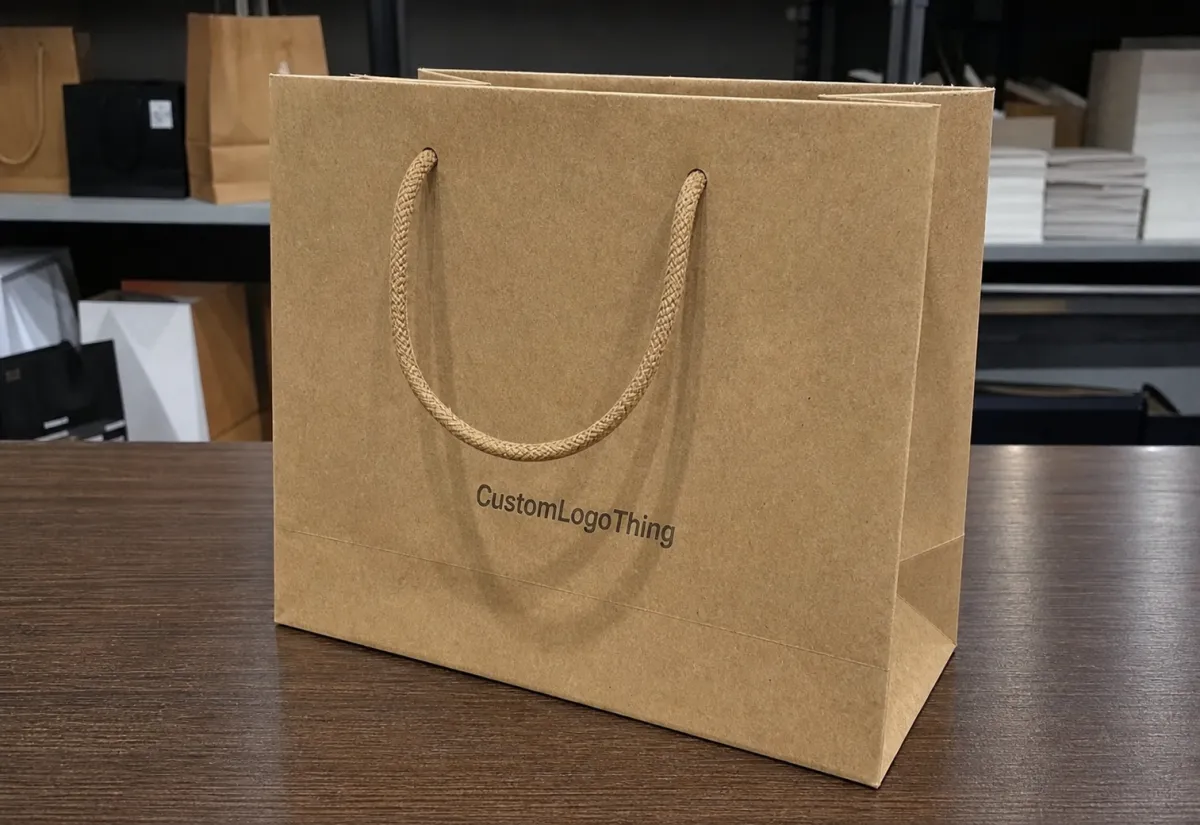
A custom small retail paper Bags Bulk Order sounds like an easy packaging purchase. Pick a size, add a logo, approve the proof, done. Nice idea. Real orders usually have more moving parts, and ignoring them is how buyers end up with bags that look fine in a mockup but feel flimsy at the counter.
Small paper bags do a surprising amount of work. They carry the product, protect the handoff, sit on counters, appear in customer photos, and often get reused for receipts, gifts, or small extras. The bag may be a minor line on a packaging budget, but it is not minor in the customer’s hand.
The first decision is not decoration. It is fit. What goes inside the bag? How heavy is it? Is the item boxed, wrapped, rigid, oily, fragile, or oddly shaped? Will the customer carry it through a mall, across a parking lot, or two steps from a market table to a tote? Those answers decide the bag size, paper weight, handle style, and finish faster than any mood board ever will.
Small Retail Paper Bags are used across boutiques, bakeries, cosmetics counters, jewelry stores, gift shops, pop-ups, trade events, salons, and specialty food brands. The uses are different, so the specs should be different too. A candle box does not behave like a silk scarf. A jar of scrub does not behave like a greeting card. Shocking, I know.
A good bag should feel deliberate. Not overbuilt. Not cheap. Just right for the product and the price point. For low-ticket goods, that may mean a simple kraft bag with a clean one-color print. For a premium gift set, it may mean heavier white kraft, reinforced construction, ribbon handles, and a restrained foil detail. Both can be right. The mistake is pretending one bag spec fits every retail situation.
A small paper bag should feel like part of the purchase, not an apology at the register.
Before requesting quotes, gather the basics: product dimensions, product weight, expected quantity, preferred bag size, paper type, handle style, print colors, finish, shipping destination, and required in-hand date. That list is not busywork. It keeps the quote clean and stops the usual back-and-forth that burns days for no good reason.
Custom Logo Things supports buyers comparing Wholesale Programs and broader Custom Packaging Products, but the same rule applies with any supplier: clear specs produce better pricing. Vague requests produce padded estimates, assumptions, and revisions. Nobody enjoys those.
Paper, Handles, Printing, and Finishes That Fit Small Retail Bags
Paper sets the structure and the mood. Kraft paper gives a natural, practical feel. It works well for bakeries, handmade goods, everyday retail, market sellers, and brands that want a less polished look. White kraft gives better contrast for logos and color printing while staying fairly practical. Art paper has a smoother surface and is usually chosen when the design needs sharper print detail, richer color coverage, or a more polished retail finish.
Paper weight matters more on small bags than some buyers expect. A small format has less panel area, so weak stock collapses quickly if the product is dense or rigid. Lighter paper can be smart for scarves, stationery, lightweight accessories, or samples. Heavier stock is better for jars, candles, boxed cosmetics, small electronics, and anything with corners that press into the side panels.
Handle choice changes the feel immediately. Twisted paper handles are common because they are familiar, cost-effective, and acceptable for many retail uses. Flat paper handles are usually more economical and work for light carryout. Cotton and ribbon handles feel more premium and are often used for gift packaging, jewelry, cosmetics, and boutique retail. Die-cut handles keep the bag compact, but they are not ideal for heavier products or long carry distances because comfort is limited.
Printing should match the artwork and the order size. Flexographic printing is efficient for straightforward logos and repeat designs, especially on simpler kraft bags. Offset printing is usually better for sharper graphics, tighter registration, larger color areas, and designs that need a cleaner retail finish. Digital sampling can help when the artwork includes fine lines, layered graphics, QR codes, or color-sensitive brand marks.
Do not choose a print method only because it sounds premium. Choose it because the artwork needs it. A one-color logo on kraft does not need to cosplay as luxury packaging. A full-panel color design on smooth stock does need better print control.
Finishes can help, but small bags get crowded fast. Matte lamination reduces glare and gives a softer hand feel. Gloss lamination brightens colors and creates a shinier surface. Foil stamping works best as a controlled logo or accent, not as a glitter storm. Spot UV adds contrast on smoother stocks. Embossing and debossing can look excellent on simple marks, but they need enough paper thickness and enough blank space to show the effect.
| Option | Best For | Typical Cost Impact | Buyer Takeaway |
|---|---|---|---|
| Kraft paper with twisted handles | Everyday retail, bakeries, general merchandise | Low to moderate | Practical branded packaging without overbuilding the order. |
| White kraft with 1-2 color print | Boutiques, cosmetics, gift shops | Moderate | Cleaner color reproduction and a more refined retail look. |
| Art paper with lamination | Premium products, gifts, specialty retail | Higher | Better for sharp visuals, richer print coverage, and polished hand feel. |
| Ribbon or cotton handles with foil or embossing | Gift-ready and premium retail presentation | Highest | Use when the bag is part of the customer-facing brand experience. |
Very small bags have limited print space. Handle patches, top folds, gussets, and crease lines all reduce the safe artwork area. Fine text can disappear on textured kraft. Low-contrast logos can look weaker after production than they did on a backlit screen. If the design includes thin lines, small type, metallic foil, or a QR code, it needs a real production review before approval.
One more practical detail: dark flood coats can change the feel of the bag. Heavy ink coverage may require stronger paper to keep panels flat and reduce show-through, scuffing, or uneven appearance. That affects cost. It also affects drying time and finishing. Pretty mockups rarely mention that part.
Size, GSM, Load Capacity, and Artwork Specifications
Bag sizing uses three measurements: width, gusset depth, and height. Width controls the front panel where the logo usually sits. Gusset depth controls how thick the product can be without forcing the sides to bulge. Height controls how comfortably the item sits below the opening and handle area.
Those measurements need to work together. A bag that is too narrow looks strained. A bag that is too shallow in the gusset makes boxed items push against the sides. A bag that is too tall can make a small product look lost. Oversizing feels wasteful; undersizing feels cheap. There is not much mystery here. Measure the actual product, including any wrap, sleeve, box, tissue, or insert that will go into the bag.
Common small-bag uses include jewelry boxes, soaps, cosmetics, candles, accessories, packaged sweets, stationery, small apparel items, sample kits, and event giveaways. Dense items need more caution than lightweight ones. A small glass jar can weigh more than a larger fabric item. Load capacity is not just about whether the bag survives on a table. It is about how it behaves while being carried, squeezed, swung, or held by the top fold.
GSM, or grams per square meter, is one of the main paper-weight references. Lighter GSM can suit high-volume orders with very light products. Mid-weight paper gives better structure and a cleaner stand-up shape for most retail counters. Heavier paper improves stiffness and perceived value, but it also increases unit cost, carton weight, and freight. If budget is tight, ask for the same bag size quoted in two or three GSM options. The difference is easier to judge when the numbers sit side by side.
Exact GSM recommendations depend on construction, paper type, product weight, and handle style. As a general buying habit, avoid choosing the lightest paper simply because the unit price looks better. A weak bag that creases, sags, or tears near the handle is not a bargain. It is a small public failure with your logo on it.
Artwork specs deserve the same attention as material specs. Vector logo files are preferred because they scale cleanly. Pantone references help when the bag needs to match labels, tissue, stickers, boxes, or other branded packaging. CMYK can work for many designs, but screen color is not a production standard. Printed color shifts with paper shade, ink coverage, finish, lighting, and print method.
Proofs should show logo placement in relation to folds, gussets, handle areas, and the top edge. Safe margins matter. Bleed matters. Barcode and QR code sizing matters. If a code is too small, distorted, or printed on a textured surface with poor contrast, scanning becomes unreliable. Nobody wants to discover that after 5,000 bags arrive.
For small retail shopping bags, simpler layouts usually win. A logo, a short line, and a clean placement often look stronger than a bag packed with social icons, slogans, web addresses, QR codes, care notes, and seasonal messaging. If everything is important, the bag starts to look like a flyer with handles.
MOQ, Pricing, and Unit Cost Drivers for Bulk Paper Bag Orders
Bulk pricing is not magic. It is math plus setup. The main cost drivers are quantity, paper grade, GSM, print method, number of colors, ink coverage, handle type, finishing, packing requirements, shipping destination, and delivery timeline. Change one of those and the quote can move.
MOQ, or minimum order quantity, depends on how the order fits production. Standard sizes and common materials usually allow lower thresholds. Unusual dimensions, special paper, uncommon handles, custom tooling, heavy ink coverage, or premium finishing can raise the MOQ because setup becomes less efficient. Plates, dies, material sourcing, machine time, and finishing steps all need to be justified by enough units.
A custom small retail paper Bags Bulk Order may look inexpensive because the bag is small. Not always. Small bags still require setup, artwork checks, printing, converting, handle application, inspection, packing, and freight. A 1,000-piece run can carry a much higher unit cost than a 3,000- or 5,000-piece run because the fixed preparation costs are spread across fewer bags.
Ask for quantity tiers. Always. A single quote hides the breakpoints. Pricing at 1,000, 3,000, 5,000, and 10,000 pieces can show whether ordering more now saves enough to justify the storage space and cash outlay. Sometimes it does. Sometimes the better move is a smaller order with a plain spec while the brand tests demand. Both are valid.
| Quote Tier | Likely Use | Price Behavior | What to Watch |
|---|---|---|---|
| Economical kraft version | High-volume daily retail | Lower unit cost | Keep print coverage simple and skip unnecessary finishing. |
| Balanced white kraft version | Core branded packaging | Moderate unit cost | Good middle ground for appearance, structure, and budget. |
| Premium finish version | Gift-ready retail packaging | Higher unit cost | Worth it only if the bag supports the product price and brand experience. |
Finishes are easy to underestimate. Foil stamping, embossing, spot UV, lamination, specialty handles, and reinforced bottoms can improve the bag, but each adds cost and production time. The question is not whether they look nice. Most of them do. The question is whether they help the product sell, support the price point, or make the customer experience feel more complete.
Freight can also change the final number. Paper bags are light individually, but cartons take up space. Shipping may be driven by carton volume as much as weight. Packing method, carton count, destination, service level, and delivery schedule all matter. If bags are going to multiple locations, distribution planning should be part of the quote, not a panicked spreadsheet after production.
Storage has a cost too, even if it does not appear on the supplier invoice. Bulk cartons need dry, clean space. Humidity can affect paper shape, handle feel, and overall presentation. If a shop has limited back-room storage, a massive order may create a new problem while solving a unit-cost problem. Packaging math loves doing that.
For budget planning, compare the bag order against the rest of the retail packaging program. A slightly higher quantity may free up budget for better paper. Or a simpler bag may allow better tissue, labels, sleeves, or insert cards. The strongest packaging systems are not always the fanciest. They are the ones that look intentional together.
Production Steps, Proofing Process, and Lead Time Expectations
A clean production run follows a sequence: inquiry review, specification confirmation, quote, artwork check, digital proof, sample or pre-production approval when needed, material preparation, printing, converting, handle application, finishing, quality inspection, packing, and shipment. Skip clarity early and the schedule pays for it later.
Lead time is most reliable after final specs, payment terms, and artwork approval are complete. Not after the first email. Not after someone says, “We just need bags.” Production cannot be scheduled properly around guesses.
Proofing should be treated as a real checkpoint. A digital proof confirms layout, scale, logo placement, print areas, and basic color direction. It will not fully prove paper texture, handle feel, foil depth, embossing pressure, or exact color under store lighting. For simple one-color kraft bags, a digital proof may be enough. For premium retail bags or color-critical designs, a physical sample or production sample is often worth the extra time.
Sampling has limits. A sample can show structure, sizing, paper feel, and general print appearance. It may not always represent full production color perfectly, especially if produced using a different method from the final run. Ask what the sample proves and what it does not. That one question prevents a lot of false confidence.
Timeline variables are predictable. Standard constructions move faster than unusual sizes. One-color print is easier to schedule than multiple spot colors. Full ink coverage takes more control than a small logo. Specialty finishes add steps. Paper availability, peak production periods, inspection time, packing, and freight can all affect delivery.
Internal approval time is often the real villain. Marketing wants the logo moved half an inch. Purchasing wants a lower price. Operations wants smaller cartons. Store managers want the bags to match existing labels. None of that is unreasonable, but it needs time. If five people need to approve the proof, build that into the schedule instead of pretending everyone will reply by lunch. They will not.
Quality control should be specific. Useful checks include size tolerance, paper weight, print registration, color consistency, handle attachment strength, glue lines, bottom fold integrity, finish alignment, scuffing, carton labels, and packing count. For small bags, handle attachment and bottom structure deserve close attention because stress collects there during carrying.
If the bag is part of a wider packaging design system, align it with tissue, labels, sleeves, inserts, stickers, and custom printed boxes before production. Consistency across the full handoff often creates more value than one dramatic finish on a bag that does not match anything else.
For broader packaging context, the International Safe Transit Association is useful for transit testing considerations, while FSC provides information on responsibly sourced paper options. Those references will not replace a production quote, but they help keep material and shipping conversations grounded.
Common Ordering Mistakes That Raise Cost or Slow Production
The most common mistake is choosing a bag by appearance alone. A mockup can make almost anything look elegant. Real products are less polite. They have weight, corners, height, texture, and sometimes terrible balance.
If the product is too heavy, the handle strains. If the product is too tall, the bag looks cramped. If the gusset is too shallow, the sides bulge. If the paper is too light, the panels collapse. Customers notice these things, even if they do not describe them in packaging terms. They just feel that the purchase was handled cheaply.
Overcrowded artwork is another repeat offender. Small bags have small panels. Adding a logo, tagline, QR code, web address, social icons, seasonal message, product claim, and decorative pattern can turn the design into visual noise. Keep the hierarchy clean. Give the logo room. Use the gusset or back panel only when there is enough space to do it well.
Color expectations cause plenty of trouble. Screens are not press sheets. A color viewed on a phone can look different on white kraft, brown kraft, laminated art paper, or uncoated stock. If the bag needs to match existing packaging, provide Pantone targets or approved physical references. If perfect matching is not realistic for the chosen material, say so before production. Better an honest caveat than a disappointed unboxing.
Another problem is late-stage specification changes. A revised quantity can change unit cost. A heavier GSM can change freight. A different handle can require new sourcing. A new finish can require a new proof. A slight size change can affect tooling or carton count. Buyers sometimes treat these as tiny edits. Production does not.
Storage and distribution also get ignored until the cartons arrive. Bulk bags need dry storage and enough room to avoid crushing. If bags are going to multiple stores, confirm carton counts, labeling, and split shipments early. A finished order can still become messy if no one planned where the cartons go.
Then there is the classic rush order. Everyone wants speed, but speed depends on stable decisions. Lock the size. Confirm the artwork. Choose the paper. Select the handle. Then debate optional extras. That order keeps the quote readable and the production plan sane.
Next Steps to Prepare a Clean Quote and Place Your Order
For an accurate quote, prepare one clean specification set. Include the bag width, gusset, height, target quantity, paper type, GSM range, handle style, print colors, finish, logo files, delivery address, and required arrival date. If the size is not fixed yet, send the product dimensions, product weight, and photos showing how the item will be packed.
Photos help more than buyers expect. A product may look small until it is boxed, wrapped, bundled, or paired with an insert. Jars, candle boxes, cosmetics kits, sweets, and gift sets are especially easy to underestimate. A small adjustment to gusset depth or height can improve the fit and make the bag look cleaner without adding much cost.
Ask for two or three quote tiers. Compare a practical kraft version, a balanced white kraft version, and a premium finish version if the brand needs options. That gives purchasing a real view of cost movement instead of one lonely number with no context.
Review the proof slowly. Check spelling, logo placement, orientation, safe margins, QR codes, barcodes, color notes, handle clearance, gusset placement, and finish locations. It is much cheaper to catch a mistake in proofing than after printing. Obvious, yes. Still ignored all the time.
At Custom Logo Things, the most useful pre-production checks are the practical ones: size fit, material suitability, paper weight, print placement, handle choice, finish compatibility, proof details, carton packing, and shipping plan. None of that is glamorous. It is also what keeps retail packaging from looking improvised.
If the bags are part of a seasonal launch, multi-location rollout, or new packaging system, line them up with labels, tissue, sleeves, insert cards, stickers, and boxes before approval. A small paper bag chosen in isolation may work. A small paper bag that fits the full product packaging system usually works harder.
The cleanest path is simple: send complete specs, ask for clear options, allow time for proofing, and include freight in the planning. A custom Small Retail Paper Bags bulk order is easiest to price and produce when the request is based on the real product, the real use case, and a realistic schedule. Not a logo file and wishful thinking.
What information do I need for a custom small retail paper bag bulk order quote?
Provide bag width, gusset, height, quantity, paper type, GSM preference, handle style, print colors, finish, artwork files, shipping address, and required delivery date. If the size is not confirmed, send product dimensions, photos, and approximate product weight so the bag can be matched to the actual retail use.
What is the typical MOQ for small custom retail paper bags?
MOQ depends on size, print method, paper selection, handle type, finishing, and whether the order uses a standard construction or a custom setup. Higher quantities usually reduce unit cost because setup, proofing, and production preparation are spread across more bags.
Which paper is best for bulk small retail shopping bags?
Kraft paper is a strong everyday choice for natural branding, white kraft gives cleaner color contrast, and art paper is better for smoother premium print presentation. The right GSM depends on product weight, desired structure, handle type, budget, and whether the bag needs to feel economical, sturdy, or gift-ready.
How long does production take for custom printed small paper bags?
Lead time depends on artwork approval, material availability, order quantity, print complexity, finishing, quality checks, packing, and shipping method. The most reliable schedule begins after specifications, quote approval, payment terms, and final artwork proof approval are complete.
Can I get premium finishes on small retail paper bags in bulk?
Yes. Options may include matte or gloss lamination, foil stamping, spot UV, embossing, debossing, ribbon handles, cotton handles, or other upgraded details depending on the bag construction and paper stock. Premium finishes should be chosen based on logo shape, print area, paper thickness, budget, and whether the bag supports a gift-ready presentation.
For additional help with ordering and specifications, review the FAQ or compare bag styles within the broader Custom Packaging Products catalog before requesting a quote.
