Custom Clear Poly Retail Bags Bulk Order Made Easy
Custom clear poly retail Bags Bulk Order options with practical Specs, Pricing, MOQ, print choices, lead times, and buying steps.
Custom Clear Poly Retail Bags Bulk Order: What Buyers Actually Get
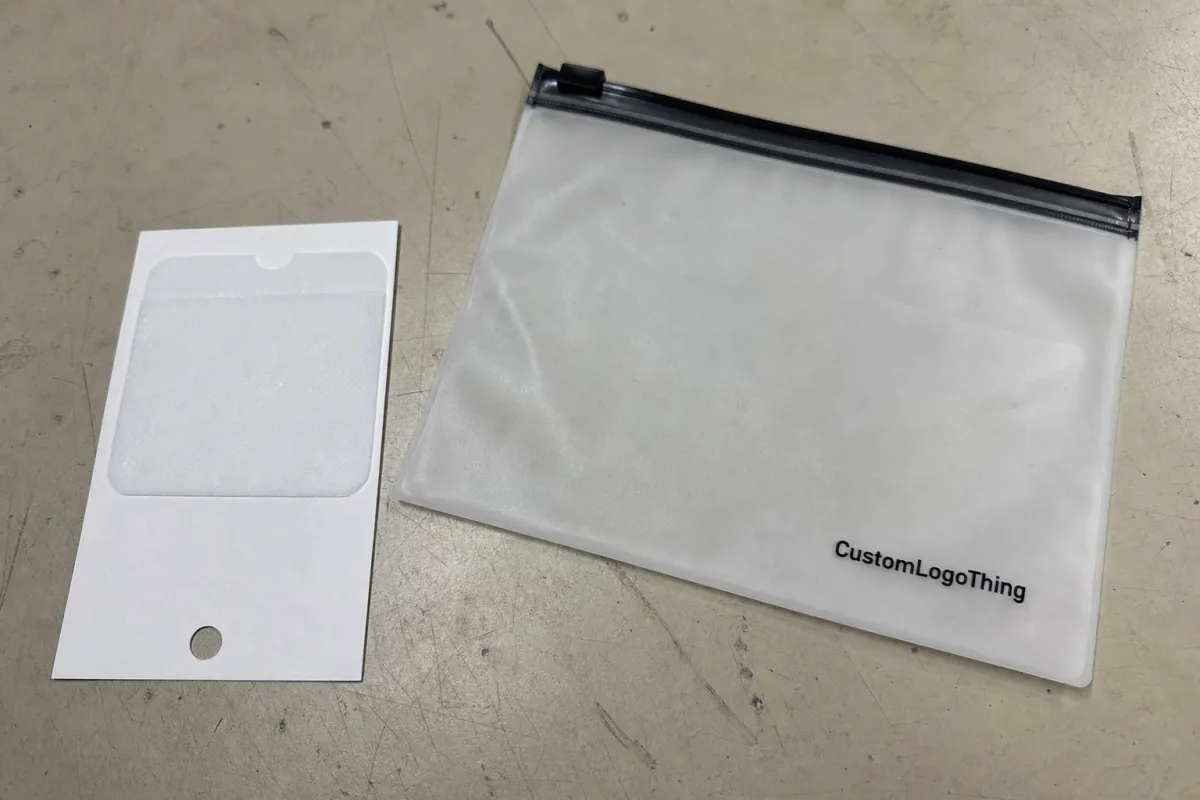
A customer sees the product before they read the label. If the bag is cloudy, wrinkled, or flimsy, the product looks cheaper before it gets a fair shot. A custom Clear Poly Retail Bags bulk order solves a practical packaging problem for apparel, accessories, stationery, cosmetics, gift sets, parts, small consumer goods, and bundled promos: protect the item while keeping it visible.
Clear poly bags are not luxury rigid boxes. Good. They should not pretend. Their job is efficiency: ship flat, pack fast, reduce handling mess, keep inventory visible, and leave enough print area for a logo, barcode, warning copy, size mark, or QR code without hiding the merchandise.
Stock bags can work for backroom storage or short-term fixes. Custom printed Clear Poly Retail Bags give you control over size, flap depth, closure type, vent holes, logo position, film thickness, suffocation warning placement, barcode area, and retail display details such as hang holes or euro slots.
Clear packaging works best when the product already has visual value: folded shirts, socks, jewelry cards, craft kits, phone accessories, sticker packs, bakery-adjacent dry goods, small parts, and promotional sets. If a warehouse team needs to identify 12 SKUs quickly, clear bags prevent the scavenger hunt nobody scheduled.
The buying decision usually comes down to five things: specs, quantity, print method, price, and timing. The right bag is boring in the best way. It fits, seals, scans, displays cleanly, and does not create new problems.
Retail Bag Details That Affect Shelf Appeal and Packing Speed
Most clear retail bags are made from LDPE, PP, or related poly films. Material choice affects clarity, softness, stiffness, seal quality, print behavior, and the way the package feels in the customer’s hand. LDPE is softer and more flexible. PP often looks crisper and clearer. Thicker film feels more substantial, but it costs more and takes more carton space.
Closure choice matters more than buyers expect. An adhesive flap is common because packers can close bags by hand without extra equipment. Resealable tape works well for apparel, accessories, and items customers may open before final purchase. Heat sealing can look cleaner and more tamper-resistant, but it adds a production step. Zip closures are useful for repeat-use packaging. Drawstrings, die-cut handles, open tops, and reinforced handles can make sense for heavier or display-focused retail packaging.
Branding surfaces should be planned, not sprayed everywhere like confetti. Common print areas include the front logo, back care notes, barcode zone, QR code, recycling icon, suffocation warning, size mark, SKU, batch code, or product instructions. One-color or two-color printing often works better than turning the transparent bag into a billboard. Let the product do some of the selling. Radical concept.
Optional features include hang holes, euro slots, ventilation holes, gussets, bottom folds, frosted panels, matte write-on areas, and reinforced handles. Each feature affects cost, production speed, and minimum order quantity. Some are worth it. Some are just decoration wearing a fake mustache.
| Feature | Best For | Tradeoff |
|---|---|---|
| Adhesive flap | Apparel, stationery, small accessories | Fast packing, but adhesive placement must be consistent |
| Heat seal | Parts, kits, tamper-conscious product packaging | Clean finish, but needs sealing equipment or an added step |
| Hang hole or euro slot | Retail peg display | Improves display, but requires accurate weight and balance planning |
| Gusset | Bulkier kits, folded textiles, dimensional goods | Better fit, usually higher unit cost |
The bag should make the product easy to identify, easy to pack, easy to display, and annoying only to competitors.
Specifications to Confirm Before You Ask for a Quote
Vague quote requests lead to vague pricing. Nobody enjoys that email chain. Before asking for a custom Clear Poly Retail Bags bulk order quote, gather the details a production team actually needs.
- Bag width and height, measured in inches or millimeters
- Flap size, side weld, or bottom fold requirements
- Gusset depth, if the product has thickness
- Film thickness or desired gauge range
- Material preference: LDPE, PP, or another clear film
- Closure style: adhesive, resealable, zip, heat seal, open top, or handle
- Print color count, print placement, and approximate print coverage
- Order quantity and target delivery location
Measure the packed product, not the product in its fantasy state before tags, inserts, hang cards, folding, and tissue. For folded apparel, add enough clearance for easy packing, usually a modest allowance around the width and height. Too tight slows labor. Too loose creates a sad loose balloon of plastic around the item.
Thickness depends on weight, handling, and presentation. Lightweight stationery or flat paper goods may work with thinner film. Apparel often needs a mid-range gauge that feels clean but still packs efficiently. Heavier accessories, kits, or bundled parts may need thicker material, gussets, or a stronger closure. A cheap thin bag that tears during fulfillment is not savings. It is a tiny invoice for regret.
Artwork needs the same discipline as sizing. Send vector logo files, preferably AI, EPS, or clean PDF. Confirm Pantone or CMYK targets based on the print method. Barcodes need quiet space and strong contrast to scan properly. Small warning text must remain readable after printing, not merely visible if someone squints under warehouse lighting.
Compliance copy is not decoration. Suffocation warnings may be needed for certain bag sizes and markets, especially for apparel, children’s products, or consumer goods. Recycling marks and material labels should be checked before production. For broader packaging guidance, buyers can review resources from the EPA recycling program and confirm local requirements with their legal or compliance team.
Orientation is another easy place to make a mess. Decide whether the bag loads from the top or side, whether the flap sits on the back, where the logo faces after packing, and whether the barcode remains visible. Product photos or physical samples help. Guessing specs from a product name is how brands end up with bags that almost fit. Almost is expensive.
Pricing, MOQ, and Unit Cost Drivers for Clear Poly Bags
Pricing depends on material, size, thickness, print coverage, print color count, closure type, finishing options, and quantity. There is no magic flat price, because manufacturing is rude like that.
Custom printed clear poly bags usually require an MOQ because setup must be justified. Plates, screens, material purchasing, machine setup, ink matching, dielines, and production time all have real cost. Small runs can be possible, but the unit cost is usually higher. Mid-size bulk orders tend to become more efficient. Very large orders can improve material purchasing and production scheduling.
For planning, request quote breaks at three levels: a starter MOQ, a practical reorder quantity, and a larger bulk tier. That gives a cleaner view of the tradeoff. A run of 2,500 pieces can price very differently than 10,000 or 25,000 pieces, especially if print plates and setup are spread across the order.
| Cost Driver | Lower-Cost Choice | Higher-Cost Choice | Practical Buying Advice |
|---|---|---|---|
| Film thickness | Thinner gauge | Thicker, heavier film | Do not under-spec if bags will hang, ship, or hold heavier items |
| Print colors | One-color logo | Two or more colors with larger coverage | One strong logo mark often beats a crowded print |
| Closure | Open top or simple flap | Zip, reinforced handle, specialty resealable closure | Pick based on packing labor and customer use, not mood |
| Size | Standard size close to the product | Custom dimensions or gussets | Custom sizing can reduce waste and improve presentation |
| Freight | Planned ground or ocean freight | Rush air shipping | Poly is lightweight, but cartons still take volume |
Setup costs can hit the first order harder than repeat orders. Artwork cleanup, dielines, screens, plates, samples, custom tooling, or specialty closures may add front-end cost. Repeat production can be more efficient if specs and artwork stay locked.
Freight deserves attention. Poly bags are light, but bulk cartons can be large. Carton volume may matter more than weight, especially on rush shipments. The cheapest bag is not always the lowest-cost choice if it slows packing, tears during fulfillment, creates returns, or makes the product look bargain-bin before it reaches the shelf.
Process and Timeline From Artwork to Delivered Bulk Order
A clean production process reduces surprises. For a custom clear poly retail Bags Bulk Order, the usual flow is quote request, spec confirmation, artwork review, dieline setup, proof approval, sample or pre-production confirmation, mass production, quality check, packing, and shipping.
Send the basics upfront: dimensions, quantity, material preference, closure style, logo file, print colors, delivery location, target in-hand date, and any compliance copy. If you have a product sample, use it. If not, send packed dimensions and photos from multiple angles. The quote gets better when the information is not a scavenger hunt.
Digital proofs confirm layout, logo position, color references, bag orientation, flap placement, warning copy, barcode zones, and print scale. Review them slowly. A proof is not a decorative PDF. It is the last quiet moment before production starts making your decision thousands of times.
Sampling options vary. A plain size sample can confirm fit and packing speed. A printed pre-production sample can confirm branding, finish, clarity, and closure behavior. Skipping samples can save time and money, but it increases risk, especially for new products, unusual dimensions, specialty closures, or tight retail displays.
Timeline depends on custom size, quantity, print colors, material availability, sample approval, peak capacity, and shipping method. Many custom packaging projects run in stages: proofing first, production second, transit third. Air freight is faster and more expensive. Ocean freight is better for larger planned bulk orders. Domestic transit depends on carton count and destination.
Practical rule: order before inventory becomes urgent. Rush packaging usually means fewer options, higher costs, and more people pretending panic is a strategy.
Buyer-side delays are painfully common: missing Pantone references, slow proof approval, changing bag size after dielines are prepared, or deciding the logo should be bigger after everyone already knew it should not. If your timeline is firm, approve details like a person who wants the delivery date to survive.
Quality Checks That Separate Retail-Ready Bags From Cheap Plastic
Quality control is not factory wallpaper language. A retail bag can look simple and still fail in several annoying ways. Material can haze. Seals can split. Adhesive can grab too hard or not enough. Print can smear. Cartons can arrive crushed because someone treated them like gym equipment.
Inspection should cover material clarity, consistent thickness, cut accuracy, seal strength, flap alignment, adhesive performance, print registration, ink adhesion, and carton packing condition. If the bags include hang holes, check placement and tear resistance. If they include barcodes, scan them before approving mass use.
Print expectations should be realistic and documented. Logos should be sharp. Ink should not smear under normal handling. Small text should remain readable. Color should stay within agreed tolerance, especially if the bag supports package branding across several SKUs. Poly printing is not the same as printing on custom printed boxes or coated paperboard, so confirm expectations before production.
Fit testing is simple and brutally useful. Put the real product in the bag. Does it slide in without forced stuffing? Does the product bulge strangely? Is there too much empty space? Can the packer close the flap quickly? Does the bag still look neat after a few minutes of handling?
Closure testing matters too. Adhesive strips should seal smoothly and align consistently. Resealable flaps should survive normal handling. Heat seals should not split during packing or transit. Bulk bags should be counted, bundled, protected from dust, labeled by size or SKU, and packed to reduce bending, edge damage, and moisture exposure.
Custom Logo Things helps buyers lock specs, avoid artwork mistakes, and match bag construction to actual retail use. That may sound unglamorous. Perfect. A slightly better-specified bag can prevent torn seams, messy shelves, confused warehouse teams, and the charming customer review that says “packaging arrived damaged.” For related options, review our Custom Packaging Products or compare shipping-focused choices like Custom Poly Mailers.
Common Buying Mistakes That Make Bulk Bag Orders More Expensive
Most expensive problems in custom packaging start as tiny assumptions nobody bothered to confirm. Clear bags are simple until they are wrong in bulk. Then they are very visibly wrong.
Mistake one: ordering by product dimensions only. Packed dimensions are what matter. Folded apparel, tags, inserts, backing cards, instruction sheets, and product bundles can change the final size by half an inch or more. That half inch can decide whether packing feels smooth or miserable.
Mistake two: choosing the thinnest film only to cut unit cost. Thin film can work for light goods, but not every item should be wrapped in something that feels like sandwich wrap. Not the premium kind. If the bag tears, wrinkles badly, or feels cheap, the product packaging suffers.
Mistake three: overprinting the clear surface. Too much ink blocks the product, raises cost, and can make the bag look busier than the shelf around it. Strong packaging design often uses restraint: logo, required copy, barcode, maybe a small product note. Done.
Mistake four: ignoring compliance text. Suffocation warnings may be required for certain bag sizes or markets. Apparel, children’s products, and consumer goods deserve extra caution. Industry groups such as ISTA provide useful testing context for packaged products, though final compliance requirements should be confirmed for your exact selling channel.
Mistake five: failing to plan reorders. Bulk orders are economical only when production and shipping time are built into inventory planning. Waiting until the last case is open turns a normal order into a rush job with fewer choices.
Mistake six: approving artwork too casually. Check orientation, flap side, barcode placement, warning text, and whether the logo faces the right direction once the product is packed. Review proofs like money depends on it. Because it does.
Ask for a spec sheet. Confirm who owns final artwork approval, sizing approval, and compliance approval. If you need broader program pricing across several SKUs, our Wholesale Programs page is a useful next stop.
Next Steps Before You Place a Bulk Clear Bag Order
Good buying starts with organized information. Not vibes. Gather the right details and the quote process gets faster, cleaner, and less likely to produce a bag that technically exists but does not help your business.
- Choose the SKU group. Decide which product or group of products needs clear bags, then measure the packed item after folding, tags, cards, inserts, or bundles are included.
- Define the job. Does the bag need to hang, reseal, stack, ship, display, protect during fulfillment, or simply keep pieces together? Function decides specs faster than mood boards.
- Prepare artwork. Send vector logo files, placement preferences, print color references, compliance copy, barcode files, QR codes, and any recycling or material marks.
- Pick quantity targets. Ask for two or three quote breaks so you can compare MOQ, practical reorder volume, and lower unit cost at higher bulk quantities.
- Confirm timing. Share the target delivery date and whether standard production works or expedited options are needed, with the obvious cost consequences.
Custom Logo Things can review specs, recommend film and closure options, prepare a quote, check artwork, and help avoid production mistakes before they become paid mistakes. If you still have basic ordering questions, the FAQ page covers common custom packaging concerns.
For a clear poly retail bag bulk order, the fastest path is clear specs, clean artwork, realistic timing, and a supplier who tells you the tradeoffs before you approve the job.
FAQ
What is the MOQ for a custom clear retail poly bag bulk order?
MOQ depends on bag size, material, print method, color count, and closure type. Custom printed runs usually need enough quantity to cover setup, plates or screens, material purchasing, and machine time. Ask for quote breaks at the minimum quantity, a mid-level reorder quantity, and a larger bulk tier so you can compare unit cost honestly.
How much does a custom clear poly bag order cost?
Cost is driven by dimensions, film thickness, material type, print coverage, print colors, closure style, finishing features, quantity, and freight. Larger orders usually reduce unit cost, but special features such as gussets, hang holes, resealable strips, or heavy ink coverage can raise pricing. The most accurate quote requires packed product dimensions, artwork, quantity, delivery location, and target timeline.
Can clear poly retail bags be printed with a logo and barcode?
Yes. Logos, barcodes, QR codes, product text, care instructions, recycling marks, and suffocation warnings can often be printed directly on the bag. Vector artwork is strongly preferred for clean logo reproduction. Barcodes need enough quiet space and contrast to scan properly, so they should be tested before final approval.
What thickness should I choose for custom clear poly retail bags?
Lightweight items can use thinner films, while apparel, kits, accessories, and heavier products usually need a stronger gauge. Thicker material can improve feel and durability, but it increases unit cost and carton volume. The best thickness depends on product weight, retail handling, closure type, and whether the bag also needs to survive fulfillment shipping.
How long does production take for bulk custom clear poly bags?
Timeline depends on artwork approval, sampling, order quantity, material availability, print complexity, production capacity, and shipping method. Digital proof approval is usually required before production starts. If you need a firm delivery date, provide specs and artwork early instead of waiting until inventory is already on fire.
