Custom Slider Lock Clothing Bags Bulk Order: When It Pays Off
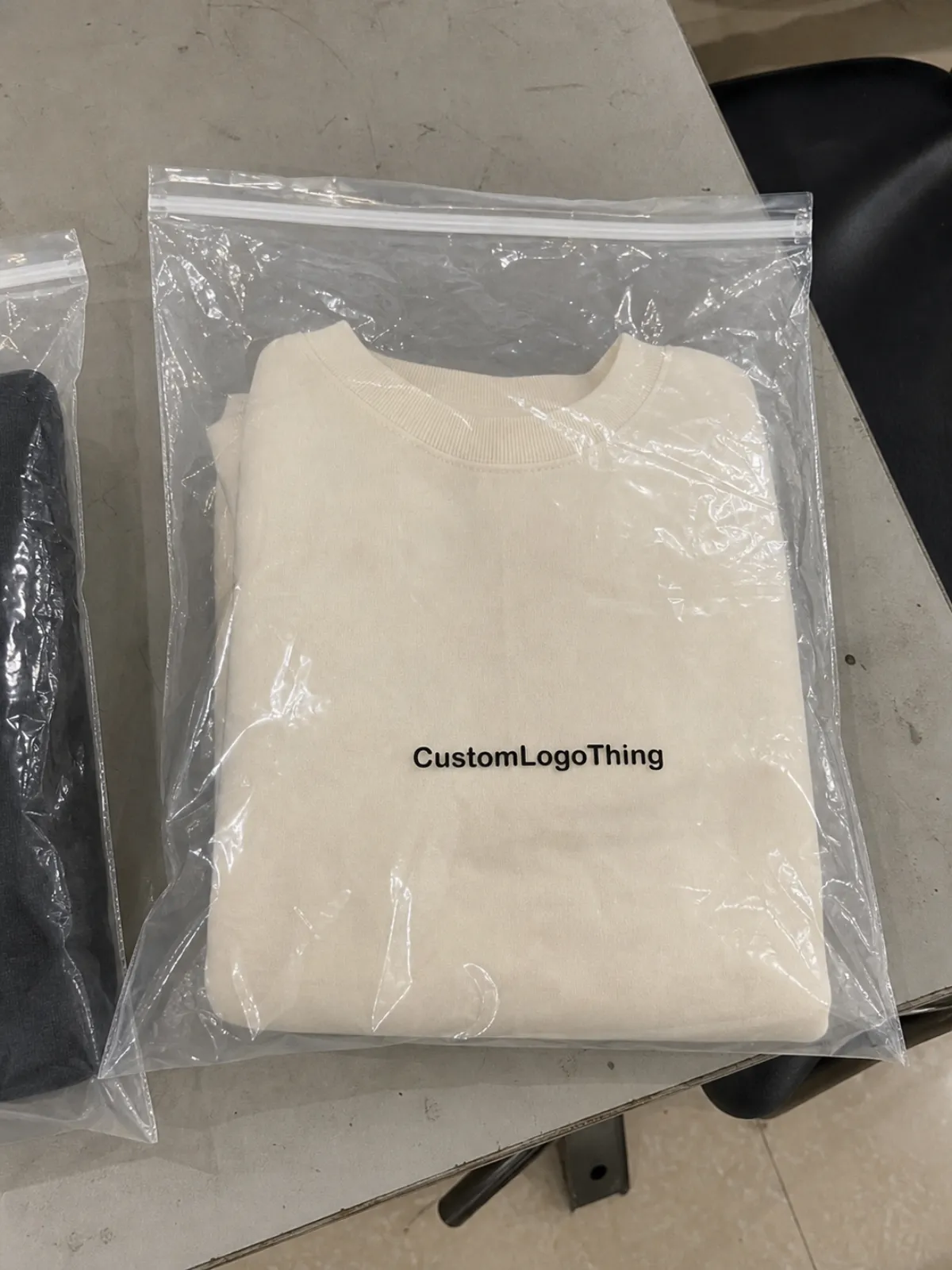
A clothing brand ships 5,000 hoodies in thin plain poly bags. Then it pays twice: once for the cheap packaging, again for returns, size mix-ups, dusty garments, split seams, and an unboxing that makes the whole operation look like warehouse leftovers. Lovely way to save money.
A custom Slider Lock Clothing Bags bulk order makes sense when packaging has to do more than cover fabric. It needs to protect inventory, speed up picking, keep SKUs visible, and present branded apparel without slowing the packing table.
Slider Lock Clothing Bags are flexible apparel bags with a zipper-style track and a small sliding closure. They open easily, close quickly, and can be reused without ripping an adhesive strip apart. That matters for garments that are inspected, tried, repacked, sorted by size, stored before fulfillment, or handled by a 3PL team that does not have time for fussy packaging.
A basic flap bag can work for low-cost tees or one-way shipping. Slider bags earn their keep when handling repeats. Uniform suppliers, merch companies, fashion brands, subscription apparel sellers, event vendors, fulfillment centers, and retailers packing by size, color, drop, or collection tend to get the most value from them.
If your team handles 2,000 to 50,000 garments per run, small packaging flaws become operational problems fast. One hard-to-open bag is annoying. Ten thousand hard-to-open bags are labor cost wearing a plastic disguise.
No, these are not the cheapest clothing bags. If the only target is the lowest unit price, a plain self-seal poly bag usually wins. But the cheapest bag can be the expensive one if it slows packing, hides labels, splits near the closure, or makes a premium hoodie look like a clearance-bin afterthought.
Practical rule: use slider lock garment bags when the bag needs to be opened more than once, identified quickly, or kept by the customer after delivery.
Product Details That Matter Before You Place an Order
Custom Slider Lock clothing bags are made for folded apparel, not sharp tools, loose hardware, or products with rough edges. Most are produced from PE-based film, commonly LDPE or blended polyethylene, with a slider track added at the opening. The slider helps warehouse staff close the bag consistently without pinching, peeling, or guessing whether an adhesive strip actually sealed.
Closure style affects both cost and performance. A standard slider lock works for most T-shirts, leggings, socks, uniforms, baby apparel, and lightweight accessories. A reinforced slider costs more but makes sense for hoodies, jackets, sample kits, multi-piece sets, or bags expected to open and close repeatedly. Certain regulated or sensitive products may require child-resistant-style features, depending on product category and local rules. Do not buy that feature because it sounds impressive. Buy it because the product requires it.
Clear film is the workhorse because it lets teams identify color, fabric, and size fast. Frosted film gives retail packaging a softer look, especially for activewear, sleepwear, basics, and giftable apparel. Tinted film can support brand color, but it still needs enough visibility for picking and returns inspection. A beautiful bag that hides the garment label is not elevated. It is inconvenient.
Branding can include printed logos, size callouts, care icons, QR codes, reorder labels, warning copy, recycling marks, campaign graphics, and retail barcode areas. The trick is restraint. A large print can look sharp, but if it covers the garment size label or barcode, fulfillment gets slower.
For brands buying other packaging at the same time, it helps to align slider bags with broader Custom Packaging Products such as mailers, tissue, stickers, hang tags, and custom printed boxes. Consistency beats random decoration. The best apparel packaging helps people pack, scan, ship, receive, and repack products with fewer mistakes.
Size, Material, Thickness, and Print Specifications
Start with the folded garment. Not the size chart. Not the product photo. Measure the actual folded item after it has been packed the way your warehouse will pack it. Add enough breathing room for fast insertion, usually 0.5 to 1.5 inches per side depending on garment thickness and packing speed.
A bag that technically fits but requires wrestling is not a production solution. It is a bottleneck with a slider on top.
| Garment Type | Common Bag Range | Typical Thickness Range | Best Use |
|---|---|---|---|
| Socks, accessories, small baby items | 5 x 7 in to 8 x 10 in | 1.5 to 2.5 mil | Low-profile packing, kits, small SKU sorting |
| T-shirts, kidswear, leggings | 9 x 12 in to 11 x 14 in | 2 to 3 mil | Standard apparel fulfillment and storage |
| Hoodies, sweaters, uniforms | 12 x 15 in to 14 x 18 in | 2.5 to 4 mil | Bulkier folded garments and repeated handling |
| Jackets, heavy fleece, retail sets | 15 x 20 in and larger | 3 to 5 mil | Premium apparel, storage, showroom, or retail use |
LDPE is common because it is soft, flexible, and cost-effective. PE blends can improve durability, stiffness, or clarity depending on the formulation. Recycled-content film may be available, but availability depends on thickness, finish, print method, clarity expectations, and current material supply. Ask early if recycled content is required. It can affect color consistency, film haze, minimum order quantity, and lead time.
Thickness is not just a number on a quote. Lighter gauges can work for single-use protection, especially for small garments shipped inside mailers. Mid-range film is the safe zone for most apparel shipping. Heavier film is better for premium garments, retail handling, sample rooms, and bags customers may reuse. More thickness also means more material cost, more carton weight, and more storage volume. Fun little tradeoff.
Printing choices usually start with spot color printing for clean logos and simple graphics. One-color or two-color logos are efficient and predictable. Multi-color printing adds visual punch, plus setup, registration control, and potential waste. Full-surface artwork makes sense only if the bag is part of the retail packaging experience, not just a protective sleeve buried inside a shipping carton.
Artwork should be supplied as vector files, usually AI, EPS, or production-ready PDF. Provide Pantone targets or CMYK values, safe margins, barcode placement, QR files, and print area limits. If bags move through third-party warehouses or retail systems, leave a clean zone for labels.
Compliance details belong in the spec, not in a last-minute email. Confirm suffocation warning text, recycling marks, country-specific labeling rules, barcode size, and any retail routing requirements before proof approval. ASTM packaging test references and related material standards can be reviewed through ASTM International, while sustainability claims should be checked against current guidance from the EPA. Vague eco claims create problems. Specific material claims are easier to verify.
Cost, Pricing, MOQ, and Unit Cost Drivers
Pricing for a custom Slider Lock Clothing Bags bulk order depends on size, film thickness, finish, print coverage, number of ink colors, closure type, order quantity, packing method, and shipping destination. Bigger bags use more film. Heavier bags cost more. More ink colors add setup and production time. None of this is mysterious. It is math, with freight waiting nearby to ruin the mood.
For planning, simple custom printed slider bags often land around $0.18 to $0.45 per unit at 5,000 to 10,000 pieces, depending on size and specs. Larger or heavier bags may run $0.40 to $0.90+ per unit. Very high-volume orders can reduce unit cost, especially if artwork is simple and the size is standard.
Small custom runs usually cost more because setup, plates, machine time, proofing, and inspection do not become free because someone wants 300 bags. Stock bags with labels may be smarter for early testing. Custom production starts making more sense once the spec is stable and the monthly usage is real.
MOQ is set by the manufacturer and the production method. A realistic custom printed apparel bag minimum may start around 3,000 to 5,000 pieces for simple specs. Custom film colors, reinforced sliders, recycled-content requirements, heavy print coverage, or multiple artwork versions may push minimums higher. Ask whether the MOQ applies per bag size, per artwork, or across the full order. That one question prevents a lot of quote drama.
| Order Scenario | Typical Quantity | Cost Behavior | Buyer Risk |
|---|---|---|---|
| Small test run | 500 to 2,000 pieces | Higher unit cost, fewer supplier options | Paying too much for a spec you may change |
| Starter bulk order | 3,000 to 5,000 pieces | Better setup efficiency, reasonable testing volume | Choosing too many sizes too early |
| Standard apparel run | 10,000 to 25,000 pieces | Stronger unit pricing, easier reorder planning | Storage space and cash tied up in packaging |
| Large fulfillment program | 50,000+ pieces | Best price breaks if specs stay stable | Forecast errors become expensive inventory |
The price break sweet spot is where storage capacity, cash flow, and reorder timing meet. If your apparel line changes every month, buying 80,000 printed bags with seasonal copy is asking for obsolete inventory. If the same logo bag supports core SKUs for six months, bulk buying can be smart.
To get a serious quote, send bag width and height, thickness target, quantity, print colors, artwork, closure style, shipping address, packing requirements, and compliance marks. If you are comparing suppliers, keep the spec identical. A cheaper bag that tears, jams during packing, arrives late, or smells like a chemistry experiment can cost more than a properly specified one. Cheap is useful. Cheap and wrong is just expensive with extra steps.
Brands ordering several packaging items can ask about combined purchasing through Wholesale Programs. Bundling may improve coordination, but only if the supplier can meet the actual bag spec. Do not sacrifice performance just to put everything on one invoice.
Process and Timeline From Artwork to Delivered Bags
A clean buying process starts with specifications, not vibes. Submit the bag dimensions, garment type, target thickness, closure style, print requirements, quantity, delivery location, and deadline. Then confirm material and size, review the quote, provide artwork, approve the digital proof, approve a sample if needed, produce the bulk order, inspect, pack, and ship.
Simple logo placement can move quickly. Multi-color artwork, exact brand color matching, barcode rules, or several size versions need more back-and-forth. If the logo file is a blurry PNG pulled from a website header, stop. Production artwork needs clean vector lines, outlined fonts, and accurate color references.
Sampling depends on risk. A digital proof is fastest and often enough for a reorder or simple logo bag. A pre-production sample is better for new sizes, new material, heavier garments, or premium retail packaging. A production sample can confirm hand feel, slider movement, print quality, and fit with real garments, but it adds time.
Typical production timing may run 12 to 25 business days after proof approval for standard custom orders, though freight and complexity can change that. Special film color, reinforced closures, large quantities, heavy ink coverage, or peak season can stretch schedules. Buyers who wait until the last possible second will discover that machines, freight carriers, and quality teams do not care about launch panic. Shocking, I know.
Common delays are painfully predictable: missing vector artwork, unclear dimensions, quantity changes after quoting, unapproved warning text, slow deposit payment, and freight decisions made after production is finished. A bulk apparel bag order moves faster when every approval point has one owner. Not six people forwarding screenshots.
Build buffer time before product launches, holiday drops, retail deadlines, trade shows, influencer kits, and warehouse intake appointments. For 3PL programs, confirm carton labels, pallet requirements, receiving windows, and ASN needs before production ships. Packaging that arrives two days after the apparel drop is not packaging. It is storage decor.
Quality Checks That Prevent Bad Apparel Packaging
Quality control starts before the run. Check size tolerance, film clarity, closure function, slider movement, print registration, ink adhesion, seal strength, and opening direction. If the bag opens on the wrong side for your packing line, every unit becomes a tiny irritation. Tiny irritations become labor cost.
Print quality needs more than a pretty mockup. Confirm logo sharpness, color consistency, correct placement, readable warning text, scannable QR codes, and barcodes that scan after the bag flexes. Codes should stay away from seams, creases, slider tracks, and high-flex corners. High contrast matters. A gray QR code on frosted film may look tasteful and scan like garbage.
Functional testing is simple. Pack a real folded garment into the approved size. Close and reopen the slider 5 to 10 times. Stack 20 filled bags. Check whether the slider catches, pops open, creates bulky edges, or digs into the garment. Try the same test with the largest and smallest garments in the size range. Apparel packaging fails at the edges of the spec, not in the perfect middle.
Warehouse usability matters more than marketing teams like to admit. Bags should be easy to open, fast to pack, simple to label, and consistent enough that staff do not need a training seminar to use a plastic bag. If the bag slows every unit by 8 seconds across 10,000 garments, that is more than 22 labor hours. Suddenly the cheaper bag is not so cute.
Defect prevention comes from approved proofs, written tolerance agreements, retained samples, carton labeling, and random inspection. Ask how cartons will be labeled by size, artwork, and quantity. For larger programs, request retained production samples so reorders can be checked against a physical reference, not someone’s memory of “kind of frosted.”
Do not approve packaging based only on a mockup. Mockups do not reveal weak seals, scratchy sliders, bad fit, or film that clouds up and makes your garment look dusty.
For shipments that face parcel handling, pallet movement, or long storage, consider test methods from organizations such as ISTA. You may not need formal lab testing for every apparel bag, but the thinking is useful: test the package the way it will actually be handled.
How to Get a Clean Quote and Start Production
Before asking for pricing, measure folded garments and choose target bag sizes. Decide whether the bag should be clear, frosted, tinted, or partially printed. Pick a thickness range based on garment weight and handling. Confirm whether the closure should be standard slider, reinforced slider, or another style. Then list every required print element: logo, size callout, SKU label, barcode, QR code, warning text, recycling mark, and campaign graphic.
Prepare artwork properly. Send vector logo files, brand colors, barcode files, QR codes, warning text, and any size or SKU labels that need to appear on the bag. If you need the bag to match other branded packaging, include photos or specs for your mailers, tissue, stickers, hang tags, or custom printed boxes. Good package branding feels intentional because the pieces were planned together, not because someone slapped the same logo everywhere.
For a quote, send this basic spec list:
- Quantity: total units needed and whether that quantity splits across sizes or artwork versions.
- Dimensions: bag width, bag height, and usable packing space after the slider area.
- Material: clear LDPE, frosted PE, recycled-content option, or another requested film.
- Thickness: target mil range, or garment type if you need a recommendation.
- Printing: number of colors, print coverage, logo file, barcode needs, and placement instructions.
- Delivery: shipping address, deadline, carton requirements, and whether a sample is needed.
If multiple sizes are needed, start with the most common garment size and adjust up or down. Creating ten custom bag sizes sounds organized until inventory has ten similar cartons and the packing team grabs the wrong one. For many apparel brands, three sizes cover most needs: small accessories, standard folded garments, and bulky garments.
Confirm storage and reorder rhythm before placing a large order. Packaging takes space. Printed packaging with dated campaign copy creates a second problem because leftovers become awkward. If monthly usage is 4,000 bags, an order of 12,000 to 20,000 pieces may be practical. If usage is 500 bags a month and the artwork changes each drop, stay lean.
If anything in the quote feels unclear, ask before production. Custom Logo Things can help compare specs across slider bags and other product packaging; the FAQ is also useful for general ordering questions. For a custom slider Lock Clothing Bags bulk order, send specs first, approve proof carefully, and lock production only when size, print, MOQ, pricing, and delivery date are confirmed.
FAQ
What is the usual MOQ for custom slider lock apparel bags?
MOQ depends on size, material, print method, and closure style, but custom printed bulk orders usually require a manufacturer minimum because setup costs are real. Many simple custom orders start around 3,000 to 5,000 pieces, while complex materials or multiple artwork versions can require more. Higher quantities lower unit cost, especially when the same artwork and bag size are used across the order. If you need several sizes, ask whether the MOQ applies per size, per artwork, or across the full order.
How much do custom slider lock clothing bags cost in bulk?
Unit cost is driven by dimensions, plastic thickness, quantity, print colors, print coverage, slider quality, and freight. A simple one-color logo on a standard clear bag costs less than a large multi-color print on thick frosted material. For planning, many bulk custom apparel bags fall around $0.18 to $0.90+ per unit depending on the spec. For an accurate quote, provide bag size, quantity, artwork, thickness target, and delivery location.
Can I print barcodes, QR codes, or size labels on slider lock garment bags?
Yes. Barcode and QR placement should be tested for scan quality before production. Keep codes away from heavy creases, seams, slider tracks, and high-flex areas where distortion can happen. Use high-contrast print and send production-ready code files instead of low-resolution screenshots. Size labels and SKU callouts are useful, but they should support warehouse work rather than cover the garment information your team needs to see.
What thickness should I choose for custom clothing slider bags?
Use lighter thickness for low-cost single-use apparel protection and heavier thickness for premium garments, repeated handling, or reusable packaging. Socks and lightweight tees may work in 1.5 to 2.5 mil film, while hoodies, uniforms, and jackets often need 2.5 to 5 mil depending on weight and handling. The best choice depends on garment weight, packing speed, shipping method, and how many times the bag needs to open and close.
How long does a custom slider lock clothing bag bulk order take?
Timeline depends on artwork readiness, proof approval, sample requirements, production complexity, order quantity, and shipping method. Standard runs may take 12 to 25 business days after proof approval, while special film, reinforced sliders, or heavy print coverage can take longer. Digital proof approval is faster than physical sampling, but samples are useful for new sizes, new materials, or premium apparel lines. To avoid delays, confirm dimensions, artwork, compliance text, deposit, and freight details before production starts.
