Buyer Fit Snapshot
| Best fit | Custom Soft Matte Boxes with Emboss projects where brand print, material claims, artwork control, MOQ, and repeat-order consistency need to be specified before quoting. |
|---|---|
| Quote inputs | Share finished size, material target, print colors, finish, packing count, annual reorder estimate, ship-to region, and any compliance wording. |
| Proofing check | Approve dieline scale, logo placement, barcode or warning zones, color tolerance, closure strength, and carton packing before bulk production. |
| Main risk | Vague material claims, crowded artwork, missing packing details, or unclear freight terms can make a low unit price expensive after revisions. |
Fast answer: Custom Soft Matte Boxes with Emboss: Structure, Print Proof, Packing, and Reorder Risk should be specified like a repeatable production item. The safest quote records material, print method, finish, artwork proof, packing count, and reorder notes in one written spec.
Production checks before approval
Compare the actual filled-product size with the drawing, then confirm tolerance on folds, seals, hang holes, label areas, and retail display edges. Reserve space for logos, QR codes, warning copy, and material claims before decorative graphics fill the panel.
Quote comparison points
Review material grade, print process, finish, sampling route, tooling charges, carton quantity, and freight assumptions side by side. A quote is only useful when the supplier can repeat the same color, closure quality, and packing count on the next order.
When a customer picks up custom soft matte boxes with emboss, the first impression usually happens before they have fully read the brand name. The surface feels smooth and muted, the logo rises with a quiet clarity, and the carton carries the kind of restraint that tells people the product was thought through with care. That is a big part of why custom soft matte boxes with emboss often outperform louder finishes when a brand wants premium presence without shiny distractions.
For a packaging buyer, the appeal is practical as much as visual. Custom soft matte boxes with emboss work across beauty, gift, electronics, specialty food, and accessories because they balance tactile depth with clean print behavior. I have seen them used on launches where the box had to photograph well, survive shipping, and still feel expensive in the hand, and that is not an easy trio to satisfy. The finish feels considered, and the structure can still do its job without calling attention to itself.
What custom soft matte boxes with emboss actually are
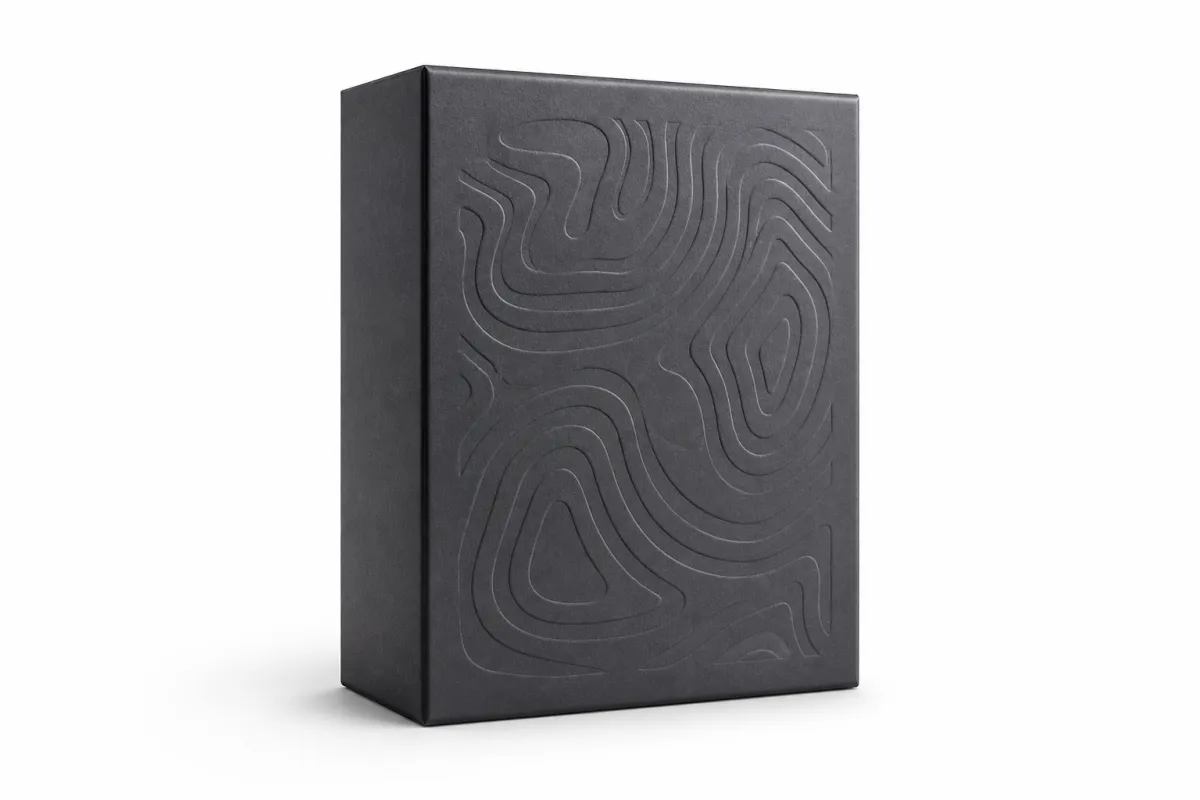
At the simplest level, custom soft matte boxes with emboss combine two separate effects: a soft matte surface and a raised image created by pressing the board with a matched die. Soft matte refers to a coating or laminate that reduces glare and gives the panel a velvety feel, while emboss means the paperboard is formed into a shaped relief so the artwork physically stands off the face of the carton.
The result is not merely decorative. In custom soft matte boxes with emboss, the finish controls how light behaves and the emboss controls how touch behaves. That pairing gives the box a quiet premium tone, which is one reason it shows up so often in product packaging where the brand wants elegance instead of flash. It feels restrained, but not plain, and that distinction matters a lot on a crowded shelf.
The difference between emboss, deboss, foil, spot UV, and lamination gets mixed up a lot, so it helps to separate them cleanly. Emboss raises the artwork, deboss pushes it inward, spot UV adds gloss only to selected areas, foil adds a metallic or pigmented layer, and lamination is the protective film or coating that changes the surface feel. In custom soft matte boxes with emboss, emboss is the tactile story, while the soft matte layer becomes the visual stage that helps the raised detail read clearly.
That combination works especially well for retail packaging. A glossy box can look energetic, but gloss tends to fight with subtle relief because reflections flatten the sense of depth. With custom soft matte boxes with emboss, the light is softer, the contrast is calmer, and the raised mark becomes easier to notice without shouting for attention.
In practice, that makes the format useful for custom printed boxes that need to feel deliberate rather than crowded. A small logo, a monogram, a short product name, or a restrained pattern can all carry more authority when the surface is matte and the artwork rises just enough to catch the hand.
If the box has to signal quality in two seconds, the finish needs to work before the copy does. Custom soft matte boxes with emboss are strong because they communicate through touch first, then through print.
How custom soft matte boxes with emboss work in production
Production starts with the board, because the board is what actually holds the relief. For folding cartons, custom soft matte boxes with emboss often use stock in the 16pt to 24pt range, or roughly 350gsm to 450gsm, depending on structure and shipping needs. If the project calls for a rigid setup, the board build changes quite a bit, and the rules for depth and pressure shift with it. Thicker board usually holds the impression more cleanly, while lighter stock can lose definition or show stress if the die presses too hard.
Next comes the printed sheet, which is usually built as a flat dieline before anything is cut. The artwork is checked against the structural lines, bleed, glue flaps, and safe zones, because custom soft matte boxes with emboss need the graphic and the relief to line up cleanly or the premium effect starts to feel accidental. A box can be beautifully printed and still miss the mark if the raised area sits just a little too close to the fold or trim.
After print, the soft matte treatment is added, usually as a soft-touch laminate or a matte coating with a low-sheen finish. Then the embossing die comes into play. The die is made from the approved artwork, mounted to the press, and used to push the board into the raised shape so the front face shows the image as a relief. If a vendor handles the process in a slightly different order, that can still work, but the basic rule stays the same: the surface has to be stable enough to accept the impression cleanly.
That sequence matters. If the embossing happens too early, before the finish has cured or settled, the surface can distort or scuff. If the board is too wet, too thin, or too heavily inked, the impression can lose crispness. For that reason, custom soft matte boxes with emboss are usually produced in a controlled order: art approval, die creation, print, coating or lamination, embossing, converting, and final pack-out. That is the part people do not always see, but it is where the quality is either made or lost.
There are also different emboss styles. A single-level emboss is the most common and often the most elegant, especially for logos or badges. Multi-level embossing can create stepped depth, but it is more demanding on press and easier to overdo. With custom soft matte boxes with emboss, a simple mark is often stronger than a crowded texture, because the eye needs room to notice the change in height.
Grain direction, panel size, and artwork scale all influence the result. Paperboard has a preferred direction, and if the relief runs against that direction on a highly compressed area, the carton may crack or show stress lines. Tiny serif details, hairline strokes, and very small type are also risky because the raised edge can blur them. For that reason, custom soft matte boxes with emboss should be designed with the press in mind, not just the screen.
The cleanest way to think about it is this: soft matte controls visual noise, emboss controls tactile signal, and the board carries both. If one of those three is out of balance, the box still prints, but it stops feeling intentional.
Design factors that make embossing look sharp
Board choice is the starting point, and honestly, it is the most underestimated part of custom soft matte boxes with emboss. A stronger board with good caliper stability tends to hold the impression more cleanly, while weak stock can cave in around the raised area and make the logo feel soft instead of crisp. If the package is meant to sit in retail packaging for a while, stiffness matters as much as aesthetics.
Artwork size is the next decision. Small embossed elements can look refined, but only if they have enough breathing room around them. Tight borders, crowded copy, and overly thin strokes make custom soft matte boxes with emboss harder to read after press because the relief competes with the rest of the design. A bold mark with generous clear space usually produces a better premium signal than a complicated scene packed into one corner.
Finish behavior matters too. Soft matte surfaces reduce glare, and that helps the eye catch the edge of the raised detail under bright store lights or product photography setups. On custom soft matte boxes with emboss, the raised image usually reads best when the finish is smooth enough to avoid speckling, but not so coated that the pressure from the die gets muted. I have seen samples where the art was strong, but the coating was just a little too heavy, and the emboss came across flatter than expected. It was still good packaging, just not the kind that makes people stop for a second.
Print interaction can support the emboss or work against it. Dark-on-dark layouts are elegant, but they demand good registration and a careful understanding of how light moves across the panel. In custom soft matte boxes with emboss, a deep navy box with a slightly raised matte logo can look luxurious, yet the same layout with too much ink coverage may hide the relief unless the lighting is ideal.
Reverse embossing is another option, but it changes the effect. Instead of the logo rising, the artwork sinks into the board. That can work beautifully for minimalist package branding, though it reads differently from a raised mark and usually feels more architectural than soft. If the brand wants tactility without obvious shine, custom soft matte boxes with emboss still tend to be the cleaner choice.
Proofing is where many teams save themselves from expensive disappointment. A digital mockup can only show color and placement; it cannot show how the board bends, how the relief catches light, or how the coating changes under pressure. For custom soft matte boxes with emboss, a physical sample is often the best way to judge whether the logo feels premium or merely busy.
A screen can show you where the emboss sits. It cannot tell you whether the box feels expensive in the hand. That difference is why custom soft matte boxes with emboss deserve a real sample whenever the tactile effect is central to the brand story.
For sourcing board with responsible forestry claims, many buyers look at FSC-certified paperboard standards. For shipment validation and transit durability, it is also worth checking the testing guidance published by ISTA, since a premium finish still has to survive the actual trip to market.
One practical rule helps more than most people expect: keep the embossed element simple and let the surface do the rest. Custom soft matte boxes with emboss rarely need many effects at once. A restrained design with one clear focal point usually feels more expensive than a carton trying to combine every finish available.
Process and timeline for custom soft matte boxes with emboss
The production schedule for custom soft matte boxes with emboss has more moving parts than a plain printed carton, and the calendar usually stretches because each step depends on the one before it. A realistic project starts with the brief, moves into structural review, and then proceeds through artwork, proofing, die making, print, finishing, embossing, conversion, and final inspection. There is no magic shortcut here, even if everyone on the buying side is a little bit under the gun.
The first checkpoint is the quote and spec review. This is where dimensions, board grade, coating type, emboss area, quantity, and ship destination need to be clear. If the brief is vague, custom soft matte boxes with emboss can get stuck in revisions before production even begins, and that delay is often more expensive than the actual print run.
After the quote, the dieline is either supplied or built by the packaging partner. Good structural engineering and packaging design can run in parallel with graphics review, which saves time, but the artwork still has to respect the crease lines, glue flaps, and safe zones. In custom soft matte boxes with emboss, the packaging format and the print layout should be reviewed together, not treated as separate jobs.
Then comes prepress. This is the stage where line weights, fonts, emboss depth, and registration are checked in detail. If a logo is too fine or a pattern is too dense, the team may need to simplify it before the die is made. For custom soft matte boxes with emboss, that conversation is normal, not a setback, because the press needs clear shapes to create clean relief.
Once the artwork is approved, the emboss die is produced. Depending on complexity, this can take several days on its own, and multi-level dies can take longer because the relief has to be accurate. Only after the die is ready can the press be set up, which means the schedule for custom soft matte boxes with emboss is usually longer than for a standard print-and-cut carton.
Typical lead time often lands around 12 to 15 business days after final proof approval for straightforward jobs, but that is not a promise and not always the case. If the order includes structural testing, sample rounds, special inks, or unusual finishing, custom soft matte boxes with emboss can take longer. Fast approvals and a ready dieline shorten the path; slow sign-off adds days very quickly.
A useful way to think about the process is this:
- Quote confirmation and scope lock
- Dieline setup and artwork submission
- Prepress review and proof approval
- Die creation and press preparation
- Print, finish, emboss, and converting
- Final inspection and shipment
Some steps can overlap. For example, packaging engineering and graphics can move together once the dimensions are known. Other steps cannot be compressed much at all. Die approval has to happen before embossing begins, and no amount of schedule pressure changes that. With custom soft matte boxes with emboss, the timeline is shaped by physical tools, not just digital files.
If a buyer wants a faster route, the simplest path is to keep the format standard, use one emboss area, and submit clean vector art early. That approach is often far more effective than asking for a complex finish stack on a tight deadline. It also produces better custom printed boxes because the process stays focused instead of overloaded.
At Custom Logo Things, many packaging teams start by comparing structure and finish options inside Custom Packaging Products before they finalize the project scope. That kind of early review helps keep custom soft matte boxes with emboss aligned with budget, timing, and the actual product protection needs.
Cost, pricing, and MOQ for custom soft matte boxes with emboss
Pricing for custom soft matte boxes with emboss is driven by a handful of concrete variables, and the biggest mistake buyers make is assuming the box cost comes mainly from print ink. In reality, board grade, finish type, structure, emboss complexity, carton size, quantity, and number of versions all shape the quote more than people expect. Two boxes that look similar in a mockup can land very differently once tooling and setup are counted.
The emboss setup itself adds cost because there is a die to make, press time to reserve, and testing to complete. Even when the artwork looks simple, custom soft matte boxes with emboss require tooling and setup work that a plain matte carton does not. That is why the unit price often drops as quantity rises: the fixed costs are spread across more pieces.
MOQ depends on the supplier and the structural complexity, but smaller runs usually carry a higher unit cost because setup costs are not diluted. For many buyers, that tradeoff is acceptable if the launch is limited or the SKU is being tested. With custom soft matte boxes with emboss, a 500-piece run can be viable, but a 5,000-piece run usually gives much better economics per box.
| Run size | Typical cost behavior | Best fit | Notes |
|---|---|---|---|
| 500-1,000 units | Higher setup impact per box | Pilot launches, small retail tests | Custom soft matte boxes with emboss may be possible, but die and setup costs weigh more heavily |
| 2,000-5,000 units | Better balance of tooling and unit cost | Most branded packaging programs | Often the sweet spot for finish quality and pricing efficiency |
| 10,000+ units | Lower unit cost, stronger economies of scale | Established product packaging lines | Great for repeat orders, though storage and forecast planning matter |
A few common items push the quote upward. Inside printing adds a second decorated surface. Heavy ink coverage may require more careful drying and handling. Multiple embossed elements demand more tooling attention. And special coatings, like extra-soft touch or hybrid matte finishes, can cost more than a standard matte lamination. On custom soft matte boxes with emboss, each added effect raises the risk of waste, which the supplier has to account for.
As a rough planning range, a simple soft matte carton with one emboss area might cost only a modest premium over a standard matte box on mid-to-higher volumes, while a complex structure with full coverage graphics, foil, and multiple emboss hits can move much higher. The exact price depends on geometry and quantity, so a clean quote request matters more than a generic "send pricing" note. If someone is promising a flat number without seeing the artwork, I would treat that as a starting point, not a final answer.
Use a short spec sheet when requesting numbers. Include dimensions, board preference, finish request, emboss location, quantity, target ship date, and whether you need samples first. That is the fastest way to get apples-to-apples pricing for custom soft matte boxes with emboss and avoid the back-and-forth that comes from vague assumptions.
A strong quote request often includes these items:
- Exact carton size and style
- Board or paper stock preference
- Soft matte coating or laminate requirement
- Emboss area and whether it is a single hit or multiple hits
- Print sides needed, including inside print if relevant
- Quantity breakpoints for comparison
From a buyer’s point of view, the biggest savings usually come from simplifying the structure and limiting the number of decorated zones. Custom soft matte boxes with emboss can still feel high-end with one strong focal element, and that often gives a better return than stacking more effects onto a design that does not need them.
Common mistakes with custom soft matte boxes with emboss
The first mistake is trying to emboss too much. Dense patterns, tiny icons, and crowded typography can all look attractive on a screen, but on the press they often blur together. Custom soft matte boxes with emboss work best when the raised element is clear, deliberate, and large enough to hold its shape after pressure is applied.
The second mistake is not leaving enough clear space around the relief. If the emboss sits too close to a crease, edge, or heavy block of ink, the carton may buckle or the effect may look squeezed. On custom soft matte boxes with emboss, spacing is not just a visual preference; it is part of how the board moves under force.
Another common problem is ignoring the structure of the box itself. A dramatic emboss on a lightweight carton can make the surface look uneven, especially along fold lines and glued areas. The board has to support the shape. With custom soft matte boxes with emboss, the finish should match the box construction, not fight it.
Skipping a physical proof is risky, especially if the design depends on tactility rather than color. A PDF will not show how the soft matte surface responds to light, how deep the relief feels, or whether the artwork reads at arm’s length. For custom soft matte boxes with emboss, one sample can prevent a costly full run of boxes that look "almost right" but not truly premium.
Some buyers also choose a finish because it looks elegant in a proposal deck, then discover that the surface scuffs too easily in packing or shipping. That is a real operational issue. Retail packaging has to survive handling, cartoning, pallet movement, and shelf presentation. If the carton is beautiful but fragile, the brand still pays for the damage later.
Finally, there is the mistake of assuming emboss alone will save weak branding. It will not. The most effective custom soft matte boxes with emboss start with good package branding, strong layout discipline, and a clear focal point. The finish amplifies a good design; it does not rescue a confused one.
Honestly, the cleanest premium boxes are usually the ones that stop one step earlier than the first instinct. One logo, one strong material feel, one disciplined layout. That is often enough for custom soft matte boxes with emboss to do their job.
Expert tips and next steps for custom soft matte boxes with emboss
Start with one hero element. If the logo is the brand’s strongest asset, emboss that and let the rest of the layout support it. If the product line uses a badge or seal, that can become the focal point instead. For custom soft matte boxes with emboss, one well-placed raise usually feels more luxurious than several small raised details competing for attention.
Ask for a sample or production proof when the tactile standard matters a lot. Photos and PDFs are useful, but touch is difficult to judge from a screen. That is especially true for custom soft matte boxes with emboss, where the perceived quality comes from the relationship between the matte finish and the relief height.
Before requesting pricing, build a simple spec sheet that your packaging partner can review in one pass. Include the carton style, outer dimensions, stock, coating type, emboss area, print sides, quantity, and destination. The cleaner the brief, the easier it is to compare custom soft matte boxes with emboss across suppliers without guessing.
Check the carton in the same lighting conditions it will face in retail or on a photo set. Matte surfaces behave differently under direct spots than they do in soft studio light, and the embossed detail may appear bolder or flatter depending on the angle. That is not a defect; it is just how material finishes work in the real world. A box that looks great in a controlled sample room can read a little differently under store LEDs, and that is normal.
If you are choosing between two directions, compare them under practical conditions:
- Hold the box at arm’s length and at fingertip distance
- Look at it under warm light and cool light
- Check whether the logo still reads when the hand blocks part of the panel
- Confirm that the emboss area does not interfere with the tuck, hinge, or closure
Those simple checks tell you more than a polished mockup ever will. They also make conversations with a packaging supplier easier, because you can point to the exact surface that needs more depth or a cleaner edge. For custom soft matte boxes with emboss, that kind of specificity leads to better production decisions and fewer revisions.
One more practical tip: if the box has to support a recycled or certified material story, say so early. FSC-certified board, low-VOC coatings, and responsible sourcing claims need to be aligned with the actual material plan, not added later as a marketing note. When that is sorted up front, custom soft matte boxes with emboss can support both branding and compliance goals more cleanly.
Here is the simplest next step. Review one existing package you already like, mark the exact panel that should carry the raised element, gather the dimensions, and send that brief to a packaging partner. That is usually enough to start a better conversation about custom soft matte boxes with emboss than asking for a generic premium box and hoping the finish will do the rest.
Are custom soft matte boxes with emboss better than gloss for premium products?
Soft matte usually feels more restrained and upscale because it cuts glare and lets the raised detail stand out. Gloss can look lively, but it often competes with the emboss rather than supporting it. For tactile unboxing and calmer package branding, custom soft matte boxes with emboss are often the stronger choice.
How much does embossing add to custom soft matte boxes pricing?
Embossing adds setup cost for the die, press setup, and test approvals, so it is not just a visual add-on. The per-box impact usually drops as quantity rises because tooling is spread across more units. Multiple raised areas, deeper relief, or complex artwork will increase the total quote for custom soft matte boxes with emboss.
What file setup is best for custom soft matte boxes with emboss?
Use clean vector artwork and keep the embossed element clearly separated from the print layers. Provide exact dimensions, safe margins, and a note showing which parts should rise. Fine lines and tiny text should be conservative so the embossed detail stays crisp on press for custom soft matte boxes with emboss.
How long do custom soft matte boxes with emboss usually take to produce?
Timeline depends on approval speed, structure complexity, and whether a sample is needed. The emboss die and press setup add time after artwork approval, so the schedule is longer than a standard printed carton. Fast approvals and a ready dieline can shorten the lead time for custom soft matte boxes with emboss.
What is the MOQ for custom soft matte boxes with emboss?
MOQ depends on the box style, board selection, print method, and the number of embossed elements. Smaller runs are possible, but unit cost is usually higher because setup costs are spread over fewer boxes. Ask for multiple quantity breakpoints so you can compare the economics of custom soft matte boxes with emboss across run sizes.
In the end, the best custom soft matte boxes with emboss are the ones that feel deliberate in the hand, read clearly on the shelf, and still make production sense when the cartons are built at scale. If the structure is sound, the finish is chosen for a reason, and the emboss is kept focused, the box does more than look premium: it carries the brand message every time someone lifts it, turns it, and feels that raised detail under the thumb.
My practical takeaway is simple: lock the embossed area before you polish the rest of the artwork, then build the layout around that decision. That keeps the design grounded in the material instead of forcing the material to rescue the design, and that is usually where the strongest custom soft matte boxes with emboss come from.
Related packaging resources
Use these related guides to compare specs, costs, quality checks, and buyer decisions before making the final call.

