For many buyers, small retail Paper Bags Unit cost is the first number they want to pin down. That instinct makes sense, but it can also lead to the wrong comparison. A bag that looks smaller on paper may still cost more to produce if the run needs the same die-cutting, print setup, handle attachment, proofing, and carton packing as a larger one. Those fixed steps do not shrink as neatly as the bag dimensions do.
The cleaner approach is to work backward from the store use case. A bag for folded apparel, a counter bag for cosmetics, and a premium gift bag all ask for different board weights, print coverage, and handle construction. If the spec is too light, the bag collapses under normal use. If it is too heavy, the buyer pays for paper, labor, and freight that never needed to be there.
A precise spec sheet usually saves more than aggressive price negotiation, because the factory can price the job against real production conditions instead of filling gaps with assumptions.
The economics of Small Retail Paper Bags sit at the intersection of material, print method, structure, and order size. That is where the real cost movement happens. The rest is noise.
Why Smaller Retail Bags Often Cost More Per Piece
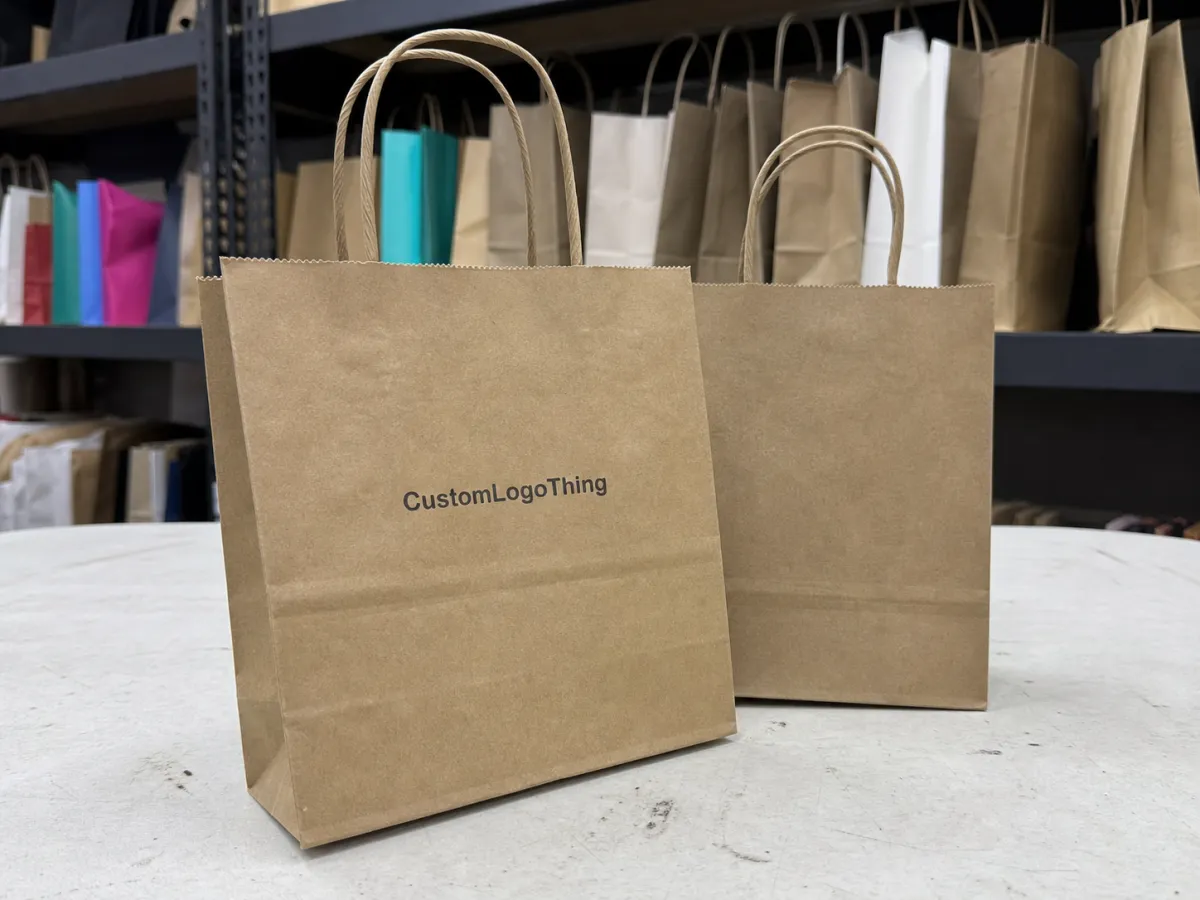
The first surprise for a lot of buyers is that reducing bag size does not automatically reduce unit cost. Board usage may drop, but the factory still has to run the same basic sequence: convert the paper, print it, fold it, attach the handles, inspect it, and pack it. Some of those steps are highly fixed. A machine setup for 2,000 bags can take nearly the same amount of time and attention as a setup for 10,000.
That is why Small Retail Paper Bags unit cost often behaves less like a simple material calculation and more like a shared-cost model. The smaller the run, the more expensive the setup becomes on a per-piece basis. Buyers sometimes compare only the finished dimensions, then wonder why two bags with almost identical measurements land at very different prices. The answer is usually in the details: paper grade, board thickness, print colors, handle type, and whether the bag needs a special finish.
There is also a practical retail point here. A smaller bag can still feel premium if the folds are crisp, the gussets are consistent, and the print holds registration. Stores rarely get credit for choosing the cheapest bag. They do get credit for a bag that survives the handoff at checkout and still looks good when the customer reaches the car. A unit cost that is slightly higher can still be the better business decision if it cuts complaints, reprints, and damaged contents.
That is why the real question is not how small the bag can be. It is how lean the specification can get while still doing the job the store actually needs.
Choose the Right Bag Style for the Store Use Case
Bag style affects both brand perception and pricing. Some constructions are built for efficiency; others are built for a stronger visual impression. If the style does not match the use case, the bag often ends up more expensive than necessary because the factory has to add material or labor to compensate for a design that was never meant for the load.
SOS bags are common for counter service and lightweight takeaway items because they stand open well and convert efficiently. Pinch-bottom bags are better for flatter items, but they are not the best choice if the bag must stand neatly on a retail counter for long periods. Flat-handle bags are practical and economical for many apparel and gift programs. Twisted-handle bags usually read as a little more polished and often fit boutique retail well. Die-cut-handle bags have a clean, modern appearance, though the handle opening needs enough reinforcement to avoid tearing under load.
For lightweight clothing or accessories, a twisted-handle or die-cut-handle bag can provide enough strength without overbuilding. For cosmetics, small home goods, candles, or premium checkout packaging, a heavier board and a better print surface may be worth the additional spend. For simple counter service, a plain kraft structure often produces the best balance of durability and cost.
It helps to compare styles by what they actually do, not by how they look in a mockup.
| Style | Best Use | Typical Cost Behavior | Buyer Notes |
|---|---|---|---|
| SOS | Counter service, lightweight carry-outs | Usually lower tooling and setup pressure | Efficient, but less premium in presentation |
| Flat-handle | Apparel, gift, general retail | Moderate cost with stable production | Often a strong value at higher quantities |
| Twisted-handle | Boutiques, specialty retail | Slightly higher due to handle labor | Good balance of appearance and price |
| Die-cut-handle | Modern retail, promo packs | Can rise with reinforcement and finishing | Clean look, but check the load target carefully |
The right construction is the one that holds up in daily use without paying for features the customer never notices.
Paper, Print, and Finish Specifications That Move the Quote
Paper choice is usually the fastest place for a quote to move. Kraft, white kraft, SBS, C1S artboard, recycled stock, and laminated papers all behave differently in production. They also behave differently once they reach a store register. Basis weight matters as well. A 120 gsm kraft bag and a 180 gsm artboard bag can share the same dimensions and still sit in very different price bands.
If recycled content is required, say so early. If virgin kraft is acceptable, say that too. Those decisions affect raw material sourcing, available sheet sizes, and sometimes the amount of waste the factory must trim. Print coverage matters in the same way. A single-color logo is much easier to run than a full-bleed design with multiple spot colors and heavy ink coverage. Pantone matching can add proofing time, especially on coated stocks where color response is less forgiving.
Finishes can be useful, but they should earn their place. A matte aqueous coating can improve scuff resistance without creating a glossy retail look. Soft-touch lamination looks refined, yet it adds cost and can complicate recycling. Rope handles, cotton handles, and reinforcement patches all add labor. None of those features are bad. They just need to do something useful for the brand or the load.
If the goal is to control small retail Paper Bags Unit cost, the best move is to tighten the spec before asking for pricing. Finished size, exact paper, print count, handle style, and coating choice will produce a far cleaner quote than a vague request for “custom bags with logo.” The more complete the brief, the less the supplier has to assume. That matters because assumptions are expensive.
There is one more detail buyers sometimes skip: bag orientation and pack format. A bag that packs efficiently can reduce freight and warehouse handling. On a small program, that may matter almost as much as the paper grade itself.
Small Retail Paper Bags Unit Cost Drivers
Small Retail Paper Bags unit cost usually moves in a predictable order: material, print setup, quantity, pack-out, and freight. Quantity is often the biggest lever because setup charges get spread across more units. That is why a 3,000-piece order can have a noticeably higher unit price than a 10,000-piece order even if the bag design is simple.
For many custom retail paper bags, a practical range at moderate quantities is roughly $0.16 to $0.42 per unit. Simple kraft builds can sit below that range, while premium bags with heavier board, multi-color print, or specialty finishes can move above it. The range is wide because the bag spec is doing most of the work. Size alone is not enough to predict price.
MOQ changes the math quickly. A supplier may price 2,000 units at one rate and 10,000 units at a much better tier because the same plates, make-ready, and inspection labor are being spread over far more cartons. That is also why small runs often feel expensive relative to the product value. The factory still has to set up the line even if the order is modest.
A few choices usually deliver the clearest savings:
- Simplify paper grade if the bag does not need premium stiffness or surface quality.
- Limit print coverage if a clean logo is enough for shelf recognition.
- Standardize handles instead of requesting a custom color or specialty build.
- Lock the specification before quoting so tooling and proofing do not reset midstream.
Pack-out deserves more attention than it usually gets. A bag that ships efficiently may cut freight and handling costs enough to beat a slightly cheaper board choice. That is one reason landed cost is a better metric than unit cost alone. The carton is part of the bill.
For buyers comparing quality expectations, industry references such as ISTA for transport testing and FSC for responsible fiber claims can help define the standard. They do not price the bag, but they shape what a defensible spec looks like.
Process, Proofs, and Production Timeline
A quote is only the opening move. The real workflow runs through RFQ, spec confirmation, artwork review, proof approval, production, and shipment. Each stage can move quickly when the information is complete. Each stage can also slow down if the buyer changes the construction after pricing has already been built.
The slowest part is usually one of three things: artwork cleanup, sampling, or color approval. Vector files are easier for the factory to handle than low-resolution images. If the brand needs a precise Pantone match, proofing may take longer because one more adjustment is often needed before production starts. If the bag uses a new structure or an unfamiliar handle type, a sample is often worth the time. A small delay there can prevent a much larger mistake later.
Typical lead times often land around 12 to 18 business days after proof approval for straightforward runs, though that depends on the factory, the season, and the material stack. A simple kraft bag with one-color print can move faster than a laminated, multi-color bag with reinforcement and special finishing. Large quantities, imported materials, or late-stage art changes can push the schedule out further.
One practical rule helps a lot: send the exact spec you want quoted. Not a rough version. Not a placeholder. The more the production team has to interpret, the more likely the final number shifts later. For small retail paper bags unit cost, schedule drift and pricing drift usually come from the same place: incomplete information.
Clean jobs are rarely mysterious. They are just specific.
Quality Checks That Protect Retail Presentation
Retail bags do not need laboratory-level inspection, but they do need enough control to stay presentable and functional. Load testing, glue-line inspection, handle attachment checks, print registration, and fold consistency are the basics. If any of those slip, the bag looks cheaper than it should and may fail before it reaches the customer’s car.
Edge quality matters more than many buyers expect. A crisp cut edge and a properly set fold give the bag a cleaner silhouette at the counter. Fold memory matters too. If the bag springs open awkwardly or refuses to sit flat in a stack, it creates friction for store staff. Consistent gusset depth is another quiet issue. When it drifts, the bag does not stack well and the retail presentation starts to look uneven.
It also helps to separate cosmetic defects from functional failures. A tiny ink speck may be annoying, but a weak handle attachment turns into a customer complaint. That is a different level of problem. Buyers should define acceptable defect levels before production starts so both sides know what counts as a reject and what counts as normal variation.
On repeat programs, disciplined QC protects the economics over time. Fewer returns, less rework, and fewer emergency reprints keep the true unit cost stable. That is where the phrase small retail paper bags unit cost becomes more than a quote number. It becomes a measure of how controlled the program really is.
Good suppliers should be able to explain their inspection points without hesitation. If they cannot clearly describe how they check handles, board caliper, and print alignment, that is a warning sign worth paying attention to.
Common Ordering Mistakes That Inflate Cost
The most expensive mistakes are often the ordinary ones. Missing dimensions. Vague artwork files. Changing the print count after pricing. Leaving freight terms undefined. Not specifying the load requirement. Each one can create rework, extra proofs, schedule slips, or avoidable shipping charges.
A common example is asking for “the same bag, but smaller” without naming what should stay the same. If the bag shrinks but the handle, paper grade, and finish remain premium, the quote may not move much at all. Another common problem is comparing quotes that are not truly comparable. One supplier may include reinforcement and freight; another may quote only factory gate pricing. That makes the lower number look better on paper even if the landed price is higher.
Changing specs late in the process is another fast way to lose cost control. A new finish, a different handle, or a revised logo position can reset tooling and alter setup charges. The longer a buyer waits to lock the spec, the more likely the final price will drift.
A simple checklist helps keep the order clean:
- Confirm finished size and gusset depth.
- Confirm paper type, basis weight, and color.
- Confirm print colors, logo placement, and side coverage.
- Confirm handle style and reinforcement.
- Confirm quantity, destination ZIP code, and carton preferences.
The best habit is also the least glamorous: approve one finished spec sheet before asking for pricing. That single step reduces quote noise more than most buyers expect.
What to Send for a Faster, More Accurate Quote
If the goal is a fast and accurate buyer quote, send the factory what it needs to price the job as it will actually run. That means finished dimensions, quantity, paper type, print colors, handle style, and delivery ZIP code at a minimum. Artwork files help. A reference sample helps. A short note on the bag’s intended use helps too.
Budget range matters as well. It does not force the supplier to guess low. It gives them a chance to propose the right construction for the target instead of forcing a premium build into a budget number. If two options are under consideration, ask for both. For example, one version might use standard kraft with a one-color logo, while the other uses a heavier board and a coated finish. Seeing both numbers side by side makes the trade-off easier to judge.
When reviewing the quote, check more than the headline price. Confirm whether freight is included, whether proofing is included, whether the MOQ matches your real need, and whether the packaging method is clearly stated. Small omissions can change the final landed cost more than a modest change in paper grade.
For most buyers, the best decision filter remains small retail paper bags unit cost, but only after the spec has been locked and every supplier is pricing the same build. Compare the tight options, request a sample if presentation matters, and choose the version that balances retail appearance with repeat-order economics rather than the one that only looks cheapest in the first email.
What drives small retail paper bags unit cost the most?
Quantity usually has the biggest effect because setup cost gets spread across more pieces. Paper grade, print coverage, handle style, and freight are the next major drivers. On short runs, shipping can matter more than buyers expect.
What MOQ should I expect for custom retail paper bags?
MOQ varies by construction and print method. Simple kraft bags are often available at lower quantities, while bags with premium print or specialty handles usually require a higher minimum. Ask for the MOQ on the exact size and finish you plan to order.
Are kraft bags usually cheaper than coated paper bags?
Yes, uncoated kraft is often lower cost, but the full specification matters more than paper type alone. Heavy print coverage, special coatings, or reinforced handles can narrow the price gap quickly.
How long does custom paper bag production usually take?
Lead time depends on proof approval, tooling, and quantity. Straightforward runs can move in about 12 to 18 business days after approval, while complex structures, sampling, or revised artwork usually extend the schedule.
What should I send to get an accurate unit-cost quote?
Send finished dimensions, quantity, paper choice, print count, handle style, and destination ZIP code. Add artwork files and a reference sample if you want the pricing to reflect a specific look or finish.

