Dad Hats Unit Cost Breakdown: Know What Drives Your Quote
A useful dad hats Unit Cost Breakdown starts with one correction: the blank cap is rarely the whole story. On smaller runs, decoration, setup, sampling, and packaging can rival or exceed the hat itself. Fixed work does not shrink just because the order is modest.
Dad hats often price better than structured caps because the build is simpler. The crown is unforced, the profile is low, and the construction usually requires fewer steps before branding begins. That does not make every dad hat cheap, but it does give buyers a lower base before spec upgrades are added.
Decoration is the other major swing factor. A clean front embroidery run may add only a modest premium per unit. A patch, raised stitch, extra location, or custom trim can move the quote much more quickly. That is why it helps to separate the cap from the decoration when reviewing pricing.
Why Dad Hats Often Win on Cost Per Cap
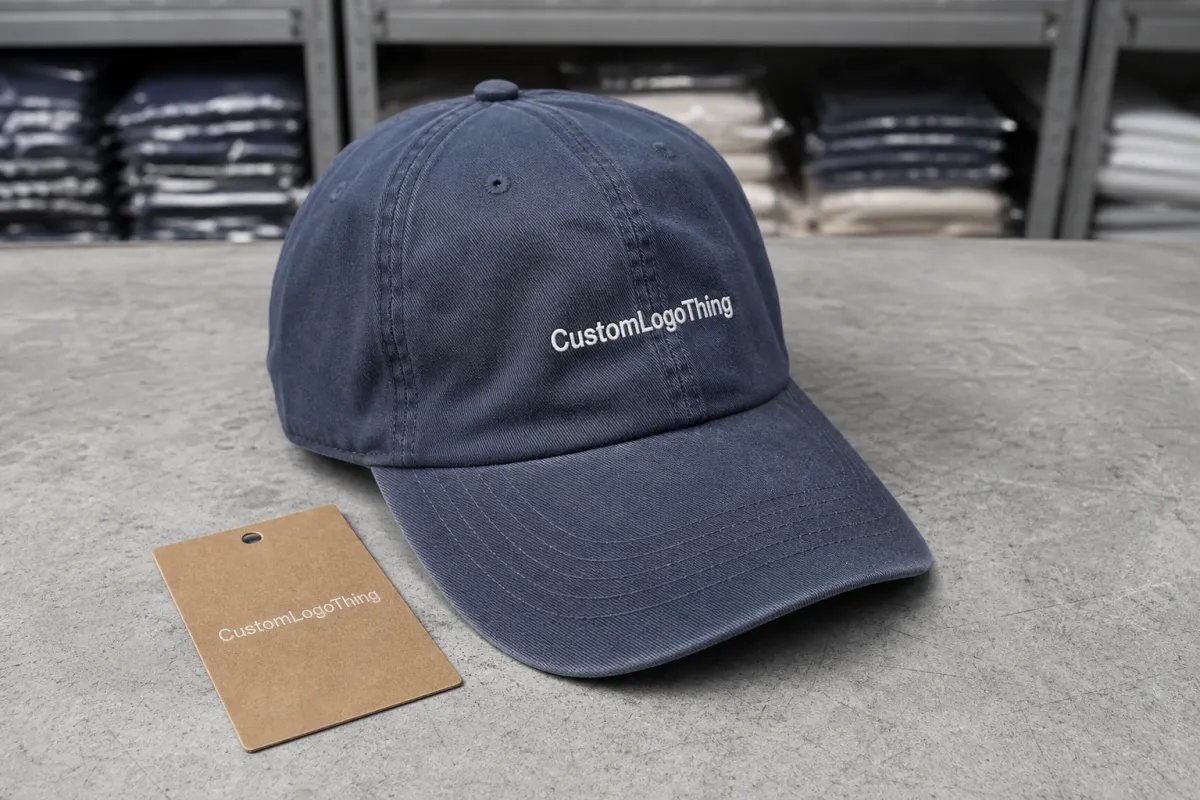
Dad hats are attractive in production because the build is straightforward. The crown is unstructured, the brim is curved, and the closure is usually adjustable. Those choices reduce material use and keep handling simpler than on more engineered caps.
Structured hats bring more internal support, firmer front panels, and more work to hold the shape consistently. That can be desirable for the design, but it also means more components and more labor. A dad hat usually starts from a lower base cost, then rises depending on decoration and trim.
A quote is more predictable when the spec is tight than when every detail is still being negotiated after pricing starts.
The gap becomes clearer on smaller orders. A 50-piece run carries nearly the same setup burden as a 300-piece run, so the unit price at the low end often looks high. Once the order grows, those fixed charges spread across more caps and the per-piece number drops. In many cases, the raw cap price changes less than the setup burden does.
That is why buyers should avoid focusing only on the finished unit total. If one supplier includes setup, decoration, and packaging while another folds them into one line, the second quote may look cheaper than it really is. The structure of the quote matters as much as the amount.
What Goes Into a Dad Hat Build
A standard dad hat usually has four core elements: an unstructured crown, a curved brim, an adjustable back closure, and a low-profile fit. Most are made from cotton twill, washed cotton, brushed cotton, or corduroy. Typical twill weights often land around 280-320 gsm, though that varies by supplier and finish.
These details affect cost more than buyers expect. Panel count matters, but seam finish, sweatband quality, brim construction, and closure style all add labor. A self-fabric strap is usually cheaper than a metal buckle. A premium buckle may look small in the mockup, but it changes sourcing, assembly, and inspection.
Standard trims keep the order efficient. Upgrades are where the quote begins to climb:
- Woven labels sewn inside or at the back strap
- Sandwich brims with contrast edge detailing
- Contrast stitching for a more visible finish
- Metal buckles instead of a basic fabric closure
- Inside taping or branded labels for retail presentation
Buyers often add more trim than the design needs. That can make sense for a premium retail cap, but for a simple promotional piece, the extra detail rarely adds enough value to justify the cost. If the logo already carries the design, the cap does not need to do everything else too.
Specs That Move Per-Unit Pricing on Custom Caps
Three levers usually move the price: cosmetic upgrades, labor complexity, and material changes. Buyers often look at artwork first, but the spec behind the artwork is what changes the math.
Cosmetic upgrades include woven patches, leather patches, contrast stitching, multiple embroidery locations, and premium trim. These additions may not use much more raw material, but they create more handling time. A patch can look minor in design review and become a separate production step on the floor.
Production labor rises with stitch count and placement complexity. A compact front logo with 5,000 stitches is usually easier to price than a larger emblem with 12,000 stitches, fill work, and fine edge detail. Side and back embroidery add more alignment risk and more machine time.
Material changes include heavier fabric, specialty washing, custom closures, and custom labels. A leather strap with a brass buckle is not just a style choice. It is a different procurement chain, a different assembly flow, and a different inspection point.
Artwork size matters too. A compact mark that fits a clean embroidery field is usually the least expensive branded option. If the file is too detailed, the factory may simplify it, digitize it more aggressively, or recommend a patch. That can improve legibility, but it can also change cost.
Ask suppliers to split the quote by component. Blank cap, decoration, setup, packaging, and freight should each be visible. If the vendor only sends one number, the extras may be buried somewhere else. A transparent quote is easier to compare and harder to misread.
Dad Hats Unit Cost Breakdown: Pricing, MOQ, and Setup Fees
A practical dad hats Unit Cost Breakdown should show which charges repeat and which ones disappear on reorders. The main line items are usually the blank cap, decoration, digitizing or setup, trim upgrades, packaging, and freight. That split matters because a cheap-looking quote can become expensive once the hidden items surface.
MOQ matters because fixed costs need volume to soften them. A 50-piece order often carries the same digitizing charge or patch setup fee as a 300-piece order, so the unit price rises quickly. That is normal. It usually means the order is too small to absorb the work efficiently, not that the supplier is padding the number.
Illustrative pricing for a standard front-embroidered dad hat, excluding shipping, often looks something like this:
| Quantity | Blank Cap | Decoration | Setup / Digitizing | Packaging | Estimated Unit Cost |
|---|---|---|---|---|---|
| 50 units | $3.20-$5.25 | $1.25-$2.80 | $0.60-$1.60 | $0.35-$0.90 | $5.40-$10.55 |
| 100 units | $2.40-$4.10 | $1.05-$2.40 | $0.30-$0.80 | $0.30-$0.70 | $4.05-$8.00 |
| 300 units | $1.85-$3.20 | $0.80-$1.85 | $0.10-$0.30 | $0.22-$0.55 | $2.97-$5.90 |
The table shows the pattern clearly. The blank cap price moves, but not nearly as much as the fixed work does. Once an order passes the smallest quantity band, the unit cost often drops because setup charges are spread more efficiently. A 100-piece run can price much better than 50 even when the design is unchanged.
Decoration method is the next major swing factor. Simple front embroidery is usually the least expensive branded option. Woven patches, leather patches, puff embroidery, and multiple embroidery placements can all add cost quickly. They are not interchangeable, even if the mockup makes them look similar.
Packaging belongs in the math too. A polybag, size sticker, insert card, or branded hangtag may only add cents, but cents matter when margins are tight. If the shipment needs FSC-certified paper for inserts or hangtags, that should be priced early. For transit protection, ISTA testing standards are a practical reference point for vendors handling more fragile pack-outs.
Production Steps, Timeline, and Lead Time
The production path is not complicated, but delays tend to cluster in a few predictable places. Artwork approval comes first. After that, most orders move through digitizing, sample stitch-out, bulk sewing, decoration, quality control, and packing. If one stage slips, the whole timeline shifts.
Revisions are the biggest time sink. Color matching can also slow things down, especially if the brand wants a specific Pantone thread or a closure that is not already stocked. Custom patches, specialty buckles, and unusual wash treatments add another layer of sourcing risk.
For a standard embroidery run, a realistic lead time is often 12-18 business days after proof approval. Orders with custom patches, mixed colors, or specialty trims usually need more time. Smaller runs can move faster because they are simpler to stitch and inspect. Larger runs can move slower because more pieces mean more sewing time and more quality checks.
Quality control should be specific, not vague. Good checks include stitch density, logo placement, seam symmetry, color consistency, brim shape, closure strength, and label placement. On hats, a front logo that sits a few millimeters off-center is noticeable. So is a crown that pulls unevenly.
Approving one clean sample before bulk work starts usually saves time later. It also limits the chance of a misunderstanding about thread color, patch size, or closure choice. A clear stitch-out approval and a written spec sheet do more for timing than repeated back-and-forth after production has started.
How We Keep Quotes Tight Across Reorders
Repeat orders are where good documentation pays off. If the logo file has already been digitized, the closure has already been approved, and the trim list is already saved, the quote becomes steadier. The factory does not need to rebuild the job from zero, which lowers the odds of surprise pricing.
Material consistency matters as much as artwork consistency. Cotton twill can vary in feel depending on wash treatment and finishing. Washed cotton usually looks softer but may show more variation between dye lots. The same applies to metal components, where finish availability and plating quality can move the price more than the buyer expects.
Ask for three things before approving production:
- Sample photos of the stitch-out or patch placement
- Trim confirmation for closure, labels, and any metal parts
- Written spec sheet listing fabric, decoration method, and packaging
That spec sheet is the anchor for future reorders. Without it, a supplier may swap a buckle, alter label width, or change fabric weight and call it equivalent. The cap may still look close, but the unit cost can drift. A documented spec reduces that drift, which is often more valuable than negotiating a few cents off the first order.
Freight deserves the same discipline. A box count, carton size, and packing format should be confirmed before shipment, especially if the order includes inserts or rigid packaging. Small changes in pack-out can change cubic volume, and cubic volume affects landed cost more than many buyers realize.
Next Steps to Lock In a Cleaner Hat Order
A cleaner quote begins with a complete brief. Send the logo file, quantity, closure preference, target ship date, and any color standards together. That gives the supplier enough information to price the order properly before sampling starts. It also reduces the chance of a revision cycle that eats both time and margin.
Ask for two versions of the quote: one showing the decorated unit cost, and another showing the total landed cost with packaging and freight. Those are not the same number, and they answer different questions. The first helps compare suppliers. The second shows what the order will actually cost once it reaches the dock.
Most of the price control sits in four decisions:
- Keep the logo within a stitch-friendly size.
- Use standard fabric and a common closure unless the brand truly needs something else.
- Avoid extra decoration locations unless they change the cap in a meaningful way.
- Approve one sample early so revisions do not turn into avoidable setup costs.
The most useful dad hats Unit Cost Breakdown is the one that can be explained without hand-waving. If the quote separates blank cap, decoration, setup, packaging, and freight, the buyer can compare it with confidence. If it does not, the missing lines should be requested before production begins. The cheapest number on paper is not always the cheapest order in reality, and caps are a good reminder of that.
What is included in a dad hats unit cost breakdown?
A proper breakdown should show the blank cap, decoration method, setup or digitizing, trim upgrades, packaging, and freight. It also helps to know which charges are one-time and which repeat on reorder, because that changes the real per-unit cost.
How does MOQ change dad hat pricing per unit?
Lower MOQ levels usually raise the cost per piece because fixed setup work is spread across fewer units. Pricing often improves at common volume breaks, so it is worth comparing 50, 100, and 300 unit scenarios before choosing a run size.
Which decoration choice usually keeps custom dad hats cheapest?
Simple front embroidery with a limited thread palette is usually the lowest-cost branded option. Patches, heavy stitch coverage, and multiple embroidery locations add labor and material costs quickly.
How can I reduce my dad hat unit cost without changing the design?
Keep the artwork within a stitch-efficient size, use standard materials, and avoid unnecessary trim upgrades. One clean sample approval early in the process can also prevent revision charges later.
What should I compare when reviewing hat quotes from suppliers?
Match the exact specs first: fabric, closure, decoration method, packaging, and turnaround time. If a quote omits setup, digitizing, samples, or freight, it is not a complete dad Hats Unit Cost Breakdown.

