Logo Patch Beanies Unit Cost Breakdown for Bulk Orders
If you are pricing winter merch, the logo patch Beanies Unit Cost Breakdown can look simple until the first quote arrives. Then the numbers split into blank beanie cost, patch type, attachment labor, setup work, packing, and freight. That is the real structure, not the hat alone.
A plain beanie is easy to compare because it is mostly knit goods. Add a patch and the order becomes a small production project. Woven, embroidered, leather, PVC, and silicone patches each change the price and the look. Knit weight affects placement, quantity changes how much setup gets absorbed per piece, and even cuff width can matter if the logo has to sit centered and level.
Why Patch Beanies Often Sell Better Than Plain Knits
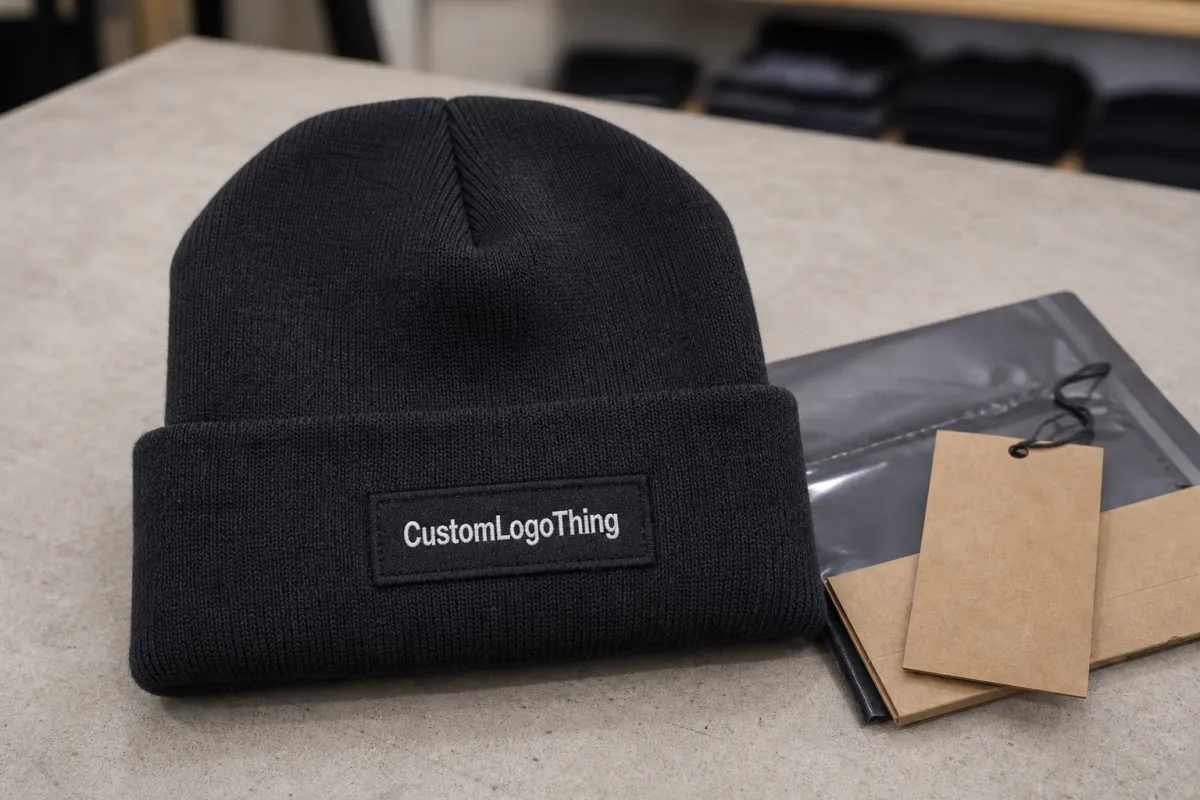
A patch gives a beanie a clear focal point. On a shelf, in a kit, or at a merch table, the logo reads faster and the product feels more finished. That matters in retail programs, team apparel, and promotional orders where decoration helps justify the price.
Patches also solve some decoration problems that embroidery on stretch knit can create. A stable front patch area often gives a cleaner logo read than stitches fighting with rib texture. For buyers, that can mean better presentation without moving to a much higher retail tier.
The tradeoff is fit. A premium patch on a thin loose knit can look oversized, while a tiny patch on a thick rib cuff can disappear. The best orders match patch size, material, and knit weight so the logo reads at normal viewing distance.
Patch Styles, Knit Fabrics, and Finish Options
Patch style is the first major cost driver. Woven patches are usually the most economical option for crisp text and small details. Embroidered patches add texture and a more classic retail feel. Leather patches read as understated and premium. PVC and silicone create a molded look with strong contrast, but they usually need more tooling and tighter production control.
These choices are not cosmetic only. Woven patches can reproduce fine lettering better than embroidered patches when the logo is small. Raised embroidery can look richer, but thin lines may disappear. Leather works best for simple marks and fewer colors. PVC and silicone are useful for bold modern branding, but the file needs to be clean and approval should not be rushed.
The beanie base matters as much as the patch. Acrylic is usually the most budget-friendly and predictable material. Wool blends and heavier yarns raise the base cost but can improve hand feel and winter performance. Rib knit is common because it stretches well. Flat knit can look sleeker, though placement needs more care because there is less texture to hide minor shifts.
Cuffed beanies are usually the easiest to decorate because the cuff gives the patch a stable landing area. Uncuffed styles can feel more modern, but the logo area is less structured, so placement accuracy matters more. If the order requires side placement, wrap labeling, or a custom badge position, expect more labor and more sample scrutiny.
| Patch style | Typical added cost per unit | Visual character | Best fit |
|---|---|---|---|
| Woven patch | $0.20-$0.45 | Flat, clean detail, light finish | Bulk promos, uniforms, small text |
| Embroidered patch | $0.25-$0.60 | Raised texture, traditional retail look | Classic logos, stronger tactile presence |
| Leather patch | $0.35-$0.85 | Premium, restrained, matte finish | Outdoor brands, lifestyle merch, premium sets |
| PVC or silicone patch | $0.50-$1.20 | Molded, sharp edges, modern appearance | Bold branding, structured retail programs |
One common mistake: choosing the patch before checking the knit. A heavy molded patch on a thin beanie can pull the cuff out of shape. A very small patch on a thick rib knit can get lost. Good buyers compare patch size, cuff width, and knit gauge before they compare finish options.
The lowest quote is rarely the lowest-cost decision if the logo reads badly and the first shipment needs fixing.
Logo Patch Beanies Unit Cost Breakdown
A useful Logo Patch Beanies unit cost breakdown starts with five parts: blank beanie cost, patch production, patch attachment labor, setup charges, and packing. Freight sits outside the factory line item unless the quote is explicitly landed. Those pieces are easy to separate on paper, but casual email quotes often bundle them together.
At bulk volume, a basic acrylic cuffed beanie may run about $1.10-$1.80 before decoration. Add a simple woven or embroidered patch, and the decorated unit can move into the $2.20-$3.40 range before freight, depending on quantity and artwork complexity. Leather, PVC, and silicone usually push higher because the patch itself costs more to make and may require tooling or mold setup.
Setup charges are the line item most buyers underestimate. Patch setup, artwork cleanup, digitizing, die work, or mold fees can sit anywhere from $35-$120 for a standard job, and more for complex molded patches. Spread across 100 units, that fee matters. Spread across 1,000 units, it becomes far less visible.
Small extras can also add up: custom labels, individual folding, polybags, retail inserts, thread color changes, placement revisions, and rush scheduling. None of them alone usually wreck a budget, but several together can turn a fair quote into a stiff one. Factories treat them as real production work because they are.
- 100 units: about $4.80-$8.50 each, depending on patch complexity and beanie quality.
- 300 units: about $3.70-$6.20 each.
- 500 units: about $3.20-$5.40 each.
- 1,000 units: about $2.60-$4.50 each.
Those ranges are not promises. They are the shape of normal bulk pricing. If a quote falls far below them, something is probably missing: decoration detail, packing, freight, or the quality level you assumed was included.
The key is to separate low price from efficient price. A cheap unit cost can still be a bad buy if the patch is too small, the beanie loses shape after wear, or the shipment arrives packed so tightly that the cuff marks do not recover.
MOQ, Samples, and Pricing Tiers
MOQ changes the math fast. For woven and embroidered patch beanies, many suppliers are comfortable in the 100-300 unit range. Leather, PVC, and silicone patches often start higher, commonly around 300-500 units, because the setup work is less forgiving and the factory needs enough volume to recover tooling or mold cost. If an order is smaller than that, the unit cost rises because fixed work is divided across fewer hats.
Sample fees usually sit outside the production price. A mockup or pre-production sample might run $25-$80, with molded patch samples sometimes higher. Some factories credit the sample fee back if the bulk order goes forward. Some do not. That difference is worth clarifying before anyone approves the art.
Pricing tiers are rarely smooth. The jump from 100 to 300 units often saves more than the jump from 500 to 700, because setup costs are already absorbed and production runs more efficiently once the line is moving. Buyers who can increase quantity without creating dead stock usually get the best unit economics.
Three choices tend to lower cost without making the product feel stripped down:
- Use a simpler patch shape with fewer edges and cleaner borders.
- Keep the logo to one or two colors if the design permits it.
- Choose a standard beanie color such as black, navy, gray, or heather.
Simple designs often look better once they are scaled to a cuff patch. Fewer colors improve consistency between batches, which matters on reorders.
Production Timeline and Quality Control
Most patch beanie orders follow a predictable sequence: artwork intake, mockup, sample or pre-production approval, bulk production, inspection, packing, and shipment. If the supplier is organized, that process is steady. Delays usually come from missing vector art, late approval, or design changes after the sample has already been signed off.
Lead times for standard orders are often 12-20 business days after final approval. That window can extend if the patch is molded, the yarn is premium, the quantity is large, or the order needs retail packing and special labeling. Rush jobs are possible, but only when the artwork is locked, the production slot exists, and shipping is simple enough to handle quickly.
Quality control should be more than a photo of the first sample. Buyers should check patch alignment, thread consistency, edge finishing, label placement, and color match against the approved file. For cuffed styles, the logo should sit level on the fold and remain centered after stretching. For wool blend beanies, the fabric should be checked for scratchiness and uneven knitting. For leather or PVC patches, inspect surface finish for bubbles, cracks, or irregular edges.
Packing matters too. Hats crushed into undersized cartons can lose shape before they reach the end user. Retail units may need individual polybags, size stickers, or insert cards. Bulk packs may need clearer carton labels and count verification. If shipping conditions are rough, carton-strength guidance such as ISTA transit test guidance is a useful reference point.
If the order uses recycled packaging or paper inserts, specifications should be locked before production, not after. Standards from FSC certification can help define the paper source early so a recycled claim is based on actual materials rather than a guess in email.
How Repeat Buyers Control Reorder Costs
Repeat buyers usually pay less because they stop rebuilding the order from scratch. A proper spec sheet with patch dimensions, backing type, thread colors, placement distance, packaging method, and carton count prevents the small errors that become expensive on reorder. A tiny change on paper can mean a new setup charge in production.
Consistency is the hidden savings engine. If the logo file changes, the patch size shifts, or the cuff placement is different, the factory may need a new sample or at least a new approval round. Each adjustment adds time, and time is where margin gets eaten.
Quality issues also hit repeat orders harder than first runs because buyers expect the second round to be smoother. A patch sewn too high, a shade that drifts from the approved sample, or a label moved without notice can undo the value of a supposedly efficient reorder. In practice, the cheapest reorder is the one that does not need correction.
Transparent line items help here. A simple quote is fine for a one-time purchase, but ongoing programs benefit from seeing what changed: material, decoration method, setup, packing, freight mode, or delivery timing.
How to Quote the Order Correctly
If you want a usable quote, send the essentials first: logo file, target quantity, beanie color, patch style, and delivery deadline. If packaging matters, add that too. If the order has a target landed cost, say it early.
Ask for pricing at 100, 300, 500, and 1,000 units if possible. That ladder shows where the unit cost starts to fall and whether it is worth stepping into the next bracket. Sometimes the savings are modest, and staying conservative makes sense. Sometimes the jump is large enough that the extra stock pays for itself.
Before approval, check five things: patch size, stitch or mold detail, logo placement, beanie color, and packing method. If one of those changes after signoff, the quote is no longer the quote. It is a revision.
For a strong Logo Patch Beanies unit cost breakdown, do not stop at the per-piece price. Ask what is one-time, what repeats on reorder, what is included in the production quote, and whether freight was estimated as standard or expedited. That is the difference between a number that looks good in an email and a number that survives an invoice.
Common Questions
What affects logo patch beanie unit cost the most?
Patch type usually moves the price more than the beanie itself. Order quantity, setup charges, and labor are next. Freight, rush timing, and packing can also push the final cost higher than expected.
Which patch style is usually the lowest cost?
Simple woven or embroidered patches are often the most economical. They work well for small logos and clean text. Complex molded patches usually cost more because they require more setup and more controlled production.
How does MOQ change the quote?
Lower MOQs usually raise the unit price because setup is spread across fewer pieces. Once the order crosses a larger production tier, the cost per hat often drops noticeably. That is why tiered pricing matters more than a single number.
Are sample fees part of the unit cost?
Usually not. Samples are commonly billed separately, although some suppliers credit the fee back on bulk production. Always ask before approving the sample so the final budget is clear.
What should I send to get a fast, accurate quote?
Send the logo file, target quantity, beanie color, patch style, and any packaging or delivery requirements. If you have a target landed cost, include that too. The clearer the brief, the fewer revision rounds the quote needs.
How long does production usually take?
Standard patch beanies often take about 12-20 business days after final approval. Molded patches, wool blends, large quantities, or custom packing can extend that timeline. Rush production is possible, but only if the artwork and logistics are already locked down.

