Buyer Fit Snapshot
| Best fit | Die Cut Foam Inserts Supplier projects where brand print, material claims, artwork control, MOQ, and repeat-order consistency need to be specified before quoting. |
|---|---|
| Quote inputs | Share finished size, material target, print colors, finish, packing count, annual reorder estimate, ship-to region, and any compliance wording. |
| Proofing check | Approve dieline scale, logo placement, barcode or warning zones, color tolerance, closure strength, and carton packing before bulk production. |
| Main risk | Vague material claims, crowded artwork, missing packing details, or unclear freight terms can make a low unit price expensive after revisions. |
Fast answer: Die Cut Foam Inserts Supplier: Material, Print, Proofing, and Reorder Risk should be specified like a repeatable production item. The safest quote records material, print method, finish, artwork proof, packing count, and reorder notes in one written spec.
Production checks before approval
Compare the actual filled-product size with the drawing, then confirm tolerance on folds, seals, hang holes, label areas, and retail display edges. Reserve space for logos, QR codes, warning copy, and material claims before decorative graphics fill the panel.
Quote comparison points
Review material grade, print process, finish, sampling route, tooling charges, carton quantity, and freight assumptions side by side. A quote is only useful when the supplier can repeat the same color, closure quality, and packing count on the next order.
If a premium product shifts inside the box, customers notice before they even touch the item. That is why choosing a die cut foam inserts supplier is not a small sourcing task. It affects damage rates, assembly speed, unboxing quality, and the way a brand feels in the hand. A well-made insert can make a simple carton feel carefully engineered. A poor one makes the whole package look improvised, and that impression is hard to fix later.
From a packaging buyer’s point of view, foam is never just foam. It is clearance, compression, friction, surface protection, and packing labor wrapped into one spec sheet. A good die cut foam inserts supplier turns product risk into cavities, tolerances, and material choice instead of tossing out a generic quote. That difference separates a package that protects from a package that only fills space.
The business side gets overlooked far too often. Fewer scratches and crushed corners mean fewer claims. Better presentation means fewer complaints and fewer returns. Repacking is easier when the insert lets the product go back into place without a fight. If your team ships high-value electronics, cosmetics, tools, medical devices, collectibles, or promotional kits, a die cut foam inserts supplier is helping manage risk, not merely filling a carton.
Below, I break down how a die cut foam inserts supplier actually works, what affects fit and price, and how to compare suppliers without getting distracted by a low number that only looks good on paper.
What a die cut foam inserts supplier actually does
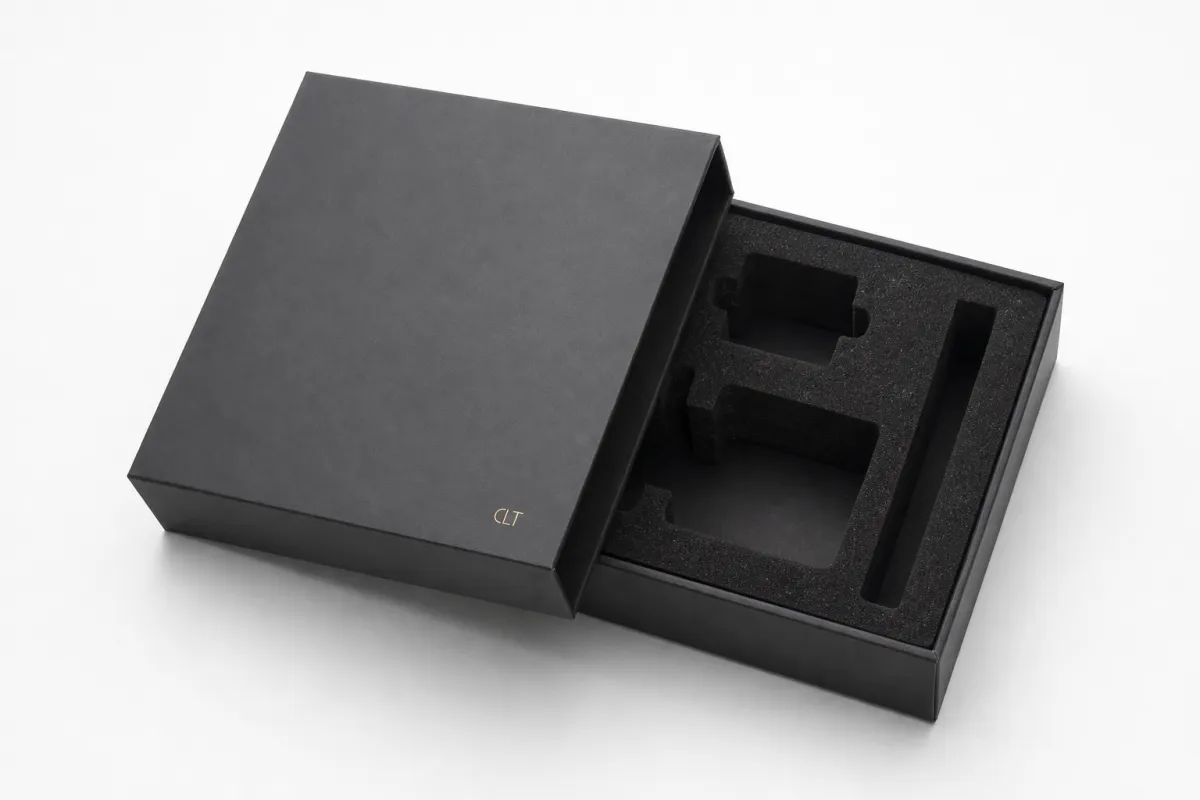
A die cut foam inserts supplier makes foam cavities to exact product dimensions so the item sits securely during shipping, retail handling, and unboxing. In plain language, the insert is cut to match the product footprint instead of leaving the product rattling around in a carton. For a phone charger, that may mean one snug pocket and one small cable recess. For a multi-part kit, it may mean several cavities with different depths so each component stays centered and easy to remove.
The point is not only protection. It is presentation. A product sitting in a well-cut insert looks intentional. A product floating in oversized packaging looks like someone guessed. Buyers notice that difference immediately, even if they cannot explain why. The die cut foam inserts supplier is responsible for making that fit feel clean, repeatable, and easy to pack.
Good suppliers do more than cut material. They look at weight, finish sensitivity, product geometry, and how the item moves through the box. Sharp corners need different foam behavior than rounded housings. A glossy surface scratches more easily than a textured one. A 4 oz accessory is a very different challenge from a 7 lb device with a metal edge. A competent die cut foam inserts supplier should ask about all of that before they start talking price.
What many buyers miss is that foam selection changes the user experience as much as the protection level. EVA usually gives cleaner edges and firmer support. EPE is lighter and more forgiving for cushioning. PU can absorb impact well but may not feel as crisp at the cut edge. Specialty foams fill the gaps for harsh transit, premium presentation, or unusual product shapes. A smart die cut foam inserts supplier will match the foam to the risk, not just to whatever is cheapest that week.
In my own packaging work, I have seen teams over-specify foam because they were trying to solve a handling problem that really came from the carton size or the loading direction. Once you separate those variables, the design gets cleaner and the quote usually does too. That part is kinda boring, but it saves a lot of hassle.
Practical rule: if the product can move, it probably will. The insert’s job is to control that movement without making packing slow or annoying.
That is why choosing a die cut foam inserts supplier is really a fit-and-risk decision. The right supplier can take a rough product brief and turn it into a cavity layout, while the wrong one just sends a quote based on a carton size and hopes nobody checks the details.
How the die cut foam inserts supplier process and timeline work
The process usually starts with an inquiry that includes product dimensions, product photos, quantity, and the box size if it is already known. If the product has irregular features, the die cut foam inserts supplier may ask for CAD files, a physical sample, or both. That is not red tape. It is how the supplier avoids building a cavity that looks right on screen and fails in the carton.
After that, the supplier builds a cut layout and reviews material options. Some jobs need a simple single-layer insert. Others need a layered build with a base cradle, a lid layer, and finger notches for removal. A strong die cut foam inserts supplier will often flag where compression could mark a finish, where a corner needs extra clearance, or where a cavity should be opened up by 1-2 mm so packing does not become a daily irritation.
The timeline is usually broken into stages: quote review, sample or prototype, revisions, production, inspection, and shipment. Simple inserts with straightforward geometry can move quickly, often in 7-12 business days after approval depending on quantity and the cutting method. More complex multi-cavity jobs, especially those with tight tolerances or layered foam, often run 12-20 business days or more from proof approval. A good die cut foam inserts supplier will state each stage separately instead of hiding behind one vague lead time.
Delays tend to come from the same few places. Measurements are incomplete. The product sample arrives late. The buyer changes accessory count after the layout is approved. Or the foam grade needs to be swapped because the first choice is unavailable. A reliable die cut foam inserts supplier will tell you which of those risks matter up front. That saves everyone from the classic packaging headache: a project that is almost ready for three straight weeks.
Here is the sequence I usually expect:
- Product details and carton size are collected.
- The supplier recommends foam type and rough cavity depth.
- A digital layout or prototype is prepared.
- The buyer checks fit, loading direction, and removal method.
- Revisions are made before cutting begins.
- Production is run, inspected, and packed for shipment.
The better a die cut foam inserts supplier is at the front end, the fewer revisions you need later. That is where real time gets saved, and where a project stops feeling like guesswork.
Key factors that decide fit, protection, and material choice
Fit starts with dimensions, but it does not end there. A cavity can be technically correct and still behave badly. If the product has a painted surface, a glossy housing, or a delicate screen, too much friction can leave marks. If the product is heavy and the cavity is too loose, the item shifts on impact and the foam stops doing its job. A seasoned die cut foam inserts supplier will talk about tolerance, not just size.
For most projects, I look at four things first: weight, fragility, surface finish, and handling method. Weight tells you how much the insert has to hold. Fragility tells you how much shock protection matters. Surface finish tells you whether the foam can rub against the product. Handling method tells you whether the product is packed once, repacked often, or removed repeatedly by end users. A die cut foam inserts supplier should ask about all four, because missing even one can lead to over-engineering or failure.
Foam selection is where the technical side gets practical. EVA is common for premium presentation because it cuts cleanly and holds shape well. EPE is often used for lighter cushioning and transit protection. PU foam can absorb impact nicely for softer support. Cross-linked PE and other specialty materials are used when the product needs firmer structure, better recovery, or a more polished appearance. A good die cut foam inserts supplier should explain why one foam is better instead of just dropping a material code on the quote and calling it a day.
There is also the question of compression. Foam that is too soft can look nice on day one and fail after a few packing cycles. Foam that is too hard can slow assembly and scuff finishes. For repeated use, I usually want enough compression to hold the product, but not so much that operators have to wrestle the item in or out. That balance is exactly where a die cut foam inserts supplier earns its keep.
Design layout matters too. One-piece inserts are simpler and cheaper. Multi-layer inserts can handle odd shapes, accessory sets, or deeper cartons. Finger notches help customers remove the product without tearing the foam. Lid clearance matters if the top of the carton presses down. If there is any chance the insert will be opened and closed multiple times, the die cut foam inserts supplier should build for that motion, not just for a single perfect photo shoot.
For shipping performance, standards matter. ISTA test methods are widely used to simulate transit hazards, and they are worth looking at before you approve a final design. The International Safe Transit Association publishes useful test information here: ista.org. If you are selecting a package material with sustainability claims, the Forest Stewardship Council is also a useful reference point for certified fiber-based components: fsc.org. A solid die cut foam inserts supplier should be comfortable talking about how the insert performs against actual handling, not just how nice it looks in a rendering.
One more practical note: a box that is too tight around the foam can make assembly harder than the insert itself. I have seen projects where the foam fit the product well, but the finished pack became awkward because the lid clearance was reduced by a millimeter or two. A careful die cut foam inserts supplier will check the whole pack, not only the product cavity.
And because buyers sometimes ask for a neat rule of thumb, here is mine: if the product finish can show a thumbprint, a scuff, or a pressure line, assume the foam design needs a second pass. That small extra review often saves the whole run from turning into a rework headache.
Die cut foam inserts supplier pricing, MOQ, and quotes
Pricing depends on more variables than most buyers expect. Foam type is one. Thickness is another. Cut complexity, cavity count, part size, and whether the insert needs a clean display edge or a hidden transit-only finish all affect the number. A die cut foam inserts supplier may also price differently depending on whether the work uses a steel-rule die, CNC knife cutting, or another cutting method. Setup time matters, and setup time is where small orders get expensive fast.
Here is the basic truth: once the design is approved, larger volumes usually reduce unit cost because tooling, setup, and labor get spread out. Small runs are absolutely possible, but the per-unit cost can be surprisingly high if the order only covers a few hundred pieces. In practice, a simple insert order might land in the $0.60-$1.50 per unit range at higher quantities, while more complex or larger multi-cavity inserts can move into the $1.50-$4.00 range or more depending on foam grade, thickness, and finishing. A good die cut foam inserts supplier will tell you what is driving the price instead of pretending all foam behaves the same.
Minimum order quantity is another spot where buyers get tripped up. Some suppliers can do prototype runs of 25-100 sets, but the unit price will reflect setup. Others are better suited to 500, 1,000, or 5,000 pieces because their process is built for scale. If your project is early-stage, ask whether the die cut foam inserts supplier offers sample cuts, short-run production, or stock foam options to get you through validation before you lock in a larger order.
Quotes also need to be compared carefully. A lower number means very little if the supplier is using a cheaper foam grade, looser tolerances, or a different freight assumption. I always want to see the same dimensions, the same cavity count, the same foam density or hardness, the same finishing requirements, and the same packaging method on every quote. Otherwise you are comparing apples to a bucket of packing scraps. A die cut foam inserts supplier should be able to spell out those assumptions in writing.
| Foam type | Typical use | Relative price | Buyer take |
|---|---|---|---|
| EPE | Lighter items, basic transit cushioning | Low to medium | Good for cost control, but can look less premium |
| EVA | Premium presentation, firmer cavity walls | Medium to high | Clean edges and better structure for display kits |
| PU | Shock absorption for softer support | Low to medium | Useful for cushioning, though not always the neatest cut |
| Cross-linked PE | Better recovery, firmer support, polished feel | Medium to high | Often chosen when presentation and protection both matter |
Hidden costs are usually the ones that hurt. Sample fees. Revision fees. Tooling changes after approval. Rush charges. Internal freight if the insert needs to be moved between facilities. And the future cost of a poor fit that creates damage claims or customer complaints. I would rather pay a fair price to a careful die cut foam inserts supplier than save a few cents and spend that money later on replacements.
Here is a quote discipline I recommend: ask the supplier to itemize sample cost, production cost, tooling or setup, lead time, and shipping separately. If they will not, ask again. A reliable die cut foam inserts supplier should not hide the structure of the quote.
Step-by-step guide to choosing the right supplier
The easiest way to choose a die cut foam inserts supplier is to start with your product, not with the supplier’s catalog. I want the product dimensions, weight, finish type, accessory list, target ship date, and the packaging use case. Is this insert for retail display, ecommerce transit, a presentation kit, or all three? That answer changes the design more than people expect.
Then I ask for proof. Not marketing fluff. Proof. Sample photos. Material options. A simple explanation of how they manage tolerances. A cut example if they have one. If the die cut foam inserts supplier cannot explain why one cavity should be 1 mm looser or why a lid needs extra clearance, they are probably quoting by habit, not by engineering judgment.
Communication speed matters more than a lot of buyers admit. If a supplier takes three days to answer basic questions during quoting, that usually gets worse after the order is placed. A good die cut foam inserts supplier should ask useful questions quickly, flag risks, and explain tradeoffs in plain language. They do not need to sound fancy. They do need to sound informed.
For a clean comparison, I usually score suppliers across five categories:
- Fit quality: Does the sample hold the product without stress marks or excessive movement?
- Lead time: Can they give a stage-by-stage schedule, not just one hoped-for ship date?
- Price clarity: Are tooling, samples, and freight separated clearly?
- Revision handling: How quickly do they respond when a cavity needs a small change?
- Scalability: Can the die cut foam inserts supplier support future volume without changing the spec on you?
I also like to ask a practical question: “What would you change first if the product is damaged in drop testing?” A serious die cut foam inserts supplier will not pretend every design is perfect. They will tell you whether the foam needs more thickness, whether the cavity needs tighter walls, or whether the product needs a second layer of support.
Another good test is how the supplier reacts to a messy brief. Real buyers rarely have perfect CAD files on day one. The better suppliers can work from measured drawings, photos with a ruler, and a sample box. A weak die cut foam inserts supplier needs a perfect spec sheet just to start the conversation. That is not a strength. That is a dependency problem.
In practice, the best supplier is often the one that makes the design conversation easier, not louder. If you leave a call with a clearer understanding of risk, tolerance, and assembly flow, you are probably talking to the right team.
Buyer lesson: if a supplier only looks good when your brief is perfect, they may not be the supplier you want when production gets messy.
Common mistakes when buying foam inserts
The first mistake is quoting from a box size alone. That is lazy, and it usually leads to a bad fit. The product cavity, loading direction, and accessory layout matter just as much as the outer carton. A die cut foam inserts supplier can only design accurately if they know how the item is placed, removed, and stored.
The second mistake is chasing the cheapest number on the page. A quote can be low because the foam is softer, the tolerance is looser, the cut quality is lower, or the supplier has left out sample work and freight. Cheap can be fine if the product is light and forgiving. Cheap is a bad idea if the item has a finish that scratches easily or a component that moves during transit. A good die cut foam inserts supplier may not be the cheapest. That does not make them expensive. It makes them less likely to cost you twice.
The third mistake is forgetting the details that actually drive performance. Product weight matters. Sharp edges matter. Coated surfaces matter. Temperature exposure matters. If the insert is going into a warehouse that gets hot in summer or cold in winter, the foam behavior can change slightly. If the item will be repacked by end users, the insert should allow easier removal. A competent die cut foam inserts supplier will ask about those conditions because they affect material choice and tolerance.
The fourth mistake is treating prototype approval like a formality. It is not. If the sample feels hard to load, needs too much force, or leaves a mark after 10 minutes in the cavity, fix it before production. Once the layout is approved, changes can add days, waste material, and trigger a new quote. That is why the best die cut foam inserts supplier relationships are built on clear approval steps, not rushed sign-offs.
The last common mistake is not testing the package in real use. A sample on a desk is one thing. A carton moving through a warehouse, truck, and customer unboxing is another. If possible, do a shake test, a light drop test, and a repack test before you commit. Industry transit tests such as ISTA methods are useful reference points, and a careful die cut foam inserts supplier should be willing to discuss them instead of shrugging and saying the foam looks fine.
Here is the blunt version: the wrong insert is usually not dramatic. It is just slightly too loose, slightly too soft, or slightly too annoying. Those small misses add up. A die cut foam inserts supplier that understands tolerance and handling can save a lot of small headaches later.
Expert tips and next steps before you request a quote
Start with the damage you want to prevent. Scratch marks? Corner crush? Movement during transit? A bad unboxing experience? That answer should guide foam choice more than a generic preference for premium material. In my experience, the best die cut foam inserts supplier conversations begin with risk, not with color or thickness.
Build a clean quote packet. You do not need a novel. You do need the product dimensions, product weight, photos from multiple angles, quantity, target ship date, carton size if known, accessory count, and any branding or presentation requirements. If the insert has to support both transit and retail display, say so. A good die cut foam inserts supplier can work with that much information and give you a far better answer than a guess.
I also recommend asking for one physical sample if the project has any real risk. Test packing speed. Test fit. Shake the carton lightly. Remove the product and put it back in. If the foam looks beautiful but slows your team down, that is not a win. A thoughtful die cut foam inserts supplier should care about the workflow, not only the appearance.
If you are comparing suppliers, use the same spec packet for all of them. Same dimensions. Same product photos. Same quantity. Same target lead time. Then compare the answers side by side. That is the cleanest way to see which die cut foam inserts supplier is actually solving the problem and which one is simply returning a price.
Before you place the order, confirm the following in writing:
- Foam type and density or hardness range.
- Target cavity tolerance and any critical clearances.
- Approval sample stage and revision limit.
- Production lead time and shipping method.
- Pack count per carton and outer packaging details.
That last step sounds boring. It is. It also prevents the sort of annoying misunderstanding that turns a reasonable project into a rushed one. A die cut foam inserts supplier worth using should have no problem confirming those points.
My final take is simple: choose the die cut foam inserts supplier that can explain tradeoffs without hand-waving. If they can tell you why a cavity should be 2 mm looser, why EVA is a better fit than EPE for your product, or why a layered insert is worth the extra setup, you are probably in good hands. If all they offer is a price and a promise, keep looking. The right die cut foam inserts supplier protects the product, supports the brand, and makes production easier instead of noisier.
What information does a die cut foam inserts supplier need for an accurate quote?
Provide product dimensions, product weight, quantity, photos, and the exact number of parts each insert must hold. Add details on fragility, surface finish, shipping method, and whether the insert is for retail display or transit protection. If you have CAD files or a sample box, send those too; fewer assumptions usually means fewer revisions. A die cut foam inserts supplier can quote faster and more accurately when the product story is complete.
How long does it take a die cut foam inserts supplier to make custom inserts?
Simple jobs can move quickly, but custom work usually includes quoting, sampling, revisions, and production scheduling. Expect faster turnaround when the design is clean and slower turnaround when the product is complex or the layout needs multiple approvals. The safest move is to ask for lead time by stage, not just one final date. A dependable die cut foam inserts supplier will tell you where the schedule can slip before it slips.
Why do quotes from different die cut foam inserts suppliers vary so much?
Suppliers may be quoting different foam grades, thicknesses, tolerances, tooling assumptions, or freight terms. Some quotes include samples and revisions, while others bury those costs elsewhere or leave them out entirely. A lower quote is not a win if the insert crushes, shifts, or creates damage claims later. That is why a die cut foam inserts supplier should always be compared on identical specs, not just on total price.
Can a die cut foam inserts supplier handle small order quantities?
Yes, but small runs often carry higher unit costs because setup time gets spread across fewer pieces. Ask whether they offer prototype runs, shared tooling, or stock foam options if you need a lower entry cost. If the product is high-value, a small run can still make sense when the fit and protection are right. A good die cut foam inserts supplier will be honest about the tradeoff instead of pretending small and cheap always belong together.
How do I choose the right foam type for my insert?
Match the foam to the product: lighter items often need cushioning, while heavier or more premium items usually need firmer support. Consider edge sharpness, finish sensitivity, temperature exposure, and how often the product will be packed and unpacked. Ask the supplier to explain why one foam is better than another instead of letting them default to whatever is cheapest. The right die cut foam inserts supplier should be able to defend the material choice in plain language.
Before you request quotes, lock your product dimensions, handling conditions, and packaging goal into one short spec sheet, then send that same sheet to every die cut foam inserts supplier you are considering. The quality of the answers will tell you quickly who understands fit, protection, and production realities, and who is just tossing numbers at the page.
Related packaging resources
Use these related guides to compare specs, costs, quality checks, and buyer decisions before making the final call.