Die Cut Handle Bags for campus bookstores moq planning is not a paperwork exercise. It decides whether a bookstore can move books, spirit wear, and event kits across checkout without overbuying stock or under-specifying the bag. A 2-cent difference in cost per piece looks small until it gets multiplied by a semester of traffic and a reorder that shows up late.
From a buyer’s point of view, the bag has two jobs. It has to carry the purchase cleanly, and it has to keep the university mark visible after the customer leaves the counter. That is why Die Cut Handle Bags for campus bookstores deserve the same planning discipline as any other retail packaging program. The difference between a workable spec and a weak one shows up in handle comfort, print clarity, shelf life in storage, and the real MOQ you can support without tying up cash.
If the order is still in the quoting stage, the sequence matters: define the load, lock the artwork, then build the order around realistic volume tiers. That order makes bulk pricing easier to judge and keeps surprise setup charges from turning a decent quote into a messy one.
Die cut handle bags for campus bookstores that move fast at checkout
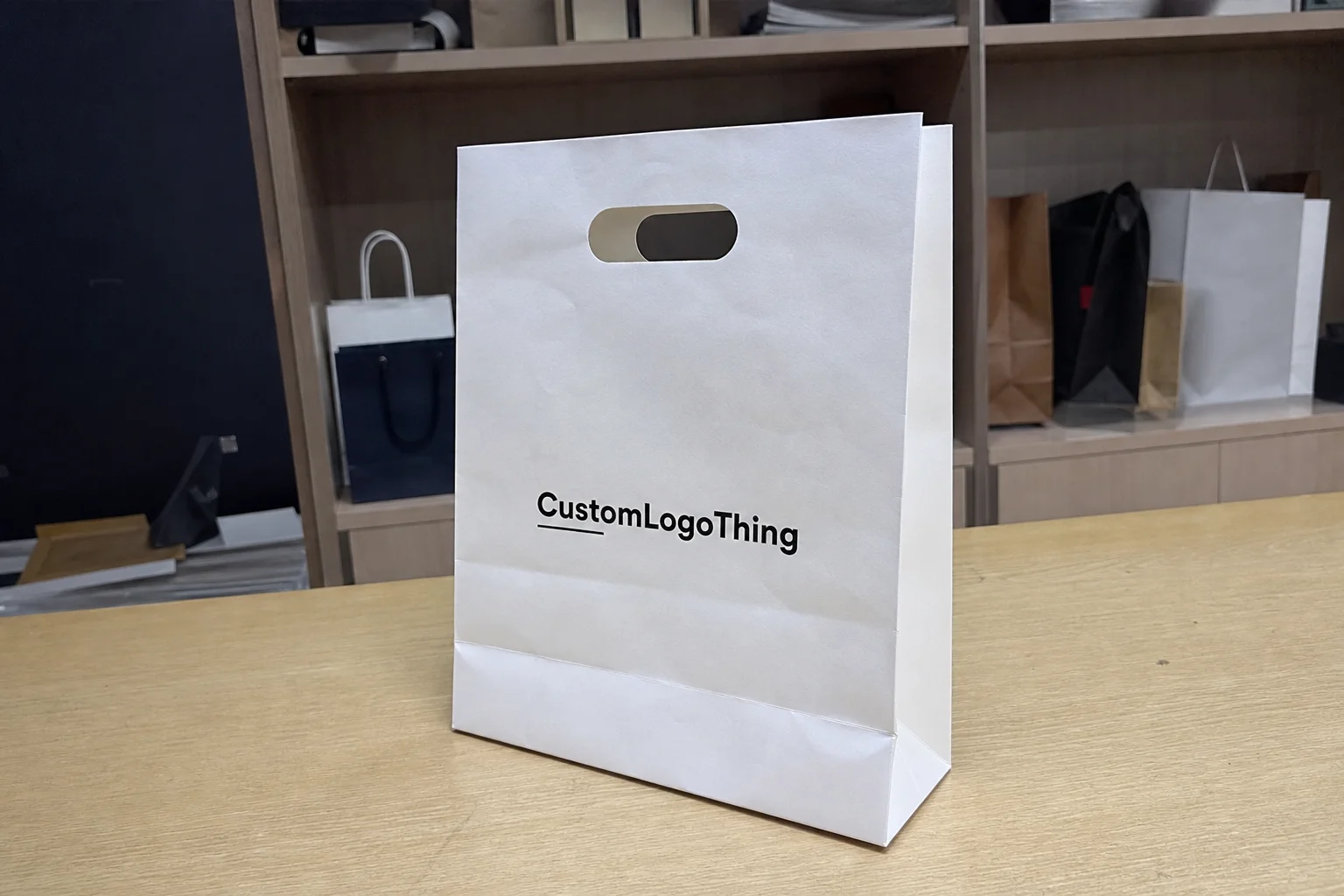
Campus bookstores live on peaks, not averages. Move-in week, game day, alumni weekend, orientation, and late-semester textbook runs all compress demand into short windows. In that environment, Die Cut Handle Bags for campus bookstores do more than replace a generic carrier. They reduce checkout friction. They keep line movement steady. They also do something simpler: they make the store look organized when traffic is anything but.
The bag becomes part of the customer experience the moment the item leaves the counter. A student carrying a hardcover and a sweatshirt does not care about the procurement file. They care whether the handles cut into their fingers on the walk back to housing. They care whether the bottom seal holds when the bag is set on a dorm bed or shoved under a bus seat. Small details matter because the bag gets used in public, and the logo rides with it.
Practical rule: spec the bag around the most common load, not the most dramatic one. If 70% of the volume is apparel and small gifts, do not buy to the rare textbook bundle. If the store regularly moves hardcovers and boxed kits, do not choose the lightest build because the sample looked neat on a proof.
A 1-cent savings per bag is not savings if the handle stretch creates even a small return rate. In campus retail, weak packaging usually costs more in replacements, complaints, and rush reorders than it saves on the original PO.
There is also a brand-value angle that many buyers underweight. Campus shoppers carry these bags across coffee lines, residence halls, transit stops, and athletic events. That gives the bookstore repeated visibility with no extra media spend. For procurement teams, that is useful because the packaging is doing part of the merchandising work whether the store asked for it or not.
For a broader packaging vocabulary on materials and use cases, the industry reference at Packaging.org is a useful baseline. It will not replace a supplier quote, but it helps buyers speak the same language when they compare print, structure, and performance claims.
Construction choices that fit books, apparel, and event kits
Construction starts with the load profile. Die Cut Handle Bags can be tuned for flat apparel, mixed merchandise, or heavier bundles, but the bag has to be sized and reinforced accordingly. A slim bag may be perfect for a T-shirt and a gift card. The same bag can be a poor choice for a hardcover book, a hoodie, and a drink tumbler in the same order.
Match the bag to the heaviest typical load
Bookstore buyers usually end up choosing among three practical formats: a compact carrier for apparel, a mid-size bag for mixed purchases, and a larger bag for books or event kits. Size is not just a dimension on a spec sheet. It changes the stress on the handle cut, the seal, and the bottom panel. If the bag is too tight, the load pushes into the handle area. If it is too large, the contents shift and feel sloppy in transit.
For many campus programs, the sweet spot is a medium size with a thicker gauge and a clean handle cut. That gives the store flexibility without forcing it into a higher-cost custom shape. If the bookstore sells large quantities of hardcovers or bundled merchandise, a wider bottom and stronger side seal are worth the extra material. The question is not whether the bag looks premium. The question is whether it performs on a crowded checkout lane.
Handle geometry and edge reinforcement matter more than most proofs show
Handle shape is one of those details people ignore until they feel it. A smoother die cut, rounded corners, and a reinforced edge reduce tearing and improve comfort. That matters on campus because students often walk farther than a typical retail customer. Ten minutes of carry time can expose a weak handle that would survive only two minutes in a mall setting.
If the supplier offers reinforcement patches, ask what load level they are tied to and whether they change the unit cost materially. A small add-on can be worth it if the bag is going to carry books or heavier gift sets. If the program is mostly apparel, the extra reinforcement may not earn its keep.
The smarter approach is to view construction as a use-case decision, not a style decision. That is how buyers keep the bag spec aligned with real checkout behavior instead of a design mockup.
Print specs, film gauges, and handle strength buyers should lock in
Print should support the campus identity, not fight it. For most bookstore programs, one- or two-color printing gives the best balance of clarity and price. A simple university seal, wordmark, or spirit mark usually reads better than a crowded layout. The more ink coverage you add, the more carefully you need to watch registration, cure quality, and lead time.
Film gauge is where performance gets concrete. Lighter gauges can work for soft goods and small promos. Heavier gauges are more suitable for textbooks, bundled merchandise, and anything that creates concentrated stress at the handle cut. The supplier should state the load assumptions in plain language. “Light apparel,” “mixed merchandise,” and “heavier educational materials” are better than vague claims about strength.
Here is a simple way to compare the common builds buyers request:
| Build option | Typical MOQ | Typical unit cost | Best use | Notes |
|---|---|---|---|---|
| Standard 1-color, lighter gauge | 3,000-5,000 | $0.09-$0.16 | Apparel, small gifts, lightweight promo kits | Lowest entry price, but not ideal for books or heavy bundles |
| Reinforced 2-color, mid gauge | 5,000-10,000 | $0.12-$0.22 | Mixed merchandise, campus events, standard bookstore traffic | Often the best balance of appearance and performance |
| Heavy-duty, larger format | 10,000+ | $0.15-$0.28 | Textbooks, boxed kits, high-load semesters | Higher freight and storage impact, but less risk under load |
Those numbers move with size, print coverage, resin or paper grade, and order volume. They are useful as a planning frame, not a promise. The buyer’s real job is to decide which spec protects margin across the whole semester. A lower quote can still be the more expensive option if it creates emergency replenishment.
When the order must travel through parcel networks or multiple receiving points, ask whether the cartons are tested against a distribution profile from ISTA. That does not guarantee perfection, but it gives the buyer a more defensible standard than “we ship this all the time.”
If the program uses paper or recycled-content alternatives, sourcing language should also be checked carefully. A lot of buyers assume sustainability claims are self-evident. They are not. Request the certification details and the exact chain-of-custody language before you approve the art.
Pricing, MOQ, and quote variables that change the unit cost
The biggest mistake I see is treating MOQ as a hard stop instead of a planning tool. In practice, MOQ is just the floor where the supplier can run the job efficiently. Once the quantity rises, the unit cost usually falls, but only to a point. After that, the savings can be eaten by storage, obsolescence, or a logo change the bookstore forgot about until the next season.
The quote should always separate the actual bag price from the rest of the job. That means product cost, freight, plate or tooling fees, artwork revisions, and any setup charges. Some suppliers bundle these items. Others do not. If the buyer cannot see the line items, comparing bids becomes guesswork.
These are the variables that move pricing fastest:
- Bag size and gusset depth
- Film gauge or paper weight
- Number of print colors
- Coverage area and ink density
- Total quantity and reorder frequency
- Tooling fees for plates, dies, or print setup
Buyers should also ask whether the quote changes at clear quantity breaks. A 5,000-piece order may look expensive compared with 10,000 pieces, but if the bookstore will not use the extra inventory before a logo refresh, the lower per-piece price is a false win. Bulk pricing only helps when the demand forecast is real.
For example, a 5,000-unit run might land around $0.12-$0.22 per piece on a mid-gauge, one- or two-color bag, while a smaller trial run can sit noticeably higher. A larger 10,000-unit order can push the price down further, but the buyer has to account for storage space and cash tied up in inventory. That tradeoff sits at the center of die cut handle bags for campus bookstores moq planning.
Put simply: the cheapest quote is not always the best purchasing decision. A slightly higher price with cleaner print, tighter size control, and fewer surprises often wins on total program cost.
If the team wants a broader checklist for spec comparisons, the bookstore packaging FAQ is a useful internal reference point before revised quotes go out.
Process and lead time from artwork approval to dock date
Good ordering is procedural. First comes the size, quantity, and artwork. Then comes the proof. Only after that should the production slot be locked. In a campus setting, this sequence matters because academic calendars are unforgiving. If bags arrive after move-in week, the program is already late, no matter how good the price looked.
Lead time should be broken into three parts: proofing, production, and freight transit. A typical run often takes 12-15 business days from proof approval to shipment release, with transit adding another 3-7 business days depending on lane and season. Rush options exist, but they are usually expensive, and any art change after approval can reset the clock.
Artwork approval is where most delays happen. Vector files, exact logo color references, and final copy reduce back-and-forth. Missing dimensions or low-resolution artwork tend to create the kind of invisible delay that feels small at first and then becomes very real when receiving dates start slipping.
Ask the supplier to confirm three things in writing:
- The approved spec is frozen
- The production window is tied to that spec
- Any change after approval triggers a new timeline and, usually, a new cost
That discipline is not bureaucracy. It is inventory control. A bookstore buyer who manages by semester milestones instead of panic reorders will almost always get a cleaner result. And if the order travels through distribution hubs, carton integrity and packing method deserve attention as much as the bag itself.
For teams that need a quick reference on order timing and common packaging terms, the campus packaging FAQ is the right place to align the buyer, store manager, and designer before the PO goes out.
How to compare suppliers for repeat semester reorders
The real test of a supplier is not the first sample. It is the second order. Repeat semester reorders reveal whether the vendor can hold the same dimensions, the same print position, and the same handle feel without making the buyer rebuild the spec file every time. That consistency is worth money because it lowers labor, reduces errors, and keeps the buying team from starting over.
Look for a supplier that saves dielines and prior art cleanly. If they can pull last season’s spec, quantity, and color references in minutes, the reorder process will be far easier. If they cannot, the buyer ends up doing data cleanup that should have been handled by the vendor’s own system.
Color consistency matters too. A campus logo that drifts from deep navy to a slightly washed version can undermine the brand even if the bag still functions. Handle finish, print sharpness, and overall registration should be checked against the approved sample, not just against memory.
The comparison should also include response quality. A supplier who answers questions about MOQ, freight, and load performance with specific numbers is usually more dependable than one who relies on general capability claims. Specific answers usually mean the operations side is actually engaged.
Here is a practical supplier scorecard for buyer review:
- Can they quote repeat jobs from existing records?
- Do they separate product cost, tooling fees, and freight?
- Will they confirm load expectations in plain language?
- Can they maintain artwork and size consistency across seasons?
- Do they offer tiered pricing that makes reorder planning easier?
That last point matters more than people think. Reorder-friendly suppliers reduce administrative friction. For a campus bookstore that is already juggling events, textbook cycles, and seasonal merchandise, that matters as much as the bag spec itself.
Next steps for a cleaner bookstore order plan
Start with the minimum spec set: size, expected contents, print colors, target quantity, and delivery date. If those five items are clear, the supplier can quote accurately without turning the conversation into a back-and-forth about basics. That saves time and makes the pricing more useful.
Then decide whether the demand should be split or consolidated. Multiple campus locations often justify a shared spec, but not always. A spirit shop near a stadium may need a stronger bag than a small academic store near the library. Standardization lowers complexity. Separate SKUs can still be justified if the load profile is genuinely different.
If the order is meant to support both day-to-day retail and special events, build the plan around the highest realistic demand, not the average week. Orientation, homecoming, alumni visits, and graduation-related traffic can all push a standard bag program past its comfort zone. That is where a clean MOQ tier and a sensible reorder buffer earn their keep.
Before issuing the PO, confirm four items with the supplier:
- The approved art file is final
- The gauge or weight matches the heaviest common load
- The MOQ tier aligns with cash flow and storage
- The dock date leaves room for transit and receiving
For buyers who need a practical path forward, the next move is to lock the spec, confirm the MOQ tier, and schedule production against the first receiving deadline for die cut handle bags for campus bookstores. That is how the order stays controlled, the unit cost stays honest, and the bag program supports the store instead of distracting it.
What MOQ should I expect for die cut handle bags for campus bookstores?
MOQ usually depends on size, film gauge, print count, and whether the artwork is standard or custom. Smaller trial runs are possible, but the price per bag usually drops as quantity rises. Ask for tiered quotes so you can compare the cost impact of 1,000, 5,000, and 10,000 units.
Can these bags hold textbooks and heavier bookstore items?
Yes, if the bag size, gauge, and handle reinforcement are specified for the load. Heavier items need a stronger construction than apparel or gift bags. The supplier should state the expected load range in plain terms before production starts.
How long does a campus bookstore order usually take?
Timing depends on how quickly artwork is approved and how busy the production schedule is. Lead time should be broken into proofing, production, and freight transit. Rush options may exist, but any artwork change after approval can move the dock date.
What print method works best for campus logos and seasonal promos?
Simple logos and short text usually work well with one- or two-color printing. If the bag is also a promotional piece, ask whether the artwork can stay crisp at the chosen print area. The best method is the one that balances clarity, cost, and reorder consistency.
How can I lower unit cost without making the bags feel cheap?
Use a standard size whenever possible and limit unnecessary customization. Consolidate orders across locations or seasons to spread setup and freight over more units. Keep the design clean and spend budget on the structural details that affect performance first.