Streetwear packaging gets judged fast. A tee can be strong, a hoodie can be cut well, the campaign can be sharp, and the bag still makes the whole purchase feel cheaper than it should. That is the real reason die Cut Handle Bags for Streetwear labels moq planning matters. The bag is usually the first branded object the customer carries into the street, into a photo, and sometimes into resale listings. It is not filler. It is part of the product.
Die Cut Handle Bags sit in a practical middle ground. They look cleaner than a plain merch sack, they usually photograph better than a twisted-handle paper bag, and they are easier to customize than rigid retail packaging. They also stack well, which matters if your team is packing launches in a back room or shipping cartons to a pop-up. The decision is not only visual. It is about carry strength, repeat use, shelf presence, and whether the bag still looks right after a real production run.
The mistake I see most often is simple: teams approve a bag from a mockup instead of from a working spec. That is how you end up with a cheap-looking handle cut, a print that loses edge detail, or a bag that tears the moment someone drops in a hoodie and a cap. The quote looks fine until the first carton lands. Then the problems start.
“The cheapest bag is often the most expensive mistake once you count replacements, complaints, and the damage from a weak first impression.”
If you are comparing suppliers, the useful question is not whether they can make a bag. Most can. The real question is whether they can make the right bag, at the right quantity, with the right print and the right tolerances, without turning the order into a chain of corrections.
Die Cut Handle Bags for Streetwear Labels MOQ Planning: Why the Bag Is the Billboard
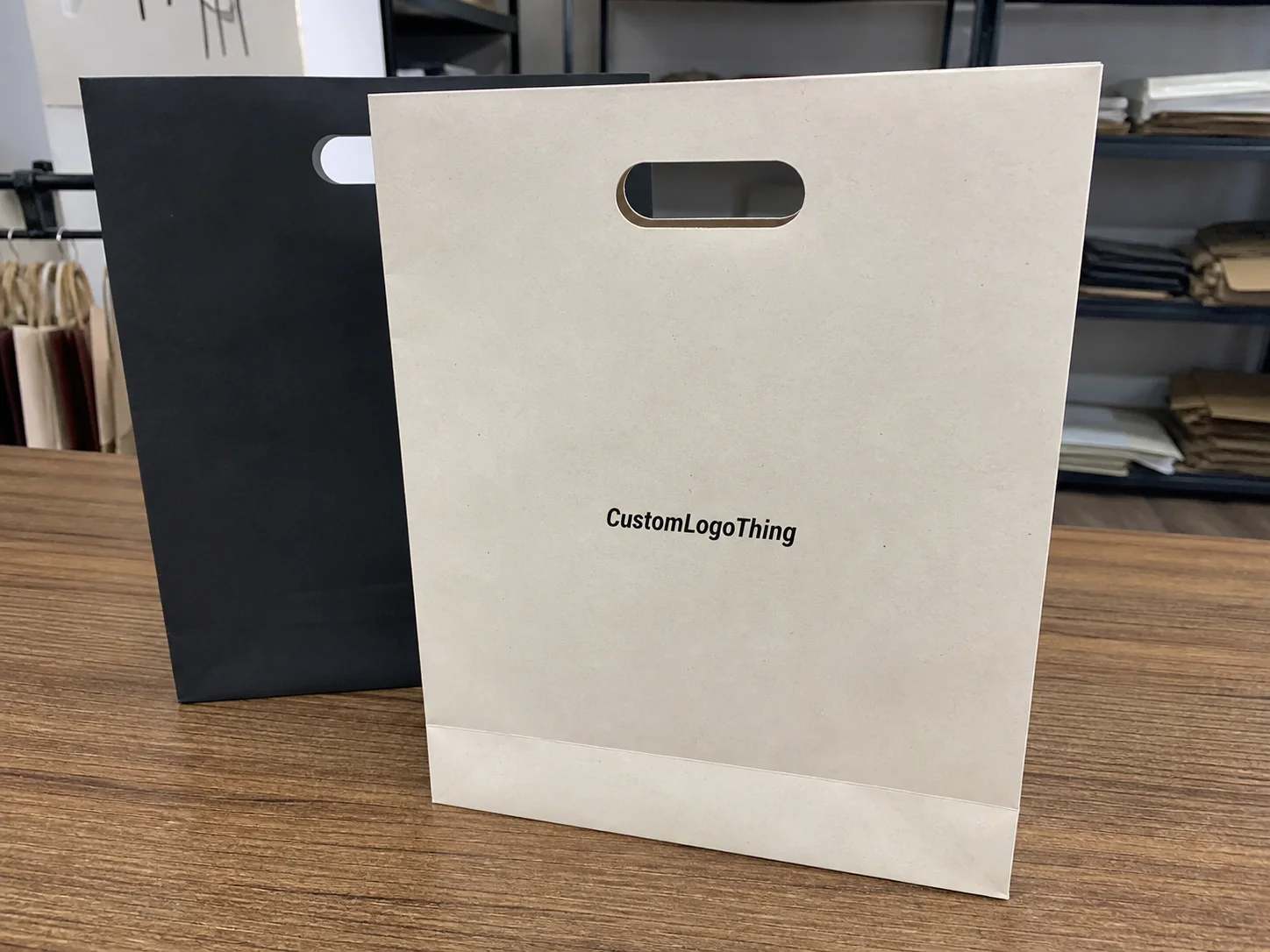
Retail bags travel farther than most garments. A customer may wear the hoodie once, but the bag may be seen by dozens of people on the walk home, on public transport, or in a social post. That makes Die Cut Handle Bags for streetwear labels moq planning a branding decision as much as a purchasing one. The bag becomes moving media, and it only works if the physical spec supports the brand you think you are selling.
Streetwear drops, pop-ups, and wholesale deliveries all benefit from packaging that feels intentional from every angle. The die cut handle format is popular because the silhouette is clean and the branding area is controlled. It can feel premium with the right film weight and finish, but it still stays compact enough for stackable packing and efficient store operations. That balance is why buyers keep coming back to it.
There is also a hidden operational reason. A bag that fits the product well reduces folding, cramming, and repacking at the counter. Staff move faster. The customer gets a better handoff. Cartons are easier to count and store. Packaging people notice that immediately, because a bag spec that slows the team down on launch day is the wrong spec no matter how good the artwork looks.
For streetwear, the bag has to do a few jobs at once:
- Carry the garment safely without stretching or splitting.
- Match the brand tone without looking generic.
- Hold up in transit and in the hands of customers who do not handle packaging gently.
- Fit the drop calendar without creating excess inventory.
That is why planning starts with function. How heavy is the packed item? Will the bag hold one piece or multiple items? Will it be used once, or reused after purchase? Is it handed over at a counter, shipped in cartons, or both? Those answers move unit cost more than the logo does.
Material, Handle, and Print Choices That Change Perceived Value
Material is the first signal customers feel. Most Die Cut Handle Bags for apparel use polyethylene film, often LDPE or a blend tuned for flexibility and tear resistance. A thin bag can be fine for light apparel, but it wrinkles more, carries less stiffness, and can make the print feel less deliberate. A thicker film, often in the 2.5 to 4 mil range depending on use, usually gives a better hand feel and more shape retention.
That range is not a rule. It is a planning band. If the bag only holds a folded tee, a lighter gauge may be enough. If it needs to hold a heavyweight hoodie, denim, or a boxed accessory, going up in thickness usually pays for itself in fewer failures and less customer annoyance. I would rather see a slightly heavier bag that survives the job than a cheaper one that stretches into a shape nobody wants to carry.
Finish changes the read too. Gloss pushes color harder and can make bold graphics pop. Matte feels quieter and can suit brands that lean minimal or monochrome. Neither is better in the abstract. If the artwork uses sharp type and strong contrast, gloss can work well. If the design is restrained, matte may feel more controlled. The real target is consistency across the print face, handle cut, and edge seal.
Handle style matters more than most buyers expect. A clean die cut with smooth edges feels considered. A rough punch or uneven cutout feels cheap immediately, even if the artwork is good. Reinforced handles help when the bag carries heavier packs or gets reused after the first purchase. If the handle area is weak, customers notice. They may not say anything at the register, but the memory sticks.
Print choices are where cost and image separate quickly. Spot colors are usually the cleanest route for simple logos and limited graphics. Full-color artwork lifts the visual impact, but it also increases setup complexity and the chance of registration drift. White ink is useful on tinted or opaque film, but it adds another layer of production work. Large coverage areas and heavy ink laydown can also raise spoilage allowance. That is not a defect. It is a production reality.
| Spec choice | Brand effect | Typical cost impact | Best use case |
|---|---|---|---|
| Thin stock, single-color print | Basic, functional | Lowest cost per piece | High-volume giveaways, basic retail packing |
| Mid-gauge film, 1 to 2 spot colors | Clean and balanced | Moderate unit cost | Most streetwear drops and pop-ups |
| Thicker film, full-color print, white ink | Higher-impact, more premium | Higher cost per piece and more setup | Hero launches, special collabs, camera-heavy events |
Small details carry more weight than the artwork file itself. Cleaner edge trimming. Tighter registration. Better opacity around the logo. Consistent handle placement. Those are the things that make a bag feel intentional. Buyers often spend too much time on visuals and too little time on tolerances. That is backwards. The tolerances are what keep the premium look intact across the whole run.
Some brands also ask for recycled content or downgauged film to meet internal sustainability targets. That can work, but it needs testing. PCR resin and lighter gauges can save material, yet they may reduce stiffness or increase surface variation. If the bag is supposed to feel premium, you need to check whether the sustainability choice changes the hand feel too much.
Sizes, Thickness, and Load Specs for Retail Drops
Bag dimensions should follow the product, not the other way around. A folded tee has very different needs from a heavyweight hoodie, a pair of jeans, or an accessory bundle. If the bag is too large, the garment shifts around and the presentation looks loose. If it is too tight, the handle or seal area can stress under load. Good sizing starts with the packed dimensions, then adds enough room for clean insertion and flat stacking.
For light tops and tees, a narrower, lower-gauge die cut bag may be fine. For hoodies and denim, buyers often move up in thickness because the bag needs more stiffness and more resistance at the handle cut. A common planning range might be 2.5 mil for light items and 3 to 4 mil for heavier retail packs. That said, the right spec depends on the actual garment weight, fold style, insert use, and whether the bag will be reused after purchase.
Load behavior is not theoretical. If a customer carries two hoodies, a cap, and a small accessory pack, the handle sees more stress than the original spec sheet implied. If the bag is used for event merch where people pick up multiple items at once, that matters even more. The weaker the bag, the faster it fails. The failure point is usually the handle area, the bottom seal, or both.
Gusset depth, seal strength, and handle placement affect comfort in ways that are easy to miss if you only review artwork. A handle cut too close to the top edge can feel sharp or unstable. A weak bottom seal can split when someone loads the bag in a hurry. Side gussets can help with layered purchases, but they also affect carton count and shipping efficiency. Nothing is free in packaging. Every added feature shifts another variable.
A practical sizing logic looks like this:
- Measure the folded product dimensions, including any insert or tissue.
- Add room for easy placement without wrinkling the garment.
- Check whether the bag will hold one item or multiple items.
- Confirm carton fit so the finished bags pack efficiently for storage and dispatch.
- Check whether shelf display or stack presentation is part of the store workflow.
For brands that standardize multiple packaging components, the value is in consistency. If the bag spec follows the same logic as your labels, tags, and inserts, the brand feels tighter. If you want to compare finish and placement across packaging elements, the Custom Labels & Tags page is a useful reference point. Buyers who keep the visual system aligned usually spend less time correcting mismatched details later.
Cost, Pricing, and MOQ Planning for Bulk Orders
Cost starts with material, but that is not where the quote ends. The major drivers are film weight, handle style, print coverage, bag size, packing format, and whether the order is stock or fully custom. Add tooling fees if a new die or special cut is needed. Add setup charges for print plates, screens, or color preparation. Those fixed costs matter most at low volume because they are spread over fewer pieces.
This is where MOQ planning stops being a spreadsheet exercise and becomes a real buying decision. At lower quantities, unit cost stays high because setup is doing most of the work. Once the order crosses the supplier’s efficient production band, per-piece price usually falls. The break points vary by factory, but many quotes shift around 3,000, 5,000, or 10,000 pieces depending on print complexity and film spec.
For rough planning, I would think about pricing this way:
- Low MOQ run: often the highest cost per piece, because setup is concentrated.
- Mid-volume run: usually the best balance of unit price and cash commitment.
- Large bulk order: lowest ex-factory price, but higher storage and cash exposure.
For a basic one-color die cut bag in a standard size, small custom runs can land roughly in the 8 to 20 cent ex-factory range before freight, depending on market conditions, resin cost, and print method. Mid-volume orders can come down meaningfully from there. More complex jobs with full-color graphics, white ink, or thicker film will move up fast. If a quote looks too cheap, it often means the supplier changed something you have not noticed yet.
Use quotes that compare like for like. If one supplier is lower, check the film thickness, print colors, handle structure, overrun allowance, and bag dimensions. A lower number can hide a thinner gauge, smaller print area, or extra charges buried in setup. Packaging purchasing is full of those false comparisons. It is not enough to compare the headline price.
Freight changes the picture too. A lower ex-factory quote can lose its advantage once you add shipping, carton count, and storage. If your launch calendar is tight, an order that saves a few cents but misses the drop is not a savings. It is a problem. Total landed cost is the number that matters.
If your supplier can break the price across multiple quantities, ask for it. A tiered quote at 1,000, 3,000, and 5,000 pieces, for example, gives you a much clearer view of where the unit cost drops enough to justify a bigger run. That is one of the cleanest ways to make die cut handle Bags for Streetwear labels moq planning less guesswork-heavy.
For buyers who care about proof of process, it helps to ask whether the supplier follows recognized transit-testing methods such as ISTA practices for packaging handling, especially if the bags are part of a larger shipment. For paper components or mixed packaging programs, FSC sourcing can also matter. Not because it looks good in a quote, but because it helps verify the material story.
Process, Lead Time, and Production Steps From Proof to Shipment
The production workflow is straightforward. The delays usually happen at the handoff points. It starts with artwork submission, then a digital proof, sample approval if required, production, inspection, packing, and shipment. The important detail is that lead time does not begin when the first email lands. It begins after the proof is approved and the spec is locked. That distinction avoids a lot of frustration later.
Artwork is the most common bottleneck. Files that are not print-ready slow everything down, especially if the logo needs cleanup, the color references are unclear, or the dieline has to be rebuilt. Buyers also lose time when they change quantity, size, or color after approval. That creates rework. Rework costs time, and sometimes it adds setup charges too.
A realistic schedule separates three clocks: proofing time, manufacturing time, and freight time. Proofing can move quickly if files are clean. Manufacturing often runs in the 12 to 15 business day range after approval for many custom orders, although larger runs or more complex print specs can stretch longer. Freight adds its own timing depending on destination and shipping mode. Air is faster. Ocean is cheaper. Both have tradeoffs.
Lead time is where expectation management matters. If a supplier promises speed without asking for final artwork, they are probably quoting the best case, not the real one. A better quote names the production window after proof approval and includes a realistic overrun or underrun tolerance. Without that, the schedule is not useful.
Here is the fastest way to shorten turnaround:
- Send final dielines or confirm that the supplier should build them.
- Provide editable artwork or high-resolution logo files.
- Include Pantone references or clearly defined brand color targets.
- State the delivery location before the quote is finalized.
- Confirm the target launch date so the supplier can back-plan production.
Quality control should not be an afterthought. Basic checks are enough to catch most issues: confirm print registration, inspect handle cut symmetry, verify seal strength, check bag thickness against the approved spec, and count carton quantities before dispatch. If the bag will sit against apparel in storage, ask about ink cure and odor too. That matters more than people admit. A bag that smells wrong can make a premium garment feel less premium the moment the carton is opened.
Packaging buyers who think in terms of transit and handling usually make better decisions. You do not need a lab report for every order, but you do need confidence that the bag holds up under real movement. If the order is shipping long distance or moving through several hands, compression and drop logic are not optional. They are the difference between a clean arrival and a box full of disappointment.
Why Repeat Streetwear Buyers Standardize One Bag Spec
Brands with frequent drops often settle on one core bag spec and stay there. That is not laziness. It is operational discipline. When the same die cut handle bag works for tees, hoodies, and accessories, the team reduces re-approval work, keeps the artwork system simpler, and avoids introducing a new packaging variable every time the collection changes.
Standardization also helps multi-channel teams move faster. Retail, ecommerce, and event merchandising rarely launch on the same schedule, but they can still share one proven format. That means fewer spec debates, fewer last-minute revisions, and less chance of ordering the wrong size for a limited run. If the bag looks right, carries well, and stacks cleanly, most buyers would rather keep the spec than reinvent it every season.
There is a financial reason too. One repeatable bag makes inventory planning easier because reorder points can be tied to sell-through. Teams do not need to guess whether a new format will work. They already know the cost per piece, the carton count, and the run rate. That predictability matters when margins are tight and drop calendars are crowded.
Constant spec changes create operational risk. They increase the chance of color drift, make reorders slower, and can force new tooling or new approvals. The benefit of variation is obvious when a special collaboration needs distinct packaging. For routine replenishment, though, a reliable bag usually beats a clever one. Buyers who run several launches in parallel learn that quickly.
If your packaging stack includes more than one branded touchpoint, consistency across bags, tags, and inserts builds a more coherent experience. That consistency also makes QA easier because there are fewer variables to check each time an order is repeated.
What to Send Before You Request a Quote
Accurate quoting starts with clean inputs. If you want the supplier to price the right bag the first time, send the size, film thickness, handle style, print colors, order quantity, target delivery date, and shipping location. If any of those are missing, the first quote is only a rough estimate. That is fine for early screening. It is not fine for final approval.
Artwork should show intent clearly. Editable files are ideal. If you do not have them, high-resolution logos and brand color references can still work as long as you make it clear whether the print should be spot color, CMYK, or a mix. If the logo depends on a specific shade, provide Pantone references. If the print area is large, say whether full coverage is expected, because that changes both cost and production complexity.
Ask for a price ladder at multiple quantities. That is one of the simplest ways to make die cut handle bags for streetwear labels moq planning more accurate. A solid tiered quote might show 1,000, 3,000, and 5,000 pieces, or another set that matches the supplier’s structure. Once you see the break points, you can match the order size to your launch volume instead of guessing.
Before you approve anything, confirm the final spec in writing:
- Exact bag dimensions
- Film thickness
- Handle cut style and reinforcement
- Print method and number of colors
- Quantity and acceptable overrun or underrun terms
- Lead time after proof approval
- Packaging format for shipment
That level of clarity reduces surprises. It also makes supplier comparison much easier because you can judge the real differences in unit cost, setup charges, and production speed. If two quotes are close, the cleaner spec and clearer schedule usually win.
“The best quote is not the lowest number. It is the one that matches the bag you actually need, ships on time, and leaves no room for avoidable corrections.”
For streetwear brands, the practical move is simple: define the bag around the product, the drop schedule, and the customer experience, then buy accordingly. Do that well, and die cut handle bags for streetwear labels moq planning stops being a procurement headache and starts behaving like a repeatable part of the brand system.
What is a practical MOQ for die cut handle bags for streetwear labels?
MOQ depends on size, print coverage, and whether the bag is stock or fully custom. For planning, ask for tiered pricing at multiple quantities so you can see where the unit cost drops enough to justify a larger run.
How does bag thickness affect unit cost and durability?
Thicker film usually costs more, but it also improves stiffness, handle strength, and reuse potential. If the bag carries heavier garments or boxed items, a slightly higher gauge can prevent failures that damage the brand experience.
Can I print a full-color logo on die cut handle bags?
Yes. Full-color coverage, white ink, and large print areas usually raise the price. Confirm whether the artwork needs spot colors, CMYK, or a combination so the quote matches the final design intent.
How long does production take after artwork approval?
Lead time starts after proof approval, not after the first email, so artwork readiness matters. Production time varies by spec and quantity, and shipping time is added on top of that schedule.
What files do you need for a fast quote on custom handle bags?
Send the target size, quantity, print details, delivery address, and any deadline that affects scheduling. Include editable artwork or a high-resolution logo file plus any brand color references to reduce back-and-forth.


