Die Cut Handle Bags for Startup Brands: MOQ Planning
For startup buyers, the bag is part of the launch decision, not just a carry item. At pop-ups, boutiques, and handoff counters, Die Cut Handle Bags often become the first visible brand touchpoint and the easiest packaging to judge for quality, consistency, and cost.
The practical value is simple: the format is relatively straightforward to produce, stack, and ship, while still giving a retail-ready look for apparel, cosmetics, accessories, events, and sampling programs. The challenge is planning the first order so it supports launch demand without overcommitting cash to unused inventory.
"The cheapest quote is rarely the lowest landed cost. If the bag tears, prints poorly, or arrives late, the savings disappear fast."
When comparing suppliers, focus on the variables that affect the finished result: dimensions, film thickness, print count, lead time, freight terms, and inspection standards. Those are the details that determine whether the quote is usable in a real buying decision.
Why startup brands choose die cut handle bags for fast shelf impact
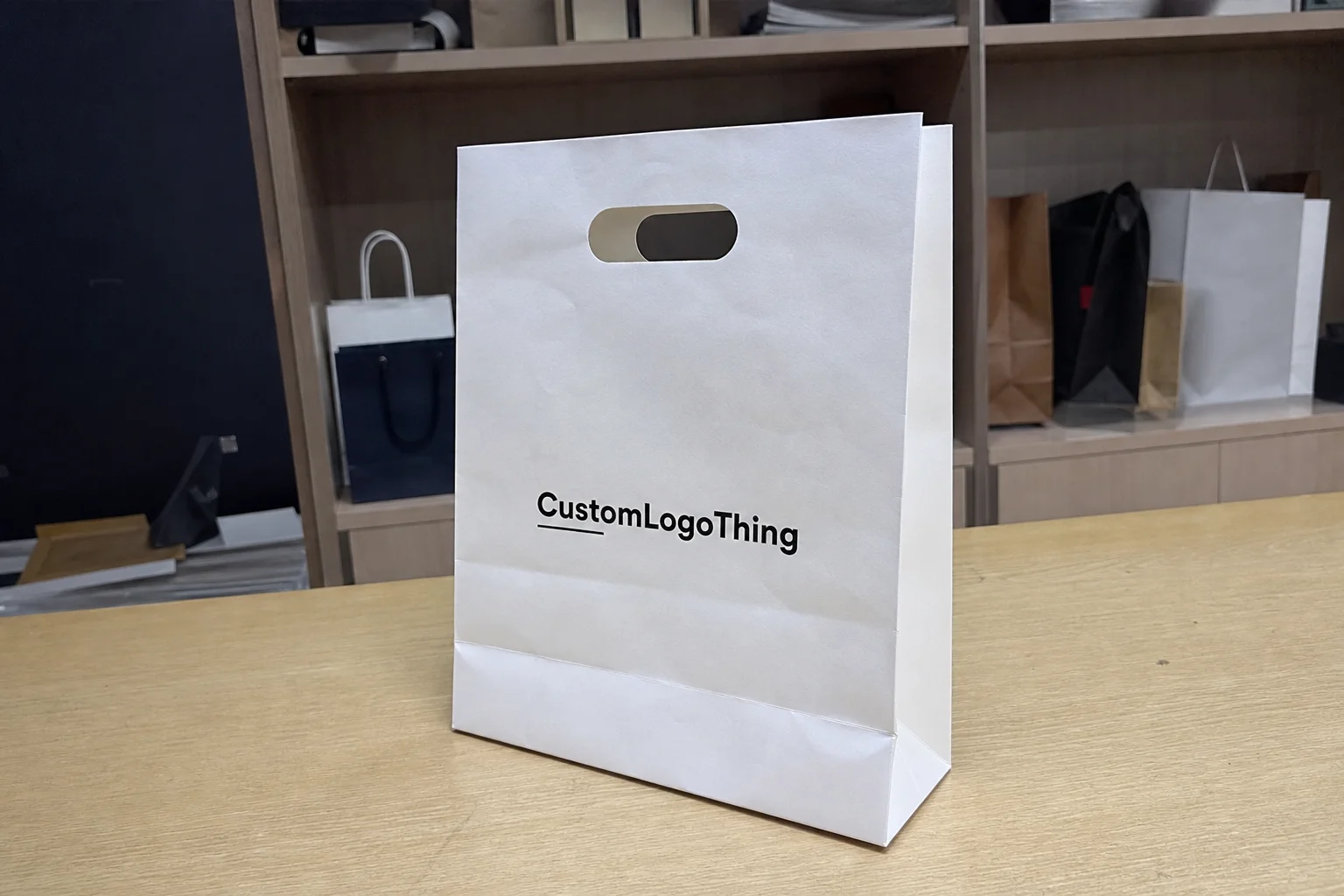
Retail is visual before it is verbal. Shoppers notice the bag, then the logo, then the product. For a startup, that sequence matters because the carrier often has more immediate brand visibility than the shelf display itself. At pop-ups and boutique checkouts, the bag becomes part of the customer experience.
Die-Cut Handle Bags are attractive because the structure is simple: the handle is punched into the bag body, which reduces the number of components compared with loop-handle or patch-handle formats. Fewer components usually mean easier production control and lower unit cost. Usually. Packaging never respects wishful thinking.
They also photograph well. Clean edges, flat print surfaces, and consistent proportions make them useful for retail, events, press kits, and social content. A startup does not always need a premium box. Sometimes it needs a bag that looks like it belongs in the same brand family as the product.
Another benefit is reuse. A shopper who reuses the bag extends the brand’s visibility beyond the original transaction. That is especially useful for fashion, beauty, boutique retail, and merchandise programs where the bag can travel long after the product leaves the store.
For early-stage buyers, this format also fits uncertain demand and limited storage. Most founders would rather put cash into inventory, sampling, or launch marketing than store a mountain of packaging just in case sales spike.
Bag construction, material choices, and handle styles that affect performance
Most Die Cut Handle Bags are made in LDPE or HDPE. Some suppliers also offer recycled-content films or compostable alternatives, depending on the application and regional availability. LDPE tends to feel softer and more flexible. HDPE is usually thinner at comparable strength and can be more cost-efficient, though it may feel crisper and less premium depending on the print and finish.
Film thickness is where a lot of bag performance lives. For lightweight apparel, 1.5 to 2.0 mil may be enough. For boxed cosmetics, accessories, and promotional sets with real weight, 2.25 to 3.0 mil is a safer range because it improves tear resistance around the handle and gives the bag a sturdier hand feel. That also changes how the bag survives packing, carry-out, and stacking in cartons.
Handle style affects both cost and strength. Die-cut handles are simpler to manufacture than patch handles or loop handles, which helps keep the production setup efficient. Some suppliers add a reinforced patch around the cut-out. That can improve durability for heavier loads, but it usually adds setup charges and unit cost. For a startup, the question is whether the contents justify the upgrade.
Finish and print choices affect perception too. Clear, frosted, opaque, gloss, and matte each send a different signal. A one-color print often keeps pricing manageable. Full-bleed art and multi-color branding can look excellent, but only if the artwork is clean and the printer can hold registration consistently across the run.
For buyers who want more than a verbal promise about strength, ask what testing methods the supplier uses. If they mention film performance data, ASTM D1709 or a similar standard is more useful than “it should be fine.” For transport and distribution questions, ISTA guidance is a better reference point than guesswork. You can review that at ISTA. For broader packaging education, Packaging.org is a useful industry resource.
Specifications to lock before quoting your first run
If you want quotes you can actually compare, the spec sheet has to be locked first. The minimum inputs are bag width, length, thickness, handle size, print area, color count, and whether you want a gusset. Leave those loose and every supplier will make different assumptions. That is how a cheap quote appears magical right up until the real numbers arrive.
Dimension creep is one of the easiest ways to inflate cost without noticing. A small increase in width or length changes material usage across every unit in the run. On a 1,000-piece order, the difference may seem minor. On 5,000 or 10,000 pieces, it becomes very real money. The safest approach is to size the bag to the product first, then add only the space needed for presentation and comfortable carry.
Artwork readiness matters just as much as physical size. Vector logo files, Pantone targets, bleed requirements, and safe zones reduce proof revisions. If your brand color is non-negotiable, say so early. Color correction after proof approval is where launch calendars quietly fall apart.
Before requesting price, confirm these points:
- Exact bag dimensions and target load.
- Material type and thickness in mils.
- Print method, color count, and placement.
- Handle shape and reinforcement preference.
- Packaging format for shipment, such as bulk-packed or retail-ready cartons.
One more practical check: ask whether the quoted spec includes overage for production waste. Some suppliers build that into the pricing quietly. Others do not. That difference matters if you are comparing total cost, not just headline cost.
The cleanest rule is simple. Choose the smallest spec that works, then pay more only where comfort, appearance, or strength actually justify the upgrade. Otherwise the bag turns into expensive branding with no operational upside.
Pricing, MOQ, and unit cost for die cut handle bags for startup brands moq planning
This is where startup buyers need discipline. Planning is not only about chasing the lowest MOQ. It is about balancing unit cost, setup charges, and inventory risk so the first order supports the launch instead of pinning cash to the warehouse floor.
Pricing usually moves with five variables: size, material, thickness, print complexity, and order quantity. Some suppliers separate tooling fees or screen charges from the quote. Others bury them in setup. That is why a low headline number can still end up expensive once all the line items are visible.
For rough planning, a simple custom die-cut LDPE bag at 5,000 pieces may land around $0.18 to $0.28 per piece, depending on size and print coverage. A smaller 1,000-piece run often sits closer to $0.42 to $0.78 per piece. Those numbers can shift with freight, packaging format, and whether the supplier is quoting ex-works or delivered pricing.
| Order size | Typical cost per piece | Setup charges | Best use |
|---|---|---|---|
| 1,000 pieces | $0.42-$0.78 | $75-$250 | Launch tests, events, small retail pilots |
| 3,000 pieces | $0.26-$0.45 | $75-$250 | Short launch cycle, pop-ups, limited wholesale |
| 5,000 pieces | $0.18-$0.33 | $75-$250 | Most startup retail programs and seasonal drops |
| 10,000 pieces | $0.12-$0.24 | $75-$250 | Known demand, repeat use, multi-channel selling |
Those numbers are directional, not a promise. The real question is where your breakpoints sit. If the 3,000-unit price is only a little higher than 1,000, the larger run may be the better buy. If the 10,000-unit price saves pennies but doubles the cash tied up in packaging, the lower unit cost is not actually helping.
Always ask for tiered pricing. A quote at 1,000, 3,000, 5,000, and 10,000 pieces reveals far more than a single number ever will. It also shows how much of the price is fixed setup and how much is variable material. That is the quickest way to see whether bulk pricing is truly improving the economics or just encouraging overbuying.
Startup buyers should also factor in the landed cost, not just the factory price. Shipping, cartons, palletization, import duties where applicable, and local delivery can move the final number enough to change the order size decision. A low ex-factory quote is nice. A low landed cost is what pays the bills.
One practical benchmark: if a supplier cannot explain where the price changes happen, the quote is not ready for a purchasing decision. You need to know which part is setup, which part is material, and which part changes with volume. Anything less is just a pretty PDF.
Process and lead time from artwork approval to delivery
Most orders follow the same path: inquiry, spec confirmation, quote, artwork proof, pre-production approval, manufacturing, quality check, packing, and shipping. That sequence sounds ordinary, but it is where timelines are won or lost. Knowing which step is blocking the calendar makes planning easier.
Delays usually come from incomplete artwork, late spec changes, color-matching questions, or slow proof approval. If your launch date is fixed, work backward from it. A supplier may quote 12 to 15 business days after approval for a standard printed run, but that is only the production part. Freight, customs, and local delivery can add more time than the factory itself.
Special materials, multi-color printing, and reinforced structures often extend lead time. So do first-time jobs, because proofing tends to be more detailed. If the packaging is tied to an event, a retail rollout, or influencer mailers, build a buffer. Two weeks is a sensible cushion. More is safer when the launch is high-stakes.
It also helps to separate production time from shipping time in every conversation. A quoted lead time that excludes freight is not wrong, but it is incomplete. Buyers get burned when they treat it like a door-to-door promise. They should not.
One more operational detail: ask for the approval cutoff. If artwork is approved after a certain time or after a certain day, the production clock may start the following business day. That small detail can move a launch by a full week if nobody is watching the calendar carefully.
How to compare suppliers on quality, communication, and order flexibility
The right supplier is not always the lowest bid. It is the one that gives you a clear spec sheet, explains MOQ without drama, and returns proofs fast enough to keep the launch on track. That matters because startup brands do not have much room for packaging mistakes. Not in budget, and definitely not in timing.
Cheap quotes can hide weak film strength, color drift, handle-cut variation, or poor packing that leads to torn cartons. Ask for sample verification, print alignment checks, seam integrity testing, and count confirmation before shipment. If the supplier cannot explain how those checks happen, the low price is probably buying you a headache later.
Quality control should include more than a glance at the artwork. A practical inspection list usually covers print registration, handle punch consistency, film gauge, bag dimensions, seal strength, and carton count. If the bag is meant to hold heavier goods, ask whether the supplier can provide simple load testing or evidence of similar runs at the same thickness.
Flexibility matters too. Reorders, minor version changes, and staggered shipments reduce launch friction. A supplier that stores art files and spec data accurately makes future runs easier and helps keep the bag consistent. That becomes important the moment the first version sells through and you need a repeat order that looks the same as the last one.
Communication is part of quality. A slow or vague quote can be more expensive than a slightly higher one from a vendor that answers clearly. One missed delivery during launch week can cost more than the price gap between two suppliers.
If you want a simple supplier test, ask three questions: what is included in the price, what could change the price, and what would slow the schedule. The vendor that answers directly is usually the one that knows how to manage custom packaging without creating unnecessary surprises.
Next steps to order the right run and avoid MOQ mistakes
The first order should be sized to actual usage, not optimism. Start with the product dimensions, estimate demand for the first 60 to 90 days, then map where the bags will be used: storefront, events, wholesale handoffs, or shipping inserts. That sequence keeps the order tied to business reality.
Before requesting a quote, gather the basics. A clean spec packet saves time and cuts down the back-and-forth that slows launches.
- Bag dimensions, thickness, and handle style.
- Artwork file, color references, and print count.
- Target quantity for the first run and a backup quantity tier.
- Delivery address and required arrival date.
- Packaging preference for shipping and storage.
If color accuracy or handle feel matters, request a sample or a virtual proof before production. That one step prevents one of the most expensive mistakes: approving a bag that looked fine on screen but prints too dark, feels too thin, or hangs awkwardly in hand.
Use a simple launch calculator if you are unsure how much to order. Estimate expected orders, sample usage, event stock, and a small spare inventory for unplanned demand. That produces a better MOQ decision than guessing and hoping the forecast behaves.
Keep the first order small enough to protect cash flow, but not so small that reordering becomes a crisis. A well-planned packaging run should support the launch, not dominate it. If the bag choice is wrong, the mistake shows up fast. If it is right, nobody comments on it, which is usually how packaging should work.
What is the typical MOQ for die cut handle bags for startup brands?
MOQ depends on size, material, and print complexity, but startup buyers should expect a minimum tied to production setup costs. Smaller, simpler runs usually allow lower entry quantities than multi-color or specialty-material jobs. Ask for tiered quotes so you can compare the cost at several quantities before committing.
How do I estimate unit cost for custom die cut handle bags?
Start with bag dimensions, film thickness, print colors, and total order quantity. Add shipping, packaging, and any proofing or setup charges to understand landed cost. Unit cost usually drops as quantity rises, but only up to the point where inventory becomes excessive.
What artwork do I need before requesting a quote?
Send a vector logo file when possible, plus Pantone color references if brand matching matters. Include bag size, print area, and any bleed or safe-zone requirements. Clean artwork reduces proof revisions and speeds up the approval process.
How long does production usually take after approval?
Lead time varies by material, print complexity, and order size. After proof approval, production and shipping timing should be confirmed separately so launch dates are realistic. Build in extra time for freight delays, especially for event-based or retail launch deadlines.
Can startup brands reorder the same bags later without redesigning everything?
Yes, if the original specs, artwork, and materials are saved accurately. Keeping a repeatable spec sheet makes reorders faster and helps preserve color and fit consistency. Ask the supplier to store your production details for easier restocking.


