Die Cut Handle Bags for cosmetic brands moq planning looks straightforward until the first quote arrives with a different size assumption, a thicker film than expected, and a setup charge that somehow found its way into the “small details” column. Cosmetic packaging does that. It turns one neat idea into three spreadsheets and a mild existential crisis.
The bag itself is not the hard part. The hard part is getting the size, structure, print method, and order quantity to line up with the product Without Wasting Money on air. A lipstick set, a sampler bundle, and a holiday kit all want a bag that looks premium, carries cleanly, and does not fail in transit or at the register.
That is why Die Cut Handle Bags for cosmetic brands moq planning should happen before quoting, not after. A supplier can price almost anything. That does not mean the spec makes sense. If the bag is too large, too thin, or too fancy for the actual use case, the brand pays for the mismatch twice: once in unit cost, again in inventory that does not fit the next order.
From a buyer’s perspective, a good handle bag earns its keep in three ways. It improves presentation. It protects the contents from sloppy handling. It reduces the need for extra wrapping or a separate carry bag. Not glamorous. Just practical. Which is usually what keeps the margin alive.
Why handle bags make cosmetic kits look premium without overcomplicating the order
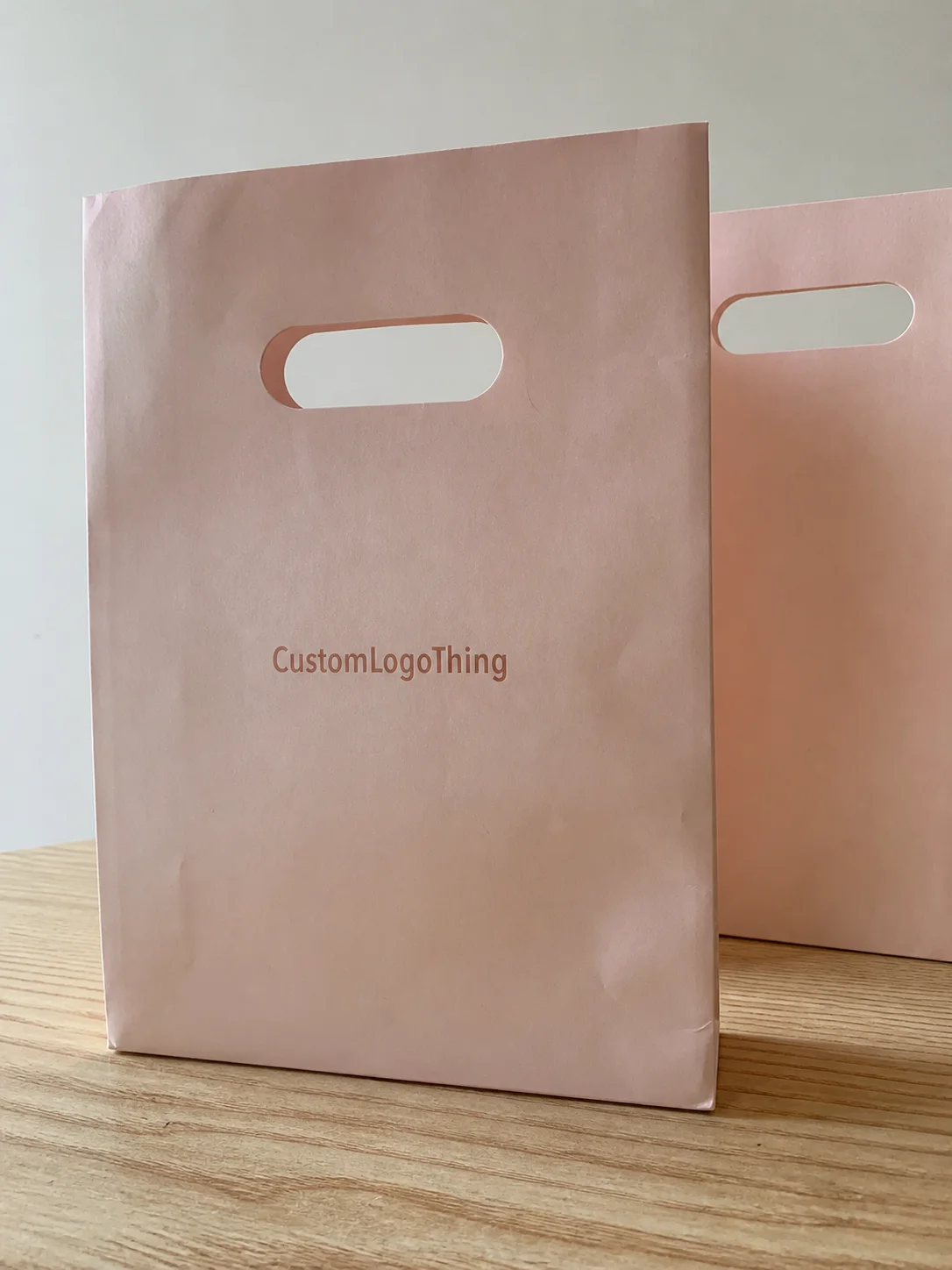
Cosmetic products rarely leave the warehouse as bare units. They are bundled, gifted, sampled, displayed, and carried from one place to another before anyone actually opens them. A die cut handle bag gives the brand a clean outer shell and a usable carry option without moving into rigid packaging territory.
That matters for launches, events, holiday sets, and retail kits. A printed bag can make a modest assortment look intentional. A plain bag can still work if the product stack does the visual heavy lifting. The wrong bag size, though, has a way of looking cheap no matter how expensive the artwork is.
The handle placement and seal structure matter just as much as the film. If the handle cut sits too close to the top edge, the bag feels flimsy. If the bottom seal is weak, boxed items can stress the base when shoppers grab the bag by one side or when cartons get stacked on top of it. Cosmetic kits are not especially forgiving. Add a little weight, and weak construction shows up fast.
For Die Cut Handle Bags for cosmetic brands moq planning, the first question should be simple: what is the bag carrying, and how will it be handled? A salon gift bag is not a retail take-home bag. A two-piece skincare set is not a boxed holiday kit with inserts, tissue, and samples. The use case sets the spec. Starting with decoration and working backward is how brands end up with expensive packaging that solves the wrong problem.
“A bag that fits the product stack properly usually looks more premium than a thicker bag that is the wrong size. Oversizing is just paying extra to move air around.”
The business case is fairly plain. The right bag can make the launch look more polished, reduce damage from loose stacking, and replace secondary packaging that adds cost without improving the customer experience. If the bag is doing presentation and carry duty, it belongs in the core packaging plan, not on the sidelines.
Material, thickness, and finish choices that protect cosmetic presentation
Most cosmetic buyers end up choosing between lightweight promo bags, midweight retail bags, and reinforced carry bags for heavier bundles. The practical thickness range usually starts around 40–60 microns for simple promotional use, moves to 60–80 microns for standard retail kits, and reaches 80–120 microns when the bag needs extra stiffness, more load resistance, or better shape retention.
That range is not about aesthetics alone. It changes how the bag behaves during filling, stacking, and carrying. Thin films fold easily and cost less, but they wrinkle more and show handling marks faster. Midweight structures tend to give the best balance of appearance and price. Heavier gauge bags feel more substantial, though the unit cost rises and some suppliers will treat them as a different production class altogether.
Finish matters too. Clear bags show the product and work well when the kit itself is the visual focal point. Frosted film softens the look and hides minor scuffs. Gloss boosts color brightness and can make a small logo pop harder than you expect. Matte is quieter and often reads more premium for minimalist cosmetic branding. Opaque white gives the cleanest background for bold artwork and logo placement.
That choice should match the product, not a mood board someone liked in a meeting.
| Bag build | Typical use | Common thickness | Visual effect | Cost impact |
|---|---|---|---|---|
| Clear lightweight | Samples, promo kits, soft goods | 40–60 microns | Product visible, simple presentation | Lowest unit cost |
| Frosted midweight | Retail kits, seasonal bundles | 60–80 microns | Premium look, hides scuffs | Moderate |
| Opaque reinforced | Boxed sets, heavier cosmetic bundles | 80–120 microns | Strong brand presence, firmer hand feel | Higher cost per piece |
Reinforcement belongs where the stress actually lands: the handle edges, side seams, and bottom seal. Bigger bags and mixed-SKU bundles need extra attention there. If the bag is carrying a boxed set plus samples or a bottle-based kit, the handle cut and seal area should not be treated like a cheap giveaway bag. That is how tears happen. Usually at the worst possible time, naturally.
For buyers who need a practical quality reference, test language matters more than marketing copy. Ask how the supplier checks seam integrity, handle strength, and size tolerance. If they can explain the checks in plain language, that is worth more than a glossy brochure with vague claims. For broader packaging context, packaging.org is useful for industry standards and materials background, while EPA guidance helps separate legitimate sustainability claims from greenwashed noise.
Print, sizing, and structural specs to lock before quoting
If you want a quote that actually means something, size the bag from the product stack, not from a guess. Measure the boxed set, insert cards, tissue, filler, or any other item that ships with it. Then add clearance so the contents slide in without bowing the panel or stretching the handle area. A useful rule is to allow enough space for the widest point plus a little breathing room, usually 3–8 mm per side depending on the structure.
Print variables change cost quickly. Color count matters. Coverage area matters. White ink layers matter on clear or frosted film. A centered logo on the front panel is simpler than full-panel artwork wrapping across both sides. More print area means more setup complexity, more registration risk, and more chances for the supplier to price in a buffer.
Structural choices affect the finished result just as much. A straight die cut handle is common and cost-efficient. A reinforced handle area adds durability. Gusset depth changes usable capacity. Seal position affects how much of the front panel remains visible for branding. These details are easy to miss in a spreadsheet and impossible to ignore when the first sample comes back looking too tight or oddly proportioned.
What to put on a quote-ready spec sheet
- Product dimensions for each kit or SKU
- Target bag size or the maximum fit requirement
- Film type and thickness
- Print colors and total coverage area
- Handle style and whether reinforcement is needed
- Quantity by SKU and total order volume
- Packing preference such as bulk-packed or carton-packed
That list is the difference between a useful quote and a guessing contest. Vendors cannot compare apples to apples if one quote assumes a 60-micron clear bag with one-color print and another assumes a frosted 80-micron bag with reinforced handles and carton packing. Same product category. Very different money.
For teams that manage multiple launches at once, keep a version-controlled spec file. It avoids the usual problem where one person remembers the bag as “the frosted one” and another remembers it as “the medium one,” which is not a specification. If you maintain a recurring buyer reference page, a simple FAQ can reduce repeated explanations and prevent old specs from floating around like lore.
MOQ, pricing, and unit cost drivers cosmetic brands should model
MOQ is tied to production setup, not to whatever number feels convenient for a launch calendar. Size, thickness, print colors, and reinforcement can all change the minimum. A simple one-color bag usually has a lower entry point than a fully custom design with multiple colors, special finishing, or heavier film.
MOQ, unit cost, and setup charges move together. Once the supplier has to prepare artwork plates, print cylinders, die lines, or a custom cutting setup, the economics change fast. That is why larger orders often lower cost per piece. The fixed setup cost gets spread over more units. Sometimes that difference is enough to justify the extra inventory. Sometimes it is not. Inventory that sits for six months is not a bargain just because it was cheaper on paper.
Typical pricing ranges vary by material, print coverage, and total volume, but cosmetic buyers often see something like this for custom carry bags:
| Order size | Simple one-color bag | Mid-complexity print | Higher-complexity build |
|---|---|---|---|
| 1,000–3,000 pcs | $0.22–$0.45 per piece | $0.30–$0.60 per piece | $0.45–$0.85 per piece |
| 5,000 pcs | $0.14–$0.28 per piece | $0.20–$0.40 per piece | $0.32–$0.62 per piece |
| 10,000+ pcs | $0.10–$0.22 per piece | $0.16–$0.32 per piece | $0.26–$0.48 per piece |
Those are working ranges, not promises. Exact pricing depends on supplier location, film grade, print method, carton packing, and current raw material rates. Still, they give buyers a realistic anchor before the first quote hits the inbox.
A practical way to reduce cost is to consolidate. If three cosmetic kits can use the same bag size, combining demand often beats placing three smaller orders. You avoid duplicated setup charges and usually unlock better volume pricing. If the artwork only needs minor SKU-specific text changes, keep the base structure identical and vary the insert or label instead of redesigning the bag three times. The packaging line is not impressed by creative fragmentation.
Buyers also ask about tooling fees. Some suppliers fold them into the quote. Others split them out. Ask directly. Same with sample charges. A paid sample is not a bad thing if it prevents a bad bulk run. The cheap quote with vague setup costs is usually the expensive choice later, after everyone has already signed off.
One more practical note: freight and carton packing can quietly change landed cost. A bag that ships flat and packs densely is easier to budget than one that requires oversized cartons or special protection. That matters more at lower MOQ levels, where freight is a larger percentage of total cost.
Production steps and lead time from artwork approval to shipment
Good timing starts with a clear production flow. The usual sequence is spec confirmation, dieline check, artwork proof, sample approval, bulk run, inspection, packing, and dispatch. If a supplier skips a step or keeps the process vague, that is not efficiency. That is risk in a neat font.
Realistic timing depends on complexity, but a workable planning window is often 12–15 business days from proof approval for standard production, plus sample time if needed. Simple bags can move faster. Custom builds with multiple print colors, reinforcement, or special packing can take longer. If freight booking and customs paperwork are part of the schedule, add more time. Manufacturing does not include shipping just because the sales sheet says “lead time” in a confident tone.
The biggest delay triggers are predictable:
- Late artwork changes after proof approval
- Missing dimensions or vague bag size requests
- Color corrections that require reproofing
- Sample approval delays from internal stakeholders
- Congested shipping lanes or incomplete documents
That last one catches more brands than it should. Production may finish on time, then freight adds another week or two depending on route and carrier conditions. If the launch date is fixed, work backward from the store date, not from the day the factory says the order is ready. Counting the factory finish date as the finish line is how schedules get wrecked politely.
For packaging buyers who care about process discipline, the better suppliers can document their checks. Load testing, size tolerances, print placement tolerance, and carton count verification should all be available in writing. That is normal risk control, not overkill. If the supplier cannot describe the inspection process clearly, it is usually because there is not much process to describe.
What to compare before choosing a supplier for cosmetic packaging
Do not choose a supplier on quote number alone. That is the fastest route to a cheap-looking bag and a long email thread. Compare sample quality, print consistency, seal strength, and whether the supplier can repeat the spec across the full run. One decent sample tells you very little if the next 9,999 pieces drift in color, handle cut position, or seal appearance.
Ask direct questions. How do they handle color matching? Do they confirm load testing? What happens if artwork revisions are needed after proofing? Can they provide photo approvals before bulk? What tolerance range do they hold for size and print placement? If the answers are vague, the run will probably be vague too.
The better suppliers will offer clear risk controls: written specs, carton counts, packing standards, and approval photos. They will also tell you where the limitations are. Honest suppliers know that not every bag can be made at every thickness with every print style and still hit the same MOQ. That is not a weakness. That is manufacturing reality.
It helps to review actual project examples through Case Studies so you can see how packaging jobs were handled, not just how they were described. For performance testing context, the ISTA testing association is a useful reference when bags need to survive distribution, stacking, and handling rather than just look nice on a proof sheet.
Questions worth asking before you pay a deposit
- What is the exact MOQ for my size and print setup?
- Are tooling fees or setup charges separate?
- Can you quote two or three volume points?
- What is the acceptable color tolerance?
- How do you pack and count cartons?
- Can you send a pre-production photo approval?
Those questions do not slow the deal down. They speed up the right deal. They also cut the odds of receiving the “same” bag on reorders and discovering that “same” meant “close enough, if you squint.”
Next steps to finalize specs, request a quote, and place the order
Before asking for pricing, gather the basics: product dimensions, estimated weight, finish preference, artwork files, target quantity, and delivery destination. If there are multiple SKUs, list them clearly and note whether the bag must fit the largest item or a combined set. One precise line here saves a lot of back-and-forth later.
Request pricing at two or three quantity levels. That is how you see where the unit cost drops enough to matter. Sometimes the sweet spot is 3,000 pieces. Sometimes it is 5,000. Sometimes the jump to 10,000 does not make sense because storage, cash flow, or launch timing eats the savings. Real MOQ planning is not about chasing the lowest line item. It is about balancing bulk pricing, stock risk, and how quickly the product actually needs to move.
A clean approval sequence works best: confirm the spec, review the sample, lock the artwork, then move into production without reopening decisions that were already settled. Rework kills schedules. So does committee thinking. Pick the decision-makers early and keep the file clean.
If the order depends on presentation and timing, send a quote request with full dimensions, print details, and realistic quantity tiers. That gives the supplier enough information to price properly and gives the brand a fair comparison across options. For Die Cut Handle Bags for cosmetic brands moq planning, clarity is the real cost saver. Everything else is just paperwork.
FAQ
What MOQ should cosmetic brands expect for die cut handle bags?
MOQ usually depends on size, print count, and whether the bag needs reinforcement or special finishing. Simple one-color bags tend to have lower minimums than multi-color custom designs. The most useful approach is to ask for quote tiers at two or three quantities before settling on the final run size.
How do I estimate unit cost for die cut handle bags for cosmetic brands?
Start with the main cost drivers: dimensions, thickness, print setup, and total quantity. Add any cost impact from handle reinforcement, special finishes, and packing requirements. Request pricing at different volumes so you can see the break point where higher quantity lowers the unit price enough to matter.
What details should I send before asking for a quote?
Send product dimensions, expected weight, artwork files, quantity by SKU, and delivery location. Include any finish preference, handle style preference, and whether the bag must fit boxed or loose cosmetics. The more exact the spec, the less back-and-forth you waste before getting a usable quote.
How long does production usually take after artwork approval?
Timeline depends on sample approval, print complexity, and current production load. Bulk production is usually faster when the artwork is final and the spec sheet is complete. Shipping time is separate from manufacturing time, so buyers should plan both instead of only asking for the factory lead time.
What mistakes cause cosmetic bag orders to run late or cost more?
Late artwork changes, unclear dimensions, and approval delays are the usual offenders. Underestimating weight or overcomplicating print specs can push the order into a higher cost bracket. Combining too many unrelated bag versions into one quote often creates confusion and slows the whole job down.


