Sports clubs buy packaging for a reason. It needs to carry gear, survive rough handling, and make the club look organized instead of improvised. That is the real job behind Die Cut Handle Bags for sports clubs moq planning. A bag that tears early or prints badly does more damage than most buyers expect. It turns a useful handout into a weak first impression.
The bag also works as mobile branding. It gets carried through parking lots, gyms, fields, registration desks, and tournament sidelines. Sometimes it gets reused. Sometimes it gets stuffed into a locker and used again next week. So the decision is not just about cost per piece. It is about whether the bag can represent the club without looking flimsy, busy, or cheap.
That is why the spec matters. Handle strength matters. Print clarity matters. MOQ matters too, because overordering is just as painful as running short. Too few bags creates rush freight and frantic reprints. Too many bags creates dead inventory nobody wants to explain next season.
The bag usually stays visible longer than the item inside it. If the handle fails or the print looks muddy, the club pays for that every time the bag is carried.
Why sports clubs order bags that do more than carry gear
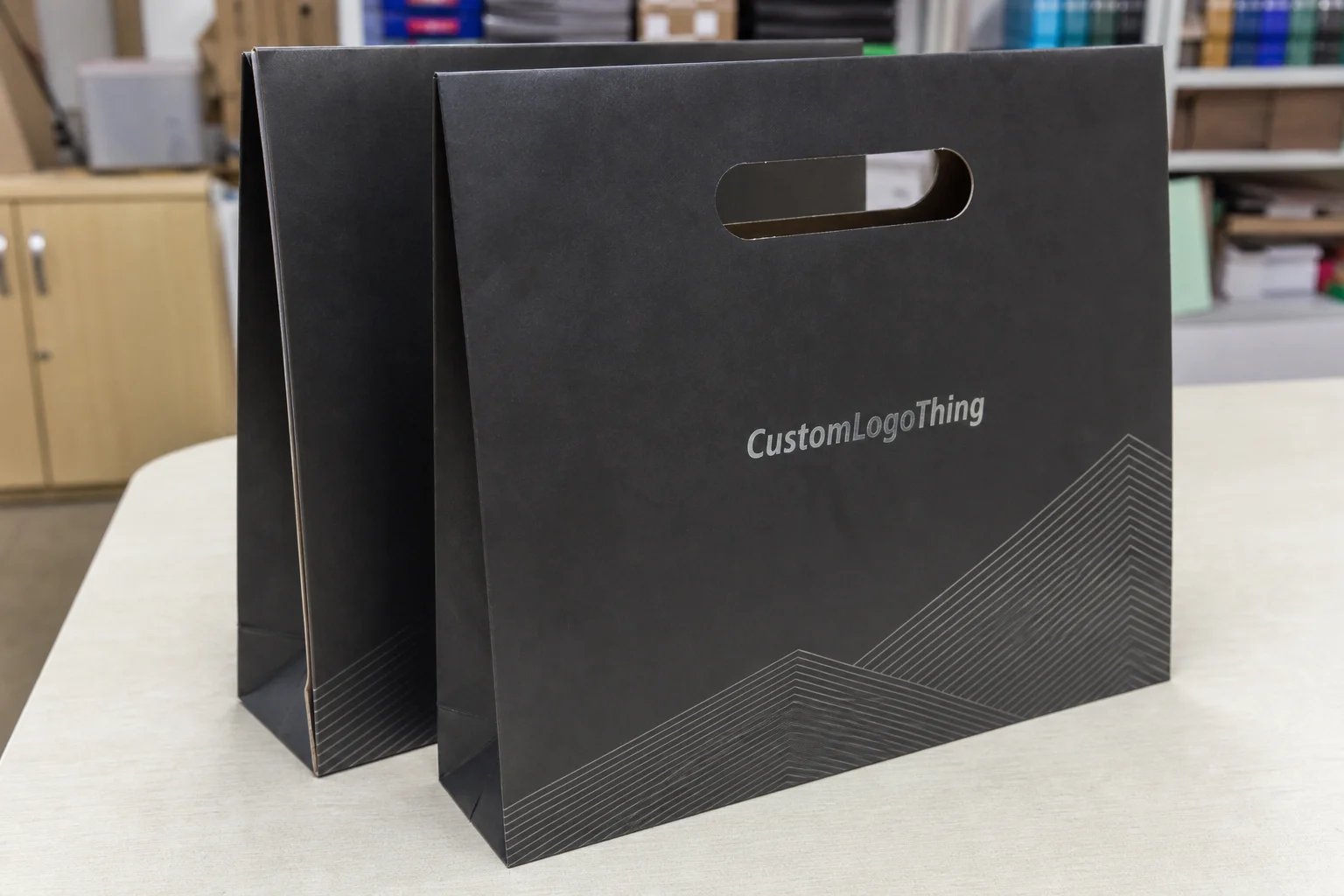
Generic poly bags do one thing. A die cut handle bag does three. It carries the contents, it presents the brand, and it gives the handoff a cleaner finish. That matters for clubs because the bag often shows up at events where presentation is part of the sale: registration day, sponsor drops, merchandise tables, award pick-up, and team kit distribution.
There is a practical reason clubs keep coming back to these bags. They are easy to store, easy to hand out, and easy to print in a way that still looks deliberate at a small unit cost. A plain white bag with a sharp one-color logo often looks more professional than a loud full-color design that was squeezed into the wrong format. Production has a funny way of punishing clutter.
For sports clubs, the bag may hold jerseys, socks, water bottles, brochures, membership cards, sponsor inserts, and sometimes a medal or two. That load is heavier than a random giveaway. If the bag wall is too thin or the handle cut is weak, stress concentrates around the top edge. That is where failures happen. Not in theory. In practice.
Another reason clubs Order Custom Bags is visibility. A bag carried across a venue becomes ad space without buying more media. If sponsor logos are included, the bag has to hold up visually, not just physically. Sponsors notice that sort of thing. So do parents, players, and volunteers. No one remembers packaging that works perfectly. They remember the one that split open.
Used well, the bag becomes part of the club’s operating system. It holds the giveaway, carries the club mark, and reduces the number of loose items floating around during busy event days. That is a modest job description. It still matters.
Product details that matter for clubs and events
Die Cut Handle Bags are built with a punched handle at the top, which gives them a cleaner look than loose-handle or string options. For clubs, that matters because the bag has to look tidy on a table and easy to carry across a field or into a gym. The handle area can also be reinforced, which helps when the bag carries folded apparel or mixed contents.
Material choice is not cosmetic. LDPE is softer and more flexible, which makes it feel a little more premium in hand and helps with heavier loads. HDPE is lighter, crisper, and often cheaper. It works well for thinner promotional bags, but it can feel stiff and can show wrinkles more easily. If the club wants a bag that stands up on a table and gives the logo a cleaner face, a heavier gauge is usually worth the extra cost.
Common club uses include:
- registration kits
- team store purchases
- booster club sales
- sponsor handouts
- award pickup bags
- tournament swag packs
Printing choices usually come down to simplicity versus decoration. One-color printing is the most common option because it keeps setup manageable and still gives a sharp result if the artwork is clean. Two-color or multi-color printing can work, but every extra color adds setup work, proofing time, and cost. Full coverage backgrounds also change the economics. More ink means more drying, more waste, and more room for variation.
That is why a bold logo on a simple bag color often wins. A high-contrast print reads faster at a distance and tends to survive production better than a detailed, crowded design. Fancy is fine. Clear is better.
Finish matters too. Gloss can look brighter and more promotional. Matte can feel more restrained and premium. Neither is automatically right. A youth club running a summer event may want something cheerful and obvious. A rowing or tennis club may want a cleaner, more restrained finish. The point is not to copy another club’s look. It is to match the way your club already presents itself.
Artwork should be prepared for print, not just for screens. Vector files in AI, EPS, or print-ready PDF format are the safest starting point. High-resolution raster files can work, but they are a second choice. Tiny text, hairline rules, and thin outlines tend to disappear or fill in during production. A logo that looks crisp on a monitor can become muddy once it hits film printing. That is not a mystery. It is just how the process behaves.
Font size and spacing deserve more attention than they usually get. Anything below 6 pt is risky unless the content is decorative and not meant to be read up close. Sponsor names need breathing room. Event dates need contrast. If a club wants a bag that can be used for several seasons, the design should avoid trends that age quickly. The bag is not a flyer. It has a longer life span.
Some clubs also ask about recycled content or sustainability claims. Those can be legitimate, but they should be documented, not assumed. If a supplier says the bag contains recycled material, ask how that is verified and whether the claim applies to the full bag or only part of the resin blend. Green language is cheap. Proof is not.
Specifications clubs should lock in before requesting a quote
Quotes become useful only after the bag spec is real. If the request says “custom bag” and nothing else, the numbers will be fuzzy. And fuzzy pricing is how club budgets drift off course. The main variables are size, thickness, print coverage, number of colors, handle style, and quantity. Change one of those and the quote changes with it.
Size should follow what the bag will actually hold. Small bags work for tickets, wristbands, and slim handouts. Medium bags fit folded shirts, brochures, and mixed registration items. Large bags are better for full apparel bundles, gear packs, and sponsor kits. If the contents are squeezed tight, the bag becomes harder to carry and the handle area takes more stress. That problem solves itself badly.
Here is a practical way to think about sizing:
| Bag size use | Typical contents | Best fit | Cost impact |
|---|---|---|---|
| Small | Tickets, wristbands, small giveaways | Fast handout, compact storage | Lowest material cost |
| Medium | Shirts, brochures, sponsor inserts | Most club orders | Moderate unit cost |
| Large | Apparel bundles, full kits, multiple items | Premium event packaging | Higher material and shipping cost |
Thickness is the next decision. A thinner bag may be fine for a light giveaway, but sports clubs rarely pack only one lightweight item. For apparel and recurring use, a thicker gauge usually makes more sense. It holds shape better, hides wrinkles better, and gives the bag a more substantial feel. Buyers often forget that “feels cheap” is not just branding language. It is usually a material choice.
Print layout needs to be locked down early. One side or two. One color or two. Spot color or full coverage. Even if the logo looks simple, extra ink coverage increases setup time and can shift pricing in ways that are not obvious on the first quote. A quote that looks cheap may be missing assumptions about print area, color count, or carton packing. Ask for those details in writing.
Pantone references help if exact brand color matters. That is especially true if a sponsor logo is involved. Proofs should show bag dimensions, artwork scale, placement, and any line items that affect the final look. Without that, the club may approve something that is technically correct and visually wrong. That is a classic packaging problem. Nobody is thrilled when it happens.
Shipping and packing details matter too. Some clubs want cartons labeled by team, by event, or by sponsor. Some need palletized delivery. Some need a specific carton count to fit shelving or storage bins. Those requirements change handling cost and sometimes production flow. If you are comparing quotes for Die Cut Handle Bags for sports clubs moq planning, every supplier needs the same spec sheet. Otherwise the comparison is fiction dressed up as numbers.
Cost, pricing, and MOQ planning for club budgets
MOQ exists because setup costs do not disappear on smaller orders. Film setup, color alignment, proofing, material waste, press calibration, and packing all cost something before the first finished bag exists. That is why unit price rises on small runs. It is not a trick. It is production math.
For custom Die Cut Handle Bags, pricing usually moves with five levers:
- bag size
- material gauge
- number of print colors
- print sides
- order quantity
Quantity is the biggest one. Small runs are fine when the event is truly one-off. But clubs that repeat the same packaging every season usually save money by buying higher. The price break between 1,000 and 2,500 pieces can be enough to justify the extra inventory. Sometimes the 5,000-piece run is still the smarter move if the club already knows the bag will be reused for multiple events.
Typical pricing patterns look something like this, though exact numbers move with size, material, and print coverage:
| Quantity | Typical price behavior | Best use |
|---|---|---|
| 500-1,000 | Highest unit cost | Trial runs, small clubs, single event needs |
| 1,500-3,000 | Better balance of cost and flexibility | Seasonal use, recurring giveaways |
| 5,000+ | Best cost per piece | Multi-event programs, sponsor packs, resale |
As a rough buying range, simple one-color die cut handle bags often land somewhere around $0.12 to $0.35 per piece at higher volumes, while smaller custom runs can sit noticeably higher. Heavier gauges, extra colors, larger sizes, and full-coverage designs push that up. Freight matters too. A cheap unit price can disappear fast if the shipment is bulky or rushed.
That leads to the budgeting rule I trust most: plan from actual need, then add a buffer only if the bags will be reused or sold. A 10% to 15% cushion usually covers spoilage, event overruns, or small counting errors. If the order supports sponsor commitments, the cushion should be bigger. Nothing creates awkward questions faster than not having enough bags for the people you promised them to.
Compare quotes only when the specs match. Same dimensions. Same material. Same ink count. Same finish. Same shipping method. Same carton count. Otherwise the lower quote might simply be quoting a thinner bag, a smaller print area, or a different freight assumption. Ask for line items. Setup fees, plate fees, tooling, and shipping should all be visible. Hidden assumptions are where budget problems hide.
For die cut handle Bags for Sports Clubs moq planning, the sweet spot is often a mid-volume order that covers one season and leaves a small reserve. It is not glamorous. It is just the least annoying way to buy packaging.
Process and timeline from artwork to delivery
The workflow should be boring. Quote, artwork review, proof approval, production, quality check, packing, and shipping. If the process feels chaotic at the quoting stage, the order usually feels worse later. Delays tend to start with missing information, not with the press itself.
A real proof should show size, placement, color references, and any sponsor or event details that matter. If the design includes team names, jersey numbers, or a season date, those items need a separate check. One typo can ruin a whole run. A wrong sponsor logo can do even more damage, because now the club has a brand problem and a counting problem.
Typical lead times for straightforward custom bag orders are often 12 to 15 business days after proof approval, plus transit time. Larger quantities, more colors, special materials, and custom packing can extend that. Rush production is possible sometimes, but only if the factory schedule, raw material availability, and shipping window all cooperate. That is not something to assume.
Common delay points include:
- missing vector artwork
- late proof approval
- color changes after sign-off
- added requests mid-order
- unclear ship-to details or deadlines
Good buyers reduce delays before the first proof is sent. They send final artwork, the right quantity, the delivery destination, the event date, and any carton or pallet requirements in one shot. It is less dramatic and more effective. Rework costs time. Time costs money. The quote never tells you that directly, but production does.
For recurring club programs, keep a reorder file. Store the approved artwork, dimensions, Pantone references, carton counts, and shipping instructions together. That makes next season easier. It also protects against the classic “we thought we used the same file” problem, which is rarely true and usually expensive.
Quality control should happen at multiple points, not just at the end. A decent supplier checks handle cut integrity, seal strength, print alignment, and carton counts before shipping. If the bags are going to be reused, a quick drop or pull test is sensible. If the order is going to a tournament, a check for scuffed print or pinholes matters more than most buyers admit. Transit is rough. Packaging should be judged like it will be handled by a tired volunteer carrying three boxes at once.
For broader material or recycling questions, the EPA recycling guidance is a better sanity check than marketing claims. For shipping and transit performance, ISTA explains why carton protection and pack density matter. Certification claims for paper-based packaging should be verified through fsc.org if they are part of the order.
What makes a supplier reliable for repeat club orders
Repeat orders reveal whether the supplier actually controls the process. The first run can hide a lot. The second run exposes it. A reliable supplier keeps the bag thickness consistent, keeps print color behavior stable, and keeps the handle cut clean from batch to batch. If the second order suddenly feels thinner or looks slightly off-color, the production controls are weak.
Communication should be plain. Clubs do not need long status emails that say very little. They need proof timing, approval deadlines, shipping timing, and clarity on whether the same material and print method are still available. If a supplier has to change the spec, that should be stated early and in direct language.
These are the QC checks I would not skip:
- handle cut integrity
- seal strength
- print alignment
- carton count accuracy
If the order involves multiple team names or sponsor versions, version control matters a lot. The wrong file in the wrong folder creates a whole new problem. A good supplier keeps proof records clean and can split shipments when the club needs bags going to more than one event site. That sounds ordinary. It saves a lot of trouble.
Direct production control usually gives better consistency than a chain of middlemen. That does not mean every direct supplier is strong. It means there is less room for the message to drift between quote, proof, press, and packing. For clubs that reorder every season, that consistency is worth more than polished sales language.
Price matters. So does repeatability. If the first order arrives with one bag style and the second order arrives with a slightly different spec, the supplier has already failed the simplest test. For a club, that can mean mismatched event kits, uneven branding, and rework that nobody budgeted for.
Best next steps for a clean club order
Start with the real use case. Registration kit. Team store purchase. Sponsor pack. Giveaway. Fundraising bundle. Each one points to a different bag size and a different practical quantity. A bag meant to move apparel needs different handling than a bag meant to carry a flyer and a wristband. Obvious, but easy to miss when the order starts as a spreadsheet note.
Then lock three things before asking for a quote: approximate size, target quantity, and final artwork. If the club is undecided on quantity, compare a few tiers and see where the unit price drops enough to matter. A mid-volume option often makes the most sense. Not the cheapest looking quote. The one that avoids reorders and avoids waste.
Approve the proof only after checking dimensions, logo scale, print colors, and delivery details. If there is any chance of a reorder later, save the exact approved spec and the final files in one place. The next order will be faster and less error-prone. That is not sophisticated. It is just good file discipline.
The cleanest order is usually the one with the least drama. Clear specs, realistic quantity, the right material, and a proof that someone actually reviewed. That is the whole point of die cut handle bags for sports clubs moq planning. Get the packaging right once, and it stops being a problem every season.
One last thing. A bag should earn its space. If it is too flimsy, too small, or too generic, it costs more than the invoice shows. The club pays in time, rework, and presentation. Better to make the boring decisions well.
FAQ
What is the usual MOQ for die cut handle bags for sports clubs?
MOQ depends on size, print colors, material thickness, and how much setup the run needs to absorb. Smaller custom orders are possible, but the unit cost climbs fast when quantity drops. For clubs that reuse the same bag across a season, ordering a higher volume often makes more sense than placing multiple small runs.
How do I Choose the Right size for sports club bags?
Match the bag to the actual contents. Small works for tickets and accessories, medium fits shirts and handouts, and large suits full kits or multiple items. If the bag will carry apparel plus sponsor inserts, leave extra room so the contents do not stress the handle or seal.
Can die cut handle bags be printed with team colors and sponsor logos?
Yes. Most club orders use one-color or multi-color printing, depending on budget and artwork complexity. Vector artwork and Pantone references help keep the logo sharp and the colors predictable. If exact brand matching matters, ask for a proof that shows placement and size clearly before production starts.
How long does production usually take after proof approval?
For straightforward orders, 12 to 15 business days after proof approval is a fair planning range, plus shipping time. Larger quantities, extra colors, and special packing can extend that. The cleanest way to avoid delays is to approve proofs quickly and send final artwork before the quote is finalized.
What should clubs send first to get an accurate quote?
Send the target quantity, bag dimensions or intended contents, logo files, print color needs, deadline, and shipping zip code. If the bag will be used for retail, giveaway, or event packaging, say that too. That gives the supplier enough information to quote price and MOQ realistically instead of guessing.


