Ecommerce Brand Frosted Zipper Plastic Bags Quote Guide
A frosted zipper bag can look straightforward until the first quote arrives and the numbers start moving. One supplier assumes a standard zipper, another prices a double-track closure, a third adds white underprint, and suddenly the same-looking pouch lives in three different cost worlds. That is why the ecommerce brand Frosted Zipper Plastic Bags factory quote checklist matters: it keeps the conversation anchored to measurable specs instead of vague descriptions.
For an ecommerce team, packaging is not background noise. The bag affects shelf presence, warehouse handling, and the first few seconds of the unboxing experience. A matte finish can hide scuffs better than a glossy one, which sounds minor until a receiving team opens cartons and half the clear bags show handling marks. Small details like that change perceived quality faster than most branding copy ever will.
Ecommerce brand frosted zipper plastic bags factory quote checklist
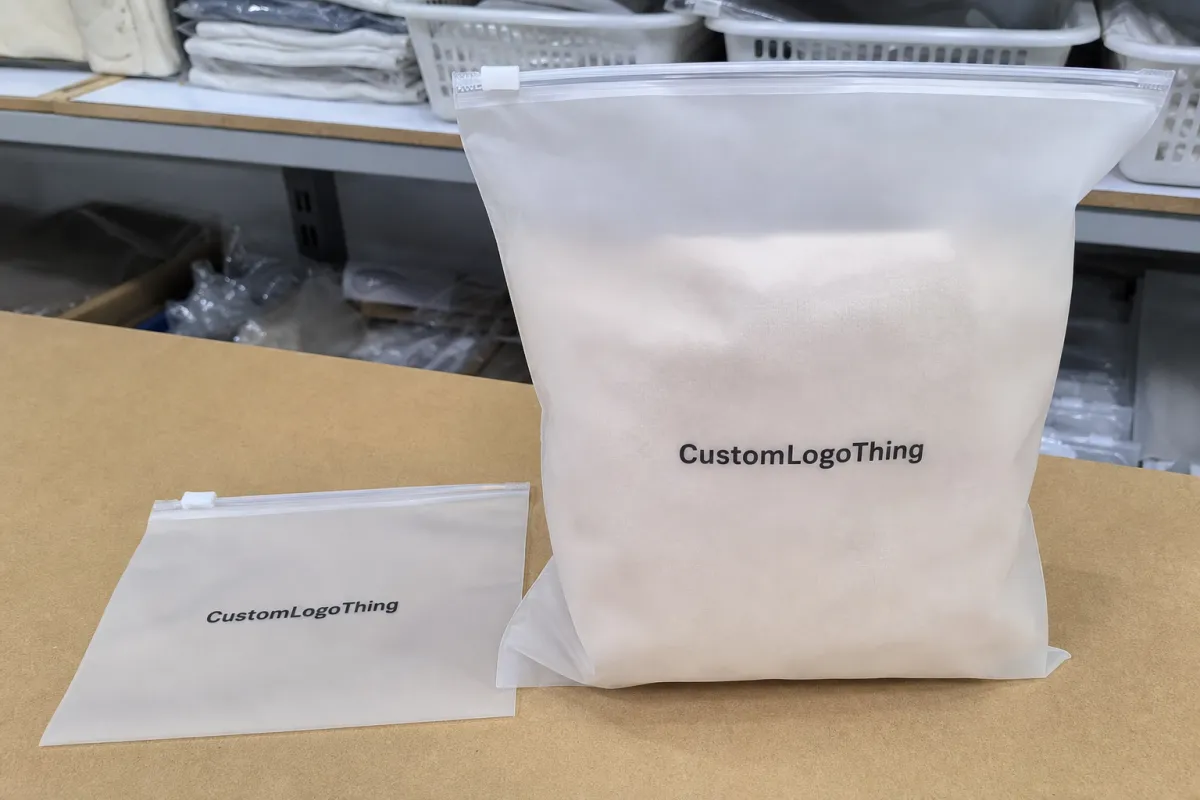
The cleanest factory quote starts with the same inputs on both sides. If a buyer says “frosted zipper bag” without dimensions, film thickness, zipper type, print coverage, or packing method, the factory will fill in the blanks. Those assumptions are where pricing drift begins.
Start with finished size, not the flat cut size alone. A 250 x 300 mm pouch with a 40 mm gusset behaves very differently from a non-gusseted bag with the same face dimensions. Add thickness in microns or mils, because “thick” means nothing in a quotation. For many ecommerce items, frosted PE bags land somewhere around 60-120 microns, while heavier garment or accessory pouches may need more. That extra film weight usually buys puncture resistance and a more substantial hand feel, but it also raises material cost and can slow sealing if the line is tuned for lighter film.
Then define the closure. A standard press-to-close zipper is fine for light product lines and single-use shipping. A double-track zipper costs more, but it holds better after repeated opening, which matters for returns handling, sample programs, and storage bags that may be reopened many times. The difference is easy to dismiss on a spec sheet; on a packing bench, it changes how quickly a worker can close the pouch without checking the seal twice.
Print detail is the other place quotes split. One-color logos, spot graphics, full-panel coverage, reverse print, and white underprint are not variations of the same thing. They are different production paths. If the artwork sits on frosted film, white ink often becomes the hidden cost driver, because it adds an extra layer and usually tightens registration requirements. A simple logo on one panel may be priced like a routine run; an edge-to-edge design with a white base may be treated like a controlled print job with more waste allowance.
The first inquiry should include:
- Finished width, height, and gusset depth, if any
- Film thickness in microns or mils
- Zipper style, seal strength expectation, and any tear notch request
- Print colors, artwork coverage, and whether white underprint is needed
- Quantity, delivery destination, and target in-hand date
Those five items do more than speed up the quote. They make it comparable. If one supplier quotes a plain bag and another quotes a reinforced, printed pouch with counted packing, the low number is not a real bargain. It is just a narrower scope.
Frosted zipper bag construction, print area, and finish options
Most Frosted Zipper Bags are made from PE-based film, often LDPE or LLDPE blends, with a matte or frosted surface finish. The finish can come from the film formulation, the extrusion process, or surface treatment depending on the factory’s setup. Whatever the method, the visual effect is the same: less glare, less obvious scuffing, and a softer presentation than a high-clarity clear bag.
That visual softness is useful in ecommerce because the bag often sits between the product and the customer’s first impression. A frosted pouch can make apparel, small accessories, cosmetics, and gift items feel more organized and less industrial. It can also make printed graphics easier to read under indoor lighting, which sounds trivial until a brand realizes its logo disappeared in reflections on the first test sample.
Construction choices matter just as much as finish. Side gussets add volume without increasing face width. Bottom gussets help a bag stand better and can make packing faster for bulkier goods. Tear notches improve opening consistency, especially when the end customer is not using scissors. Hang holes are practical for retail display, but they also help some warehouse teams sort or suspend stock during packing.
Closure style deserves a closer look. Standard zippers are adequate for low-risk packaging. Double-track zippers cost more and take more pressure to fit, but they are less likely to pop open in transit. If the bag will be reused, stored, or returned through a fulfillment network, the stronger zipper usually pays for itself in fewer complaints. The same logic applies to seal width: a slightly wider seal uses more material, but it can reduce failures on heavier contents.
Print area has a direct effect on both price and readability. A small front logo is inexpensive because the factory can keep registration simple. Full wraparound art creates more line movement, more ink coverage, and more opportunities for alignment drift. On frosted film, fine text is risky if the contrast is weak. A design that looks elegant on a monitor can become faint on matte plastic unless the white base, line weight, and color density are adjusted for the substrate.
For brands that want the bag to carry more of the visual load, the packaging can include:
- Single-panel or dual-panel printing
- White underprint for sharper logo contrast
- Reinforced seams for heavier contents
- Gussets for larger or uneven products
- Hang holes or tear notches for merchandising or ease of opening
One practical observation: a frosted surface hides minor handling marks better than a glossy clear one, but it is not immune to scratches. If the factory packs bags too tightly in cartons, edge rub and compression marks can still show up. That is not a design flaw; it is a packing and handling issue, and it should be addressed in the quote.
Key specifications buyers should lock before requesting samples
Sample requests often fail for one simple reason: the buyer is still deciding what the bag should be. A factory can make a sample from partial information, but the result is rarely useful for pricing or production approval. The sample ends up as a conversation starter instead of a working spec.
Dimensions should be locked in finished form. Say exactly what the usable opening needs to be, especially if the product has a wider collar, folded edges, or a zipper that sits above the main body. Flexible film always carries some tolerance, and the factory should state that tolerance up front. A pouch that is off by 2-3 mm may be acceptable; one that misses by 8-10 mm is usually not.
Film thickness should be written in microns or mils, never as “premium” or “heavy duty.” For reference, 2.5 mil is about 64 microns and 5 mil is about 127 microns. That range is wide enough to change how the bag folds, how it seals, and how much abuse it can take in transit. Thinner film is easier to pack and cheaper to ship. Thicker film usually looks better and resists puncture more effectively, but it can feel stiffer and cost more per thousand units.
Artwork needs the same discipline. Define the print file format, color count, placement, bleed allowance, and whether the logo must sit above the zipper line or centered on the front panel. If a design wraps around the gusset, say so. If the colors need to match an existing packaging line, ask for a proof against a reference sample rather than a theoretical match. Packaging color drift is often accepted too casually; on a product wall, it is visible immediately.
Before approval, confirm:
- Exact dimensions and acceptable tolerance
- Target thickness and material type
- Zipper feel and closure strength
- Artwork version, print colors, and placement
- Packing format, carton count, and label requirements
Packaging method matters more than many buyers expect. Bulk-packed bags reduce handling cost, but counted inner packs can speed warehouse receiving and reduce inventory errors. If the bags will sit in a fulfillment center or be kitted by hand, ask for the packing format that matches the labor process. A quote that ignores pack-out can be cheap on paper and expensive in the building.
Frosted zipper plastic bag pricing, MOQ, and quote inputs
Pricing is built from material, conversion, print work, and packing. Size matters, but not nearly as much as buyers think. A wider bag uses more resin, yes, but a printed bag with white underprint and a special zipper can outrun the material cost quickly. A quote that looks high may simply be honest about setup and waste.
MOQ is usually tied to machine setup, print preparation, and the amount of film a factory expects to lose before the line stabilizes. Unprinted bags often have a lower threshold than custom printed ones. A basic unprinted pouch might be possible at a few thousand pieces, while a printed run with several colors often makes more sense at 5,000-10,000 pieces or above. The exact number depends on bag size and the factory’s line speed, but the pattern is consistent: more customization means a higher economic floor.
| Order profile | Typical unit price range | What drives the cost |
|---|---|---|
| Unprinted frosted zipper bag | $0.06-$0.14 | Film weight, size, zipper style, packing method |
| 1-2 color logo print | $0.10-$0.24 | Artwork setup, print registration, ink coverage, proofing |
| Full coverage print with white underprint | $0.18-$0.36 | Heavy ink load, extra passes, tighter control, higher waste |
| Custom structure with gusset or double zipper | $0.22-$0.45 | Additional converting steps, longer setup, more material use |
Those numbers are directional, not universal. A 6 x 8 inch accessory bag and a large apparel pouch do not belong in the same pricing bracket, even if both use frosted PE. Freight also shifts the result. Air shipment can make a low unit price meaningless. Ocean freight reduces landed cost, but only if the order schedule can absorb the transit time. For some brands, a slightly higher factory quote with local stock or consolidated freight is still the better business decision because it lowers the risk of a launch delay.
Watch for one-time charges. Plates, cylinders, sampling, proofing, carton changes, and special packing can sit outside the unit price. If the supplier buries those costs inside a single line, the quote becomes hard to compare. Transparent breakdowns are more useful than aggressive headline pricing because they show what repeats on reorder and what disappears after the first run.
There is also a quality-cost tradeoff that is easy to miss. A very low quote can mean thinner film, weaker seals, or looser print control. Those savings often show up later as returns, damaged product, or rework. Packaging is one of the few parts of the order where a small material downgrade can create a visible customer-facing problem almost immediately.
Production steps, timeline, and turnaround for approved orders
A serious factory should be able to map the order from inquiry to shipment without hand-waving. The usual sequence is spec review, price confirmation, artwork check, sample or proof approval, production scheduling, inspection, and packing. Miss one step, and the schedule slips.
For a standard custom order, the sample or proof stage may take about 5-7 business days if the artwork is clean and no new tooling is needed. Production often lands in the 12-20 business day range after approval for moderate runs. Heavy print coverage, special zippers, or seasonal congestion can push that longer. If the order needs new cylinders, a more complex zipper profile, or a revised bag structure, add time. International freight is a separate clock entirely; ocean transit can add weeks, not days.
A useful quote includes milestone dates. “Ready soon” is not a schedule. Better factories give a date for proof approval, a start date for production, a rough inspection window, and a packing completion target. That level of detail helps ecommerce teams plan launches, subscription replenishment, and ad campaigns without treating packaging as a guess.
Quality control should be practical rather than decorative. Ask how the factory checks seal integrity, zipper engagement, print adhesion, and carton count. A good line will look at seal width, run a zipper cycle test, check ink rub resistance, and inspect random samples for pinholes or weak seams. If the order carries heavier product, burst testing or simple drop testing on packed cartons is worth requesting. The goal is not perfection theater. It is catching the failure modes that matter most in transit and fulfillment.
Material availability can change timing. If the factory has to reorder a specific resin blend or change a zipper source, the schedule can shift even after the quote is approved. Honest suppliers say that early. Less reliable ones wait until the promised ship date is already out of reach. That difference is often more valuable than a few cents off the unit cost.
As a rule, the more customized the bag, the more the buyer should expect a proofing loop. Simple bags move faster; custom printed, frosted, zipper-sealed pouches need more checking because a small mismatch in registration or film tension can affect the final appearance. That extra day or two often saves a full production rerun later.
For buyers who care about transport standards, it is reasonable to ask whether carton and packaging tests align with ISTA methods. If recycled content, paper inserts, or outer cartons are part of the package, request evidence where FSC sourcing is relevant. Those questions do not slow good suppliers down; they clarify the standard.
What a reliable factory quote should include for ecommerce brands
A quote that can be trusted reads more like a technical spec sheet than a sales pitch. It should list the bag size, material, thickness, zipper style, print method, quantity break, packing method, sample terms, and delivery assumption. If a supplier only gives a unit price and a lead time, there is not enough information to compare the offer to anything else.
Reliable quotes also show tolerance. That detail is often missing, and its absence matters. Flexible packaging is not a rigid product. Some variation in cut length, zipper alignment, and print position is normal. The issue is whether the supplier states the acceptable range and whether that range matches the brand’s tolerance for visual consistency.
Repeat order control should be visible in the paperwork. The factory should track approved artwork versions, carton labels, print references, and any material substitutions. Without that discipline, a reorder can drift. The second batch may be slightly cloudier, the zipper may feel different, or the print tone may shift just enough to look inconsistent beside the first run. That is not just a cosmetic issue. It can make a product line feel unstable.
It also helps to see how the supplier handles change. If the quantity changes, if the buyer adds a gusset, or if the logo moves, the quote should show the cost and timing implications immediately. Good factories do not hide the effect of a revision. They surface it because revision control is part of manufacturing, not a favor.
Next steps: what to send for a fast, accurate quote
If speed matters, send the exact dimensions, thickness target, zipper style, print colors, and any special construction such as gussets, hang holes, or tear notches. Add order quantity, destination country or postal code, preferred shipping mode, and target in-hand date. That combination gives the factory enough data to price the bag and the freight assumptions behind it.
Artwork files should be as complete as possible. A dieline is best, followed by a print-ready PDF or editable file. If the finish needs to match a current package, attach a reference photo or a physical sample. A real sample often resolves more confusion than a long email thread because it shows thickness, surface feel, zipper resistance, and print contrast in one object.
Tell the supplier whether the order is a test run, a launch quantity, or a replenishment. Those are not interchangeable. A test order often carries higher setup cost per unit. A replenishment run may justify a lower price if the tooling and artwork are already approved. That distinction affects the quote more than many buyers expect.
Use the checklist as a filter before requesting pricing. The better the inputs, the cleaner the quote, and the easier it becomes to compare suppliers on the same basis. For ecommerce packaging, that is the real value of the ecommerce brand Frosted Zipper Plastic Bags factory quote checklist: fewer assumptions, fewer surprises, and a shorter path from spec to production.
What should I prepare before asking for a frosted zipper plastic bag quote?
Prepare finished dimensions, thickness, zipper style, print colors, and any special features such as gussets or hang holes. Include quantity, destination, and target delivery date so the factory can quote both unit cost and freight assumptions. A clear artwork file or reference sample reduces revision cycles.
What MOQ is typical for frosted zipper plastic bags from a factory?
MOQ depends on size, print complexity, and whether the factory needs new tooling or print plates. Unprinted bags can often start lower than printed custom runs, while full-coverage artwork usually needs a higher threshold to make setup efficient. Ask for tiered pricing so you can compare a test order with a replenishment order.
Why does a frosted zipper bag quote change after I send artwork?
Artwork can change the number of print colors, the amount of ink coverage, and whether white underprint is needed. Designs that wrap around panels or require precise registration take more setup and proofing. A clean dieline and clear placement notes keep the quote steadier.
How long does production usually take after sample approval?
Simple jobs often take about 12-20 business days after approval, while more complex structures or print jobs can take longer. Sampling or proofing may add 5-7 business days before production starts. Freight time should be treated separately from factory lead time.
How do I compare two frosted zipper plastic bag factory quotes fairly?
Compare the same dimensions, thickness, zipper type, print method, MOQ, and packing specification. Check whether tooling, samples, freight, and carton details are included or listed separately. Landed cost matters more than the headline unit price, because hidden setup and shipping charges can change the real purchase cost.


