For fitness studios, fitness studio Frosted Zipper Plastic Bags wholesale order planning begins with a practical question: how do you package apparel, towels, accessories, and welcome kits so they look intentional without creating extra work at the front desk? A frosted zipper bag answers that better than a random mix of mailers, retail sacks, and reused packing materials. The frosted surface hides scuffs more gracefully than glossy film, and the zipper closure gives staff a cleaner handoff than tape or folded tops.
The appeal is not only visual. A studio bag has to survive being stacked, carried, reopened, and sometimes reused. That means the material, zipper, print area, and carton pack-out all matter. Buyers who think only about logo placement usually miss the real cost drivers. Buyers who think only about price usually end up with bags that wrinkle, split, or look tired after a short run.
Fitness Studio Frosted Zipper Plastic Bags Wholesale Order Planning
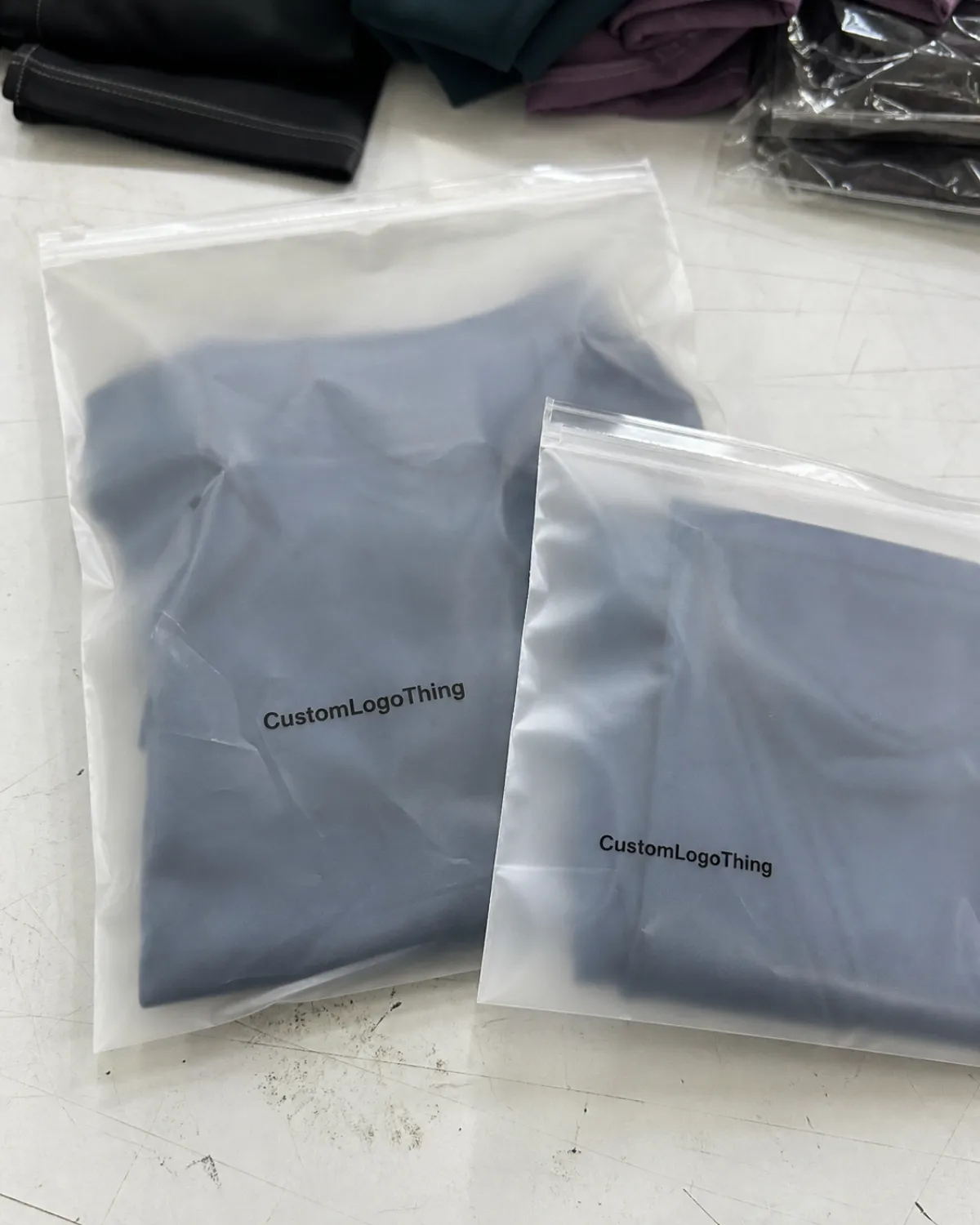
Good order planning starts with the contents, not the decoration. A folded tee behaves differently from a towel roll. Resistance bands have awkward edges. A welcome kit with a brochure, small apparel item, and sample product needs more interior room than a single item does. If the bag is too tight, the zipper track takes the strain. If it is too large, the package looks loose and less considered.
That is why a useful spec sheet includes more than a target size. It should list what goes inside, whether the bag is for one-time handoff or repeated use, whether the contents are light or heavy, and whether the bag will be displayed at retail. A quote built on those details is usually more accurate than one based on a vague request for “something premium.” Small changes in use case can change the best film gauge, zipper style, and even the print strategy.
A front-desk package has a narrow job: protect the contents, look orderly, and avoid slowing down staff.
That seems simple, but in a studio setting small failures are noticed quickly. If the zipper snags, staff feel it during every pack. If the finish fingerprints too easily, the retail wall starts looking messy. If the bag sits on a shelf and shows every seam imperfection, the brand impression drops even when the contents are good.
For that reason, fitness studio Frosted Zipper Plastic Bags wholesale order planning should be treated like a repeatable packaging program, not a one-off purchase. The first order should teach you something useful: what size actually works, how much room staff want for packing, whether the frosted film gives enough visual coverage, and whether the final package feels sturdy enough for real use. That information is more valuable than a low first quote.
Frosted Finish, Closure Style, and Pack-Out Details
The frosted finish is more than a style choice. Most bags in this category use LDPE or a similar polyethylene blend, with a surface treatment or film structure that softens the clarity. The result is a bag that reads cleaner under store lights and hides handling marks better than a glossy clear bag. For studios with a merchandising wall or reception counter, that slightly muted surface can make the whole package look more deliberate.
Film thickness matters just as much. A lighter build around 2.5 mil can work for soft, low-stress contents. Folded garments, bundled kits, and bags that will be reopened many times usually do better in the 3 mil to 4 mil range. Thicker film tends to feel steadier in the hand, resist corner wear better, and reduce the chance of seam splits. It also adds weight, so the lowest material price is not always the best delivered price.
Zipper style deserves the same attention. A basic press-to-close zipper can be enough for short-term retail handoff. If the bag will be opened repeatedly, a smoother track with better alignment is worth the added cost. The difference shows up fast in daily use: less snagging, fewer missed closures, and a better sense that the package can hold up beyond the first trip home.
Pack-out details are where good projects stay organized. A hang hole makes peg displays easier. A write-on panel helps staff label sizes or class names. Reinforced seams reduce stress on heavier contents. Card inserts or header cards turn a simple storage pouch into a retail package. None of these features is dramatic on paper, but each one can remove friction from a studio’s daily workflow.
- Display use: frosted finish, consistent logo placement, hang hole, neat carton counts
- Repeated use: thicker film, stronger zipper track, reinforced seams, easy reopening
- Fast packing: exact finished size, wide opening, readable labeling area
Sizes, Thickness, and Print Options for Studio Goods
The fastest way to choose the wrong bag is to estimate from the product description instead of measuring the actual contents. A folded shirt, a rolled towel, and a small accessory kit all have different footprints. Measure the widest point first, then add enough room for easy insertion and zipper closure. A little clearance helps staff move quickly. Too much clearance makes the package look underfilled and less polished.
For studio purchasing, size planning usually falls into three useful bands:
- Small accessory bags: grips, bands, socks, and add-on items
- Mid-size bags: folded shirts, leggings, towels, and welcome items
- Larger kit bags: bundled apparel, multi-item retail sets, and layered inserts
Those categories are not exact standards, but they are a better starting point than guessing by product name. A pair of leggings folded tightly may fit in a smaller bag than a towel bundle, while a welcome kit can need more depth than width. The contents decide the shape, and the shape decides whether the zipper line stays clean.
Thickness should follow the load. Reused bags and bags that hold items with corners need more structure because repeated flexing puts stress on seams and closure points. For one-time takeaway, a lighter gauge may be acceptable if the contents are soft and the studio wants to keep cost down. The tradeoff is simple: lighter film saves money up front, thicker film reduces failure risk and usually improves perceived value.
Print options also deserve a realistic review. One-color logo printing often works best for frosted film because the base material already carries visual interest. It also tends to be more economical than full graphics or multiple ink passes. Unprinted stock bags can make sense for internal use, then printed bags can follow once the studio confirms the right size and volume. That two-step approach often avoids expensive rework.
Artwork visibility changes on semi-opaque film. Thin script fonts, tiny type, and delicate linework can lose clarity. Bold marks with moderate contrast usually print better and read faster at a glance. Dark logos are generally easier to place than pale ones, but ink opacity and exact film tone still matter. A proof that looks fine on screen can look different on the actual bag, especially under bright retail lighting.
That is one reason experienced buyers ask for a placement mockup before approval. It is not enough to know that the logo fits. The important question is whether it fits in a way that still looks intentional once the zipper, seam, and folded contents are all present.
Pricing, MOQ, and Quote Drivers for Wholesale Orders
Price is shaped by a small set of variables, and buyers save time when they ask about those early. Finished size, film gauge, zipper style, print colors, and any add-on features all affect unit cost. Freight matters too. A larger, thicker bag weighs more, which changes both carton count and shipping cost. The cheapest per-bag number is not always the lowest landed cost.
MOQ, or minimum order quantity, reflects setup time and production overhead. A 1,000-piece custom run often costs more per bag than a 5,000-piece run, even if the spec is identical. That is not a pricing trick; it is the math of setup spread across fewer units. Smaller runs still make sense for testing or seasonal campaigns, but the buyer should know they are paying for flexibility.
| Order Type | Typical Quantity | Indicative Unit Cost | Best Fit |
|---|---|---|---|
| Stock frosted zipper bag, no print | 2,000-10,000 pcs | $0.12-$0.22 | Fast replenishment, internal use, size testing |
| Custom one-color logo print | 3,000-10,000 pcs | $0.18-$0.35 | Retail handoff, branded member kits |
| Thicker film, hang hole, custom print | 5,000+ pcs | $0.28-$0.48 | Display use, repeated opening, premium presentation |
These figures are broad planning ranges, not fixed market quotes. A 10 x 12 bag and a 12 x 16 bag do not cost the same. A plain zipper does not cost the same as a reinforced one. One-color printing on a single side is usually easier to price than two-sided branding or multiple ink colors. The more variables you change, the more the quote shifts.
Quote requests are stronger when they include the finished size, quantity tiers, print colors, shipping location, and whether samples are required. If the bag will hold heavier goods, say so. The supplier can then suggest a film gauge that matches the load instead of assuming a lightweight structure that might fail later. That kind of detail reduces re-quoting and avoids disappointed receiving teams.
One useful habit is to compare at least three quantity tiers. A run at 3,000 pieces, 5,000 pieces, and 10,000 pieces usually reveals whether the extra inventory is worth the price break. If the studio can store the higher quantity without stress, the savings per bag may offset the carrying cost. If not, a smaller run can still be the smarter operational choice.
Production Process, Lead Time, and Turnaround
A predictable production flow usually looks like this: specification review, artwork proofing, sample or mockup approval, manufacturing, quality check, packing, and shipment. Each step is simple in isolation. Delays come from changes, missing files, or late approvals. A clean file set and a firm decision timeline can shorten the schedule more effectively than almost any other variable.
Lead time depends on more than the calendar. Print complexity adds time. Special film requests add time. Material availability adds time. Freight conditions can move the final delivery date even after production is complete. For standard custom orders, 12-15 business days after proof approval is a reasonable planning window in many cases, but that can stretch if the order is complex or supply is tight.
Reorders are usually faster because the final specification is already settled. That is one reason it helps to document the approved bag size, film gauge, zipper type, print count, and carton pack count after the first run. Later teams may not remember which version was finalized. A clear record prevents accidental changes that create cost or delay.
Build in buffer time for class launches, membership kits, and promotional events. Even a well-run order can slip if artwork needs revision or freight misses a connection. For a fixed launch date, count backward from the event and leave room for at least one proof round plus transit. A two-week cushion is practical; more is better for heavily customized bags.
Carton handling also matters. Bags that look good on a spec sheet can arrive scuffed or bent if the outer packaging is weak. Ask how the cartons are stacked, whether there is corner protection, and whether the shipper uses palletizing for larger quantities. The goal is not lab perfection. It is making sure the bags arrive ready to use, not ready for rework.
For buyers who want a common reference point for transit stress, the ISTA test framework is a useful benchmark. It gives suppliers and buyers a shared language for vibration, drop risk, and carton abuse. You do not need a formal testing program for every order, but it helps to think like someone who does.
Artwork, Samples, and Approval Steps Before You Buy
Artwork mistakes are costly because they repeat across the entire run. Send vector files whenever possible, and include brand color references instead of approximate screen colors. If the logo has thin strokes or small type, ask for a proof that shows real placement and size. A floating logo on a digital mockup is not enough to judge how the print will read on frosted film.
Proof review should cover the obvious and the easy-to-miss details: spelling, logo size, bleed, safe area, zipper clearance, and alignment relative to the seams. A bag is a simple object, which makes errors stand out more. A design that sits too close to the zipper can feel cramped even when the file is technically acceptable.
A physical sample is worth the Time for Orders that will be reused or displayed. The hand feel of the film, the zipper action, and the visibility of the contents cannot be judged fully on a screen. A sample can also reveal whether the frosted finish gives enough opacity for the items inside. That matters for studios that want the bag to feel neat and unified rather than partially transparent.
A practical approval checklist keeps the process tight:
- Finished size confirmed
- Quantity tier confirmed
- Print colors and placement approved
- Logo files final and correct
- Carton count and labeling confirmed
- Delivery address and date checked
Those six items are basic, but they catch most of the problems that turn into production delays. If one line is missing, the order usually takes longer. If the team changes the quantity after proof approval, the job may need to be reworked. In custom packaging, precision at the front saves time later.
Quality Checks, Shipping Prep, and Receiving Standards
Receiving standards separate a tidy packaging program from a messy one. The checks that matter most are straightforward: zipper function, seam strength, thickness consistency, print registration, and finished size. If the zipper catches on arrival, staff notice immediately. If the seams are weak, the failure may not appear until a heavier kit is packed or reused.
Good shipping prep protects the order from crush and moisture. Cartons should be labeled clearly, packed with sensible inner counts, and arranged so the bags do not bend under weight. Frosted films can show scuffs if they rub against rough carton surfaces for too long. For large orders, ask how the cartons are palletized and whether corner protection is used.
Storage matters too. Keep cartons flat, dry, and away from heat sources. Heat can soften flexible film, and humidity can make outer cartons look worn before the bags are even opened. A clean shelf and simple bin labels usually do enough. There is no prize for overcomplicating storage.
Front-desk teams should have a short receiving routine. Count the cartons, open one, inspect a few bags for zipper action and print quality, and move the order to storage. That takes minutes. It also catches issues early, while the shipment is still traceable. If a defect shows up, clear photos and notes help the supplier respond faster than a general complaint ever will.
Environmental handling is part of the decision too. Flexible plastic bags are not automatically curbside recyclable everywhere, and local rules vary. If the bags are intended for reuse, storage, or eventual disposal, the studio should be clear about that from the start. The EPA recycling guidance is a practical reference for understanding those limits.
Next Steps to Place a Studio Order with Confidence
The easiest way to improve the first quote is to prepare one short spec sheet before reaching out. Include what goes inside the bag, the target size, expected quantity, print needs, and delivery location. Add a note about whether the bag is for retail display, member kits, or back-of-house storage. That small amount of context changes the quality of the response quickly.
Then compare several quantity tiers. A quote at 3,000 pieces and another at 5,000 pieces often tells a better story than a single number. You can see whether the price break offsets the extra inventory, or whether the smaller run fits your cash flow and storage better. Procurement becomes much clearer once the studio sees the curve instead of one point on it.
Decide whether the first run should be stock, custom, or mixed. Stock bags work well for immediate replenishment and internal use. Custom printed bags lift the presentation for retail and welcome kits. A mixed approach often makes sense: stock for everyday operations, custom for launches, campaigns, or member-facing moments. That balance keeps costs controlled without making the brand feel inconsistent.
fitness studio Frosted Zipper Plastic Bags wholesale order planning works best when the bag is matched to the real use, not to a vague idea of premium packaging. If the size fits, the zipper performs well, the print stays readable, and the quantity matches the studio’s rhythm, the order supports operations instead of complicating them.
Frequently Asked Questions
What size should a fitness studio frosted zipper bag be for apparel and small merch?
Measure the widest item first, then add enough room for easy insertion and zipper closure. For folded tees, towels, or bundled kits, a slightly larger size usually works better than a tight fit because it reduces seam stress and speeds up packing at the front desk.
How does MOQ affect fitness studio frosted zipper plastic bag pricing?
Lower quantities usually carry a higher unit cost because setup and production overhead are spread across fewer bags. Ask for tiered pricing so you can compare a few quantity levels before committing, especially if you are deciding between a test run and a full restock.
Can frosted zipper bags carry a logo clearly for studio retail use?
Yes, but the artwork should use strong contrast and sensible placement so the logo stays readable through frosted film. Proofs help a lot when the design includes thin lines, small text, or multiple colors, because those details can soften on semi-opaque material.
How long does the process usually take after artwork approval?
Stock items move faster, while custom printed bags need time for proofing, production, and quality checks. Lead time can stretch if artwork changes late or if the film or zipper style is not already available, so it helps to build a buffer before a launch or event.
What should I include when requesting a quote for wholesale order planning?
Provide the finished size, quantity, print colors, target ship date, delivery location, and any sample requirements. If the bags will hold heavier goods, include the contents and approximate weight so the supplier can suggest the right film thickness and avoid under-specifying the order.


