The ecommerce embroidered Beanies Material Sample guide is less about collecting a pretty object and more about preventing a costly mismatch between expectation and reality. A beanie can photograph well, carry a clean logo, and still disappoint once it arrives: too itchy, too shallow, too loose at the crown, or too weak around the cuff. That is the kind of mismatch that quietly turns into returns, discounts, and customer complaints.
Ecommerce makes the problem sharper. In a store, a buyer can touch the knit, test the stretch, and judge the embroidery from a few inches away. Online, the product has to sell through images, copy, and trust alone. The sample exists to close that gap before inventory is committed.
Good sampling also helps with an awkward truth: the cheapest-looking choice on paper is not always the cheapest choice in practice. A slightly denser knit, a more stable blend, or a better embroidery setup can add a little to unit cost and save far more by reducing shape issues, thread breakage, or poor review scores later.
What the sample should reveal before you place an order
A sample is not proof that a production run will be perfect. It is a controlled test of risk. The best sample answers a practical question: will this beanie feel good, hold its shape, and display the logo clearly after shipping and handling?
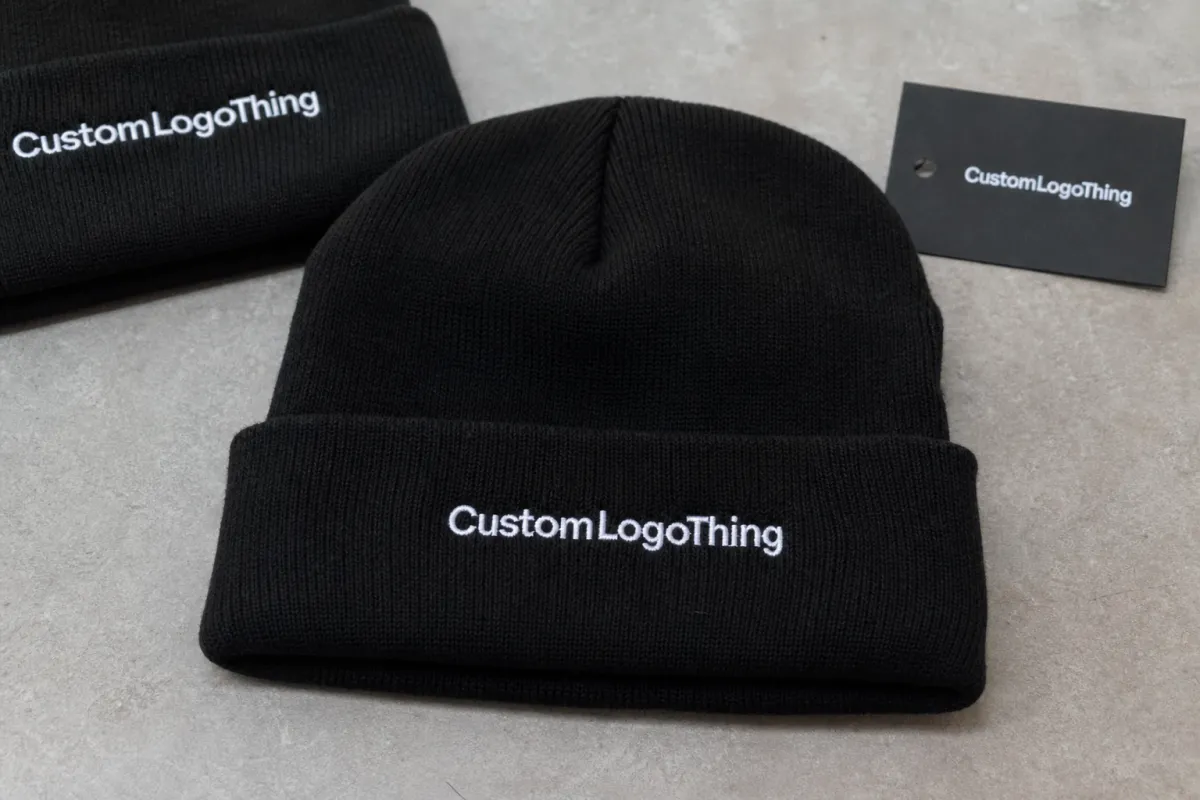
Five details matter most. First, fiber feel: is the fabric soft enough to wear against the forehead without immediate irritation? Second, knit structure: does the surface look tight and even, or loose and slightly unstable? Third, recovery: after you stretch the cuff, does it spring back or sag? Fourth, embroidery behavior: do the stitches lie flat, or do they tunnel and pull the fabric? Fifth, logo legibility: can the mark still be read clearly in a product photo, especially on a phone screen?
That last point is easy to underestimate. A logo that looks elegant in a digital mockup can disappear once the beanie is folded, worn, or compressed in a thumbnail. A sample that reads well in hand usually gives you a better shot at a clean ecommerce listing.
The phrase ecommerce embroidered Beanies Material Sample guide sounds narrow, but the decision set behind it is broad. You are comparing warmth, stretch, stitch stability, wash behavior, shipping resilience, and packaging fit. If a supplier sends only a fabric strip and asks for blind trust on the finished hat, the sample is incomplete.
"A sample is useful only if it exposes the weakness before the bulk order does."
That is the real purpose of the review. Not to admire it. To catch the problem while the cost of fixing it is still modest.
How sampling and timelines usually work
The process is straightforward in theory and slower in practice. Most buyers move through four stages: specification, blank material review, decorated prototype, and final approval. Each stage answers a different question, and each can introduce delay if the details are not aligned early.
- Spec alignment: You define fiber blend, cuff style, target size, logo dimensions, color references, and packaging needs.
- Blank swatch or knit check: The supplier sends raw material options so you can compare softness, density, and stretch.
- Decorated sample: The logo is stitched onto the actual beanie so you can judge placement, tension, and visibility.
- Pre-production approval: Final details, including labeling and packout, are signed off before the bulk run.
Timeline depends on what already exists in stock. If yarn colors and knit settings are ready, a blank sample may arrive in 2-5 business days plus shipping. A decorated prototype usually takes 7-14 business days because it adds embroidery setup, thread matching, and a second quality check. Custom knit development or special yarns can stretch the timeline further, especially if the first test reveals a fit issue or the logo needs resizing.
Shipping often becomes the hidden delay. International courier transit can add another week or more depending on lane and customs processing. If a launch date is fixed, that transit time should be counted as part of the sample schedule, not treated as a separate logistics detail.
Packaging should be reviewed at the same time. If the beanie ships as a retail-ready SKU, the sample should show how it folds, how it sits inside the mailer, and whether the chosen insert or tag changes the presentation. Sample kits commonly arrive in corrugated cardboard boxes with kraft paper cushioning, and many brands now ask for FSC certified paper components or other recycled materials. That affects cost, shelf impression, and fulfillment speed.
Transit behavior matters too. A product that looks fine before shipping but arrives creased or compressed is still a problem. The sample and the packout should be judged together, in the same way shipping tests treat product and packaging as one system rather than two separate decisions.
Fiber blend, knit gauge, and logo performance
Buyers often start with color because color is visible and easy to compare. That is understandable, but it can be misleading. The more decisive variables are fiber blend and knit gauge. They shape how the beanie feels, how it holds up, and how the embroidery behaves on the surface.
| Fiber or blend | Typical feel | Logo behavior | Best use case |
|---|---|---|---|
| Acrylic | Light, warm, often budget-friendly | Usually stable enough for embroidery on tighter knits | High-volume ecommerce basics |
| Polyester | Smooth, durable, lower shrink risk | Clean stitch definition, especially on finer gauges | Branded promo runs and repeat replenishment |
| Wool blend | Warmer, richer handfeel, sometimes itchier | Good visual depth, but tension and puckering need close review | Premium collections and colder markets |
| Cotton mix | Breathable, casual, less insulating | Can look relaxed, but may stretch out faster | Lifestyle merch and milder climates |
Knit gauge determines how much structure the embroidery has to work against. A tighter gauge usually gives the stitches more support, which helps small text stay readable and keeps edges cleaner. A looser knit can feel softer and more relaxed, but it also gives thread more room to distort the fabric. That matters most on logos with fine lines, small lettering, or dense fill stitches.
Look for the basic markers of a healthy sample. Stitch tension should be even. The backing should not show through the face of the knit. Borders should stay where they were placed. If the logo pulls the fabric out of shape during sampling, the bulk run will usually make that effect more visible, not less.
Comfort testing should be practical, not ceremonial. Wear the beanie for five minutes, then thirty. Stretch the cuff and check whether it rebounds cleanly. Fold it into the shape it will take in the mailer. Rub the surface lightly to see whether pilling starts too early. For darker beanies with bright thread, press a damp white cloth against the embroidery to see whether any color bleed shows up. None of this requires a lab, but it does require consistency.
Thread choice matters as well. Some thread types produce crisp definition but sit more rigidly on the fabric. Others feel softer but can flatten under pressure. If the supplier offers a choice of embroidery thread, ask for side-by-side samples. The difference can be subtle in a spreadsheet and obvious in a photo.
Sample costs, MOQ, and unit pricing tradeoffs
Sample cost is easy to dismiss because it sits far below production spend. That is usually a mistake. A sample fee is small insurance against a bad decision, and the bill is easier to swallow than a warehouse full of product that looks right on paper and wrong on arrival.
| Sample type | Typical cost | What it tells you | Tradeoff |
|---|---|---|---|
| Blank swatch | $8-$25 | Fiber feel, knit density, color baseline | Does not prove logo performance |
| Decorated prototype | $25-$75 | Embroidery, placement, and production look | More expensive, but far more predictive |
| Pre-production sample | $40-$120 | Near-final version with production-grade setup | Best for approval, usually slower |
MOQ changes the economics fast. A lower minimum can look safer, but the unit price often rises as the run gets smaller. On the other side, a larger order lowers per-unit cost but increases exposure if the fit or logo is off. The right balance depends on sell-through confidence, margin targets, and how expensive the brand can afford a mistake to be.
There is also a hidden cost to sampling badly. If you approve a cheap blank swatch and skip the decorated prototype, you may save a few dollars now and pay for it later in revisions, rework, or unsellable stock. In many ecommerce programs, a better sample can justify a slightly higher unit cost because it catches problems before bulk production locks them in.
Additional charges usually come from thread changes, special yarns, custom woven labels, printed care tags, or a new packaging format. Biodegradable packaging and FSC certified inserts can add a small amount per unit, while recycled materials or simple kraft paper mailer options may keep costs lower. The point is not to chase the cheapest packout. It is to match the packout to the product’s risk profile and the brand’s positioning.
The best ecommerce embroidered Beanies Material Sample guide should make cost tradeoffs visible before the quote stage turns into guesswork. If the sample cannot show a meaningful difference in comfort, stitch quality, or packaging, it is not useful enough to guide procurement.
Step-by-step checklist for reviewing beanie samples
A disciplined review process matters more than a perfect sample. If every item is judged under different lighting, with different reference points, the result is a mood board, not a buying decision. Keep the conditions consistent.
- Inspect the fabric first: Feel the handweight, check the seam comfort, and stretch the cuff to see how it returns.
- Review the embroidery: Look for flat stitches, clean edges, correct placement, and no visible pulling or tunneling.
- Test the wear: Put the beanie on, fold it, and remove it several times to see how the shape holds up.
- Photograph the sample: Shoot front, side, and three-quarter angles to judge how the beanie reads online.
- Record the result: Score comfort, logo clarity, packaging, and turnaround so comparisons stay objective.
The photo test deserves more attention than it usually gets. Ecommerce buyers are not just selecting a product; they are selecting a product that has to survive compression, cropping, and small-screen viewing. A beanie that looks refined in the hand but disappears in a thumbnail is harder to sell than it first appears.
Use a simple scorecard and assign separate notes to fit, fabric feel, stitch quality, and packout. If the sample arrives in a mailer, note whether the packaging used corrugated cardboard, kraft paper, or plastic-heavy filler. That affects the unboxing experience, warehouse handling, and whether the brand can honestly describe the package as lower-waste.
Transit damage should be part of the review. If the sample arrives crushed, lint-covered, or folded in a way that leaves a permanent ridge, that is a packaging issue, not just a shipping issue. A beanie sold online has to tolerate the journey as well as the product photo.
"A good sample makes comparison easier, not more emotional."
That is a useful rule because sample decisions often get distorted by small accidents. The first sample to arrive feels like the front-runner. The one with the nicest card looks more premium. The one with the lowest freight bill feels efficient. None of those cues tell you whether the product will perform.
Common mistakes that distort sample decisions
The first mistake is judging by photos alone. Smartphone lighting can flatten texture, exaggerate saturation, and hide stitch problems. Two samples that look nearly identical on a screen can feel completely different in the hand. If the decision has not been made with the physical sample present, it is not really a decision yet.
The second mistake is approving one sample and assuming the bulk run will match it exactly. That is risky whenever the order uses alternate yarn lots, a different stitch operator, or a revised knit program. Ask whether the sample reflects the final machine settings and whether tolerances have been documented. If the answer is vague, the approval needs more context.
Comfort is another easy place to miss. A beanie can look premium and still irritate the wearer after a few minutes. That kind of problem shows up later in returns, low ratings, and discounting pressure. A soft-looking surface does not always translate into a comfortable one.
Embroidery can drift at scale too. Small text may be readable on the sample and muddy in production if the stitch density changes or the logo is scaled too far down. Ask for a clear explanation of what is fixed and what can move during manufacturing. Production variance is normal; unexplained variance is not.
Packaging mistakes are just as expensive. If the sample only tests the beanie and ignores the mailer, the fold pattern, or the insert card, the final SKU may fail in the warehouse or arrive looking less premium than intended. For brands that want a lower-waste packout, confirm whether the insert uses FSC certified stock, whether the material can be recycled locally, and whether biodegradable packaging actually holds up in transit. Sustainability claims need to survive shipping, not just marketing copy.
The most common failure is simple overconfidence. A buyer sees a good first sample, assumes the problem is solved, and skips the second review. That is usually where avoidable defects slip into production.
What to prepare before requesting quotes
Before asking for pricing, prepare one clean spec sheet. Keep it practical: fiber blend, target size, cuff style, logo dimensions, color references, packaging preference, and the exact questions the sample has to answer. The clearer the brief, the more useful the quote and the less room there is for interpretation later.
Ask each supplier for the same sample format if you want a real comparison. Do not compare a blank swatch from one source against a fully stitched prototype from another. That creates false winners. The test should be as even as the supply chain allows.
A simple decision matrix helps keep the review grounded:
- Comfort: Does the beanie feel acceptable after five minutes and again after thirty?
- Stitch quality: Is the logo centered, flat, and readable at product-photo distance?
- Turnaround: Can the sample arrive before the launch calendar closes?
- Unit cost: Does the margin still work after freight, revisions, and packaging are included?
Set an approval deadline before the samples arrive. Endless revision loops usually begin with vague feedback and no cutoff. If a sample is close but still off, ask for one specific change at a time. That keeps the process controllable and makes the next round easier to judge.
The best sourcing teams treat the ecommerce Embroidered Beanies Material sample guide as a launch control document. It defines what the product feels like, how the logo behaves, what the packaging adds, and how much risk sits inside the quote. That is a better use of sampling than admiration alone.
How many ecommerce embroidered beanies material samples should I request?
Request at least two material options if you are comparing softness against structure, plus one decorated sample for logo review. If you have multiple colorways, ask for the main production color and one alternate so you can see how embroidery reads on both bases.
What should a beanie material sample include besides the fabric swatch?
It should ideally show knit structure, cuff behavior, and embroidery placement rather than a loose patch of material. Ask for fiber composition, care notes, and any warning about shrink, stretch, or pilling after washing.
How do I compare sample quality if the supplier offers different sample formats?
Use the same review steps for every option: touch, stretch, wear, photo test, and embroidery inspection. If one supplier only offers a swatch, ask for a finished beanie sample before making a final sourcing decision.
Can sample fees be applied to the final order?
Sometimes, but it depends on the supplier’s policy and whether the sample was standard or custom decorated. Confirm the credit terms in writing so the sample cost does not get lost in the quote later.
What is the fastest way to approve embroidered beanie samples without missing problems?
Use a checklist with must-pass items like fit, feel, logo clarity, and color match, then review all samples in one sitting. Document each issue with photos and notes so revisions are based on evidence rather than a vague preference.