Wedding Woven Label Beanies Material Sample Guide
The first surprise in a wedding woven label Beanies Material Sample guide is usually not the artwork. It is the way the label behaves once it is stitched onto a real rib-knit cuff. A logo that looks sharp in a file can read tighter, softer, or heavier in person, especially after the beanie is folded, handled, and packed with other wedding favors. Flat renders hide that shift. Fabric does not.
That is why the sample carries so much weight. It shows more than color. It tells you how the weave density, edge finish, backing, and body knit work together under normal handling. For wedding orders, those details matter because guests notice comfort and presentation quickly. If the cuff feels scratchy, the label buckles, or the logo looks too rigid, the favor loses polish before it is even worn.
There is also a useful distinction that buyers sometimes blur: the design proof, the material sample, and the production approval. A proof answers whether the artwork is correct. A material sample answers whether the finished beanie feels and looks right in hand. Production approval answers whether the full run can be made to the same standard without drift. Those are separate checks, and treating them separately prevents expensive surprises.
Wedding woven label beanies material sample guide: what the first swatch reveals
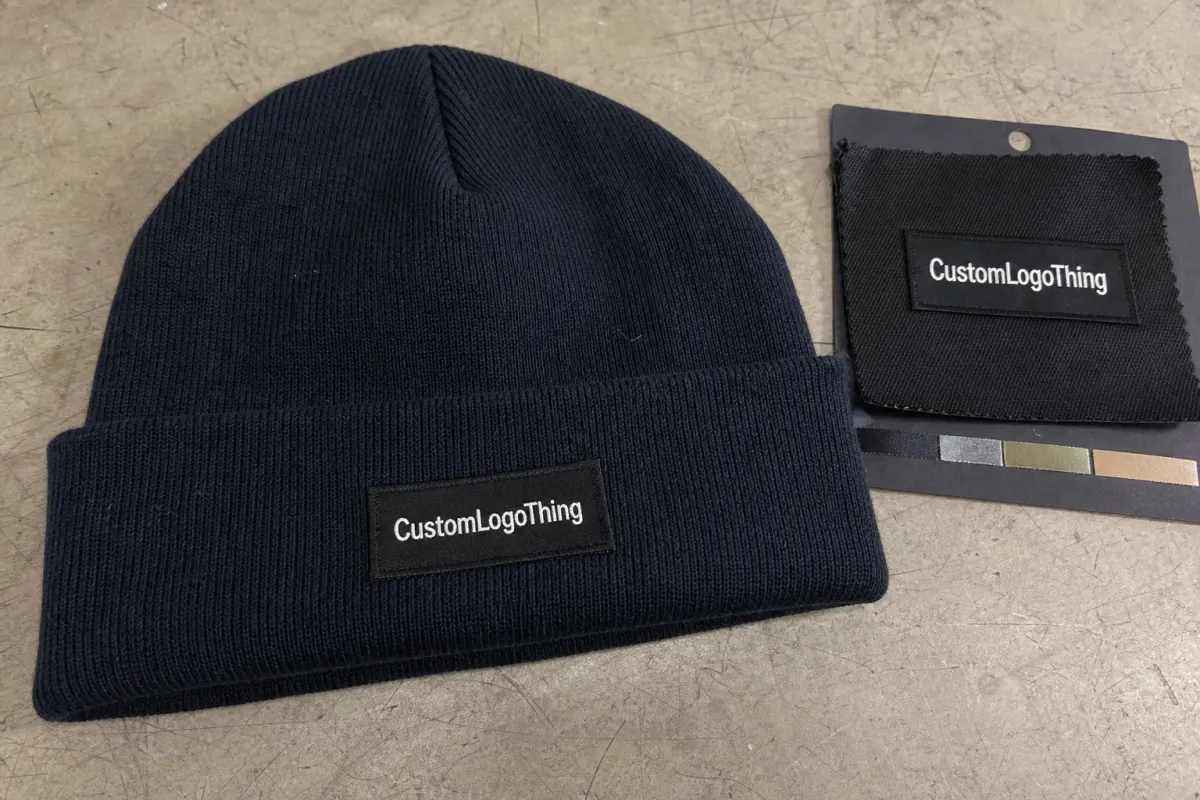
A good sample reveals a lot quickly. You can see whether the woven label has enough thread count to hold small lettering, whether the border stays clean at a reduced size, and whether the beanie body has enough softness to support a wedding-ready look. On rib-knit cuffs, the stretch and recovery of the fabric can compress the label just enough to change spacing. That means a design that looks balanced on screen may feel slightly crowded once it is attached.
That is the practical issue many buyers miss the first time. The artwork can be correct, but the fabric underneath changes the reading. A dense cuff may make the label appear tighter and more contrast-heavy, while a looser knit can soften the edges and reduce visual sharpness. The sample also shows whether the label sits naturally against the cuff or creates a hard ridge that catches a finger. That matters more on a wedding favor than on a basic retail hat because the guest experiences it immediately.
For wedding use, the first swatch should also answer a presentation question. Does it look elegant in hand? Does it fold cleanly into packaging? Does the branding feel elevated without becoming stiff? Those questions sound subjective, but they usually map to measurable choices: label thickness, stitch tension, yarn blend, and cuff placement. A beanie can be warm and functional and still miss the brief if those choices are off by a little.
A clean artwork proof is not the same thing as a comfortable finished beanie; the sample is where the design meets the actual fabric, and that is where most surprises show up.
For a wedding Woven Label Beanies material sample guide, I would keep the physical sample and the approval notes separate from the start. Mark what feels too firm, what needs to move a few millimeters, and what looks heavier than expected. Those notes become the production reference. Without them, a vague “looks good” can turn into guesswork once the full run is underway.
It also helps to inspect the sample in the real setting, not only under ideal desk lighting. A beanie that looks balanced on a table may read differently once it is boxed, tied, stacked, or photographed next to other favors. Wedding buyers tend to get more useful feedback when they test the sample the way guests will meet it: in hand, under warm light, and after a few folds.
How woven labels sit on rib-knit beanie bodies
Rib-knit construction changes the behavior of the whole item. The fabric stretches across the head, recovers after being pulled, and creates a surface that is more active than a flat panel. That movement can slightly alter how borders and text read, especially on small labels. A label that looks centered on a digital mockup can shift visually once the cuff flexes.
Three placement choices usually decide whether the result feels polished or awkward. Center-front placement is the easiest to read in photos and is still the most common choice for wedding favors. Cuff height matters because a label set too low can disappear into folds, while one placed too high can look crowded against the crown. Seam clearance matters too. If the label sits too close to a seam, it can buckle or twist after attachment.
The attachment method changes the handfeel as much as the appearance. A narrow, controlled stitch line can hold the label securely while keeping the cuff flexible. A dense attachment line can make the front panel feel heavier than expected. On a wedding order, that matters because guests are often putting the beanie on right away, not leaving it untouched on a shelf. The sample tells you whether the construction still feels soft after stitching.
If you are comparing label styles or planning matching trim, review Custom Labels & Tags alongside the beanie sample. Wedding presentation tends to look stronger when the branding language stays consistent across the whole set instead of feeling assembled from separate pieces.
From a buyer’s point of view, the best sample is the one you can stretch, fold, and wear without losing confidence in the logo. That is especially true on rib-knit, where the fabric is doing active work and the label has to stay legible while the cuff moves.
Material and finish factors that change the final look
The beanie body does more visual work than most buyers expect. Fiber blend, yarn thickness, rib texture, and softness all change how the woven label reads against the knit. A soft acrylic blend usually feels comfortable quickly and can deliver a clean, approachable look. A tighter wool-blend body creates a more structured profile and often looks more formal. Neither is automatically better. The right choice depends on the venue, climate, guest comfort, and budget.
The label weave itself matters just as much. Small wedding branding often uses thin borders, monograms, or delicate type. Those details need enough thread structure to stay legible. If the label is woven too loosely, small elements can blur together. If it is woven too densely for the size, the design can look stiff and overcontrolled. There is a narrow sweet spot, and the sample is the only reliable way to find it.
Finish choices shift the perception in subtle ways. A matte yarn body usually feels quieter and more understated, while a slight luster can make the beanie read dressier under event lighting. Backing also matters. Some buyers prefer a soft-touch backing because it feels better against the forehead or cuff. Others choose a firmer backing so the label keeps its shape after repeated folding and unpacking. In wedding orders, there is no single correct answer; there is only the choice that fits the brief without creating discomfort.
Color behavior deserves its own check. Winter knits and woven labels can look different under daylight, tungsten reception lighting, and flash photography. A navy beanie may look nearly black indoors. A warm ivory label may drift cream under yellow lighting. That is why one lighting condition is not enough for approval. I would view the sample under at least two light sources and, if possible, a camera flash. Wedding guests will not see the item in a controlled studio.
Packaging belongs in the finish conversation too. If the beanies ship as favors or retail gifts, the carton and inserts matter almost as much as the hat. Many teams use FSC certified corrugated cardboard, kraft paper, or recycled materials for outer packing. In some orders, post-consumer waste board or biodegradable packaging can fit the brief if the goods still arrive clean and protected. For transit testing language, some buyers look to ISTA-style protection standards so the sample does not arrive crushed and misleading.
That shipping check is not cosmetic. A soft knit can pick up dents from poor packing, and a distorted label can make a good product look suspect before anyone finishes the inspection. The sample needs to survive the journey, not just the sew line.
Cost, pricing, and MOQ drivers for woven label beanies
Pricing usually moves for a few predictable reasons: blank quality, label size, stitch complexity, the number of colors in the woven artwork, attachment method, and any special finish or packaging step. A one-color woven label on a standard acrylic cuff will not price the same way as a multicolor label on a premium knit body with custom folding and boxed presentation. That gap is normal.
Sample cost and production cost need to be treated separately. A one-off sample often costs more per piece because setup, weaving, stitching, and hand inspection are spread across one unit. In bulk, those same steps are distributed across the run, so the unit price drops. That is one reason samples are decision tools rather than fair comparisons to final unit cost.
MOQ has a direct effect too. Smaller quantities usually carry a higher unit price because labor and setup are spread across fewer pieces. Larger runs often bring better economics and steadier color matching, but they also require stronger confidence in the proof. If the event date is fixed and the order is modest, the real job is finding the quantity that keeps pricing reasonable without creating excess inventory.
Here is a practical way to compare options inside a wedding Woven Label Beanies Material Sample guide without getting lost in vague sales language. The numbers below are reference ranges, not fixed quotes, because yarn choice, label artwork, packaging, and finishing can move the price up or down.
| Option | Typical sample cost | Typical bulk unit range | Best for | Main tradeoff |
|---|---|---|---|---|
| Basic acrylic beanie + single-color woven label | $35-$60 | $2.10-$3.20 at 300+ units | Simple monograms and clean logos | Less texture and fewer premium cues |
| Midweight knit + multicolor woven label | $50-$85 | $3.25-$5.25 at 300+ units | Wedding favors with stronger color presence | More sensitive to artwork detail and thread matching |
| Soft-touch premium knit + custom finishing | $70-$120 | $4.80-$8.00 at 300+ units | High-touch gifting and presentation-focused orders | Longer setup and tighter approval discipline |
Always compare quotes on the same assumptions. A lower headline price can hide a thinner blank, a simpler label weave, a smaller label, or longer turnaround. Ask what fabric weight, label dimensions, stitch count, and packaging method are included. Without that detail, the quote is hard to compare and easy to misread.
One more practical point: wedding orders often look inexpensive in isolation and expensive when late. Rush fees, rework, and express freight can erase the advantage of a lower unit price very quickly. The cheapest quote is rarely the cheapest finished order if the sample stage was too loose.
Sample process and timeline from first proof to bulk approval
A clean approval process usually follows a fairly predictable path. First comes artwork review. Then label layout confirmation. Then sample weaving and attachment. After that, the physical inspection matters most because this is where you verify softness, stretch, placement, and color in hand. Only after those checks should the order move to final sign-off.
- Artwork review: check file quality, text size, line thickness, and contrast.
- Label layout confirmation: confirm dimensions, border spacing, and placement on the cuff.
- Sample weaving: test thread colors and weave density on the chosen label size.
- Attachment and inspection: review stitch path, flexibility, and feel on the actual beanie.
- Approval: lock notes, save the sample, and release the production run.
Timeline depends on a few real-world variables. Artwork complexity can add a day or two if the file needs cleanup. Thread color availability matters, especially if the label uses a custom shade or a shade that sits close to another in the palette. Seasonal demand can stretch lead times during busy wedding months. Shipping distance matters too, because a sample can be right and still arrive late if the carton spends too long in transit.
For many orders, one revision loop is enough if the original artwork is clean. I would still budget extra time. Wedding dates do not move, and it is much easier to adjust a sample early than to rescue a bulk order after the schedule is fixed. A practical buffer is enough time for proofing, one correction cycle if needed, and transit.
Packaging for the sample deserves attention as well. If you want the sample to reflect the brand honestly, ask for packed samples in FSC certified corrugated cardboard with kraft paper or recycled inserts instead of loose plastic that can scuff the knit. Where protection and budget allow, biodegradable packaging or inserts made from post-consumer waste can keep the presentation cleaner. For broader packaging language, the FSC site is a useful reference for responsible forest materials and chain-of-custody terms.
A sample that arrives protected, uncreased, and easy to handle gives a more honest read on the product. A crushed carton can make a good beanie look average, and a scratched label can make buyers second-guess a sound production plan.
Common mistakes that create mismatched bulk orders
The first mistake is approving from a screen only. Digital mockups are useful, but they hide thread thickness, edge definition, and how the label settles into a knit. A file can look balanced at 100 percent on a monitor and still feel crowded on a cuff once the fabric starts moving.
The second mistake is asking too much of a small label. Tiny lettering, fine borders, and overly detailed icons can crowd together once woven. If the artwork is not scaled for the actual label size, contrast weakens and the branding loses clarity. In practice, simpler shapes often look more expensive than busy ones because the weave has room to breathe.
Lighting is another common trap. A sample checked only under office fluorescents may look different at a reception venue, in daylight photos, or on a gift table after sunset. If the favors will be displayed under warm event lighting, view the sample under something close to that environment before approval. The lighting used at approval should not be wildly different from the lighting used at the event.
Another mistake is ignoring stretch behavior. The cuff is not static. It expands, relaxes, and returns to shape, and the label has to survive all three states. If the placement is slightly off or the stitch line is too tight, the label can twist after a few wears. That problem is easy to miss in the box and obvious once the beanie is on a head.
Finally, keep one approved physical sample on file. That is the fastest way to compare later production lots and catch drift before the full shipment is packed. If a later run changes slightly, the approved swatch gives everyone a common reference point instead of a memory of what “looked right” a month ago.
The approved sample should be treated like a working reference, not a souvenir; it is the piece that keeps repeat orders honest.
Expert checks before you place the order
Before release, check the basics with a buyer’s eye. Look for legibility, softness, stretch recovery, label placement, and color consistency. Then wear or fold the beanie a few times. A label that still feels good after handling is usually the one that will hold up best once it reaches guests.
It also helps to prepare your inputs before asking for final pricing. Send the exact artwork file, preferred beanie color, target quantity, and event deadline together. Cleaner inputs usually produce cleaner quotes, fewer follow-up questions, and a faster path to a usable sample. If the order includes tags, inserts, or packaging, bundle those details at the same time so the full presentation can be priced honestly.
For quality control, a few checks matter more than others: confirm thread color against the approved swatch, measure label placement from a fixed seam point, inspect stitch tension, and verify that no loose threads remain around the cuff. Those details sound small, but they separate a presentable favor from a piece that feels rushed.
If the order is large enough to justify a pre-shipment check, ask for random pull inspection across multiple cartons, not only the first one packed. Color drift, packing pressure, and stitch variation can hide in a small sample of a big run. A short inspection pass is cheaper than remaking a batch after delivery.
Wedding favors should feel calm and polished, not hurried. The strongest orders start with a clear material sample, a realistic timeline, and a note set that says exactly what must stay fixed. That is the real value of a wedding woven label beanies material sample guide: it helps you compare tactile proof, visual proof, and packaging proof before bulk production begins.
What should a wedding woven label beanies material sample show?
It should show the actual knit handfeel, label clarity, edge finish, and how the branding sits on the cuff when the beanie is stretched and worn. It should also confirm whether the artwork stays readable at real size, since tiny details often look stronger in mockups than on fabric.
How many sample rounds are typical for custom woven label beanies?
Many buyers can approve after one physical sample if the artwork is simple and the reference file is clean. If the logo is small, the colors sit close together, or the beanie body needs a specific feel, plan for one revision round.
Why does the pricing for woven label beanies change so much?
Price changes with blank quality, label size, stitch complexity, quantity, and whether the order includes a special finish or packaging step. Lower quantities usually carry a higher unit cost because setup and inspection are spread across fewer pieces.
How long does the sample and approval process usually take?
The timeline depends on artwork readiness, thread availability, shipping distance, and how many revisions are needed before approval. Build in buffer time for transit and one correction cycle so the final bulk run does not collide with the wedding date.
What mistakes cause the final beanies to look different from the sample?
The biggest issues are approving from a screen only, ignoring stretch behavior, and not comparing the sample under the same lighting used for the event. Keeping the approved swatch on file helps catch later changes in color, placement, or stitch density.

