If you are evaluating electronics Frosted Zipper Bags physical sample checklist samples for cables, adapters, small boards, sensor kits, or accessory packs, the sample needs to answer one simple question: does it work once the real product is inside? A bag can look crisp in a product photo and still fail on zipper feel, seal straightness, or fit when a coiled cable adds thickness.
That gap between appearance and function is where packaging projects usually go sideways. The frosted finish may read as clean and premium, but the real test is whether the bag protects the contents, opens without snagging, and still looks tidy after handling. A physical sample makes those tradeoffs visible before production locks them in.
For electronics packaging, the small details matter more than people expect. A zipper that closes unevenly, a film that shows scuffs too easily, or a bag that is 3 to 5 mm too short can turn a practical pack into a repeat-fix problem. The goal is not perfection for its own sake. The goal is a bag that fits the product, survives handling, and matches the price point the project can support.
Electronics Frosted Zipper Bags Physical Sample Checklist: What to Inspect First
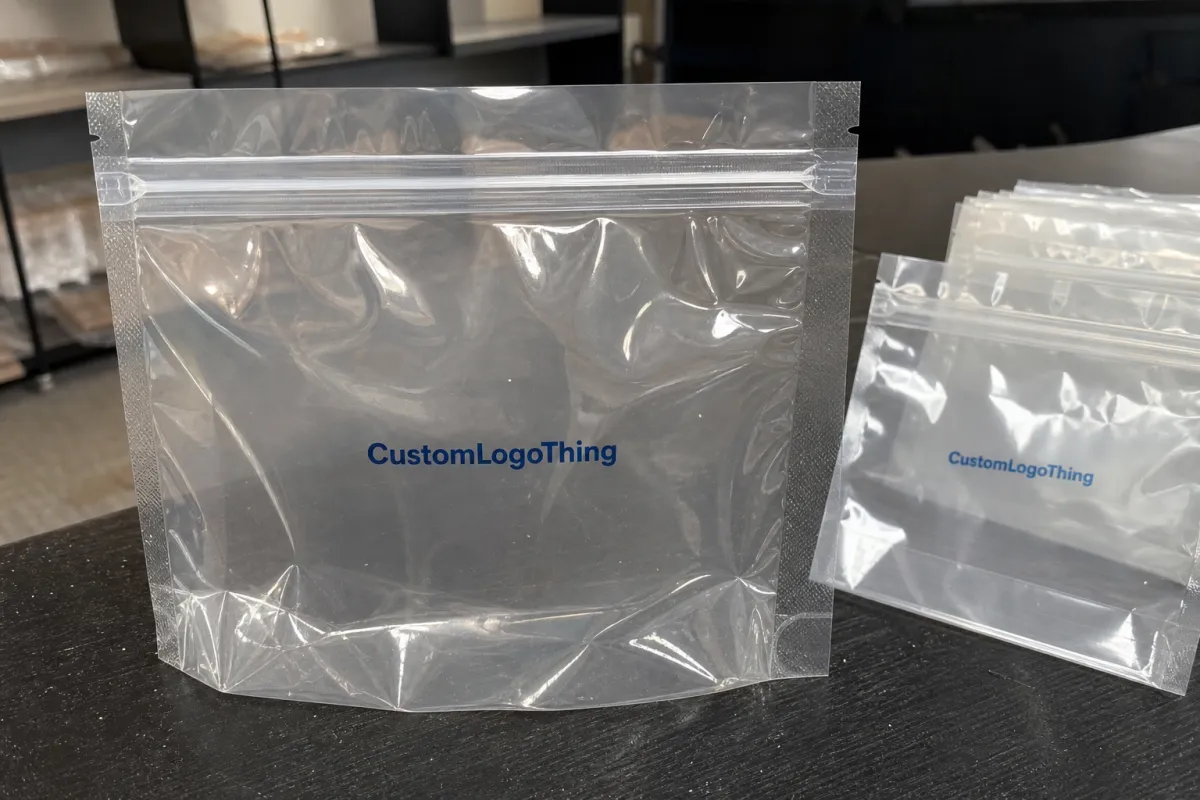
Start with three basics: fit, closure, and visual consistency. If the sample is the wrong size, everything else becomes noisy. A bag that is too tight will bow at the zipper line; one that is too loose lets the contents slide around and makes the package feel less deliberate.
A useful sample review starts with the product inside the bag, not beside it. A flat drawing or a dimension chart cannot show how a molded adapter corner behaves, how a cable coil fills the lower corners, or how a small accessory box pushes against the top seal. That is why a proper electronics Frosted Zipper Bags physical sample checklist begins with the actual contents.
| Check | What to look for | Why it matters |
|---|---|---|
| Fit | Easy insertion, no forced corners, enough headroom for the zipper | Prevents stress on the seal and keeps the bag looking aligned |
| Zipper action | Even closure, no skips, no crunching at the ends | Shows whether the bag can handle repeated use |
| Seal straightness | Side seals run clean and do not drift or curve | Bad seals are easy to miss in photos and hard to ignore in hand |
| Surface quality | No dust, scratches, haze spots, or oil marks | Frosted film can hide defects until strong light hits it |
| Presentation | Print legibility, matte/frost balance, overall finish | Electronics packaging still has to look deliberate and saleable |
Review the sample under more than one light source. Warehouse lighting reveals scuffs and zipper alignment. Retail lighting shows whether the frosted finish still reads as clean. Desk lighting is useful for print contrast and haze. A bag can look expensive in one setting and plain in another.
A short pass-fail sheet works better than a long narrative. Use five fields: size, zipper feel, seal alignment, surface quality, and visual presentation. If the team cannot agree on those points, the sample is not ready. That is especially true for packaging that will sit next to precision components, where a small mismatch looks careless.
Practical rule: approve the sample with the real electronics inside, under the same lighting and handling conditions used during packing, stocking, or buyer review. Empty bags often conceal fit problems that appear immediately once weight and shape are added.
How the Bag Should Perform in Real Use
The zipper is the first functional test. It should close with steady pressure from one end to the other, without sticking at the corners or creating a rough patch where the track seems to jump. If the closure feels tight only near one side, that usually points to alignment or heat-seal inconsistency rather than user error.
Repeated open-close cycles matter. One smooth pass is not enough. A bag used for electronics accessories may be opened during packing, inventory checks, retail inspection, and end-user access. If the track loosens after a few cycles or the ends begin to split, the bag will not hold up long enough to justify a premium finish.
Frost level changes the experience in a quieter way. A heavier frost gives a softer, more upscale appearance and hides minor internal clutter. A lighter frost increases visibility, which can help when a buyer needs to identify parts quickly. The tradeoff is that lighter film can show fingerprints, smudges, and handling marks more easily. The right choice depends on whether the bag is meant to signal clarity or refinement.
Size should be judged as usable volume, not just flat dimensions. A cable coil needs more room than a flat label card. A small charger block may fit on paper but still push against the corners once it is sealed inside. Leave enough tolerance for insertion and closure, or the zipper will absorb stress that belongs in the bag body.
For light accessory kits, common film thicknesses often sit around 0.08 to 0.10 mm. Heavier contents, sharper corners, or repeated handling usually push buyers toward 0.10 to 0.12 mm for a little more margin. There is no universal best gauge. Thicker film costs more and feels sturdier, but overbuilding a bag for a soft accessory set can make the package unnecessarily stiff and raise unit cost without improving actual protection.
A quality sample should also be checked with realistic handling. Shake it lightly, set it down, pick it up by the top edge, and check whether the contents shift in a way that makes the package look messy. Electronics packaging often fails on appearance before it fails on function. That is a subtle distinction, but a real one.
Material, Closure, and Print Details That Change the Result
Film gauge is only part of the story. Resin mix, surface treatment, and zipper profile all affect the final feel. A bag made from a slightly softer film may drape better around small accessories, while a stiffer structure can help the package hold shape on a shelf. If the contents have hard edges, the extra stiffness can reduce corner stress. If the contents are light and flexible, too much stiffness can make the bag feel overbuilt.
The frost itself should be judged carefully. Heavy frost gives a diffused look that often feels more premium, but it also reduces the sharpness of printed text. That matters if the bag carries model numbers, part names, or regulatory marks that need to stay readable. Lighter frost improves visibility but can expose fingerprints, dust, and the internal layout of the contents more clearly than the buyer intended.
Zipper style deserves separate review. Some closures give a stronger audible click and are better for bags that will be opened and closed often. Others are smoother and visually cleaner, which suits packaging that needs a more refined presentation. Compare multiple zipper profiles side by side with the same contents inside. A profile that feels fine on an empty bag can behave very differently under load.
Print is another place where sample quality matters. On frosted film, high-contrast artwork usually reads better than fine, low-contrast detail. Small type can blur visually if the frost is heavy or the ink laydown is light. If the design includes logos, QR codes, or part labels, test them at the actual size, not a scaled-up mockup. A design that looks sharp on-screen can become mushy on translucent film.
Special features change both utility and cost:
- Hang holes: useful for display racks, but they can affect tooling and top-edge strength.
- Tear notches: helpful for first-open convenience if the bag is not meant for long-term reuse.
- Anti-static treatment: worth asking about for sensitive components, dust-prone environments, or higher-risk shipping routes.
- Custom printing: improves branding and tracking, but adds setup, proofing, and a greater chance of approval delays.
When the bag is part of a shipping chain, ask how the supplier thinks about handling stress, seal consistency, and surface durability. Industry test methods from organizations such as ISTA can help frame that discussion. For buyers, the value is not in chasing a standard for its own sake; it is in checking whether the bag will survive the real path from packout to customer hands.
Material sourcing for inserts or companion packaging matters too, but it should be evaluated separately. A paper insert, instruction card, or carton can improve the overall package without changing the behavior of the bag itself. Mixing those decisions together often muddies the review.
Cost, MOQ, and Unit Price Drivers
Price depends on more than size. For Frosted Zipper Bags, the biggest cost drivers are film thickness, zipper profile, print coverage, bag dimensions, and any added features such as anti-static treatment or a die-cut hang hole. Two bags that look almost identical in a photo can land in very different cost bands once the specification is finalized.
MOQ changes the economics quickly. Small runs carry a higher unit price because setup, artwork prep, and handling are spread across fewer pieces. Larger runs reduce per-unit cost, but only if the project can absorb the inventory. A low price on paper is not useful if the customer will only ever need a fraction of the lot.
| Option | Typical Use | Approximate Cost | What It Tells You |
|---|---|---|---|
| Stock sample | Quick fit and finish check | $10-$35 plus freight | Basic zipper feel, size, and appearance |
| Custom prototype | Bag with your size or print | $35-$120 depending on setup | Closer match to the final construction and branding |
| Pre-production sample | Final approval before the run | Often credited or charged at low cost | Confirms the approved spec before mass production |
For production pricing, a plain frosted zipper bag often lands around $0.08-$0.18 per unit on larger runs. Once the order moves into custom print, thicker film, or specialty zipper profiles, the number can move into the $0.18-$0.35 range or higher. Those are practical market ranges, not promises. Quantity, print coverage, and material choice can move the result quickly.
Ask for an itemized quote. Material, printing, tooling, packaging, and freight should be visible as separate lines. That makes it easier to see which change actually saved money and which change only moved the cost from one bucket to another. Sometimes reducing print coverage or simplifying the zipper style trims the price without affecting the bag's real usefulness.
Price and performance should be judged together. A cheaper bag that tears at the corners or looks uneven under light costs more in rework than the quote suggests. A slightly higher-priced bag that packs cleanly and holds its shape may be the better purchase if the product line depends on presentation.
Process, Timeline, and Lead Time for Approval
The sequence should be simple: confirm the specification, request the sample type, inspect the sample, note changes, and approve or revise. Delays usually happen when the project skips one of those steps. The buyer assumes the supplier is working from a final size; the supplier is still using an earlier drawing that is close but not exact.
Lead time depends on the sample type. Stock samples are usually the fastest. Custom-printed prototypes take longer because artwork, material selection, and setup all have to be aligned. Revised samples can take another cycle if the first version reveals issues in closure feel, frost clarity, or fit.
Shipping time has to be included in the calendar. A sample that is built quickly can still arrive late if it crosses borders, sits in customs, or gets delayed by a carrier. For an electronics launch, that matters more than most teams admit. Packaging is often treated as a downstream task until it starts controlling the launch date.
A realistic approval path looks like this:
- Confirm dimensions, material, zipper type, print requirements, and any special treatment.
- Request one sample that matches the intended use case as closely as possible.
- Test the bag with the actual electronics or accessory kit.
- Record comments in a short approval sheet with photos.
- Allow room for a revised sample if the first version misses key points.
Typical timing is often 3 to 7 business days for a stock sample, 7 to 15 business days for a custom prototype, and longer if artwork revisions or special treatments are involved. That still leaves the transit window, which can be the real bottleneck. A few extra days built into the schedule is easier to absorb than a rushed approval that lands on the wrong spec.
For higher-volume orders, ask for a pre-production confirmation. That last review catches mismatches between the approved sample and the production run, especially if the bag will hold small but valuable electronics parts. The delay is modest; the risk reduction is not.
Common Sample Mistakes That Skew the Review
The most common error is approving an empty bag. An empty frosted zipper bag can look neat and balanced, then fail immediately once a charger, cable, or accessory set goes inside. The corners expand, the zipper bows, and the package loses the tidy look that made it acceptable in the first place.
Lighting causes problems too. Frosted film, print contrast, and minor scuffs all shift under different conditions. A sample viewed only under soft office light can look better than it really is. The reverse happens too: a bag judged under a harsh desk lamp may look worse than it would in actual packing conditions. Compare samples under the lighting the product will actually face.
Another frequent mistake is testing only once. A zipper that works on the first pass can still feel loose or catch after repeated use. Side seals may look aligned until the bag is filled and closed several times. Electronics packaging tends to be handled more than buyers expect, so repeatability deserves real attention.
There is also the issue of undefined tolerance. If no one says what level of variation is acceptable, the review turns subjective very quickly. A slight change in frost, a millimeter of print drift, or minor zipper tension variation may be within normal production tolerance, but without a baseline the team may reject a workable bag for the wrong reason.
Keep the review disciplined:
- Test with the actual contents.
- Use the same lighting when comparing samples.
- Open and close the zipper several times.
- Mark issues directly on photos or the sample sheet.
- Record what is acceptable before final sign-off.
That discipline turns the electronics Frosted Zipper Bags physical sample checklist into a useful control point instead of a paperwork exercise. It keeps the review grounded in performance, cost, and delivery timing instead of vague impressions.
Expert Checks and Next Steps Before Production
A good approval sheet is short but specific. It should include exact measurements, zipper performance, fit with the real product, surface notes, and any comments about frost level or print readability. If the sheet gets too broad, the important details get buried. If it is too thin, the team cannot repeat the approval later.
Photos help more than most teams think. Take the sample with the electronics inside and mark the issue directly on the image if something looks off. A note like "zipper catches near left corner" or "print too muted under overhead light" is more useful than a general "needs work" comment. The supplier can respond to a visible problem. They cannot respond to a mood.
For larger orders, a final pre-production check is worth the extra day or two. That is especially true when the bag must match a branded packout or protect parts with tight tolerances. A slight mismatch in film thickness, zipper feel, or print placement is much easier to correct before the run than after thousands of bags are packed.
Across the whole process, the best order of operations is simple: fit first, closure second, presentation third, then price and lead time. If the bag misses the first two, the rest of the discussion barely matters. If it passes those tests but blows the budget or misses the schedule, it still fails the project.
That is the real value of a careful sample review. It keeps the decision tied to what the bag actually does, not what the rendering suggests. For electronics accessories, that difference is often the line between packaging that feels considered and packaging that feels improvised.
What should I inspect first on an electronics frosted zipper bag sample?
Start with zipper smoothness, seal alignment, and whether the bag closes cleanly without catching at the corners. Then test the actual electronics or accessory kit inside so you can see whether the fit still works once the bag is under load.
How do I compare two frosted zipper bag samples for electronics accessories?
Use the same lighting, the same product inside, and the same handling test for both samples. Compare film feel, frost level, zipper repeatability, print legibility, and seal straightness, then record the differences on a simple side-by-side scorecard.
Should I ask for a physical sample before approving a quote?
Yes, especially if the bag needs a precise fit, custom print, or a frosted finish that may vary by material grade. A sample shows whether the quoted price matches the real construction, not just the appearance in a digital proof.
What lead time should I plan for a custom frosted zipper bag sample?
Plan for the build time plus shipping time, and leave extra room if the sample needs printing, revisions, or a second approval cycle. For launch-driven projects, a small buffer protects the schedule better than a rushed sign-off.
How do I know if the bag is right for small electronics parts?
Check that the items fit without forcing the zipper or stretching the film at the edges, and make sure the bag still closes cleanly after repeated use. If the parts are sensitive to dust or static, confirm whether the bag needs an added protective feature before production starts.

