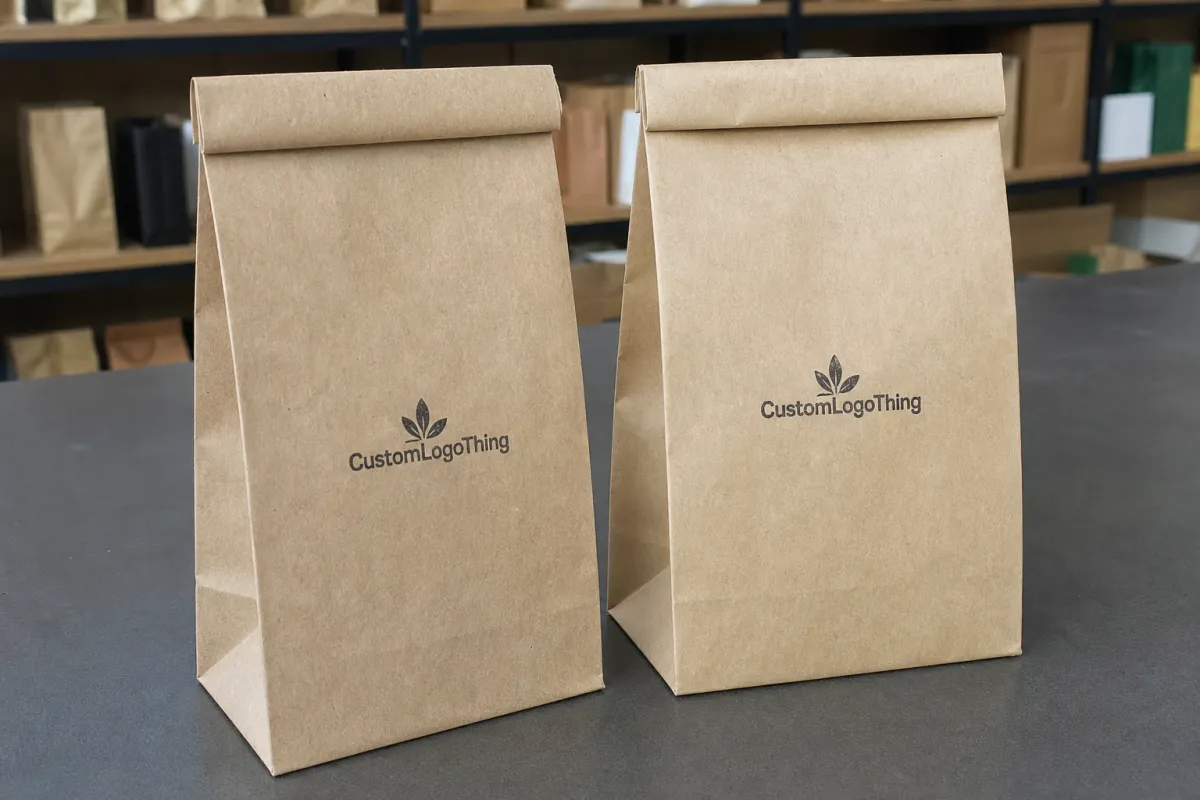
Packaging buyers do not get rewarded for choosing the prettiest quote. They get rewarded for landing the right bag at the right cost, with no drama at receiving. That is why vitamin ribbon Handle Paper Bags bulk order planning deserves more attention than it usually gets. The bag affects shelf presentation, freight cube, assembly time, and the chance of a clean reorder. Cheap on paper is not the same as cheap on the landed invoice.
Ribbon Handle Paper Bags sit in an awkward but useful middle ground. They look more finished than twisted-Handle Paper Bags, but they do not carry the weight, protection, or storage penalty of rigid gift boxes. For vitamins, supplements, pharmacy kits, and premium promotional packs, that balance matters. One correct spec can handle multiple uses. One sloppy spec can create a string of avoidable problems.
The buyer’s job is not to chase decoration. It is to lock a bag that fits the product, matches the brand, and survives production, transit, and store handling without burning margin.
Why these bags can lower per-pack cost fast
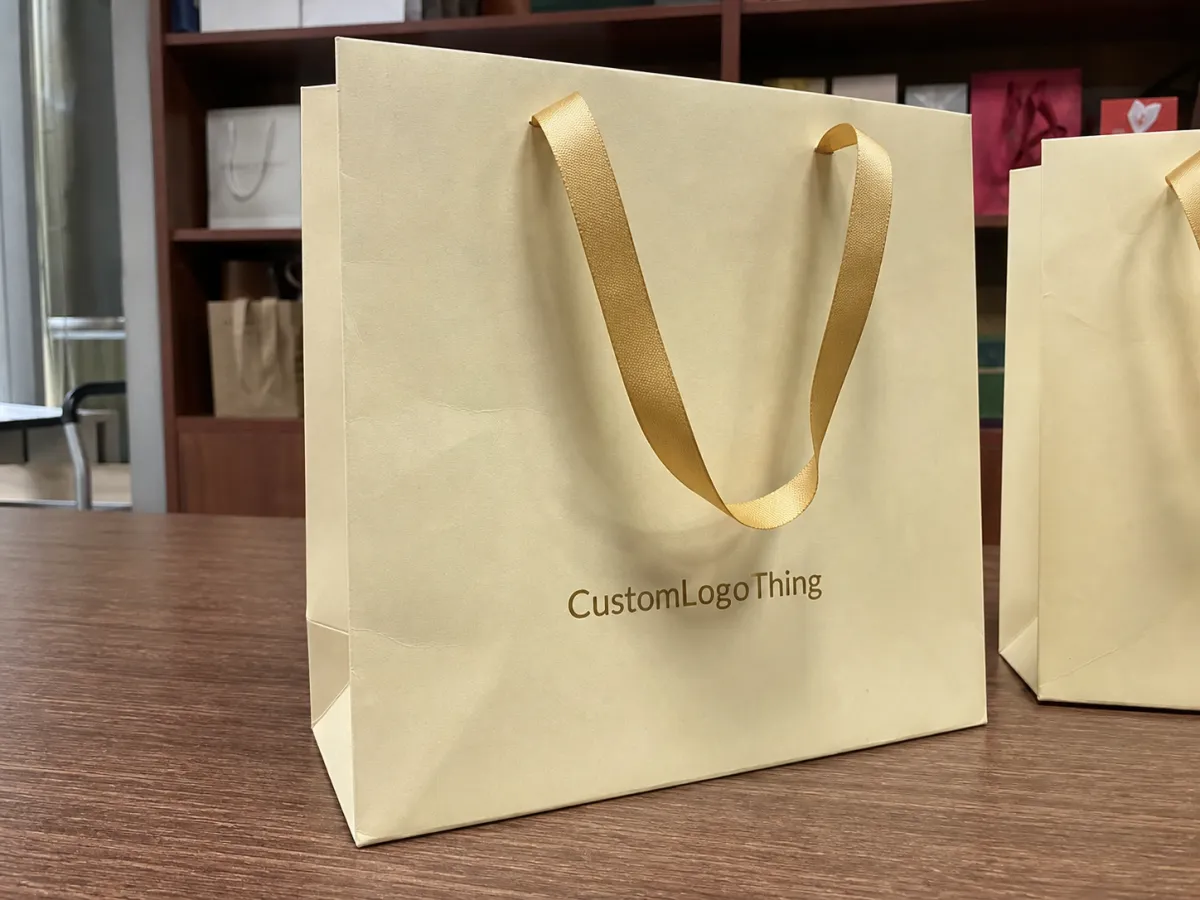
Ribbon handles make sense when the bag is part of the sale, not just a carrier. A supplement sampler, pharmacy gift set, conference kit, or seasonal wellness bundle needs to look intentional the moment it is handed over. Ribbon handles do that without forcing the order into box economics. They read as premium, but the structure is still paper-based and relatively efficient to produce.
The cost benefit shows up when the size is planned properly. A single bag spec can often cover more than one product format if the gusset, height, and load rating are chosen with a little discipline. Buyers sometimes split one use case into three bag sizes because the first round of measurements was too loose. That looks harmless until the SKU count grows, the artwork changes, and the warehouse starts carrying dead inventory.
There is another advantage people miss: the bag can absorb part of the marketing spend. If the packaging has to do some of the branding work at the counter or in the gift set, then the bag is not an optional add-on. It is part of the presentation budget. That is a valid place to spend money, but only if the structure survives real handling. A ribbon that tears out at the fold is not premium. It is a complaint with branding on it.
What to lock before you request quotes
Start with the finished size. Not the product size. Not the guess. The finished size. Measure the packed carton, the bundle, or the boxed set, then add clearance for insertion, removal, and handle drop. If the bag is supposed to hold a vitamin gift pack or a multi-item pharmacy kit, interior volume matters more than the outside silhouette. A small measurement error at the quote stage becomes an expensive reprint later.
Decide how the bag will be used before asking for pricing. A one-time promo carry bag, a retail bag that gets handled repeatedly, and a secondary bag for shipping inserts do not need the same build. Use case changes paper weight, reinforcement, and expected failure rate. A bag that only crosses a counter once can be built differently from a bag that will travel with the customer all day.
Artwork needs to be settled early as well. Send the supplier the logo files, Pantone targets, barcode placement, warning copy, and any retailer rules that affect the face of the bag. If the bag has to align with a broader product launch, ask where the safe zones are on the dieline before approving art. That prevents the usual mess where the logo looks fine on screen and lands awkwardly across a fold or trim line in production.
For planning purposes, keep the internal brief simple. If the spec can be written on one page, it is probably ready for quoting. If it takes six pages and still leaves room for interpretation, the quote will be cheap only because the supplier has not priced the risk yet.
Paper stock, handle build, and print specs
Paper stock drives both appearance and durability. Kraft gives a natural, grounded look and usually handles moderate weight well. Coated board gives cleaner color and sharper print reproduction, which matters if the bag sits under bright retail lighting or needs a more polished finish. Specialty papers can raise perceived value quickly, but they also raise risk. A fragile texture or difficult coating can slow assembly and create waste during folding or transport.
For many vitamin and supplement programs, the right paper weight is the lightest stock that still survives the load. A common working range is 250gsm to 350gsm, but that is not a rule. A compact sampler bag with a narrow footprint may need less. A deeper bag with a heavier bundled set may need more. The right answer depends on the product weight, the handle attachment, and the amount of shelf time the bag needs to endure.
Handle construction deserves the same attention as the board. Ribbon width often falls around 10-15 mm, but the real question is whether the ribbon feels comfortable in hand and whether the anchor points can survive use. Ask how the handle is fixed, whether the top edge is reinforced, and whether the factory tests pull strength or only visual appearance. A ribbon that looks polished but slips under load is a poor trade.
Print specs should be treated like production specs, not decoration notes. State the number of colors, bleed, registration tolerance, and whether the art wraps across a seam. If foil, spot UV, embossing, or lamination is involved, disclose it before tooling begins. Those details change curing time, waste allowance, and inspection steps. I would rather see a slightly simpler bag that prints cleanly than a fancier one that creates line rejects.
There is also a practical finishing decision that gets overlooked: whether the bag needs extra surface protection. Aqueous or film lamination can improve scuff resistance and moisture handling, but it adds cost and can change the feel of the paper. That tradeoff is worth thinking through if the bags will move through humid storage, retail back rooms, or distribution centers where cartons are stacked tightly.
Cost, pricing, and MOQ drivers to watch
Factory pricing moves with a few predictable variables: paper grade, sheet size, print sides, color count, handle type, and finishing complexity. Every change has a cost trail. Add a second print side and the price shifts. Move from a basic ribbon attachment to a reinforced top fold and the price shifts again. Buyers often compare only the bag unit price, then forget the cartons, pallet pattern, and freight mode that decide the actual landed cost.
MOQ is not just a supplier preference. It is the point where setup, plates, and handling stop dominating the unit cost. Small runs usually look expensive because the fixed work gets spread over fewer bags. Larger runs improve price, but they also lock up cash and storage space. The best quantity is usually the largest order that can be sold, stored, and replenished within the brand’s real demand window.
For planning, these ex-factory ranges are a reasonable starting point for standard printed Ribbon Handle Paper Bags. The exact number moves with size, finish, and route to market, so no one should treat this as a promise.
| Order size | Typical unit price | What usually changes | Best fit |
|---|---|---|---|
| 1,000 units | $1.15-$1.80 | Setup burden is heavy, finishing costs spread across fewer pieces | Launches, short promotions, test runs |
| 3,000 units | $0.72-$1.10 | Better spread on tooling and line handling, more stable scheduling | Regional rollouts, mid-size replenishment |
| 5,000 units | $0.48-$0.86 | Setup costs are diluted, but storage and working capital rise | Repeat SKUs, national programs, ongoing retail use |
Samples can also affect budget. Digital proofs are fast and usually inexpensive. Blank samples are useful for size and structure checks. Pre-production samples cost more because they sit closer to the final build, and some suppliers will charge for them even if the order later proceeds. That is normal. The sample is cheaper than a wrong run.
Lead time has a similar pattern. Special finishes, complex handle builds, and strict color matching all increase the chance that a quote with a lower unit price becomes the more expensive option once time pressure is counted. If the launch date is fixed, the landed cost may include air freight. That single line item can erase most of the savings from a low factory quote.
Ask for tiered pricing at multiple quantities. If a supplier only gives one number, the quote is incomplete. Real planning needs at least two or three breakpoints so you can see where setup cost stops hurting you and where inventory starts hurting you instead.
Process and lead time from proof to shipment
The order path is simple on paper: brief, dieline confirmation, artwork check, proof, approval, production, QC, packing, and shipment. The problem is not the order of events. The problem is how many times each step can stall if the spec is vague.
A normal bulk order can take 12-15 business days after proof approval. Add time for a first sample, a complex finish, or a new handle structure, and that schedule stretches quickly. Then add transit. Then add customs if the shipment crosses borders. Buyers who only plan factory time usually end up with a delayed launch and a warehouse full of excuses.
Artwork approval is where most delays start. Pantone matching, barcode placement, warning text, carton labels, and dieline alignment all need to be signed off before the line starts. If each team member approves a different piece separately, the project drifts. A cleaner method is to approve the full package in one pass so production is not held hostage by a tiny revision nobody noticed earlier.
For programs that travel through ecommerce channels or get stacked in distribution, ask the supplier how the master carton is packed and whether the shipping format has been tested against ISTA distribution expectations. If the brand needs paper traceability, ask for FSC chain-of-custody documentation before the order starts. Those checks do not solve every issue, but they do filter out suppliers who are guessing.
The best schedule is the one that leaves room for a redo without forcing one. If the first production run arrives with a problem, there should still be time to correct it before the next sell-through window. That is the difference between planned replenishment and panic buying.
Quality checks that prevent expensive reorders
Bulk orders fail in the same few places over and over. Handles pull loose. Print drifts. Glue fails in humidity. Creases land off-center. The order is fine in a sample and messy in quantity. That is why QC should be treated as part of buying, not as an afterthought.
Request a pre-production sample whenever the artwork is new, the paper changes, or the schedule is tight. Then check it like a buyer who has to live with the shipment, not like a designer who only wants the front panel to look nice. Measure the finished dimensions. Test the handle feel. Check board stiffness, mouth opening, fold accuracy, and the actual placement of logos and text. A millimeter issue on paper becomes a warehouse issue when the whole order arrives slightly off.
Pay attention to carton labeling. The warehouse needs clean pack counts, clear SKU references, and master carton labels that match the receiving system. If cartons cannot be identified quickly, labor costs rise and inventory counts become sloppy. That is where a cheap bag quietly becomes an expensive one.
A basic QC checklist should cover these points:
- Handle pull strength against real carry weight, not display-only handling.
- Print consistency from the first carton through the last carton.
- Cut accuracy so the mouth, gusset, and base stay square.
- Glue integrity after folding, packing, and normal humidity shifts.
- Carton labeling that matches the warehouse count system.
One more thing: inspect the bag under the same lighting where it will be seen. A finish that looks clean in a proof room can read differently under pharmacy lighting or on a crowded shelf. That is a small detail until the brand has to explain why the bag looks darker, flatter, or less precise than the approval sample.
How to compare suppliers on capability, not claims
Good suppliers answer in numbers. MOQ tiers. Sample charges. Lead times. Defect tolerances. Carton counts. Weak suppliers answer with adjectives and hope the quote closes before anyone asks a harder question. Packaging buying gets easier once the difference is clear.
A capable vendor can explain why a slight change in board weight will save money or protect the handle without changing the visual result. A weaker vendor just says the bag is high quality and leaves the math blank. That is not confidence. That is hand-waving.
Reorder behavior matters more than first-order charm. If the supplier cannot hold the same color, handle construction, and print placement across future runs, the first shipment is not the real test. The second one is. Ask how they store production references, how they handle reprints, and what happens if a later order needs to match the original exactly. Good packaging suppliers protect continuity. Average ones hope nobody notices drift.
Capability also shows up in practical support. Can the supplier advise on freight packing? Can they suggest carton counts that fit warehouse receiving? Can they keep the same spec when a reorder lands six months later? Those are not flashy benefits, but they save time and money. In a recurring program, that is worth more than shaving a few cents off the quote.
A simple scorecard helps keep the decision honest:
- Spec fit: Does the bag size and structure match the product, not just the logo?
- Production clarity: Are finish, handle build, and carton counts documented?
- Order logic: Are tiered prices and realistic lead times provided?
- Reorder stability: Can the same spec be repeated without guesswork?
That kind of comparison is less glamorous than a slick quote deck. It is also a lot better at preventing expensive surprises.
Vitamin Ribbon Handle Paper Bags Bulk Order Planning: Next Steps for a Clean Reorder
Start with one clean brief. List the finished size, target quantity, print count, handle style, delivery date, and packing requirements. Then ask for at least two pricing options that differ by paper grade or finishing complexity. That makes the tradeoff visible instead of vague, which is exactly what vitamin ribbon handle paper bags Bulk Order Planning needs if the order has to pass internal review.
Before release, confirm artwork, carton counts, and replenishment assumptions. If the bag is tied to a launch, a retail promo, or a pharmacy-facing kit, those details should be locked before the PO goes out. The cleanest buys are not the ones with the lowest number in the table. They are the ones that arrive on time, fit the product, and do not come back with a stack of complaints.
Reorder early if the first run performs well. Waiting until stock gets thin creates pressure for rush freight, speculative substitutions, and rushed approvals. That is where costs climb. A well-timed reorder keeps the spec stable, protects the print match, and avoids the usual scramble that turns a simple bag into a supply-chain headache.
What details do I need for a vitamin ribbon handle paper bag quote?
Share the finished size, gusset depth, quantity, print colors, handle style, and delivery destination. Include artwork files, Pantone targets, and any barcode or warning-copy requirements. If you already know the carton pack-out, include that too so freight and warehouse costs can be estimated more accurately.
How do I estimate MOQ for ribbon handle paper bags?
MOQ usually changes with paper size, print complexity, finish, and handle construction. Ask for tiered pricing at two or three quantities so you can see where setup costs drop meaningfully. Choose the highest quantity you can store and sell within your replenishment window, not the lowest number on the sheet.
What is the usual lead time for bulk orders?
Lead time depends on proof approval, production capacity, and freight method. New artwork, special finishes, or a first-time sample approval can add days before production begins. Always separate factory lead time from shipping time so the launch date is realistic.
Can I get samples before placing a large order?
Yes, request a blank sample, digital proof, or pre-production sample depending on how close you need to test the final build. Use the sample to check handle feel, board stiffness, print placement, and true bag dimensions. If the order is time-sensitive, confirm the sample schedule before you finalize the purchase order.
How can I keep costs down without downgrading the bag?
Simplify print colors, standardize the bag size, and choose the lightest paper grade that still meets load needs. Reduce custom finishing unless it supports sales or shelf appeal directly. Align carton pack-out and shipping mode with your receiving process so inventory costs stay controlled after delivery.